






















This video demonstrates a three-day bacterial protein expression and purification workflow using E. coli. The process begins with inoculating a bacterial colony into LB medium containing selective antibiotic, followed by overnight growth at 37°C. Bacterial growth is monitored by measuring optical density at 600 nm, with protein induction triggered when OD reaches 0.5 using IPTG, which mimics allolactose to activate the lac repressor and enable T7 polymerase-mediated transcription. After induction at 18°C overnight, cells are harvested by centrifugation, resuspended in lysis buffer containing lysozyme, DTT, and PMSF, and lysed by probe sonication. Soluble proteins are separated from cell debris by centrifugation, and the target protein is purified using nickel-NTA affinity chromatography, where His-tagged proteins bind to nickel ions and are eluted with imidazole. The purified protein can be further processed through dialysis, TEV protease cleavage, and size-exclusion chromatography for higher purity.
Bacterial Protein Expression & His-Tag Purification
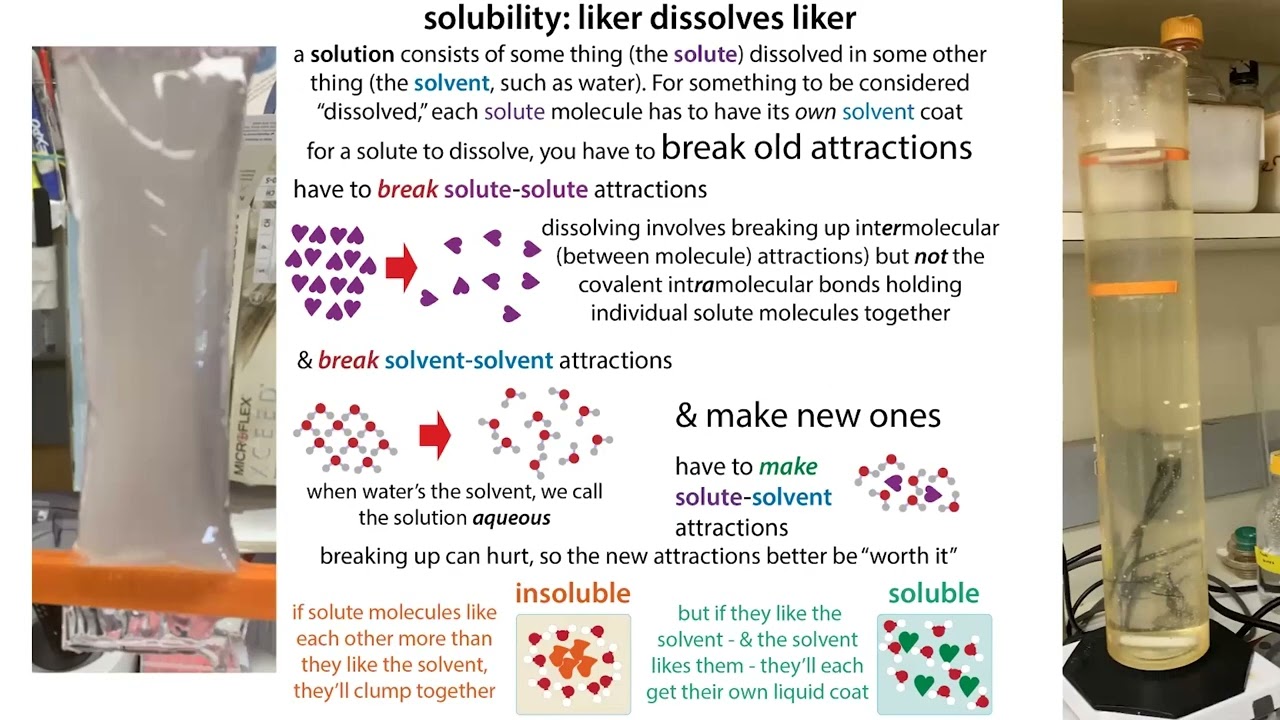
Added:hello in this video we will talk about the expression amplification of a protein of interest by using a bacterial expression system this process can take several days in our case we completed the bacterial growth expression and purification in three days prior to the experiment we need a bacterial plate lb medium iptg and nickel nta column in the first day of the experiment we inoculated one of the colonies found on an agar plate in the albe medium containing a selective antibiotic since this is a bacterial protocol we need to work in a sterilized environment to do so we first cleaned the bench with 70 ethanol here we do not use gloves in case of getting bird in the open fire the reason why we work close to fire is to eliminate the possible contaminants in the air we put three milliliters of lb medium to the tube by a sterile pipette and tips or here we can also use serological pipettes after taking three milliliter lb the lid of the falcon tube and lb stock was closed tightly [Music] then we added three microliter antibiotic which is cannabisin and mix file after that we remove the perfume on the plate and select one colony and then inoculate in the lb economizer medium [Music] we left the bacterial culture to grow overnight in the 37 degrees celsius shaken incubator do not extend the time more than 16 hours otherwise the antibiotic amount in the media may deplete first we ignite the fire and transfer 200 milliliter lb medium into one liter and the mirrored flask here the volume of the early mirror should be at least five times bigger than the lb media added as to allow the proper mixing and aeration of the culture during the growth as they are more practical for greater volumes we prefer to use serological pipettes [Music] after we put the lb we add 200 microliter economizing to the lb media and then mix well [Music] then we took the overnight ground culture after bacterial cells are grown in the media they will make the lb look blurry before inoculation we took one milliliter of lb canomizer media and transferred to a uv viscuit to later use it as a plank in spectroscopic measurement to determine the bacterial growth stages [Music] after that we add bacterial culture in lb economizing medium mixing valve and then allocate one milliliter of the solution into the quad to measure its absorbance at 600 nanometer wavelength [Music] before we go to measure absorbance we place bacterial growth medium in the shaking incubator at 37 degrees celsius be careful when placing erlenmeyer in the incubator and make sure it is tightly attached to the chambers inside [Music] in the uv spectrophotometer we choose applications and single wavelength measurement we set the wavelength to 600 nanometer and then press ok first we place lb canomizer media as blank while placing follow the arrows indicated on both qt and sample holder this is crucial to assure correct placement of qf and access the light also do not touch the below part of the curette after placing press blank and let it measure then put your first sample cured and press measure note the time and the od value read the absorbance of the bacterial culture until the optical density is in between 0.4 to 0.6 at 600 nanometers we choose this wavelength since the cells will not be killed as they would under uv light moreover the cuvettes that we use is also appropriate for a defined wavelength which means that it will not reflect the light this wavelength also minimizes interferences from yellowish broads take one milliliter of culture each time and place in unique red be careful not to form bubbles in the correct during the process [Music] when the optical density of the culture reached around 0.5 we took it from the incubator and added one milliliter of iptg solution to induce the expression of our target protein [Music] then we put it back to a shaken incubator at 18 degrees celsius for overnight induction [Music] iptg is the molecular mimic of allo lactose which is a lactose metabolite that triggers transcription of lac operon and it is therefore used to induce protein expression where the gene of interest is under the control of black operator when iptg is available it binds to lac repressor and causal dissociation therefore allows rna polymerase to initiate t7 transcription when t7 polymerase is expressed by iptg it binds to the t7 promoter located on the upstream of the targeted protein enabling expression of protein of interest after the induction of protein expression we take the culture from the incubator then we divide the culture into four pre-chilled falcon tubes [Music] to remove media from bacterial culture we centrifuge the tubes at 4700 rpm for 20 minutes at 4 degrees celsius make sure that each tube has identical amounts for a balanced centrifuge after the centrifuge we observe a bacterial pellet and a clear supernatant this card is supernatant to a bacterial waste and place the tubes on ice [Music] first we need the lysis buffer which we add one tablet of protein inhibitor to prevent the proteins from degradation [Music] then we add 50 milliliter of lysis buffer in a tube mix and vortex well [Music] we then transfer the same resuspension to other tubes in order to resuspend and recover the pellets in those other tubes the lysis buffer contains salts lysozyme dtt and pmsf lysozyme breaks peptidoglycan cell roles dtt is used to prevent oxidation damage of the protein and pmsf is used to prevent protease degradation [Music] next we pour the solution into a beaker placed on ice prior to lysis by a probe sonication process prop sonicator applies ultrasonic power to the sample resulting in full destruction of the cell membrane first clean the probe with the tissue and a tunnel next set up the parameters for the cell lysis here we set 10 seconds pulse in 70 amplitude for 20 minutes [Music] after setting the parameters we place the sample in the probe in a way that we could prevent the contact of probe the glass then we press the start after the sonication we observe bubbles in the sample then remove the sonication probe from the sample transfer the sample to a 50 milliliter falcon tube and centrifuge for 45 minutes at 4700 rpm at 4 degrees celsius here our proteins are soluble in the liquid phase after the centrifuge we obtain the protein in supernatant and the cell debris in the palate now let's talk about nickel nta column purification nickel neutral acetic acid colon purification is an affinity purification system which is designed for the purification of 6x hystec proteins nickel antiagora's beads are located into the column in liquid form upon addition of his-tag proteins nickel forms bonds with nitrogen atom of his stacks making proteins bind to the agarose beads after the addition of imidazole the bones are broken meaning his tags are replaced by the imidazole leading to the addition of proteins from the column the protocol for the nickel nta has made the four steps step one is the equilibriation of the column which includes conditioning of the column to make it ready for the binding of hystec proteins here we use mpi10 buffer which is defined as lysis and equilibriation buffer the second step is binding of the proteins whereby the his-tags are binding to the nickel nta agora's beads here we load the bacterial lysate after that we wash the column width mpi-20 buffer to remove unbound proteins and contaminants the last step is dilution in which we increase the concentration of the imidazole in the buffers and elute the protein the ph of buffer is used is at eight after the illusion we wash the column with sodium hydroxide and store it in ethanol for further use remove the lids of the column let the storage buffer flow [Music] take the supernatant of the cell lysate into a fresh tube and put it on ice [Music] add mpi 10 buffer to the column since the column is filled with beads and liquid it should never be dried out therefore keep the liquid levels above the agarose while adding the buffers use password pipette and add each solution from the edges of the column gently next add the bacterial lysa supernatant into the column the yellow color will guide the locale of the protein after adding the whole supernatant let the liquid flow by gravity here we use wash buffer to remove contaminants and other proteins to purify his stack protein load the buffer to the column as gently as possible [Music] after washing we add allusion buffer to unlinked resin and the protein since we were purifying a fluorescent protein yellow color coming down could be a clear indication of protein solution after dilution we can clean the column with sodium hydroxide then we add ethanol keep the beets in it close the lids and start at 4 degrees celsius here we use an amicon ultra centrifuge tube to concentrate our protein we gently load our protein solution to the filter part of the protein [Music] after the nickelodeon take column purification we can make dialysis to remove excess of imidazole then we can apply tev enzyme count which separates 6x systems from our target protein as a last step we can also apply size exclusion chromatography to further provide our protein of interest [Music] you
Up Next

Downstream Processing: Stages & Product Recovery | Industrial Microbiology
@microzone9473
17.3K views•2020-09-07

Triumph of Orthodoxy Icon: Byzantine Art & History Explained
@BenCallan
2.1K views•2024-08-06

FastAPI vs Flask vs Django: Choosing the Right Python Web Framework
@TechWithTim
302.5K views•2024-05-26

Game of Thrones Opening Credits: A Cinematic Analysis
@gameofthrones
46.3M views•2011-04-18
Related Study Plans & Knowledge Roadmaps
Structured learning paths in General & Interdisciplinary Studies