

















Downstream processing is the extraction and purification of biotechnological products from fermentation broth, involving five key stages: solid-liquid separation (using methods like flotation, flocculation, filtration, and centrifugation), release of intracellular products (through physical, chemical, or enzymatic cell disruption), concentration, purification, and formulation. The process depends on product type, concentration, stability, and required purity level, with intracellular metabolites requiring cell disruption before recovery.
Downstream Processing: Stages & Product Recovery | Industrial Microbiology
Added:Fundamentals of upstream biotechnology, including bioreactor operation, microbial growth kinetics, and industrial fermentation processes.
The biochemical distinction between intracellular and extracellular products, including how cell wall structures affect product localization.
Basic physical and chemical properties of biomolecules, such as molecular weight, electrical charge, hydrophobicity, and solubility.
Standard laboratory separation concepts, including basic filtration, sedimentation, and the fundamental principles of chromatography.
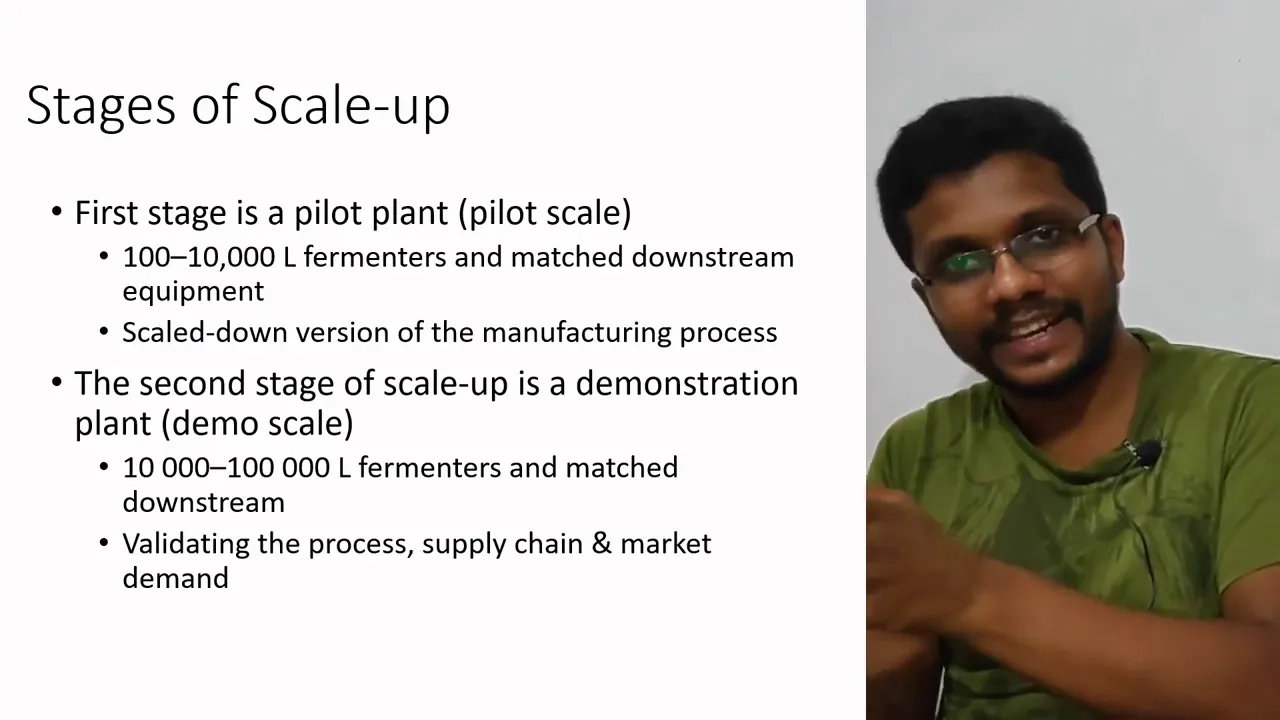
Industrial scale-up strategies and engineering challenges when transitioning recovery processes from laboratory scale to high-volume manufacturing.
Process economics and cost optimization, focusing on reducing the high financial overhead typically associated with downstream purification.
Regulatory affairs and quality control standards, such as Good Manufacturing Practices (GMP) and FDA guidelines for biopharmaceutical purity.
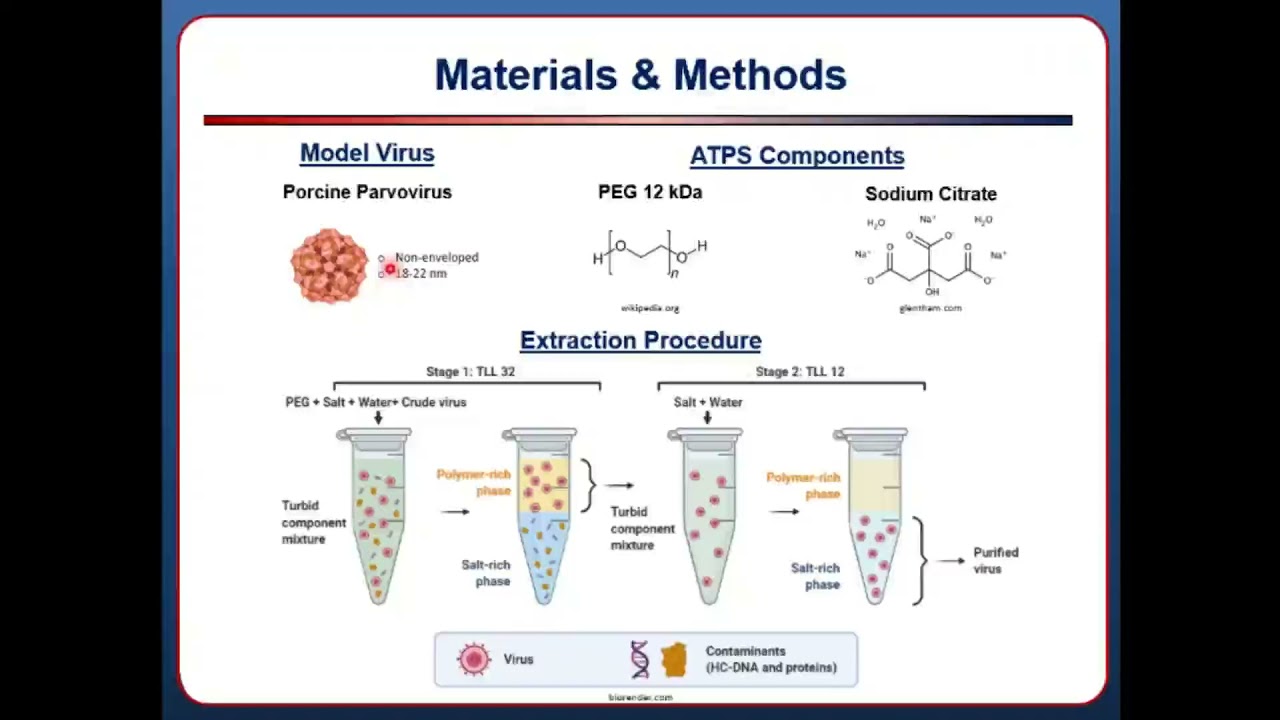
Advanced and emerging purification technologies, including continuous chromatography, aqueous two-phase extraction (ATPS), and membrane adsorbers.
17.3K views268likes23:58Original Release: 2020-09-07
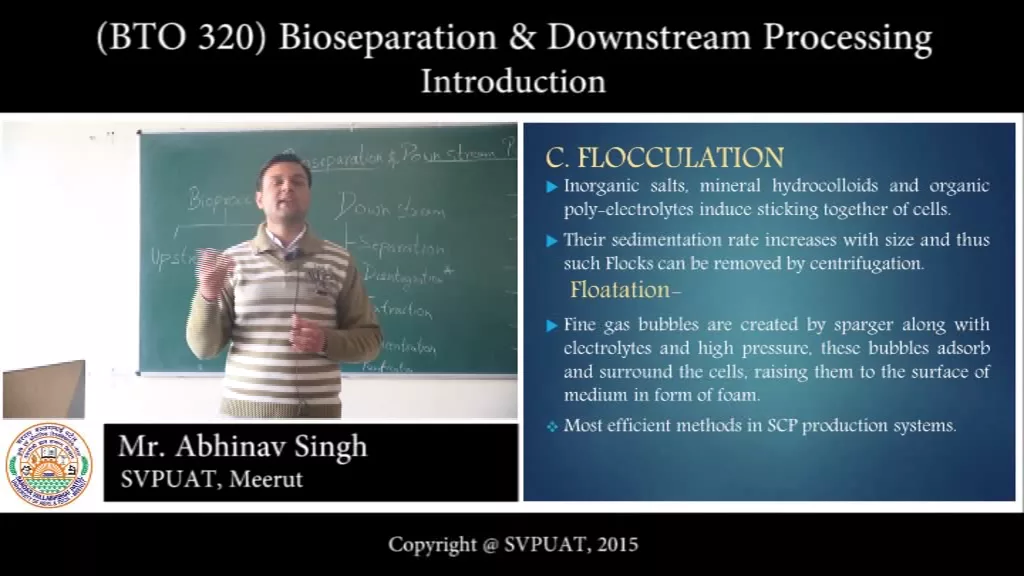
dear students welcome to the session of downstream processing we will discuss about what is downstream processing and its different stages okay we know about different types of fermentation after the formulation process it is necessary to recover the end product okay so the recovery of the end product is called downstream processing we can start our topic downstream processing downstream processing is an important part of industrial microbiology and it is very much related to the biotechnology topic okay every industrial production of product relies on three major steps that are upstream processing fermentation and downstream processing okay first one upstream processing you know about what is fermentation fermentation means the conversion of substrate into a product by using microorganism okay so this is the basic thing in the fermentation process for this process we must provide the substrate and the selection of substrate is based on type of microorganism used the substrate used must be cheap and easily available okay example for the production of alcohol we uses glucose as the substrate okay so the addition of substrate into a fermenter is called upstream processing so the fermentation is carried out then after the fermentation process comes downstream processing okay we can define the down downstream processing as the extraction and purification of a biotechnological product from from a fermentation okay that is the downstream processing and it is also called product recovery and the downstream processing depend upon certain factors like the type of end product formed and its concentration that is the end product concentration stability and degree of purification required okay the decide product for the isolation by downstream processing are of three types first one intracellular metabolite second one extracellular metabolite third one both the intracellular and extracellular intracellular metabolites means the products are located within the cell example vitamin enzymes etc then the extracellular metabolites means the products are present outside the cell that is the culture fluid okay product are present in the culture fluid example antibiotic amino acid etc third one both the intracellular and extracellular metabolites okay example vitamin b12 flavonomycin etc so the downstream processing requires a technical skill and it is a complex process okay there are different stages in the downstream processing first one solid liquid separation second one release of the intracellular production third one concentration fourth one purification and fifth one formulation the first stage in the downstream processing is solid liquid separation okay it is the separation of wall cells or cell biomass and other insoluble ingredients from the culture brother okay so the name solid liquid separation this the separation of cell biomass and other in other ingredients from the broth okay if the product is an intracellular metabolite then it must be released from the cell before the solid liquid separation okay then the salt liquid separation can be carried out by different method including flotation fluctuation filtration and centrifugation okay first method flotation when a gas is introduced into the growth then it will forms bubbles so the cells and other solid particles present in the media get adsorbed onto the gas bubble then the bubbles forms a form layer and the form layer can be collected and removed here for the steerable form formation we can add collector substances example example for the collector substances are long chain fatty acid amines etc second step is the flocculation okay it is another type of solid liquid separation here the cells form large aggregates large aggregates or clumps cells caused to form clumps or aggregates so the cell aggregate or clumps are easy for the removal this flocculation process depend upon the natural of the microbial cell the addition of flocculating agent increases the flocculation process flocculating agent means organic polyelectrolyte or inorganic salt or mineral hydrocolloid okay these are the flocculating agent flocculating agent can increase the flocculation process or the clump formation okay and the third solid liquid separation method is the filtration filtration is the method used for the separation of biomass and culture filtrate okay separation of biomass and culture fruit rate and this process depend upon several factors like type of the organism or the size of the organism and the presence of other organism and the media viscosity and temperature etc the there are different types of filters um including depth filters absolute filters rotary drum vacuum filters membrane filters etc first type of filters is depth filters it is composed of a filamentous matrix like filter paper glass wool or asbettos and the particles are trapped within the filamentous matrix so the fluid passes out of the matrix okay filamentous fungi can be removed by using depth filters second type of feature is absolute filters these are the filters with a specific pore size and this pore size are smaller than the particles to be separated okay the pore size of the absolute filter is smaller than the particles to be separated then the third type is rotary drum vacuum filters and it is used to separate yeast cells and filamentous fungi it is used for the separation of growth containing 10 to 40 percentage solids the filtration unit contains a rotating drum the rotating drum is partially immersed in a tank and the tank contains the fill and the tank contains the broth when the drum rotates it pick ups the biomass or the cell and the cells get deposited as a cake on the drum surface so the filter cake can be easily removed next type of filter is the membrane filters these are filters with a specific pore size here one of the major problem of the membrane filter is the clogging problem okay clogging of the filters there are two different types of membrane filters sorry there are two different types of membrane filtrations static filtration and cross flow filtration so this is about the types of filters then there are three types of filtration that are micro filtration ultra filtration and reverse osmosis these three types of filtration process vary or sorry in this three types of filtration depend upon particle size and other characteristics next solid liquid separation is the centrifugation it is the separation of soul particles from the liquid phase and it is based on the density difference that is the density difference between the particles to be separated and the media okay there are different types of centrifuges tubular bowel centrifuge disc centrifuge multi-chamber centrifuge and scroll centrifuge the tubular bowel centrifuge is the symbol and small centrifuge and it is used in the pilot plants here the solids are removed manually and it can be run in both batch and continuous mode disk centrifuge consists of several disks that separate the centrifuge bowl into different zones here the slurry is added through a central tube then the centrifugation is carried out after the centrifugation process we can collect the clarified fluid from the upper portion while the solids remain at the bottom of the centrifuge okay the clarified fluid move upward and the solid settle at the bottom okay next multi-chamber centrifuge that is the centrifuge with the multiple chambers okay it consists of several chambers and this chambers are connected in such a way that the slurry flows in a zigzag fashion okay slurry moves in zigzag fashion because of the presence of several chambers okay here a centrifugal force is applied and the application of this force vary in different chambers that is that is the force application is higher at the periphery chambers so the smaller particles or the particles that needed the higher centrifugation okay the smaller particles settle in the outermost chamber and the larger particles settle in the innermost chamber okay so the chamber helps to separate particles based on the size for the type of centrifuge is the scroll centrifuge and it is used to concentrate fluid with solid concentration five to eight eighty percentage okay next the release of intracellular productive there are several industrial products are formed within the cell like enzymes vitamins etc so it must require the release of such products from the cell before the processing okay there are different methods used for the cell disruption or cell disintegration and the methods are classified into three physical method chemical method and enzymatic method physical methods are osmotic shock thermolysis or heat shock ultrasonication high pressure or homogenization impingement grinding with the glass beads and the chemical methods include alkali treatment with organic solvent and detergents and the enzymatic method includes treatment with lysozyme and gluconase mayonnaise protease etc first physical method is the ultrasonication it uses high sound waves for the cell cell disruption so due to its high cost it is not suitable for the large scale use in industry okay second method is the osmotic shock in this method we suspend the cells in a 20 percentage buffered sucrose okay then after that the cells are transferred into a cold water that is 4 degree celsius water okay that causes osmotic shock and this osmotic shock is used for the release of hydrolytic enzymes and proteins from the bacteria then another method is the another physical method is the heat shock or thermolysis okay thermolysis means lysis of cells with the application of heat okay so the heat application is not suitable for the release of heat stable intracellular productive okay the breakage of cells causes by application of heat that is the heat shock okay another method is the high pressure homogenization in this method the cell suspension is forced at a high pressure through a narrow orifice to come out to atmospheric pressure okay cell suspension with high pressure passes through a narrow orifice and come with the come out to atmospheric pressure so the difference in the pressure or the sudden release of the pressure high pressure to atmospheric pressure causes a liquid shear okay so that causes the breakage of the cell that is called high pressure homogenization next method is the impingement it is also a physical method in the impingement method the cells with high velocity and pressure are forced to heat a stationary phase okay so the cells are disrupted by the forces created at the end point of the conductor clear enrichment means the cell with high velocity and pressure are forced to hit a secondary or stationary phase okay so the force created at that stationary phase causes the cell disruption okay microfluidizer is a device based on the principle of impingement microfluidizer okay it is a device based on the imagement principle and the microfluidizer used to disrupt e coli cells this is about physical method of cell disruption the last physical method is the grinding with the glass beads it contains a cylindrical body and the cylindrical body consists of an inlet for the supply of cell suspension and an outlet for the collection of disrupted cells and a central motor driven shaft okay the central motor motor driven shaft fitted with radial agitators okay the cylinder is fitted with glass beads so the cells are mixed with glass beads and subjected to high speed agitation so with the application of this agitation the cell breakage causes as they are forced against the wall of the vessel by the beads okay so the disrupted cells can be collected through the outlet the second cell disruption method is the chemical method of cell disruption we can use alkalis organic solvents and detergents for the cell disruption alkalis mainly sodium hydroxide is used as the alkali for the cell description okay alkali treatment is used for the extraction of bacterial proteins and another one organic solvents different organic solvents are used for this cell disruption example methanol ethanol butanol isopropanol etc this all are inflammable mainly used organic solvent is the toluene uh the toluene dissolves the membrane phospholipids and causes a membrane pose in the cell okay the membrane pose helps for the release of intracellular condenser detergents can also be used for the cell disruption mainly ionic detergents are mainly used but the non-ionic detergents can also be used to some extent example tritone x 100 or twin but one of the problem of the detergent is that it causes or it affects the purification steps okay particularly the salt precipitation third type of cell disruption is the enzymatic method different enzymes are used for the cell disruption mainly lysozyme is used lysozyme is an enzyme that hydrolyzes the beta 1 4 glycosidic bond of the bacterial cell wall okay so the cell digested by the lysozyme enzyme and it causes the breakage of the plasma membrane to release the intracellular condenser it is mainly uh applied to gram positive bacteria for the gram negative bacteria lysozyme in association with the edta can break the cell okay for the gram-positive bacteria only lysozyme enzyme is used for the cell disruption but in the case of gram-negative bacteria lysozyme in association with the edta used for the cell disruption other enzymes can also be used for this cell disruption example glucanized mayonnaise protease this enzymes used for the disruption of yeast cells you
Up Next

8:05
Gen5 Plate Reader Setup Guide: ELISA, Luminescence, Fluorescence Assays
@adwoabiotech
23.6K views•2021-11-26

12:54
Triumph of Orthodoxy Icon: Byzantine Art & History Explained
@BenCallan
2.1K views•2024-08-06

9:49
FastAPI vs Flask vs Django: Choosing the Right Python Web Framework
@TechWithTim
302.5K views•2024-05-26

1:42
Game of Thrones Opening Credits: A Cinematic Analysis
@gameofthrones
46.3M views•2011-04-18
Related Study Plans & Knowledge Roadmaps
Structured learning paths in General & Interdisciplinary Studies
general-studies
Elevator Engineering: History, Physics & Cities
01From Hoists to Safety Brakes: The Dawn of Vertical Lift
02Hydraulic vs. Traction: The Engineering Physics of Elevators
03Modern Speed, Safety, and Algorithms
+ 2 more learning modules
12h5 modules
Explore Roadmap
general-studies
Rubber: Material Science, History & Geopolitics
01Origins of Natural Rubber & Mesoamerican History
02The Chemistry of Natural Rubber & Vulcanization
03The Geopolitics of the Rubber Boom & Colonization
+ 2 more learning modules
12h5 modules
Explore Roadmap
general-studies
Containerization: Evolution, Logistics & Trade
01Ancient Trade & Bulk Cargo: Amphorae to Barrels
02The Industrial Revolution & Cardboard Packaging
03The Containerization Revolution: Malcom McLean
+ 2 more learning modules
12h5 modules
Explore Roadmap
general-studies
Textile Tech: Evolution, Labor & Global Impact
01Pre-Industrial Textiles: Handloom & Cottage Industry
02Mechanization: The Spinning Jenny to the Power Loom
03The Factory System & Global Labor Transformation
+ 2 more learning modules
10h5 modules
Explore Roadmap