













DNA transcription involves copying genetic information from DNA to messenger RNA (mRNA) in the nucleus, where RNA polymerase reads the DNA template strand and synthesizes complementary mRNA, adding a 5' cap and poly-A tail for protection, then splicing out introns to leave only exons; translation then occurs in the cytoplasm where ribosomes read mRNA codons (triplet nucleotide sequences) and match them with transfer RNA (tRNA) anticodons to assemble amino acids into polypeptide chains, which fold into proteins with primary, secondary, tertiary, and quaternary structures to perform cellular functions.
DNA Transcription and Translation: Protein Synthesis Explained
Added:The molecular structure of DNA, including its double-helix shape, nucleotide components, and complementary base-pairing rules (A-T, C-G).
The fundamental differences between DNA and RNA, including single-stranded vs. double-stranded structures, ribose vs. deoxyribose sugars, and uracil vs. thymine.
Basic eukaryotic cell anatomy, specifically understanding the locations and roles of the nucleus, cytoplasm, and ribosomes.
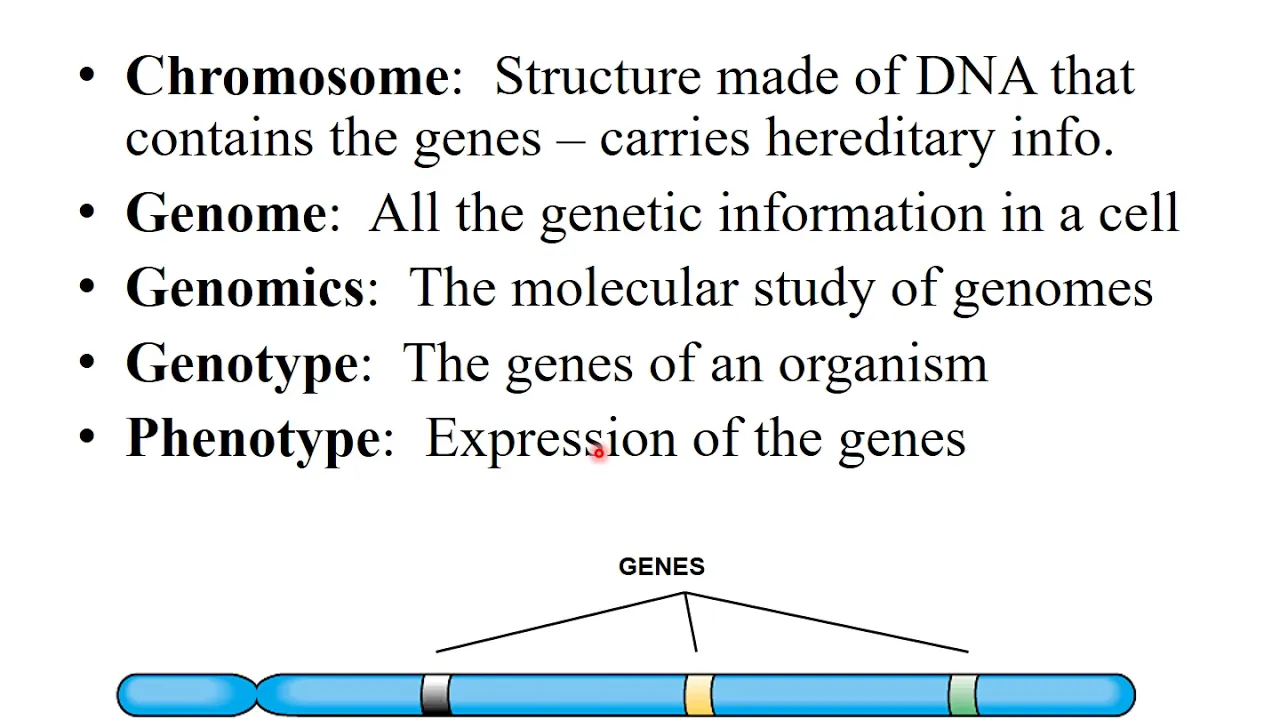
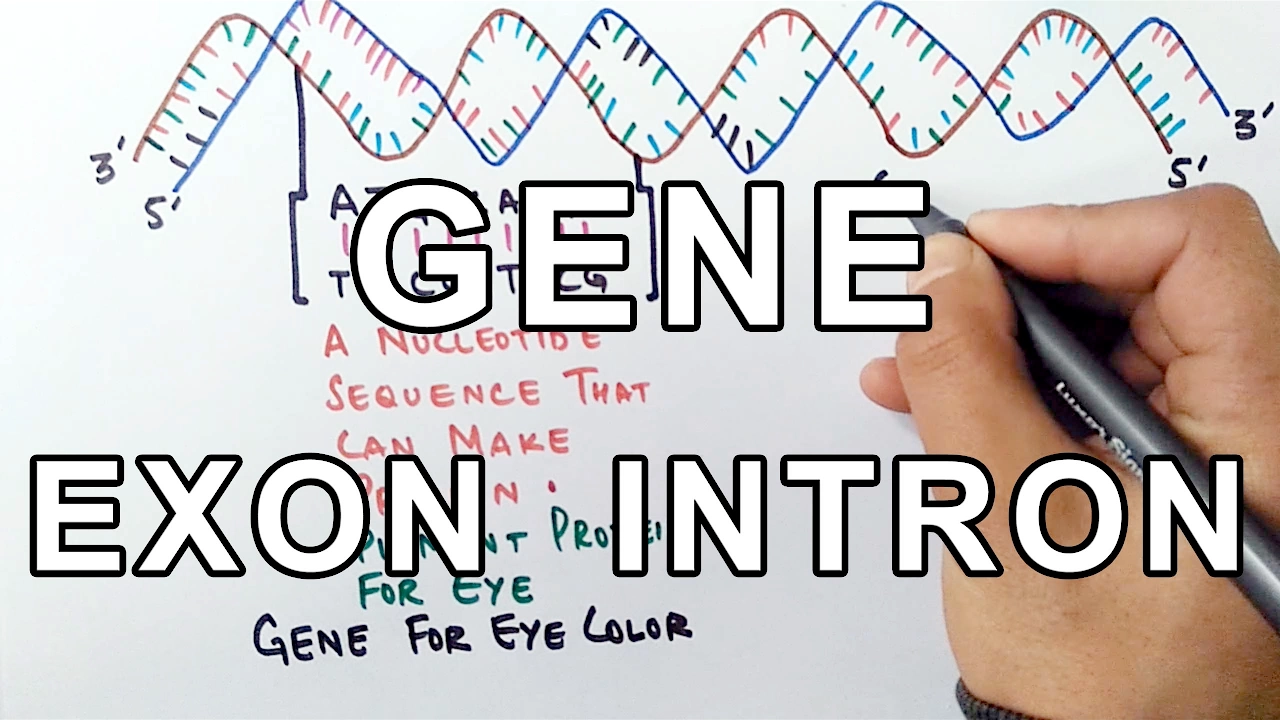
The conceptual definition of a gene as a specific segment of DNA that codes for a functional product.
Post-translational modifications, explaining how newly synthesized polypeptide chains fold into functional 3D proteins and undergo chemical modifications.
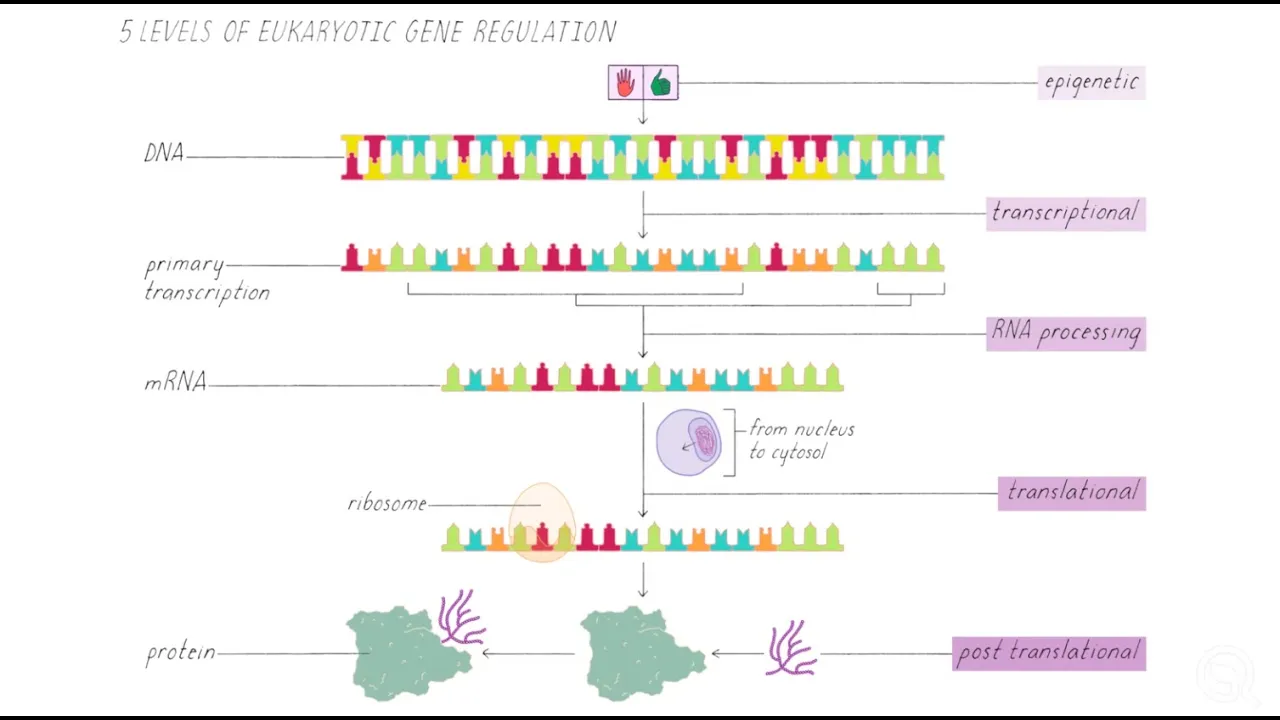
The mechanisms of gene regulation, exploring how cells control when and to what extent specific genes are transcribed and translated.
The impact of genetic mutations (such as silent, missense, nonsense, and frameshift mutations) on the final protein product and cellular function.
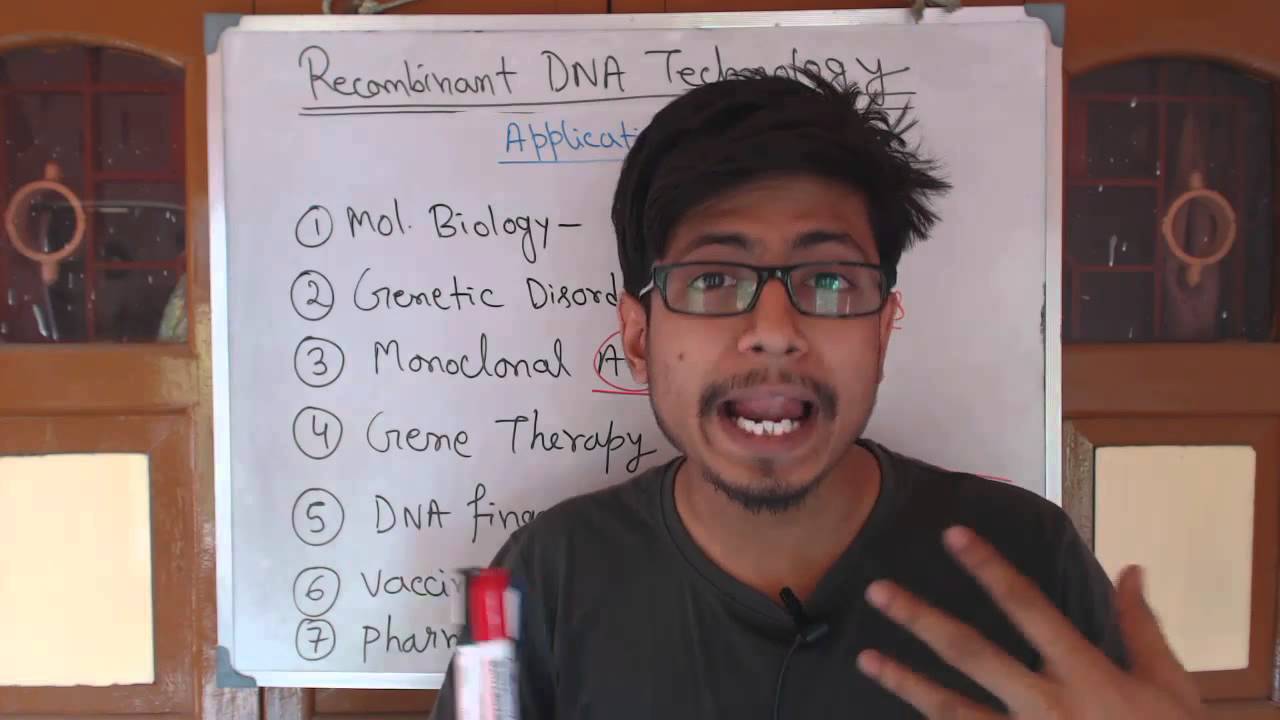
Real-world biotechnology applications, including recombinant DNA technology, mRNA vaccine development, and CRISPR-based gene editing.
5.8M views52.6Klikes14:07Original Release: 2012-04-09
Ok, roll it.
You know what this is? It is the longest word in the world.
Like, anywhere, in any language, ever.
More than 189,000 letters.
If you were to write it down, though I don't know why you would, it'd fill up more than 100 pages!
And if you could actually say it without, like, breaking your face, it'd take about FIVE hours!
So what the frick is this word?
It's the name of the longest known protein on earth. And it's actually in you right now.
Because of its enormous size, it was given the nickname Titin by scientists.
And that's with two i's.
It's a protein that helps give some of the springiness to your muscles.
Today we're going to be talking about DNA and how it, along with three versions of its cousin RNA, unleash chemical kung fu to synthesize proteins just like this.
This is going to take a while to explain, so how about if we make ourselves some hot pockets.
Mmmm, my favorite. Ham and cheese.
Every time I take a bite I wonder, how do they do it?
How do they pack exactly the same flavor into every foil-cardboard wrapped foodish item?
Clearly there has got to be some super secret instruction manual kept in a location known to only two people.
And since I'm talking about biology here, that brings up a related question: How did I get built from the DNA instructions and biological molecules we've been talking about?
Today, that's what I'm going to do. Not actually make hot pockets, or a person.
But I'm going to be talking about DNA transcription and translation which is how we get made into the delicious things we are today.
Though hopefully none of us know how delicious people are.
Animals, plants, and hot pockets are really nothing more than salty water, carbohydrates, fats, and protein, combined in precise proportions following very explicit instructions.
Let's say I want to make my own hot pocket. I would have to: 1) break into the lair of the Hot Pocket Company holding the secret manual 2) read the instructions on how to make the machinery to produce the hot pocket and the proportions of the ingredients 3) quickly write down that information in shorthand before I get caught by the hot pocket police 4) go home and follow the instructions to build the machinery and mix the ingredients until I have a perfect hot pocket. That's how we get us.
Very simply, inside a cell's nucleus, the DNA instruction manual is copied gene by gene by transcription onto a kind of RNA then taken out of the lair where the instructions are followed, by the process of translation to assemble amino acid strings into polypeptides or proteins that make up all kinds of stuff from this titin down here to the keratin in my hair.
But most of the polypeptides that get made aren't structural proteins like hair, they're enzymes which go on to act like the assembly machinery, breaking down and building and combining carbohydrates and lipids and proteins that make up variations of cell material.
So enzymes are just like whatever ingenious machinery 'they' use at the factory to make this.
Let's start in the lair -- I mean the nucleus.
The length of DNA that we're going to transcribe onto an RNA molecule is called our transcription unit.
Let's say, in today's example, that it's going to include the gene that transcribes for our friend titin which, in humans at least, occurs on Chromosome 2.
Now each transcription unit has a sequence just above it in the strand and that's called "upstream" biologists call that "upstream" on the strand And that sequence defines where the transcription unit is going to begin.
This special sequence is the promoter, and it almost always contains a sequence of two of the four nitrogenous bases we discussed in our last episode: adenine (A), thymine (T) cytosine (C) and guanine (G).
Specifically, the promoter is a really simple repetition we've got thymine, adenine, thymine, adenine, and then A-A-A.
And on the other side: ATATTTT. Because you know how this works, right!?
This is called the TATA box. It's nearly universal and helps our enzyme figure out where to bind to the strand.
Now, you'll remember from our episode about DNA structure that DNA strands run in one of two directions depending on which end of the strand is free and which end has a phosphate bond.
One direction is 5 prime-3 prime, and the other is 3 prime-5 prime.
In this case, upstream means toward the 3 prime end and downstream means toward 5 prime.
So the first enzyme in this process is RNA polymerase, and it copies the DNA sequence downstream of the TATA box that's towards the 5' end and copies it into a similar type of language: messenger RNA [mRNA].
Quick aside: So you'll notice that to read the DNA in order to make enzymes we need an enzyme in the first place.
So it kind of gets "chicken vs egg" here.
We need the enzyme to make the DNA and the DNA to make the enzyme.
So, where did RNA polymerase come from if we haven't made it yet!?
What an excellent question! It turns out all of these basic necessities get handed down from your Mom.
She packed quite a bit more into her egg cell than just her DNA so we had a healthy start.
So, thanks Mom!
So the RNA polymerase binds to the DNA at that TATA box, and begins to unzip the double-helix.
Working along the DNA chain, the enzyme reads the nitrogenous bases, those are the letters and helps the RNA version of the nitrogenous bases floating around in the nucleus find their match.
Now as you ALSO might recall from our previous episode nitrogenous bases only have one counterpart that they can bond with.
But RNA, which is the pink one here, doesn't have thymine like DNA does which is the green and the blue.
Instead it has uracil (U), so U appears here in T's place as the partner to adenine.
As it moves, the RNA polymerase re-zips the DNA behind it and lets our new strand of messenger RNA peel away.
Eventually, the RNA polymerase reaches another sequence downstream, called a termination signal, that triggers it to pull off.
Now, some finishing touches before this info can safely leave the lair.
First, a special type of guanine (G) is added to the 5-prime end that's the first part of the mRNA we copied and this is called the 5' cap.
On the other end, it looks like I fell asleep with my finger on the A key of my keyboard but another enzyme added about 250 adenines on the 3' end.
This is called the poly-A tail.
These caps on either end of the RNA package make it easier for the mRNA to leave the nucleus and they also help protect it from degradation from passing enzymes, while making it easier to connect with other organelles later on.
But that's still not the end of it. As if to try to confuse me to protect the secret hotpocket recipe the original recipe book also contains lots of extra, misleading information.
So just before leaving the nucleus, that extra information gets cut out of the RNA in a process called RNA splicing.
And it's. something. like. editing. this. video.
The process is really complicated, but I just had to tell you about two of the key players because they have such cool names.
One, the Snurps, which are Small Nuclear RibonucleoProteins.
These are a combination of RNA and proteins, and they recognize the sequences that signal the start and end of the areas to be spliced.
Snurps bunch together with a bunch of other proteins to form the spliceosome, which is what does the actual editing as it were, breaking the junk segments down so their nitrogenous bases can be reused in DNA or RNA, and sticking together the two ends of the good stuff.
The good stuff that gets spliced together, by the way, are called exons because they'll eventually be expressed the junk that gets cut out are just intervening segments, or introns.
The material in the introns will stay in the nucleus and get recycled.
So for instance, titin down there is thought to have hundreds of exons when it's all said and done probably more than 360, which may be more than any other protein.
And it also contains the longest intron in humans, some 17,000 base pairs long.
Man, titian! It is just a world record holder!
So now that it has been protected and refined, the messenger RNA can now move out of the nucleus.
OK, a quick review of our Hot Pocket Mission Impossible caper so far: We broke into the lair containing the instructions, we copied down those instructions in shorthand we added some protective coatings, and then we cut out some extra notes that we didn't need and then we escaped back out of the lair.
Now I have to actually read the notes, make the machinery and assemble the ingredients.
This process is called translation.
So next, rewind your memory -- or just watch that video again -- to the episode about animal cells.
Do you remember the rough endoplasmic reticulum? I hope you do.
Those little dots on the membranes are the ribosomes, and the processed messenger RNA gets fed into a ribosome like a dollar bill into a vending machine.
Ribosomes are a mixture of protein and a second kind of RNA, called ribosomal RNA [rRNA] and they act together as a sort of work space.
rRNA doesn't contribute any genetic information to the process, instead it has binding sites that allow the incoming mRNA to interact with another special type of RNA the third in this caper, called transfer RNA, or tRNA.
And tRNA really might as well be called 'translation RNA' because that's what it does it translates from the language of nucleotides into the language of amino acids and proteins.
On one end of the tRNA is an amino acid. On the other end is a specific sequence of three nitrogenous bases.
These two ends are kind of matched to each other.
Each of the 20 amino acids that we have in our body has its own sequence at the end.
So if the tRNA has the amino acid methionine on one end, for instance, it can have UAC, as the nucleotide sequence on the other.
Now it's like building a puzzle. The mRNA slides through the ribosome.
The ribosome reads the mRNA three letters at a time - each set called a triplet codon.
The ribosome then finds the matching piece of the puzzle: a tRNA with three bases that will pair with the codon sequence.
That end of the tRNA, by the way, is called the anticodon.
Sorry for all the terminology.
YOU NEED TO KNOW IT!
And of course, by bringing in the matching tRNA, the ribsome is also bringing in whatever amino acid is on that tRNA.
Ok so, starting at the 5' end of the mRNA that's fed into the ribosome, after the 5' cap, for almost every gene, you find the nucleotide sequence AUG on the mRNA.
The ribosome finds a tRNA with the anticodon UAC, and on the other end of that tRNA is methionine.
The mRNA, like a mile-long dollar bill, keeps sliding into the ribosome so that the next codon can be read, and another tRNA molecule with the right anticodon binds on.
If the codon is UUA, the matching tRNA has AAU on one end and Leucine on the other and if the mRNA has AGA, the matching tRNA has UCU on one end and Arginine on the other.
In each case that new amino acid gets connected to the previous amino acid - starting a polypeptide chain.
Which is the beginning, the very beginning of a protein.
But it turns out there are LOTS of different ways to read this code.
'Cause UUA is not the only triplet that codes for Leucine -- UUG does too!
And argenine is coded for by six different triplets!
This is actually a good thing. It means that we can make a few errors in copying, transcribing and translating DNA, and we won't necessarily change the end product.
This process continues, with the mRNA sliding in a bit, the ribosome bringing in a tRNA with an amino acid, that amino acid binding to the existing chain and on and on, sometimes for thousands of amino acids to make a single polypeptide chain, for example.
This whole word is basically just the names of the amino acids in the sequence in the order in which they occur in the protein all 34,350 of them.
But before we can make our own hot pockets and that string of amino acids becomes my muscle tissue we have some folding to do.
That's because proteins, in addition to being hella big, can also contort into very complex and downright lovely formations.
One key to understanding how a protein works is to understand how it folds, and scientists have been working for decades on computer programs to try to figure out protein folding.
Now, the actual sequence of amino acids in a polypeptide - what you see scrolling along down there - is called its primary structure.
One amino acid covalently bonded to another, and that one to another, in a single file.
But some amino acids don't like to just hold hands with two others, they're a bit more promiscuous than that.
The hydrogens on the main backbone of the amino acids like to sometimes form bonds on the side (hydrogen bonds) to the oxygens on amino acids a few doors down.
When they do that, depending on the primary structure, they bend and fold and twist into a chain of spirals, called a helix.
We also find several kinked strands laying parallel to one another, called pleated sheets.
All those hydrogen bonds in pleated sheets are what make silk strong, for instance.
So in the end, our promiscuous amino acids lead to wrinkled sheets. Ah-hah!
These hydrogen bonds help give polypeptides their secondary structure.
But it doesn't end there. Remember the R groups that define each amino acid?
Some of them are hydrophobic. Since the protein is in the cell, which is mostly water, all those hydrophobic groups try to hide from the water by huddling together, and that can bend up the chain some more.
Other R groups are hydrophilic, which if nothing else means that they like to form hydrogen bonds with other hydrophilic R groups.
So we get more bonding, and more bending, and our single-file line has now taken on a massively complex 3-D shape.
It also explains why I can fix my bed-head by wetting my hair with water.
The water helps break some of those hydrogen bonds in the keratin which relaxes its structure.
That way I can comb it out, and when it dries those bonds reform and voila, perfect hair.
All of this shape caused by bonding between R groups gives our polypeptide a tertiary structure.
So now we have a massively contorted polypeptide chain, and it actually contorts very precisely.
Sometimes, just one chain is what makes up the whole enzyme or protein.
In other proteins, like hemoglobin, several different chains come together to from a quaternary structure.
So a quick review of structure: the sequence is primary, the backbone hydrogen bonds forming sheets and spirals are secondary, R group bonds are tertiary, and the arrangement of multiple proteins together give quaternary structure.
These polypeptides are either structural proteins, like this thing at the bottom here that you can find in muscle or in my hot pocket.
They might also be enzymes, and enzymes like, do stuff.
They can cut up biological molecules like I do with this chef's knife, they can mix stuff and they can put stuff together.
So from that one recipe book we got all of the ingredients and all of the tools necessary to make me, which is better than a hot pocket.
Would you all agree?
Now take your time with this stuff, feel free to watch the episode a couple of times, because next week we're going to talk about how cells swap all of this genetic information through reproduction.
Thank you for watching this episode.
By now, you should probably know how this works.
You can click on any of the links over there, and it'll take you back to that point in the show as long as you are not watching on your cell phone.
It doesn't work on cell phones, I apologize for that.
Thank you to everyone who helped us put this show together, and thank you to you, for watching it today.
If you have any questions about this episode please leave them in the comments below, or you can get us on Facebook or Twitter.
And that's all. Goodbye!
Up Next

62:50
CRISPR-Cas9 Gene Editing Design & Confirmation Tools Tutorial
@Labroots
13.1K views•2021-04-27
50:12
Bacterial Communication: Quorum Sensing and Biofilm Formation Explained
@JHUAAP
12.6K views•2011-06-28

11:04
Population Genetics: Darwin Meets Mendel | HHMI BioInteractive
@crashcourse
1.8M views•2012-05-28
7:08
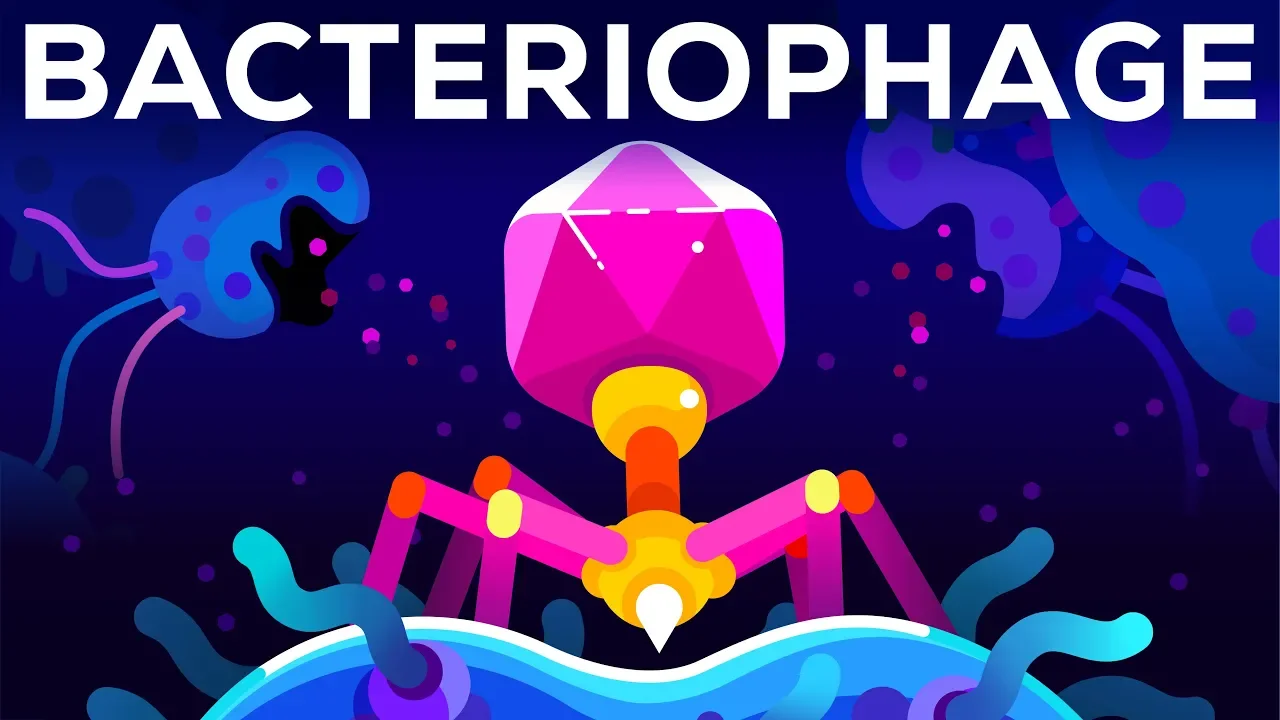
Bacteriophages: Earth's Deadliest Killers and Future Antibiotics
@kurzgesagt
34.6M views•2018-05-13
Related Study Plans & Knowledge Roadmaps
Structured learning paths in Biology
biology
RNAi: Biogenesis, RISC & Gene Silencing
01Molecular Biology Foundations: DNA to Protein
02Introduction to RNA Interference (RNAi)
03Molecular Biogenesis of miRNA and siRNA
+ 2 more learning modules
10h5 modules
Explore Roadmap
biology
Mycorrhizae: Signaling, Biophysics & Ecology
01Foundations of Mycorrhizal Symbiosis
02Molecular Signaling and Root Colonization
03Biophysics and Bioenergetics of Nutrient Exchange
+ 1 more learning modules
11h4 modules
Explore Roadmap
biology
Circadian Clocks: TTFL, SCN & Periphery
01Foundations of Molecular Biology & Gene Expression
02Introduction to Chronobiology and Actograms
03The Core TTFL: Molecular Architecture of the Clock
+ 3 more learning modules
14h6 modules
Explore Roadmap
biology
Population Genetics: Math, Drift & Selection
01Genetic & Probability Foundations
02The Hardy-Weinberg Principle and Baseline Models
03Mathematical Modeling of Natural Selection
+ 3 more learning modules
18h6 modules
Explore Roadmap