


![Traducción del ARN - Bio[ESO]sfera - Biología](https://i.ytimg.com/vi_webp/ZapoL3RuX3s/maxresdefault.webp)









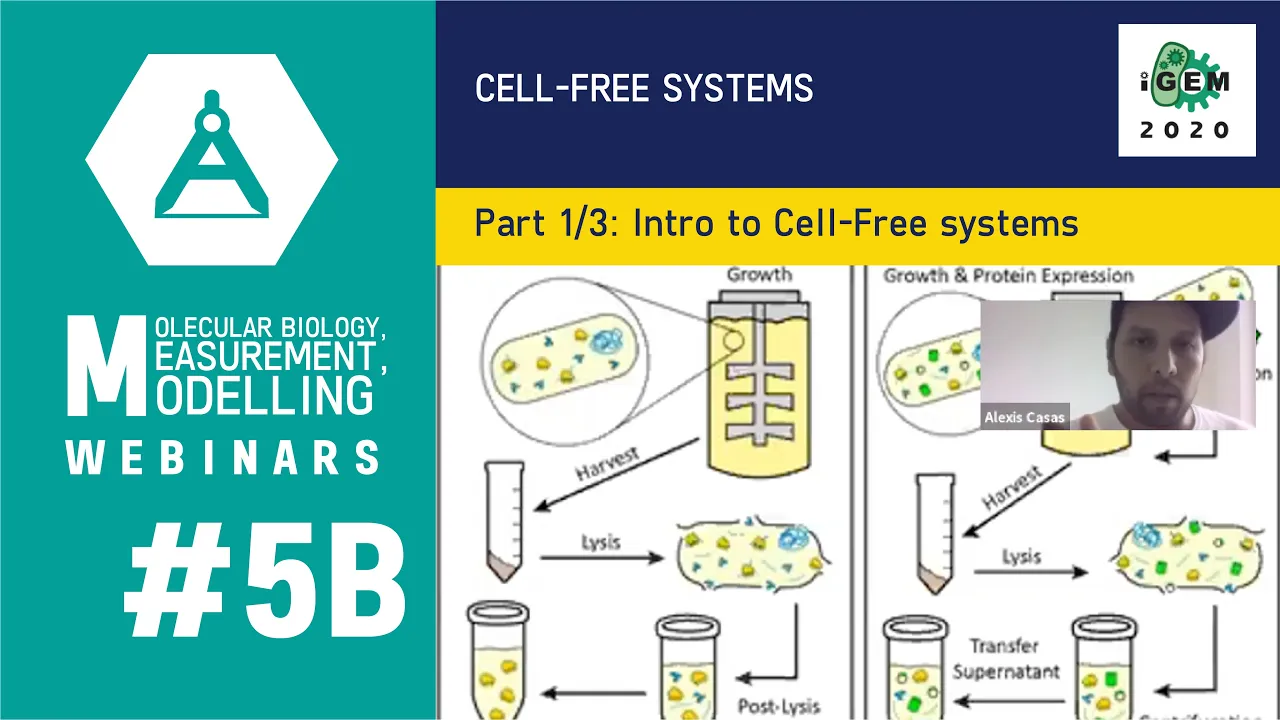








The PURE (Protein synthesis Using Recombinant Elements) system is a cell-free protein expression platform composed of 36 purified proteins, ribosomes, and energy molecules that enables precise control over transcription and translation processes. Unlike crude lysates, PURE systems offer high definition and adjustability but require more preparation time and cost. The system requires careful optimization of key components including elongation factor Tu (the most abundant and limiting protein), ribosome concentration, and magnesium levels. Detection methods include fluorescent readouts, calorimetric assays, and SDS-PAGE. Special considerations include adding chaperones for complex proteins, vesicles for membrane proteins, and adjusting redox conditions for disulfide bond formation. PURE systems operate optimally at 37°C and reach saturation within approximately 2 hours.
Cell-Free Systems Explained: The PURE System for Protein Synthesis
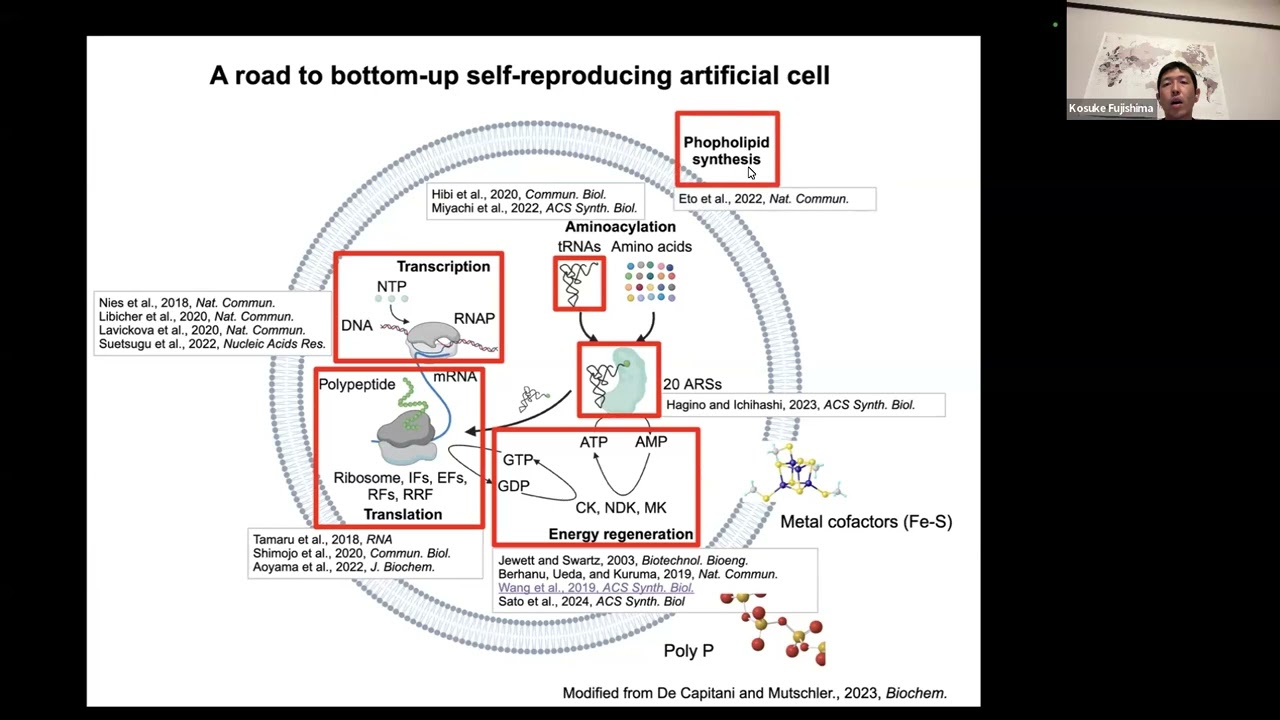
Added:hello everybody as you probably already know my name is barbara and i'm zoe's colleague actually and today i will tell you a bit about recombinant softly expression system most more commonly known as pure system so so we told you a lot about lysate and how to prepare them in comparison to lysate pure system is prepared by purifying separately many different proteins and then assembling them together to form the selfie expression system the advantage of using such a system is that they are very well defined and can be easily adjustable which is not the case of lysine however it means that you will probably need to spend more time preparing the system and the preparation cost might be high so what is pure system so pure system is basically the core transcription translation material you would use also in case of lysine but the other stuff are gone it's basically composed of 36 proteins ribosomes and then as in case of lysate some small molecules energy and buffer we can look at the system in case of four subunits so we have amino oscillation where your trna is attached to its amino acid this requires atps energy then we have transcription uh usu most commonly used is t7 rna polymerase but other polymerases very use in the pure system and then we have transcript translation where ribosomes and translation factors uh use mrna to produce the protein this requires gtps energy gtp and atp can be then regenerated in pure it's creating phosphate the energy is first used so how can you prepare such a system so what you will need to have is your proteins your ribosomes and your energy solution so the common way how to prepare a pure is to do 36 his stack purification and then assemble your system we recently developed a method which avoids doing 36 purifications but allows you to prepare all the proteins in just one purification uh i will tell you more about it in just a minute here is a side here is a list of protocols i used for preparation of pure systems so this is really nice protocol from ueda from the original pure then this is our one put pure system i if you decide to use or do such a protocol i really recommend to look for supplementary information there is lots of notes and then last but not least last year igem team from epfl did really nice protocol they did some videos so again if you decide to go with one put pure i highly recommend checking their website i also attach to edging sources where you can see all the vectors you will need to synthesize your proteins so let's look more closely in preparation of different parts so let's start with the proteins so if you do the as i said the classical way you define the composition in the end this makes it very simple you just mix things you can omit stuff you can adjust stuff it's super easy to change and if you decide to go with one put pure with single purification you need to define the composition at the beginning so how you do this one system is that you combine all your strains at the beginning and then do one culture and one politification by changing the ratio of the strands you add to the system you can adjust the final yield of the protein this is of course not as precise as mixing the proteins in the end but luckily pure system is relatively robust and it shows that one of the most important proteins is elongation factor to you this is also the most abundant one of the most abundant protein in e coli so you don't need to have such a such a grasp on the concentration of all the other proteins you just have to make sure that you have sufficient concentration of the elongation factor to you so as you can see by doing single purification here the vampire we were able to relatively reproduce the mixing of the proteins after the purification if you decide to do such a system you are doing a classical historic purification i will not go much into detail you will have a nice seminar about protein purifications and so on in upcoming weeks but what i wanted to point out here is as one more time was the mixing of the cultures so you have 36 overnight cultures and you mix them in only one culture and then you express all your proteins again as zoe was saying fertilizers we are using sonication that's really really nice method i also have a good experience with it but if you don't you can use different license methods the last thing i wanted to point out was that we use for our protocol buffer exchange instead of dialysis these are basically exchanged it's easy to exchange these two things so if you don't want to do dialysis you could do buffer exchange if you don't want to do buffer exchange you can do dialysis this is not just in case of one pot but in general for protein purification but i wanted to focus on for you is strain preparation because this is really important if you want to have a good pure system you have to have good strains you will purify from so if you have your vectors you have to make sure you have your correct strength because not all vectors or plasmids are compatible with all strains so this is in general good idea anytime you have a new plasmid or new vector you don't know check with which strains you can use the vector so after you confirm you transform your plasmid i recommend doing expression tests this is again not just in case of pure but in case of all expression you can do very small cultures you can just induce them and then mixing very small amount of culture with lemony buffer and then directly after heating up loading it to a gel and you can see that you will immediately see if your protein is expressing this is not any purification this is just cell lysate loaded but you can just slice the cells with lemon this is really nice approach in general and last but not least you should always make sure that yourself have good conditions to grow most important for especially for e coli is oxygen so use brief easy membranes on a plate or high rotation and small volumes in big flask or baffles fast to really make sure you get lots of oxygenation for the culture then i put here slide for people who are considering using a pure system uh there are basically three things you can do you can use a commercial system which is really nice it's easy to use it's pre-prepared but it's quite expensive and you cannot really adjust it too much i don't think uh for igem it is a great idea to go with a single component preparation is lots of work uh but in general this is the best system if you want to adjust or check components and play with the system in general if you decide to go with single purification this is cheap and it's easy to prepare but it's not as easy to adjust as in the case of the single components of course you cannot just prepare your proteins you also have to prepare your ribosomes and your energy solution so first a bit about ribosomes so with in case of ribosome purification you do not over express your ribosomes you are just isolating already present ribosomes so most commonly used is a19 strength this is also strained which used to be used for lysid preparation it's rnas deficient but you can get ribosomes from any e coli the most common method is ultracentrifugation through cushion to cross cushion you can see it's really reproducible protocol this is how ribosome look uh on page shell after purification but of course not everybody has especially i would say in igem access to ultracertification so i also added his stack ribosome protocol here uh which can be done only through simple gravity fill purification but unfortunately we didn't see that these ribosomes are as productive as the sucrose cushion one but still it's good to consider them again you are not over expressing them you're you have just his tag on one of the proteins of ribosomes in the genomic dna here is a summary for both of the purification so the historic purification is classical hispanic purification again i will not talk about it in detail for the sucrose cushion there is you have to do first hydrophobic interaction purification and then you follow with all that centrifugation for real cushion so this is the supress cushion and then by your spinning you will deposit your ribosomes on the bottom but there are really nice protocols a lot of different protocols for this method last but not least uh the energy solution so i will not go too much into details but what i consider important is to think of the final ph of your solution you should make sure you do not get different ph than seven so use ntp which are buffered um in general energy solution for pure is simpler than from light for lysate but it's very similar and then one more two more things i wanted to mention is if you are using trnas make sure that you are not introducing rnase into your bottle or into your rnase so we usually directly add water to the bottle to avoid innervating and introducing rnas and then last but not least this is not often mentioned but sulfury system in general are relatively sensitive to yond concentrations so i highly recommend using volumetric flask and be really precise when you are preparing your buffers and salts especially in case of magnesium because this might influence your reactions a lot and then how you test your system when you prepared it so zoe talked a bit or showed you a bit of data from a plate leader which is a fluorescent readout as she said it gives you a kinetic readout pure in general is much faster than lysate so usually you saturate your reaction around two hours um in pure we also use a linear template the advantage compared to lysate is that you don't have any dnase so you don't need to protect your dna as we said you can also use plasmids if you have but you don't need to you can do just extension pcr to your given protein you want to express and um what's and if we look at the graph on the bottom you can see that pure system is highly sensitive to a temperature so the optimal temperature is around 37 degrees and then if you start decreasing the temperature of incubation you can see quite big drop this is not as common for lysate you usually see a bit more possibility you have bit more possibility to choose at different temperatures i know that lots of people don't or lots of labs don't own a plate reader so you can also use a calorimetric detection for two examples are trellis and beta galaxy days enzyme you can also do gels we like to use fluorescently labeled trna which gives you really good indication what you are expressing you can also say from comma sustain gel but it's not as easy as you can see the pure gives you lots of background this is even worse for lysate i would like to finish with two slides about important things to consider so first you should pay attention of things you should pay attention to if you are preparing such a system or if you are using it so as i said the pure system is relatively uh requires lots of elongation factor to you and it's also relatively sensitive to ribosome concentration here you make you should make sure that you are not overshooting the concentration so you have to find an optimal need to be found uh yeah and then also i already mentioned it salts are really important magnesium is important for ribosome function if you add too much magnesium or too little your system will eventually stop working and i mean i'm mentioning it also because i think lots of people add some additional stuff to the reactions and you should always consider the fact that adding more things might bind your magnesium neons and that means that you might dump your reaction or the opposite you might be into induce introducing a new or higher concentration of magnesium and again this can clear the action and then last but not least uh use redux regions which are fresh we like to use t set but beta mercapto or dtt is also fine just don't use dtt for his stack purification and last slide pure as you saw is just the core transcription translation machinery so it doesn't contain any chaperones so sometimes you have to add chaperones to help the proteins fault this is not always the case you can see like gfp lots of proteins can be folded to be now adding the chaperones but some more complex proteins aggregation prone proteins don't require this if you are expressing membrane proteins you will need to add vesicles to help follow the proteins and if you are doing some mammalian proteins or some specific proteins which require disulfide bonds you might need to change the conditions of the reaction to oxidizing to actually properly form the the sulfide bonds so just something you should consider so yeah thank you a lot for your attention and good luck to all of you with your experiments and projects all right thank you barbara um [Music] do we have any questions [Music] i think we're good does anyone have a question how to make the one part pure system that barbara just described okay no question so i think we can end here uh thank you again all of you for um being here um for your attention and i wish you a very good summer very good project productive summer and good luck for the item competition thank you all thank you zoe thank you barbara goodbye
Up Next

How to Design Plasmids with ApE Plasmid Editor Tutorial
@daicelarborbiosciences8217
304 views•2024-08-28
Quantitative Real-Time PCR (qPCR): Principle, Method & Data Analysis
@animatedbiologywitharpan
129.2K views•2023-09-06
Making Cell-Free Systems: E. coli Lysate Protocol Guide
@iGEMFoundation
781 views•2020-09-04

CRISPR and Genetic Engineering: How Gene Editing Works and Why It Matters
@kurzgesagt
30.5M views•2016-08-10
Related Study Plans & Knowledge Roadmaps
Structured learning paths in Biotechnology