







![Operons: Positive, Negative, Inducible, and Repressible! [Gene Regulation]](https://i.ytimg.com/vi_webp/Qd16nt1WdAc/maxresdefault.webp)









The central dogma of molecular biology describes the flow of genetic information from DNA to RNA to protein through three key processes: replication (DNA makes DNA), transcription (DNA makes RNA), and translation (RNA makes protein), where each linear polymer's monomer sequence encodes information that is faithfully preserved and used as a template for synthesizing the next polymer.
Central Dogma of Molecular Biology: DNA to RNA to Protein
Added:Basic cell biology, specifically the functions and locations of organelles like the nucleus and ribosomes in eukaryotic and prokaryotic cells.
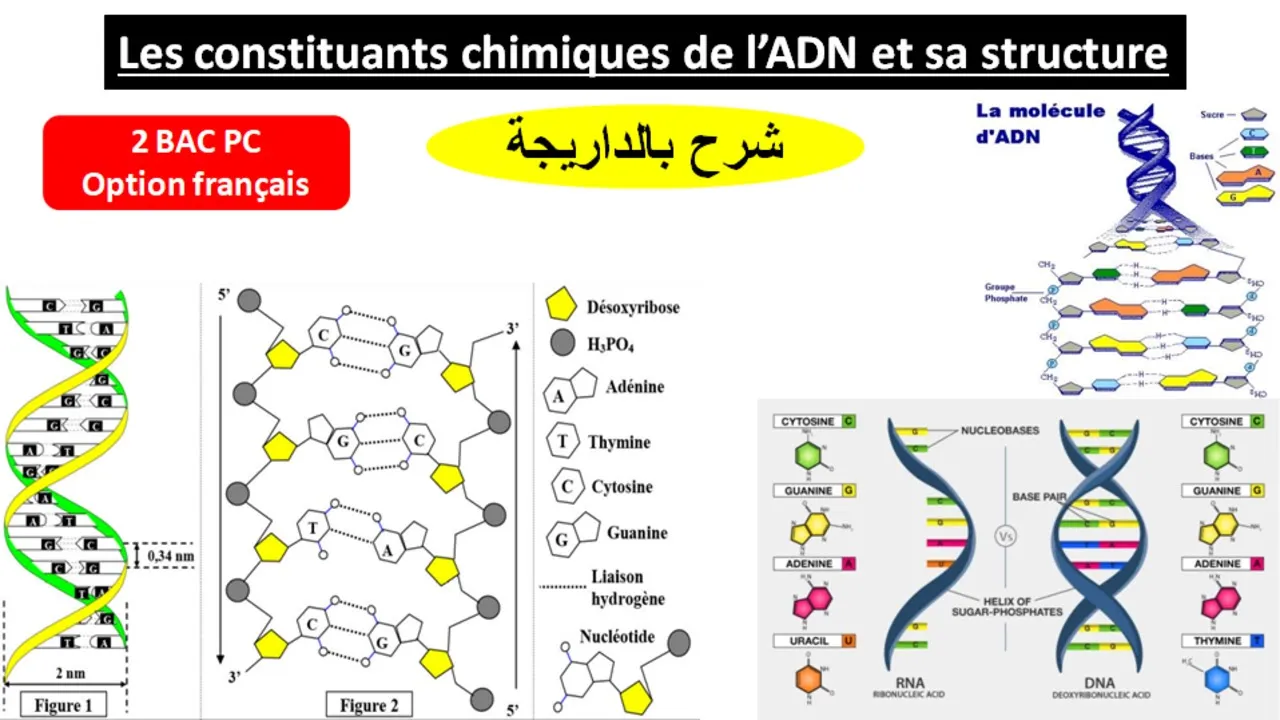
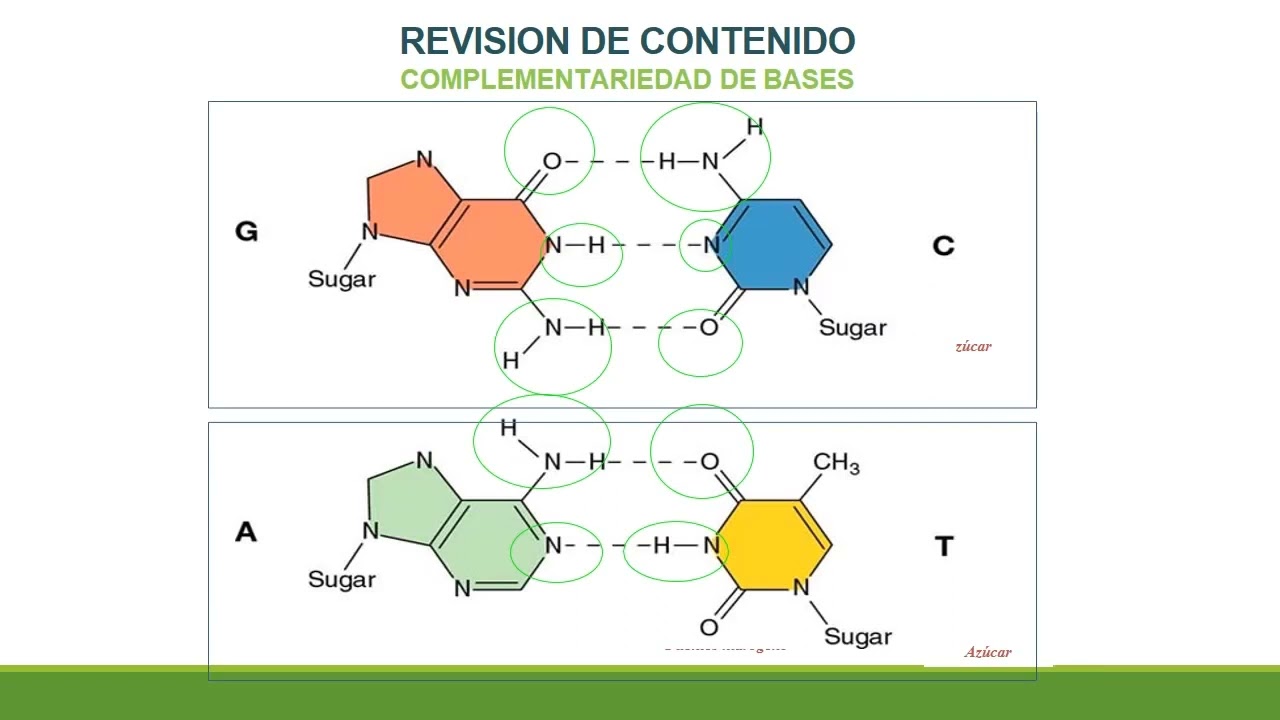
The chemical structure of DNA, including nucleotides, base-pairing rules (A-T and C-G), and the double-helix model.
The structural and chemical differences between DNA and RNA, such as sugar composition and the substitution of uracil for thymine.
The fundamental concept of a gene as a physical and functional unit of heredity that contains instructions for making proteins.
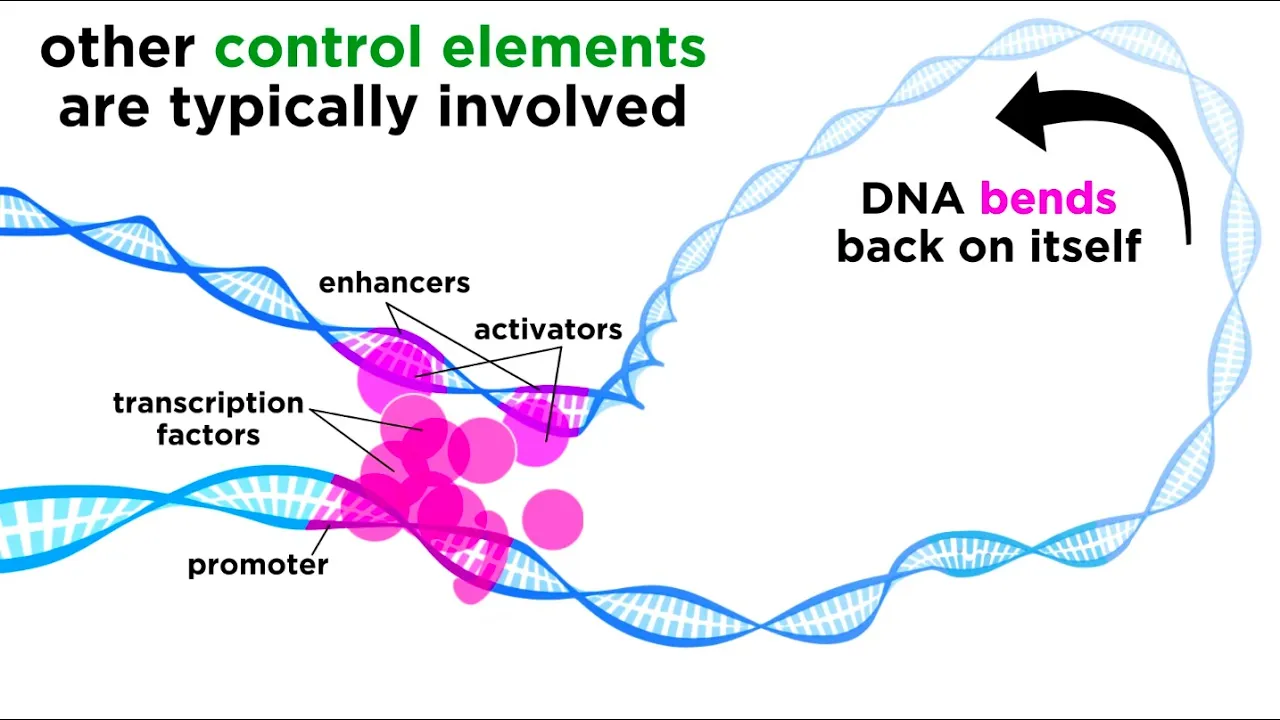
Mechanisms of gene regulation, exploring how cells control the rate and timing of transcription and translation (e.g., operons and transcription factors).
Post-transcriptional and post-translational modifications, such as RNA splicing, intron removal, and protein folding.
The molecular basis of genetic mutations (like insertions, deletions, and substitutions) and their downstream effects on protein function and phenotype.
Applications of molecular biology in biotechnology and medicine, such as PCR, recombinant DNA technology, gene therapy, and mRNA vaccines.
885.7K views5.6Klikes4:22Original Release: 2013-12-28
- So what exactly is the central dogma of molecular biology?
Well, really it could just be called the central dogma of all of life because it explains how you and I take this conglomeration of genetic information from each of our parents, and how this information gets transferred into generating a full-blown human being, like you and me.
So some very clever scientists, Francis Crick and James Watson, or "Watson and Crick," as they're often referred to as, are credited with discovering this dogma, which they say deals with the detailed residue-by-residue transfer of sequential information.
Or, as Marshall Nirenberg, who won the Nobel Prize in Physiology and Medicine, once said, "DNA makes RNA makes protein."
And I think this simple explanation really just says it all.
So let's explore this concept a little bit further.
So we have three major players here.
DNA and RNA are nucleic acids, which are made up of nucleotides, and proteins are made up of amino acids.
And the information starts at the most basic level stored as DNA, which can then be re-stored as DNA when DNA copies itself in a process called "replication."
Then DNA can be copied into RNA in a process called "transcription."
And then finally you can use the information in RNA to synthesize a protein in a process called "translation."
Now since DNA, RNA, and protein are linear polymers, this means that each individual unit, or monomer, is only attached to, at most, two other units.
So say we have a monomer, which is just one unit.
They are connected in a series like this, which makes it a linear polymer, and this is the same for DNA if each of these is a deoxyribonucleic acid, for RNA if it's a ribonucleic acid, or a protein, which are just amino acids all connected in a linear polymer.
So what does this mean?
This means that the specific sequence of each of these monomers effectively encodes information, and that that transfer of information is faithfully preserved from DNA to RNA to protein.
Each polymer sequence is used as a template for the synthesis of the next polymer.
And you could go into any step in this sequence and determine what the corresponding polymers would look like.
So in other words, you could take DNA and obviously figure out what the corresponding RNA would look like, and then what the corresponding protein would look like.
So this whole process is the central dogma.
It can sometimes be a little bit tricky to keep all of these terms straight, so I'll try to break it down a little bit for how I like to remember them.
For DNA, I think it's pretty easy.
When you go from DNA, and DNA makes a copy of itself, it's called replication because DNA is just replicating itself.
It's making the same copy of itself.
Transcription and translation, on the other hand, it's kind of easy to get these two terms mixed up.
One of them obviously is talking about DNA to RNA, whereas the other one is talking about going from RNA to protein.
So if you look at the word transcription, it has the word "script" in it, so I think of it as going from one written form to another kind of written form, and both use nucleic acid, so they both use this sort of alphabet, if you will, of nucleic acids.
And so you're just going from one kind of alphabet to the next kind of alphabet.
Translation, on the other hand, which is also the same term that we use when translating one language to another, describes going from nucleic acid to amino acid, so it's like you're using one kind of language and going to another kind of language, because you're going from nucleic acid building blocks to amino acid building blocks.
So hopefully that helps you keep these terms straight a little bit.
So what did we learn about the central dogma?
Just remember the simple statement that DNA makes RNA, which makes protein.
Up Next
9:54
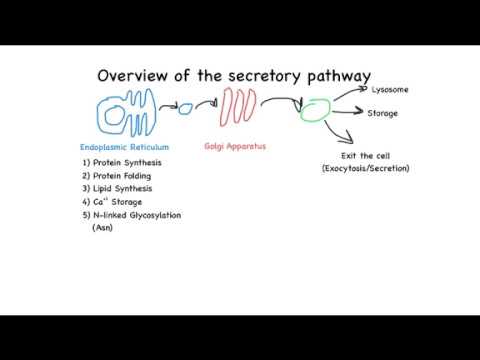
Secretory Pathway Overview: ER, Golgi & Protein Sorting
@cellbiology1662
65.2K views•2017-11-08
50:12
Bacterial Communication: Quorum Sensing and Biofilm Formation Explained
@JHUAAP
12.6K views•2011-06-28
5:10
Mendelian Genetics: Alleles, Genotypes & Punnett Squares
@khanacademymedicine
648.4K views•2014-06-16
7:08
Bacteriophages: Earth's Deadliest Killers and Future Antibiotics
@kurzgesagt
34.6M views•2018-05-13
Related Study Plans & Knowledge Roadmaps
Structured learning paths in Biology
biology
RNAi: Biogenesis, RISC & Gene Silencing
01Molecular Biology Foundations: DNA to Protein
02Introduction to RNA Interference (RNAi)
03Molecular Biogenesis of miRNA and siRNA
+ 2 more learning modules
10h5 modules
Explore Roadmap
biology
Mycorrhizae: Signaling, Biophysics & Ecology
01Foundations of Mycorrhizal Symbiosis
02Molecular Signaling and Root Colonization
03Biophysics and Bioenergetics of Nutrient Exchange
+ 1 more learning modules
11h4 modules
Explore Roadmap
biology
Circadian Clocks: TTFL, SCN & Periphery
01Foundations of Molecular Biology & Gene Expression
02Introduction to Chronobiology and Actograms
03The Core TTFL: Molecular Architecture of the Clock
+ 3 more learning modules
14h6 modules
Explore Roadmap
biology
Population Genetics: Math, Drift & Selection
01Genetic & Probability Foundations
02The Hardy-Weinberg Principle and Baseline Models
03Mathematical Modeling of Natural Selection
+ 3 more learning modules
18h6 modules
Explore Roadmap