














The ribosome is a complex molecular machine composed of RNA and proteins (approximately 66% RNA and 34% protein by mass) that reads the genetic code from mRNA and catalyzes peptide bond formation during protein synthesis; it consists of two subunits—the 50S large subunit containing the peptidyl transferase center (which is itself an RNA-based ribozyme with no protein in its catalytic site) and the 30S small subunit containing the decoding center—with three tRNA binding sites (A, P, and E sites) that work together to translate genetic information into polypeptide chains.
Ribosome Structure & Translation Overview | MIT Biological Chemistry
Added:The Central Dogma of Molecular Biology, specifically the flow of genetic information from DNA to RNA to protein.
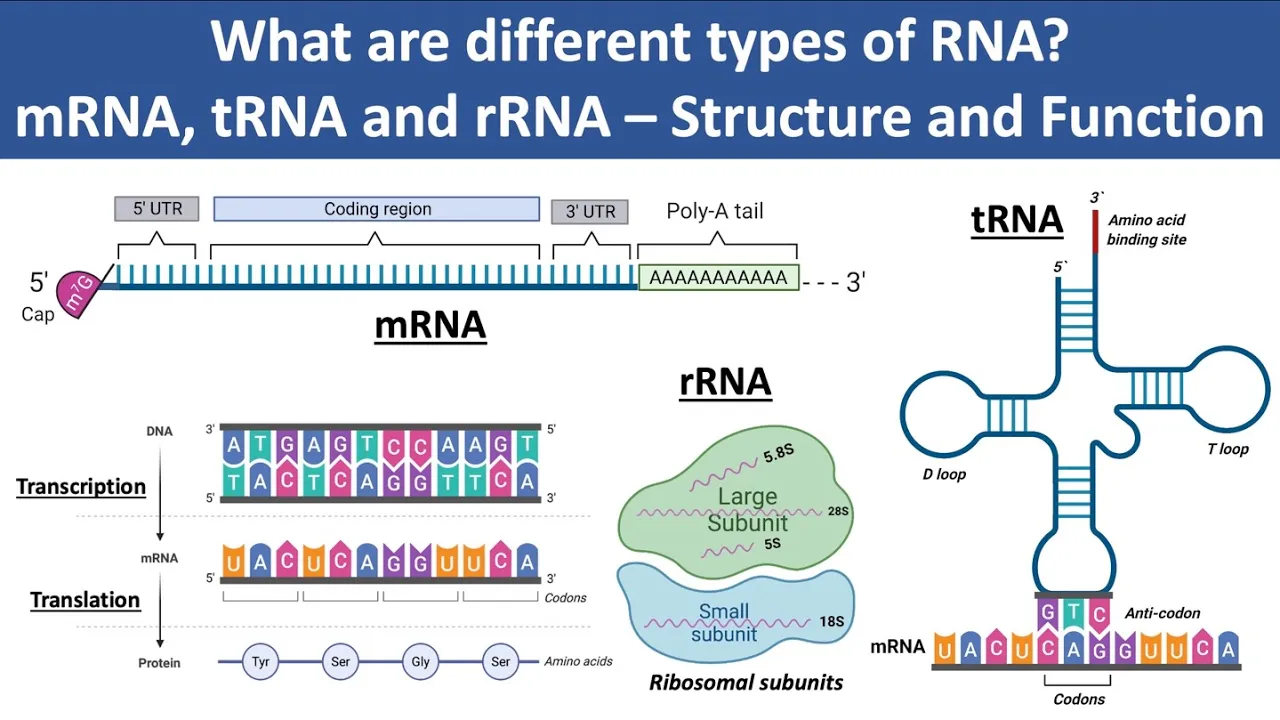
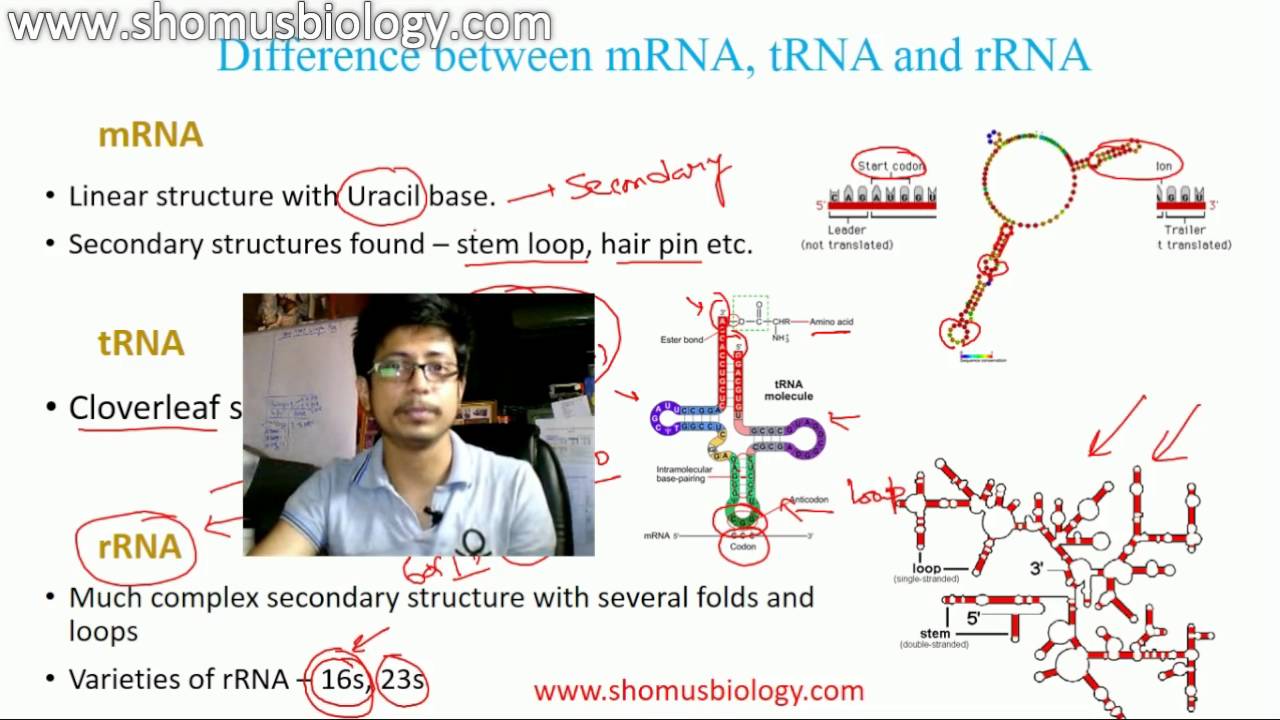
The classification and distinct functions of RNA types, primarily messenger RNA (mRNA), transfer RNA (tRNA), and ribosomal RNA (rRNA).
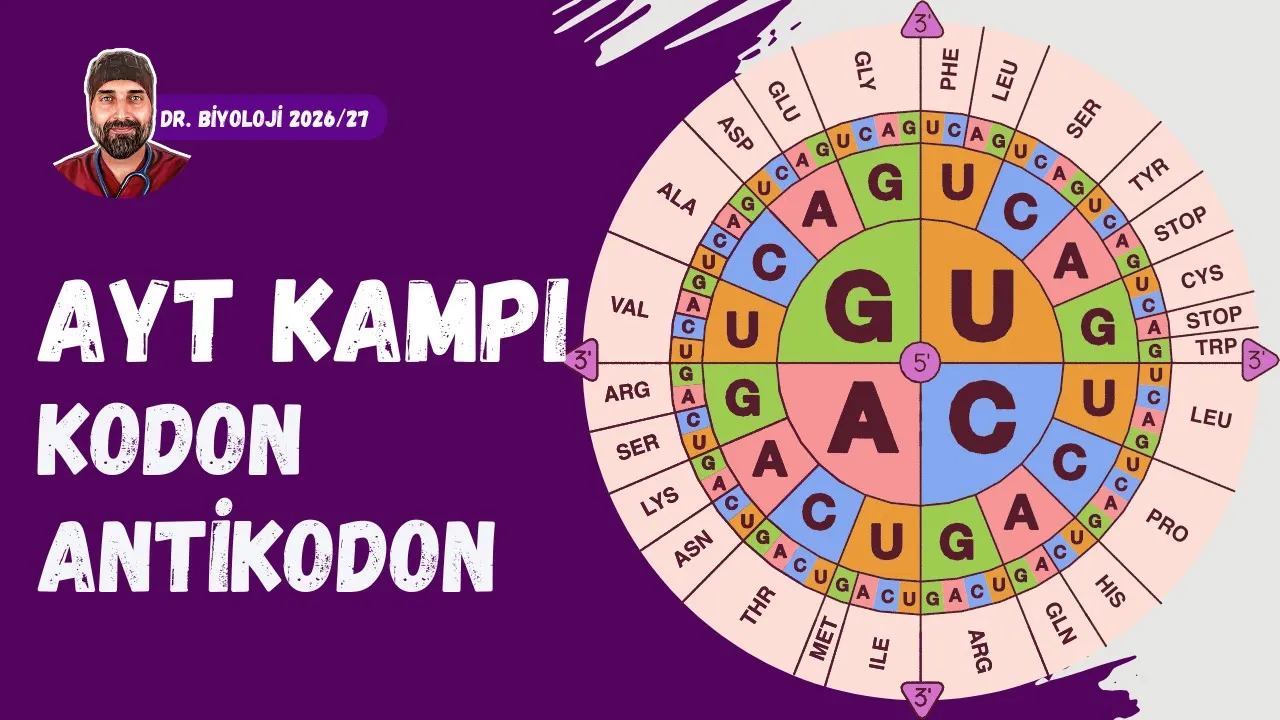
The nature of the genetic code, including codons, anticodons, and the concept of reading frames.
The fundamentals of protein structure, specifically amino acid properties and peptide bond formation.
Post-translational modifications (PTMs) and how newly synthesized polypeptide chains undergo folding, cleavage, or chemical modification.
The pharmacological application of translation inhibition, focusing on how specific antibiotics selectively target bacterial ribosome subunits.
Translational regulation mechanisms in eukaryotes, such as the control of translation initiation factors and the impact of microRNAs.
Advanced structural biology of the ribosome, including high-resolution cryo-EM studies capturing dynamic ribosomal states during elongation and translocation.
35.1K views586likes50:48Original Release: 2019-08-01
The following content is provided under a Creative Commons license.
Your support will help MIT Open Courseware continue to offer high quality educational resources for free.
To make a donation or view additional materials from hundreds of MIT courses, visit MIT Open Courseware at ocw.mit.edu.
ELIZABETH NOLAN: What we'll do today is have an overview looking at the ribosome structure, and also an overview of translation to get everyone on the same page for the discussions we'll start next week on the elongation cycle of translation.
So I'll post, within lecture notes, reading as it applies to a given module and information about the problem sets, so you have that here.
So before we get into some more molecular level details about ribosome structure, it's important to appreciate how we've gotten to where we are now in terms of our understanding, and so where we'll start is back in some early studies of electron microscopy.
And this is in the '50s, and this researcher, Palade, obtained images, that looked like this, of rat pancreas tissue.
And what was seen in these images were a lot of dark spheres.
You can see them throughout, and they were called the particles of Palade.
And one thing the scientists questioned is whether these black spheres or dots were something real or an artifact from his methods, so the perennial and arduous question of artifact versus reality.
So this is something that we all question everyday when doing our experiments as well.
And so he was quite a thorough scientist and experimentalist, and he repeated these experiments using different procedures to fix the tissues.
And he observed these types of features in many different types of samples, and what was determined later on is that these black spheres are actually ribosomes.
So one of the things we're going to look at today is how did we get from an image like this, just seeing some black dots, to the crystal structures we have today and the atomic resolution and understanding.
And so he received the Nobel Prize back in 1974 for this contribution.
So just to keep in mind the hypothesis of translation, which is easy for us to take for granted these days.
Goes back into the '60s, so there were studies during the '60s that resulted in the discovery that the 50S subunit of E. coli ribosomes catalyzes peptide bond formation.
And it was discovered that the anticodon of the tRNA interacts with the 30S subunit, and that was important for translation.
So this decoding problem-- effectively, how do we get from mRNA to protein-- was also articulated in the early '60s, and this was a puzzle for basically four decades.
If we think about this from the standpoint of structure analysis and crystal structure-- so we'll look at images and data from crystal structures of the ribosome subunits today.
If you take a look, what's important to appreciate here is that there was huge amounts of effort over many, many years to get where we are now.
So in 1980, first crystals of the ribosome were obtained, but these crystals weren't of suitable quality for analysis.
If we look at 20 years later, in 2000, the first crystal structure of the 50S subunit was reported, and since then, there's been a flurry of activity.
So in 2001, first crystal structure of the 30 subunit-- 30S subunit with mRNA bound, and in this time, too, single molecule spectroscopy was well on its way, and so there were studies beginning of ribosome dynamics.
And later, 2011, we have a crystal structure of a eukaryotic 60S subunit here.
And so we're going to focus our discussions on the prokaryotic ribosome, their similarities and differences between prokaryotic ribosomes and eukaryotic ribosomes, just to keep in mind if you've heard about eukaryotic ribosomes in other classes.
So also to note, in 2009, the Nobel Prize in chemistry was awarded for structural studies of the ribosome to these three researchers here.
And their contributions are shown ranging from basically the first low quality crystals of the 50S ribosomal subunit to understand how important that was, to the first crystal structures.
And something Professor Stubbe and I like to remind everyone and keep in mind is, with these types of problems and areas, there's often many contributors, and they can't all be recognized by this prize because it's limited to three individuals at maximum.
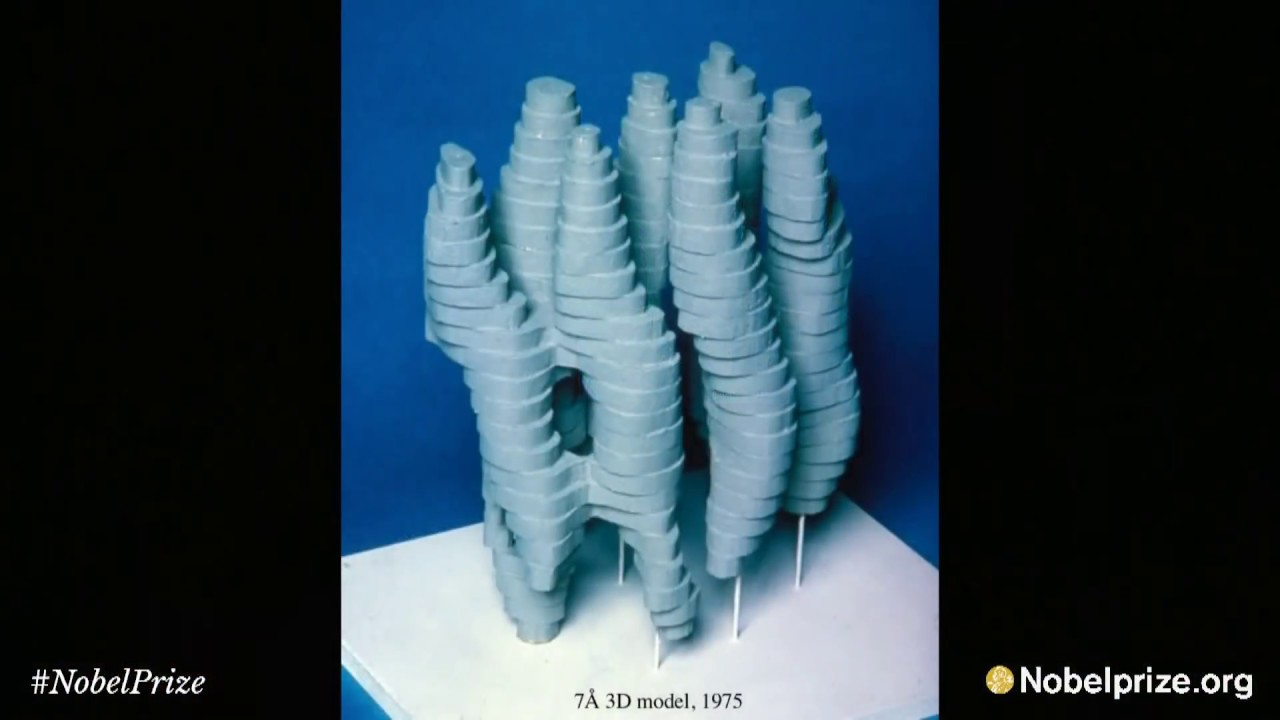
And so other folks like Harry Noller, Peter Moore, and Joaquim Frank made really seminal contributions to our understanding of this macromolecular machine.
So what are the questions we're going to address in this module?
And then we'll go over some of the basics in ribosome structure.
So first, one is that we learn from structural studies of the ribosome, and really, what does ribosome structure at an atomic level tell us about its function?
How does the ribosome recognize, bind, and decode mRNA?
How are amino acids recognized and delivered, and how is the correct amino acid delivered?
The genetic message needs to be read, and it needs to be read properly.
And what happens if a wrong amino acid is delivered?
So that's a possibility.
How does the ribosome cope?
So this brings up the notion of fidelity.
How is fidelity of translation maintained?
And we'll address that next week.
How is translation initiated?
How does the ribosome catalyze peptide bond formation?
So we're interested in that mechanism within the context of this course.
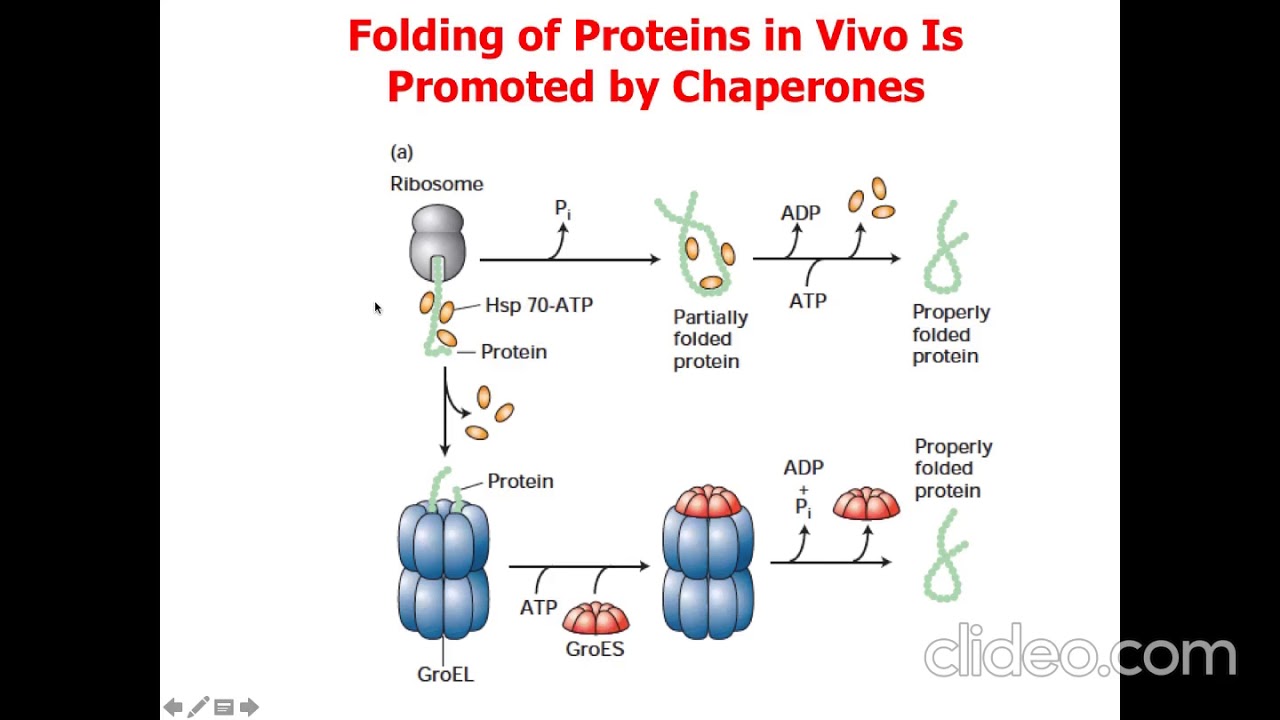
How does the polypeptide leave the ribosome, and what happens to that polypeptide after it exits?
So that will be a transition for us into module 2 on protein folding.
How is translation terminated, and what happens to the ribosome after?
So a given polypeptide chain is made.
What happens after that?
And where we'll close this module is thinking about how our understanding of the ribosome, from all of these basic and fundamental studies, allows for the development of new technologies.
And we'll specifically think about how it's possible to use the ribosome to incorporate unnatural amino acids into proteins.
So where we're going to move forward today is really structure-- focusing on ribosome structure and a general overview of translation, basically to have everyone here up to speed for the discussions to come next week.
So first of all, we'll do an overview of key players in translation, a brief look at the cycle, and then we'll go into structural studies of the ribosome.
And within this set of lecture notes are several tables that have lists of the players and detailed overall cycle that I encourage you to use, just as a reference throughout this module for keeping everything straight.
So first, of course, we have the ribosome.
So the ribosome, as we all know, reads the genetic code via the mRNA, and it catalyzes peptide bond formation.
So in addition to the ribosome, we have the mRNA.
So this mRNA delivers the genetic code to the ribosome, and it provides a template-- [AUDIENCE MEMBER SNEEZES] Bless you-- for protein synthesis.
So effectively, we can think about this process as a template-driven polymerization.
So somehow, the amino acids need to get to the ribosome, and so we need the help of the tRNAs.
So these transfer RNAs deliver the amino acid monomers, to the ribosome, and they transfer the amino acids during synthesis of the polypeptide.
So in addition to the ribosome, the mRNA, and the tRNAs, the ribosome needs some help, so we have translation factors.
And there's translation factors that are involved in each step of the translation cycle.
So these are proteins that are required at specific points during the translation process.
And so in terms of translation factors, we can break the process of translation into three or four steps-- I prefer three-- which are initiation, elongation, and termination.
Some review articles and papers will divide this into four steps, because termination, you can think about peptide release and then ribosome recycling.
But regardless to that detail, at each of these stages, there are translation factors that help.
So we have initiation factors that help with the process of initiation, and in prokaryotes, we have initiation factors 1, 2, and 3, so 3 translation factors that help during elongation.
So the process of making the peptide bond-- there are elongation factors.
EF for Elongation Factor.
IF for Initiation Factor.
We have EF-Tu, EF-G, and others, and we'll spend quite a bit of time thinking about EF-Tu and EF-G over the course of the next week and in recitation and in problem sets, thinking about how these factors are really facilitating the elongation process here.
And during termination, there are release factors, so we have release factors 1, 2, and 3.
And we can also-- these are involved in release of the polypeptide that's been synthesized from the ribosome, and there's other players as well that I'll list here, including ribosome recycling factor, so the subunits get recycled, as we'll see.
And we can also include a protein called trigger factor here.
That is involved in folding of nascent polypeptide chains or the polypeptide chain as it's coming off the ribosome.
And then just to summarize in terms of three stages of translation as I'll present them to you within this course, we have the initiation process; two, elongation; and three, termination.
And where we'll be focusing the lectures next week, and really, this whole module, is here on elongation.
And I'll just note that the elongation cycle is highly conserved.
Termination and initiation vary quite a bit between prokaryotic and eukaryotes there in terms of the processes and involved players.
So where are we going?
Just as a brief overview of the cycle, and we'll come back to this later within today's lecture, or if not, on Monday.
So we start with initiation, and we're going to have to ask ourselves, how is it that this 70S prokaryotic ribosome or initiation complex is assembled?
And so there's a special tRNA involved, the initiator tRNA that we see binds here, and we'll talk more about these E, P, and A-sites in a moment.
So we see the ribosome is assembled, the mRNA is bound, and there's an initiator tRNA bound.
In order for the elongation cycle to be entered, an amino acid needs to be delivered, and that's delivered by an aminoacyl tRNA.
That's in a ternary complex, so three components.
We have the tRNA, the elongation factor Tu, and GTP.
So this complex here somehow delivers an aminoacyl tRNA to the ribosome, and we're going to look at this process in detail next week.
So this will be one of our case studies thinking about experiments and how experiments have supported a specific kinetic model here.
So here, we have a complex where the tRNA is ready to occupy the A-site.
What happens here-- we see that there's a GTP hydrolysis event.
We'll talk about more as we go forward.
Peptide transfer reaction-- so we have formation of a peptide bond, and then this elongation factor G comes in to facilitate the elongation cycle.
And then this cycle will continue until some point that signals to stop synthesis, so a stop codon will enter the A-site.
And there's a termination process, ribosome recycling, and you can imagine this whole cycle happening again.
So how do we get to this cartoon to some more detailed understanding?
That's where we're going.
So come back to this cartoon at various stages throughout the course.
So first, we'll do a cartoon overview of the prokaryotic 70S ribosome, and then we're going to look at some of the data from crystallography studies here.
So as I think we all know the ribosome is comprised of RNA and proteins, and by mass, it's about 66% RNA and about 34% protein.
And it's comprised of two subunits, and those are indicated in the cartoon by different colors.
So in prokaryotes, we have the 50S, which is the large subunit.
This is made up of 23S ribosomal RNA, a piece of 5S ribosomal RNA, and proteins.
In terms of size this is huge, so it's approximately 1.5 megadaltons.
And what we find within this subunit is the catalytic center, or peptidyl transferase center.
This is sometimes abbreviated as PTC.
And what we also find in the 50S subunit are three sites for tRNA binding.
And so the other subunit in prokaryotes is the 30S.
This is a small subunit.
It's comprised of 16S rRNA and proteins, and it's also quite large.
Just smaller than the 50S, so on the order of 0.8 megadaltons.
And in terms of function, what we have in the 30S is the decoding center, so for decoding the mRNA, and the site of mRNA binding.
So if we draw this in cartoon form-- and this is something I really encourage you all to do when thinking about the experiments and the problem sets because that's going to help you understand the experimental design and what actually happened.
Here, what we have on top is the 50S subunit.
On bottom, the 30S subunit.
We have the mRNA, and note the directionality, so 5 prime end, 5 prime end of the ribose, 3 prime end here.
And then within this 50S, we can think about these sites for tRNA binding ordered as such, so E, P, and A here, so this is the catalytic center or peptidyl transferase center here.
So overall, this assembled ribosome is on the order of 2.3 megadaltons and is about 200 Angstroms in diameter.
So just in terms of these names, 50S, 30S-- this is overall the 70S assembled ribosome.
What do these numbers-- where do they come from?
What does this 50S, 30S, 70S mean?
So what is the S?
AUDIENCE: It's [INAUDIBLE].
It has to do with the sedimentation [INAUDIBLE].. ELIZABETH NOLAN: Yeah, it has to do with the sedimentation.
So there's a type of experiment called analytical ultra centrifugation, and effectively, you can use this to ask about the sedimentation of a biomolecule.
So effectively, what is the rate at which a biomolecule moves in response to the centrifugal force in a centrifuge there?
And so you can use optics to monitor the sedimentation and use mathematics to fit those data to come up with an S value.
So typically, the larger the S value, the larger the size.
It's not always directly proportional to the mass because things like shape play a role as well, but effectively, we see 50S, and that subunit is larger than the 30S.
And note, when they come together, it's not additive.
It's 70S there, if you're to look at the assembled ribosome in one of these experiments.
So that's where those values come from here.
So if we take a look from my cartoon depiction to actual image from cryoelectron microscopy-- so this is just rotated basically 90 degrees.
What do we see?
We have the 50S here, the catalytic center.
We have the 30S.
Here's the mRNA, and what we're seeing is that, in this particular structure, there's some tRNAs bound, and they've indicated also a ribosomal protein here.
Just as a sense of complexity-- so in E. coli, the 50S subunit has over 30 proteins associated with it.
That's a lot-- 30 different proteins.
And the 30S has 21 ribosomal proteins associated with it, so we need to think about the proteins in addition to the RNA.
So let's take a look at an image from the crystal structure reported in 2000, of the 50S ribosome from a particular prokaryote shown here.
So this is what's described as the crown view, and in this particular depiction, what we're seeing is that the ribosomal RNA of the 50S is in gray or white, and the ribosomal proteins that are bound are in gold.
So taking a look at this, what do we see?
We can ask ourselves some questions from this structure.
So the first question I'll ask is about the RNA.
What does this RNA look like?
So do we see any obvious domains?
If anyone has some experience looking at structures.
I don't see any.
What I see is a compact mass of RNA here.
There's not obvious domains or regions that are somehow different here.
To me, in this structure, it looks like one big glob of RNA.
But then the question is, is that truly the case, or is there an organization we're just not seeing at this level?
The next question we can ask is where are the proteins?
So if we look at the proteins and how they're arranged on this compact mass of RNA, what do we see?
Where are they?
AUDIENCE: The edges?
ELIZABETH NOLAN: On the edges, yeah.
There's many on the edges, like L1 here, this one on the outside here, over here.
So it looks like these proteins, at least in this view, are mostly on the outside.
Is there anything unusual or potentially unusual we can see in addition about these proteins?
Maybe looking at this one here or here.
What's going on?
AUDIENCE: I can't see very well, but I think that there's not just [INAUDIBLE].
ELIZABETH NOLAN: It looks like there's some unfolded parts?
AUDIENCE: Yeah.
ELIZABETH NOLAN: Right, so look here.
So it looks like there's some unfolded regions to these proteins.
And why is that?
And where are these unfolded regions going?
So what we can do is look at the RNA separately and look at the protein separately now and see what we learn from these analyses.
So effectively, if we consider the 23S rRNA, despite that structure we saw before that looked like a compact mass of RNA, it's structured, and it consists of six domains.
And these domains have quite complicated shapes, and they fit together.
And here is just a schematic diagram of this structure.
So if we take a look, we can see that there's domain 1, domain 2, 3, 4, 5, and 6.
And on the left here, it's indicated where, in that crown view we just looked at, right here, these domains are located.
So there is organization, even though in that structure, it looks like one compact mass of RNA.
So let's think about these proteins a bit more.
And in addition to the crown view and the observations we had from this particular face of the ribosome, where it looks like many proteins are on the outside, and there's some unfolded regions, what happens if we look elsewhere?
So here, we have rotation, so 180 degrees from here, effectively looking, we can say, on the backside.
And here, we can look at the view from the bottom of this subunit.
So what do these images suggest?
Do they support what we were thinking from this one view here, that proteins are mostly on the outside?
Yeah, I see some shaking heads "yes."
It looks like the surface of this 50S is covered, effectively, by a protein lattice here.
So what might a role be for these proteins, an important role?
AUDIENCE: Structural?
ELIZABETH NOLAN: Yeah, so some structural role.
So these proteins can help with stabilizing this 3D structure of the RNA.
And they have other functions as well, and some of those will come up as we discuss this elongation cycle.
But one function is certainly structural.
If we just think about the distribution of the proteins along the surface of this 50S, it looks more or less uniform.
There aren't patches where there's no protein or patches where there's a lot of protein.
They're pretty much evenly distributed here.
So as it turns out, most of the segments of the 23S do interact with protein, and if we look at these proteins more closely, we're going to follow up on the observation that it looks like they have some unfolded regions.
So what we're looking at here are just a selection of the 50S proteins in the absence of the RNA.
So these structures have been taken out of that total structure.
In terms of nomenclature, l means large and s means small, in terms of thinking about ribosomal proteins.
And so what's found in the 50S is that we can categorize 17 of the proteins as globular or folded and 13 of the proteins as cases where there's extensions that are non-globular or have no clear structure.
And that's color coded in these examples, where we have folded regions in green and then unfolded regions in red.
So why is this, and where are these red extensions going?
So what's seen is that these non-globular extensions work their way into the interior of the ribosome, so we can think about them kind of like tentacles, for instance, going into the interior.
So how might they interact with the RNA?
So I'll give you a hint.
In these regions in red, there are quite a number of arginine and lysine residues compared to other regions.
So what properties of arginine or lysine would be important?
AUDIENCE: [INAUDIBLE] ELIZABETH NOLAN: Positive charge.
Right, we have positively charged amino acids.
What about PKAs?
So who votes for arginine having a higher PKA than lysine?
The opposite?
So that's a point for review.
Lysine around 10.5.
arginine around 12.5.
arginine's higher here.
So if we have a bunch of positively charged residues in these extensions, how are they going to interact with the rRNA?
What are the molecular features there that are important?
AUDIENCE: [INAUDIBLE] ELIZABETH NOLAN: Pardon?
AUDIENCE: Phosphates?
ELIZABETH NOLAN: Yeah, the phosphate backbones.
So we have the negatively charged phosphates, positively charged amino acids-- effectively formation of salt bridges here.
AUDIENCE: So I know structure for a lot of these, well, non-globular regions.
Does it mean that they're more disordered, or do they still have relatively similar B factor compared to the rest of the globular region?
It's just that they don't fall under [INAUDIBLE]---- ELIZABETH NOLAN: I don't know what the B factors are for the different regions of these proteins, and for the case of discussion here, I would have it fall under a lack of secondary structure.
And keep in mind, the ribosome is quite dynamic, and in isolation, are all the proteins there and in their native way or not is just something else to keep in mind.
But these are certainly lacking a fold and going into the interior and working from salt bridges here.
Here's just an example of the 50S with tRNAs bound.
So we have the 50S.
We see tRNA in the E-site, the P-site, and the A-site.
And so what are these three sites?
Effectively, their names indicate what they bind or what they do in terms of these letters.
The A-site binds aminoacyl tRNAs with the exception of initiator tRNA, which cannot bind to the A-site.
The P-site binds the initiator tRNA during the initiation process of translation, and then it also binds peptydil tRNAs, so effectively the tRNA that has the growing peptide chain attached.
And then the E-site binds the DA slated tRNA, and this is called the E-site because it's the exit site.
And eventually, this tRNA that has lost its amino acid needs to get kicked out of the ribosome.
So one more point-- just going back about these proteins to highlight.
We stated that these proteins are mostly on the exterior, and there's just these extensions that go in.
One thing I didn't explicitly say is that this peptidyl transferase center is devoid of protein.
So in this catalytic center that's responsible for peptide bond formation, there's no protein.
So based on all of the structural evidence, the nearest protein is 18 Angstroms away.
That's quite far when thinking about making a peptide bond in a catalytic center.
And also we'll learn that magnesium ions are important for ribosome assembly.
I'll just point out that the closest magnesium ion is 8 Angstroms away.
So if there's no protein in this catalytic center that's responsible for formation of peptide bonds in this growing polypeptide chain, what does that tell us right off the bat about the ribosome and catalysis?
AUDIENCE: [INAUDIBLE] ELIZABETH NOLAN: Pardon?
AUDIENCE: You have many functional component of [INAUDIBLE] ribozymes.
ELIZABETH NOLAN: Yeah, so the ribo-- the ribosome is a ribozyme, yes.
So there's many functional components, but in terms of peptide bond formation, it's the RNA that's catalyzing that reaction.
So it's a ribozyme, or an RNA based catalyst.
And so this is something many of us may take for granted right now, but it was a big surprise to see this here.
And to the best of my knowledge, the ribosome is the only natural ribozyme that has a polymerase activity.
So many of these natural ribozymes are involved in RNA maturation here, so for those of you interested in evolution and hypotheses about RNA world, this observation that there's no protein in the catalytic center of the ribosome supports an RNA world hypothesis, the idea that the RNA, which stores genetic information, can perform chemical catalysis predates DNA and proteins.
One thing I'll just, though, point out is that, prior to this structural study, roughly two years before, there was some experimental work done just looking at isolated 50S rRNA with no proteins.
And it was found that isolated 50S rRNA could catalyze peptide bond formation, and that, specifically, domain 5 was important for that reaction here.
So if you're curious about that, I can point you in the direction of a paper.
One last observation about the 50S subunit involves a peptide exit tunnel.
And so somehow, the growing polypeptide chain needs to get out of this macromolecular machine, and in order for that to happen, there's an exit tunnel in the 50S subunit.
So here, if we go back to that cryo-EM image, what's shown in this particular depiction is a polypeptide chain emerging from the 50S here.
If we look at this view, a top or bottom view, what we see is that there's a hole here, and that hole is this exit tunnel.
This is just another view of the same thing rotated, and a macrolide is a type of antibiotic that can bind in the region and is thought to block exit of the polypeptide.
So there's some features about this exit tunnel that are interesting and that we need to consider.
First of all, it's long, so approximately 100 Angstroms.
And the diameter is relatively small, so the diameter is on the order of 15 Angstroms.
So what we need to think about, from the perspective of this diameter, is what can fit, and so this week in recitation, you're looking at using PyMOL and ubiquitin as an example.
If you just ask yourself, would ubiquitin, folded ubiquitin, fit in this exit tunnel based on its size?
And so where does protein folding occur?
We think about this as primarily and predominantly happening after the polypeptide comes out of the ribosome because there just isn't room in this exit tunnel for some folded structure to exist here.
Also, the exit tunnel not shown in these images is lined with hydrophobic residues, just as another feature.
So it's narrow, and it cannot accommodate folded proteins.
So briefly on the 30S, similar to the 50S as said before, this 30S is comprised of RNA and proteins.
It has the sites of mRNA binding and decoding.
Here's just a structural overview of the 30S with different regions named, and similar to what we saw for the 23S rRNA of the 50S subunit, the 16S rRNA also has structure.
And I just show you the domain organization here, so we see that there are four domains, and they're color coded in green, yellow, blue, and red here.
And so another point just to make in passing about 16S-- 16S rRNA is highly conserved amongst species, so sequencing the 16S is commonly done in studies of, say, the microbiome to figure out something about the distribution of different types of prokaryotic organisms there for that.
So why spend so much time on the individual subunits?
What we find is that the structures are very similar when the ribosome is assembled.
So we can think of the 30S and the 50S as coming together to give the 70S, and these subunits basically look the same as they do in isolation.
And that's depicted here, in just another example.
So if we're looking at this structure based on the cartoon and our discussions, you should be able to identify the different components.
So here, what do we have?
AUDIENCE: 50S.
ELIZABETH NOLAN: Yeah, and here?
AUDIENCE: 30S.
ELIZABETH NOLAN: 30S, right.
What's this?
AUDIENCE: [INAUDIBLE] ELIZABETH NOLAN: Yeah, we have a tRNA bound here.
Here, a protein.
So bring yourself back to this cartoon and its simplicity as we work through problems next week.
So another point to make, just to think about, is how is it that these subunits actually come together, and what mediates that interaction there?
And so these subunits basically come into contact at about 12 positions, and magnesium ions are really important for mediating the interaction between the 30S and the 50S.
So there's bound magnesium ions that mediate interactions between these subunits here.
And so in week four recitation, we're going to think about how to purify ribosomes.
And if you're interested in purifying ribosomes, how do you get an assembled 70S prokaryotic ribosome?
And based on the need for magnesium ions here, we'll see how that's an important variable in these procedures.
So we'll close just with some overview points about the translation process as a whole.
So during translation, mRNA is read from the five prime to the three prime end.
Polypeptides are synthesized from the N terminus to the C terminus, so there's directionality.
As I said earlier, translation factors are required at each stage-- initiation, elongation, and termination.
Something that I haven't highlighted yet is the importance of GTP.
So in that initial overview of the cycle, we saw that there were some instances of GTP hydrolysis by certain translation factors, and in this translation process, GTP hydrolysis provides a means to convert chemical energy into mechanical energy.
And so we're going to think a lot about how GTP hydrolysis plays a role next week.
And although we're going to look at many structures, keep in mind that conformational changes are essential for catalysis by the ribosome, and that this is a very dynamic system here.
So just some additional facts-- so ribosomes will synthesize six to 20 peptide bonds per second.
The error rate is less than 1 in 1,000, which brings up fidelity again.
How does the ribosome maintain this?
And the rate accelerations are on the order of 10 to the 7-fold, so less than many enzymes, but quite good.
And in all living organisms, these ribosomes carry out protein synthesis, so all ribosomes contain two subunits that reversibly associate during the translation cycle.
Protein synthesis occurs through the binding of the aminoacyl tRNAs to the 70S ribosome in an order dictated by the mRNA.
And next week, we're going to dissect how this actually occurs, and we think this will be quite new for all of you, even if you've learned about the ribosome in other courses.
These tRNAs move sequentially through these three ribosome binding sites, as we saw before here.
So we can return to our overview cycle here, that we saw before.
And so we'll briefly address how initiation occurs.
So how is this 70S ribosome assembled?
We'll have a detailed case study of EF-Tu and then look through this elongation cycle in more detail.
In terms of the players and the outcomes-- so this is a reference slide for all of you, where the stages are listed, that all of the players are listed, so some more detail than what's up here, and then the outcome.
So what you can see from this overview, and go back and study it outside of lecture, is that, in each case, we see GTP, which means GTP hydrolysis occurs at each step.
In initiation, our outcome is assembly of the 70S with mRNA bound and with an initiator tRNA in the P-site.
The outcome of elongation is synthesis of this nascent, or new, polypeptide chain, and termination is the hydrolytic release of the peptide, release of the tRNAs and mRNAs and dissociation of the 70S and, ultimately, recycling.
So there's many factors that need to be taken into account and dealt with it at every stage here.
This is just another reference table.
It has some additional players, like EF-Ts, and this is a nucleotide exchange factor for EF-Tu.
So EF-Tu is a GTP-ase that we'll hear more about in lecture next week, and in recitation next week.
Briefly, some topics for review-- if you need to review the genetic code, please do.
We're not going to spend much time on it here.
But in brief, I think we all know this genetic code is based on codons.
They're read sequentially from a fixed starting point, and the code, which is a triplet code, is degenerate and non-overlapping.
So why do we have a triplet code?
We have four bases.
AUDIENCE: We need enough combinations to [INAUDIBLE].. ELIZABETH NOLAN: Exactly, there needs to be enough combinations for all the amino acids.
So we have 20 proteinogenic amino acids, and what else do we have?
We have selenocysteine.
We have pyrrolysine.
So a triplet code with four bases covers everything we need here.
We have start codons and stop codons we have to keep in mind, listed here.
And as a reminder, in translation, the amino acids are delivered by the aminoacyl tRNAs.
So the mRNA does not recognize these amino acids directly.
We need the tRNAs that allows this reading to occur.
Throughout this course, we're going to refer-- well, throughout this section with the ribosome, we'll be referring to nucleotides, et cetera, by the letter abbreviations.
There are structures, chemical structures, associated with these abbreviations, and it's important to know those and be thinking about those as you work problems.
So just as review, we have the DNA bases, C, G, A, and T. In RNA, we have uracil instead of thymine.
The purines, A and G, have two rings, and the Pyrimidines, one ring.
For nomenclature, nucleoside versus nucleotide-- so the nucleoside is a base plus a sugar, so there's this glycosidic bond here between the base and the carbon here of the ribose.
And then the nucleotide is this nucleoside with one or more phosphate groups attached at the five prime carbon.
So we go one prime, two prime, three prime, four prime, five prime for the numbering of the ribose.
And keep in mind, from 5.07 or 7.05-- I think this should be known, but these phosphates, we have alpha, beta, and gamma phosphates.
And depending on whether your ATP or some other nucleotide is being hydrolyzed to, say, an AMP or and ADP, you're going to have attack at different positions.
So if you need to review, visit your basic biochemistry textbook for these details.
Also just to keep in mind, the Watson-Crick based pairing, so G and C. We have three hydrogen bonds here, A and T, two hydrogen bonds.
And after spring break, Professor Stubbe will be presenting a module on nucleotide metabolism, where we'll be thinking about these things in some more detail.
So where we'll begin on Monday is briefly looking at an overview of initiation, and then we're going to begin to ask how did these amino acids get attached to tRNAs, and how did those aminoacyl tRNAs get to the A-site of the ribosome.
So we'll see you then.
Up Next
56:29
Larval Bivalve Responses to Ocean Acidification | George Waldbusser
@vembusubramanian8428
463 views•2015-04-20
50:12
Bacterial Communication: Quorum Sensing and Biofilm Formation Explained
@JHUAAP
12.6K views•2011-06-28
49:08
Chemical Bonding Lipids and Membranes | MIT 7.016 Introductory Biology
@mitocw
262.9K views•2020-05-12
7:08
Bacteriophages: Earth's Deadliest Killers and Future Antibiotics
@kurzgesagt
34.6M views•2018-05-13
Related Study Plans & Knowledge Roadmaps
Structured learning paths in Biology
biology
RNAi: Biogenesis, RISC & Gene Silencing
01Molecular Biology Foundations: DNA to Protein
02Introduction to RNA Interference (RNAi)
03Molecular Biogenesis of miRNA and siRNA
+ 2 more learning modules
10h5 modules
Explore Roadmap
biology
Mycorrhizae: Signaling, Biophysics & Ecology
01Foundations of Mycorrhizal Symbiosis
02Molecular Signaling and Root Colonization
03Biophysics and Bioenergetics of Nutrient Exchange
+ 1 more learning modules
11h4 modules
Explore Roadmap
biology
Circadian Clocks: TTFL, SCN & Periphery
01Foundations of Molecular Biology & Gene Expression
02Introduction to Chronobiology and Actograms
03The Core TTFL: Molecular Architecture of the Clock
+ 3 more learning modules
14h6 modules
Explore Roadmap
biology
Population Genetics: Math, Drift & Selection
01Genetic & Probability Foundations
02The Hardy-Weinberg Principle and Baseline Models
03Mathematical Modeling of Natural Selection
+ 3 more learning modules
18h6 modules
Explore Roadmap