






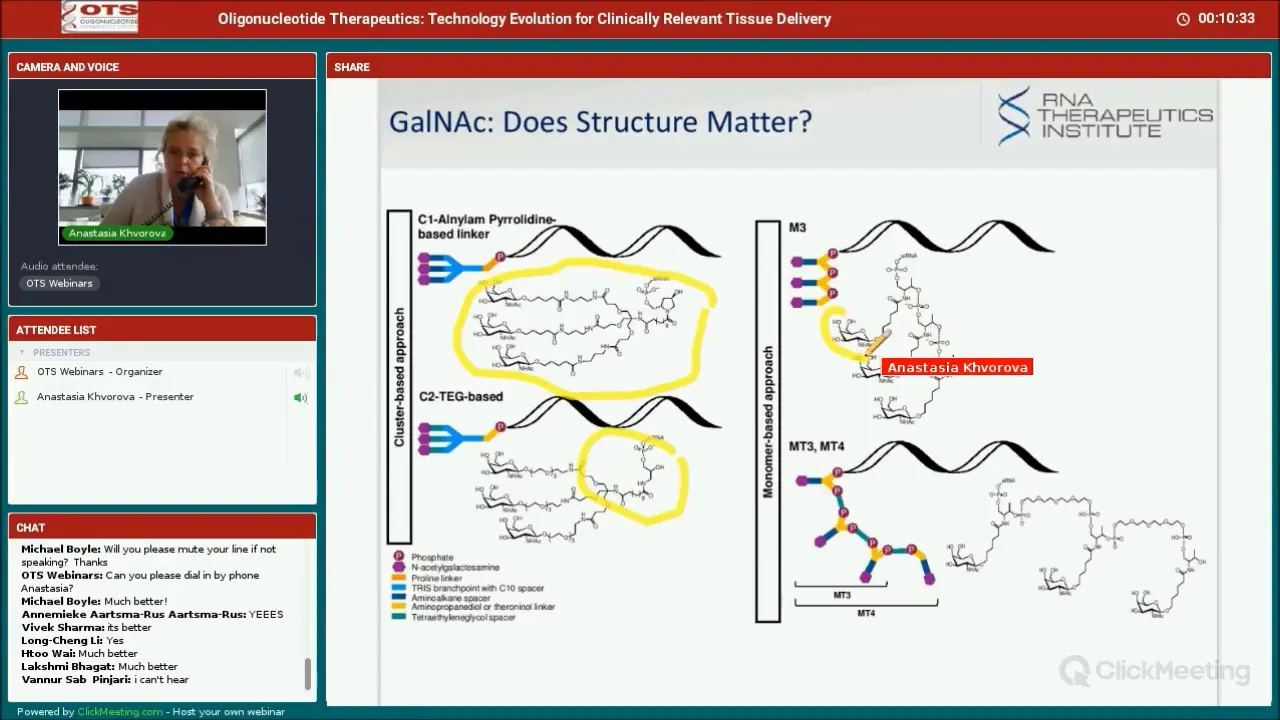







miRNA (microRNA) is naturally expressed from host genes, requires imperfect base pairing (4-5 nucleotides of complementarity) for target recognition, and primarily inhibits translation; siRNA (short interfering RNA) is synthetic or derived from exogenous sources like viruses, requires perfect base pairing, and cleaves target RNA; shRNA (short hairpin RNA) has a hairpin structure that is processed similarly to siRNA by Dicer to produce functional siRNA duplexes. All three types function through the RNA-induced silencing complex (RISC) to regulate gene expression by targeting complementary RNA sequences.
miRNA vs siRNA vs shRNA: Key Differences Explained
Added:The Central Dogma of Molecular Biology: A solid understanding of transcription (DNA to RNA) and translation (RNA to protein).
Basic RNA Biology: Familiarity with different types of RNA (mRNA, tRNA, rRNA) and the chemical differences between DNA and RNA.
Introduction to Gene Regulation: Understanding how cells control the timing and amount of protein production.
The Concept of RNA Interference (RNAi): A general overview of post-transcriptional gene silencing and the roles of Dicer and the RISC complex.
RNAi-Based Therapeutics: Exploring real-world clinical applications, such as Patisiran (Onpattro), and how siRNA is engineered for drug delivery.
Delivery Vectors for Gene Silencing: Studying how lipid nanoparticles (LNPs) are used for siRNA and how viral vectors (lentivirus/adenovirus) are used to deliver shRNA into cells.
Experimental Design for Gene Knockdown: Learning how to design target-specific siRNAs and shRNAs, including computational prediction and avoiding off-target effects.
Gene Knockdown (RNAi) vs. Gene Knockout (CRISPR/Cas9): Comparing transient post-transcriptional silencing with permanent genomic editing techniques.
75.7K views1.4Klikes10:12Original Release: 2016-05-15
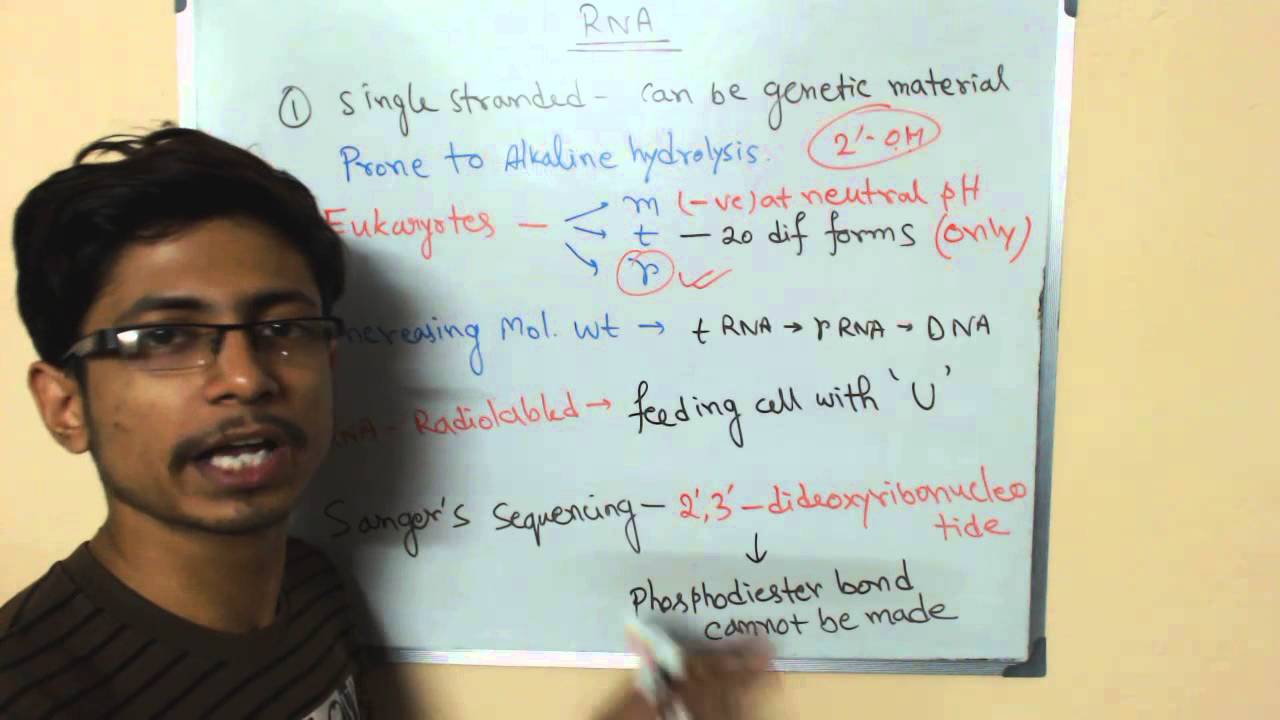
[music] [music] Welcome back friends. Welcome to another video lecture from Shomus Biology. And in this difference video series, I'll be talking about the difference between MINA, SNA and SH RNA. Now in the first phase, MINA is microRNA. SNA is short interference RNA or interfering RNA.
SHRNA is short hairpin RNA. Now among them in a generalized sense the difference between MINA and SNA is something which will be required to know while the SHRNA functionality and the processing process is more or less similar with the SNA. So if you know the difference between MINA and SNA that will be very important and this is one of the most requested videos. So here we go. Let me take a color first. It's already taken. So let's start talking about this three.
So here I draw the different scheme for mirna, sirn and shrna. We begin with the mirna. mirna precursor is a 70 nucleotide longna or double stranded RNA. It could be the precursor for mRNA.
For sirna the precursor for is long double stranded RNA. For MINA there's imperfect pairing required. You know all these type of interfering RNAs. These are ultimately the RNA who who ultimately go and destroy a doublestranded RNA. Figure out a specific region of the RNA destroy that RNA which is a target for this RNAs. So all this RNA interference work like these are all RNA itself but they will go and bind with a target RNA and target RNA will be cleaved so that the process of protein synthesis is not possible.
Okay. Now all of them forms that functionality but the degree at which they form the fun functionality and the process and the mechanism by which they're doing the functionality is a little bit different.
So in mi RNA that binding you know all of they require is to bind with the target RNA. Let's say this is the target RNA we are talking about. Let me take another color that is green which is the MINA. Now the pairing required here the pairing homology not actually homology the the pairing complimentarity should be required to bind with the target RNA. Now the complimentarity here is not much perfect. They don't need a perfect complimentary to interact with the target DNA and destroy it. Some imperfect pairing like almost like in in a in a stretch of 10 nucleotide if they bind with almost four to five nucleotide that will be enough for this MINA to break down the target RNA.
While in SNA, SNA requires a perfect binding with the target RNA prior to the destruction. Okay.
The function of MINA is the cleavage of the target mRNA while the function of SNA is the cleavage of the target RNA where their originated form. But MINA can cleave the target of different regions and sometimes they also prevent this process of degradation depending upon the cell's behavior and what the cell is destined to do. But sir will always destroy the target DNA or target RNA. Sorry. The structure if you look very carefully and the and the sequence of MIA if you study very carefully you will find that it is very much conserved in the recent species and related organisms. But in SAna it is not conserved. The sequence varies uh with the related organisms body.
Now mirna is encoded by its own genes of that organism. Right? So if you talk about the mirna that is present in our body as humans all those mias are generated from the own body genes and own genes of our body. While in sirna can be generated by some other foreign elements. For example viruses can contribute to the sirna. Transposons can contribute to the sirna.
Now if we look at SHRNA I haven't talked about yet because I told you SHRNA processing is very similar to the SA. So if you know the difference between MI and SNA you know the process a little bit for the SH as well. Now we will see the mechanism with which MINA and SA activates.
This is the process of MIA activation.
It begins with the gene. So remember long uh doublest stranded RNA that is present there. Now it may also form this hairpin like structures. From this hairpin like structures if they form they require specific protein known as dasha and pasha they start to break down or cleave some part of this other element to form what is known as premi.
at the beginning when they form the steam loop from the double stranded uh structure or they form a steam loop of as a secondary structure of RNA known as pry mi binding of dsha will cleave this pryna into premi now once we get the premi still the loop is present but for the processing of the mi we need to cut this loop out and who does that dicer is a molecule that cleave that loop out But before cleaving that loop out, this RNA should be transported into the cytool because all the process of the PMINA type is conducted in the nucleus. Once the PMINA is made, then it is transported into the cytool where daer actually cleaves that lof from the pmi. After this cleavage, we only get two strand of the RNA. So it's a double stranded RNA. Now this doublest stranded RNA is known as mi star duplex. One of those strand becomes the strand called guide RNA which will be interacting in this picture. This one is the guide which will be interacting and pairing with the target RNA to destroy it and then it will involve with some more ribboucleoproins and then finally involve with the target RNA and destroy that. That is the process of mirna.
For process of sirna, it starts with a long doublestranded RNA or it can also start with SHRNA.
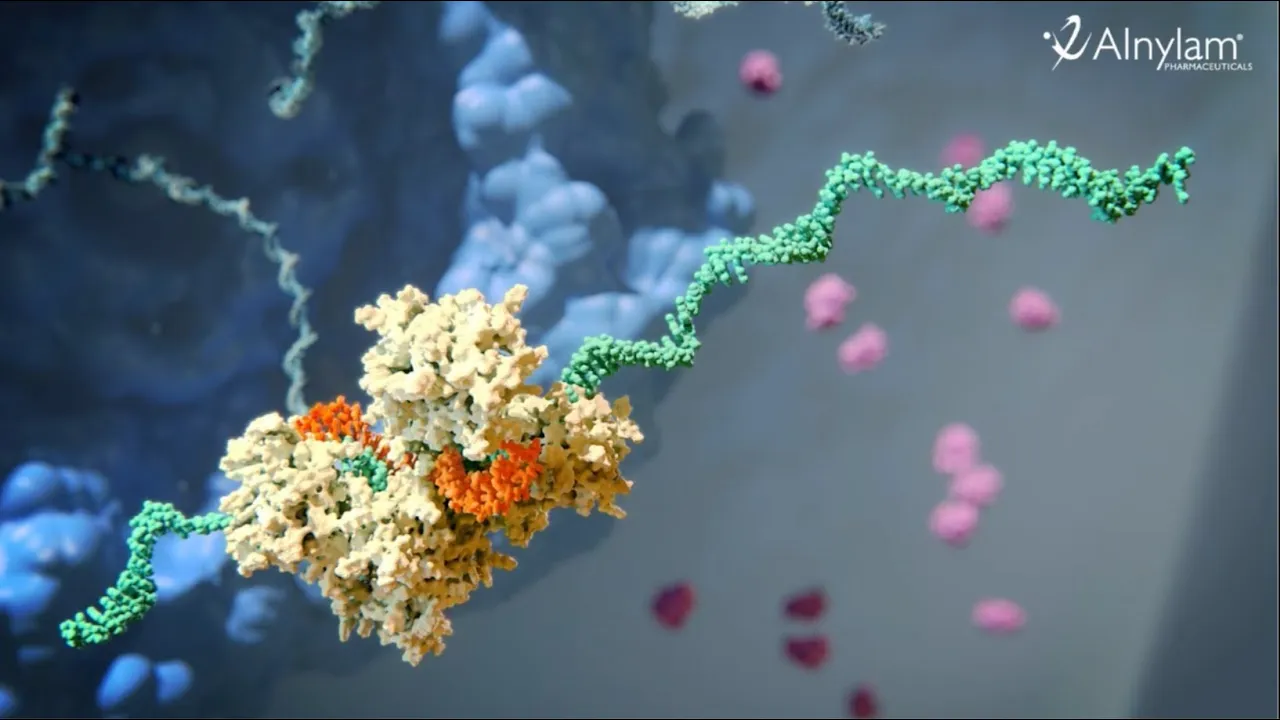
SH RNA can be produced easily or actually if there is an SHRNA, it can be easily converted into SNA by a single step that is the cleavage of the loop with the help of daer. So if you look at for the mirna the whole process starts with nucleus and then the processing goes on in the cytool but for sirna the process is there in the cytool itself because the process of mirna begins from our own gene remember so mirna is generated from our own gene these are our own body gene from where we generate the mirna but for sirna it can be injected It might be inserted by viruses or transposons or any elements from outside. So here the sa is generated or srna. If there's shrna it is nothing but a short hairpin RNA where we have a double stranded linkage and some some part will be like uh like bulges or loop like things formed. So if we have this structure dicer will ultimately cleave this loop out. So we get the sirna complex. Now you see it's more or less similar from the process that start from here to this region. So sirna resembles some part of the process of mi processing that occurs inside sal. So once it dicer cleaves the loop out we have a double stranded si duplex and the si duplex is then attached with other proteins known as argonaut and other molecules. they form a complex known as risk. Okay, RNA interference mediated silencing complex. And once this risk is formed, then it will start to guide one of the strands because that will act as a guide strand of the RNA.
Interact with the target RNA. This is the target RNA and this is the guide RNA. So guide RNA interacts with the target RNA and the process is the same.
it will break down the target RNA.
In case of SHRNA, it's nothing much difference because if you have a SHRNA, it could be easily converted into a PMI RNA or SHRNA with the help of enzyme known as dasha. Dasha will clip some part of this hairpin RNA and the part will be then converted into either PMI RNA or SHRNA. Whatever of these RNA will be made then it will be transported into the site soling will be very same like the SNA processing. Okay. So that is the three different types of RNA interference and their differences. I hope this video helped you to understand about the difference between mirna, sirna and shrna. If you like this video, please hit the like button, subscribe to this channel to get more video like that and share this video with your friends.
Thank you.
Up Next

8:22
Human DROSHA Structure & MicroRNA Biogenesis | RNA Scissors
@cellvideoabstracts
2.6K views•2016-01-14
50:12
Bacterial Communication: Quorum Sensing and Biofilm Formation Explained
@JHUAAP
12.6K views•2011-06-28

14:34
RNA Interference Mechanism: siRNA and shRNA Pathways Explained
@shomusbiologyofficial
379.7K views•2015-02-21
7:08
Bacteriophages: Earth's Deadliest Killers and Future Antibiotics
@kurzgesagt
34.6M views•2018-05-13
Related Study Plans & Knowledge Roadmaps
Structured learning paths in Biology
biology
RNAi: Biogenesis, RISC & Gene Silencing
01Molecular Biology Foundations: DNA to Protein
02Introduction to RNA Interference (RNAi)
03Molecular Biogenesis of miRNA and siRNA
+ 2 more learning modules
10h5 modules
Explore Roadmap
biology
Mycorrhizae: Signaling, Biophysics & Ecology
01Foundations of Mycorrhizal Symbiosis
02Molecular Signaling and Root Colonization
03Biophysics and Bioenergetics of Nutrient Exchange
+ 1 more learning modules
11h4 modules
Explore Roadmap
biology
Circadian Clocks: TTFL, SCN & Periphery
01Foundations of Molecular Biology & Gene Expression
02Introduction to Chronobiology and Actograms
03The Core TTFL: Molecular Architecture of the Clock
+ 3 more learning modules
14h6 modules
Explore Roadmap
biology
Population Genetics: Math, Drift & Selection
01Genetic & Probability Foundations
02The Hardy-Weinberg Principle and Baseline Models
03Mathematical Modeling of Natural Selection
+ 3 more learning modules
18h6 modules
Explore Roadmap