














RNA interference (RNAi) is a cellular defense mechanism where cells use double-stranded RNA to silence specific genes; the process involves the enzyme Dicer chopping long RNA molecules into short snippets, which are then loaded into the RISC complex to identify and destroy matching messenger RNA, preventing unwanted protein production and protecting cells from viral infections or self-regulating gene expression.
RNA Interference (RNAi) Explained: Gene Silencing Mechanism
Added:The Central Dogma of Molecular Biology, specifically how DNA is transcribed into mRNA and translated into proteins.
The basic structure and chemical composition of RNA, including the difference between single-stranded RNA (ssRNA) and double-stranded RNA (dsRNA).
The fundamental process of translation, including how ribosomes read mRNA codons to synthesize polypeptide chains.
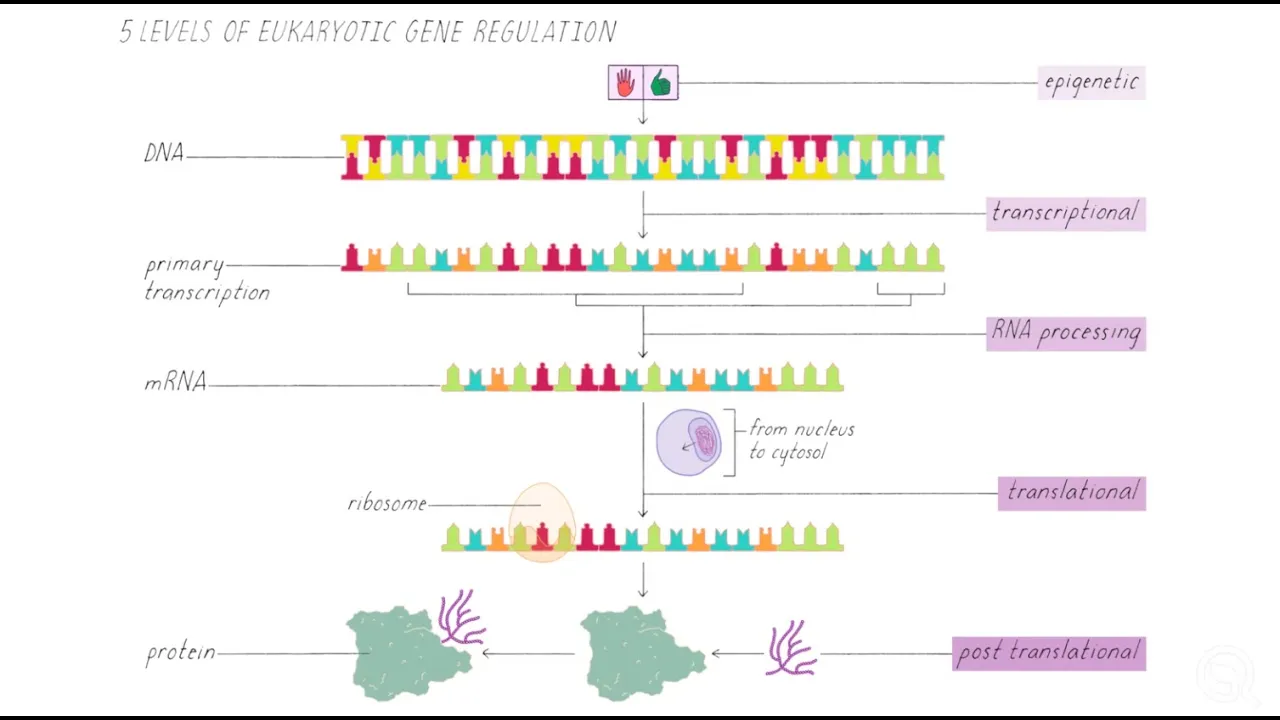
The concept of gene regulation and the various stages at which a cell can control gene expression.
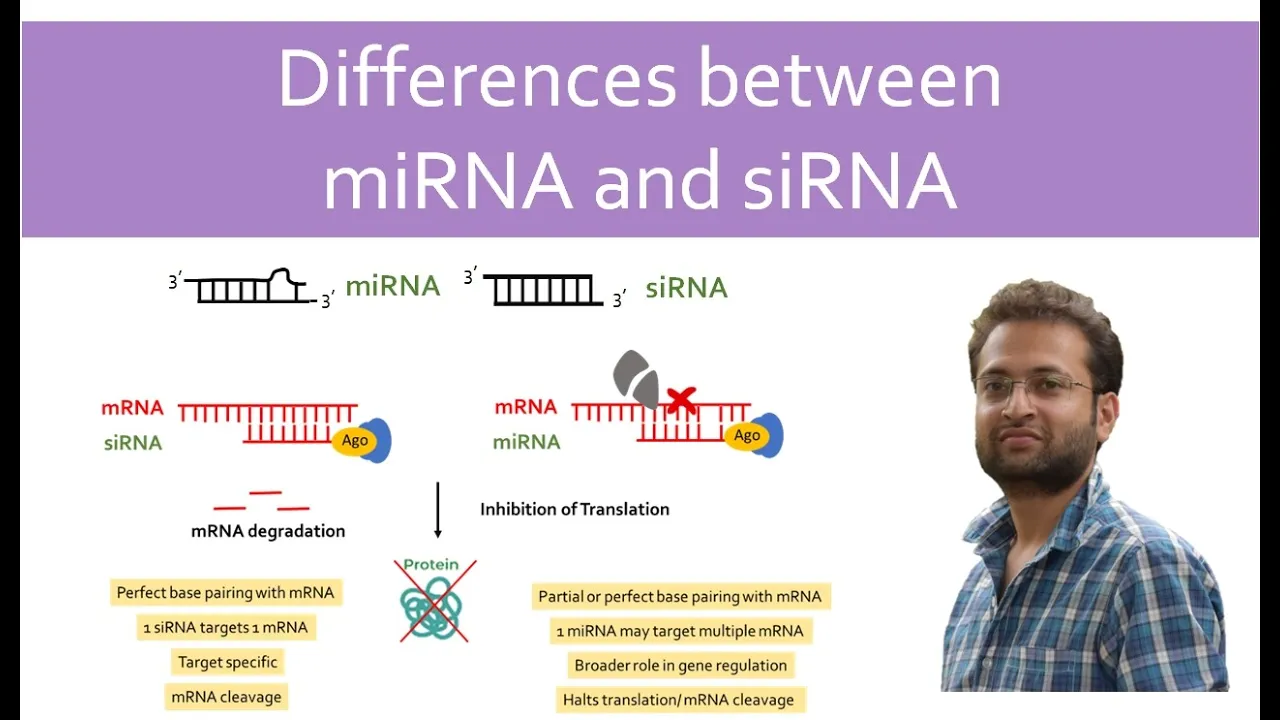
The distinction between small interfering RNA (siRNA) and microRNA (miRNA) pathways and their respective origins.
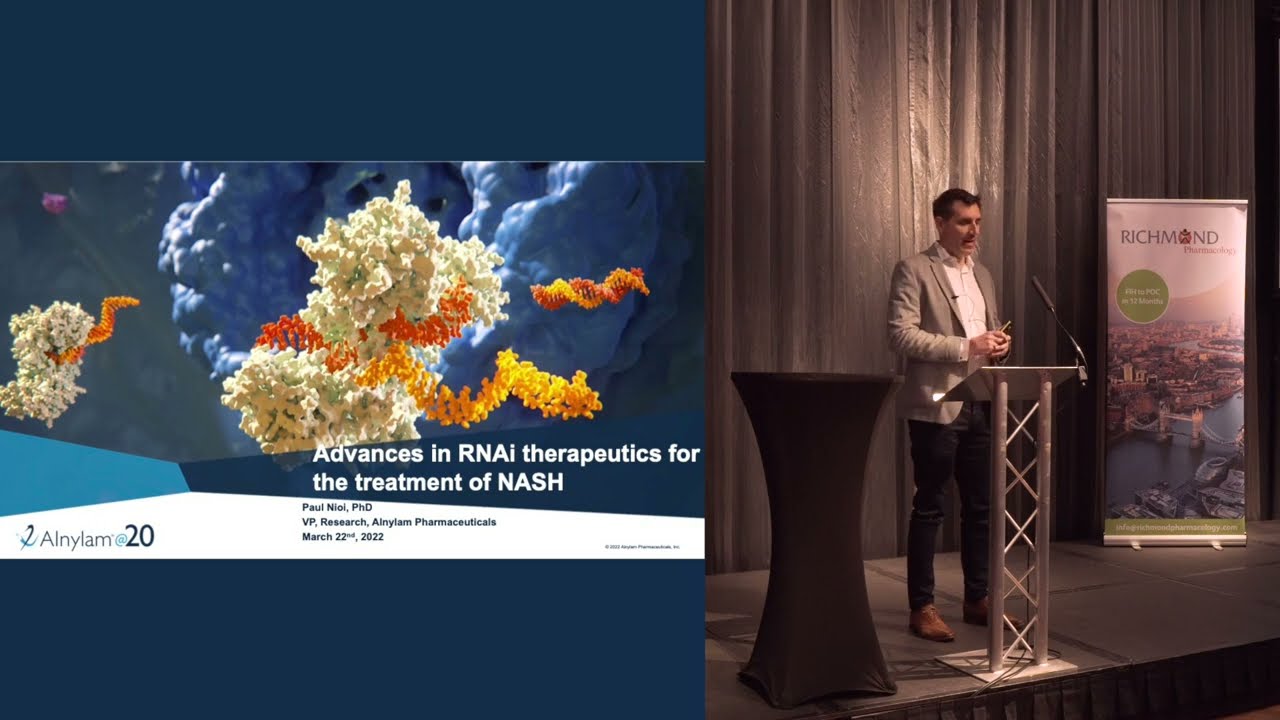
Therapeutic applications of RNAi, such as FDA-approved siRNA drugs (e.g., Patisiran) and their use in treating genetic disorders.
The physiological and technological challenges of delivering RNAi therapeutics safely into target human cells (e.g., using lipid nanoparticles).
A comparison of transient post-transcriptional gene silencing (RNAi) with permanent genomic editing technologies like CRISPR-Cas9.
402.7K views7.5Klikes4:08Original Release: 2013-08-12
You can think of your cells as the kitchen in a busy restaurant.
Sometimes your body orders chicken.
Other times, it orders steak.
Your cells have to be able to crank out whatever the body needs and quickly.
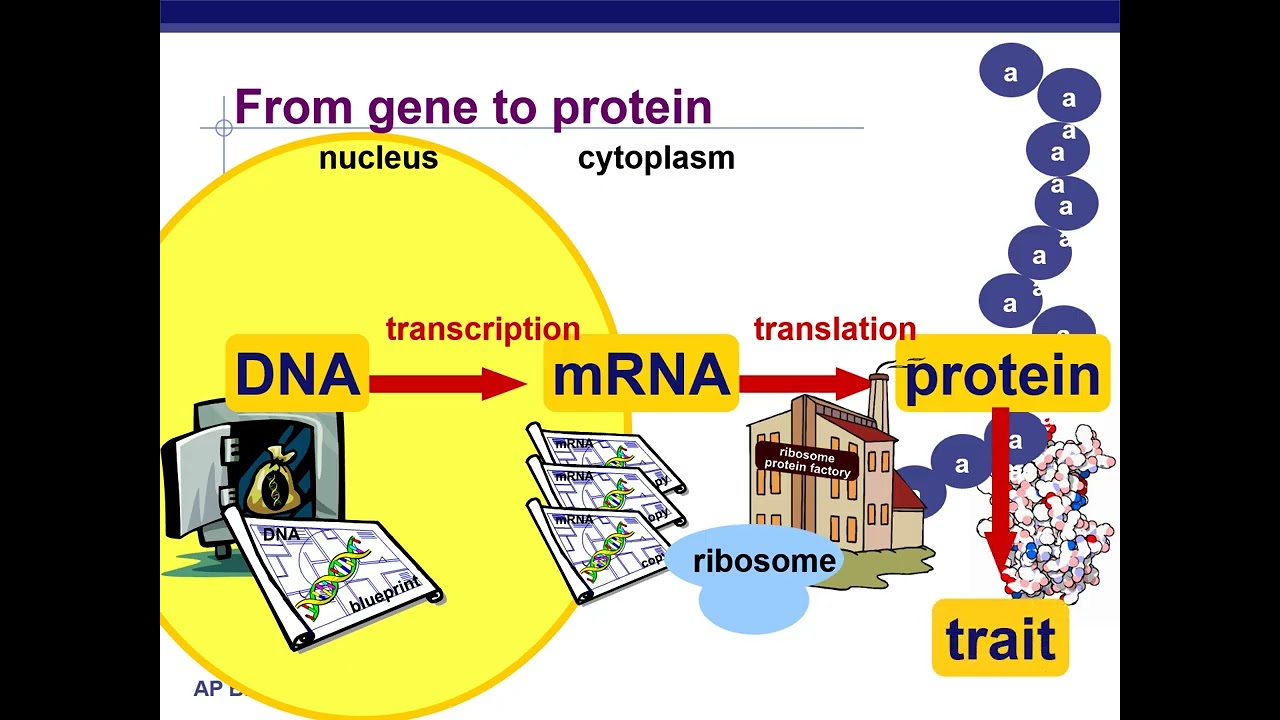
When an order comes in, the chef looks to the cookbook, your DNA, for the recipe.
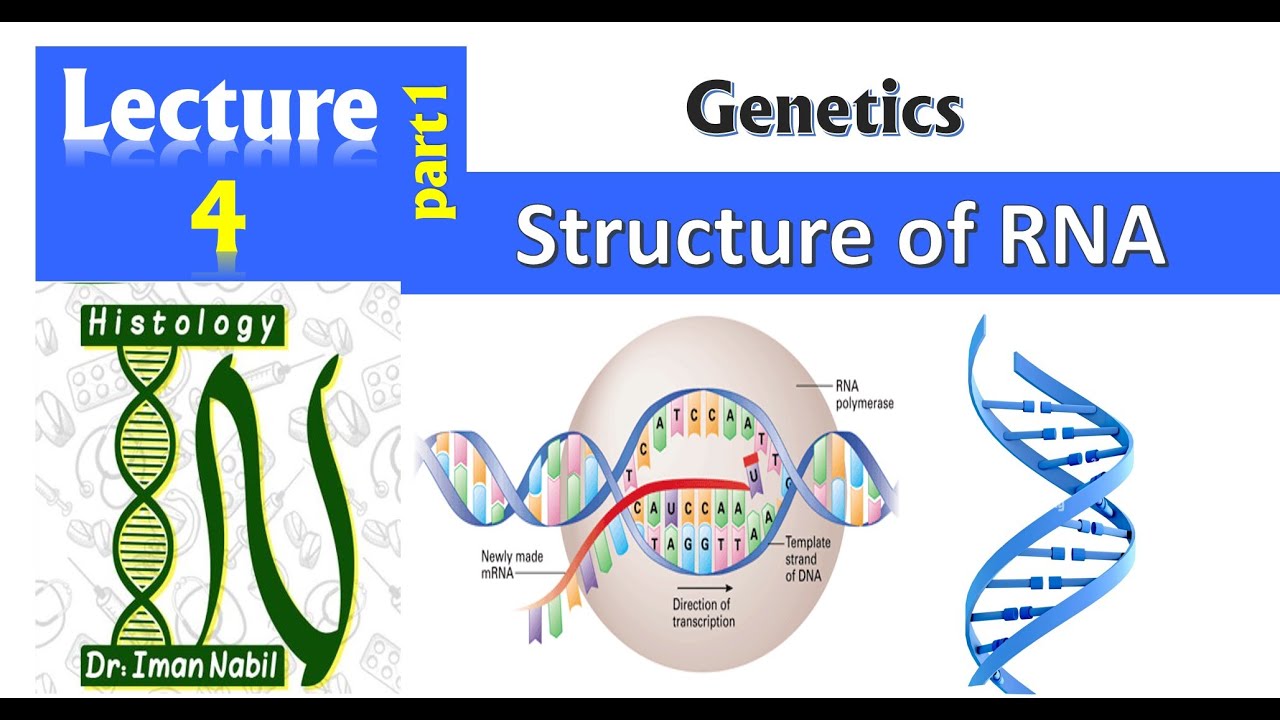
She then transcribes that message onto a piece of paper called RNA and brings it back to her countertop, the ribosome.
There, she can translate the recipe into a meal, or for your cells, a protein, by following the directions that she's copied down.
But RNA does more for the cell than just act as a messenger between a cook and her cookbook.
It can move in reverse and create DNA, it can direct amino acids to their targets, or it can take part in RNA interference, or RNAi.
But wait!
Why would RNA want to interfere with itself?
Well, sometimes a cell doesn't want to turn all of the messenger RNA it creates into protein, or it may need to destroy RNA injected into the cell by an attacking virus.
Say, for example, in our cellular kitchen, that someone wanted to cancel their order or decided they wanted chips instead of fries.
That's where RNAi comes in.
Thankfully, your cells have the perfect knives for just this kind of job.
When the cell finds or produces long, double-stranded RNA molecules, it chops these molecules up with a protein actually named dicer.
Now, these short snippets of RNA are floating around in the cell, and they're picked up by something called RISC, the RNA Silencing Complex.
It's composed of a few different proteins, the most important being slicer.
This is another aptly named protein, and we'll get to why in just a second.
RISC strips these small chunks of double-stranded RNA in half, using the single strand to target matching mRNA, looking for pieces that fit together like two halves of a sandwich.
When it finds the matching piece of mRNA, RISC's slicer protein slices it up.
The cell then realizes there are odd, strangely sized pieces of RNA floating around and destroys them, preventing the mRNA from being turned into protein.
So, you have double-stranded RNA, you dice it up, it targets mRNA, and then that gets sliced up, too.
Voila!
You've prevented expression and saved yourself some unhappy diners.
So, how did anybody ever figure this out?
Well, the process was first discovered in petunias when botanists trying to create deep purple blooms introduced a pigment-producing gene into the flowers.
But instead of darker flowers, they found flowers with white patches and no pigment at all.
Instead of using the RNA produced by the new gene to create more pigment, the flowers were actually using it to knock down the pigment-producing pathway, destroying RNA from the plant's original genes with RNAi, and leaving them with pigment-free white flowers.
Scientists saw a similar phenomena in tiny worms called C. elegans, and once they figured out what was happening, they realized they could use RNAi to their advantage.
Want to see what happens when a certain gene is knocked out of a worm or a fly?
Introduce an RNAi construct for that gene, and bam!
No more protein expression.
You can even get creative and target that effect to certain systems, knocking down genes in just the brain, or just the liver, or just the heart.
Figuring out what happens when you knock down a gene in a certain system can be an important step in figuring out what that gene does.
But RNAi isn't just for understanding how things happen.
It can also be a powerful, therapeutic tool and could be a way for us to manipulate what is happening within own cells.
Researchers have been experimenting with using it to their advantage in medicine, including targeting RNA and tumor cells in the hopes of turning off cancer-causing genes.
In theory, our cellular kitchens could serve up an order of cells, hold the cancer.
Up Next

7:18
DNA Transcription & Translation: Gene Expression Explained
@darkweb9919
764 views•2019-09-06
50:12
Bacterial Communication: Quorum Sensing and Biofilm Formation Explained
@JHUAAP
12.6K views•2011-06-28

18:11
How Bacteria Talk: Quorum Sensing Communication | Bonnie Bassler TED
@TEDEd
707.9K views•2013-02-09
7:08
Bacteriophages: Earth's Deadliest Killers and Future Antibiotics
@kurzgesagt
34.6M views•2018-05-13
Related Study Plans & Knowledge Roadmaps
Structured learning paths in Biology
biology
RNAi: Biogenesis, RISC & Gene Silencing
01Molecular Biology Foundations: DNA to Protein
02Introduction to RNA Interference (RNAi)
03Molecular Biogenesis of miRNA and siRNA
+ 2 more learning modules
10h5 modules
Explore Roadmap
biology
Mycorrhizae: Signaling, Biophysics & Ecology
01Foundations of Mycorrhizal Symbiosis
02Molecular Signaling and Root Colonization
03Biophysics and Bioenergetics of Nutrient Exchange
+ 1 more learning modules
11h4 modules
Explore Roadmap
biology
Circadian Clocks: TTFL, SCN & Periphery
01Foundations of Molecular Biology & Gene Expression
02Introduction to Chronobiology and Actograms
03The Core TTFL: Molecular Architecture of the Clock
+ 3 more learning modules
14h6 modules
Explore Roadmap
biology
Population Genetics: Math, Drift & Selection
01Genetic & Probability Foundations
02The Hardy-Weinberg Principle and Baseline Models
03Mathematical Modeling of Natural Selection
+ 3 more learning modules
18h6 modules
Explore Roadmap