











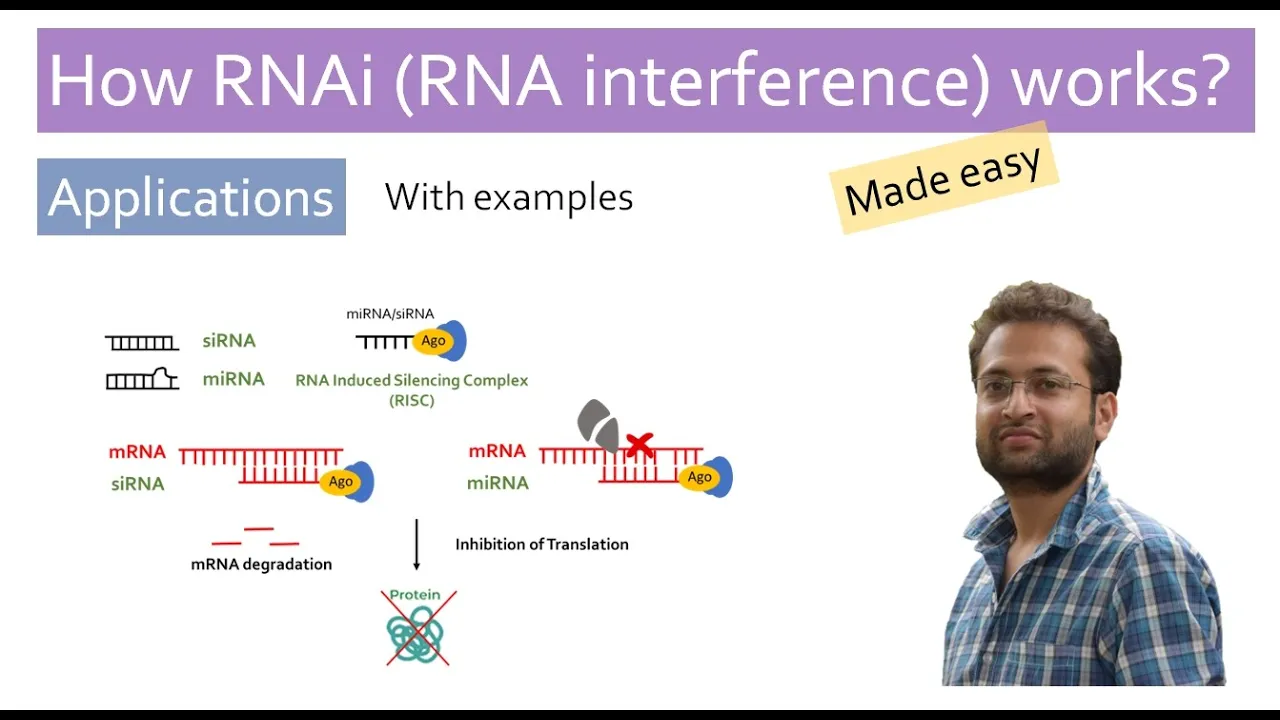






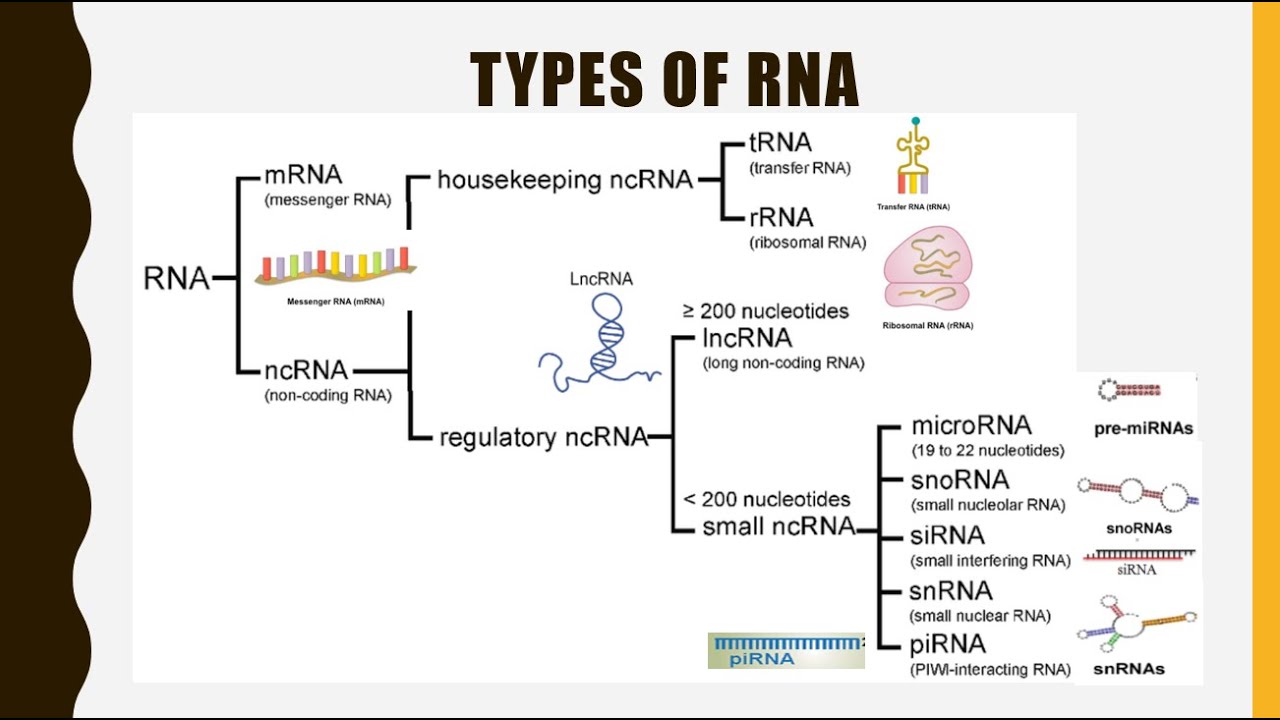


Small regulatory RNAs called microRNAs (miRNAs) and small interfering RNAs (siRNAs) mediate gene silencing through distinct biogenesis pathways: miRNAs originate from genomic genes, undergo nuclear processing by the Drosha-DGCR8 microprocessor complex, and are loaded into Argonaute proteins to form miRISC complexes that repress translation via imperfect seed sequence binding; in contrast, siRNAs derive from exogenous or endogenous double-stranded RNA sources, undergo direct cytoplasmic dicing by Dicer, and form siRISC complexes that cleave fully complementary target mRNAs through the slicer activity of the Argonaute protein's PIWI domain.
siRNA and miRNA: Generation and Gene Silencing Mechanisms
Added:The Central Dogma of Molecular Biology: Understanding how genetic information flows from DNA to RNA to protein.
Basic RNA Structure and Chemistry: Understanding the differences between single-stranded RNA (ssRNA), double-stranded RNA (dsRNA), and messenger RNA (mRNA).
Eukaryotic Gene Expression and Regulation: Familiarity with transcription, splicing, and translation, as well as where these processes occur in the cell (nucleus vs. cytoplasm).
Introduction to Enzymes in Molecular Biology: Broad understanding of nucleases (RNases) and their role in cutting nucleic acid strands.
RNA Interference (RNAi) in Research: How scientists use synthetic siRNAs and short hairpin RNAs (shRNAs) for targeted gene knockdown in laboratory experiments.
Therapeutic Applications of RNAi: Exploring FDA-approved siRNA drugs (e.g., Patisiran) and how RNA-based therapeutics are designed to treat genetic disorders and viral infections.
The Role of miRNAs in Human Disease and Cancer: Studying how dysregulated miRNA expression can act as oncogenes or tumor suppressors, and their potential use as diagnostic biomarkers.
Other Small Non-Coding RNAs: Exploring related pathways such as Piwi-interacting RNAs (piRNAs) in germline cells and the evolutionary links to the CRISPR-Cas immune system in prokaryotes.
435K views5Klikes6:50Original Release: 2014-08-12
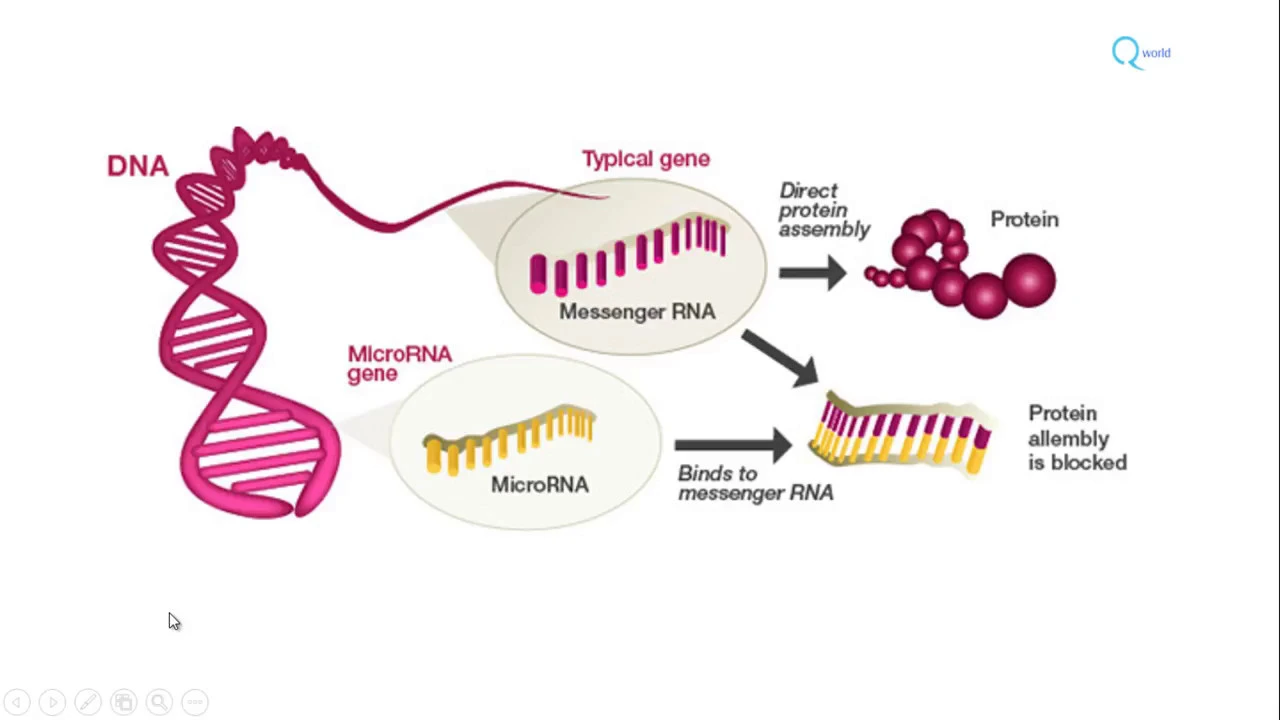
two families of small regulatory rnas called micr rnas and small interfering rnas or Si rnas regulate the stability and translation of mrnas in ukar both classes of small RNA associate with a family of proteins known as Argonaut but differ in their origin processing pathway targets a mechanism of action we will first focus on micro rnas and then point out the similarity with and differences from SI rnas micro rnas derive from actual genes found in genomes across the lineages of multicellular animals and plants these rnas begin as primary transcripts or Prim micr rnas and they're usually transcribed by RNA polyas 2 the prim micro RNA transcript folds into a stem Loop structure that generally has some unpaired nucleotides and single stranded extensions are found at both the five Prime and three prime ends the structure serves as the initial substrate for processing by drosa a nuclear RNA 3 enzyme drosa interacts with a specialized RNA binding protein called dgcr8 in humans to form what is termed the microprocessor complex this complex performs a cleavage reaction that removes the five Prime and three prime extension and liberates a 60 to 70 nucleotide transcript known as a pre microrna the pre micr RNA generated by the microprocessor complex is recognized by by a nuclear export Factor called expor in five which transports the pre microrna to the cytoplasm for subsequent processing in the cytoplasm a second endonuclear reaction generally referred to as dicing is catalyzed by dica another rna's three enzyme daiser is found in complex with a double stranded RNA binding protein called the tar RNA binding protein 2 or trbp2 the product of this second cleavage reaction is is called the M mirar duplex it carries five Prime monophosphates and three prime overhangs of two nucleotides which is not fully complimentary the two strands of this duplex RNA are called the guide and passenger strands once the Mir mirar duplex has been generated it is loaded into the argonut protein that is dedicated to microrna mediated silencing reactions if the duplex is loaded in an appropriate orientation one of the RNA strands called the mere guide strand is retained while the other strand the mere Star passenger strand is selectively removed the guide strand will ultimately be involved in determining which Target rnas will be silenced this process of retaining one strand and removing the other is called sorting for imperfect M mirar duplexes it is not certain how the passenger strand is identified and selectively removed though the action of a Healer case may well be helpful argonut proteins charge with their guide micro rnas are referred to as the miir risk complex the complex is now ready to bind its Target RNA and promote gene silencing Argonauts bound to micr rnas typically identify sequences with imperfect complementarity in the three prime utrs of mrnas the most important pairing region for the micr RNA is referred to as the seed sequence which generally encompasses nucleotide positions 2 to8 of the microrna species the absence of extended duplex formation allows the three prime end of the micro r& remain securely bound to the P domain of the argonot protein as a consequence the pee domain of the argonot protein is generally not positioned appropriately to cleave mrnas that are targeted by micro rnas once bound to targets Mi risks appear to recruit additional factors including in particular A protein that contains multiple glycine tryptophan repeats which is known as TR nc6 in humans this protein is thought to be involved in repressing translation and in destabilizing the MRNA through mechanisms that remain poorly understood what is clear is that the repression mechanism does not depend on the sial activity of the argonut protein in contrast to micrornas snas are not generally encoded in the genome as specific genes instead snas are derived from double stranded RNA that comes from several different sources endogenous duplex RNA can arise from the normal transcription of genomic Loi have extensive hairpin structures or from the analing of sense and antisense rnas that have both been transcribed from a given Locus exogenous sources of double stranded RNA include viral rnas and duplex structures that have been synthetically introduced into cells by scientists for experimental purposes irrespective of their Origins duplex rnas become substrates for an RNA processing reaction akin to the one described for the micr rnas but without the first nuclear droser dependent cleavage only dicing by the dacer enzyme is needed the cytoplasmic enzyme sequentially cleav the long duplex structures approximately every 20 to 25 base pairs The Cutting frame is set by interactions between the double stranded RNA and the Pas region of the daiser protein the products of the daiser reaction are short duplex rnas similar to the mere mere star duplexes but fully base paired along their length once the SI s star duplex has been generated it also is loaded into the appropriate argonut protein and the sir Star passenger strand is selectively removed for these fully complimentary sir s star duplexes the endogenous endonuclease activity of the peee domain of the algonot protein catalyzes cleavage of the passenger strand the cleaved strands are then easily Unwound and released this mechanism makes use of the rna's H fold of the peee domain and acidic residues that are poised in the active site for such catalysis the resulting singl stranded SI risk complexes can now scan for their fully complimentary Target rnas in contrast to the situation with the Mi risk complexes fly complimentary binding to the Target rnas lead to the three prime end of the sna being displaced from the P domain of the argonut as extended duplex nucleic acid forms this results in confirmational changes that activate the cleavage activity of the rna's h peee domain the cleavage reaction is referred to as slicing products of the slicing reaction are thought to immediately become targets for the exosome and other standard RNA Decay Pathways in the cell
Up Next

4:08
RNA Interference (RNAi) Explained: Gene Silencing Mechanism
@TEDEd
402.7K views•2013-08-12

50:12
Bacterial Communication: Quorum Sensing and Biofilm Formation Explained
@JHUAAP
12.6K views•2011-06-28

5:35
Enteric Nervous System Explained: The Gut's Brain | Neurobiology Lecture
@alumniu6029
438 views•2018-09-12
7:08
Bacteriophages: Earth's Deadliest Killers and Future Antibiotics
@kurzgesagt
34.6M views•2018-05-13
Related Study Plans & Knowledge Roadmaps
Structured learning paths in Biology
biology
RNAi: Biogenesis, RISC & Gene Silencing
01Molecular Biology Foundations: DNA to Protein
02Introduction to RNA Interference (RNAi)
03Molecular Biogenesis of miRNA and siRNA
+ 2 more learning modules
10h5 modules
Explore Roadmap
biology
Mycorrhizae: Signaling, Biophysics & Ecology
01Foundations of Mycorrhizal Symbiosis
02Molecular Signaling and Root Colonization
03Biophysics and Bioenergetics of Nutrient Exchange
+ 1 more learning modules
11h4 modules
Explore Roadmap
biology
Circadian Clocks: TTFL, SCN & Periphery
01Foundations of Molecular Biology & Gene Expression
02Introduction to Chronobiology and Actograms
03The Core TTFL: Molecular Architecture of the Clock
+ 3 more learning modules
14h6 modules
Explore Roadmap
biology
Population Genetics: Math, Drift & Selection
01Genetic & Probability Foundations
02The Hardy-Weinberg Principle and Baseline Models
03Mathematical Modeling of Natural Selection
+ 3 more learning modules
18h6 modules
Explore Roadmap