















Transcription is the process where RNA polymerase synthesizes RNA from a DNA template using transcription factors and ATP, while translation involves ribosomes reading mRNA codons to assemble amino acids into proteins through initiation, elongation, and termination phases, with tRNA bringing specific amino acids matching mRNA codons and release factors terminating the process at stop codons.
Transcription and Translation: Animation for Biology Students
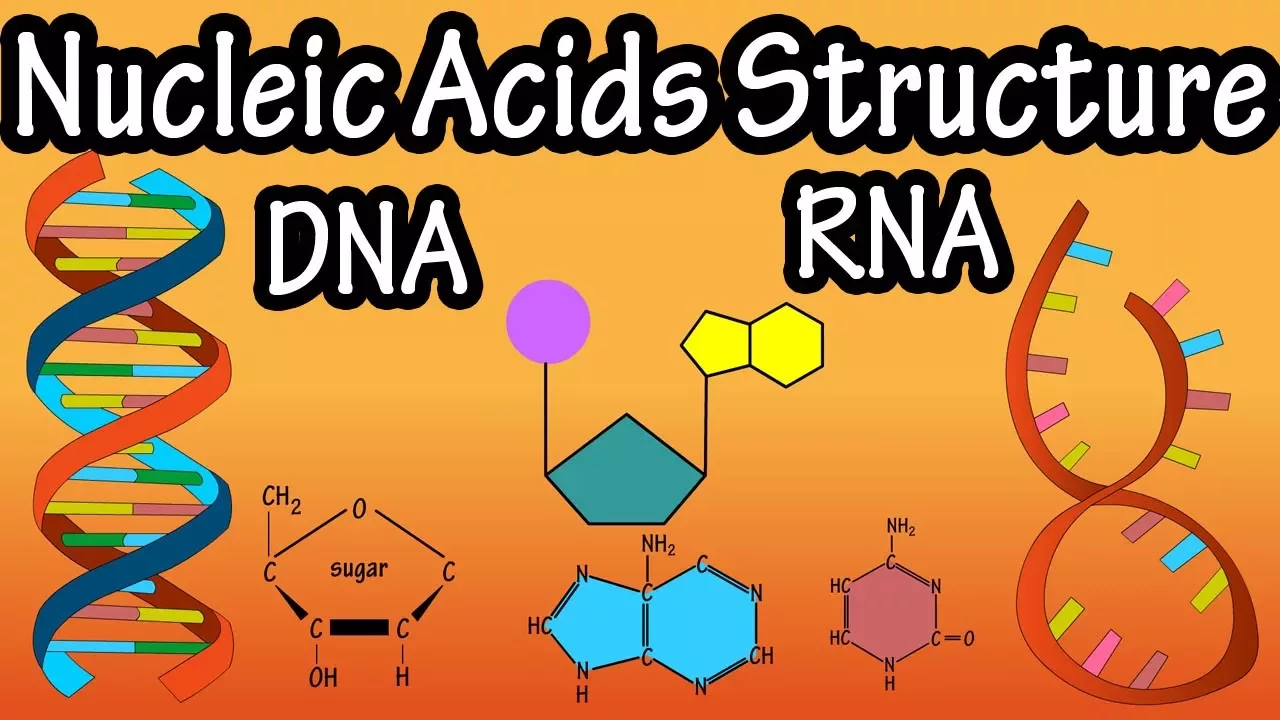
Added:The basic structure of DNA and RNA, including nucleotide base-pairing rules (A-T/U, C-G) and their structural differences.
The Central Dogma of Molecular Biology, which outlines the general flow of genetic information from DNA to RNA to protein.
Eukaryotic cell structure, specifically the compartmentalization of the nucleus (where DNA resides) and the cytoplasm (where translation occurs).
The basic chemical structure of proteins, including the concept of amino acids as the building blocks of polypeptide chains.
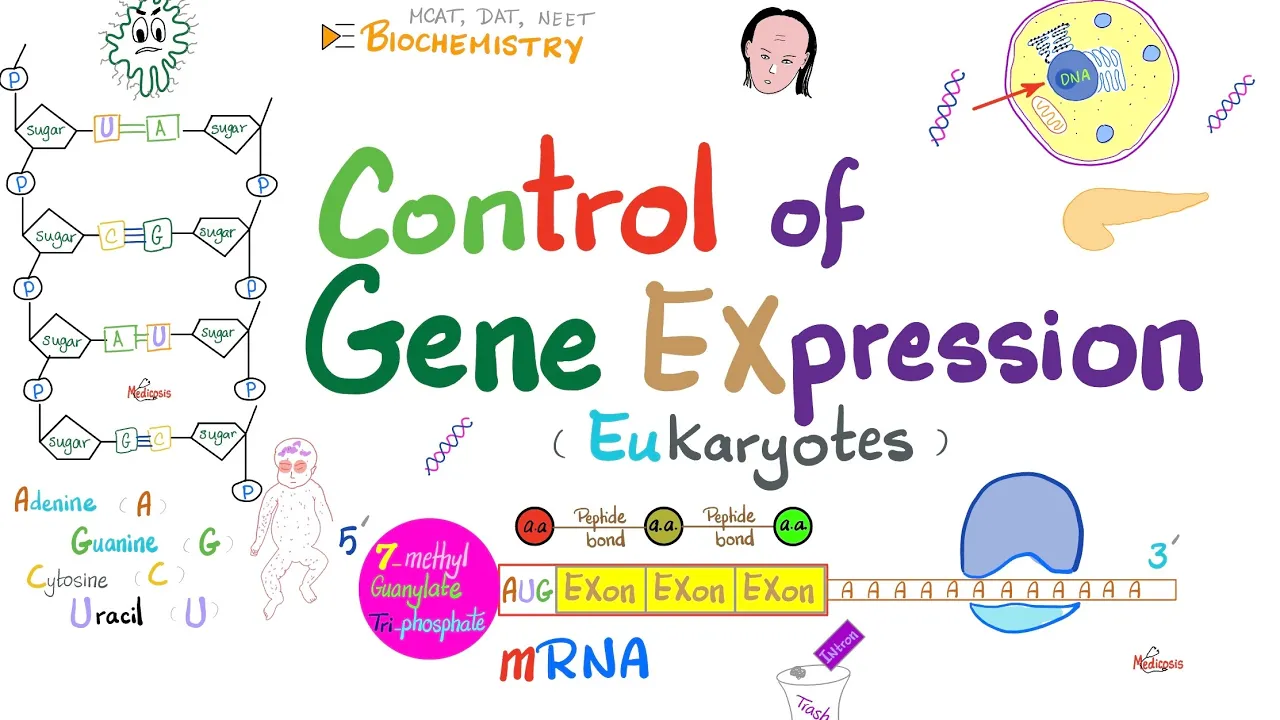
Post-transcriptional modifications in eukaryotes, such as RNA splicing (introns and exons), 5' capping, and polyadenylation.
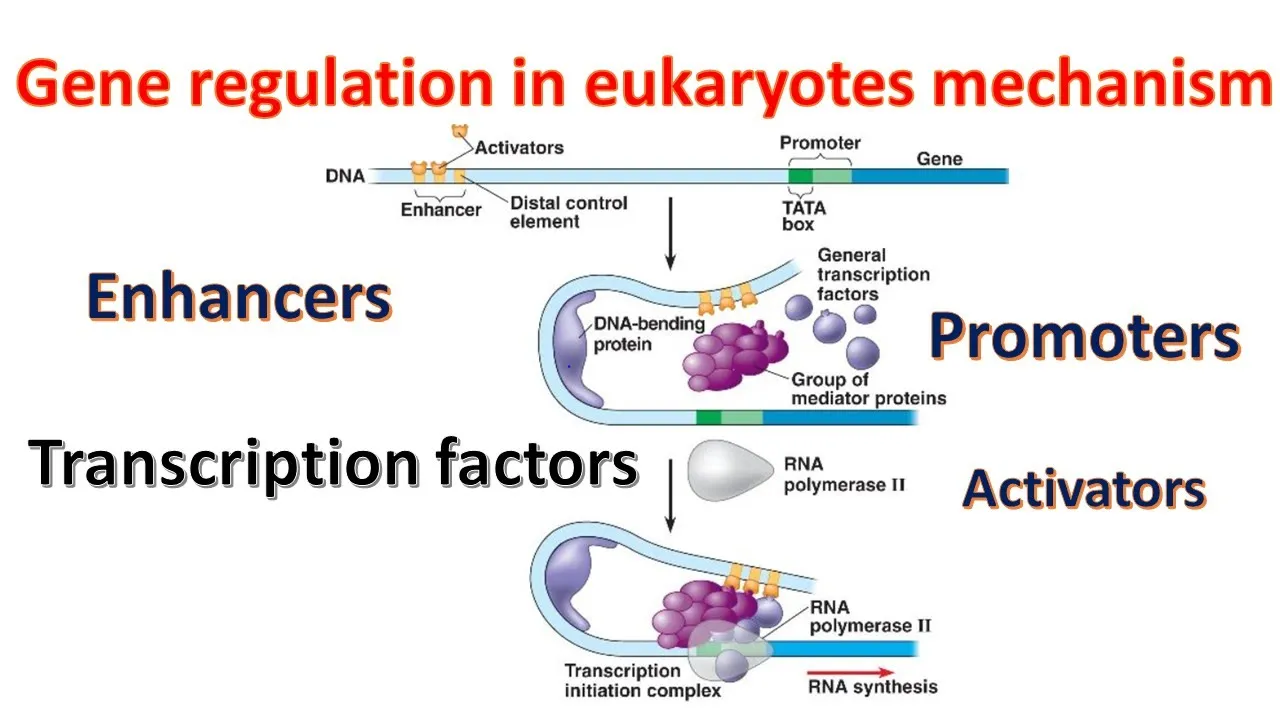
Mechanisms of gene regulation, including how transcription factors, enhancers, and promoters control when and where specific genes are expressed.
The consequences of genetic mutations (such as silent, missense, nonsense, and frameshift mutations) on the resulting amino acid sequence.
Real-world biotechnology applications, such as the design of mRNA vaccines, gene cloning, and how antibiotics target bacterial protein synthesis.
427K views2.8Klikes5:33Original Release: 2016-04-03
Transcription is the process of making RNA from a DNA template.
Several key factors are involved in this process.
Including; DNA, Transcription factors, RNA polymerase, and ATP.
Transcription begins with a strand of DNA.
It is divided into several important regions.
The largest of these is the transcription unit.
This portion of the DNA will be used to produce RNA.
Upstream of the transcription unit is the TATA box.
An enhancer region may also be involved.
Several complexes, known as transcription factors, are required for successful transcription.
The first is TFIID, the largest of the general factors.
A component of this factor, TBP, binds to the DNA using the TATA box to position TFIID near the transcription initiation site.
Other transcription factors, including TFIIA and TFIIB, then attach.
These complexes prepare the DNA for the successful binding of RNA polymerase.
Once RNA polymerase is bound, other transcription factors complete the mature transcription complex.
Now, energy must be added to the system for transcription to begin.
This energy is provided by the reduction of ATP into ADP and Pi.
RNA polymerase then synthesizes an RNA template from the strand of DNA.
Most factors are released after transcription begins.
When the end of the transcription unit is reached, the RNA polymerase dissociates, and the newly formed strand of RNA is released.
Translation is the synthesis of a protein from an mRNA template.
This process involves several key molecules including; mRNA, the small and large subunits of the ribosome, tRNA, and finally the release factor.
The process is broken into 3 stages: initiation, elongation, and termination.
Let's see the process in action.
Eukaryotic mRNA, the substrate for translation, has a unique 3'-end called the poly-A tail.
mRNA also contains codons that will encode specific amino acids.
A methylated cap is found at the 5'-end.
Translation initiation begins when the small subunit of the ribosome attaches to the cap and moves to the translation initiation site.
tRNA is another key molecule.
It contains an anticodon that is complementary to the mRNA codon to which it binds.
The first codon is typically AUG.
Attached to the end of tRNA is the corresponding amino acid.
Methionine corresponds to the AUG codon.
The large subunit now binds to create the peptidyl or (P site) and the aminoacyl or (A site).
The 1st tRNA occupies the P-site.
The 2nd tRNA enters the A-site, and is complementary to the 2nd mRNA codon.
The methionine is then transferred to the A-site amino acid, the first tRNA exits, the ribosome moves along the mRNA, and the next tRNA enters.
These are the basic steps of elongation.
As elongation continues, the growing peptide is continually transferred to the A-site tRNA, the ribosome moves along the mRNA, and new tRNAs enter.
When a stop codon is encountered in the A-site, a release factor enters the A-site and translation is terminated.
When termination is reached, the ribosome dissociates, and the newly formed protein is released.
Up Next

10:09
DNA Replication Explained: Enzymes, Leading & Lagging Strands
@Bozemanscience1
1.4M views•2012-04-07
50:12
Bacterial Communication: Quorum Sensing and Biofilm Formation Explained
@JHUAAP
12.6K views•2011-06-28

5:35
Enteric Nervous System Explained: The Gut's Brain | Neurobiology Lecture
@alumniu6029
438 views•2018-09-12
7:08
Bacteriophages: Earth's Deadliest Killers and Future Antibiotics
@kurzgesagt
34.6M views•2018-05-13
Related Study Plans & Knowledge Roadmaps
Structured learning paths in Biology
biology
RNAi: Biogenesis, RISC & Gene Silencing
01Molecular Biology Foundations: DNA to Protein
02Introduction to RNA Interference (RNAi)
03Molecular Biogenesis of miRNA and siRNA
+ 2 more learning modules
10h5 modules
Explore Roadmap
biology
Mycorrhizae: Signaling, Biophysics & Ecology
01Foundations of Mycorrhizal Symbiosis
02Molecular Signaling and Root Colonization
03Biophysics and Bioenergetics of Nutrient Exchange
+ 1 more learning modules
11h4 modules
Explore Roadmap
biology
Circadian Clocks: TTFL, SCN & Periphery
01Foundations of Molecular Biology & Gene Expression
02Introduction to Chronobiology and Actograms
03The Core TTFL: Molecular Architecture of the Clock
+ 3 more learning modules
14h6 modules
Explore Roadmap
biology
Population Genetics: Math, Drift & Selection
01Genetic & Probability Foundations
02The Hardy-Weinberg Principle and Baseline Models
03Mathematical Modeling of Natural Selection
+ 3 more learning modules
18h6 modules
Explore Roadmap