













DNA replication is a semi-conservative process where each strand of the double helix serves as a template for synthesizing a complementary strand; the Meselson-Stahl experiment confirmed this mechanism using nitrogen isotopes, and the process involves multiple enzymes including helicase (unwinding DNA), primase (adding RNA primers), DNA polymerase (synthesizing new strands), and ligase (joining Okazaki fragments on the lagging strand), with replication occurring bidirectionally from origins of replication in both prokaryotic and eukaryotic cells.
DNA Replication Explained: Enzymes, Leading & Lagging Strands
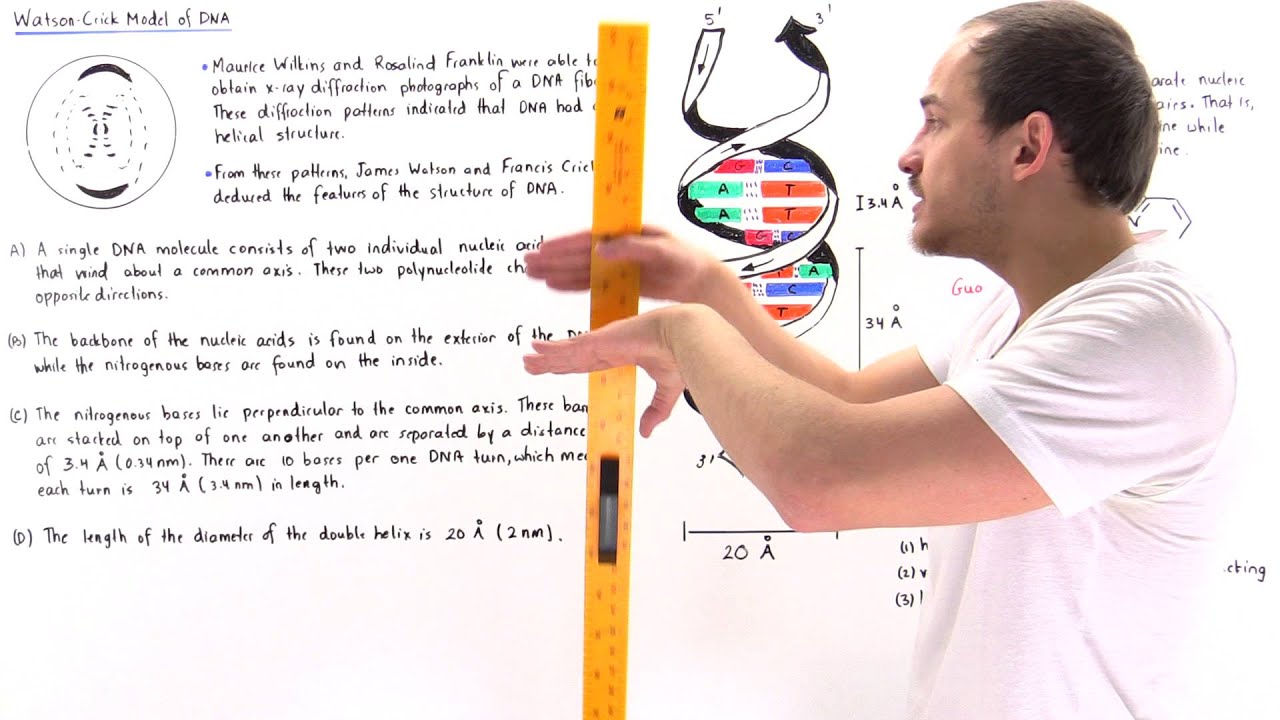
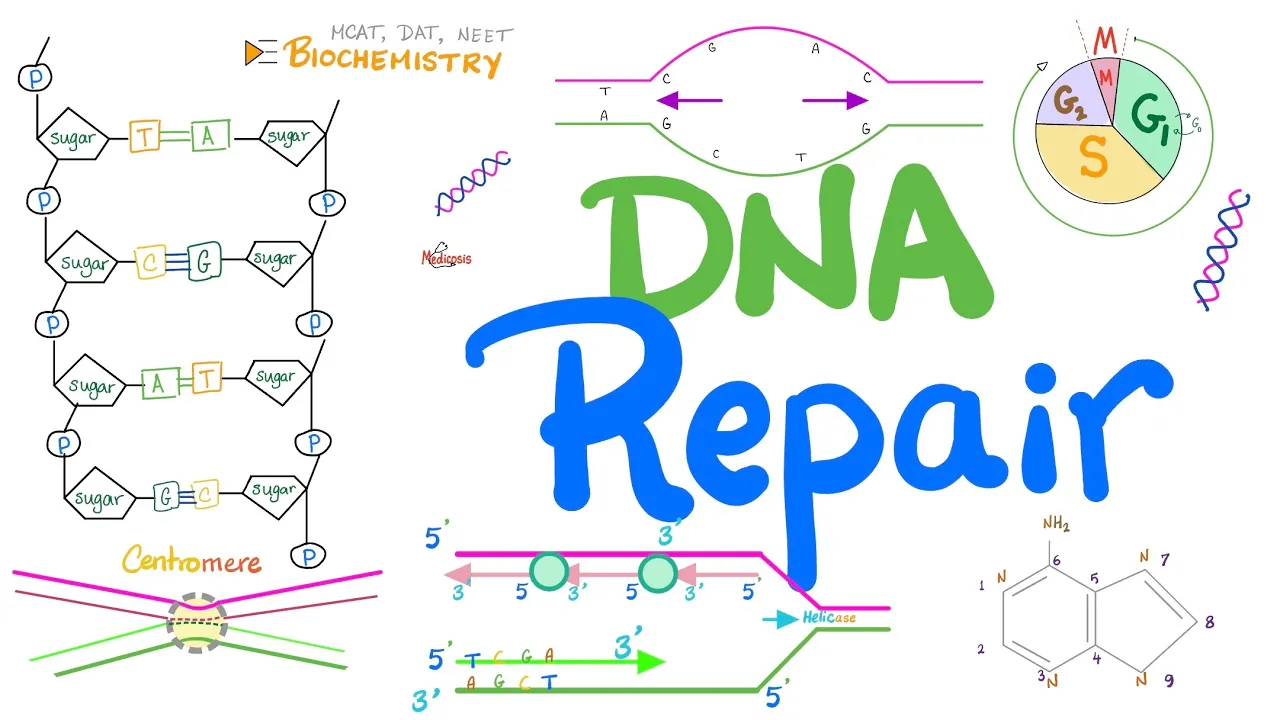
Added:The double-helix structure of DNA, including its antiparallel orientation (5' to 3' directions) and nucleotide composition.
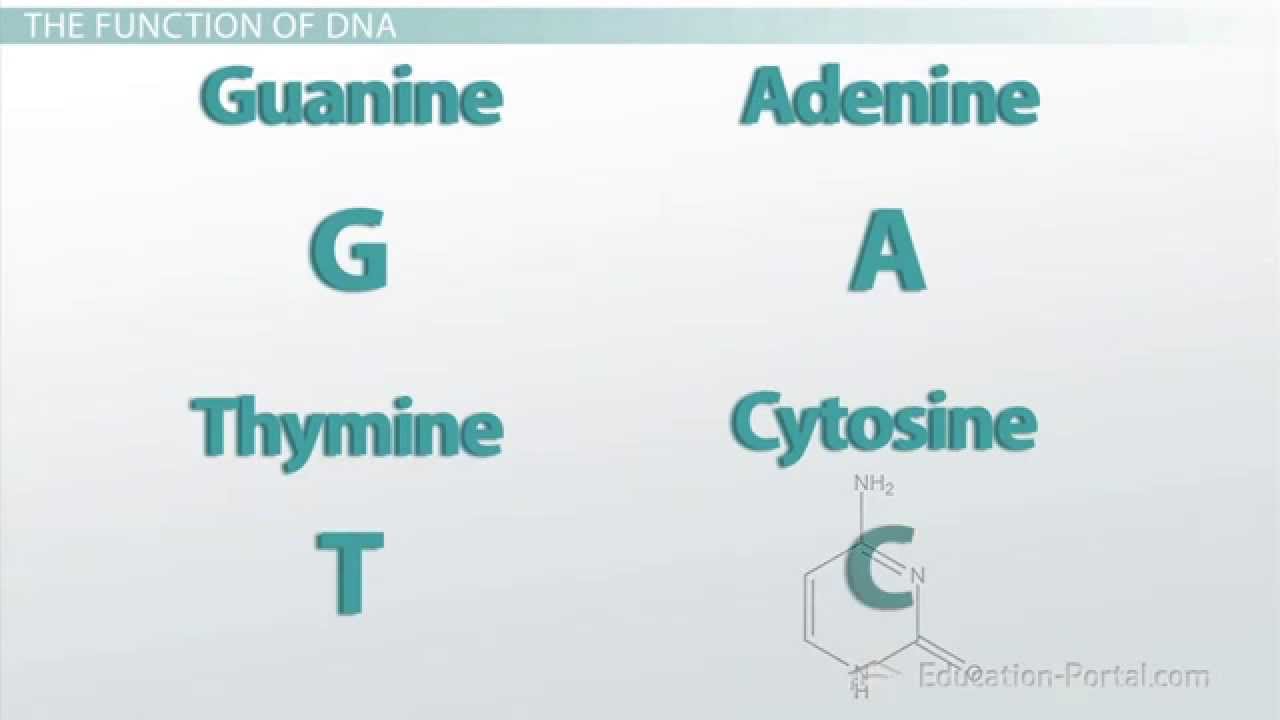
Complementary base pairing rules (adenine with thymine, cytosine with guanine) and hydrogen bonding.
The eukaryotic cell cycle, specifically the purpose of the S-phase (synthesis phase) in preparing for cell division.
Basic concepts of chemical isotopes and density-gradient centrifugation, which are foundational to understanding the Meselson-Stahl experiment.
DNA repair mechanisms (such as proofreading, mismatch repair, and nucleotide excision repair) and how replication errors lead to mutations.
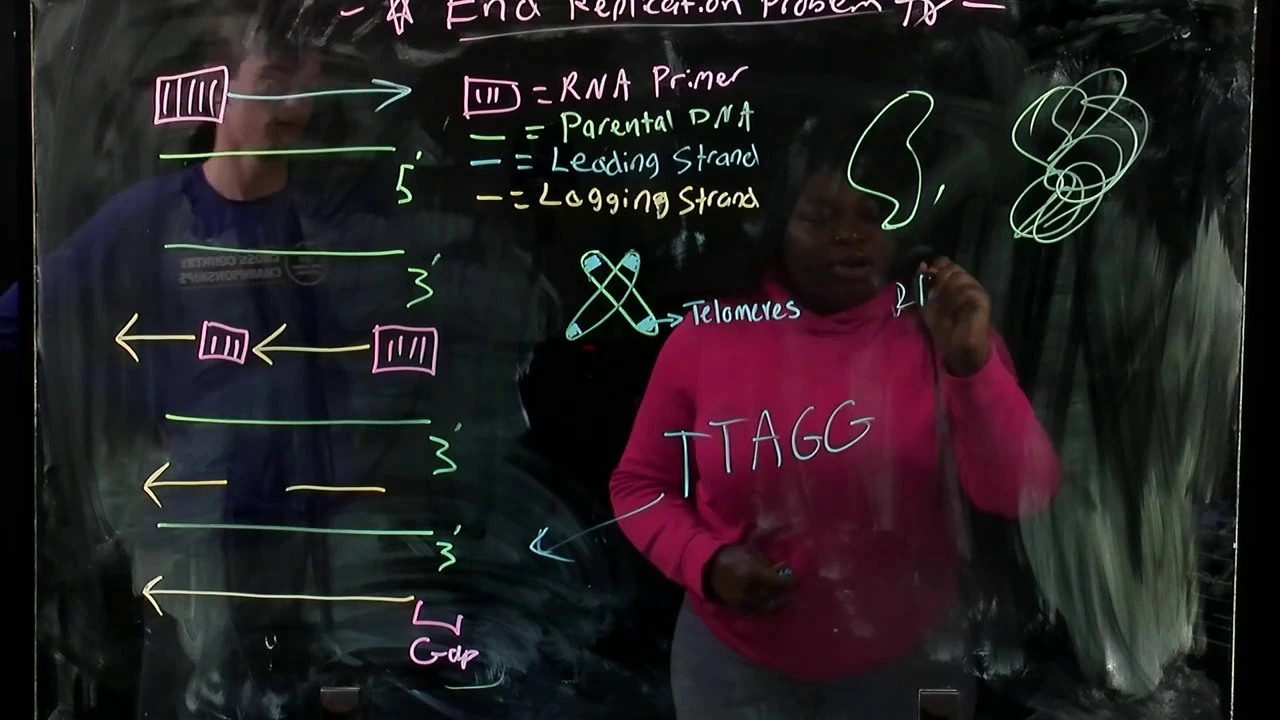
The 'end-replication problem' in linear chromosomes and the role of telomeres and telomerase in preventing chromosome shortening.
The Central Dogma of Molecular Biology: how replicated DNA is transcribed into RNA and translated into functional proteins.
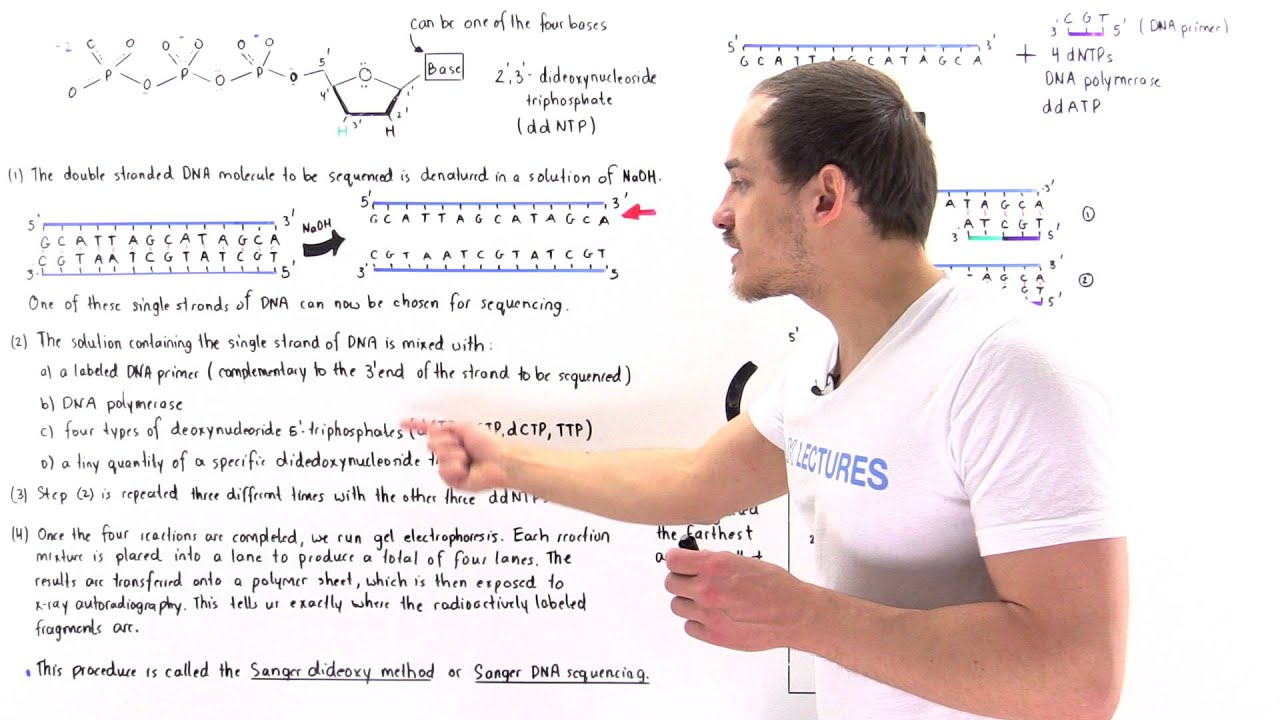
Biotechnology applications derived from replication principles, specifically Polymerase Chain Reaction (PCR) and Sanger DNA sequencing.
1.4M views10.5Klikes10:09Original Release: 2012-04-07
Hi. It's Mr. Andersen and in this podcast I'm going to talk about DNA replication.
That's the process by which DNA makes a copy of itself. Why is that important? Well this right here is an egg being fertilized by a sperm. That means it's about to become a zygote.
It'll divide through mitosis to eventually create an embryo, a fetus and eventually create a human. And that human is going to have billions and trillions of cells. And we have to make sure that each of those cells has the same exact DNA that was in that original cell.
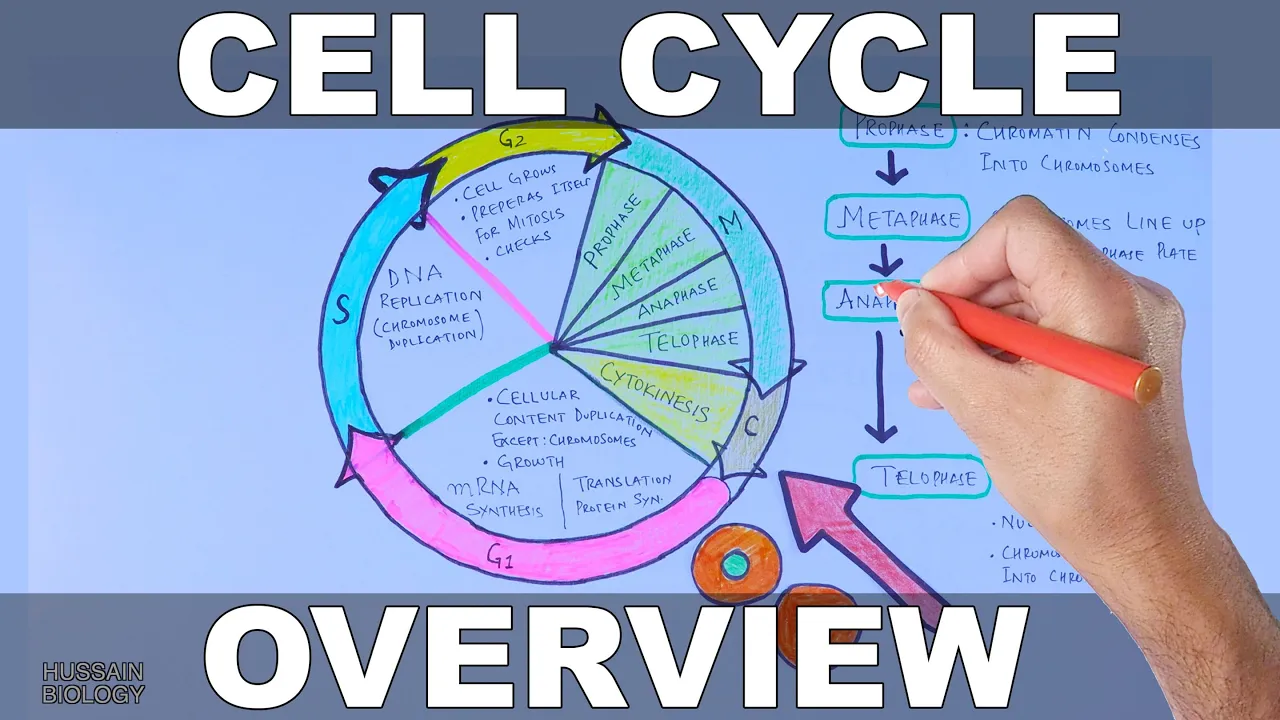
And we do that through the process of DNA replication. If we were to point specifically where that occurs, well in eukaryotic cells, like this little baby here, that cell cycle basically is remember, the G1 phase where it grows. The S phase where we copy all of the DNA. The G2 phase is where it continues to grow. So this whole process right here is called interphase. We then have mitosis where we go through prophase, metaphase, anaphase, telephase, cytokinesis. But right here we have to make sure during that S phase that we copy all of the DNA. Now mitosis is not found in prokaryotes. But they're going to use a process called binary fission. And if you look right here, here's their nucleoid region. They'll copy their DNA perfectly before they split in half. And so in all life on our planet, DNA replication is super important. And so basically when they figured out the structure of DNA, three theories came about as to how it actually makes copies of itself.
The first is semi-conservative, conservative and dispersive. Watson and Crick actually believed in this. They believed that DNA would split in half. And then you'd copy new strands on either side. But there were other scientists who believed in a conservative theory that that first DNA remains intact and it kind of makes a photocopy of itself. And then some believe that there was kind of a combination of conservative and semi-conservative. That chunks of it were being split between the two. And this had to do with, they thought, the histone proteins and how the DNA wrapped around it. And so basically the whole thing was figured out through the Meselson-Stahl experiment. Basically what they used was two different types of nitrogen. Good old run of the mill nitrogen 14. And then nitrogen 15. An isotope that's heavier than nitrogen 14. So basically they bred a bunch of e.coli on nitrogen 15 until all of their DNA was nitrogen 15. They then put them on a broth of nitrogen 14. And basically in that first generation if it would have been conservative, we would have had one band that would have been totally heavy at this N15 line. And then one that was at N14. But instead we got this intermediary amount of DNA. In other words it was a mix of the two. And then through generation after generation after generation, they were able to figure out that this is how DNA copies itself. It copies itself semiconservatively.
And so to look at that in a little better detail, basically here is your DNA. It's a double helix. It will unzip in the middle. So you can see it's unwinding right here.
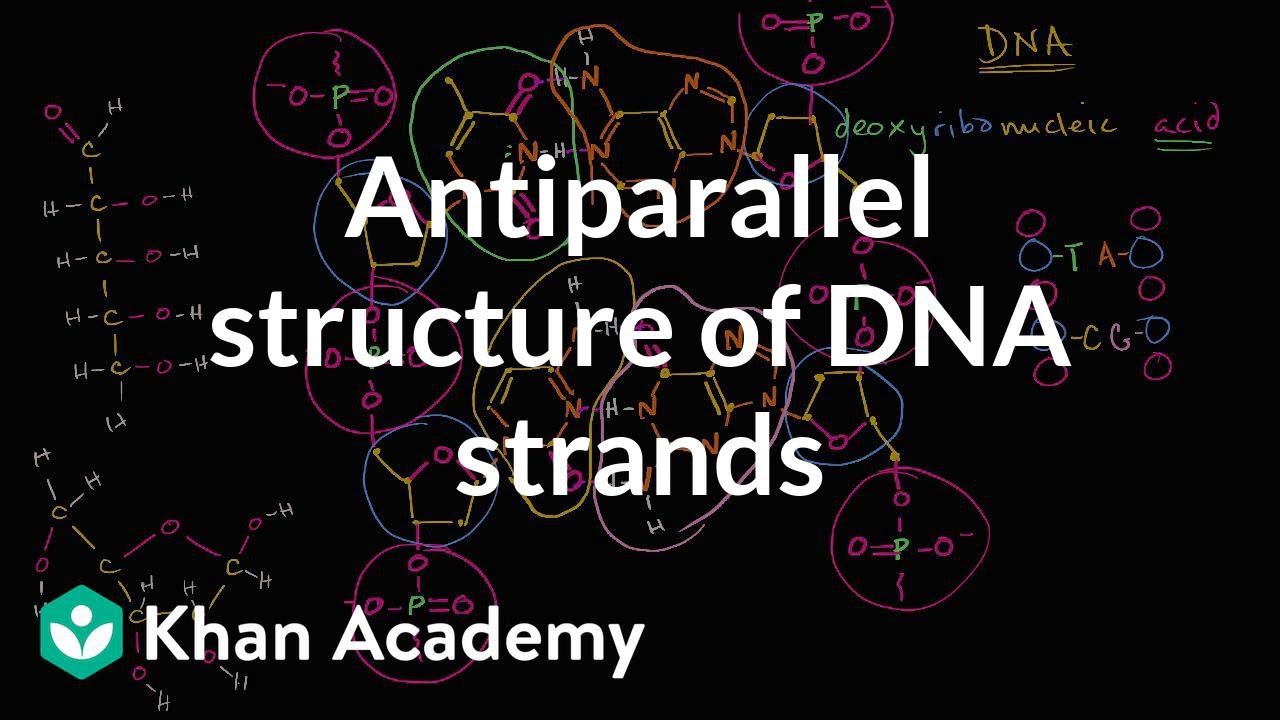
And then we're going to add new strands on either side. So we eventually start, excuse me, we start with one strand and we're going to end up with two strands. Each of these strands are identical to that first strand. And each of them are going to contain half of that original DNA. So again it's semiconservative in nature. Before we actually talk about the process of DNA replication, we should talk about DNA and the parts of DNA. Remember DNA is going to have three parts to it. Your basically going to have a sugar. That would be this deoxyribose sugar right here. I could circle it. This is going to be our deoxyribose sugar.
You're going to have a nitrogenous base attached to that. And then you're going to have a phosphate group. And so there are three parts to every nucleotide. Again we've got a sugar and a phosphate and then a nitrogenous base. But you could see that there's going to be another nucleotide right here. And another nucleotide going to be found right here. So let me clean that up a little bit. Because it's anti parallel in nature. In other words DNA runs next to each other. So it's parallel. But it's antiparallel in nature. In other words the two strands of DNA are actually running in opposite direction. And when I mean running, I mean chemically running in either direction. So basically how do we tell which way it is going? Well we do that based on the sugar. And so if we look at this sugar right here, this sugar is going to have a carbon here. So we call that carbon the 1 prime carbon. It's going to have a carbon right here. And we call that the 2 prime carbon. It's going to have a carbon right there. We call that the 3 prime carbon. It's going to have a carbon right there called the 4 prime. And then it's going to have a carbon right here. And that's called the 5 prime. And so basically if you look here that whole thing is going to run, from the let's look way down here, 1, 2, 3 prime end. Oops. Let me go back. So that's going to run from the 1, 2, 3 prime end right here all the way up to the 5 prime end over here. Because here's that 5 prime. If we look on the other side of the DNA you can see it's running the opposite direction. From the 3 prime to the 5 prime. And that's going to be important when we look at DNA and how it copies itself. And so let's look at that. If we look on the next slide, in DNA replication there are tons and tons and tons of enzymes that are helping out.
It's way more complex than this. But from a diagram level this is pretty good. So basically the DNA is going to be a double helix in this direction. But were going to have this enzyme right here. It's called helicase. And it's basically going to unwind the DNA. So we're going to go from this double helix to these single strands of DNA on either side. These strands are going to be held in place using these enzymes. They're called single strand binding proteins. They're basically going to hold it in place. And so now we have that unwound DNA. The big enzyme that's super important in here is called DNA polymerase. So if we look on this side, DNA polymerase is going to race down the DNA and it's going to add new nucleotides on the other side of the DNA. So here's the original strand. And you can see that DNA polymerase has already been here because it's added new strands in this direction.
Now the trick is that we can only add new nucleotides on the 3 prime end. We can't add it on the 5 prime end. And so basically again. So here's the 5 prime end. If we follow that right down here we can add DNA on this side, on the 3 prime end and it's just going to go on silk smooth. In other words helicase is unwinds it. DNA polymerase adds the new letters. And on this side we call that the leading strand. Everything is going to be perfect. It's just going to flow on there perfectly. But the problem is since we can only add DNA on the 3 prime end, we can't add it up here. We can't add it on the 5' end over here. And so what's evolved is this really elegant method called the lagging strand.
So we can finish out the other side. And it's lagging strand because it tends to lag behind the other side. If you have done any sewing, which I never have, it's kind of like back stitching. In other words you're going in this direction but you're back stitching the way as you go. And so basically there are a number of different parts that are found in here. First thing that we have to do is we have to put down a primer. And so there's going to be DNA or excuse me, RNA primase. And primase is going to add down a primer.
A primer is just one little bit of RNA. So we'll add a little bit of an RNA first. And after we've added that RNA primer, then DNA polymerase can go in this direction. So once the primer is in place, then we can run in that direction. And we can run in that direction.
We can keep running in that direction. So we've got to put a little RNA down and then DNA polymerase goes. Unfortunately it can't connect it here. Because we've got DNA bumping into RNA. And so there's going to be another enzyme. And that enzyme is called, let me find it, DNA ligase. And so basically what DNA ligase is going to do is it's going to go after that and clean up all of these messy junctions here. And it's going to put DNA straight across it. And so basically that's a lot of stuff going on. What is all of that doing? It's making sure that that message that was found in the DNA is copied to that two new strands of DNA on either side. And there's some videos out on YouTube about how DNA replication works. And they put together some computer animations of it, and it's wild.
It doesn't look like this at all. You have the lagging strand coming back upon itself.
So it's pretty amazing. Or you could even read the story of Okazaki, the person who came up with this idea of how these Okazaki fragments work. Another fascinating story.
But we've got to finish. So basically what I want to talk about is origins of replication or where DNA replication starts. Well in life there are basically two life types. We've got the prokaryotics, which is going to be the bacteria and the archaea. And then eukaryotics and that's going to be like you. And if you're prokaryotic you're going to have a single loop of DNA. This is actually a plasmid but it looks the same way. You have a strand of DNA in a perfect loop. And so for them they can just simply start copying it on this side.
The origin of replication is at one point. They move around and eventually what they'll have is two strands of DNA. It's going to be an exact copy of that. And again in binary fission those become different cells. But in us we have such a long DNA that we have to wad it up to even get it to fit in a chromosome like these pictured right here. In other words your DNA, in a cell is going to be like that long. And so if we were to start on one side and start copying it, it would take forever. And so basically what happen is we work in two directions. So basically there will be a site of replication where it starts here.
But we're going to have it moving in this direction and moving in that direction. And so basically that diagram that I just showed you, I think this would be a better picture of it. That diagram where we had the DNA here. And then we had those new strands of DNA that are being formed. This would be one of those replication forks we call it. But there would be another replication fork at the other side. And also in eukaryotic cells we'll have multiple sites or multiple origins or replication. So we'll have one here. We'll have on here.
We'll have one here. In other words when we're copying the DNA it's going to start copying in a bunch of different points. And then those replication forks will move towards each other until we eventually have two strands of DNA. And so again, DNA replication is super important.
It's incredibly accurate. It rarely makes mistakes. And I hope that was helpful.
Up Next

14:33
CRISPR-Cas9 Mechanism: Adaptive Immunity vs Genetic Engineering
@elliotnicholson5117
40.3K views•2015-03-01
50:12
Bacterial Communication: Quorum Sensing and Biofilm Formation Explained
@JHUAAP
12.6K views•2011-06-28

11:43
Hardy-Weinberg Equation: Allele & Genotype Frequency Explained
@Bozemanscience1
578K views•2013-09-24
7:08
Bacteriophages: Earth's Deadliest Killers and Future Antibiotics
@kurzgesagt
34.6M views•2018-05-13
Related Study Plans & Knowledge Roadmaps
Structured learning paths in Biology
biology
RNAi: Biogenesis, RISC & Gene Silencing
01Molecular Biology Foundations: DNA to Protein
02Introduction to RNA Interference (RNAi)
03Molecular Biogenesis of miRNA and siRNA
+ 2 more learning modules
10h5 modules
Explore Roadmap
biology
Mycorrhizae: Signaling, Biophysics & Ecology
01Foundations of Mycorrhizal Symbiosis
02Molecular Signaling and Root Colonization
03Biophysics and Bioenergetics of Nutrient Exchange
+ 1 more learning modules
11h4 modules
Explore Roadmap
biology
Circadian Clocks: TTFL, SCN & Periphery
01Foundations of Molecular Biology & Gene Expression
02Introduction to Chronobiology and Actograms
03The Core TTFL: Molecular Architecture of the Clock
+ 3 more learning modules
14h6 modules
Explore Roadmap
biology
Population Genetics: Math, Drift & Selection
01Genetic & Probability Foundations
02The Hardy-Weinberg Principle and Baseline Models
03Mathematical Modeling of Natural Selection
+ 3 more learning modules
18h6 modules
Explore Roadmap