The central dogma describes how genetic information flows from DNA to RNA to protein: DNA is transcribed into messenger RNA (mRNA), which undergoes splicing to remove non-coding introns and retain coding exons; the mature mRNA is then translated by ribosomes, where transfer RNA molecules deliver specific amino acids based on the triplet codons read from the mRNA, ultimately assembling the protein chain.
The Central Dogma of Biology: DNA to RNA to Protein
Added:Deep Dive
Understanding of basic cell structure, particularly the distinction between the nucleus (where transcription occurs) and the cytoplasm (where translation occurs).

الليلة الأخيرة | لايف حل امتحان ٢٠٢٣ دور أول وثان | ليالى الامتحان الجوهرية
396.1K
In eukaryotic cells, transcription (النسخ) produces mRNA from DNA in the nucleus, while translation (الترجمة) produces proteins from mRNA in the cytoplasm. The question asks about the relationship between transcription and translation. The correct answer is that transcription produces mRNA (which contains codons) and translation produces proteins (which contain amino acids). The mRNA codons are read by ribosomes to assemble amino acids into polypeptide chains. The two processes are spatially separated in eukaryotic cells (transcription in nucleus, translation in cytoplasm).
Click to watch →
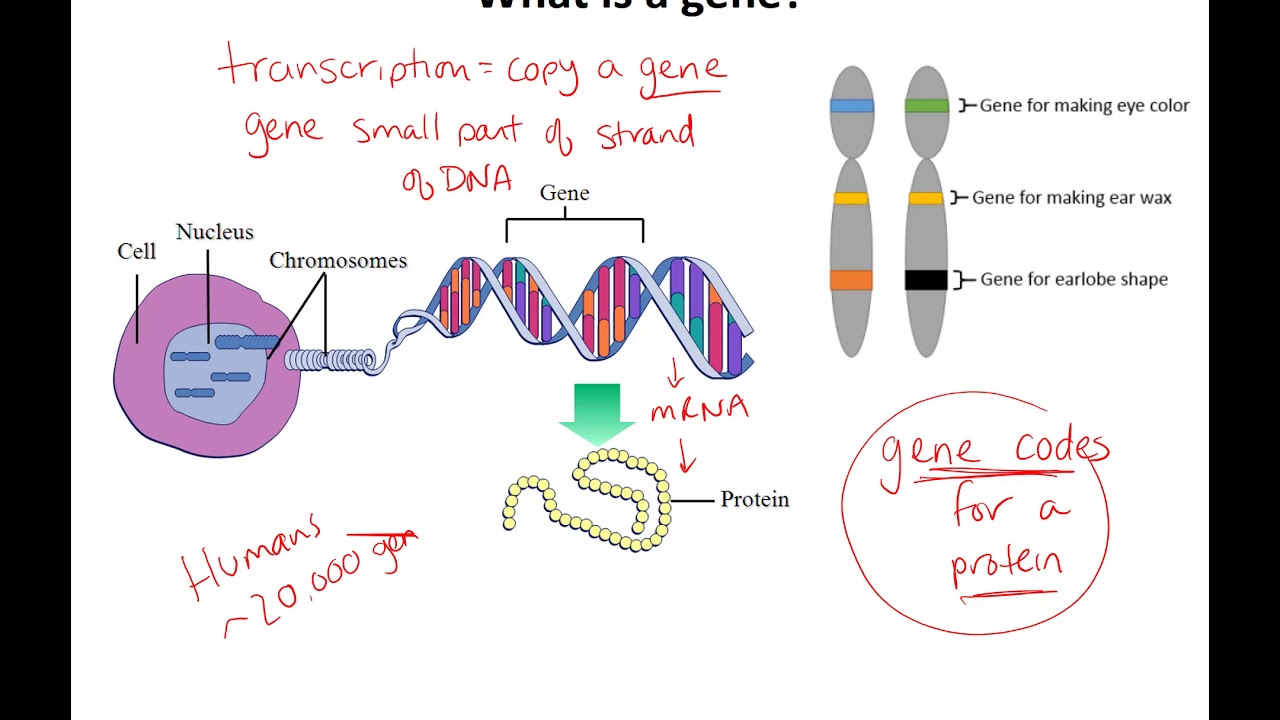
Ch 10 lecture 1 transcription translation basics SV
139
Genes are located at specific positions on chromosomes, each responsible for different traits. Transcription only copies small portions of information from entire chromosomes. All cells share common features: DNA, plasma membrane, ribosomes, and cytoplasm. Prokaryotes and eukaryotes differ in transcription location (cytoplasm vs nucleus), RNA processing (eukaryotes have capping, tailing, splicing), and cytoplasm/cytosol distinction. Translation occurs in the cytoplasm/cytosol in both cell types.
Click to watch →

Repaso Núcleo, Replicación del ADN, Síntesis de proteínas
172
In eukaryotic cells, DNA replication and transcription occur in the nucleus because DNA is located there, while translation occurs in the cytoplasm where ribosomes are located. Heterochromatin is highly condensed, transcriptionally inactive DNA that cannot be transcribed due to its condensed state. Euchromatin is less condensed and transcriptionally active. In eukaryotes, transcription occurs in the nucleus, while in prokaryotes, transcription occurs in the cytoplasm (nucleoid region). This compartmentalization in eukaryotes separates transcription from translation, unlike prokaryotes where both processes can occur simultaneously. The nucleus controls gene expression by regulating which genes are transcribed.
Click to watch →

जीवों में जनन | Biology Class 12 Chapter 1 | Crash Course | Reproduction In Organisms One Shot
92.5K
A cell consists of two main components: the nucleus (केंद्रक) and the cytoplasm (कोशिका द्रव्य). The nucleus is the control center of the cell, containing genetic material. The cytoplasm is the fluid substance that fills the cell and contains various organelles. The instructor explains that understanding cell structure is fundamental to understanding how reproduction occurs at the cellular level.
Click to watch →

Science | বিজ্ঞান | Chapter 2 | জীবের বৃদ্ধি ও বংশগতি | Class 8 Star Batch | Fahad Sir
137.6K
The instructor explains the basic structure of a cell. A cell consists of two main components: (1) Nucleus (নিউক্লিয়াস) - also called the cell's control center or brain (কোষের মস্তিষ্ক), which contains genetic material and controls all cellular activities, and (2) Cytoplasm (সাইটোপ্লাজম) - the jelly-like substance that fills the cell and contains various organelles. The nucleus is surrounded by cytoplasm, which provides the medium for cellular processes.
Click to watch →
Deep Dive
Familiarity with the structure of DNA, including nucleotides, base-pairing rules (Adenine-Thymine, Cytosine-Guanine), and its double-helix shape.

شرح DNA بطريقة رائعة-الدرس الثانى-بيولوجى محمد عياد
75K
DNA has a double helix structure consisting of two antiparallel strands. The strands are held together by hydrogen bonds between complementary nitrogenous bases: Adenine (A) always pairs with Thymine (T) through 2 hydrogen bonds, while Guanine (G) always pairs with Cytosine (C) through 3 hydrogen bonds. Each complete helical turn contains 10 nucleotides (20 total). The sugar-phosphate backbone is on the exterior while nitrogenous bases are on the interior.
Click to watch →

DNA Structure
920
DNA is composed of nucleotides containing deoxyribose sugar, phosphate groups, and four nitrogenous bases: adenine, thymine, guanine, and cytosine. Purines (adenine, guanine) have two nitrogen rings, while pyrimidines (thymine, cytosine) have one. DNA forms a double helix with two sugar-phosphate backbones on the outside and bases on the inside. Complementary base pairing occurs through hydrogen bonds: adenine always pairs with thymine, and cytosine always pairs with guanine. Chargaff's rules state that adenine equals thymine and cytosine equals guanine in any DNA sample.
Click to watch →

DNA Structure 4- DNA structure
538
DNA is composed of nucleotides, each containing a phosphate group, pentose sugar (deoxyribose), and nitrogen base. There are four nitrogen bases: guanine, cytosine, adenine, and thymine. Chargaff's rules state that guanine equals cytosine and adenine equals thymine in number. Bases are classified as purines (adenine, guanine - larger, double-ring) or pyrimidines (cytosine, thymine - smaller, single-ring). A purine always binds to a pyrimidine: adenine with thymine, guanine with cytosine. This complementary base pairing forms the rungs of the DNA double helix ladder.
Click to watch →

Chap3.5 - nucleic acids
128
DNA is a double-stranded molecule with nucleotides linked by phosphate groups. Base pairing follows specific rules: adenine (A) always pairs with thymine (T) via two hydrogen bonds, while guanine (G) always pairs with cytosine (C) via three hydrogen bonds. The complementary strands run in opposite directions (5' to 3' and 3' to 5'). The G-C bond is stronger than A-T due to three hydrogen bonds versus two. This structure allows DNA to be stable yet accessible for genetic information access.
Click to watch →

الحصة الاولى مكثف - المركبات العضوية الحيوية - الاستاذ حسام عياش - مجانية للتجربة - توجيهي 2006
94.4K
Nucleic acids (DNA and RNA) are polymers of nucleotides containing pentose sugar, phosphate group, and nitrogenous base. DNA has deoxyribose and bases A, T, G, C; RNA has ribose and bases A, U, G, C. Nitrogenous bases are purines (adenine, guanine - double-ring) and pyrimidines (cytosine, thymine, uracil - single-ring). Base pairing rules: A always pairs with T (2 hydrogen bonds), G always pairs with C (3 hydrogen bonds). Chargaff's rules state A=T and G=C in double-stranded DNA. DNA structure involves phosphodiester bonds connecting nucleotides within strands and hydrogen bonds between base pairs.
Click to watch →
Deep Dive
A foundational concept of what a gene is—specifically, a sequence of nucleotides that contains instructions for making proteins.

SSLC Biology 2026-27: Genetics of Life | Part 1|gradient academy
234
A gene is a specific sequence of nucleotides in DNA that contains instructions for making a particular protein. Genes are segments of DNA that code for specific traits or characteristics.
Click to watch →
RAPID REVISION CHAPTER 1& 2 🔥 Biology | Class 10 | Brilliant Pala
976
A gene is a specific segment of DNA that contains a specific sequence of nucleotides. This nucleotide sequence encodes the instructions for making a particular protein or functional RNA molecule. The unique arrangement of nucleotides within a gene determines the specific amino acid sequence of the protein it encodes, which in turn determines the observable characteristics (phenotype) of the organism.
Click to watch →
Structure of gene B.Sc 3rd semester | fine Structure of gene | Process of Transcription
2.3K
A gene is the basic unit of heredity and the functional unit of chromosomes. Genes are segments of DNA composed of nucleotides that carry hereditary information. In eukaryotic cells, genes are located within the nucleus, while in prokaryotic cells, they exist freely in the cytoplasm. The genetic code is linear, meaning nucleotides are directly proportional to amino acids in proteins. A codon is a sequence of three nucleotides that specifies a particular amino acid. This linear relationship between nucleotide sequences and amino acid sequences is fundamental to protein synthesis and genetic expression.
Click to watch →

(Physiology) (pharmacy - first year) (Lec3) (part 1)
340
A gene is a specific sequence of DNA nucleotides. This sequence contains the instructions for making a particular protein. The gene is essentially a segment of DNA that carries the code for building a specific polypeptide chain.
Click to watch →
ثانية ثانوي🧬 بنية ADN والاستيلاد 🏅 من الألف إلى الياء 🧬 كل ما تحتاجه
180.3K
A gene is a specific segment of DNA that contains the instructions for producing a particular protein or trait. Each gene is a specific sequence of nucleotides that codes for a specific function. For example, the insulin gene contains the information needed to produce insulin. Genes are located on chromosomes and are the basic units of heredity. The sequence of nucleotides in a gene determines the sequence of amino acids in the protein it codes for.
Click to watch →
Deep Dive
The primary chemical differences between DNA and RNA, such as the single-stranded nature of RNA and the substitution of Uracil for Thymine.

Transcription 1
431.4K
Another difference between DNA and RNA is their nitrogen bases. In DNA, one of the nitrogen bases is thiamine (thymine), which is a pyrimidine. In RNA, wherever thiamine would normally be found in DNA, instead there is uracil. Uracil is also a pyrimidine and is very similar to thiamine. The only difference between these two molecules is that thiamine has a methyl group at one position, while uracil has only a hydrogen atom at that position. This substitution of uracil for thiamine is a key characteristic of RNA.
Click to watch →

8) TYT Biyoloji - Nükleik Asitler - Zeliha YÜCEL - 2026
61.4K
DNA and RNA share characteristics: both are polynucleotides, both have nucleotides connected by phosphodiester bonds, both contain adenine and guanine, both contain 5-carbon sugars, both contain carbon, hydrogen, oxygen, nitrogen, and phosphorus, and both can be found in prokaryotic cytoplasm and eukaryotic nucleus, mitochondria, and chloroplasts. Key differences: DNA is double-stranded while RNA is single-stranded, DNA contains thymine while RNA contains uracil, DNA contains deoxyribose while RNA contains ribose, and DNA can self-replicate while RNA cannot. RNA types include mRNA (messenger RNA, carries genetic information), tRNA (transfer RNA, transports amino acids), and rRNA (ribosomal RNA, component of ribosomes).
Click to watch →

DNA and RNA - Overview of DNA and RNA
496K
DNA (deoxyribonucleic acid) and RNA (ribonucleic acid) are the two types of nucleic acids that store and transmit genetic information; both are composed of nucleotides containing a phosphate group, a five-carbon sugar (deoxyribose in DNA, ribose in RNA), and a nitrogenous base, with DNA having adenine, thymine, cytosine, and guanine while RNA has uracil instead of thymine, and DNA forms a double helix structure through complementary base pairing (adenine-thymine and guanine-cytosine) discovered by Watson and Crick in 1953, whereas RNA is single-stranded and serves as an intermediary in protein synthesis through three types: messenger RNA (mRNA), ribosomal RNA (rRNA), and transfer RNA (tRNA).
Click to watch →
PLUS TWO PUBLIC EXAM 2026 CHEMISTRY MS PREDICTION 42+ MARK SURE | MS SOLUTIONS
74.4K
DNA and RNA differences are a guaranteed question type in the Plus Two Public Exam Chemistry paper. Students will be asked to differentiate between DNA and RNA. Key differences include: DNA contains deoxyribose sugar while RNA contains ribose sugar, DNA contains thymine while RNA contains uracil, DNA is double-stranded while RNA is single-stranded, and DNA is more stable than RNA. Students should understand these fundamental differences.
Click to watch →
☑️التمرين 01_سلسلة العالمية 🌍 🔥
305.6K
DNA and RNA differ in several key aspects: (1) Number of strands: DNA is double-stranded while RNA is single-stranded; (2) Sugar type: DNA contains deoxyribose while RNA contains ribose; (3) Nitrogenous bases: DNA contains thymine while RNA contains uracil; (4) Location: DNA is primarily found in the nucleus while RNA is found in the nucleus and cytoplasm; (5) Function: DNA serves as the genetic blueprint while RNA carries genetic information and participates in protein synthesis. mRNA is always read in the 5' to 3' direction during translation, starting from the start codon (AUG) at the 5' end.
Click to watch →
Prerequisite Knowledge
- Concept 01Understanding of basic cell structure, particularly the distinction between the nucleus (where transcription occurs) and the cytoplasm (where translation occurs).
- Concept 02Familiarity with the structure of DNA, including nucleotides, base-pairing rules (Adenine-Thymine, Cytosine-Guanine), and its double-helix shape.
- Concept 03A foundational concept of what a gene is—specifically, a sequence of nucleotides that contains instructions for making proteins.
- Concept 04The primary chemical differences between DNA and RNA, such as the single-stranded nature of RNA and the substitution of Uracil for Thymine.
Subsequent Learning
- Step 01The study of gene regulation, exploring how cells control when and how much of a specific protein is produced (e.g., operons, transcription factors).
- Step 02The impact of genetic mutations, including how changes in the DNA sequence can alter mRNA codons and result in non-functional or mutated proteins.
- Step 03Exceptions to the traditional Central Dogma, such as reverse transcription in retroviruses (RNA back to DNA) and the behavior of prions.
- Step 04Real-world biotechnology applications, such as the design of mRNA vaccines, CRISPR-Cas9 gene editing, and recombinant DNA technology.
DNA to RNA
RNA to Protein
DNA to RNA
0:04Playing Section
- 1
Transcription copies DNA into RNA via matching factors.
- 2
Splicing removes introns and joins exons for editing.
- 3
Spliceosome machinery recycles after each intron removal.
Exceptions to the Central Dogma: Non-Canonical Information Flow
While the Central Dogma historically posited a strict, unidirectional flow of genetic information from DNA to RNA to protein, modern molecular biology has revealed major exceptions that challenge this linear paradigm. The discovery of reverse transcription (as seen in retroviruses like HIV) proved that genetic information can flow backward from RNA to DNA. Additionally, RNA replication allows information to transfer directly from RNA to RNA in certain viruses. Beyond nucleic acids, prions demonstrate that proteins can transmit biological information and alter phenotypes by inducing conformation changes in other proteins without any DNA or RNA intermediary. Finally, epigenetic modifications show that environmental factors can influence gene expression and inheritance without altering the underlying genetic sequence. Together, these phenomena establish that biological information flow is multidirectional and far more complex than the traditional dogma suggests.
Deep Dive
The study of gene regulation, exploring how cells control when and how much of a specific protein is produced (e.g., operons, transcription factors).
![Operons: Positive, Negative, Inducible, and Repressible! [Gene Regulation]](https://i.ytimg.com/vi_webp/Qd16nt1WdAc/maxresdefault.webp)
Operons: Positive, Negative, Inducible, and Repressible! [Gene Regulation]
6.5K
Cells regulate gene expression to control when and how much of each protein is produced. This regulation occurs primarily at the transcription level, where RNA polymerase copies DNA into RNA. Operons are clusters of genes regulated together, allowing coordinated control of related proteins. Regulatory proteins called transcription factors control transcription through two mechanisms: positive control (activators that increase transcription) and negative control (repressors that decrease transcription). These proteins require signals to know when to act, and these signals come from small molecules called effectors that bind to regulatory proteins and cause conformational changes, switching them between active and inactive states.
Click to watch →

AP BIOLOGY: Let’s Review THE WHOLE COURSE in 50 MINUTES!
31.3K
Translation occurs at ribosomes where mRNA codons specify amino acids. The genetic code is nearly universal across all species. Translation begins with initiator tRNA carrying methionine binding to AUG start codon. Amino acids are polymerized until stop codons signal termination. The completed polypeptide folds into functional 3D structure. Gene regulation controls when and how much protein is made. In bacteria, inducible operons (lac operon) are activated when needed (lactose binds repressor, releasing it from promoter). Repressible operons (trp operon) are blocked when their product accumulates. In eukaryotes, translational regulation can occur where abundant mRNA exists without corresponding protein, indicating transcription occurred but translation is controlled separately.
Click to watch →
NEET 2026 Class 12 Biology – All Chapters NCERT Summary in One Shot | Seep Pahuja
104.5K
Gene regulation controls when and how much a gene is expressed. In prokaryotes, genes are organized into operons (functional units) that can be regulated together. The lac operon in bacteria is regulated by the presence of lactose and glucose. When lactose is present, the operon is activated to produce enzymes for lactose metabolism. This represents substrate-level regulation of enzyme synthesis.
Click to watch →
Control of Gene Expression | Lecture-2 | CSIR NET/JRF | Life science
7.4K
This lecture introduces gene regulation in prokaryotic systems, focusing on operons as functional units of gene organization. The instructor explains that gene regulation controls when and how much of a gene's product is produced. Bacteria possess a single circular chromosome with genes organized in specific sequences. An operon consists of multiple genes (typically 2-10 or more) organized together in a single unit structure, transcribed from a single promoter. This organization allows bacteria to coordinate the expression of multiple genes involved in the same metabolic pathway or cellular function.
Click to watch →
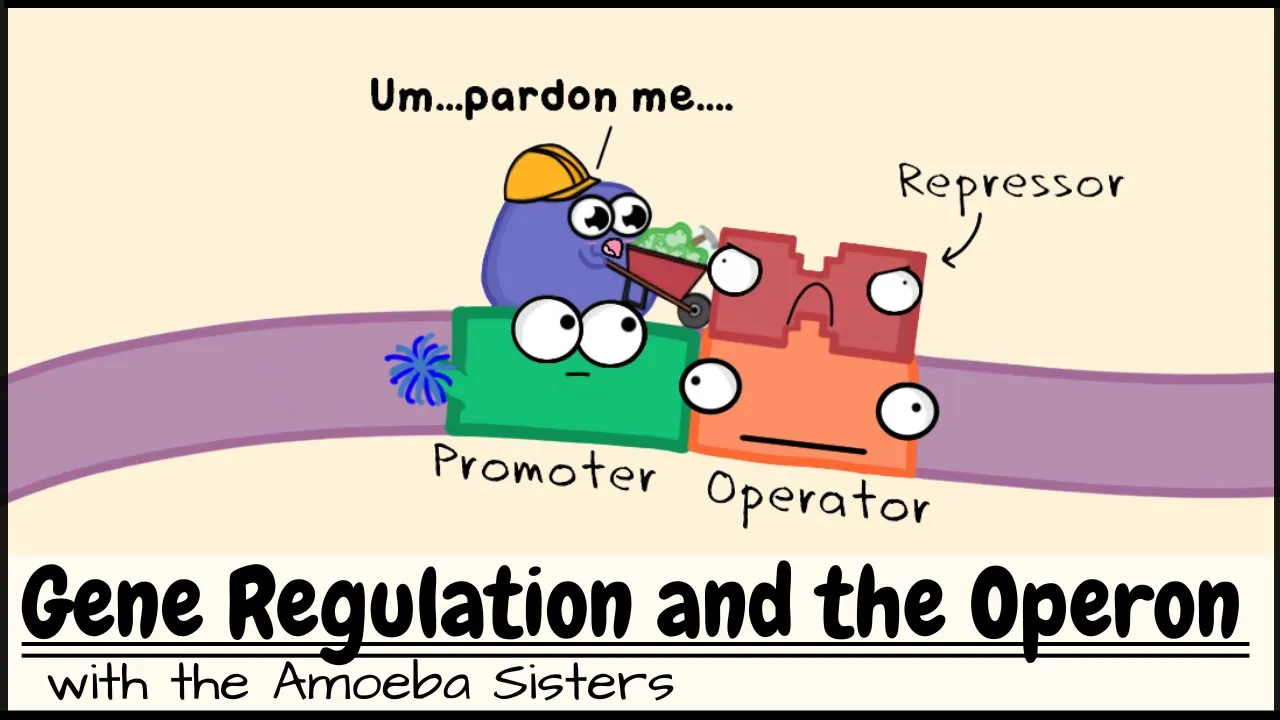
Gene Regulation and the Operon
3.1M
Genes are regulated through proteins that bind to specific gene regions. Some proteins increase the rate of transcription by helping RNA polymerase work more efficiently, while other proteins decrease transcription to the point where it may not occur at all. This regulation determines which portions of DNA are used in each cell type, allowing cells to specialize in producing only the proteins they need for their particular function.
Click to watch →
Deep Dive
The impact of genetic mutations, including how changes in the DNA sequence can alter mRNA codons and result in non-functional or mutated proteins.

Gentherapie (deel 1)
2.9K
A mutation is a change in the nucleotide sequence of DNA. Substitution mutations replace one nucleotide with another, such as thymine being replaced by adenine. Since DNA and mRNA are complementary (with uracil replacing thymine in mRNA), these changes alter codons and can change which amino acid is incorporated during translation. Most mutations that alter amino acid sequences render proteins non-functional because the protein's three-dimensional structure is disrupted. This demonstrates how single genetic changes can have significant consequences for cellular function.
Click to watch →

MUTACIONES GENETICAS
124
Silent mutations change the DNA sequence but do not alter the resulting protein, occurring because the genetic code is degenerate (multiple codons code for the same amino acid). Nonsense mutations change a codon to a stop codon, resulting in a prematurely terminated protein that is typically non-functional. These mutations demonstrate how specific changes in the genetic code can have different consequences for protein function.
Click to watch →

l'information génétique : 2 Bac -- ملخص شامل
54K
Transcription copies DNA into mRNA using RNA polymerase, with uracil replacing thymine. Translation decodes mRNA at ribosomes using tRNA anticodons matching codons. Each three-letter codon specifies an amino acid or stop signal. The genetic code is nearly universal. Mutations are DNA sequence changes causing genetic disorders. Single base substitutions alter amino acid sequences, potentially producing nonfunctional proteins. Analyzing mutations requires tracing effects through the central dogma: identify mutated DNA base, determine resulting mRNA codon, find corresponding amino acid using genetic code, and predict protein function impact. Gene expression produces functional proteins; gene mutations produce nonfunctional proteins causing diseases. Cystic fibrosis results from nonfunctional CFTR chloride channels. Protein function directly determines phenotype: functional proteins yield normal traits, nonfunctional proteins cause abnormalities.
Click to watch →

Objetivo | O código genético
596
Mutations are changes in the DNA sequence. A point mutation (substitution of one base) may or may not change the amino acid due to code degeneracy. A deletion mutation (loss of one base) causes a frameshift, changing all subsequent codons and typically resulting in a non-functional protein. The effects of mutations depend on where they occur and what codons are affected. Scientists use base pairing rules (A-T/U, G-C) to determine DNA sequences from RNA sequences and vice versa.
Click to watch →
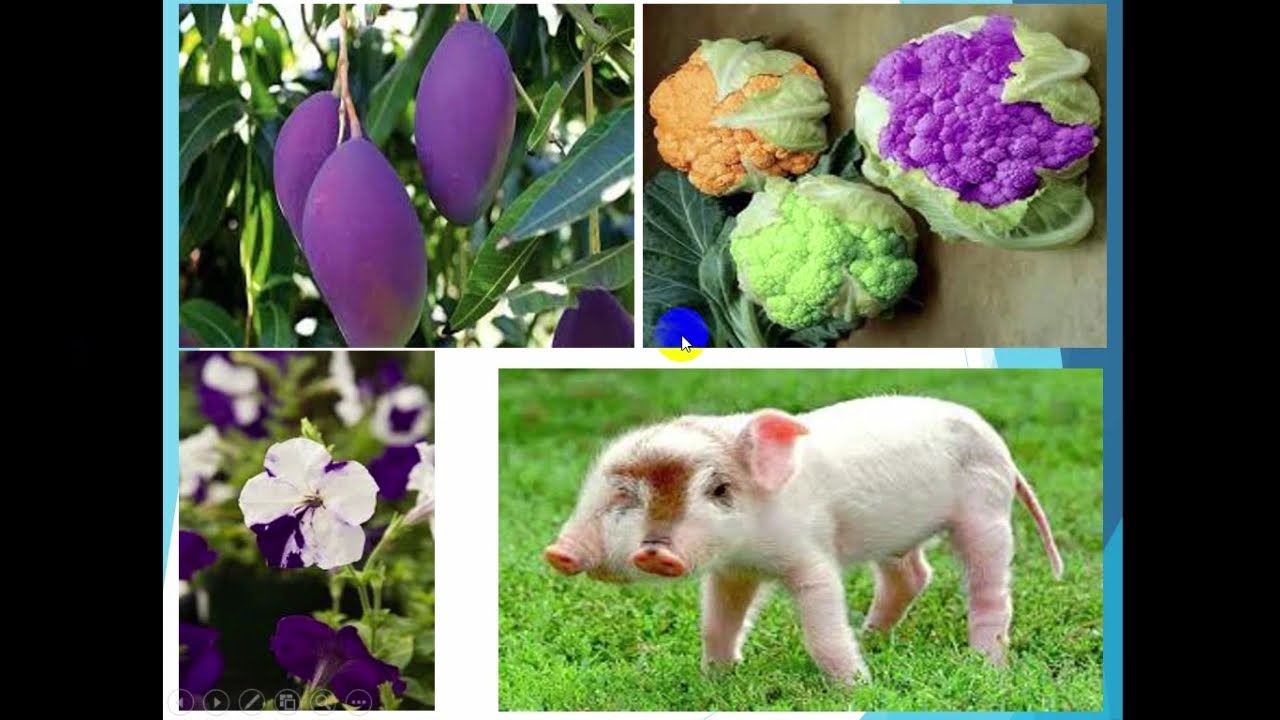
Đột biến gen
4.5K
Gene mutations affect protein synthesis through the central dogma: DNA mutation → altered mRNA during transcription → incorrect amino acid sequence during translation. Consequences include loss of amino acids, addition of incorrect amino acids, altered sequence, or premature termination. Most mutations are harmful, resulting in non-functional proteins. Very rarely, mutations can be beneficial by increasing protein activity.
Click to watch →
Deep Dive
Exceptions to the traditional Central Dogma, such as reverse transcription in retroviruses (RNA back to DNA) and the behavior of prions.

BIF733_Topic010
246
The central dogma states DNA makes RNA makes protein, but this is not absolute. Two major exceptions exist: (1) Reverse transcription, where RNA serves as template for DNA synthesis, exemplified by retroviruses like Rous Sarcoma Virus (discovered the concept) and HIV (causes AIDS). The HIV replication cycle involves RNA-to-DNA conversion, integration into host chromosomes, transcription to RNA, and viral particle assembly. (2) Prions are proteins that can alter the 3D structure of other proteins, causing diseases like Mad Cow Disease, Creutzfeldt-Jakob Disease, and Scrapie. These exceptions demonstrate that genetic information flow is not always unidirectional.
Click to watch →
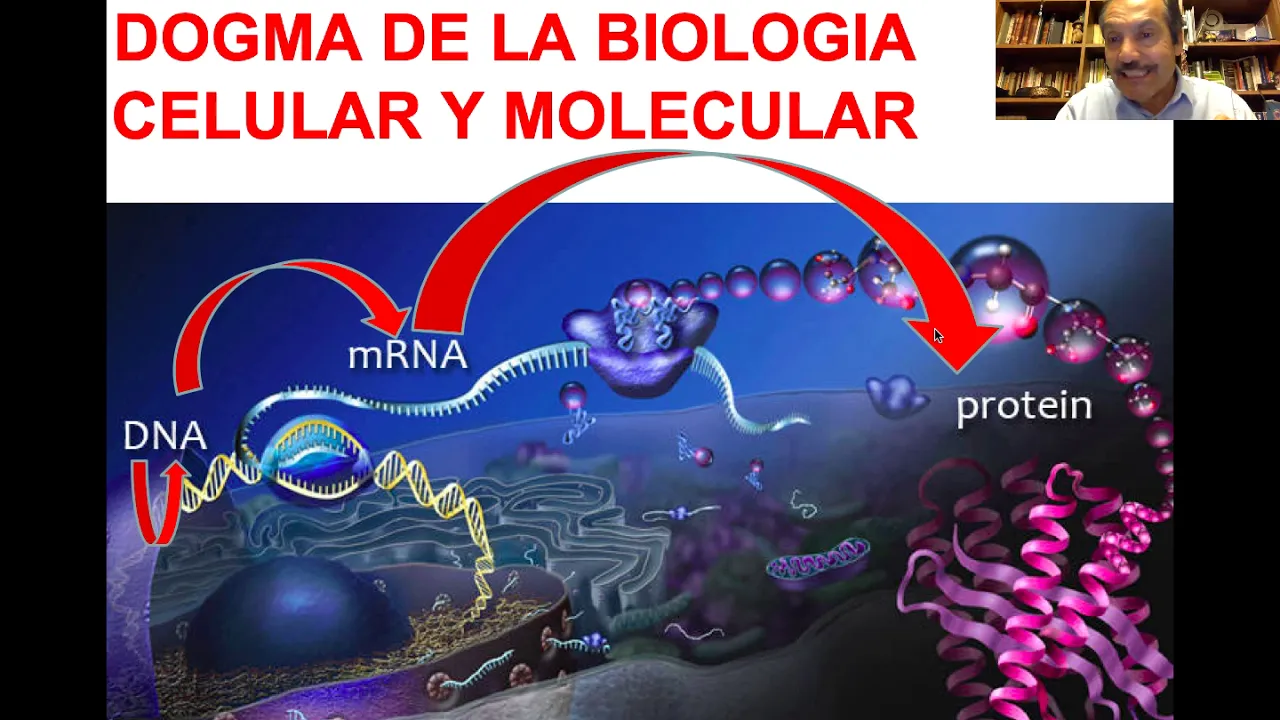
Dogma central biología celular y molecular
2.7K
The Central Dogma has several exceptions observed in nature and laboratory settings. Reverse transcription allows RNA to be converted back to DNA, primarily in retroviruses like HIV, using the enzyme reverse transcriptase. RNA can also serve as genetic material in some viruses. RNA-dependent RNA polymerase allows RNA to be copied directly from RNA templates. Prions represent another exception as infectious proteins that can convert normal proteins into misfolded forms without any genetic material. Unlike other biological entities, prions do not contain DNA or RNA. Instead, they are misfolded proteins that can induce normal proteins to adopt the same misfolded conformation. When a prion encounters a normal protein, it causes the normal protein to change its shape and become a prion as well. This process can continue, with each prion converting multiple normal proteins, leading to a cascade of misfolded proteins. In the brain, this accumulation of misfolded proteins causes tissue damage and neurodegeneration, resulting in fatal diseases like mad cow disease and Creutzfeldt-Jakob disease. Despite the diversity of human characteristics, approximately 99.9% of human DNA is identical among all individuals, with the remaining 0.1% accounting for individual differences.
Click to watch →
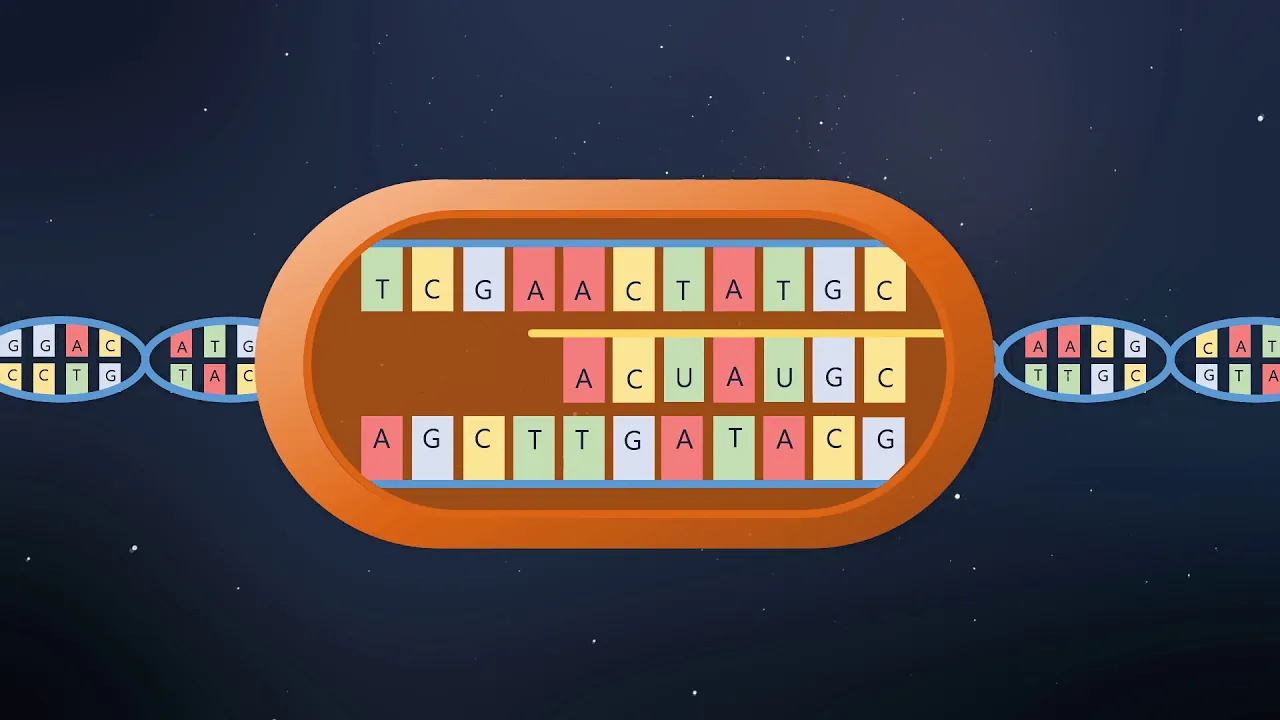
Central Dogma(센트럴 도그마, 유전정보의 중심원리)
10K
Translation converts mRNA codons into proteins using ribosomes and tRNA molecules. The genetic code uses three-nucleotide codons to specify 20 amino acids. Exceptions include reverse transcription (RNA to DNA, as in HIV) and prion proteins (protein to protein information transfer). Despite these exceptions, the Central Dogma remains fundamental to molecular biology, enabling genetic manipulation and providing insights into life's fundamental mechanisms.
Click to watch →

Molecular Basis of Inheritance | Part - 2 | Biology | NEET 2023 | Seep Pahuja
317K
The Central Dogma of Biology, proposed by Francis Crick, describes the flow of genetic information: DNA replicates to make copies of itself, DNA is transcribed to make RNA, and RNA is translated to make proteins. This describes the one-directional flow of genetic information in cells. However, in 1970, Howard Temin and David Baltimore discovered reverse transcription - the process by which RNA can be used to synthesize DNA. This was discovered in retroviruses (like Rous sarcoma virus) and challenged the one-directional Central Dogma. Reverse transcription is now known to be important in HIV and other retroviruses, where the viral RNA genome is converted to DNA inside host cells.
Click to watch →

Molekuláris neurobiológia, a tudomány dogmái és a Covid | Metszéspont Waldmann Szabolccsal
12.3K
The central dogma describes DNA → RNA → protein flow, but retroviruses (like HIV) can reverse this by converting RNA back to DNA. Prions are misfolded proteins that induce normal proteins to misfold, causing diseases like mad cow disease. These exceptions challenged the established paradigm and expanded our understanding of genetic information flow.
Click to watch →
Deep Dive
Real-world biotechnology applications, such as the design of mRNA vaccines, CRISPR-Cas9 gene editing, and recombinant DNA technology.
Introduction To Biotechnology I Biotechnology I Part -1 I Unit - 1 I Semester - 2 #organicchemistry
533
Key tools in biotechnology include: Recombinant DNA technology for inserting designed genes into vectors and host cells to produce desired products. PCR (Polymerase Chain Reaction) amplifies DNA. Gel electrophoresis separates DNA fragments by size. CRISPR-Cas9 is a gene therapy tool for treating various diseases. Monoclonal antibodies are produced in labs using B cells and cancer cells for disease-specific antibodies. Bioreactors and fermenters are used for tissue culture, cell culture, and producing products like antibodies, enzymes, toxins, and flavonoids. Real-world applications include: Cancer therapy using monoclonal antibodies like Rituximab, infertility treatment using recombinant FSH hormone, anemia treatment using recombinant erythropoietin, and thrombosis treatment using recombinant tissue plasminogen activator. The human insulin case study demonstrates how recombinant DNA technology replaced pig pancreas-derived insulin (which caused allergic reactions) with human insulin produced using E. coli bacteria, resulting in a safer, more effective, and scalable treatment.
Click to watch →
2117 Chapter 9 - Biotechnology
9K
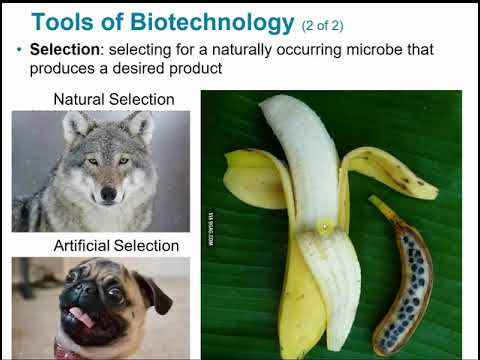
Recombinant DNA technology produces pharmaceuticals like erythropoietin (anemia treatment) and human insulin (replacing animal-derived insulin). Subunit vaccines use genes coding for pathogen surface proteins inserted into yeast cells, producing antigens without the entire pathogen (e.g., hepatitis B vaccine). DNA vaccines use non-pathogenic viruses carrying pathogen antigen genes, tricking the immune system without infection risk. Gene therapy uses vector viruses to insert correct genes into patient cells (e.g., hemophilia treatment). CRISPR enables precise gene editing at specific locations, potentially treating genetic diseases like sickle cell anemia. Gene silencing uses siRNAs to bind mRNA and prevent translation, serving as natural defense against viruses.
Click to watch →

BIO 211 Genetics Day 28 2023
147
Recombinant DNA technology has transformed medicine and agriculture. Recombinant insulin, the first human gene product created in 1978, is produced by cloning insulin gene subunits into bacterial plasmids. Edible vaccines insert pathogen genes into plant plasmids, creating bananas and potatoes that trigger immune responses—valuable in developing countries. The Human Genome Project revealed human genomes are over 99% identical between individuals. Transgenic animals are created by injecting DNA into fertilized embryos, demonstrating that gene function can be restored even when sequences differ between species. Knockout transgenic animals deplete gene expression using embryonic stem cells, modeling human diseases including cancer, obesity, and heart disease. CRISPR (Clustered Regularly Interspaced Short Palindromic Repeats), awarded the 2020 Nobel Prize, enables precise DNA targeting, cutting, and gene replacement. Applications include creating knockout mice for disease modeling, correcting specific mutations using repair templates, and potentially curing genetic diseases like type 1 tyrosinemia in mice.
Click to watch →

जैवप्रौद्योगिकी एवं उसके उपयोग (BIOTECHNOLOGY AND ITS APPLICATIONS) Class 12 Biology All Topics
279
Recombinant DNA technology enables safe, large-scale production of therapeutic drugs. Recombinant insulin (since 1970) eliminates allergic reactions from animal-derived insulin. Interferons (IFN-alpha, beta, gamma) treat cancer, particularly hairy cell leukemia. Vaccines for Hepatitis B, Influenza, and Smallpox are produced through genetic engineering. Monoclonal antibodies (hybridoma technology) detect diseases like cancer and allergies. Antibiotics (penicillin, streptomycin) are produced biologically. Gene therapy corrects genetic defects by transferring normal genes. Molecular diagnosis uses PCR for cancer/AIDS detection and ELISA for STDs. Transgenic animals (mice, rabbits, pigs, sheep) have foreign genes inserted into their genomes, serving as models for studying gene function and disease mechanisms.
Click to watch →

Bio-Digital Convergence... (Remastered)
403
CRISPR-Cas9 is a gene editing technology that allows scientists to cut out portions of a genome and insert new material or proteins into that genome, which will then replicate. This technology can fundamentally change the DNA of a creature. The video notes that mRNA vaccines introduced to the world cause the body to begin to produce spike protein sequences that do not naturally occur in the human being, representing a real-world application of these technologies.
Click to watch →
DNA to RNA
RNA to Protein
DNA to RNA
0:04- 1
Transcription copies DNA into RNA via matching factors.
- 2
Splicing removes introns and joins exons for editing.
- 3
Spliceosome machinery recycles after each intron removal.
Exceptions to the Central Dogma: Non-Canonical Information Flow
While the Central Dogma historically posited a strict, unidirectional flow of genetic information from DNA to RNA to protein, modern molecular biology has revealed major exceptions that challenge this linear paradigm. The discovery of reverse transcription (as seen in retroviruses like HIV) proved that genetic information can flow backward from RNA to DNA. Additionally, RNA replication allows information to transfer directly from RNA to RNA in certain viruses. Beyond nucleic acids, prions demonstrate that proteins can transmit biological information and alter phenotypes by inducing conformation changes in other proteins without any DNA or RNA intermediary. Finally, epigenetic modifications show that environmental factors can influence gene expression and inheritance without altering the underlying genetic sequence. Together, these phenomena establish that biological information flow is multidirectional and far more complex than the traditional dogma suggests.
Understanding of basic cell structure, particularly the distinction between the nucleus (where transcription occurs) and the cytoplasm (where translation occurs).
Familiarity with the structure of DNA, including nucleotides, base-pairing rules (Adenine-Thymine, Cytosine-Guanine), and its double-helix shape.
A foundational concept of what a gene is—specifically, a sequence of nucleotides that contains instructions for making proteins.
The primary chemical differences between DNA and RNA, such as the single-stranded nature of RNA and the substitution of Uracil for Thymine.
The study of gene regulation, exploring how cells control when and how much of a specific protein is produced (e.g., operons, transcription factors).
The impact of genetic mutations, including how changes in the DNA sequence can alter mRNA codons and result in non-functional or mutated proteins.
Exceptions to the traditional Central Dogma, such as reverse transcription in retroviruses (RNA back to DNA) and the behavior of prions.
Real-world biotechnology applications, such as the design of mRNA vaccines, CRISPR-Cas9 gene editing, and recombinant DNA technology.
550.8K views3.7Klikes2:52@DNALearningCenterOriginal Release: 2012-04-13
The DNA double helix contains two linear sequences of the letters A C G and T, which carry coded instructions.
Transcription of DNA begins with a bundle of factors assembling at the start of a gene, to read off the information that will be needed to make a protein.
The blue molecule is unzipping the double helix and copying one of the two strands.
The yellow chain snaking out of the top is a close chemical cousin of DNA called RNA.
The building blocks to make the RNA enter through an intake hole.
They are matched to the DNA - letter by letter - to copy the gene.
At this point the RNA needs to be edited before it can be translated into a protein.
This editing process is called splicing, which involves removing the green non-coding regions called "introns", leaving only the yellow, protein-coding "exons."
Splicing begins with assembly of factors at the intron/exon borders, which act as beacons to guide small proteins to form a splicing machine, called the spliceosome.
The animation is showing this happening in real time.
The spliceosome then brings the exons on either side of the intron very close together, ready to be cut.
One end of the intron is cut and folded back on itself to join and form a loop.
The spliceosome then cuts the RNA to release the loop and join the two exons together.
The edited RNA and intron are released, and the spliceosome disassembles.
This process is repeated for every intron in the RNA.
Numerous spliceosomes remove all the introns so that the edited RNA contains only exons, which are the complete instructions for the protein.
Again, this is happening in real time.
When the RNA copy is complete, it snakes out into the outer part of the cell.
Then all the components of a molecular factory called a ribosome lock together around the RNA.
It translates the genetic information in the RNA into a string of amino acids that will become a protein.
Special transfer molecules - the green triangles - bring each amino acid to the ribosome.
Inside the ribosome, the RNA is pulled through like a tape.
There are different transfer molecules for each of the twenty amino acids, shown as small red tips.
The code for each amino acid is read off the RNA, three letters at a time, and matched to three corresponding letters on the transfer molecules.
The amino acid is added to the growing protein chain and after a few seconds the protein starts to emerge from the ribosome.
Ribosomes can make many proteins.
It just depends what genetic message you feed into the RNA.
Up Next

12:07
Cancer Biology Explained: Mutation, Metastasis, and Drug Resistance
@CancerQuest
1.8M views•2013-10-02

50:12
Bacterial Communication: Quorum Sensing and Biofilm Formation Explained
@JHUAAP
12.6K views•2011-06-28

5:35
Enteric Nervous System Explained: The Gut's Brain | Neurobiology Lecture
@alumniu6029
438 views•2018-09-12

7:08
Bacteriophages: Earth's Deadliest Killers and Future Antibiotics
@kurzgesagt
34.6M views•2018-05-13
Related Study Plans & Knowledge Roadmaps
Structured learning paths in Biology
biology
RNAi: Biogenesis, RISC & Gene Silencing
01Molecular Biology Foundations: DNA to Protein
02Introduction to RNA Interference (RNAi)
03Molecular Biogenesis of miRNA and siRNA
+ 2 more learning modules
10h5 modules
Explore Roadmap
biology
Mycorrhizae: Signaling, Biophysics & Ecology
01Foundations of Mycorrhizal Symbiosis
02Molecular Signaling and Root Colonization
03Biophysics and Bioenergetics of Nutrient Exchange
+ 1 more learning modules
11h4 modules
Explore Roadmap
biology
Circadian Clocks: TTFL, SCN & Periphery
01Foundations of Molecular Biology & Gene Expression
02Introduction to Chronobiology and Actograms
03The Core TTFL: Molecular Architecture of the Clock
+ 3 more learning modules
14h6 modules
Explore Roadmap
biology
Population Genetics: Math, Drift & Selection
01Genetic & Probability Foundations
02The Hardy-Weinberg Principle and Baseline Models
03Mathematical Modeling of Natural Selection
+ 3 more learning modules
18h6 modules
Explore Roadmap