






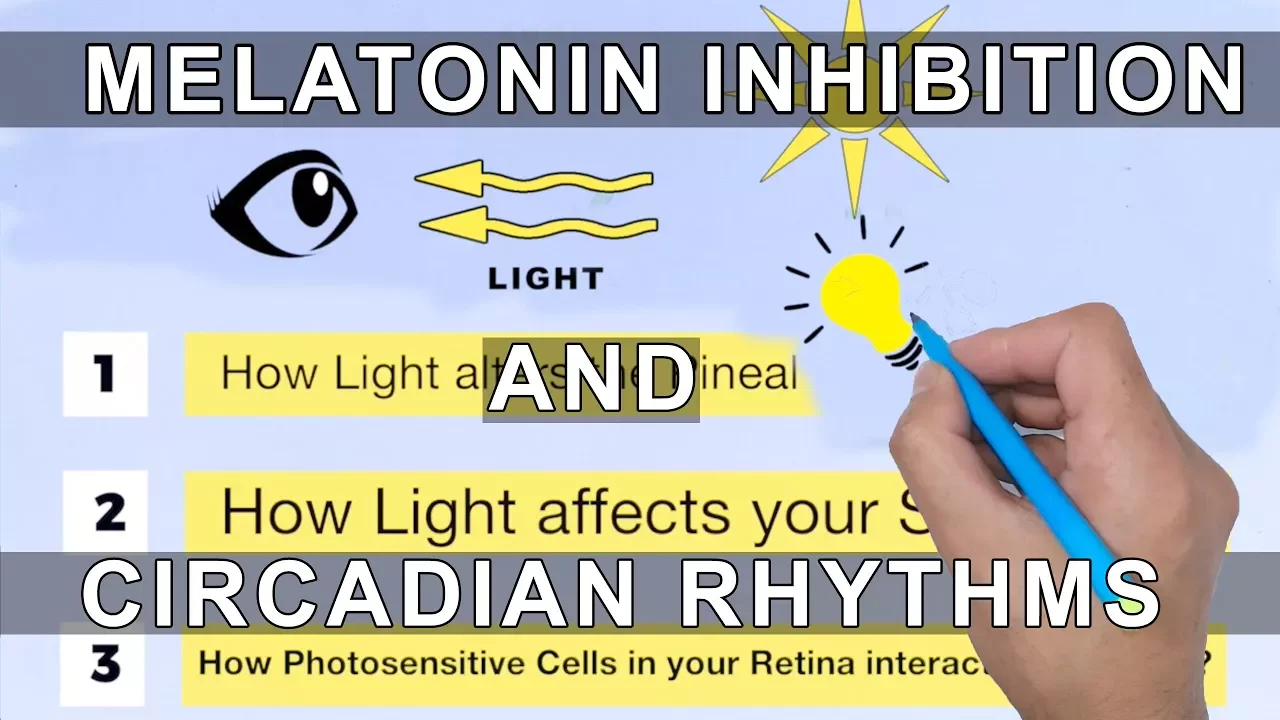






Circadian rhythm is an endogenous biological process with a natural oscillation of approximately 24.2 hours, regulated by the suprachiasmatic nucleus (SCN) in the hypothalamus, which acts as the master biological clock. This rhythm is synchronized with environmental cues called zeitgebers, primarily light exposure, through a molecular feedback loop involving the PER and CRY genes. Sleep emerges from the interaction between two processes: Process S (sleep homeostasis) and Process C (circadian process), creating a sinusoidal alerting signal that explains why humans experience dips in alertness during daytime (typically 11 AM to 3 PM) and increased alertness in the evening (the 'second wind' phenomenon). Circadian rhythm sleep disorders include advanced sleep phase disorder, delayed sleep phase disorder, free-running disorder, irregular sleep-wake rhythm, shift work disorder, and jet lag disorder. Treatment strategies involve timed light exposure and melatonin administration to phase shift or anchor the circadian rhythm according to the specific disorder.
Circadian Rhythm Sleep-Wake Disorders: Diagnosis and Treatment
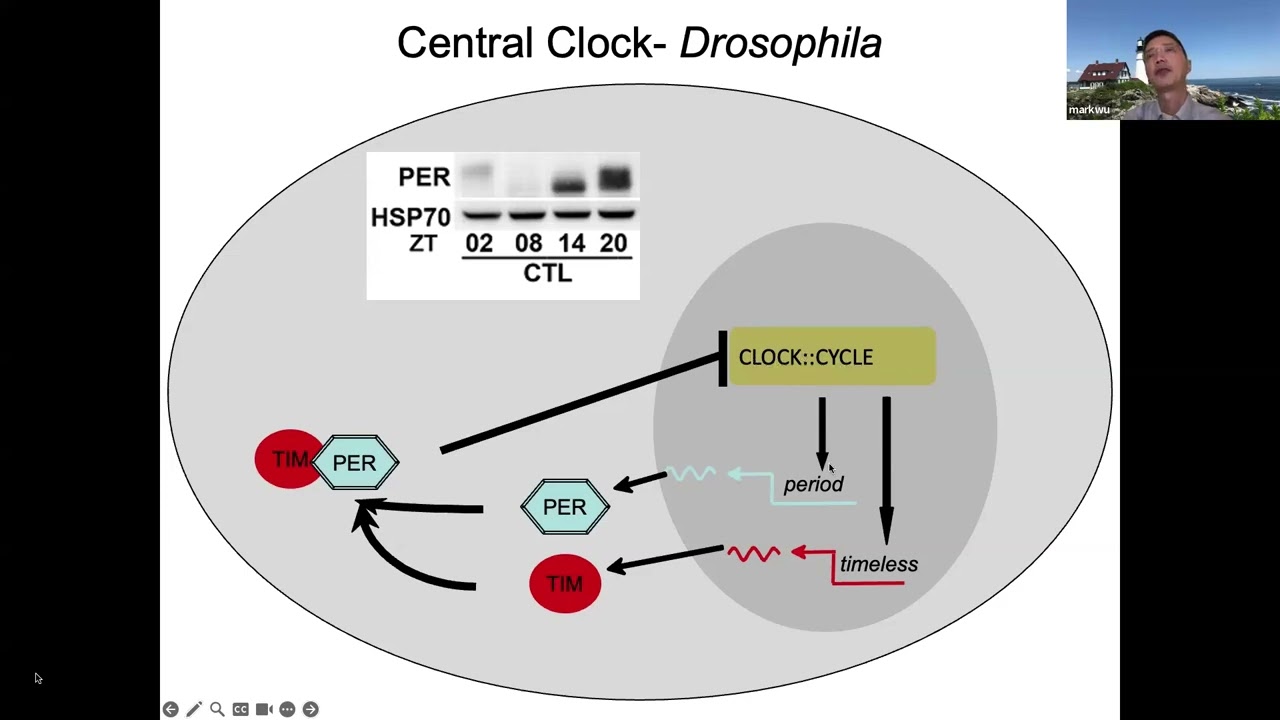
Added:well good morning and first of all thank you to all of you um to join in uh what i consider to be a very uh important and usually underrepresented uh topic of sleep medicine first off my name is wajahat falu i'm an assistant professor at the university of minnesota i'm a staff physician at the va medical center here in minneapolis and by training i'm a pulmonologist sleep specialist and a critical care doc so all that perspective with a lot of interest in advanced underlying lung you know and disorders uh cardiopulmonary physiology and respiratory disorders associated with sleep and an interest in chronobiology so with that said i'm going to take my video out so you can focus on what is more important the topic for the date is um chronobiology from a perspective of human sleep and circadian sleep disorders even that narrow approach towards this topic is still very broad so the goal of my presentation today would be to make you fly say about at 30 000 feet first and then dip down you know lower to to pick up some of the saline and important features which are important not only for your training but from the perspective of your board examination feel free at the end of the the presentation and later even if you want to reach out with any questions in this regard i have no disclosures uh and i will not be discussing any off-label use or investigational use during my presentation the learning objectives for the date is first to define circadian rhythm explain the differences between biological rhythms describe sleep as a function of circadian rhythm identify various tools to measure circadian rhythm and describe various circadian disorders and finally take a shot at explains explaining some of the tools which can be applied on phase shift and treating various circadian disorders now us as life on this planet means that we need to be very familiar with um how life has evolved over millions of years 4.5 billion years of stated life a stated life of our earth as a planet and then life emergence probably in the order of around a billion years later as we know that the evolution started somewhere in the deep deeper crevasses of the ocean and the life didn't see light probably till around when it started reaching the 200 to 300 meter mark of the ocean water but as soon as it reached that area it had to deal with two important things the significant variation in a 24-hour cycle to light and no light and what it accompanies and compounds with temperature and variation and also the tilt of the planet which basically determines the distance from our star and the availability of heat and light on that regard so what i'm trying to put push into you guys is that the biology when it faced that started learning something about this particular process and it then started incorporating and probably through an evolutionary process over millions of years so whatever is the outcome of that is not something which is brand new and if it is not brand new it means that it is associated with with the very core of our existence on this planet chronobiology is a science or study of the effect of time especially rhythms on living systems and basically it is the intrinsic adaptation of that life the circadian rhythm or circadian coming out of the latin stands for a biological process which displays an endogenous and i mark it again endogenous frequency of oscillation of around 24 hours if this is less than 24 hours that rhythm will be called a gradient and if it is beyond 24 hours and up to about a year it is calling in freight in rhythm while i'm describing this you guys are already jotting down in your mind about various biological rhythms you're very you're well familiar with for example our hormonal system in a 24-hour day some of it responds to a 24-hour frequency fluctuation while the others friction you know have a frequency much at a much higher level than that so there's fluctuation uh during the daytime and the night time uh you know and and in is it falls into the ultradian rhythm the infrared and the menstrual cycle in human is is an example and certain activities of hormones in our body and then finally the circa as the circum manual is basically um determining beyond a year timeline of biological rhythm you know animal and bird migration as we're familiar with the two main rhythms which we will be focusing on will be the circadian and the ultradian rhythm and i'll explain the ultradian portion later because i think um uh you know the common knowledge is uh the association of sleep behavior with circadian but um uh but there is more to it and there may be a role of an altradian rhythm involved so let's talk about what sleep is first it's a cyclical behavior which is marked by characteristic immobile posture and diminished but readily reversible sensitivity to external stimuli now some of you might scratch your head as it's pretty broad here and i would you know argue that it is better to be left abroad than to narrow down and then be able then you can't fit the whole realm of sleep in it so the most important thing here to note is the cyclical pattern and now since it's cyclical you need to figure out its oscillation and its time and what we have figured out based on his oscillation and our through common experience that the fluctuation is within a 24-hour cycle so it is circadian in nature sleep itself is a byproduct is a two you know byprocess product um and uh involved which involves process s as we all know the sleep homeostasis and process c and it's the culmination of these two products which produce what we call the alerting signal now process s is sleep homeostasis it's like a potential energy where it will keep on piling up on you the more you you know um you're lacking sleep so and it will start going down immediately once you start going into sleep it has a steady rise over time and then starts declining during your sleep time while the process c seems to have a bit of a dip earlier in the day and it gradually rises and peaks at around 9 p.m and then it goes down during the sleep phase of the normal population till it starts rising up again the next day when you overlap these two uh processes you actually get um what we call a sinusoidal vape with a dip during the daytime or at least that is the the the dip which we um have picked up earlier on there are dips in the night as well and we'll talk about that later but the this particular dip uh is present usually between the order of around 11 and 3 o'clock or the siesta time and basically what this means is that your your process s or sleep homeostasis is gradually building up while the process c or the circadian process hasn't catch you know hasn't caught up to that mark yet and then there is an over shooting off the process c later in the evening at around eight to nine o'clock and this is what we call the second wind phenomena that you get more alertness around that and after that the circadian process starts going down so our understanding of circadian rhythm and biology is nothing new the first time it got described was back in the early 18th century on the mimosa plant where the french scientists noticed that independent of whether the light exposure was there or not the mimosa plant closes and opens itself in a 24-hour cycle pattern so that was the first documented and stated fact of you know circadian rhythm and biology but it wasn't till later uh in 1938 that for the first time natalia employment in the at the university of chicago took this very interesting uh experiment into the deep caves uh mammoth caves in kentucky and uh um forced um the the subject to what we call complete isolation from the environment and this was replicated again back in 1962 by ashraf and liver in germany and what they did was they used the second world war era you know deep underground bunkers uh to uh to conduct this experiment so what you see on your right right here is actually the replication of the experiment done by astrovenvega in the top portion you see the natural conditions so the subject is in a bunker uh deep underground but is about is able to communicate with the environment the door is open and they're able to maintain a relative stable relatively stable sleep wake cycle and the triangle in between on the the the solid line is depicting the core body temperature nader or the lowest core body temperature native on day 10 um the isolation was started by closing the dough and no environment environmental contact was made and what they noted was that there was a gradual progression of the sleep wake cycle later into the day all the way up to day 35 when the doors were reopened and there was a time and they stopped the experiment at the time when uh the entrainment was complete and stability of sleepwake was achieved again and through that experiment what they found was the in there is an intrinsic clock when when when we as humans are isolated from the environment and what they measured back then was in the order of around 25.4 hours so longer than the 24-hour cycle of our planet uh later experiments and now actually measuring the exact out the the signal of our genetic clock we know that this number is around 24.2 hours again the 0.2 and there's something to be said about why there is a need of the the the why the slightly longer cycle than than than the rotation of the earth of 24 hours and a state you know and we can speculate and suggest that this could be an adaptation to the tilt of the planet so we can adapt beyond and as farther away we go from the equator is that a you know an evolutionary adaptation mechanism for that tilt some people took that uh thought seriously and did conducted uh experiments um in various races and what they did noticed uh they couldn't go to all the regions and these experiments are very difficult we need to understand but but you know our our ethnic backgrounds and our race does depict or the longest uh uh of the the evolutionary things which we have accumulated over time and it remains relatively stable so it's a good place to start so when they compare they found that the african americans population here depicted they had a slightly shorter um intrinsic clock time than 24.2 so um we all need to work for what is the practical use of it well we need to understand that that this particular intrinsic clock time varies between people to people uh region to region maybe and more experiments needs to be done to confirm its association and relationship uh but for the immediate purposes we you know whenever we're dealing with trying to deal with uh circadian disorders and and conditions like traveling and jet you know jet flight we need to keep that in the back of our mind now here comes the part where i'm going to slip this up front so you guys can recognize um that what you're obviously seeing is the dip and and and and and and the peak of a circadian biological rhythm uh on the you know overlying these multiple dips which you're seeing the peaks and troughs um but what we do know is that even during our circadian high we have dips and they're more than one dip and those are in the circadian high we have certain troughs of low while in sleep as you all recognize that our sleep cycles and there is you know there is a thought that could sleep cycling be associated with this intrinsic ultradian rhythm which kind of you know uh takes the overlay of a circadian pattern of sleep behavior and then uh triggers you know shifts in stages of sleep so for example in a circadian low uh an ultradian high can that result in and is the explanation for rem behave for a rem sleep um versus the frequent arousals when the natural arousals which we have in our sleep are they on this the ul trading high while we're in the circadian low these are all important questions which are you know which requires ongoing studies to confirm but it's an interesting thought all right so based on this what we have established so far is that we um as as humans have an intrinsic process which maintains a clock which is relatively in close relationship with the environmental uh you know time cycling which is happening on the planet so the obvious second question is where is that if that is a time keeper where is that time keeper so the the the major or the the master clock or the timekeeper is located smack right straight behind our eyes in the cellar tursica um as a and the suprachiasmatic nucleus um it takes uh it's it's like a generator if you want to think about it that way it takes certain signals which promotes it its signal uh its activity and there is a feedback mechanism which decreases its activity and the feedback loop is part and parcel of this whole cycle which i will explain so through the retina the light exposure and by the way the light exposure not every light is the same light so the the spectrum of the light does determine um you know the effect on your circadian rhythm and phase and for um for practical purposes the shorter frequency lights have the most you know impact uh visible light you have i must say that has the most impact on our circadian uh rhythm with phase shift phase shift so um and that would be your blue range as we are you know uh um more and more experiments are coming in confirming that as well so retinal hypothalamic tract is the straightest path behind the retina all the way to the cellulosica and then through an indirect path of the igl and presence of light or exposure to a photon is the strongest uh signal for this uh the uh uh super cosmetic nucleus as a positive reinforcer there are other signals coming from the raphael nuclei and there's the negative feedback loop which goes through the preganglionic nuclei the superior cervical ganglia postganglionic nuclei into the pineal gland and we all know what is secreted from there is melatonin has um a peregrine connection back on the the scn and it slows it down bottom line of all this activity is number one the circadian sleep wake cycle which we are very familiar with but downstream a lot of other processes are also associated and it's important for us to recognize that they're all interlinked neurobehavioral uh overall performance so physiology and and biochemistry uh is closely interlinked with how you know with the circadian or mood cortisol as we all know melatonin as we all know core body temperature and your heart rate are few to just mention here now the field of circadian biology was and chronobiology was brought on to the limelight in 2017 with the award of the nobel prize of physiology and medicine to these three great gentlemen jeffrey hall michael robash together and young independently worked on a similar project and produced similar results and what they did uh i will walk you through the history of it so in 71 benzer and knopkov first and it was an accidental discovery that they discover a mutant of dorsophila the fruit fly and what they noticed was that this mutant displayed alteration in the normal 24-hour cycle of the pupil occlusion well what is interesting to know here is that dorsophila does display the intrinsic circadian clock which is very similar to us so how useful and this fly has served so much in our human size uh and and continues to serve us even more so so once they discovered that there was a mutant uh they immediately asked the question can we work on it and figure out and narrow down the gene if there is a genetic component to it uh and in back in 1984 for the first time hall robash and young separately independently discovered the period gene and they identified it and then they characterized it in 94 holland uh colleague holland robash went further and discovered timeless the second gene which was involved that allows basically the period protein to come back into the nucleus and stop the process of transcription of the period gene finally in the 1994's up till late 1990s so 97 takahashi and colleagues started putting all these things together and started coming up with what we call a unified explanation of what is considered as the cellular clock as very important uh that this this paradigm shift of our understanding of how we life and particularly humans are interacting with the environment uh and how do we keep and tell your time so i know i put quite a few lines and dates here but let's get to the action of understanding what they actually did so if you can see uh what i'm depicting here out there the outline is for the cell the green area right here is the cytoplasm the blue line is circling up to the nucleus okay so you've got your dna first thing first the the b mall one and clock uh genes gets transcribed and they find a dimer they they make a dimer which then acts as a pro you know attaches to the promoter region and acts as a pro transcription or enhances transcription of per and cryo so period gene and cryptochrome gene this in the in the uh the nucleus then goes through the nucleus into the cytoplasm into the ribosomal area and gets translated into period and uh cryptochrome proteins so capital you know uppercase per and cry uninhibited these will find that these two will combine and make these dimers right here which will then go back into the nucleus and inhibit the b-mole clock transcription zone so if you can see this is a circular path and what is interesting to know is that this is the circular path which comprises our intrinsic clock so literally the 24.2 which we're talking about is the transcription translation post-translation uh inhibition and transcription factor inhibitor by the the the protein diameter re-entering uh diameter re-entering the nuclei so that's um that's an interesting thing now how does this progress is uh is that there is another interesting protein called the casein kinase which phosphorylate uh which can phosphorylate both per and cry and the moment that phosphorylate uh the the period protein gets destroyed so it cleans up the cytoplasm so on one hand it decreases the the concentration of per and cry protein translation and hence the diameter formation is going to get less and less over time and the second thing is it actually goes back into the nucleus and destroys the the uh the per-cried dimer which was inhibiting the b-mall one clock cycle so if i may uh go over this thing again per cry gene transcription goes into the cytoplasm translated as per cry protein forming dimer going back into the nucleus to stop the beam all cycle the clock transcription cycle while this casing kinase inhibits or destroys these proteins decreasing its concentration so diameter formation is decreased also whatever is present of this complex of per and cry in the nucleus is destroyed as well and this whole cycle is what determines our intrinsic clock and i will explain you know you know uh what that is called uh later now what is interesting here is that the casein kinase mutation leads to rapid accumulation of period back into the nucleus and um and the period cry uh blockage of the p v mall one and clock and it's actually the reason the first identified reason for what we call familial advanced uh phase sleep disorder so there's a direct genetical implication a genetic application of this process now what comes out of this is a biological rhythm okay and um and a biological rhythm is represented in a form of what we call a sine wave it has uh a you know a peak and a trough it has a midline and it is important for us to recognize what what what those salient features are called and there is a reason so then you can apply uh this in calculating and projecting certain features and measurements of circadian rhythm so a cosine or curve basically has a peak a trough and a midline the midline is called the mesore the amplitude is the distance the peak distance between the me sword the midpoint all the way up to the peak point can be taken it for the trough as well so the the the the distance from the the lowest point of the nature or the the highest point in the peak from the mesore is your amplitude the acrophase starts from the lowest point of the trough all the way up to the peak um um [Music] the tip of the peak and that is the upper phase now if you can see what you're trying to do here is you're creating some some geometry and some measuring tools so if you know one or few then you can extrapolate about other data so this is how circadian rhythms are measured you know rather than following it dot by dot second by second so if you have a certain amount of data available for example what you do in an active when you give your patient an active graph it is calculating it is measuring movement and and if you have a certain you know persistence of a rhythm time and time again then you can calculate and extrapolate certain other features of this waveform and predict so it's a good it's a good tool to understand and use and it's always it is it is used frequently in the measurements of circadian rhythm so what are the various markers of circadian face first of all i want to tell you that there these are just the the few which we use or we are using but a lot of our you know physiological functions are have a circadian link to it i mean you know needless to say that our heart rhythm our core body temperature um you know uh certain um hormonal activities they will all depict this particular sinusoidal waveform which i just described but let's get familiar with some of the ones which we do use in measuring circadian rhythm so you need to understand the cbt minimum which is the core body temperature minimum uh and point so this happens during your sleep and we will talk about when dlmo stands for the dim light melatonin onset and it usually occurs it's the onset where the the melatonin uh crosses the mesore and started going it starts going upwards it usually happens two to three hours before your typical sleep onset and um you can actually calculate um um about the core body temperature minimum um by adding seven hours to your dll more time and vice versa you can you know if you know your dlmo um you can do the cbt calculation and if you have an idea if you you're following the 24 hour core body temperature and you know your core body temperature minimum you can calculate your dmo uh dlmo that way through this formula few other things to understand so remember what i talked about that whole cycle the clock cycle going from the the uh the beam all clock transcription then per cry transcription translation loop um that whole cycle is what is called the intrinsic um or the endogenous pacemaker rhythm or tau any periodic stimuli which can have an impact on this tau and can change um it's rhythm uh is a zeitgeist or a time giver german um things like the strongest one of that is light but temperature pharmacological agents exercise um you know your habits eating and drinking so a lot many things are giving these signals back to us and can influence or affect or uh intrinsic tau well the intrinsic tau is is solid that's your genetic signal but how it is going to interact with with the environment is what is going to be impacted by its interaction with the the design giver and what is what is the result of that is what is called psi or the phase angle relationship which is the relationship between your intrinsic circadian rhythm and its interaction with the time givers so the equation is written as you can see psi is equal to tau minus sigma now in an ideal uh circadian lab where you can control almost all as i and i'm just gonna say again almost all not all but almost all of your time givers of sight givers and you take this number to zero the psi which is the phase angle will be proportional to tau so you can actually figure out your intrinsic or or assess your intrinsic tau or intrinsic rhythm if you know the phase angle so that's an important thing to see now if you look over here what you're seeing is that this is in a situation where um the the the individual is entrained so there is constant light uh uh dark interaction and a stable sleep is maintained when temporal isolation which is basically locking as many of the zeitgeist out starts a free running phenomenon starts and the free running is happening because you know 24.2 so it's longer than your 24 cycles so there is gradual progression or free running of your intrinsic rhythm into the the 24 hour cycle day and so this happens and and this slant angle is what is uh represented by psi so if you know what that angle is you can predict a lot many things uh including the the proportion or the the relative tau that way and that's the way most of uh circadian labs operate moving on to understanding some of these tools and how do we use them so tau as i said are the intrinsic circadian rhythm the ideal lab protocol is to to create temporal isolation and force the synchrony and let that tau run a free run and the angle which you're going to calculate will give you the measurement of what you're interested in you and i don't deal with or live in a world where we have access our patient has access to a perfect circadian lab so the less than perfect alternative would be to maintain rather you know constant state in our patients keep a very close history on what their wake and sleep cycles are document as much of that as possible objectively with an active graph or a sleep diary as much as you can and then measure three consecutive weeks dlm also so quite a tough job the chrono the the psy chrono top chrono type which is the phenotype of the slant angle uh can be measured by uh seeing a regular sleep wake sleep awake pattern and and picking up on what we call the sleep midpoint and then looking at uh you know from that point you can talk about in the 24 hour cycle if you plant this as an anchor you can say what is the chronotype of uh and these people morning people or morning larks or our night owls there are other tools which can be used uh morning evening questionnaire and i will give you an example of it so you know what exactly it looks like and then logs and activity activity which are less than perfect tools the true sigh it requires that you have a constant routine uh and then you measure circadian c you know rhythms which is core body temperature melatonin cortisol heart you know you have to plant them as a wave and then use your your uh your calculations based on calculating your amplitude your acrophase knowing your mesore so then you can project uh and protect uh predict uh the absolute the um the uh the true sigh amplitude again the same thing either you take a intrinsic rhythm coming out of you plant every point of it or as many of it so you have the closest to the fit you know cosine wave and then start calculating those values or you can use a nectimetry now remember in in the real world out there your your patient works uh has a weekend and uh the the exposure to light and all that kind of stuff is not in your control so whatever is going to be coming out on a test is it has to be taken in uh you know in the context of whatever whatever is out there to pollute that signal so you so if you prescribe you know if you if you give a active to your patient for one reason or the other don't expect that you're getting a gold standard result out of it uh know you know what are the limitations of that particular test uh the activity rest is of course the activity is much more objective than maintaining a sleep log and then how do you figure out about you know or measure sleep homing stat or you know an idea of what we call the process s and we can use the eeg in the psg so the delta power in a sleep it determines uh you know the pres the the the potential energy or or the presence of process s um the other thing which we which we can see is the slow wave activity or um the the theta alpha ratio um it starts increasing uh in a person who's sleep deprived when they're awake now for practical purposes we have to start moving towards tools which are readily usable and in that case we need to start understanding uh the basic concepts [Music] of generally putting your population in one group or the other so like any other the population the the general population is distributed as in a gaussian curve and if you can see right here the light blue onwards is the early type and the green uh towards the right are the late types chronotype which is the phenotype expression of the tau intrinsic cow is a combination of gene which is representation of the tau age as we all know that the sleep habits and duration changes and the nature and quality of sleep changes with progression of age and then the exposure of light or in general any site gathers this is a munich chronotype questionnaire so mctq you probably will encounter this in research environments but it is something which can be used in your practice as well basically it starts with a question i mean and i'm so sorry that this is very crowded for you guys but i think i try to exp you know uh magnify as much as i can and if you can get a copy of this you can go over and you can download this form anyway so basically it has questions like okay what is your usual you know sleep time what and what time you want to sleep versus what time you are sleeping are you waking up with an alarm or without an alarm during your work days versus weekends and then you know it further adds up to um to your your history in general about as a child as a teenager so it's adding up all those points and then furthermore it adds up about the chronotropicity or or the morning-ness or evening-ness of your parents and your siblings as well and and uh when you when you compute all this together you get a score the higher the score the more morning lark you are and the lower the score the night owl you are so that's how it works okay so i'm gonna switch gears here so um up till now what i was trying to do was to to kind of make you familiarize with certain tools of circadian rhythm understand the basic concept behind it understand that it is it is a much more complex situation than you know with with so many other interactions of the individual in the environment so the tools you're going to be used using in assessing or measuring should be taken in the context of whatever is out there polluting that signal so switching gears now to circadian rhythm uh sleep disorders so um up front i can tell you so you you can broadly you know divide these into intrinsic and extrinsic types and the others the intrinsic uh ones are you know you're familiar with are the the advanced sleep phase the delayed sleep phase the free running and irregular sleep wake um response the extrinsic ones are your shift workers and jet lag and the other ones which basically can have intrinsic effect and compounding effect in general for example a medical condition uh or a debilitating uh you know um neuromuscular situation you know those things can limit one thing which can limit your activity which can limit your exposure so those are compounding factors right so some of those things have to be taught in that context and and few of the things can have an in a more direct effect certain drugs or medical conditions can underlying neurodegenerative condition is an example of medical conditions which can impact and can give rise to sometimes intrinsic circadian rhythm disorder the irregular sleep wake syndrome the practice parameters for the clinical evaluation and treatment of circadian rhythm sleep disorders so now knowing how they're classified now you need to know how you test them what are the practice parameters around that and how do you or what are the treatment options so uh i'm gonna go over uh gradually over it uh it is a it's a bit of a crowded uh uh slide um uh so it will require some of your attention right there so the evaluation tool so first of all you know your disorders shift workers jet lag advancedly phased delayed sleep phase free running irregular sleep wake okay so what is indicated for diagnostics and what is not and as you can see i just highlight it all in green right here for so that should capture your attention first so you don't need a psg for any of it okay the circadian markers just because of the availability and the difficulty of conducting those those tests makes them very difficult for us to use in our day-to-day practice so the things which are usually used are the ectography right for diagnostic purposes for advanced sleep phase and delayed sleep phase their guideline and for response pretty much across the board you know the ectography has been used and the other thing which is an important tool and has been used is the sleep lock as sleep fellows and and and practitioners you are very well you know aware of the limitations of these tools but this is the best we have right now until we actually have a much more direct way of measuring the tau or the intrinsic circadian rhythm so for um the treatment um what is indicated and i'll i'll go over um those one by one so in shift work disorder taking planned uh naps uh prior to the work is is a standard uh you know a practice recommendation um also recommended in uh that is time light exposure usually during the earlier portion of the the shift work at night well of course you have to do to um to know your um your your um uh patient's uh shift time and and then graph it out between their sleep wake cycle and then time your light exposure accordingly but in a standard night shift usually it's in the earlier part of the night and you gradually start dimming down the light for them melatonin is indicated as a guideline you can also use hypnotics and stimulants can be used modafinil as well as you can use kef caffeine for jet lag the most uh important thing to note is basically time-like exposure well first of all which way which you know direction the person is traveling so east versus west so the severity of the jet lag change you know it's different for uh for east versus western and i'm i'm going to walk you through that and use of timed melatonin as well as use of hypnotics these are the three things which are usually in your toolbox when you're dealing with jet lag situation for advanced or delayed sleep phase you know it's pretty standard uh indicated option for using time light exposure and uh i will tell you how to utilize them and what is the concept behind it um between light exposure and melatonin for the free runners right here whether they're sighted or not that's an important thing because even if they're not cited they can still perceive light and you know uh and so it so some of them are completely un you know unsighted and that's a different situation what i have been doing is i used melatonin as an anchor so i basically in this free running situation for them i put an anchor where i want their sleep cycles to start and based on based on when you know which when i'm going to give the melatonin i will uh use the dose so lower dose for uh shift anchoring and a higher dose for uh shift influence as well as hypnosis right i mean for sleep purposes irregular sleep wake basically the most important thing in them is structuring their environment because a lot of their problems are staying in the nursing home debilitated and so environment in you know structuring the environment helps a lot and then also you can use melatonin for time anchoring as well so for jet lag you know i think you probably already know but i'll go over it again um the direction of the travel matters the zones usually two plus is what is needed and the the more the zones the worst uh the jet lag is going to be and of course the individual susceptibility so traveling east is worse than when traveling west and when you travel east there is phase advancement while phase delay when you're traveling west and um in case when you're doing you know six to eight plus hours of traveling east um your face advancement is gonna happen so the first thing you need to do is control the light exposure and it starts all the way so there are various approaches which have been taken some would make the argument that we should start aligning or realigning their their circadian clock even 48 hours earlier before then the travel starts so it basically makes it easier for them to adapt once they land particularly traveling some would say you know it's and some would practice by using dark glasses earlier in the day avoiding sunlight when they land and then gradually start exposing to sunlight later into the day and using melatonin as an anchor for sleep and when you're using melatonin you're not using it as a circadian shift changer which is the low-dose melatonin but you're using a high-dose melatonin there basically as a sleep anchor there coming to the phase shift and the concept behind it so the first thing as a pearl i want you guys to remember and you probably already know by now is light pushes melatonin poles okay so wherever you're going to put the melatonin sleep is going to get pulled towards it and wherever you're going to expose the light the sleep is going to go away from it and uh this is important to know that not every light is the same so in the spectrum of visible light the shorter frequency lights have the most impact on circadian rhythm so the orange and the yellows are not that important as the blue so you need to know that the core point to to to remember is identification of the core body temperature remember the formulas which we talked about earlier this is why you need to calculate or project where someone's core body temperature nature is going to be because it's important where are you going to expose the light if you expose so expose the light beyond after the core body negative and you will basically cause phase advancement it is a dose-based situation so and as well as um there is some argument about proximity to the core body temperature so how much of light those you're going to use and how close you're going to be to it in common practice we usually uh try to do this once they're awake during the daytime and we know that their core body temperature is uh is lying to the left of it so you want to phase advance them for the late sleep phase uh in um and vastly phase timed light exposure in the evening is what is going to help you to face delay their sleep and you know their you know cbt is going to be dlmo plus seven hours into their sleep right so so light exposure when they're awake in the later part of the evening uh it it's rather simpler that way for melatonin again uh as i said melatonin pulse so this is a study by shakim back in 2002 and what is interesting to note in this particular study is that it's a dose response thing as well so the higher dose of melatonin you're going to use the larger phase shift you're going to achieve with melatonin and um usually when when we want to impact uh phase shift we usually talk about um we try to use doses in the order of around point uh 0.3 to 0.5 milligrams we're not talking about 3 6 10 12 milligrams of melatonin that's for phase shifting and usually when if you want to anchor that usually you anchor at the time or around the time of the dim light melatonin onset that's where you want to anchor it and and that that way it will phase it will pull the sleep towards it remember melatonin poles like pushes all right so with that said i'm going to use my last slide to open up your mind in a different way remember the slide i showed you about uh you know the the bigger picture of a sleep being a cyclical behavior and fluctuating around 24 hours but you and i who have studied and looked at sleep studies uh uh and and look at the eegs and look at the different um you know stages of sleep know that there is something happening within sleep as well and as i was talking about the underlying ultradian rhythm so what it opens up is a whole new chapter of understanding and sub-specializing within the realm of sleep of how to um to create sleep and how to impact sleep um what we call sleep engineering and can we use sleep which is a signal of circadian biology can we use that tool to manipulate other circadian signals even in the realm of therapeutic therapeutics and once you start going into that realm for example performance enhancement is something which is very popular nowadays but think about it this way uh that um how many of us um have been you know i mean in medicine in general we've been treating high blood pressure for for decades and the pressure which you are monitoring and and following through is the pressure which you see of your patient when they they they arrive in your clinic during the day time in a stressful situation how about redefining hypertension as elevation of the nader of the blood pressure during a circadian timing so if you take that as your anchor point it gives you a single point which you need to be monitoring and managing and much more focused approach towards it we all know that the relationship of hypertension chronic hypertension and untreated sleep disorder breathing with you know arousal and sympathetic tone and all that kind of stuff is basically about not reaching the the blood pressure nader during your sleep so um what i'm trying to propose here is that we need to start thinking in the field of sleep medicine um chronobiology and circadian rhythm in a different realm just way beyond sleep wake and maybe use or understand sleep as a tool through which we can manipulate and manage uh chronobiology and circadian rhythms in human so with that i would stop and open up for quest uh questions but before that sally will go through a few questions of iran so now we open up the general questions um i already seen a question up there and you can keep on typing and i will try to address as many of it as possible uh so neja uh uh you're asking about do you have any experience with time shifter apps uh i personally myself don't but i am aware of the it's [Music] its use um don't have a strong opinion one way or the other if anybody else wants to jump onto it all right good question so um so so kitchen right so uh sleep inertia is primarily uh a process uh s thing you know so so it's remember the potential energy component of uh um of that but it's it's a it's a bit more complex than that because what you're seeing basically is um so let me let me uh turn back depending on if you're talking about sleep inertia which i now i'm realizing you're talking about is when you wake up and you are having difficulty getting to yourself right your active self that is a process c right because your circadian rhythm is still on the lower side and hasn't started peaking up again so lingering on this low alertness level uh is a process c thing uh your process s started dipping down and should be at the lowest at the time when you're waking up in the morning if it makes sense so um regarding the single or double dose um delayed sleep phase if you're talking about okay um i mean remember i showed you a graph you know so melatonin follows the same chronobyte you know the uh cosine wave so you don't have a single time you have different levels so even when you use the 0.5 milligrams by the way that's a that's a huge dose for what is actually being secreted in your system right we're talking about picogram dose which has been secreted in the system now even the 0.5 is an overwhelming dose so whether uh whether you want to enhance one explanation i can give you is that you can use a lower dose for uh you know for anchoring uh for phase advancement or also for support for phase shift uh in delayed sleep phase you basically are trying to pull up towards it and the higher dose you can use at the time of sleep to basically synchronize sleep with presence of higher level of melatonin so can it improve the quality of sleep is the question i mean there's no objective data to suggest one way or the other most of that stuff is all experiential and anecdotal but from a mechanistic point of view if you're following a curve and you are increasing the dose of that in that fashion it makes sense uh may i add to my question so i have actually seen where they used one single dose around the dlmo and then um and then there's another way of two doses where one is used around the dln one is right before bedtime so i guess the use would be more like a circadian entrainment as well as a hypnotic is that something that you've seen as well or is that just based on like decide where you practice that yeah no i would say i mean you know um i've seen that uh um and there are times every now and then where my you know where i want to achieve sleep in my you know in my patient as well so you have to use it as well so if i'm using a hypnotic agent i might as well use the higher dose of melatonin so i've done that uh infrequently but i've done that too but that's not uh for me it's not a standard part of my practice uh when i'm using as a you know uh face shifting agent i'm using it at the dlmo point basically your body needs the signal uh when the the melatonin is gonna cross the mesore right so it needs to have that anchor signal if that is the purpose of it i think the 0.5 at six o'clock five o'clock whichever time you want to be setting it up remember the two to three hour timeline will do that trick the second dose as you you you quite rightly said is basically not about circadian shifting it will have an influence by the way as i already told you melatonin dose does influence so it has a shift phase shift influence too uh even and higher dose will cause more shift but your most of us are using it or when we're using it we're using it for hypnotic reasons right so i don't have a strong um i mean i wouldn't disagree with that but but i would say that um uh from a you know proof-of-concept point of view i think what you wanted to show is uh that the this melatonin has crossed the na the mesore and is now trying to peak you so um there are quite a few out there the issue is that there are limited labs which runs uh for you know celebrity uh saliva based uh melatonin measurements urine based so it's basically limited by um you know um uh where you're practicing where you know you know um what what you can utilize within the the the reasonable vicinity of your geography and so those are rate limiting factors and somehow but they're becoming more and more popular let me tell you this thing that that you basically can actually now calculate and measure the intrinsic tower of a single cell in a petri dish okay so you can do that so or genetically mark it so you can actually have a very accurate measurement of tau but it is not available that frequent it's being used in in the research realm where i i see this that the more and more interest in circadian biology will start beyond even sleep medicine you know as i told you circadian biology is interested an interesting topic for medicine in general i mean think about it when we were trained um and when we when we started becoming sleep physicians right there's a whole lot of stuff which we started realizing at that point which is physiology and biochemistry uh and which which we didn't tackle during our medical training as well you know earlier on so i think we're moving in the right direction of recognizing the core component of chronobiology and the circuit the use of circadian markers and circadian tools and i think where this is heading you know it will dictate that we start using this more frequently um sure um divia so the thing is that as i was and it's a great point what we what i wanted to say was that uh time and time again we talk about circadian um and and narrow it down completely to um sleep specific disorder specific situation and in in my opinion sometimes it limits our grasp of the bigger project you know the purpose of understanding chronobiology and and circadian but you can only pick one or the other you know at a global level because it it's an extensive topic so um we can you know um i can redesign a conversation or talk around clinical you know um uh pres clinical cases and clinical vignettes and then we can talk about practical applications in that way but to understand corona biology it takes so much time of going into that presentation um um and that i i think what i would propose uh sally if you're up for it is to have more of what we call um a case-based in learning experience where you know uh circadian disorders are discussed in that fashion too actually we do have um a planned presentation for the may webinar young learners are able to submit unusual cases and present them during the may webinar so hopefully we will be able to get some great topics to discuss in may yeah i know that there you go so uh and again i mean i just wanted to retreat that one of my my my my wish as an educator in sleep medicine is to expand and open up this tremendous field of chronobiology and incorporate in the broadest way possible for sleep medicine right because we might become the well you know cancer biology is using chronobiology circadian biology uh more and more uh people are getting into therapeutics of it we who are essentially sitting and understanding and dealing with the most important signal of this circadian biology which is sleep right sleep wake um are in the in the in probably uh well placed to to adapt and and benefit and and then develop this uh this feel future so so one of the you know the thing which i really wanted to do was to to open up hopefully and expand you guys to start thinking in that direction
Up Next

Circadian Clocks: Clock Genes, Cells, and Circuits Explained
@scicommlab
42.7K views•2014-03-24
Bacterial Communication: Quorum Sensing and Biofilm Formation Explained
@JHUAAP
12.6K views•2011-06-28

Enteric Nervous System Explained: The Gut's Brain | Neurobiology Lecture
@alumniu6029
438 views•2018-09-12

Bacteriophages: Earth's Deadliest Killers and Future Antibiotics
@kurzgesagt
34.6M views•2018-05-13
Related Study Plans & Knowledge Roadmaps
Structured learning paths in Biology