






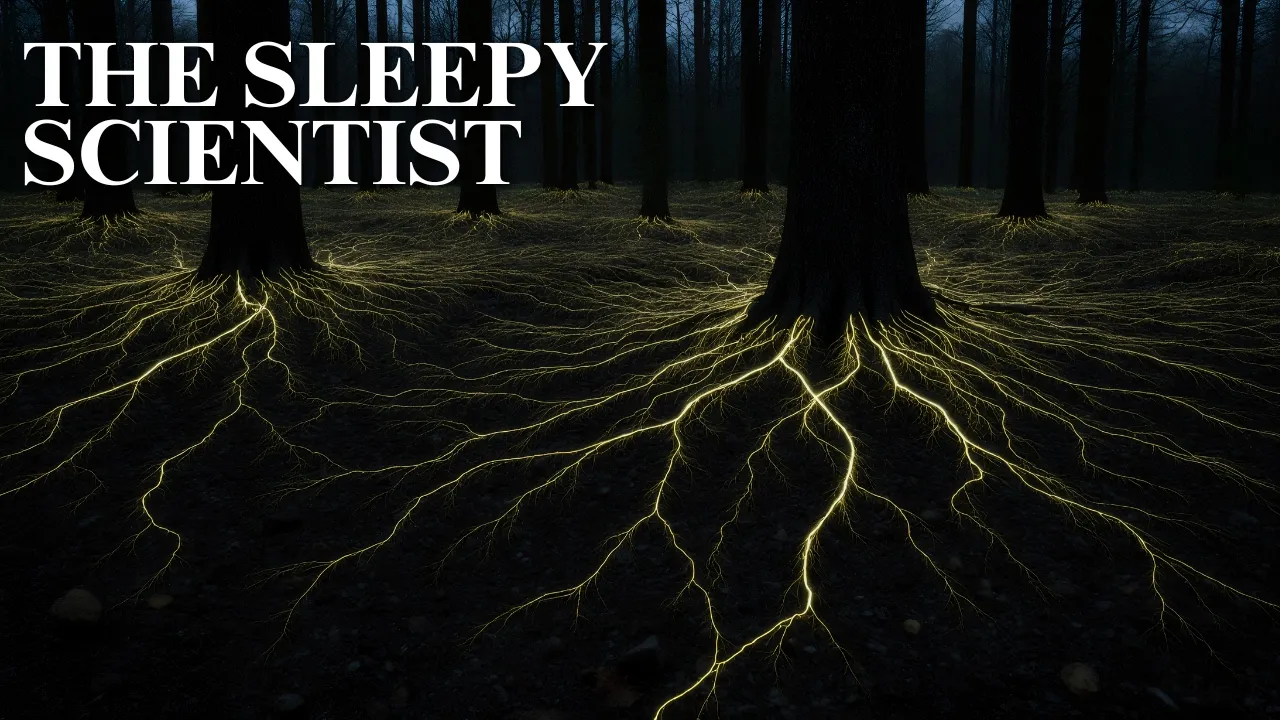



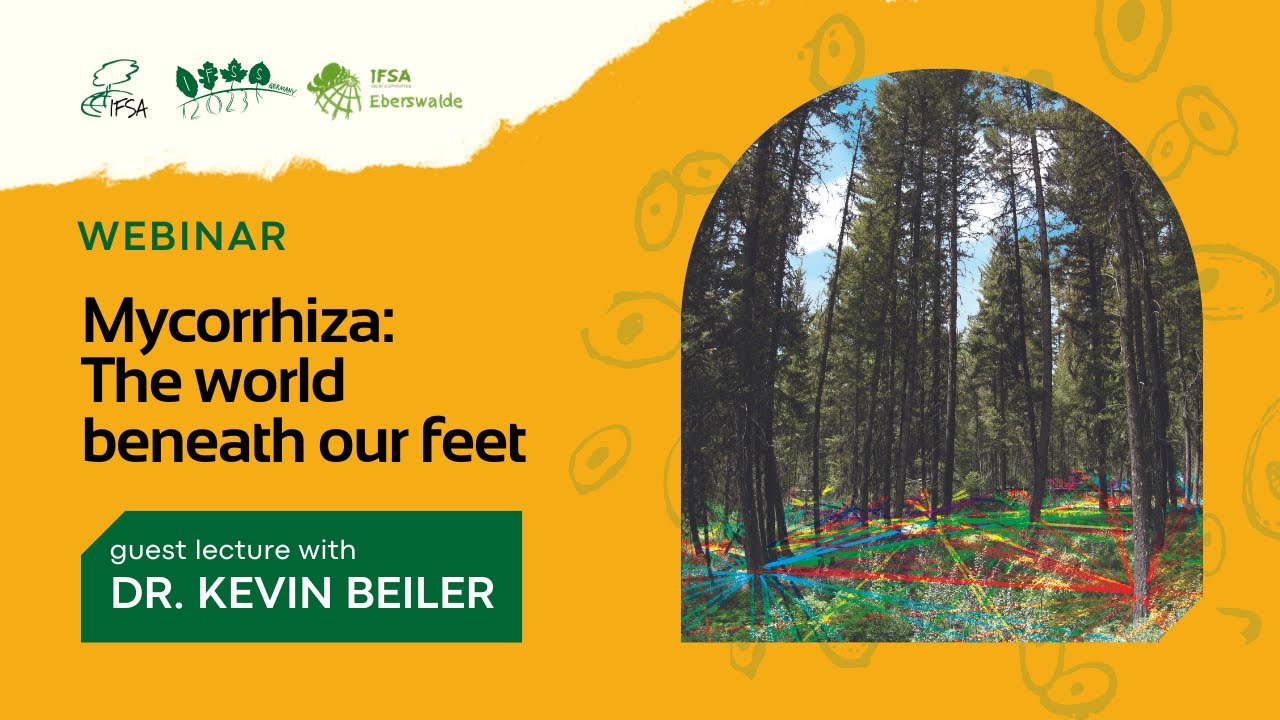




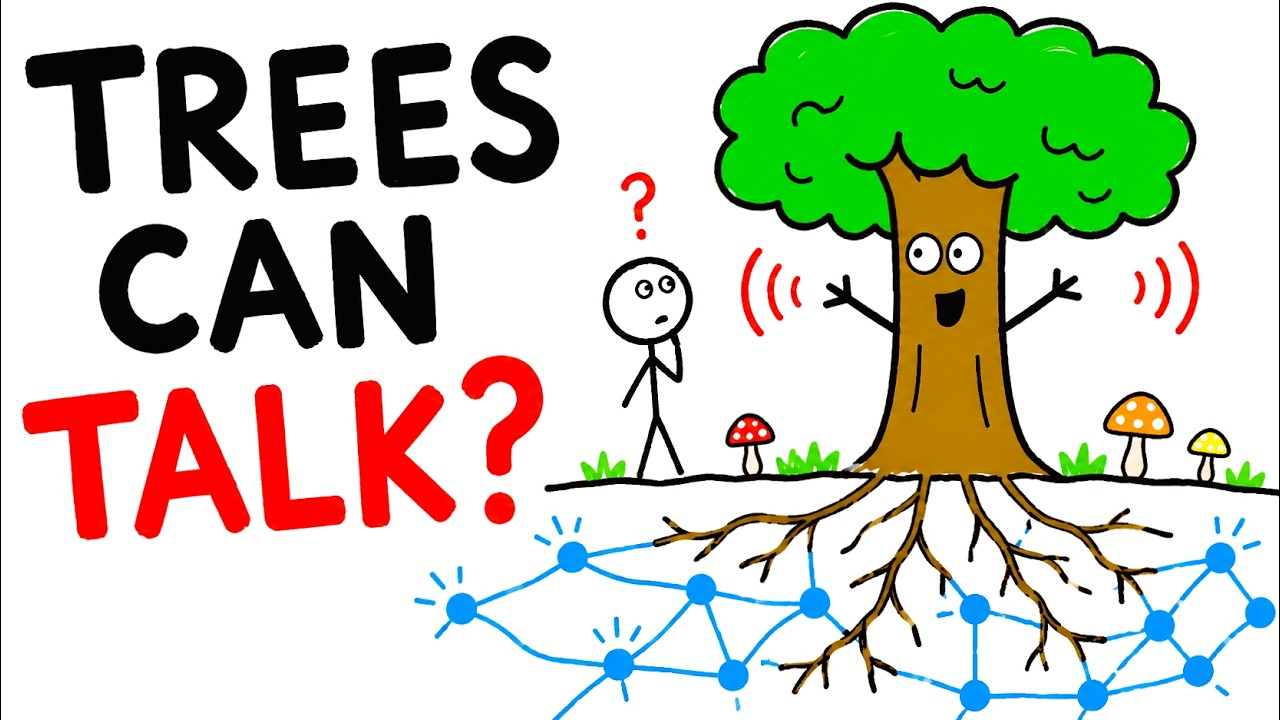


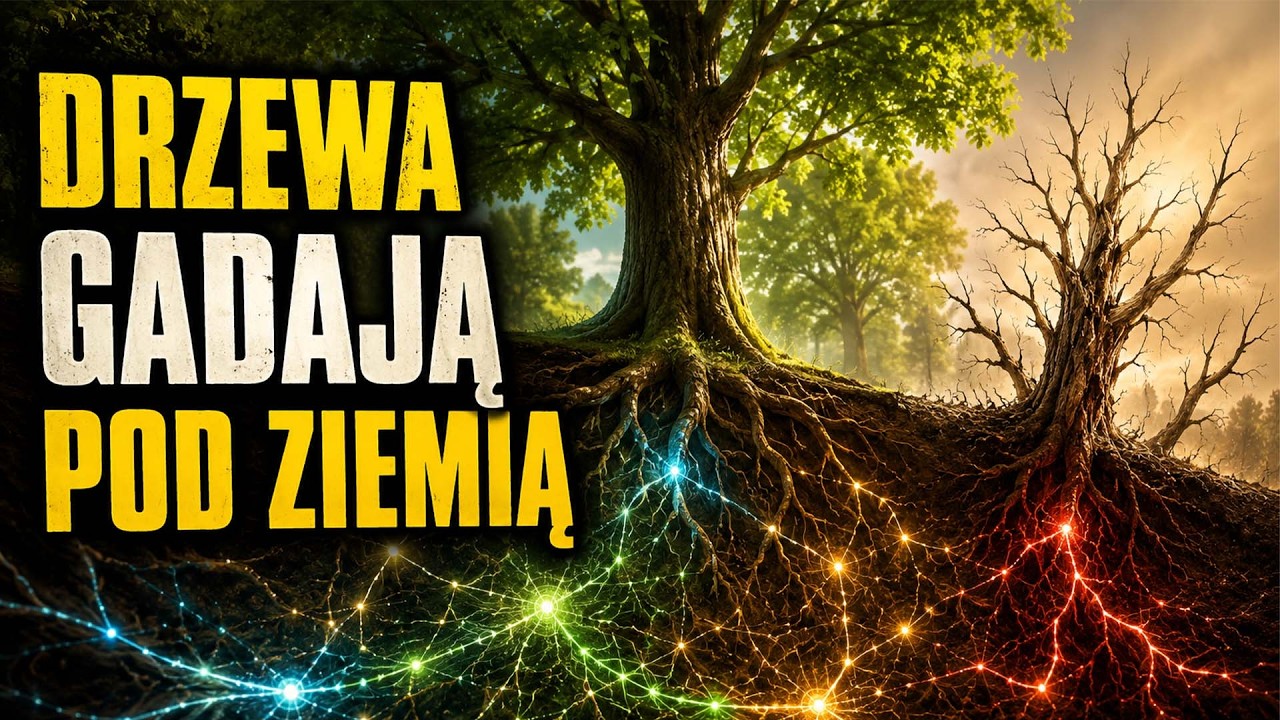




Trees communicate and share resources through underground mycorrhizal fungal networks, which function like neural networks connecting individual trees into a cooperative community; these networks allow trees to transmit carbon, nutrients, water, and warning signals between species, with larger 'mother trees' serving as central hubs that nurture younger trees and kin, demonstrating that forests operate as complex adaptive systems where cooperation and reciprocity are fundamental to ecosystem health and resilience.
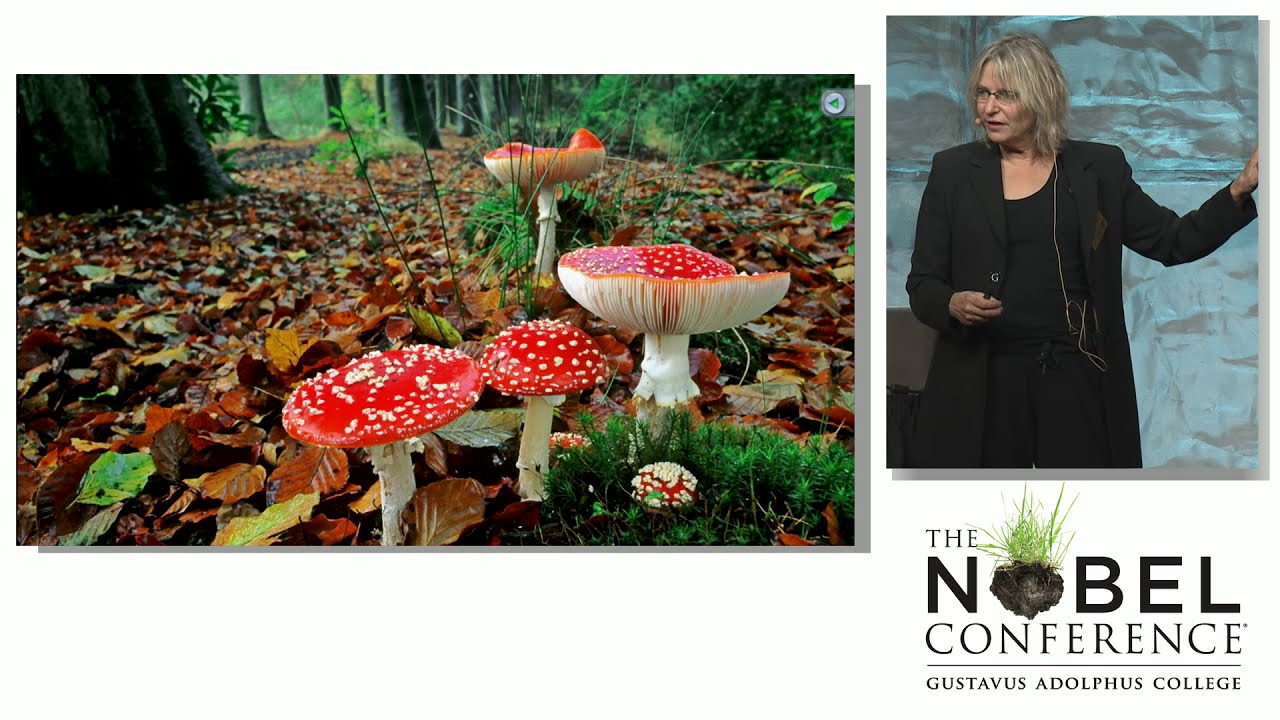
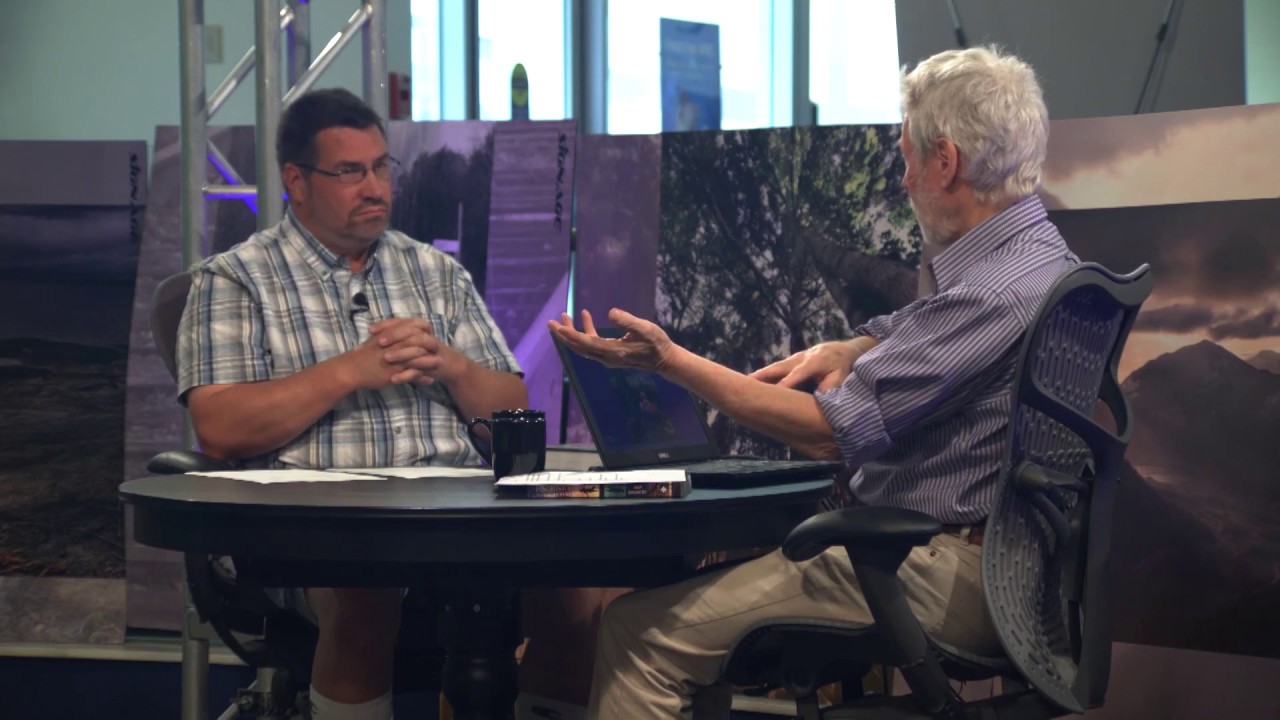
How Trees Talk to Each Other in a Healthy Forest | Suzanne Simard
Added:Basic concepts of symbiosis, specifically mutualistic relationships where different species cooperate for mutual benefit.
The biology of fungi, including the structure of underground mycelial networks and how hyphae absorb nutrients.
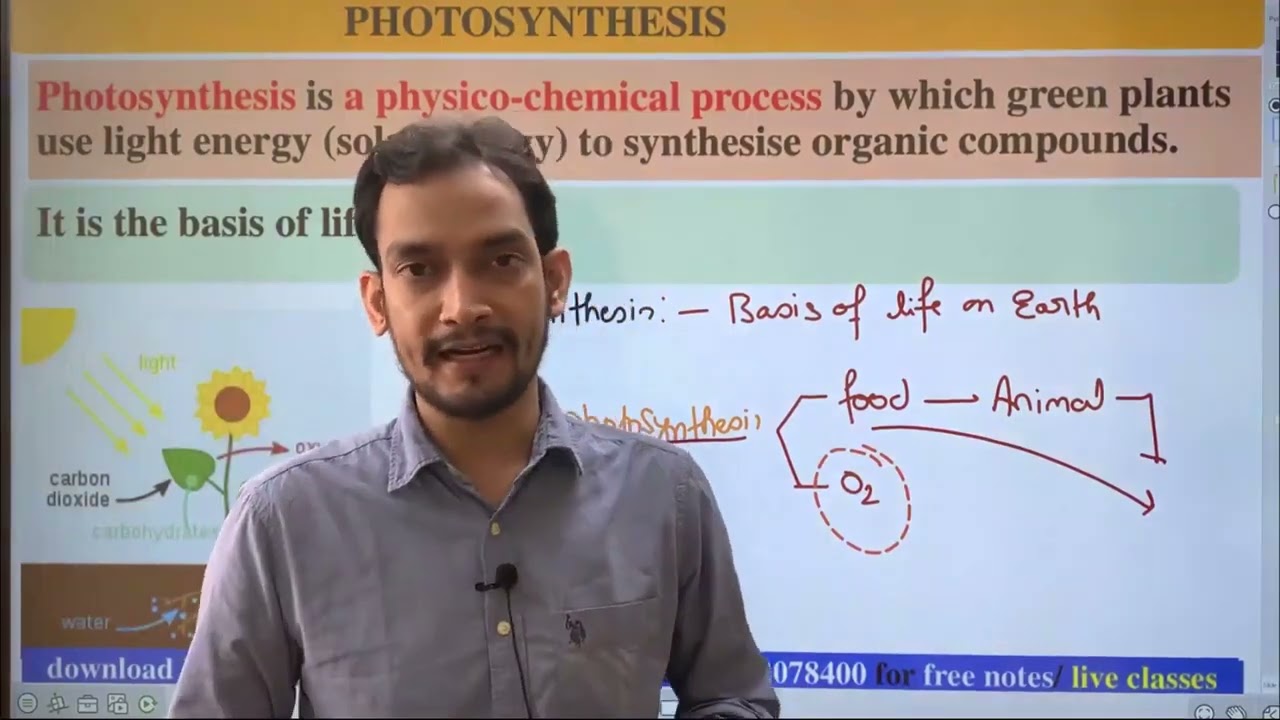
The process of photosynthesis and how trees produce, store, and transport carbon and sugars.
Fundamental ecological principles of forest ecosystems, particularly food webs and resource competition.
The detailed biochemical mechanisms of Mycorrhizal Networks (the 'Wood Wide Web'), including how carbon, nitrogen, and water are actively transferred.
Plant communication and defense signaling, specifically how chemical warnings about pests or drought are transmitted between trees.
The concept of 'Mother Trees' and evolutionary kin selection, exploring how older trees recognize and prioritize resource distribution to their own offspring.
The implications of forest networks on conservation biology and modern forestry management, such as the ecological impacts of clear-cutting versus retention forestry.
190.8K views4.2Klikes19:33Original Release: 2017-02-02
Translator: Rhonda Jacobs Reviewer: Ellen Maloney The Coast Salish people say, "We are one."
[nə́c̓aʔmat ct] For thousands of years they lived it.
But we didn't pay any attention.
Most of us have forgotten that we're connected to each other, and to nature, that we are one.
But nature is not some separate thing, but an intimate part of us.
And what we do on this Earth ripples through our ecosystems, our web of connections.
Now, the signs are undeniable: climate change, species extinctions, human suffering.
We have forgotten.
But for their faith, the people are connected through spirit to forests, and oceans and rivers and bears and salmon, the Coast Salish people were ignored.
But truly, it does come down to a matter of faith, to trust and respect the relationships that make up the complexity of nature.
But we said that's unscientific.
Western science requires exact measurements, visible proof, statistics.
But make no mistake, the Coast Salish people were deeply scientific.
How else could they have lived here for over 10,000 years in such prosperity?
In fact, they were more scientific than we.
For us to look any deeper, that would have hampered progress.
"There are trees in those forests, and our buildings need wood, and our printers need paper.
We need to cut down the forests and replant those trees."
Now, how do I fit into this?
Well, I come from a family of loggers.
And while my family was up on the mountainsides cutting down trees, one here, one there, I was playing in the forest below, in the places that are seen and unseen, in the trees and the logs and the forest floor.
And I believed that fairies lived there.
And their job was to live in and protect the forest, just like my job.
But the fairies couldn't save that forest, and neither could I; actually, nobody could.
Because the owner of the patch had to cut it down to feed his family.
And that moment changed me forever.
Actually, it motivated me.
And I went to school to study forestry.
I wanted to understand the mystery of why forests felt so powerful to me.
I wanted to save forests.
Ironically though, the first job I got coming out of forestry school was to mark old growth trees for clearcutting, and then to replant those clearcuts with fast-growing firs and pines, and to weed out the unwanted species - the alders, the birches, the aspens.
And you know what?
Well, it's because we considered them competitors, interfering with our profits.
And I got pretty good at creating these shiny new monocultures.
But you know, the questions kept piling up.
Why was disease spreading through these plantations?
Why was cutting out birch making the fir so sick?
And I was also increasingly worried about the increasing rate of clearcutting.
You see, I'd learned in school that about a century ago, that in Canada, in British Columbia, they developed this cutting plan to cut down all of the old growth trees in the working forest.
I knew about it, I'd learned it in school.
But it took me a long time to realize that the cutting was not going to stop.
Nor the attitude that we could convert these old growth forests into nice marketable, neat plantations.
It seemed to me that there was more to the forest than meets the eye.
So, I returned to graduate school and I became fascinated with the underground, I wanted to understand the mystery of why these old growth forests were so powerful.
So, I looked at this UK study, and they were examining seedlings growing in the laboratory, and colonized them with this fungus, a mycorrhizal fungus.
The fungus connected the seedlings in a web, and they transmitted carbon from one seedling to the other.
A mycorrhiza is literally a fungus-root.
In this symbiotic association the fungus grows through the soil picking up nutrients and water, and bringing them back to the plant, and trading them for photosynthetic carbon.
It's a symbiotic, mutualistic, reciprocal relationship.
And most fascinating to me, these fungi could connect plants below ground.
So, I wondered, I thought back to my fir forests, and I wondered, could the fungi colonizing birch actually connect with fir and protect it?
So, I did some research, I wanted to find out.
My first question came back to that faith thing again.
Even though we can't see it, could these mycorrhizal fungi be connecting trees below ground?
Well, it turns out that they can in real forests.
Using DNA microsatellites, we uncovered this network in an old growth Douglas fir forest.
In this picture, these circles represent Douglas fir trees.
And the bigger and darker the circle, the bigger and older the tree.
And those small, light circles in the middle, those are the seedlings growing in the understory.
And these lines that are linking the circles, those are the interlinking mycorrhizal fungal highways.
And you'll notice that the biggest, darkest circles, the biggest, oldest trees, are the most highly connected.
So, we call these 'hub trees.'
and later, more fondly, we started to call them 'mother trees.'
Because as it turns out, those mother trees are nurturing the young seedlings in the understory.
Now, this map is of only two of what we think are 100 fungal species in the forest.
Could you imagine if we'd been able to map all 100 species?
Next I wanted to know, what might be flowing through this network?
Well, it turns out, the very things that plants need to survive and grow.
Things like carbon, and nutrients, and water.
So, we use isotopes, carbon isotopes, and we label plants, and we were able to see the carbon transmix back and forth through this network, like messages transmitting through the internet.
And when one seedling is under stress, if it's small, or shaded, or nutrient poor, or senescing, the other plant sends more carbon.
We figured out that it follows what's called a source-sink gradient.
From a robust source plant like an illuminated birch tree to a needful sink plant like an understory fir tree, and all this without harming the source plants.
The next thing we wanted to know was, so this happens, but what does it really matter in forests?
Well, it turns out if you shade one of the plants, if Douglas fir's shaded in the understory, birch will send ten percent of its carbon, and that's a lot of carbon.
That's enough for Douglas fir actually to make seeds.
Now, we haven't figured out precisely what the amounts mean, but we do know that this transfer increases their survival and growth, and health of the seedlings growing in the understory.
Now, I published this work in some pretty good journals.
This particular article struck a chord.
Lots of people were enthused.
In fact, there is a whole bunch of new research all around the world that was inspired by this paper.
But there were also critics who tried to discredit my work.
In fact, there were a lot of papers written, keynote addresses given, press releases.
And back home, a professional ethics letter was actually put on my file.
And my work was called "a dog's breakfast."
Now, I know that you know that this kind of intimidation is actually not that uncommon with breakthrough science, especially if it challenges the status quo.
Knowing this, this didn't stop me.
I knew that my science was sound and rigorous, and I knew that one day it could change the way we view the environment.
So, really motivated, I returned to my original question, because I still hadn't quite answered it yet.
And I wondered, could these webs, these networks, serve as more than just avenues of exchange of carbon and nutrients and water.
Could a tree that's under stress, diseased, actually benefit from the health of its neighbors?
Could birch be helping fir?
So, I did some more experiments, and it turns out, it does.
When Douglas fir is under stress or disease, it sends warning signals to its neighbors, and the neighbors respond by increasing production of their defense enzymes, and they're more resistant to disease.
And if that neighbor is a birch tree, the fir benefits from the antibiotic-producing bacteria that are associated with this shared network.
It's like a public immunization system.
And I wondered, could there be more than defense signals moving?
Well, it turns out that trees can actually recognize, transmit messages to their relatives.
A mother tree can recognize whether seedlings in her neighborhood are her kin or strangers.
She sends more carbon to kin seedlings than to strangers.
And if the mother tree is injured, she sends even more carbon to her kin seedlings.
It's as though she's passing her energy, her legacy, to the next generation.
Now, when I look at all this together, it's as though these trees are sharing their deepest secrets.
This is breakthrough stuff.
It's pretty exciting.
You know, at the time, there were actually many articles written, Popular Science, documentary films, the word was getting out, and I was really, really excited.
But I got cancer.
And that was really awful.
But you know, the beautiful thing about this is that it re-connected me with my people.
My people, my family, looked after me.
They held me.
They helped me up the stairs.
They cooked my meals.
They looked after my children.
They saved me.
And back in the hospital, I made even more connections, strong ones, with other women fighting breast cancer.
And we were really afraid, and we cried.
But we also laughed.
We still do every day.
We've become so tight, we're like this tapestry that's knit together in a tight weave.
When one of us stumbles or bends, the others are right there to pick her up.
What I've learned through all this, is what my forests have been trying to tell me all along - that these connections are crucial to our well-being.
They're not easily seen, but they're real.
And you know what? I'm living proof.
And I'm really grateful.
(Applause) Thank you.
Now that I'm strong and healthy again, I've returned to my science, and I'm asking other questions.
My first, and the most important question to me is, what can our discoveries tell us about how to deal with our biggest threat?
Climate change.
Yeah, climate change is no hoax.
In fact, we can't kid ourselves, there is no fancy engineering that's going to get us out of this mess.
What my discoveries have shown me, is that the answer, the solution, lies in our relationship with nature.
And in doing this research, I went to the Aboriginal people.
I'm doing my research with Aboriginal people who are, as you know, dependent on the salmon, have a long relationship of stewardship of the salmon which then helps with their livelihood, it is crucial to their livelihood.
So, in the fall, when the salmon are spawning in the rivers, the bears come down to the river, and the wolves, and they feed on the salmon in the spawning rivers, and they carry the salmon up into the forest.
And underneath the big, old mother trees, under the sheltering crowns of the mother trees, they feed on the salmon.
And in the fall, the leftovers decay and seep into the ground.
And we think that the big mycorrhizal networks of those mother trees soak up that nitrogen.
And scientists have discovered traces of salmon nitrogen in the tree rings, stored there for centuries.
And what we're going to do this summer is go back to these forests, and we're going to trace whether nitrogen - and we think this is happening - moves from mother trees to their neighbors, from tree to tree to tree, deep into the forest.
And we think this is tied to the health of the forest, which of course is tied to the health of the rivers, which of course is linked to the salmon, and the health of the salmon populations, which of course, feeds back to the oceans, and comes back to us, the people.
Now, this circle of life, what our Aboriginal ancestors have called 'reciprocity,' is the trading of mutual respect.
And this is a really good example of what scientists are calling 'complex adaptive systems.'
Now look, forests are built on relationships.
In a healthy forest, everything is connected, and communicating.
Here, these nodes represent the species.
And they're constantly relating to each other.
And it's out of their interactions that emerges what scientists are calling 'complex adaptive behaviors,' or higher system level properties.
Things like resilience and health, the cycling of clean air and clean water.
But you know, in modern society, we view ourselves separate from this, somehow entitled, or superior, or at the minimum, we take it for granted.
But the thing is, when we take out key parts, like the grizzly bears, and we trash the salmon populations, these systems rapidly degrade into what we're calling 'wicked stable states.'
Now, this is not somewhere we want to go.
Wicked stable states are unpredictable, they're contradictory.
When you try to fix one problem, another problem shows up over here.
And the way things are going, right now, with our forests dying from climate change, which feeds back to more climate change, this is happening really fast.
But here's the beautiful thing: It's precisely because they're complex adaptive systems poised for change, that we can change this trajectory from negative to positive.
Here's how we do this.
First, we've got to re-imagine ourselves as part of this network.
Imagine yourself listening to all the other creatures.
We can tap into that below-ground network and become part of the conversation.
If we'd done this, we would never have cut birch out of those forests, the Douglas fir forests, because we would have known it undermines the resilience of the forest.
But we're still doing that.
But I'm still very hopeful, because I know that once we tap into this complex adaptive system, into our role in it, we can change our thinking, we can change our behavior.
We can become part of this great system.
Remember when birch was sending nutrients to fir, and fir was sending them back to birch, remember that?
Well, this just proves that in ecosystems, there is no bigotry, there's only reciprocity, only mutual respect.
Just like in my cancer support network.
That's what we practice.
So finally, thirdly, I know that once we understand that we are deeply part of nature, really part of nature, not separate, that we can become part of the great strengthening, that positive trajectory.
We have to stop treating nature as our shopping mall, and once we do that, we can change the arc of the future.
Once, I thought that fairies connected and protected the forest, and now with my science, I know I wasn't that far off.
(Laughter) Using science, I've shown that precisely, these unseen connections exist, just like the Coast Salish have been telling us all along.
They've shown, the science has shown, that everything is connected and communicating, with respect and reciprocity.
And out of this comes balance in our communities and our ecosystems.
And it's based on principles like kinship, respect of elders, and this gives rise to complexity and adaptability.
And out of this, of course, we have resilience.
Resilience to deal with things like climate change.
So, I want to leave you with one final, hopeful message.
I know, based on my experience, and in my science, that you, too, can own this, that we are one.
Thank you very much.
(Applause)
Up Next
93:00
Mother Trees and the Social Forest: Mycorrhizal Networks Explained
@mushroomwonderland1
15.6K views•2021-09-27
50:12
Bacterial Communication: Quorum Sensing and Biofilm Formation Explained
@JHUAAP
12.6K views•2011-06-28
17:48
Phages: A Natural Solution to Antibiotic Resistance | TEDx Talk
@TEDx
44.7K views•2016-10-06
7:08
Bacteriophages: Earth's Deadliest Killers and Future Antibiotics
@kurzgesagt
34.6M views•2018-05-13
Related Study Plans & Knowledge Roadmaps
Structured learning paths in Biology
biology
RNAi: Biogenesis, RISC & Gene Silencing
01Molecular Biology Foundations: DNA to Protein
02Introduction to RNA Interference (RNAi)
03Molecular Biogenesis of miRNA and siRNA
+ 2 more learning modules
10h5 modules
Explore Roadmap
biology
Mycorrhizae: Signaling, Biophysics & Ecology
01Foundations of Mycorrhizal Symbiosis
02Molecular Signaling and Root Colonization
03Biophysics and Bioenergetics of Nutrient Exchange
+ 1 more learning modules
11h4 modules
Explore Roadmap
biology
Circadian Clocks: TTFL, SCN & Periphery
01Foundations of Molecular Biology & Gene Expression
02Introduction to Chronobiology and Actograms
03The Core TTFL: Molecular Architecture of the Clock
+ 3 more learning modules
14h6 modules
Explore Roadmap
biology
Population Genetics: Math, Drift & Selection
01Genetic & Probability Foundations
02The Hardy-Weinberg Principle and Baseline Models
03Mathematical Modeling of Natural Selection
+ 3 more learning modules
18h6 modules
Explore Roadmap