





















![شرح علوم متكاملة[أثر الممارسات البشرية على التربة]/ فيزياء ١ث/ الفصل التالت/ الترم الاول ٢٠٢٥م](https://i.ytimg.com/vi/fYOfKrKXzf4/sddefault.jpg?v=674414bd)
Trees communicate and share resources with each other through vast underground networks formed by symbiotic fungi called mycorrhizae, which connect tree roots and allow the transfer of sugars, nutrients, and warning signals between trees, enabling older trees to support younger ones and helping entire forests respond collectively to environmental stresses like drought or insect attacks.
How Trees Talk Through Underground Fungal Networks | Science Explained
Added:Basic plant biology, specifically photosynthesis and how plants absorb water and nutrients through their root systems.
The ecological concept of symbiotic relationships, particularly mutualism, where two different species benefit from one another.
Fundamental fungal anatomy, including the difference between mushrooms, hyphae, and underground mycelial networks.
The basics of biological communication and how organisms use chemical compounds to transmit information.
The 'Wood Wide Web' hypothesis and the pioneering research of Dr. Suzanne Simard on 'Mother Trees' and forest dynamics.
The practical applications of mycorrhizal networks in regenerative agriculture, sustainable forestry, and ecological restoration.
The specific biochemistry of plant defense signaling, such as the transport of volatile organic compounds and jasmonates through fungal conduits.
How anthropogenic threats, such as soil compaction, clear-cutting, and chemical fungicides, disrupt these vital underground networks.
832.6K views26.3Klikes4:34Original Release: 2019-07-01
Most of the forest lives in the shadow of the giants that make up the highest canopy.
These are the oldest trees, with hundreds of children and thousands of grandchildren.
They check in with their neighbors, sharing food, supplies, and wisdom gained over their long lives.
They do all this rooted in place, unable to speak, reach out, or move around.
The secret to their success lies under the forest floor, where vast root systems support the towering trunks above.
Partnering with these roots are symbiotic fungi called mycorrhizae.
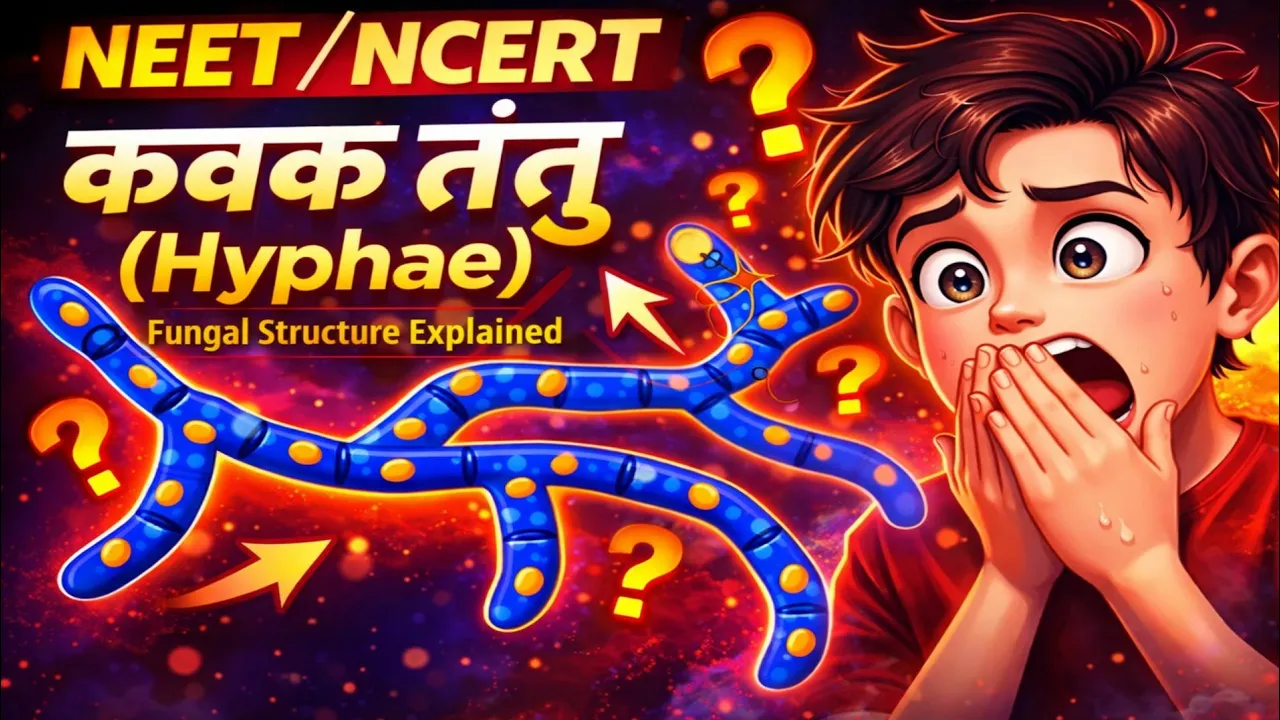
These fungi have countless branching, thread-like hyphae that together make up the mycelium.
The mycelium spreads across a much larger area than the tree root system and connect the roots of different trees together.
These connections form mycorrhizal networks.
Through mycorrhizal networks, fungi can pass resources and signaling molecules between trees.
We know the oldest trees have the largest mycorrhizal networks with the most connections to other trees, but these connections are incredibly complicated to trace.
That’s because there are about a hundred species of mycorrhizal fungi– and an individual tree might be colonized by dozens of different fungal organisms, each of which connects to a unique set of other trees, which in turn each have their own unique set of fungal associations.
To get a sense of how substances flow through this network, let’s zoom in on sugars, as they travel from a mature tree to a neighboring seedling.
Sugar’s journey starts high above the ground, in the leaves of the tallest trees above the canopy.
The leaves use the ample sunlight up there to create sugars through photosynthesis.
This essential fuel then travels through the tree to the base of the trunk in the thick sap.
From there, sugar flows down to the roots.
Mycorrhizal fungi encounter the tips of the roots and either surround or penetrate the outer root cells, depending on the type of fungi.
Fungi cannot produce sugars, though they need them for fuel just like trees do.
They can, however, collect nutrients from the soil much more efficiently than tree roots— and pass these nutrients into the tree roots.
In general, substances flow from where they are more abundant to where they are less abundant, or from source to sink.
That means that the sugars flow from the tree roots into the fungal hyphae.
Once the sugars enter the fungus, they travel along the hyphae through pores between cells or through special hollow transporter hyphae.
The fungus absorbs some of the sugars, but some travels on and enters the roots of a neighboring tree, a seedling that grows in the shade and has less opportunity to photosynthesize sugars.
But why does fungus transport resources from tree to tree?
This is one of the mysteries of the mycorrhizal networks.
It makes sense for fungus to exchange soil nutrients and sugar with a tree— both parties benefit.
The fungus likely benefits in less obvious ways from being part of a network between trees, but the exact ways aren’t totally clear.
Maybe the fungus benefits from having connections with as many different trees as possible, and maximizes its connections by shuttling molecules between trees.
Or maybe plants reduce their contributions to fungi if the fungi don’t facilitate exchanges between trees.
Whatever the reasons, these fungi pass an incredible amount of information between trees.
Through the mycorrhizae, trees can tell when nutrients or signaling molecules are coming from a member of their own species or not.
They can even tell when information is coming from a close relative like a sibling or parent.
Trees can also share information about events like drought or insect attacks through their fungal networks, causing their neighbors to increase production of protective enzymes in anticipation of threats.
The forest’s health relies on these intricate communications and exchanges.
With everything so deeply interconnected, what impacts one species is bound to impact others.
Up Next

19:33
How Trees Talk to Each Other in a Healthy Forest | Suzanne Simard
@TEDx
190.8K views•2017-02-02
50:12
Bacterial Communication: Quorum Sensing and Biofilm Formation Explained
@JHUAAP
12.6K views•2011-06-28

18:11
How Bacteria Talk: Quorum Sensing Communication | Bonnie Bassler TED
@TEDEd
707.9K views•2013-02-09
7:08
Bacteriophages: Earth's Deadliest Killers and Future Antibiotics
@kurzgesagt
34.6M views•2018-05-13
Related Study Plans & Knowledge Roadmaps
Structured learning paths in Biology
biology
RNAi: Biogenesis, RISC & Gene Silencing
01Molecular Biology Foundations: DNA to Protein
02Introduction to RNA Interference (RNAi)
03Molecular Biogenesis of miRNA and siRNA
+ 2 more learning modules
10h5 modules
Explore Roadmap
biology
Mycorrhizae: Signaling, Biophysics & Ecology
01Foundations of Mycorrhizal Symbiosis
02Molecular Signaling and Root Colonization
03Biophysics and Bioenergetics of Nutrient Exchange
+ 1 more learning modules
11h4 modules
Explore Roadmap
biology
Circadian Clocks: TTFL, SCN & Periphery
01Foundations of Molecular Biology & Gene Expression
02Introduction to Chronobiology and Actograms
03The Core TTFL: Molecular Architecture of the Clock
+ 3 more learning modules
14h6 modules
Explore Roadmap
biology
Population Genetics: Math, Drift & Selection
01Genetic & Probability Foundations
02The Hardy-Weinberg Principle and Baseline Models
03Mathematical Modeling of Natural Selection
+ 3 more learning modules
18h6 modules
Explore Roadmap