






![Primary Hemostasis: Platelet Plug Formation [Step-by-Step Animation]](https://i.ytimg.com/vi/liMJhYPrP3k/hqdefault.jpg)










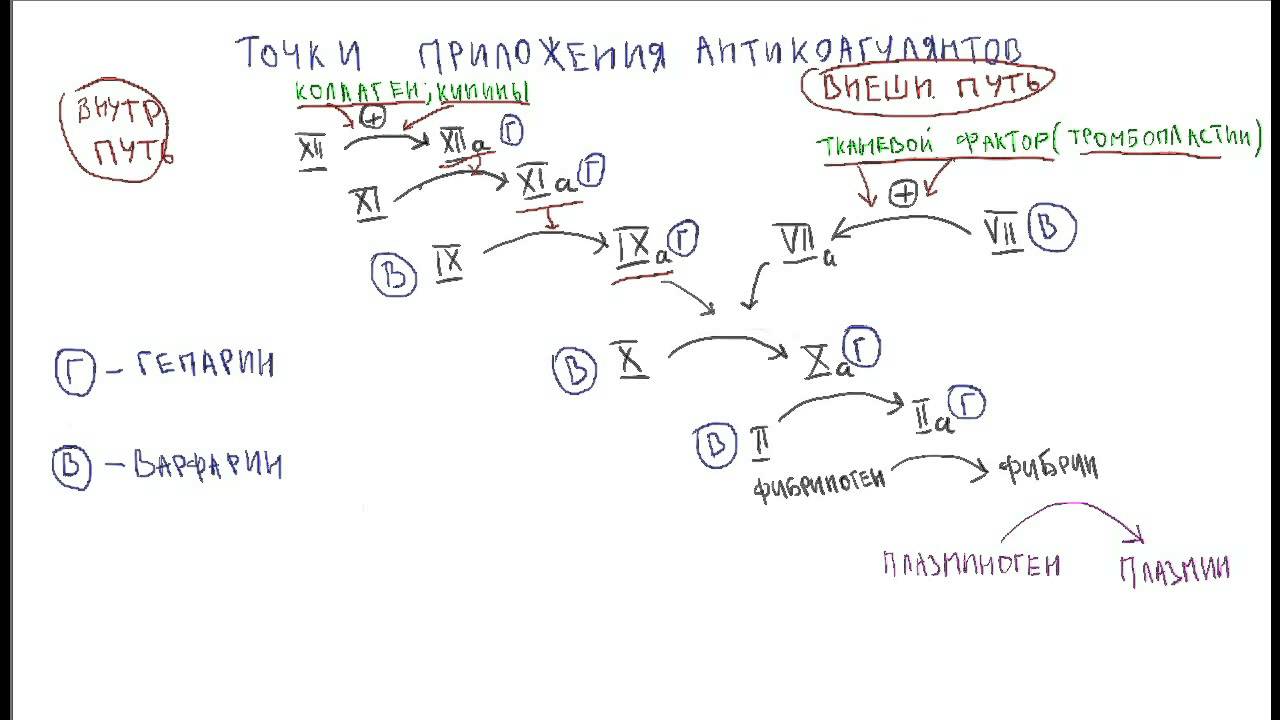



The coagulation cascade is a complex series of enzymatic reactions that stops bleeding after blood vessel injury, involving two main pathways—the intrinsic pathway (activated by damaged endothelium) and the extrinsic pathway (activated by tissue factor)—which converge to activate thrombin, which then converts fibrinogen to fibrin strands that form a mesh holding the platelet plug together; this cascade includes negative feedback loops to prevent excessive clotting and deficiencies in specific clotting factors (such as VIII, IX, or XI) can lead to hemophilia.
Coagulation Cascade: Understanding Blood Clotting (Part 1)
Added:Basic blood composition, specifically the role of platelets (thrombocytes) in primary hemostasis and forming the initial platelet plug.
The biochemical concept of zymogens (inactive enzyme precursors) and how sequential proteolytic cleavage propagates biological cascades.
Vascular anatomy, particularly the role of the endothelial lining and how the exposure of subendothelial collagen triggers clotting.
The role of calcium ions (Factor IV) and phospholipid membranes in facilitating cellular and enzymatic interactions.
The process of fibrinolysis, focusing on how the body safely dissolves clots using plasminogen and tissue plasminogen activator (tPA).
Endogenous regulation mechanisms of coagulation, including the inhibitory roles of Antithrombin III, Protein C, and Protein S.
Pharmacological modulation of clotting, including the mechanism of action of anticoagulants like Heparin, Warfarin, and Direct Oral Anticoagulants (DOACs).
Clinical pathologies of hemostasis, such as Hemophilia (factor deficiencies), Von Willebrand disease, and hypercoagulable states like Deep Vein Thrombosis (DVT).
1.3M views13.3Klikes14:39Original Release: 2014-08-18
- Let's say this is a blood vessel and it's made up of these endothelial cells, the same way that all blood vessels are.
Let's say that this blood vessel gets into a fight and it gets a little bit hurt.
So, the walls break open and the cells now no longer seal the vessel from what's around it.
When this happens, we wouldn't want all the blood in this vessel to come pouring out of the vessel because we'd lose way too much blood.
So the body has a method of containing the blood.
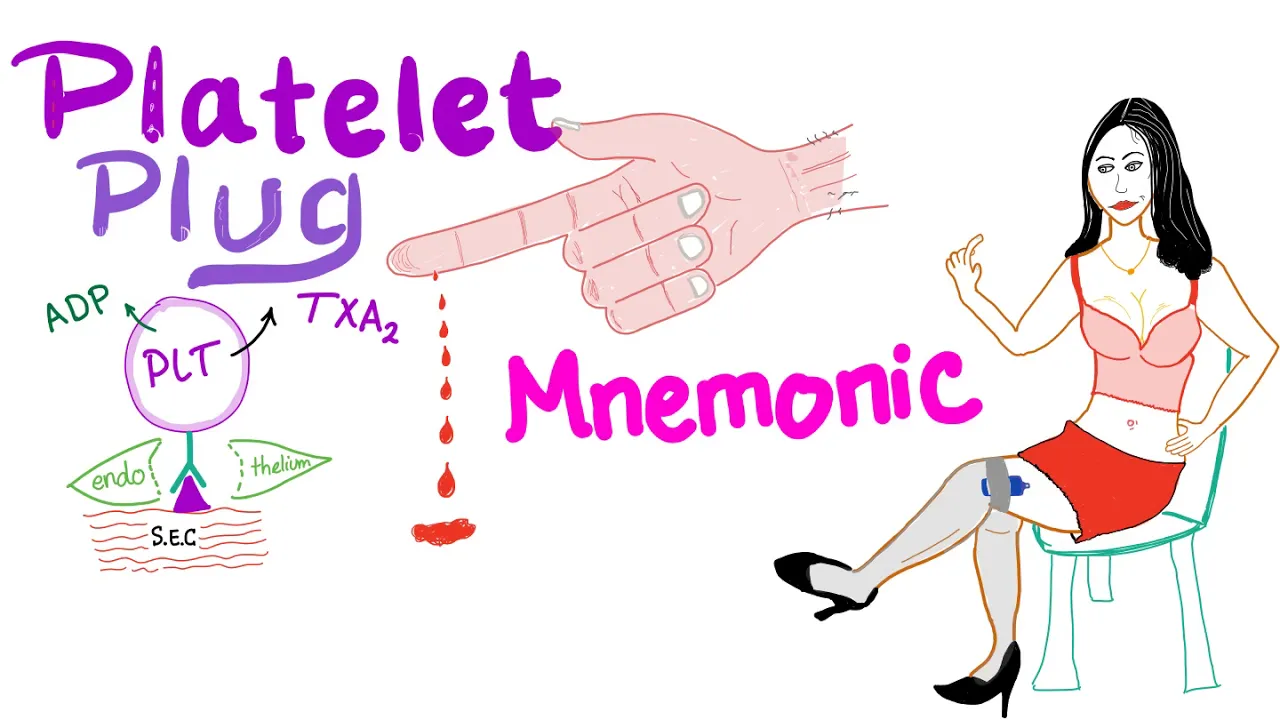
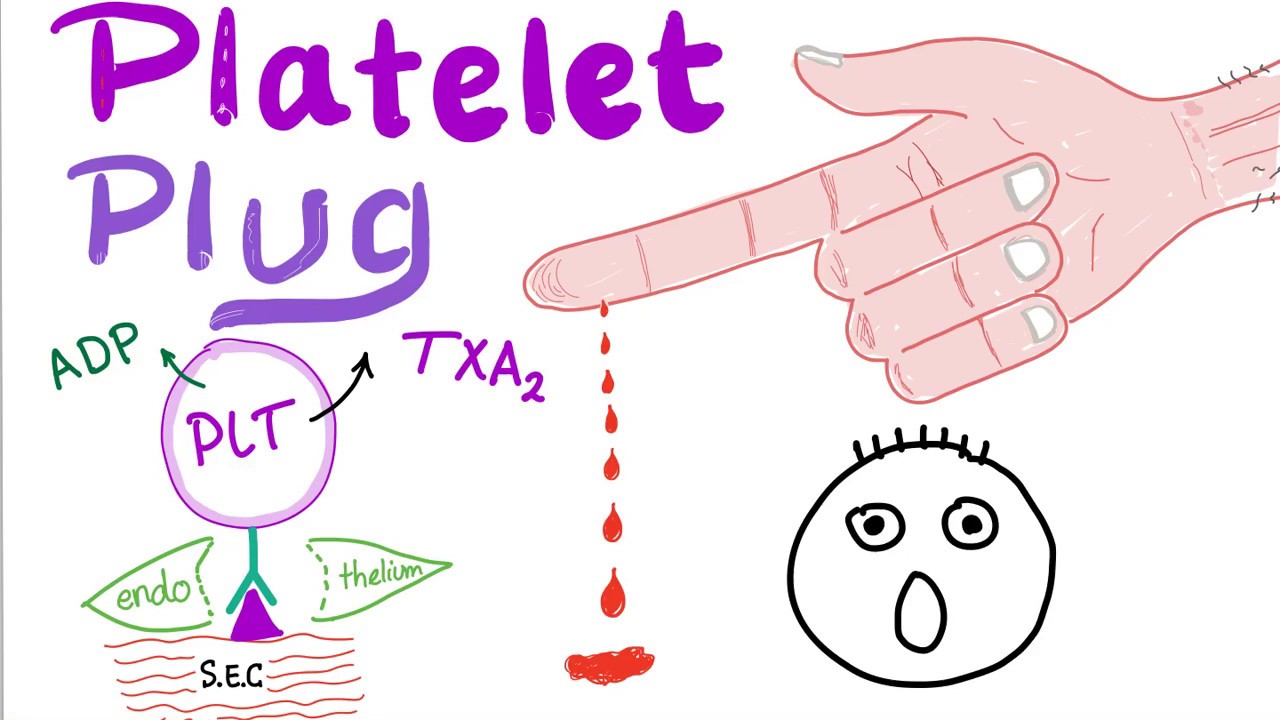
The first thing that's going to happen is that little platelets, which are circulating in the body, are going to come and deposit there and form an initial plug.
So these little things are platelets.
But it turns out that this plug is not quite solid enough, and so the body needs a second mechanism to solidify the plug.
And that mechanism is what we're going to talk about most in this video.
I'm drawing that mechanism here.
What I'm drawing is little fibrin strands, which will come and act as a kind of mesh to hold the platelet plug together solidly.
So what do these fibrin strands look like?
Well, they're made up of little fibrin sub-units.
These are actually what we refer to as the fibrin molecules or proteins.
These, it turns out, have a natural affinity for each other, so that when you bring them together, they form a polymer.
They join end to end and they create a fibrin strand.
So the question then becomes, how do you make sure that these fibrin units only join together and make a strand at the site of injury?
So for example, if you had a bunch of little fibrin molecules over here, how would you keep them from joining together?
The answer is that you can't, which is why you don't have fibrin circulating in your blood.
You actually have something else, which I'm going to draw here.
That something else is fibrin, but plus an extra piece.
That extra piece, as you can see, covers one of the active sites of the fibrin and therefore prevents it from joining to itself.
So the name of this thing is fibrinogen, probably because it will form fibrin, hence the fibrinogen.
It's only when you convert fibrinogen to actual fibrin that the units can join together and form a strand.
So again, to repeat, you don't have fibrin circulating in your blood, you actually have fibrinogen.
So the question then becomes, how does your body know to convert fibrinogen into fibrin at the site of injury?
The answer is that when you injure your endothelium here, you're going to expose your blood to new proteins.
And maybe your actual endothelial cells will release some proteins because they're damaged.
So basically, you have new proteins that weren't seen before and that are seen now.
Those proteins will eventually cause fibrinogen to turn into fibrin.
So while evolution was designing us, it could've said, let's use these little yellow guys to convert fibrinogen to fibrin.
That might've worked, but it's actually not the most efficient way to do things.
The reason is, imagine if you and a couple of friends have a huge amount of work to do.
Let's say you need to convert a million fibrinogen to fibrin.
Is the best way to do it, to actually sit down and crank it out?
Or would it be more efficient to have each of you call five friends and invite those friends to come work.
And ask those friends to each call five friends.
And ask those friends to each call five friends.
Well, obviously that would get the job done much faster assuming you had those friends.
That's also what your body does.
So actually, it doesn't use these yellow guys to convert fibrinogen to fibrin.
There's another player which does that, and it's an important one, so we'll give it a little drawing like that, and it is called thrombin.
Thrombin, just like fibrinogen, is activated from an inactive form, which we call prothrombin.
The prothrombin has a little piece on the end that prevents it from working, so this is prothrombin.
That piece is removed when you want to get to work.
So is prothrombin activated by the little yellow guys?
Well, actually, he's not either because the chain of amplification is much longer than that.
To draw the actual amplification cascade, you just need to see it and practice.
But there is an easier way to draw it than it usually is drawn, so we'll do that now.
So let's say you were counting down from XII.
Normally you would start at XII.
You'd go to XI.
You'd go to X, and then you'd go to IX.
But let's say that you weren't very good at counting.
You would start with XII.
You'd go to XI.
Then you'd make a little mistake - you'd go to IX.
Then you'd realize you forgot X, so you'd go to X.
Now it's good that you remembered X because X is a big deal, and he's going to help bring us thrombin.
Turns out that thrombin is also known as II.
We know very well that thrombin helps give us fibrin, which is known as I, and that's no surprise because fibrin's the most important guy.
He's the ultimate goal, and thrombin is the guy that helps us get the ultimate goal, so he should be number II.
Now unfortunately, it's not quite that easy.
X likes V because they're both multiples of five, so they work together and IX likes VIII because they're right next to each other and so they work together.
So this is the first part of our clotting cascade and it turns out that we call this part here, the intrinsic pathway and we can talk about what that means later, but for now let's just give it its name.
But what's perhaps more important to be clear about is that in this drawing, XII is not actually becoming XI, and XI is not actually becoming IX.
What's happening is that XII, when it's activated, is a catalyst to convert XI from it's inactive form into its activated form, which we'll draw XIa.
And then once XI is activated, it serves as a catalyst to convert IX from its inactivated form into its activated form.
So you see that these arrows are actually more about catalyzing.
Now I said that this was an amplification sequence, so I just wanted to share a little data to show that that's true.
It turns out that this guy, factor I, or fibrin in its inactivated form, which is fibrinogen, has about 3,000 micro-grams per milliliter in blood, while this guy has about 100 micro-grams per milliliter in blood.
Meanwhile, X has about 10 micro-grams per milliliter in blood and factor IX has about five micro-grams of milliliter in blood.
So you can really see that as you go down this thing, you're increasing your amounts in your blood, which reflects the fact that you're also going to increase the number of active forms of these when you have a clot.
But anyway, I said that this was the intrinsic pathway because there is another pathway, which also leads to an activated X, but in this other pathway, what activates the X is an activated VII, which is activated by III, also known as tissue factor.
I'll just write TF for tissue factor.
In this pathway, which I'll circle here - and I apologize for the poor organization - this one is known as the extrinsic pathway, extrinsic.
So what's the difference between these two pathways?
Well, it turns out that the extrinsic pathway is the spark.
It's the one that gets activated by the original insult over here, whereas the intrinsic pathway is kind of like the workhorse that really gets most of the coagulation done.
So how does that work?
Well, you first get this tissue factor, which is actually one of these little yellow guys.
And that tissue factor activates VII, which activates X, so you get a shot - a spark that shoots down this way and activates a little bit of X.
And then X will activate a little bit of thrombin, and then thrombin will get the intrisic workhorse going.
And how will thrombin do that?
Well thrombin actually activates a whole bunch of these guys, and to remember the ones that it activates, you just need to take the five odd numbers starting at five.
So what is that?
That's V, VII, IX, XI, and XIII.
Actually, this is just almost right, but it actually turns out that it's not IX, it's VIII because it couldn't be quite that easy.
So those are the five that it activates.
So let's draw that in here in our drawing.
So let's draw that in the form of blue arrows because thrombin is blue.
We said it's going to activate V.
We said it's going to activate VII.
We said it's going to activate not IX, but VIII, so this will be an awkward arrow to draw.
We said it's going to activate XI, and we said it's going to activate XIII.
Where's our XIII?
Well, we haven't actually drawn it in yet, so let's quickly chat about that.
The end goal of this whole cascade is to get these fibrin molecules, and these fibrin molecules together will form some strands.
It actually turns out that there's one more step, which is to connect these strands together.
So we're going to want to connect these strands together with some cross links.
These cross links will just hold them together so that they actually form a tight mesh.
It turns out that it's this step right here, which is enabled by factor XIII.
So let's draw the final thrombin activity, which is to activate XIII.
So you can see that once you activate a little thrombin, it's going to activate all the necessary things in this intrinsic pathway to get it going.
You might actually be wondering about XII up there because thrombin is not hitting him, and actually it turns out that if you remove a person's factor XII, they can still clot pretty well.
So it's clear that XII is not a totally necessary part of this intrinsic pathway.
And to be clear again, with our use of arrows, this green arrow here is different from these white arrows in the sense that here, we are saying that fibrin is going to become fibrin strands, which is going to become interlaced fibrin strands.
So if this was all there was to the story, then every time you had a little bit of damage to your endothelium, you would cause the extrinsic pathway to fire.
So you'd create a little activated VII.
You would activate some X, which would activate some II, which is thrombin, which would start to create fibrin from fibrinogen.
And moreover, the thrombin would have this positive feedback, which would cause more and more thrombin to be produced, which would cause more and more fibrin to be produced.
And basically, this system would just spiral out of control and you would become one large walking clot.
So to keep that from happening, there are some negative feedback loops.
And like much of the other steps in this picture, they are governed by thrombin.
So one thing that happens is that if thrombin helps create plasmin from plasminogen, much the way it helps create fibrin from fibrinogen.
And this plasmin acts directly on these mesh networks of fibrin and breaks them apart.
So that's one helpful factor, but that's not really the example of negative feedback because it won't prevent the continued production of all this.
So another example is that thrombin actually stimulates the production of anti-thrombin, which is kind of counterintuitive, but that's sort of classic negative feedback.
And what anti-thrombin is going to do, as you could guess, is it's going to decrease the amount of thrombin that's being produced from prothrombin, and it's also going to impede the production of activated X from X.
So what if this whole system didn't work?
I don't mean the negative feedback, but I mean the whole clotting system?
Well, if it didn't work, then you wouldn't form a stable plug here, and you would get lots of blood pouring out of your damaged endothelium.
So what we call that is hemophelia.
Hemo refers to blood and phelia means love.
So people who have hemophelia, love to bleed.
There are three different kinds of hemophelia.
There is A, there's B, and there's C.
It's easy to remember the causes of these, because A is associated with VIII.
B is associated with what comes after VIII? IX.
And C is associated with what comes after IX?
Not X, actually, but XI.
So we can draw those into our clotting cascade over here to see that a factor VIII deficiency will give you hemophelia A.
A factor IX deficiency will give you hemophelia B.
Whereas a factor XI deficiency will give you hemophelia C.
So we see that these guys target the intrinsic pathway.
Up Next

18:58
Intermediate Risk Prostate Cancer: Treatment Options Explained (MUSC)
@muschollings
70.6K views•2023-09-11
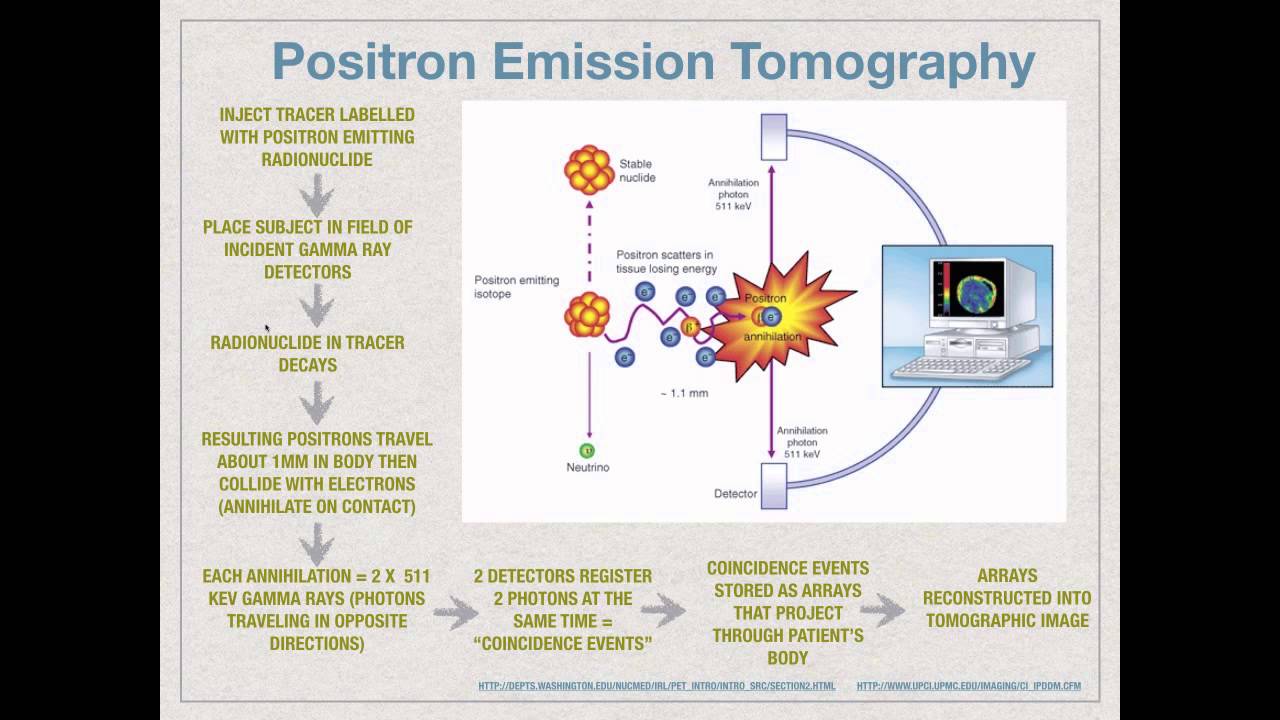
17:12
PET vs SPECT in Molecular Imaging: Principles and Nanomedicine Applications
@kimberlykelly1479
84.4K views•2015-11-02
13:10
PV Loops Explained: Contractility, Ea, and Preload Effects
@khanacademymedicine
40.5K views•2012-11-28
3:05
Stages of Labor and Vaginal Birth | Childbirth Animation
@nucleusmedicalmedia
52.1M views•2017-08-18
Related Study Plans & Knowledge Roadmaps
Structured learning paths in Medicine
medicine
Abnormal LFTs: Diagnostic Workup & Pathology
01Liver Anatomy and Basic Physiology
02Introduction to Liver Function Tests (LFTs)
03Hepatocellular vs. Cholestatic Patterns
+ 3 more learning modules
12h6 modules
Explore Roadmap
medicine
Analyzing Blood Smears: RBC, WBC & Platelets
01Introduction to Blood Components & Smear Preparation
02Normal Morphology of Blood Cells
03Erythrocyte Pathologies & Morphological Variants
+ 2 more learning modules
12h5 modules
Explore Roadmap
medicine
Mechanical Ventilation: Waveforms & Alarms
01Anatomy and Physiology of Breathing
02Introduction to Mechanical Ventilation & Core Modes
03Ventilator Settings and Waveform Interpretation
+ 2 more learning modules
12h5 modules
Explore Roadmap
medicine
Neuro Exam: Localization & Stroke Syndromes
01Foundations of Neuroanatomy and Vascular Supply
02The Neurological Examination: Step-by-Step
03Principles of Neurological Localization
+ 3 more learning modules
18h6 modules
Explore Roadmap