













![[#2] Regulação do bombeamento cardíaco: PRÉ-CARGA, PÓS-CARGA E CONTRATILIDADE | MK Fisiologia](https://i.ytimg.com/vi/OuP0riVfInk/maxresdefault.jpg)

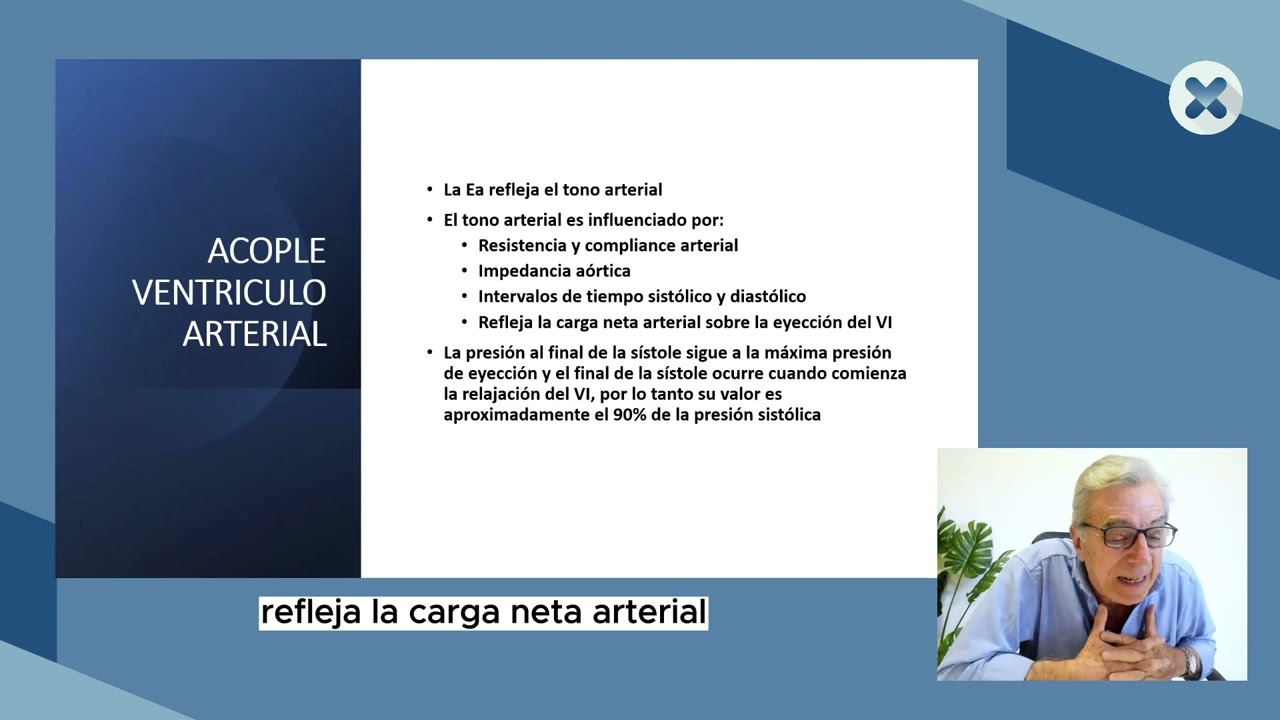



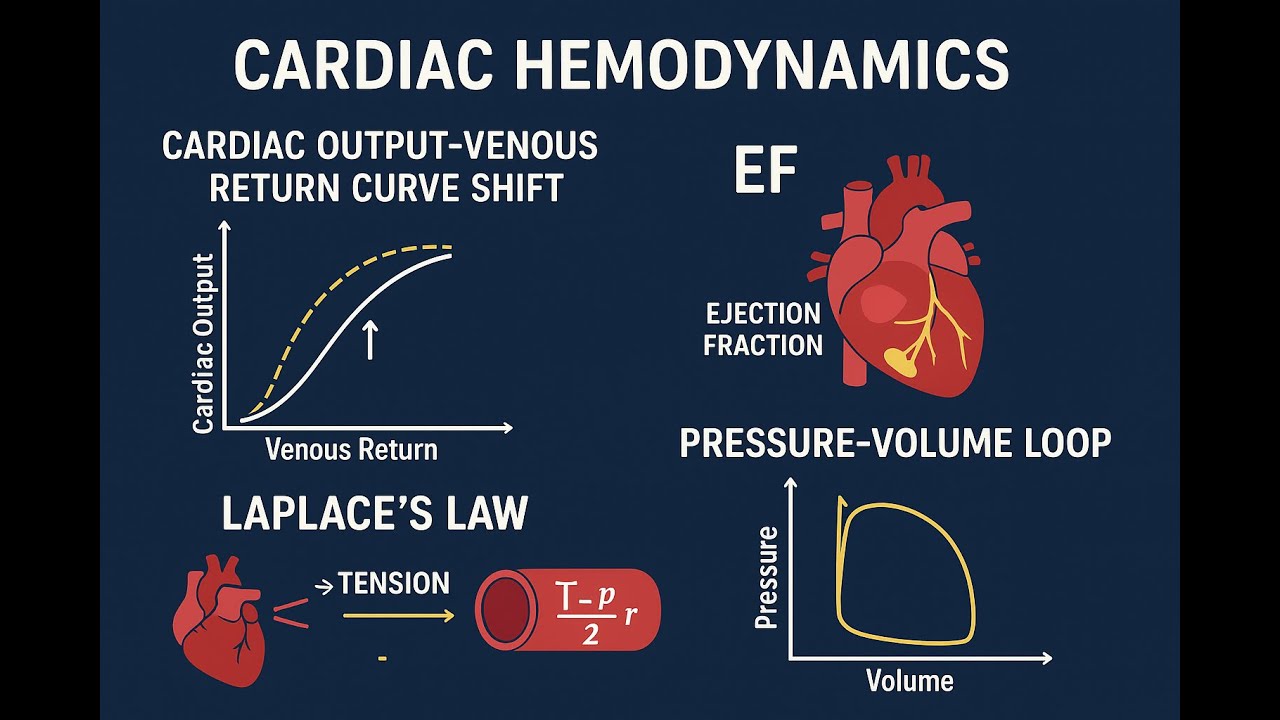





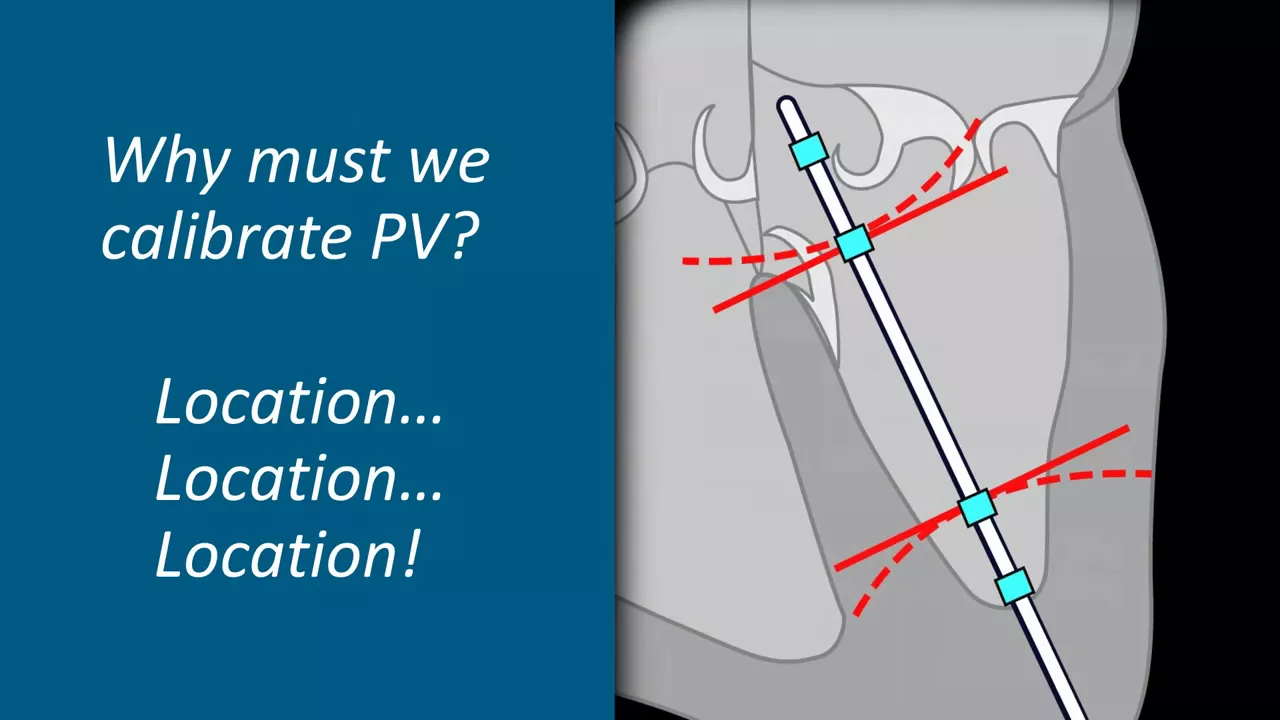
In PV loop analysis, contractility changes pivot the ESPVR line, increasing both stroke volume and end-systolic pressure when contractility increases; arterial elastance changes pivot the Ea line, creating a trade-off where increasing pressure decreases stroke volume and vice versa; preload changes roll the Ea line without altering its slope, proportionally increasing or decreasing both stroke volume and end-systolic pressure.
PV Loops Explained: Contractility, Ea, and Preload Effects
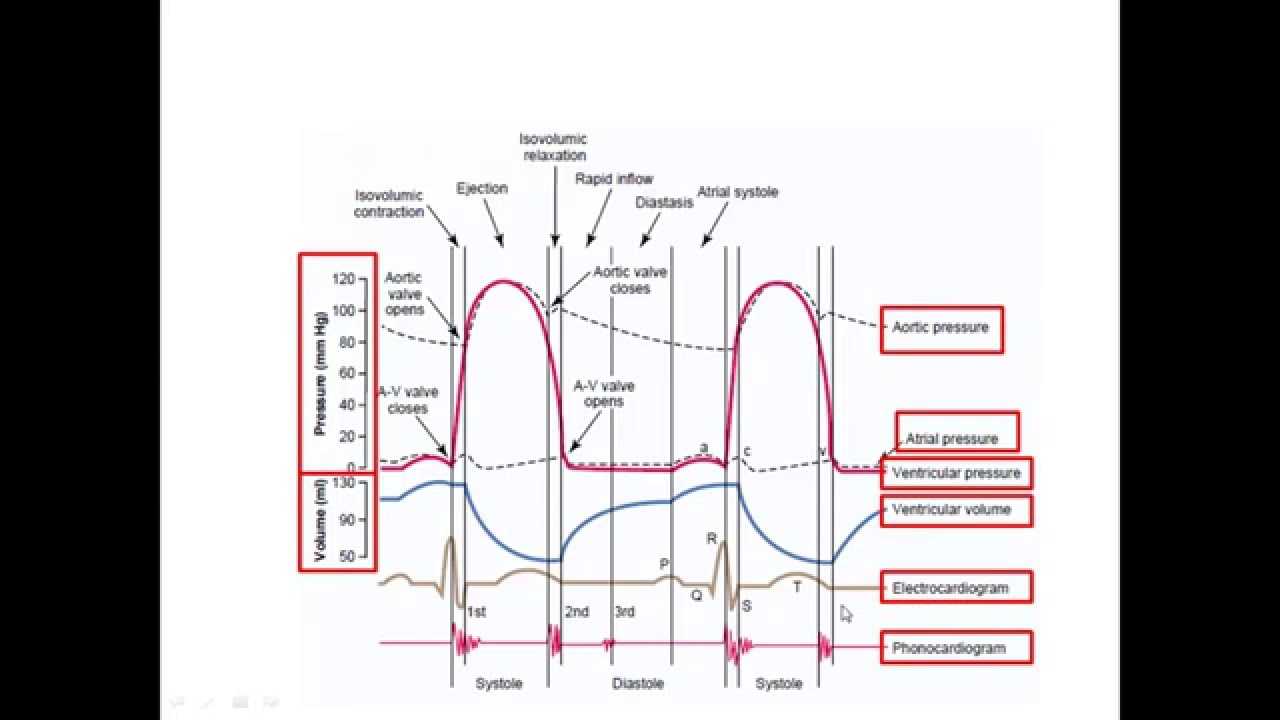
Added:The phases of the cardiac cycle, including ventricular filling, isovolumetric contraction, ejection, and isovolumetric relaxation.
The basic structure of a standard left ventricular Pressure-Volume (PV) loop, including how to identify end-diastolic and end-systolic points.
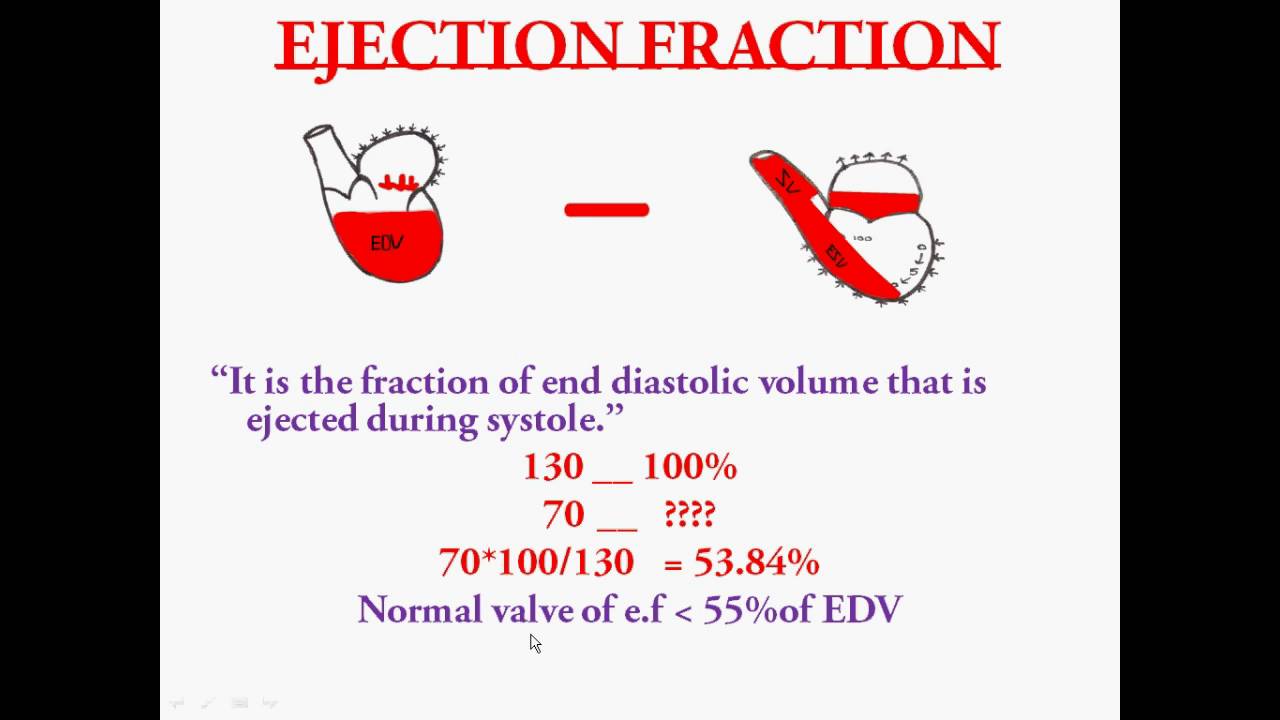
Fundamental definitions of key cardiac metrics: stroke volume (SV), cardiac output (CO), end-diastolic volume (EDV), and end-systolic volume (ESV).
The physiological definitions of preload, afterload, and contractility, as well as the concept behind the Frank-Starling law of the heart.
Ventricular-arterial coupling (the mechanical relationship between end-systolic elastance, Ees, and arterial elastance, Ea) and its role in cardiac energetic efficiency.
Pathological alterations of PV loops, including how valvular diseases (e.g., aortic stenosis, mitral regurgitation) and different types of heart failure (HFrEF vs. HFpEF) distort the loop.
The therapeutic and pharmacological effects of cardiovascular drugs (such as positive inotropes, beta-blockers, and vasodilators) on PV loop dynamics.
The clinical application of PV loops in intensive care monitoring and research using conductance catheterization.
40.5K views246likes13:10Original Release: 2012-11-28
We've worked really, really hard to understand PV loops.
Now I want to show you how PV loops-- and more specifically, PV boxes-- can be helpful in understanding what's going on in our heart.
These are going to be three diagrams.
We're going to write out three diagrams.
And in all three, we're going to see how PV boxes change shape if we tweak one of three things.
So the first thing we can tweak is contractility.
The second thing is arterial elastance-- or sometimes we just call that "Ea."
And the third thing we can tweak to change our PV box is preload.
So these are going to be the three ways that we can actually change how the box looks.
And I want to actually walk you through exactly will happen if we change it.
So let's do contractility first.
Let's see how contractility can change our PV box.
And to start out, I actually kind of want to show you how I think about these things.
I'm drawing a little cement block here.
And this cement block is to remind me that the ESPVR line-- remember, this end-systolic pressure-volume relationship-- is going to be fixed in terms of the volume at which it hits the bottom.
And the reason for that is that you know that there's a certain minimum volume that you need to be able to get pressure in your left ventricle.
And that isn't going to change.
So I think of that line as being fixed.
And then, there's a second line.
Let's say I draw it out right here.
And this is my arterial elastance line.
And at the bottom of that line-- instead of just letting it hit the baseline-- I'm actually going to show you how I think about it.
I think about it as kind of having a wheel.
A little wheel.
And the reason for that drawing a wheel is to show you that, if I wanted to move it, I could.
In this particular case, we're going to leave the wheel alone.
We're not going to move it.
And we're only going to change contractility.
Just try to think about what change in contractility means exactly.
Well, what that's going to do is that's going to pivot-- I'm going to write it down here-- pivot the ESPVR line.
It's going to cause changes to the ESPVR line.
Let's now draw that out.
Let's say we actually increase-- so I'll do increase first.
Well, actually, maybe, even before doing that, let's actually draw what the pressure volume loop looks like to start out with.
I just have to take the two corners.
These will be the two corners.
And I draw a box that connects the two corners.
Right?
These are the two corners of my box.
It actually looks more like a rectangle than a box, but that's OK.
We call them "boxes" even though they're sometimes rectangles.
And the height of the rectangle is the end-systolic pressure.
The width of my box is stroke volume.
So stroke volume is kind of how wide it is, and end-systolic pressure is how tall it is.
So what's going to happen if I actually now increase-- let's start with increase-- my contractility?
Well, increasing contractility means that I pivot that way.
And I'm going to write a little plus sign to mean increase.
And I have to start at that cinder block because I said it's always fixed.
It's not going to move.
And I just kind of draw it.
Like that.
So this is my new line.
And to draw the box, I just have to say, well, where does it cross the Ea line-- the arterial elastance line?
It crosses at the blue dot.
The other corner is going to have the same point as my wheel.
Right?
I just have to draw a vertical line down and a horizontal line across, and I've got my box.
There's my box.
And it's a little bit bigger than my green box.
And it's increased both the width and how tall it is.
Right?
So now it's taller and wider.
And that means that my stroke volume went up because that's my wideness.
That went up.
And also, my end-systolic pressure went up.
Right?
So this length is higher.
Both the end-systolic pressure and the stroke volume went up just by increasing the contractility.
That's good and easy to remember.
Just imagine that line pivoting.
And if I wanted to know what happens if I decrease contractility, I could just draw a third line.
This would be a decrease in contractility because it's pivoting down.
And now, I draw a new dot where the red line and the purple line cross.
And I draw a box from there-- just as before-- to my wheel, which is right there.
And I say, well, wow.
Now my box is smaller.
So the amount of stroke work or the area in my box went down, and both dimensions of my box went down.
Again, the end-systolic pressure-- I'm not going to write it out, but-- well, I guess I could write it out over here.
This is now smaller than the green value.
And my stroke volume is actually smaller.
This is smaller than it was as well.
So both the stroke volume and the end-systolic pressure went down.
These are the changes you see with changes in contractility.
And remember, it all goes back to pivoting the ESPVR line.
By increasing or decreasing contractility, what you're doing is increasing or decreasing the size of the box.
Let's move on to arterial elastance.
I think the first example is pretty easy.
I think you've got it.
Let's move on to the second example, and I'm going to draw it kind of the same way with a little cinder block here and a line coming off of it.
Let's say the line is something like that.
I'm trying to draw it very similar to the first time but probably not identical, I guess.
I'll draw a purple Ea line coming like this with the little wheel at the bottom.
And again, I'm not going to move the wheel, but I want you to always remember that it could be moved if I wanted to.
But in this case, we're not going to move it.
What we're going to do instead is we're going to change arterial elastance.
And what that does is it pivots-- so just as the other one pivoted, this one also pivots-- this one pivots-- I should probably write an "s," "pivots"-- the arterial elastance line.
So now, instead of pivoting the yellow line, we're going to pivot the purple line.
Let me start by drawing my first box, kind of our standard box, just as a point of reference.
Right?
You need that just to see how things change.
You've got to know how things started.
So this is my initial PV box.
And if I was to pivot things-- let's say I now moved the arterial elastance up.
The two ways I could do this, remember, are to increase the heart rate or increase the resistance.
Now, if I moved it up like that, then my new line would look something like this.
Let's say that would be my new line.
Remember, there's still a wheel down here.
So that's my new line.
And what would my new box look like?
The blue line and the yellow line cross right there.
So I just have to draw my box using that as my example, and I could do this.
This is my new box.
And now, if I was to shade the new area, this is kind of the increase area.
But there's also kind of a decrease.
Right?
I also lost a little bit of stroke volume on this side.
So I just want to point that out to you.
So you do lose some stroke volume, but you gain some end-systolic pressure.
So if I was to write the new variables in, you can see the stroke volume's a little tinier than it used to be, but the end-systolic pressure has gone up.
So this is different than the first example.
In the first example, the entire box basically just got bigger or smaller as contractility went up or down.
But now, you're seeing that one dimension goes up-- in this case, the pressure went up-- but the other dimension goes down.
That was the stroke volume.
And if I was to actually shift it the other way-- let's say I kind of shifted things this way-- now my line pivots that way, and the arterial elastance is lower.
Now my new box is actually going to do the opposite.
The stroke volume actually increases.
And I could finish off this box like that and like that.
Now my stroke volume increases because look at this big stroke volume over here.
Right?
This is a bigger stroke volume than it ever used to be, but the end-systolic pressure went down.
This is actually lower than the original green box or the blue box.
Here, it's actually a little different.
When you pivot the arterial elastance line-- which is what we're doing-- you can actually see that now you're kind of trading off.
On the one hand, you can increase pressure if you are willing to get a smaller stroke volume.
Or you can do the opposite.
You can actually decrease pressure and get a larger stroke volume.
So this is actually kind of different than what was happening in the first example.
Now, let's move to our third example and see how the pressure volume box will change with preload.
So here I'm going to start out the same way as before, kind of drawing my cinder block just to kind of remind myself that this ESPVR line never really shifts.
It always stays at one point, even though we know it can pivot.
It doesn't roll.
I'm going to finally give you an example of what rolling would do.
So let's say you have our Ea line with a little wheel here.
What preload does is it rolls.
Actually, let me change the color there because that's kind of a weird color.
Let's do that.
It rolls the Ea line.
So that's different than what was happening with the pivoting of the Ea line.
So when I roll it, what I mean-- I'll show you in just a second-- it's actually going to move the entire line.
So this is my initial PV box.
Right?
Something like this.
And if I now decide I want to increase-- let's start with increase my preload-- then I would basically kind of move things this way.
You want to draw a plus sign here.
Now, my new line.
Let's say it's over here.
And I'm going to have to draw this as best I can to make sure that I maintain the exact same slope because the slope does not change.
And that's my new line.
And actually, I should probably-- well, yeah.
Maybe I should do that in a different color just to make it very, very clear because I don't like having two purple lines.
It looks too similar.
So this would be my new blue line.
And I can also do the opposite and move it in.
And actually, that would be a decrease in preload, and that would actually look like this.
So you can see that, basically, what happens is that the line shifts.
The entire line shifts, but the slope stays the same.
So that's what I mean when I say "rolling" the line.
Actually, let's draw out our box to see what that looks like.
So if I increase preload, then my new box basically gets much bigger.
So my new box is a larger area than my green box.
Right?
You can see it's much, much larger.
Even though there's a little sliver of green on the left side, I'm going to show you that we have to at least identify.
You have this bit right here that you lost.
Right?
This little bit.
But overall, you gained much more than you lost.
So the blue box is definitely bigger.
And in fact, it's not only bigger in stroke volume-- this is definitely larger-- but it's also a bigger in end-systolic pressure.
They both went up.
A larger preload-- it's not like it would happen forever, but within certain limits-- it basically increases your stroke volume and increases your pressure.
And the opposite is true, too.
So if you decrease your preload, you get a tinier box.
So basically, this is my small box here.
And this box I'm going to kind of draw in for you.
Maybe I'll just color the whole thing in just so you can kind of see the area of the small box.
This red box is obviously much smaller than the green box used to be.
So stroke volume has gone down here.
It's gotten smaller.
And end-systolic pressure has also gone down.
What happens with preload is actually, in some ways, kind of similar to what happened with contractility.
Basically, as you go down in preload, the entire box gets smaller, and both dimensions of the box get smaller.
And as preload goes up, the opposite happens-- both dimensions, stroke volume and end-systolic pressure, go up.
And the entire box, therefore, goes up.
And this is quite different than what happened in the middle example with arterial elastance, where it was more of a trade-off between the two.
Right?
In one case, you had a higher stroke volume.
In the other case, you had a higher end-systolic pressure.
So this is how you can kind of put it together.
Just kind of think about two lines.
It's actually quite simple.
One of them is fixed.
The other rolls.
And then, you can very easily draw out your box.
And then you can just see what the differences would be.
Up Next
15:46
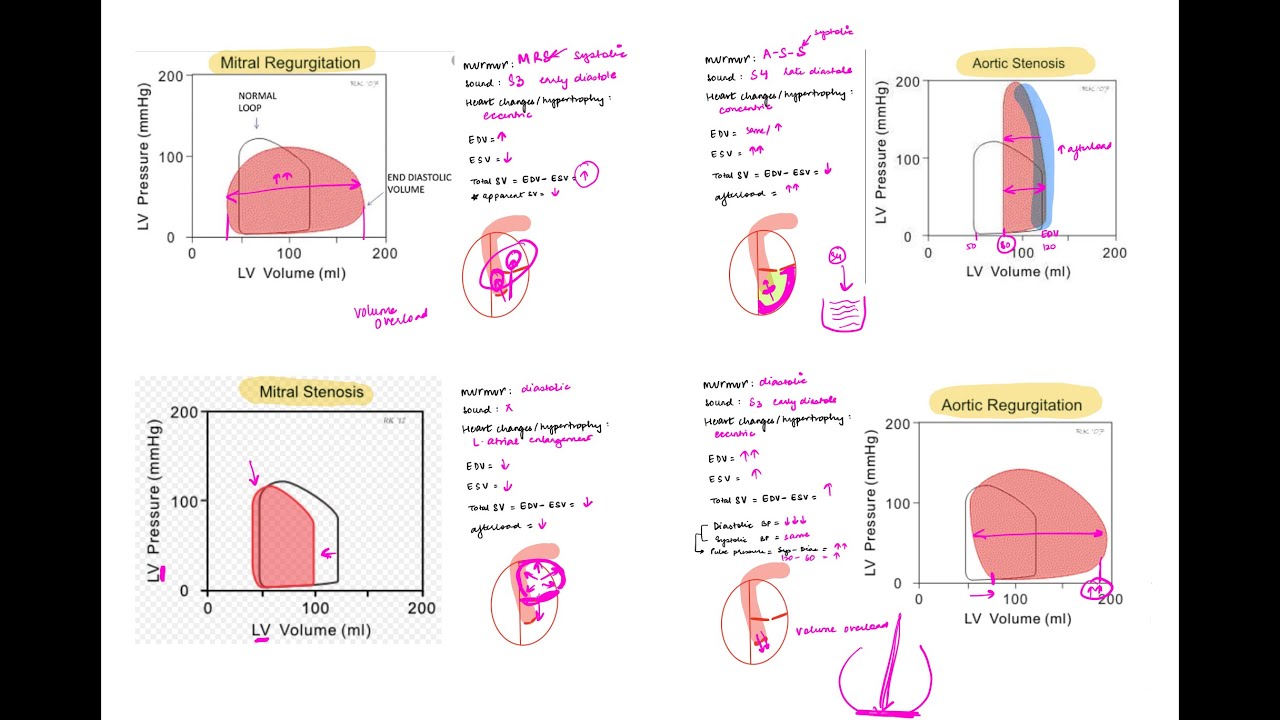
PV Loops Explained: Cardiac Physiology & Pathology
@medtutorberry
43K views•2021-06-01

48:47
Graphic Medicine: Comics for Collaborative Healthcare Communication
@nationalpatientadvocate
189 views•2023-12-04

2:56
Oligodendrocytes: Structure and Function | Neurobiology
@khanacademymedicine
111.1K views•2013-09-24
3:05
Stages of Labor and Vaginal Birth | Childbirth Animation
@nucleusmedicalmedia
52.1M views•2017-08-18
Related Study Plans & Knowledge Roadmaps
Structured learning paths in Medicine
medicine
Abnormal LFTs: Diagnostic Workup & Pathology
01Liver Anatomy and Basic Physiology
02Introduction to Liver Function Tests (LFTs)
03Hepatocellular vs. Cholestatic Patterns
+ 3 more learning modules
12h6 modules
Explore Roadmap
medicine
Analyzing Blood Smears: RBC, WBC & Platelets
01Introduction to Blood Components & Smear Preparation
02Normal Morphology of Blood Cells
03Erythrocyte Pathologies & Morphological Variants
+ 2 more learning modules
12h5 modules
Explore Roadmap
medicine
Mechanical Ventilation: Waveforms & Alarms
01Anatomy and Physiology of Breathing
02Introduction to Mechanical Ventilation & Core Modes
03Ventilator Settings and Waveform Interpretation
+ 2 more learning modules
12h5 modules
Explore Roadmap
medicine
Neuro Exam: Localization & Stroke Syndromes
01Foundations of Neuroanatomy and Vascular Supply
02The Neurological Examination: Step-by-Step
03Principles of Neurological Localization
+ 3 more learning modules
18h6 modules
Explore Roadmap