












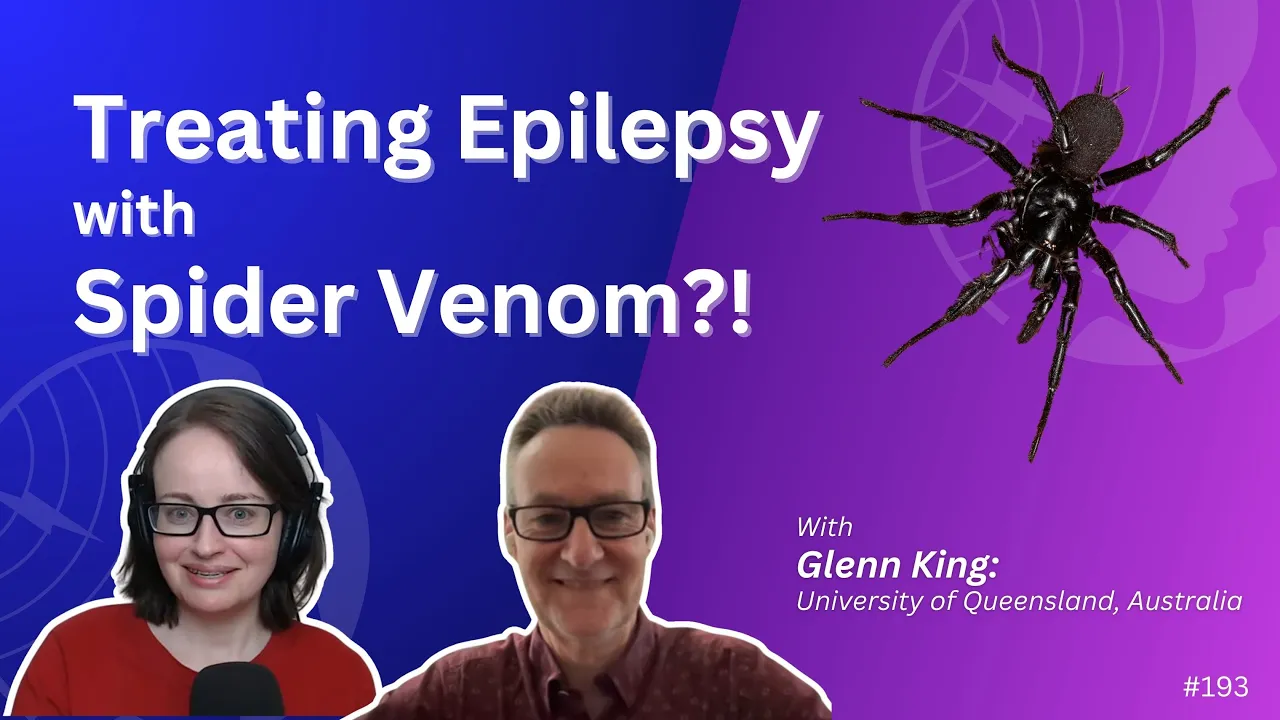
Cone snails, venomous marine organisms that evolved disposable harpoon-like teeth about 60 million years ago, produce complex venom mixtures containing multiple peptides that work synergistically to paralyze prey through combination drug therapy; researchers have discovered that these venoms contain hundreds of pharmacologically active components, some of which have been developed into effective treatments for intractable pain (omega-conotoxin) and epilepsy, demonstrating how studying venom evolution can lead to novel therapeutic discoveries.
Cone Snail Venom: From Fish Hunting to Drug Discovery
Added:Basic neurobiology, including synaptic transmission, action potentials, and how neurons communicate.
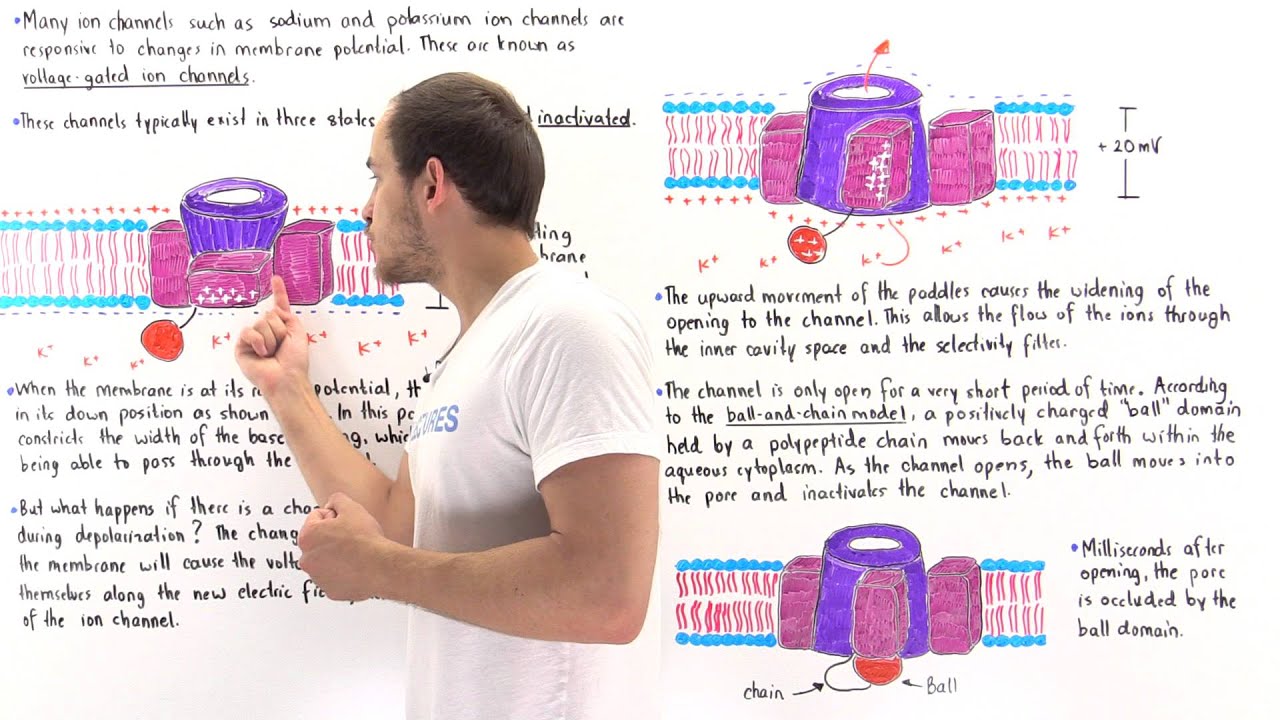
The structure and function of membrane proteins, specifically voltage-gated and ligand-gated ion channels.
Fundamental principles of pharmacology, including receptor-ligand interactions, agonists, and antagonists.
Basic evolutionary biology concepts, particularly predator-prey adaptations and natural selection in venomous organisms.
The clinical application of conotoxins, such as Ziconotide (Prialt), and the challenges of delivering peptide-based drugs across the blood-brain barrier.
The field of 'Venomics' and high-throughput bioprospecting, using genomics and proteomics to discover novel bioactive peptides.
Structure-based drug design and peptide engineering techniques used to optimize natural toxins for therapeutic safety and efficacy.
The pathophysiology of neurological disorders like epilepsy, chronic pain syndromes, and channelopathies that are targets for venom-derived therapeutics.
1.7K views26likes16:58Original Release: 2018-07-18
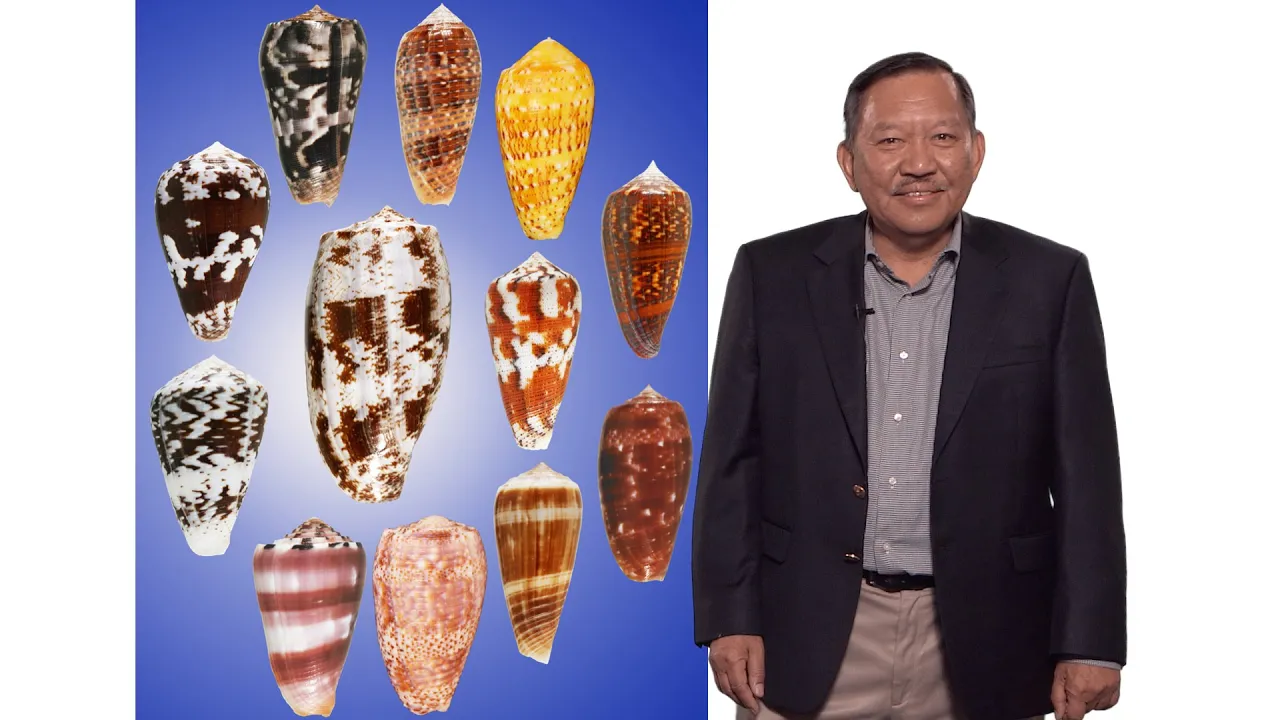
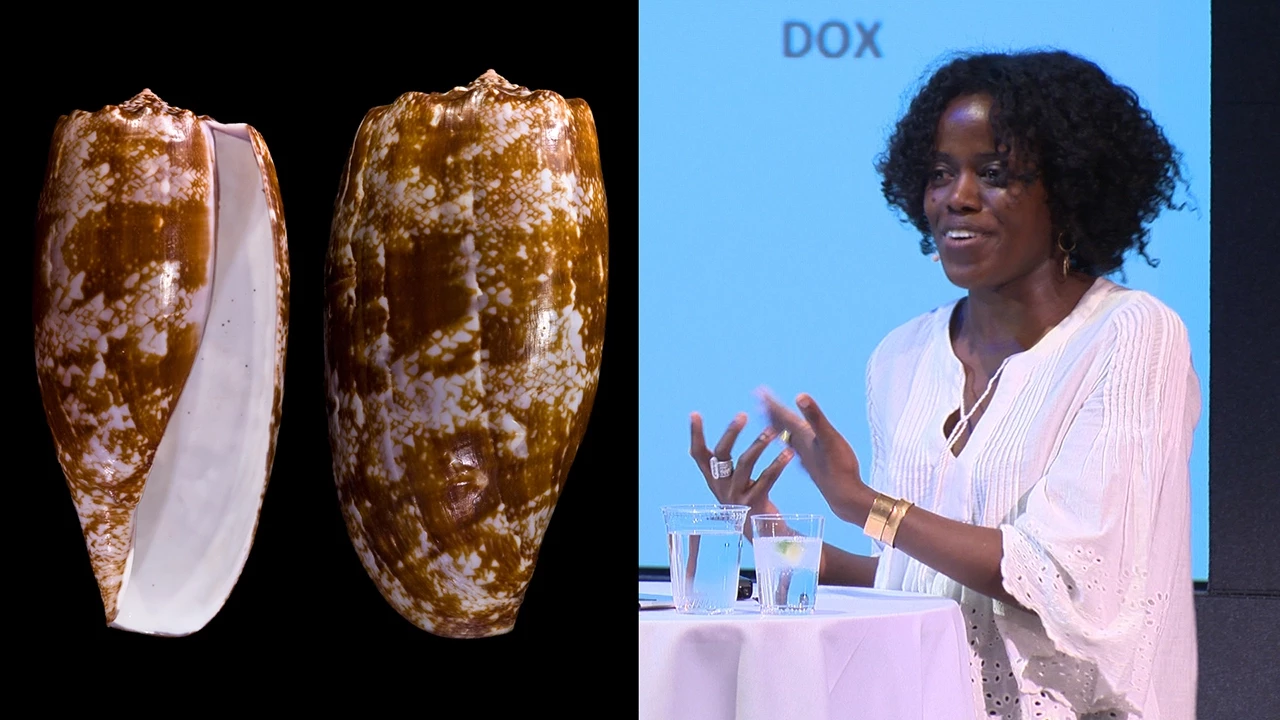
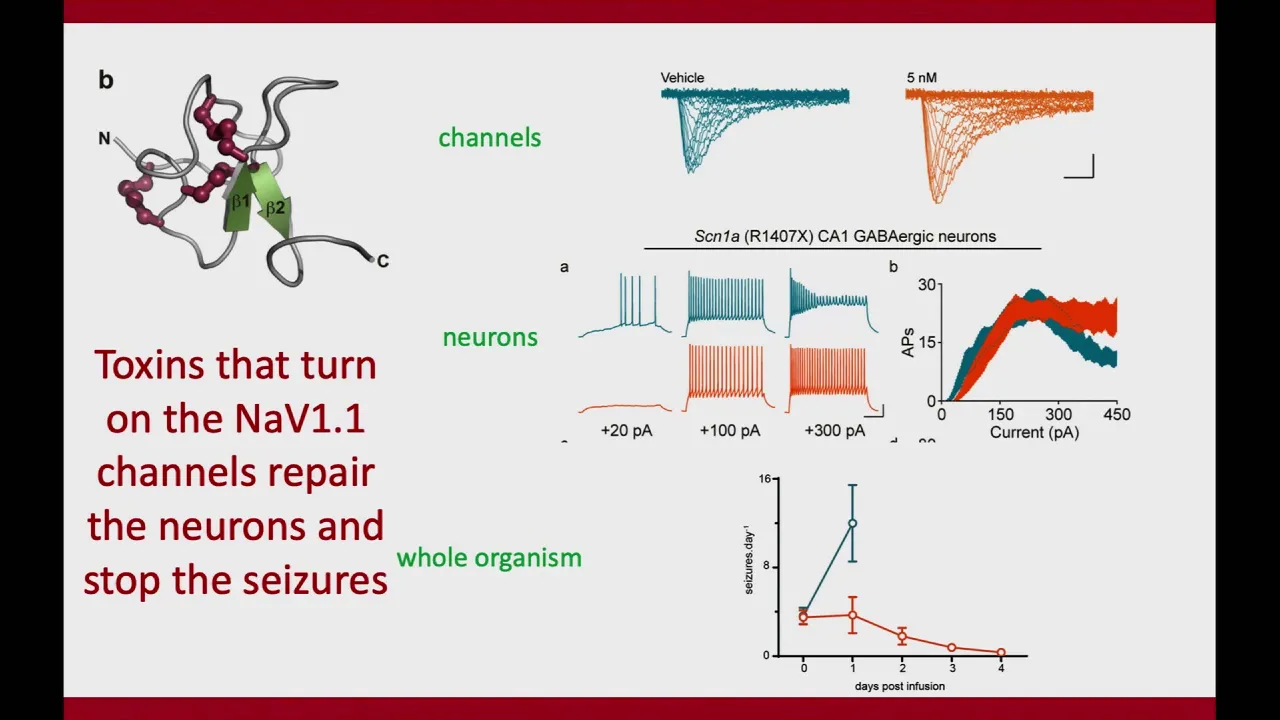
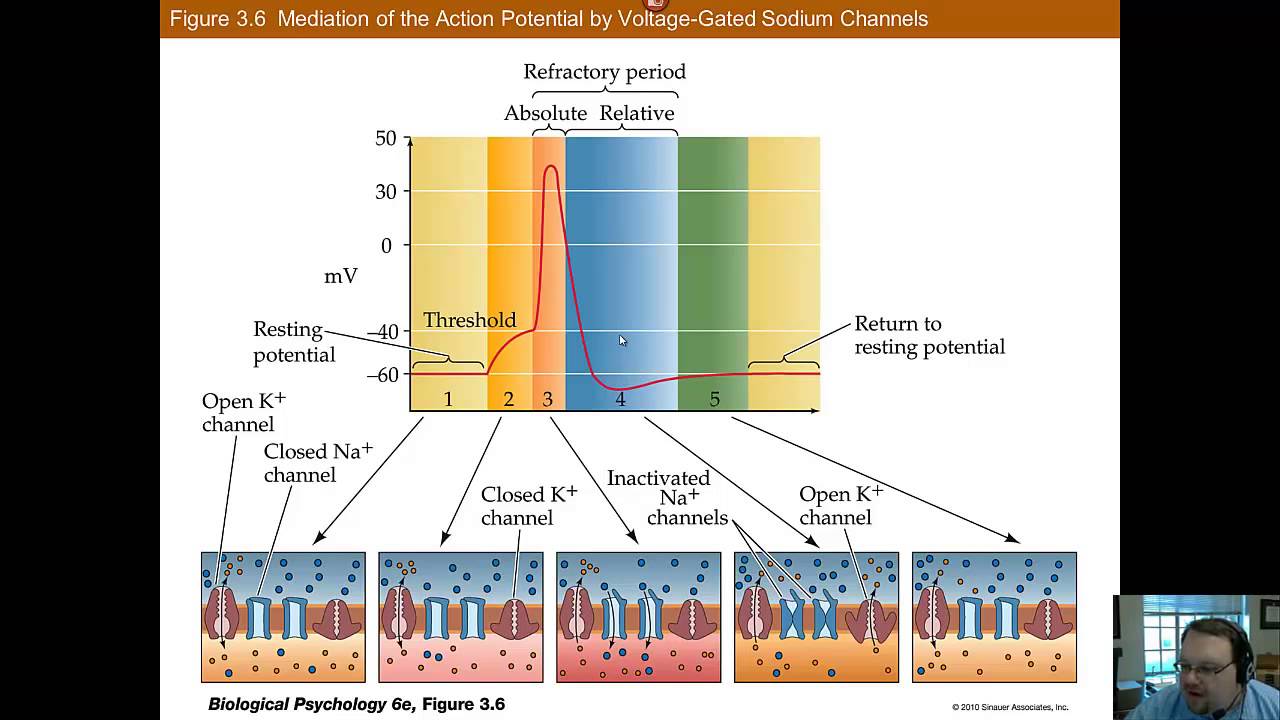
so that's a hard act to follow but we'll go down to earth and talk about snails I think that's a good contrast to the expanding universe and we work on a group of marine organisms the cone snails and people usually don't think of snails as venomous but all of these snails 700 species catch their prey with venom and in fact what I'm going to talk about today are the particular species that are able to capture fish and use fish as their specialized prey so how do you capture a fish this shows you how and what you see is a snail extending its proboscis towards the fish and this is real time and what you'll see is that everything happens very very fast so the snail extends its proboscis harpoons the fish and very quickly makes a meal out of the fish and so that's typical of what these snails do so it's a new soil that an astronomy talk introduced this topic but this is the product of evolution of course this is the venom apparatus and the long tube is where the Ducks are made but they use a harpoon like tooth in order to tether the fish and so they have a harpoon shaped tooth but this tooth is amazing because not only does it tether the fish but it's also hollow and so the venom flows from the proboscis tip through the harpoon to the end of the harpoon and the fish is not only tethered but the venom is injected and this tooth is only used once and so this is a group of that basically develop disposable hypodermic needles as a drug delivery device about 60 million years ago and that's why they've been successful ever since and the shape of the harpoon-like tooth varies from species to species so here's another tooth but what our work has been is to try to understand how how a snail is able to paralyze a fish and it turns out that what these snails use are small peptides and five of them from a single venom are shown there and that's what we isolated five different peptides any one of which is sufficient to paralyze the fish and so the question is why five and it turns out that all five peptides act where the motor nerve and the skeletal muscle meet and what you see is a diagram of the important components at the end of a nerve there's a calcium channel which is blocked by one set of peptides and at the muscle end of the synapse there's an acetylcholine receptor which is blocked by another set of peptides and finally their sodium channels that carry the muscle action potential and that's blocked by yet another set of peptides so in other words the snails are using combination drug therapy they discovered this principle 55 million years ago and for anything they want to do physiologically they use not a single pharmacological compound but a whole combination and they've carried things even further because in fact what they're able to do is they use one set of peptides at one side of a particular ion channel called the acetylcholine receptor and so for you to be able to move any muscle as the choline receptors have to open up from a closed state to an open state and the green dot there shows the neurotransmitter acetylcholine but this new block The Binding of acetylcholine with the red toxin and as a result the receptor is stuck in the closed state and doesn't open up so that causes paralysis but just to show you how thorough evolutionists in case any receptor escapes the red toxin the snails have a failsafe toxin and so any receptor that opens up is then blocked at a second site where the channel is plugged and so you can see that these snails are carrying combination drug therapy to an extreme not only do they hear different molecules in the same physiological circuit they hit different sites on the same molecule just to make sure they wipe it out now we call groups of toxins that act together for a particular physiological and a cabal after our Cabal sir secret societies out to overthrow existing Authority and so these toxins overthrow the normal physiology of the prey and what you see are the components of what we call the motor cabal well it turns out that you can take any of these components or all of them in combination and inject them into fish and it still takes you 20 or 30 seconds to paralyze a fish why because this the the components of the venom have to get from the side of injection to where they're going to act which is the neuromuscular junctions and so they have to enter the circulation and that has a transit time of 20 to 30 seconds but if you looked at the video you saw that the snail was able to paralyze the fish in less than a second and the reason it turns out is that they have developed the equivalent of a Taser and so of course today we don't use poison arrows which is what the motor cabal does muscle paralysis we use Tasers in our own society today because you've got to stop a predator much faster and so these snails discovered the same principal and so instead of simply paralyzing the muscle which is the job of the first cabal it turns out that they have a second cabal which we call the lightning strike cabal so the components of the lightning strike cabal they show you two peptides and their structures that are the major components and I'll show you how these act so within the nervous system of a fish you have action potentials coming at a certain rate and those action potentials are carried by sodium channels in blue which open up and then very quickly are inactivated and the signal is terminated by potassium channels shown in brown which led potassium out of the cell and so this combination of sodium and potassium channels discovered by hodgkin and huxley originally is what I'll allow the transient action potential to pass through an axon so how do you subvert this physiology if you're a snail and how that's done is shown here the snail injects the fish and when it injects the fish there are two toxins and one of these toxins is called a delta toxin and it binds to sodium channels and what happens is when this toxin binds the sodium channels sodium channels remain open they don't close as they normally do and there's a second toxin called a kappa toxin which basically blocks potassium channels the net effect of this is when an excitation arrives at this site it never leaves that part of the action remains continuously excited and therefore within the fish the injection site becomes the equivalent of an epileptic focus causing the firing of the whole nervous system causing a very very stiff fish this is a strategy that's not only employed by cone snails but also by scorpion and also by sea anemones now what you see here is the lightning strike cabal and the snail is going to try to find the fish and when it injects it what you're going to see is the lightning strike cabal in full action and in this case it won't happen very fast but the net result is the same the fish is immobilized and you can see how stiff this fish is and what's happening is from the site of injection because of these two toxins you have this uncontrolled firing the whole nervous system is hyper activated and so as a result although this as you can see the fish is not yet completely paralyzed its gills are still moving it has very very stiff fins and it's basically unable to move and I think you'll agree with me that you've never seen such a fish they're stiff fish in your life so look at the fins of that that fish so they use two cobbles a lightning strike a ball and a motor cabal why why do you need both if the lightning strike cabal is so effective and this video shows you why so this is the fastest immobilization we've ever seen by a fish hunting console notice how fast that was the fishes are almost completely immobilized in less than a second but what's remarkable about this video is that what you're going to see is that the fish is going to recover and so it's being tethered swallowed and it's the excited toxic shock syndrome is going on but what you see is the fish now recovering but of course in this particular case it's too late so our work really developed from an undergraduate in Utah who took a single venom and he injected each component of the venom shown by a peak into a mouse and this was many years ago and what Craig Clark showed that there was a beat that cost mice to jump and twist as they're jumping there was a peak that made my son coordinated there was a peak that may put mice to sleep another peek but made them drag their back legs another peek made them run around in circles another peek made them swing their heads back and forth these are all components of the same venom and so what we discovered was there were 200 different components of the venom and there was this extremely diverse pharmacological activity and that's when we realized that the venom wasn't simply a few paralytic toxins but was this very complex mixture and ever since then we've been trying to figure out what all the components of this venom do so we had a whole slew of undergraduates in the early days young kids that could choose any snail they wanted and one young guy I chose CONUS Magus the magician's code and this is what he looked like when he purified the component shown in black in the graph which he called the shaker peptide so why am I telling you this because this component that was purified by this undergraduate which he called the shaker peptide and which has the structure shown here is today a drug for intractable pain and what's interesting is that the biotech company that developed this spent two years trying to change various functional groups to improve it but in the end what they went to it was exactly what the snails make they haven't changed the single functional group in this and this is a drug for pain we call it Omega Kona toxin but today it's called pre out for primary alternative to morphine and the reason it is such an effective drug is because it only hits one particular type of calcium channel which happens to be found in the dorsal horn where pain fibers come in and and what you see is an animal model of pain and so the the the drug is only used when morphine works because morphing is much cheaper much simpler to use and what this shows is an animal model of pain and if you inject morphine in the green you reduce the pain and the first day and if you inject the peptide you reduce the pain as well the problem with morphine as I'm sure many people in this room know is that if the pain continues after a while morphine doesn't work anymore and that's because it hits a kind of receptor called a g-protein coupled receptor which intrinsically down regulates when it's exposed to agonist but because this peptide acts directly on an ion channel as you can see after seven days it still works perfectly well so what I'd like to close with is to just show you that by knowing the phylogeny of the cone snails and looking at another group of cone snails shown by the blue arrow so there are four different groups of fish hunting code snails represented by FS it turns out that they have a very different biology when you drop a fish in instead of sticking their proposes they open their mouths and what you can see is this name opening its mouth and you can see there's quite a large mouth quite a cavernous mouth and here's another snail of the same clade and this guy has frills at the end of his mouth and so he engulfs the fish first and so they engulf the fish before they sting and we call this the net strategy indeed what happens is these snails crawl out of the reef at night and if they're lucky they go after schools of sleeping fish and if they're lucky they bag the whole school and they can pick them off one by one but if they injected the fish in their mouth and they and if they had a lightning strike cabal then what would happen is that the fish would twirl around with very stiff fins and that's not a good idea if the fish is already in your mouth and so instead what these snails have they do not have a lightning strike cabal they do not have those components in their venom what they have instead is what we call the Nirvana cabal because this group of toxins makes the fish behave as if they're in an opium den they look all relaxed sedated and so the components of this venom of this nirvana cabal are able to make the fish hyperactive and these are some of the components of the Nirvana cabal there they all quiet down your own old circuitry and so knowing this behavior we can ask the question can this have some use in pathological conditions where you have neuronal circuitry that's too active and indeed our two members of the Nirvana cabal one of the which we originally called the sluggish peptide which is actually a modified version of the tap off and well-known Europe appetite called neuro tension has reached human clinical trials for intractable pain and the sorry for for intractable pain and the second component of this venom of the Nirvana cabal has reached human clinical trials for intractable epilepsy so you can see that knowing about the biology of the snails gives you a hint as to how the different components of the snails are care of these Venom's can be used for for biomedical purposes and I think since we were running a little bit late I'll stop there and I'd be happy to take any questions thank you [Applause]
Up Next
5:30
Scorpion Venom Peptide Bs8 for Brain Tumor Drug Discovery
@lpmhealthcarebroadcasting
204 views•2025-08-20
14:12
Quantitative Real-Time PCR (qPCR): Principle, Method & Data Analysis
@animatedbiologywitharpan
129.2K views•2023-09-06
23:33
Microbial Degradation of Plastics: Biodegradation Pathways & Sustainability
@majeedhammad
2.9K views•2021-04-11
16:04
CRISPR and Genetic Engineering: How Gene Editing Works and Why It Matters
@kurzgesagt
30.5M views•2016-08-10
Related Study Plans & Knowledge Roadmaps
Structured learning paths in Biotechnology
biotechnology
AAV Production: Transfection, Prep & qPCR
01Introduction to Gene Therapy and AAV Biology
02Mammalian Cell Culture: Suspension HEK293 Cells
03Upstream Bioprocessing: Triple-Transfection Optimization
+ 2 more learning modules
18h5 modules
Explore Roadmap
biotechnology
Building Gut-on-a-Chip: PDMS, Cells & TEER
01Foundations of Microfluidics and Gut Anatomy
02Cleanroom Fabrication & PDMS Soft Lithography
03Epithelial Cell Culture and On-Chip Seeding
+ 2 more learning modules
26h5 modules
Explore Roadmap
biotechnology
Optimizing CFPS: E. coli Extract & Yield
01Fundamentals of Molecular Biology and Translation
02Introduction to Cell-Free Protein Synthesis (CFPS)
03Preparing E. coli Crude Lysate (The Extract)
+ 2 more learning modules
19h5 modules
Explore Roadmap
biotechnology
Haematococcus PBR: Design, Stress & Astaxanthin
01Biology and Life Cycle of Haematococcus pluvialis
02Bench-Scale Photobioreactor (PBR) Design and Engineering
03Culture Media Formulation and Inoculation
+ 2 more learning modules
15h5 modules
Explore Roadmap