








![Sistema nervioso PERIFÉRICO [Vías sensitivas y motoras]](https://i.ytimg.com/vi/TkHV8SncmD4/maxresdefault.jpg)


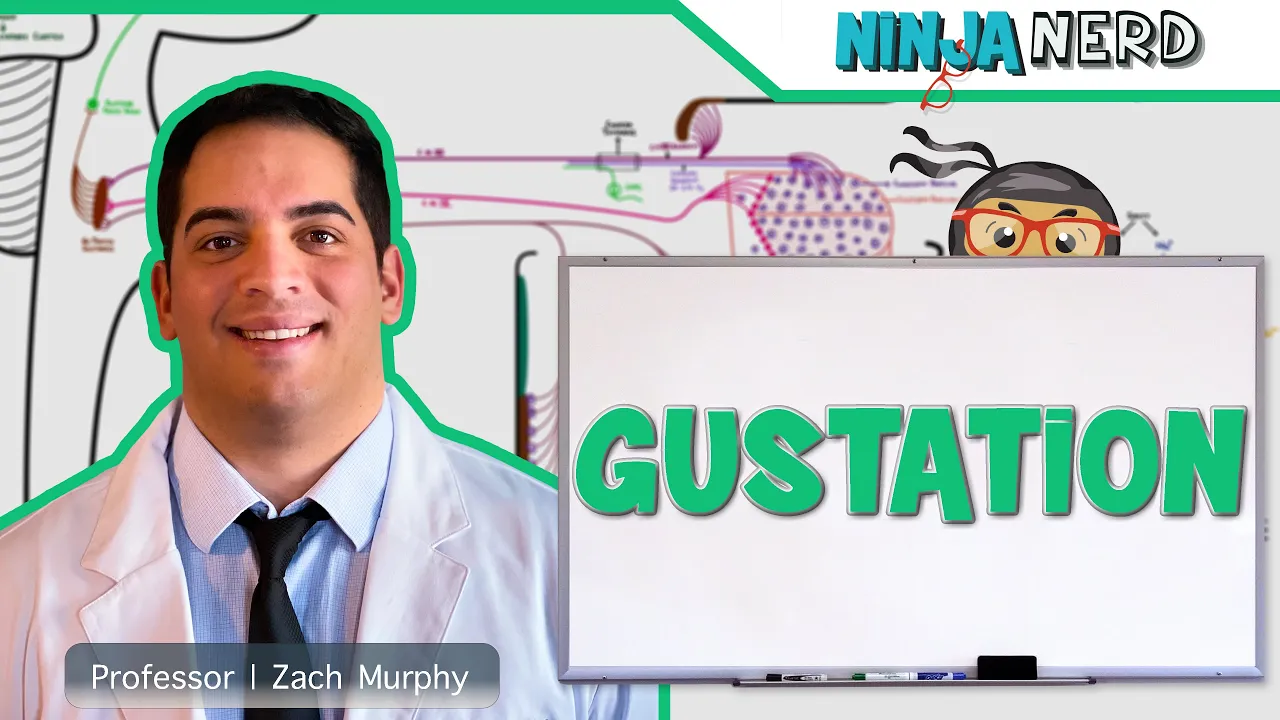
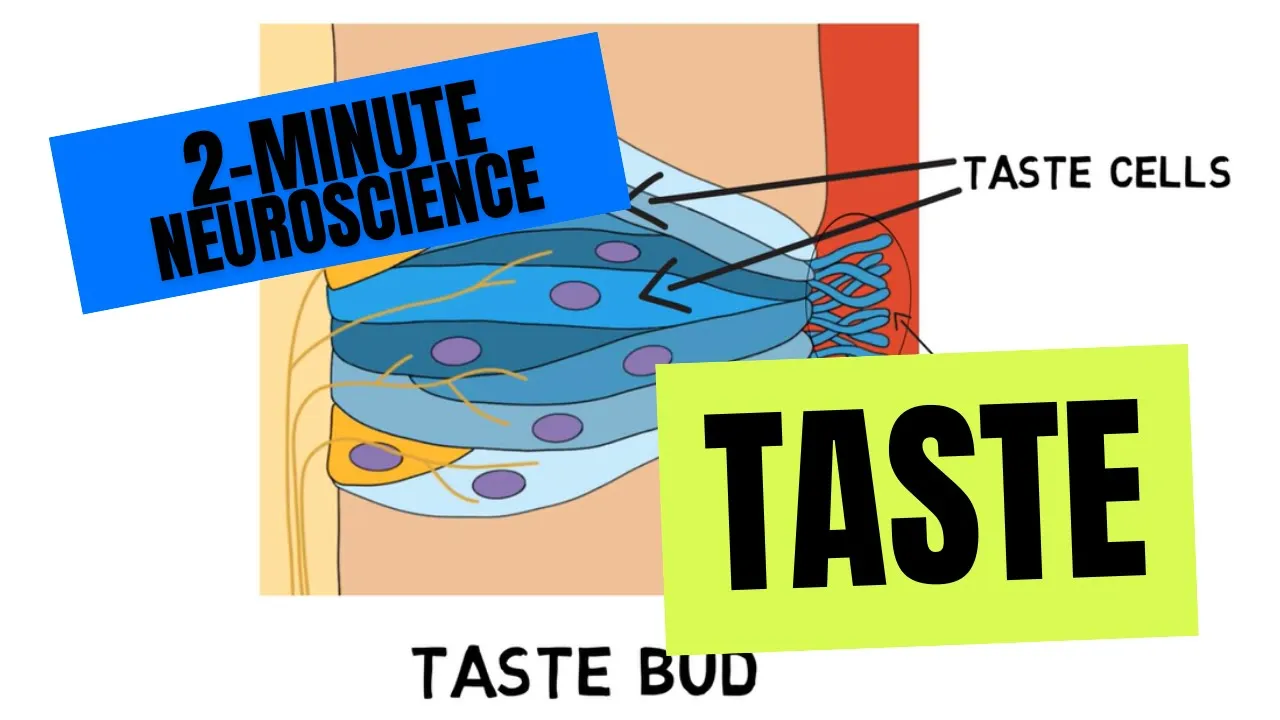









The human sense of taste relies on five basic tastes (bitter, salty, sweet, sour, and umami/glutamate) detected by specialized taste buds distributed throughout the tongue, where each taste bud contains multiple receptor cells that transmit signals via dedicated axons to specific regions of the gustatory cortex through the labelled lines model; sweet, umami, and bitter tastes are detected through G-protein coupled receptors that trigger intracellular cascades leading to depolarization, while sour and salty tastes are detected through direct ion channel activation that causes cellular depolarization.
Gustation: Taste Buds, Receptors & Labeled Lines | MCAT
Added:Basic principles of sensory transduction, specifically how environmental stimuli are converted into electrical neural signals.
The structure and function of cell membrane proteins, including G-protein coupled receptors (GPCRs) and ligand-gated ion channels.
Fundamentals of action potentials, synaptic transmission, and neurotransmitter release.
Anatomy of the peripheral nervous system, particularly the concept of cranial nerves and their sensory roles.
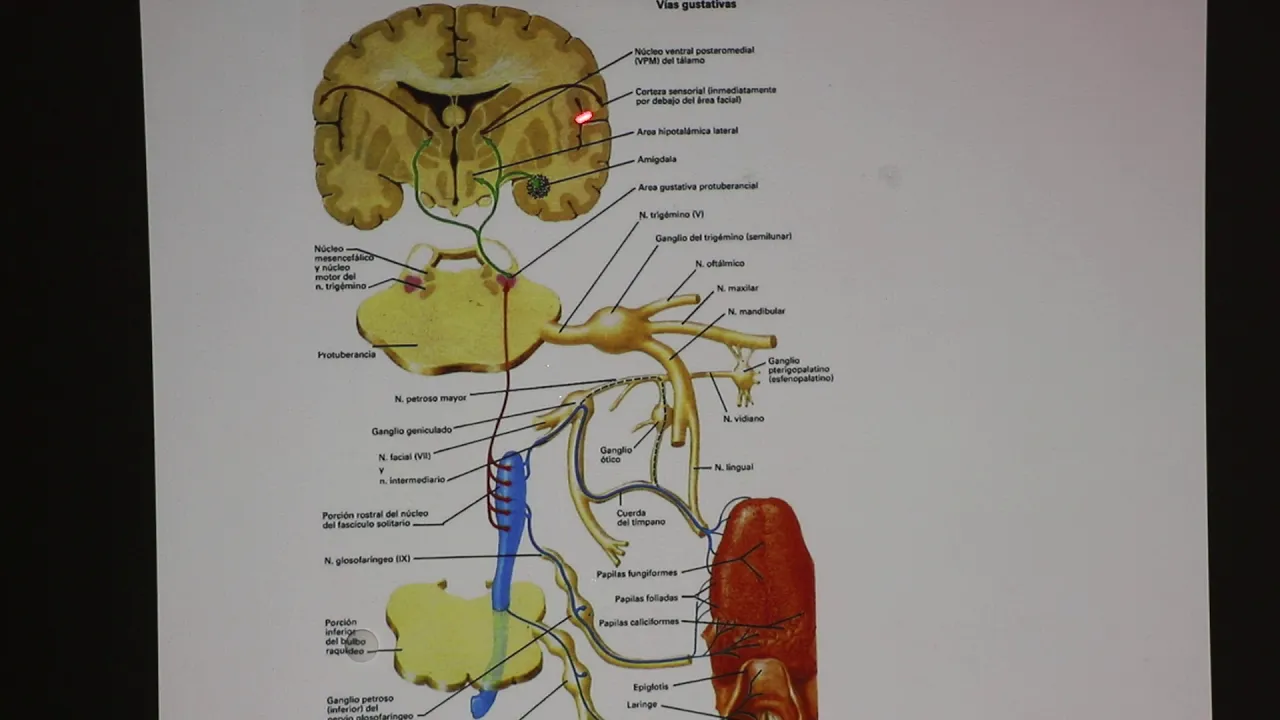
The central gustatory pathway, mapping how taste signals travel from cranial nerves VII, IX, and X to the solitary tract in the medulla, the thalamus, and the primary gustatory cortex.
Multisensory integration, specifically how gustation combines with olfaction (smell) and somatosensation (texture, temperature, spiciness) to form the perception of flavor.
Comparative sensory biology, analyzing the similarities and differences between gustatory transduction and olfactory transduction (GPCRs and olfactory bulb pathways).
Clinical pathologies of taste, such as ageusia, dysgeusia, and how nerve damage or aging affects chemosensory perception.
232.9K views1.5Klikes12:30Original Release: 2013-10-25
Voiceover: We have 5 main tastes.
Each taste depends on a particular receptor that's localized somewhere on the tongue.
So the 5 different things that we're able to taste are bitter compounds, salty compounds, sweet compounds, sour compounds, and one more thing known as umami.
This is basically the ability to taste a particular molecule known as glutamate, so glutamate.
Now these 5 tastes all depend on a particular receptor.
So let's imagine that here we have a tongue and this is the front of the tongue, this is the back of the tongue.
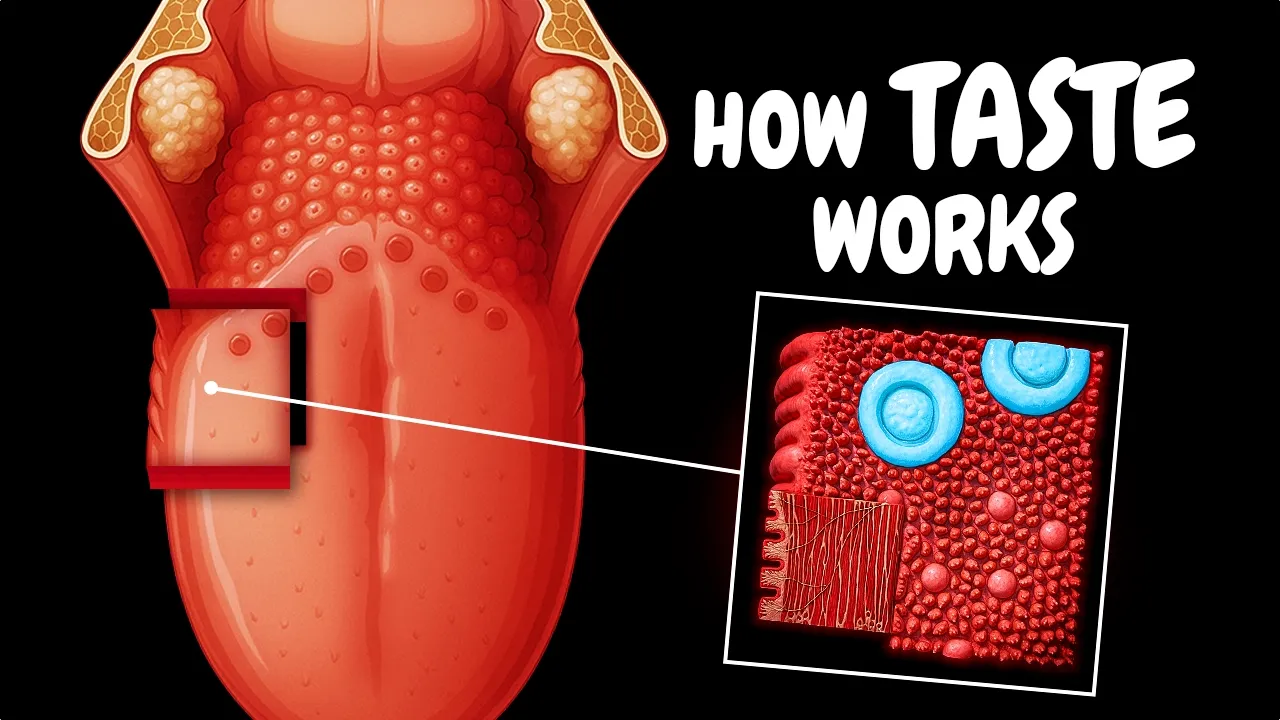
We basically have taste buds sprinkled throughout the tongue so these taste buds are kind of all over the place and for the most part they are very, very highly localized in the more anterior aspect of the tongue so they're most localized in this anterior aspect of the tongue moreso than in the back.
There are 3 different types of taste buds.
There are taste buds that kind of look like this and these are known as fungiform taste buds.
I'll write that down. Fungiform taste buds and these are the ones that are mostly found over here in the anterior part of the tongue.
There are also taste buds that look like this.
where the little buds are over here and these are known as foliate taste buds and these taste buds are mostly found over here on the side of the tongue.
And finally there are taste buds knows as circumvallate taste buds which look a little like this.
And the taste buds themselves are actually over here on the sides and these circumvallate taste buds are mostly found back here in the back of the tongue.
Now each one of these taste buds, if we actually zoom in, so if we kind of zoom into an individual taste bud what we would find we would find a little pore.
And this pore would have a bunch of different types of cells.
It would have like one cell over here.
It would have another cell right next to it.
It would have a third cell over here and so on.
And basically each one of these cells is responsible for one of these 5 tastes.
So for example, we can take this pink cell over here to be able to detect salty things.
For example we could imagine that this whitish cell would be able to detect sweet things and so on and so forth.
So the general idea is that each taste bud, so this thing would be a taste bud, each taste bud contains all of the different taste cells so every small taste bud is able to detect bitter, salty, sweet, sour and umami compounds and these taste buds are found all around the tongue mostly in the anterior part of the tongue.
So another way to say this is that we are able to taste all 5 of these different tastes everywhere in the tongue so it's not as if bitter compounds can only be tasted in this region and salty compounds can only be tasted in this region and sweet compounds only in this region.
That's not the case.
This is not the case so it's not like that.
Instead we basically are able to taste all 5 of these different compounds throughout the entire tongue and mostly most of the taste buds are concentrated over here in the anterior part of the tongue.
So what I want to talk about next is something known as a labelled lines model.
So here we have a taste bud and as I mentioned before we have all the different types of cells and each one of these cells is specialized to a particular one of the 5 tastes and what you can see down here is that each cell has a little axon projecting from it and what is interesting is that these axons actually remain separate all the way to the brain so all these get projected and they eventually reach the brain and they actually synapse on different parts of the brain so let's imagine that this is the gustatory cortex so let's imagine that this is the part of the brain that receives input from various taste cells while each one of these different axons will synapse on different parts of the brain.
So here we've got this axon that's going to go it's going to synapse over here and every other axon, every other taste cell that is this color blue so let's just say this is a sweet cell.
Let's say this is a sweet taste cell every single sweet taste cell will send its axon to the brain and it will all end up in this one region of the gustatory cortex so we can say this is the sweet region of the gustatory cortex.
I keep using this word gustatory and taste can also be thought of as our sense of gustation, so gustation. Similarly all the cells that are green and we can say that green could be bitter so we can say the green cells are bitter taste cells, they're really bitter.
They will all synapse in one part of the cortex which we can imagine to be the bitter part of the cortex. It's very mad at the world.
So this is basically how taste cells send their projections to the brain.
They actually send them through dedicated axons and there is no mixing and this is known as the labelled lines model.
So let me just write that down here.
Labelled lines model.
And again what the labelled lines model is saying is that each one of these cells has its own dedicated labelled line and this distinction is basically carried on all the way to the cortex itself.
Now let's look at an individual taste cell itself.
So let's look at an individual taste cell.
So here's the axon.
This is the cell nucleus and little hairs that kind of project out into the tongue.
So what happens is let's say that this is a sweet cell.
A sweet taste cell so it's sensitive to sweet molecules so let's imagine that we've got a little molecule of glucose.
So let's imagine you're eating cake.
Some glucose will hit the tongue and some of the glucose will find its way over to a sweet cell and why is this cell sweet?
Well it's sweet because it actually has receptors in the membrane so it has little receptors in the membrane that are sensitive to glucose and other sweet molecules so when the glucose binds to the cell it triggers a cascade of events that eventually allows this cell to depolarize and send an action potential all the way down its axon and to the brain.
Now I mentioned that we have 5 different tastes.
We have sweet, umami, bitter, sour and salty.
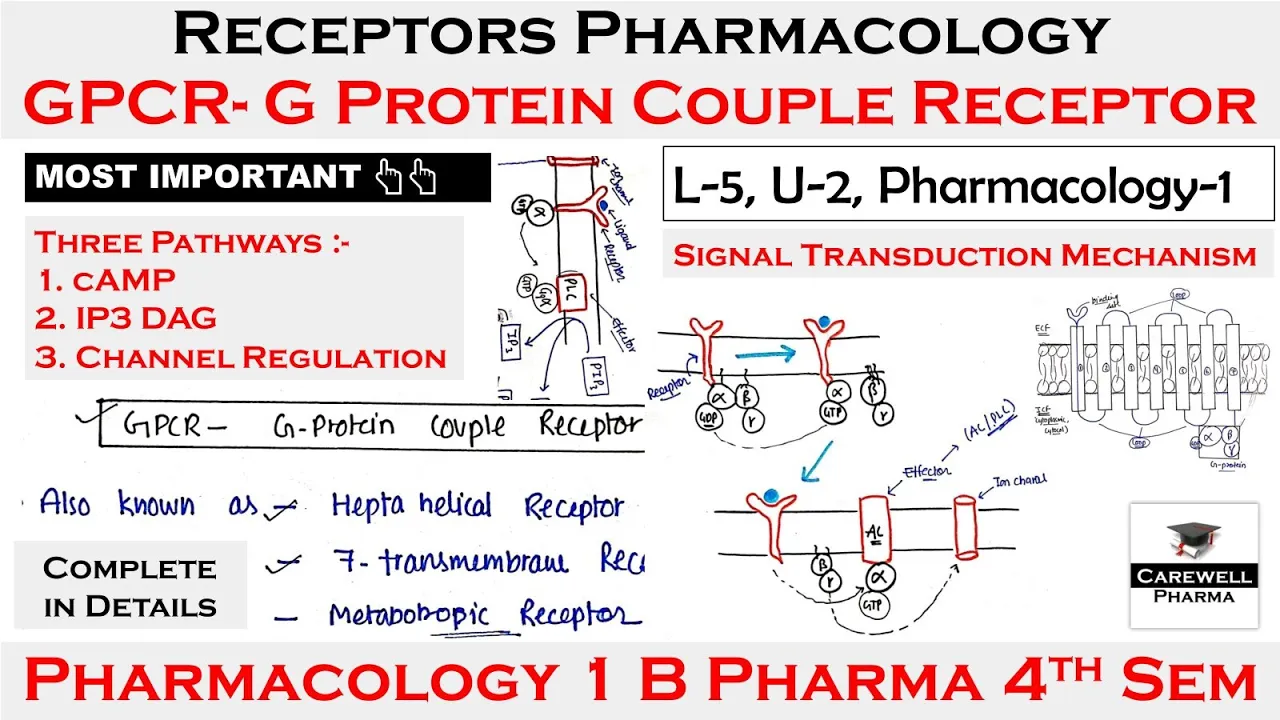
These top 3 taste cells over here have similar receptors and these receptors are known as G-Protein.
So G-Protein coupled receptors.
So basically what a G-Protein coupled receptor is let me just go ahead and draw it out.
It's an inner membrane protein so this is the protein and then let's imagine this is the cell membrane.
So this protein is a receptor and the receptor binds to a ligand so let's imagine that we have glucose in this case so let's imagine that a molecule of glucose comes in, hits the receptor.
The receptor will undergo a conformational change that basically causes a G-Protein which is coupled to it so this is a G-Protein over here so when the ligand binds to the receptor it causes the G-Protein to dissociate so this bond is broken and the G-Protein goes off.
The G-Protein can do a couple of different things inside the cell so this is inside the cell over here.
This is outside the cell.
So basically the G-Protein can go off and do a few different things.
Now one of the things that the G-Protein can do when it gets dissociated from this receptor is it can actually open some ion channels so the G-Protein can go and open ion channels.
So the opening of ion channels the conformational change can actually cause the cell to depolarize and fire an action potential.
So fires an action potential.
So on the other hand these 2 taste cells sour and salty rely on ion channels.
So instead of relying on a G-Protein coupled receptor they actually rely on a receptor.
So let's imagine this receptor over here.
So in the case of salty let's imagine that a molecule of NaCl.
So a little salt molecule comes in it will bind to this ion receptor and then cause the receptor to open up.
So the receptor will open up and it will allow positive ions outside the cell to flow in.
When positive ions flow inside the cell it causes the cell again to depolarize and fire an action potential and that action potential goes to the brain.
So let's look at what would happen if we put a salty receptor inside a sweet cell.
So here we have a sweet cell and the reason that this cell is sweet is because it will have receptors in its membrane that bind to glucose.
So let's imagine that we took a salty receptor so as I said previously the salty receptors are ion channels and let's imagine that we put a little salty receptor here.
Now if you remember the labelled lines model basically says that a particular cell, so in this case a sweet cell has an axon that will eventually reach the brain and when it reaches the brain the brain since the axon is coming from a sweet cell will detect the compound that activated the sweet cell as sweet.
So what would happen if we put a salty receptor inside a sweet cell.
Well if we have NaCl so some salt comes in and it will activate this receptor and when this receptor is activated it opens up and positive ions outside flow into the cell.
This sweet cell depolarizes and causes an action potential to fire and by the time the action potential reaches the brain the brain isn't able to differentiate between a sweet molecule or a salty molecule and a sweet molecule so both salts and sugar will activate the sugar cell, but since the brain has already decided that hey, this is a sugar cell and every time this cell normally activates it's usually something sweet it's gonna think that the salty compound is actually sweet.
It's gonna detect it as being sweet.
So if you were to put a salty receptor in a sugar cell you could actually trick your brain into thinking that something that is salty such as NaCl, sodium chloride, was actually sweet.
Up Next

12:15
Histology of Taste Buds and Lingual Papillae
@mentaldental
79.9K views•2017-05-13
50:12
Bacterial Communication: Quorum Sensing and Biofilm Formation Explained
@JHUAAP
12.6K views•2011-06-28
5:10
Mendelian Genetics: Alleles, Genotypes & Punnett Squares
@khanacademymedicine
648.4K views•2014-06-16
7:08
Bacteriophages: Earth's Deadliest Killers and Future Antibiotics
@kurzgesagt
34.6M views•2018-05-13
Related Study Plans & Knowledge Roadmaps
Structured learning paths in Biology
biology
RNAi: Biogenesis, RISC & Gene Silencing
01Molecular Biology Foundations: DNA to Protein
02Introduction to RNA Interference (RNAi)
03Molecular Biogenesis of miRNA and siRNA
+ 2 more learning modules
10h5 modules
Explore Roadmap
biology
Mycorrhizae: Signaling, Biophysics & Ecology
01Foundations of Mycorrhizal Symbiosis
02Molecular Signaling and Root Colonization
03Biophysics and Bioenergetics of Nutrient Exchange
+ 1 more learning modules
11h4 modules
Explore Roadmap
biology
Circadian Clocks: TTFL, SCN & Periphery
01Foundations of Molecular Biology & Gene Expression
02Introduction to Chronobiology and Actograms
03The Core TTFL: Molecular Architecture of the Clock
+ 3 more learning modules
14h6 modules
Explore Roadmap
biology
Population Genetics: Math, Drift & Selection
01Genetic & Probability Foundations
02The Hardy-Weinberg Principle and Baseline Models
03Mathematical Modeling of Natural Selection
+ 3 more learning modules
18h6 modules
Explore Roadmap