





![Биология поведения человека. Лекция #3. Эволюция поведения, II [Роберт Сапольски, 2010]](https://i.ytimg.com/vi/zFu5NyK_eCI/maxresdefault.jpg)



![Laurie Santos & Kent Kiehl [The Mind Report]](https://i.ytimg.com/vi/0tkDHowIz-w/hqdefault.jpg)





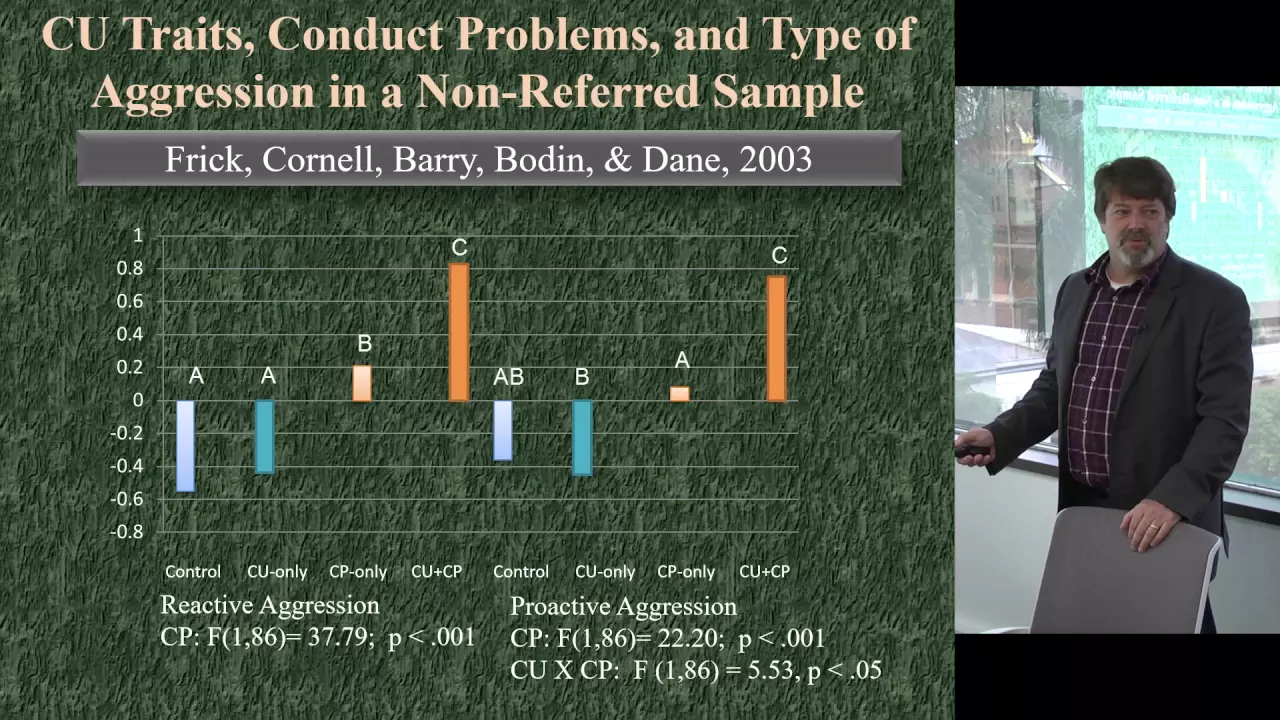




Altruism and psychopathy represent opposite ends of a continuum defined by how much people intrinsically care about others' welfare; altruistic individuals demonstrate heightened neural resonance with others' fear and pain, driven by genuine concern for others' welfare rather than superior empathy abilities, while psychopathic individuals lack the capacity to experience remorse, guilt, and genuine care for others' welfare, making altruism and psychopathy fundamentally rooted in different motivational systems that can be studied together to understand human prosocial behavior.
Altruism and Psychopathy: The Neuroscience of Human Kindness
Added:Basic neuroanatomy, specifically the structure and function of the amygdala and the prefrontal cortex in processing emotions.
The psychological distinction between cognitive empathy (understanding another's perspective) and affective empathy (sharing another's emotional state).
Fundamental evolutionary concepts of social behavior, such as kin selection, reciprocal altruism, and the evolutionary origins of cooperation.
An introductory understanding of functional Magnetic Resonance Imaging (fMRI) and how researchers measure brain activity in response to emotional stimuli.
The legal and ethical implications of neuroscientific evidence in the justice system (Neurolaw), specifically regarding moral culpability and psychopathy.
Clinical interventions, therapeutic approaches, and early childhood screening methods designed to address callous-unemotional traits.
The science of neuroplasticity and research on whether empathy and altruistic behavior can be actively trained or enhanced through interventions like compassion meditation.
Advanced study of Abigail Marsh's 'fear-sensitivity' theory, exploring how the brain's response to non-verbal distress cues (like fearful facial expressions) dictates social behavior.
54.1K views1.2Klikes41:32Original Release: 2025-12-03
There's a man out there somewhere who looks a little bit like the actor Idris Elba, or at least he did 20 years ago. I don't know anything else about him except that he once saved my life by putting his own life in danger. I was 19 years old and driving back to my home in Tacoma, Washington down the Interstate 5 freeway when a little dog darted out in front of my car. And I did exactly what you're not supposed to do, which is swerve to avoid it. And I discovered why you're not supposed to do that. I hit the dog anyways and that sent the car into a fish tail and then a spin across the freeway until finally it wound up in the fast lane of the freeway facing backward into oncoming traffic and then the engine died.
And I was sure in that moment that I was about to die, too. But I didn't because of the actions of that one brave man who must have made the decision within a fraction of a second of seeing my stranded car. So pull over and run across four lanes of freeway traffic in the dark to save my life. And then after he got my car working again and got me back to safety and made sure I was going to be all right, he drove off again. Never even told me his name. And I'm pretty sure I forgot to say thank you.
So before I go any further, I really want to take a moment to stop and say thank you to that stranger.
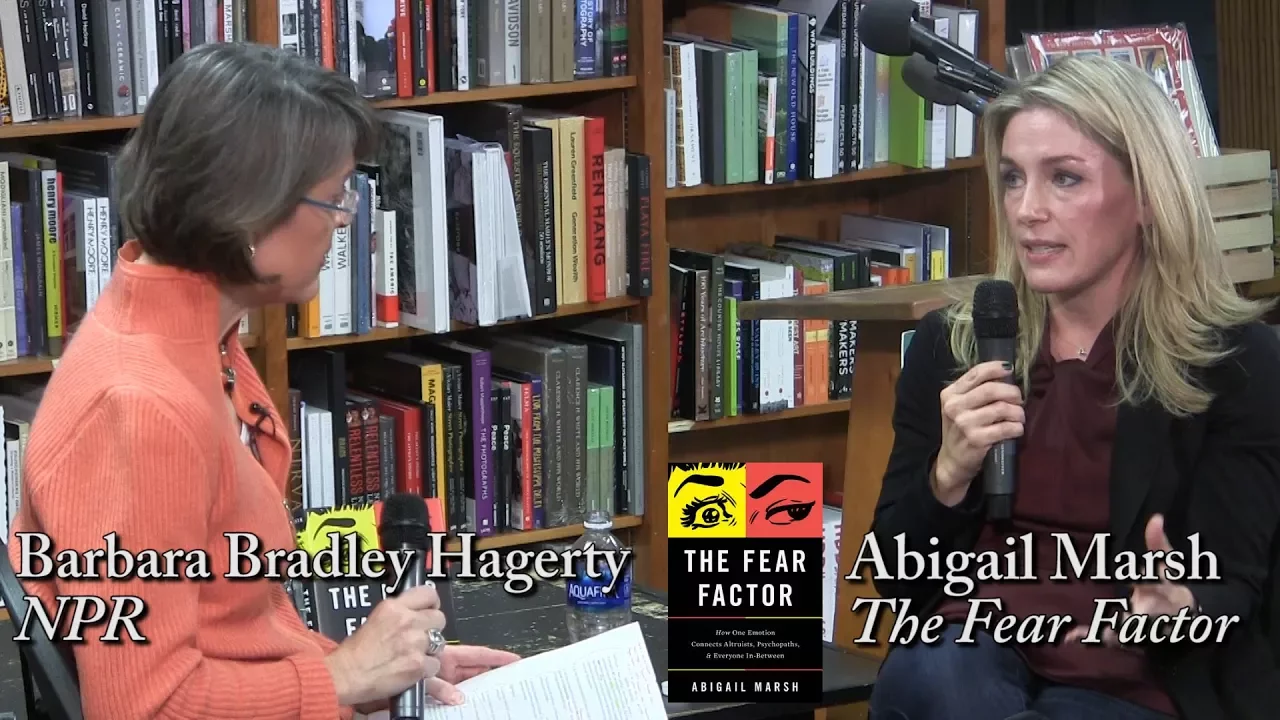
Hi, I'm Abigail Marsh. I'm a professor of psychology and neuroscience at Georgetown University. I'm the author of the book The Fear Factor and the co-founder of the Society for the Prevention of Disorders of Aggression.
>> You've been really interested in studying altruism and what makes people altruistic. Let's just start by what is the definition that you use for altruism?
>> So, altruism is any behavior that is aimed at benefiting another person, improving their welfare. Um, if you're a biologist, you don't really care about the intention. You do care about the outcome and that you pay some sort of a cost for the behavior. If you're a psychologist, you mostly care about what the goal of the behavior was.
>> You study altruism. You study what makes people do extraordinary acts of of kindness or generosity for other people.
But you also study it from the flip side, which is what makes people not care about other people. What makes people not willing to do um generous or caring acts?
>> Exactly. uh I see them as either ends of a single continuum um that's defined by how much people intrinsically care about other people's welfare. But from a scientific perspective as well, if you want to understand a phenomenon, it's really useful to try to study people who are missing whatever it is you're interested in. So if you're interested in memory, it's interesting to study people with amnesia. So because I'm interested in what allows people to care about others welfare, it's really intrinsically interesting to study people who really don't seem to have the capacity to care about other people intrinsically. Um, for example, people with psychopathy. So yes, that's who I study as well.
>> You talk um in the book several times about how people who do something that is incredibly altruistic. An example that you give is people who donate a kidney to someone that they don't know and probably will never meet. So they they go through a painful and quite serious surgery to help someone else without any personal connection at all that those people often really insist that there is nothing special about them that they are just the same as everyone else.
>> Absolutely. I met the first altruistic kidney donors who came in to do our research, was very honored to meet them and so excited. And it was amazing how obvious it was right from the get-go that any kind of fawning or flattery was just um horribly uncomfortable. It was not something they were looking for essentially to a person. Every single altruistic kidney donor I've ever worked with that's true of and other kinds of altruists as well like heroic rescuers.
They're not looking for that. And it's even further than not wanting flattery.
They really insist like I I'm just the same as you. And I initially thought that was just a funny kind of bug. But now I think it's a feature. Uh I think it's actually essential because if you are going to take a big risk or you know expend your own resources or energy to help a total stranger, you can't believe that you're more important than they are because otherwise you should be the one who has all the stuff. Right? Only if you truly believe that you're not more important than anybody else does it make sense for you to give up your own stuff to help somebody else out there no matter who it is. So I think actually humility and altruism are intrinsically related.
>> What are some of the other key pieces to altruism? Uh humility is obviously one of them.
>> Well um the most obvious one that people ask about is empathy and there is a relationship between empathy and altruism but it's not as simple as I used to think. Um, people who are altruistic do not appear to be more empathic across the board. So, for example, they don't empathize any better with other people's pain. For example, we've put them in the scanner um and used a device that uh bangs on their thumbnail really hard.
>> Terrible device. Hate that device.
>> It's we we call it a thumb smasher colloquially, but we try not to.
>> What's the technical term? Now, I'm really fascinated. What's how do you like say a thumb smasher in scientific language?
>> Pneumatic pressure pain device.
Pneumatic pressure pain device. Okay.
Wow. Also like nightmare term just like as a forward sentence there.
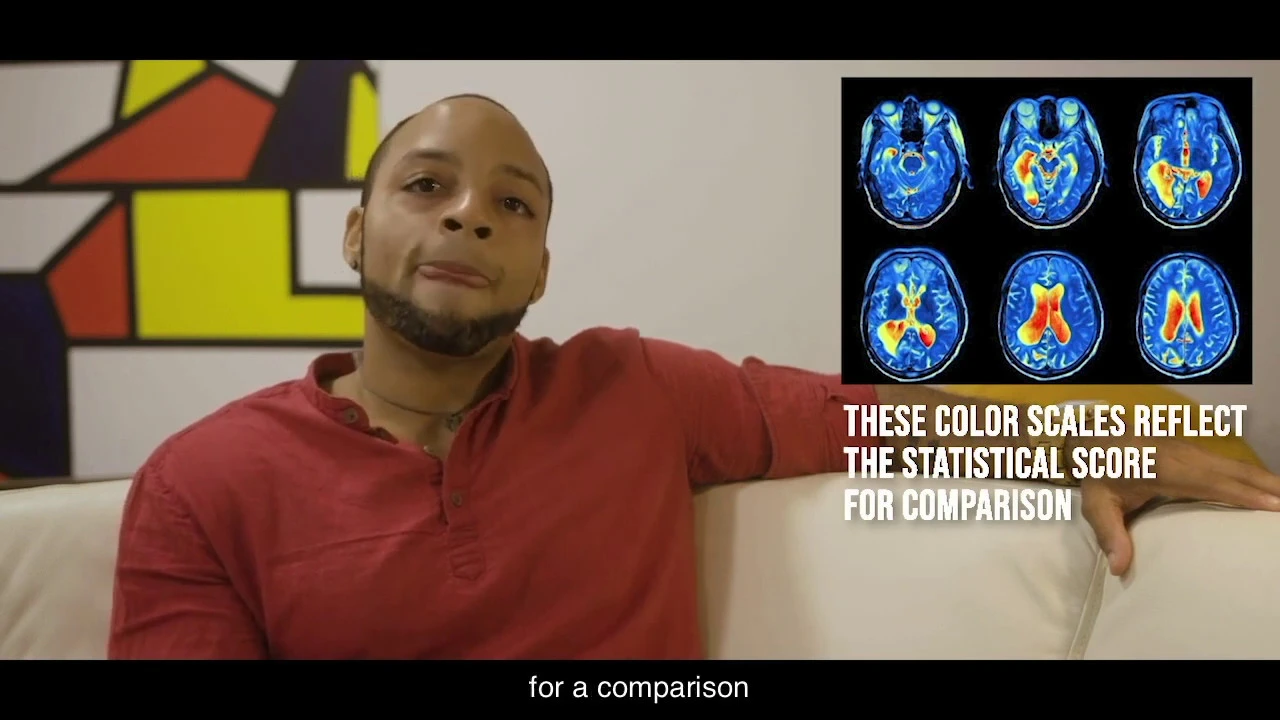
>> Yes. And I I hasten to add that everybody gets to control their own level of pain. We are not doing anything and nobody has consented to. And then while they're still in the scanner, they watch over a real-time feed as a stranger has the same pressure pain applied to their thumbnail. And uh what we found is that the altruistic kidney donors do show more empathy with a stranger's pain. So their brain looks very similar when they're experiencing the pain and watching somebody else experience pain. It's it's literally kind of the neural equivalent of trying to put yourself in somebody else's shoes, mapping their experiences onto your own. But what was neat is that when we told everybody in the study, the altruist and the typical adults to try to empathize, they all did it equally well. There was no difference. And so what that means is that it's not that the altruist necessarily can empathize better, but they do empathize. And the reason seems to be that they genuinely care about other people's welfare more.
And we have lots of data points that that's true. And I think that's interesting because what it means is that most people, and we know this, can empathize just fine, right? Most people don't need to be taught how to empathize. It's actually pretty natural if the person on the other end is somebody you intrinsically care about, right? If it's somebody very close to you, somebody who's similar to you, somebody who shares your values. But then uh that empathy goes away when the other person is not somebody we intrinsically care about. So what this means is that altruists somehow have developed the ability to genuinely care about everybody. Like truly everybody maybe not to exactly the same degree, but even if you're a perfect stranger they've never met before, they already care that you are not suffering, that you are well. And that's really the core, right? And that's the thing. We don't quite know where it comes from, but it clearly does uh exist. One of the ingredients to developing that ability, interestingly, seems to be having a high level of well-being. So, not necessarily being happy all the time, but feeling um like you're flourishing, feeling like you have what you need in life. And in general, we see that at a societal level, when people have higher levels of well-being, when they feel like they're flourishing, they have what they need in life, they're more likely to be altruistic towards strangers. So, that's a good thing because it means that we don't have to choose between those two outcomes.
>> Yeah. I mean certainly even just in my own personal life, right? I know it's a lot easier to be generous and to be, you know, the best version of myself if I've got a good night's sleep and I'm not hungry or thirsty, right? I mean, the amount of arguments that I've had with people that I love that ultimately boiled down to like you need a snack is extremely high and that's the smallest level of this, I think. But if higher levels of wellbeing translate towards more altruism, caring for more people, why is it that there seem to be at this moment in our society uh you know a a group of people who have more than they could ever possibly need and yet don't feel the need to use their wealth to give to other people. the state of being a billionaire.
You know, maybe there are exceptions, but like you have the ability to without without almost any effect in your own personal life.
>> Yeah.
>> transform the lives of other people and very few people actually use it in that way. So, >> yeah.
>> My question is does that have to do some something with like who we actually have compassion for like where our circle is?
Are those people really generous to their children? then when they see someone who is, you know, um, suffering on the street, they just don't think of them as as being in that same category.
H how do how do you explain that?
>> Yeah, this is a really great and complicated question and there's, I think, a d several prongs to the answer.
One is that whenever you're talking about a group of people and the relationship between variables, so higher well-being, higher altruism, we're just talking about averages. So there's always going to be exceptions to that rule. And one of the things I always hasten to add because it could sound like what I'm saying is oh so people who are poor aren't kind and I am absolutely not saying that and you know hopefully anybody who's ever been a person in the world understands that that's not true. Um however it is true that as people have more sort of resources and wherewithal they are more and more generous especially towards strangers on average with big exceptions you know wherever you are on that continuum. But the next piece of the puzzle is that it's always it's intrinsically hard to talk about billionaires, right? Because there just aren't that many of them. You know, it's a tiny fraction of the population. Nobody's ever done a study.
>> But it's also a tiny fraction of the population who donate their kidneys.
>> But what I love to do the study of billionaires. I would, but what I should mention is that there are it's it's important not to make too many except uh too many assumptions about exemplars. Um because the types of exemplars that come to mind tend to be extreme. um and of course salient and so things that are happening right now in the world result in different billionaire exemplars being brought to mind than maybe 10 years ago when we might have thought of Warren Buffett or Bill Gates um 100 years ago when we might have thought of Carnegie you know any one exemplar could tell a totally different story. So, I would say the evidence tends to be billionaires aside, because we don't have data on that, but it it does tend to be that as people move up the well-being ladder, which is not exactly the same thing as wealth, but there's a little bit of overlap, they do tend to give proportionally more of what they have in terms of resources to others. They do, and again, there's lots of exceptions.
It's not linear. However, it is statistically predictable. However, it's also true that there's a relationship between the desire for money and status and power and callousness.
>> So, it probably also depends on um a little bit on how you came to be somebody with such high levels of well-being whether we'll see the typical pattern or not. If you're somebody who came to acquire a lot of resources, you know, through the fact that you just happen to be a brilliant person in the right place at the right time, developed a technology that makes, you know, people's lives better and sold tremendously well, there's no reason to expect that you wouldn't be somebody who feels immense gratitude for what you've done in your life, how successful you've been, how lucky you've been, and then will pass it along. And that does happen a lot. But you know there are other people for whom wealth and power were the result of the fact that all they've ever cared about is amassing wealth and power. Um that tends to be associated with more callous and psychopathic traits. No question. Those are the things that highly psychopathic people tend to be driven by um is status um and resources and pleasure. And so if those were the causal forces behind your success, we might expect to see a different pattern when you achieve the success that you hope for. And the other thing is to the extent that people's interest is in sort of relative status, that's a moving target, right? There's it's never enough if really what you want is to have more than the other guy because your social circle and your basis for comparison just keeps changing. And so that's certainly a pattern that we see sometimes too. But then you also are researching something that is like a deep and profound maybe the moral question of our time which is like who do you care about and how do you care for them?
>> I do think personally there is no more important question in the world that what makes people care about others and what causes them to harm them.
>> I've heard you say that you have three key questions that you address and focus on in your research. Empathy, how do people understand what others think and feel?
>> Altruism, what drives us to help other people? And then psychopathy and and aggression. What prevents us from harming them? What prevents us from harming others? Tell me tell me about that.
>> Uh luckily many things for most of us.
Um so aggression is any behavior that's aimed at harming another person or could be an animal I suppose. Uh and that's really important. Aggression has to be intentional. Um there was a period in time where I feel like a lot of things were getting labeled violence and aggression. Oh, and I should clarify violence is physically harming somebody else.
So there's social aggression, emotional aggression, you know, bullying, ostracism, malicious gossip, those sorts of things. But, you know, physically harming somebody else with the intention of harming them is violence. And there was a period in time, I think, when it was pretty common to call a lot of unintentional uh behavior that caused somebody else to be upset or um you know, feel wounded aggression. And but from a scientific perspective, that's not true. It has to be intentional. Um, and uh, aggression is, you know, deep in our bones, right?
Just like altruism is. It it, you know, we see these same behavior in mice and rats and monkeys and horses and dogs.
You know, there's nothing unique >> um, to humans about aggression. And it's not completely learned. And I think anybody who's had a small child knows that small children sometimes bite and kick and scratch and pull hair that behaviors that they have not watched anybody else engage in. The reason that we aggress is is complex. The sort of most, I don't know, um, morally acceptable kinds of aggression or aggression in self-defense or in defense of somebody else. And so that is often true. You know, it's the standard fight orflight response. If I think I'm going to get hurt, I will uh respond aggressively to defend myself.
No big deal. Um the kinds of aggression we worry about more from a moral perspective and certainly from a legal and social perspective are aggression that's a response to not getting what you want. So this is relates to the frustration aggression hypothesis which is that when your efforts to achieve a goal through other means are frustrated aggression might be the next way you try to achieve those goals. And so there is a relationship between aggression and um you know uh situations of need or desire that aren't being met. The worst kind of aggression from a moral perspective what's called instrumental aggression.
So this is I'm not even mad, right? I'm nobody's done anything to me. I just want something. I haven't necessarily even been frustrated in my attempts to get it, but I perceive that aggression will be the most effective way to get what I want. Right. So I I I want some money. you have some and if I have to hit you over the head with a bat or threaten to do so to get your money, you know, I will.
>> And that kind of, you know, very cold, calculated deliberate aggression is uh rare, luckily. And it's really only associated with one particular psychological disorder, which is psychopathy. I feel like we have, at least in the United States, there's kind of like a a very interesting complex cultural obsession with psychopathy and and psychopathic people. There's a whole very popular strand of entertainment that is just, you know, true crime stories or or what makes people do that.
And and you actually work with the real people, not the characters of this. Yes.
Um I've certainly met many people who are very altruistic, but I've never met someone personally where I'm like, "Oh, they donated one of their kidneys to a stranger." It's like, "How much is this hidden versus how much is this something where you definitely would know if you met them?"
>> Everybody listening, you included, knows somebody with psychopathy. I promise you 1 to 2% of the population of US adults is has clinical levels of psychopathy.
Most of them are not in prison or a psychiatric institution and are good at masking what they're really like. So there is no question that we all know people with psychopathy.
>> So the reason I think that I haven't met someone who has this is because I'm I have a false idea in my head that's like this would be the person who, you know, out of nowhere takes a hammer and just attacks me.
>> Oh, luckily no. Usually not. And this actually comes back to your prior question of what keeps us from acting aggressively. So even people with psychopathy don't act aggressively most of the time. And the reason is that because what marks a good society is that in general pro-social behaviors are rewarded and antisocial behaviors are punished. Like you have to have that be true to have a good society. If you are primarily rewarded by engaging in antisocial behavior like you get good things by doing bad things, you're going to do more bad things. That's as fundamental a law in psych in psychology as there is. And so society is set up so that aggression is generally punished.
It's stigmatized. That's good, right?
you will have fewer friends and fewer people will want to be with you. Uh if you are aggressive um especially in a sort of random or unjustified way. Uh you may get punished in the legal system for being aggressive or at least you know the nonfully legal system but for example in school you may get punished for being aggressive and usually you won't get what you want right um because there are laws and structures set up to make sure that that is not how people get resources. it's just by being bigger and tougher and meaner than the people around them.
>> And so, for the most part, society is set up to prevent aggression. Now, you know, again, there are going to be situations when people perceive that they can get away with being aggressive if that's what will get them what they want. And then for most people, they aren't aggressive in those situations. A because they have a fully developed conscience. They have a sense of remorse and guilt when they hurt people. And so, that prevents them from doing it in the future. Guilt and remorse are very good pro-social emotions. And they also have a sense of empathy. So they they they can um simulate what the experience of the other person would be if they hurt them and recognize that experiences like pain and fear that the other person would likely experience are bad. And most of us care about other people's welfare and so we're just intrinsically motivated not to hurt them. So people with psychopathy live in the same society, right? They know all the rules and all the benefits from doing the good thing. But what they don't have is the ability to experience remorse or guilt.
So those aren't stopping them. um from behaving aggressively. They also don't genuinely care about other people's welfare at all. True psychopathy means that other people's welfare is just not motivating to you. Doesn't mean you can't be a good person, right? You can still develop a moral code even without that. And I know many people with psychopathy for whom that's true.
However, uh many people with psychopathy also have trouble regulating their impulses. Sometimes all the breaks fail and you end up acting aggressively. Uh when that's true, I >> I wonder um I work in podcasting. I'm also a comedian. These are places where I know that by virtue of the the fields I encounter a lot of uh delusional self agrandizing people right like that th those piece and I'm not saying that I'm not one of them but like those those pieces of um you know psych psychology those are definitely like over represented in the in the fields of entertainment and comedy right people who think like everyone should listen to me and I should be on stage while people are silent since a lot of um what's happening with psychopathic individuals is they're responding to um rewards and consequences rather than some sort of intrinsic um sense inside of themsel what it would mean to care about other people. Um are there then fields where psychopaths are over represented because they reward those traits more than others?
>> This is a good question. Uh I don't think we have a great like rock solid sense of whether this is true. There have been some studies looking at um you know certain fields of business for example where there's uh very kind of high-risk highreward uh endeavors where you can make a lot of money but there's a lot of risk you have to take to get it. That is the kind of setting that would attract people who are psychopathic because they're not deterred by risk. One of the critical components of the psychopathic personality is being relatively fearless. Um not learning from punishment or from being hurt. So, um you're more likely to do things that other people would avoid because it's risky. And there's some evidence that maybe especially fields of business that have that very high-risisk, highreward um combination have higher levels of people with psychopathy. There's some evidence that certainly uh the entertainment field may be filled with people who are higher in narcissism.
>> I can confirm I'm I don't have a PhD, but I'll tell you it doesn't take it doesn't take years of research to say that that is true.
I was going to say this did not take a lot of study effort >> either. That's one where they're like, "Yep, we can just accept that to the peerreview journal right now. We don't have to we don't even have to send it out, publish it."
>> Journal of the clinically obvious. Yes.
Um and narcissism is not the same thing as psychopathy, but they do overlap. Um and so it wouldn't be impossible to imagine that there might be higher levels of psychopathy as well. But this again, not conflating psychopathy with violence or serial killers or anything like that. Most people with psychopathy um are nothing even close to being a violent serial killer. They're just people who want what they want and they're not terribly motivated by guilt or remorse or care about other people.
>> I've noticed that you don't use the word psychopath. You say people with psychopathy or psychopathic individuals.
Can can you talk a little bit about that choice?
>> Yeah, thanks so much for asking. Um as I mentioned in u my introduction, I'm the co-founder of an organization called the Society for the Prevention of Disorders of Aggression. It's the only organization in the world aimed at trying to help people who have disorders of aggression like psychopathy. And one of the really important goals of the organization is just to reinforce that disorders of aggression, meaning psychological disorders for which a primary feature is engaging in aggressive behavior are psychological disorders. They have every hallmark of psychological disorders, including the fact that they're pretty strongly heritable. So there's a strong genetic component. They're associated with different patterns of brain development.
Um, and it's not that people choose to have these conditions. They can choose not to have them, right? You can absolutely choose a course of treatment that will cause you to not act this way anymore. And that's important to remember, but it's a disorder. And uh, psychology has stopped referring to people as their disorders um, for many years now. We don't It used to be common place to call people with anorexia anorexics or people with um, you know, depression depressives. Uh, defining them as their disorder. And it's interesting how psychopathy has sort of not been caught up under that umbrella even by many uh psychologists. They're still called people psychopaths, but I I think that's dehumanizing. And you know, I understand why people don't experience compassion for people with psychopathy.
You know, I get it. Um but they're still human beings. They didn't choose to have the disorder that they have and they can be treated. And I think many of them actually really would like to be treated and be able to live a much more typical flourishing life. And so the first step is just remembering they're people and that they have psychopathy. They're not psychopaths. So it's a word I try to avoid.
>> What are some of the um smaller maybe less dramatic traits of psychopathy that we might notice in a loved one or even in ourselves?
>> I'm going to tell you first of all it is hard because again almost everybody I've ever talked to who has psychopathy says that they spend a lot of time masking.
So they figured out how normal people look and act and they or they've all not even normal they've figured out sort of what are the best ways to act to get what you want in a given situation.
Often times the best way to act is to be really nice like really nice. And so people with psychopathy can be wonderful friends and they can be fantastic people to spend time with um because they've learned that by being really nice and fun and a good person to hang out with that's a good way to get what they want later down the road. that's not necessarily bad as long as the thing that they want is not something that it's bad to want. Um, but I will say that there are some clues that you can look for. Um, one of which again is an unusually fearless temperament. So, people with psychopathy, it's not that they're unemotional across the board, but they don't seem to be afraid of risks the same way that other people are. That they just don't seem to be deterred by the possible risks of their behavior, including punishment. So, they're more likely to do things that most of us would be like, "Oh my gosh, aren't we going to get in trouble?" And they're like, "Maybe we will. I don't care."
>> Um, and then you're also looking for a pattern of behavior that seems to exploit other people across contexts.
So, the big mistake people make is saying, "Well, I don't like that person.
They must be such >> maybe they don't like you either and they're a really nice person in every other setting and you think they're psychopathic because you and they have a bad relationship." That's not the same thing at all. You're looking for a pattern of exploitative behavior again across situations. So, this is a person who doesn't seem to have any great relationships where like they and the other person really are mutually supportive and loving, >> right? It's just like kind of a lot of shallow relationships or relationships based on kind of mutual benefit um rather than kind of long-standing ties.
Like they they may not have like longtime best friends that just like to hang out together. they have a lot of colleagues who are, you know, together for mostly beneficial reasons. You also sometimes will look for people who different people think very different things of. So some people will say like that person is not trustworthy at all.
They are, you know, I've seen them lie.
I've seen them manipulate people. And other people like, oh, are you actually kidding me? They're the nicest person in the world. And when you get enough of that variation across different people's opinions of someone, it means that they're masking some of the time or that they're chameleon like switching the way that they present themselves depending on the situation that they're in. And there's more than one reason somebody could do that, but it is at least correlated with being more psychopathic.
>> Let's say you're a parent. There's someone who's listening, they're a parent, they heard what you just said, and they're like, "Wow, that actually does ring true for my kid."
>> Yep.
>> I love my kid. I want to give them the best life. what what practically can they do >> since like you said there's only one organization in the whole world that uh is doing this?
>> So yes, a subset of parents out there have kids that they're worried about for behavioral reasons. They they think you know my kid really does not respond to punishment at all. Like and I'm not talking about harsh punishment. I'm talking about like timeouts and getting your iPad taken away and you know the normal things that parents do to restrain behavior and the kid just does not respond. They are very defiant. They um don't seem to care if they hurt other people. They lie a lot. Uh maybe they steal things when nobody's looking. And and this behavior happens at home, at school, it happens in so many settings that there doesn't seem to be like a particular trigger for it. It's like a more of a personality trait. This is cause for concern. You should not let this you should not just hope this goes away. Um it is it could be a sign that the child has what's called on emotional traits, which are sort of the child precursor to psychopathy. And uh the first thing you should do is uh set up an appointment with your kids doctor. If the child has a social worker, that's also good. And you should ask specifically that they be assessed for the official diagnosis are oppositional defiant disorder or OD conduct disorder in kids and then callous and emotional traits. And they may be like what or they may say well we don't you know we don't believe in those diagnoses which a lot of clinicians will say. They think they're too stigmatizing.
um they think that kids are just misunderstood when they act out and really what's the problem is anxiety.
This happens all the time. And the problem with that attitude is that if you a kid actually has callous unemotional traits and a um disruptive behavior disorder like conduct disorder, the treatments that will help them are not the same treatments that will help kids with, you know, anxiety or depression or these other disorders.
Those are different treatment patterns.
And so you really have to get the right diagnosis >> to get the right treatment. And there are treatments that work, but so few kids get them that they've developed the reputation of being untreatable. But if they're not untreatable, it's just they're not they're not getting treated.
Um because a lot of clinicians really um struggle to work with these populations.
They may not know the treatments that work. So you you got to say, look, I want to I want to know the real deal.
Like these are the these are what I want you to assess for. There's standard assessments for them. They can always go to our website if they're looking for one of the standard assessments. We provide them for free. It's disordersofagression.org.
And uh and then I if the kid comes back as having troubling levels of these different traits, the best treatment by mile is these uh parent focused treatments. So these are treatments that the par that a therapist trains the parent to deliver to the child. Why?
This is always the best kind of treatment for kids. By the way, having a therapist work with a young child directly is not nearly as helpful as having the therapist work with the parent. And the reason is that, you know, kids aren't able to deliver their own therapy, right? Most therapy is aimed at helping the person sort of learn to regulate and develop insight and those sorts of things into their behaviors. But young kids can't do that.
The best treatments are the ones where the therapist teaches the parent how to better manage the kid at home. And parents often times don't want to do this. They're like, "Ah, I'm busy. You know, can't you just, you know, I'll send you the kid. They'll come back fine." The answer is no. If you really actually want the problem to go away, >> you need to work with a therapist. And so really what a therapist will do um hopefully in an ideal world is use one of the tested forms of treatment that work. Uh one of the best ones is called PCIT or parent child interaction therapy. And the therapist will coach the parent on how to sort of manage the child's behavior in such a way that the child is only reinforced for doing the right behavior and never gets the reinforcement that they're looking for from the wrong behavior. It's not punishment focused because again, if your kid is at risk for psychopathy, they're not going to respond to punishment. It's one of the problems with with working with kids like this.
But you you can make sure that they only get the reinforcements that they care about, whatever those reinforcements are, um by doing the right thing and not doing the wrong thing. Um and they'll also focus on being much more kind of warm and sort of loving with your child than might even seem natural. And this is a weird thing for some parents because a lot of kids who are like this don't seem to want that level of warmth and affection. They kind of resist it.
Um, and it's partly because they're not as sensitive to it. And so you actually have to up it even more than you think you need to for it to kind of sink in.
And and and building that really warm, positive relationship with them is so important for the rest of it to take hold. And it's really hard to do.
There's no reason a parent should ever figure out how to do this on their own.
It's complicated. But it it it really does. It's not going to work miracles, but it absolutely can help. I really admire teachers who are so good at working with these kids because it is hard, right? You have to resist the natural tendency to be grumpy and cold with these kids because they frustrate you all the time, right? You have to >> amp up the affection and the warmth, but not be a pushover, right? This is the mistake some people make. They're like, "Oh, they need the most love. Don't be too hard on them, you know, when they mess up." It's like, no, no, no, no, no.
Like you have to have very high standards and there must be consequences when they misbehave. That has to be true because otherwise they will run rough shot over you and they will just learn like oh I can do whatever I want and people will just give me more and more benefits. I've seen teachers do that too.
>> Um and it just drives me bananas because the kids are just learning how to manipulate people. So coupling that those high standards and high expectations with genuine warmth and love and affection is the secret sauce.
It's very it's a very difficult balance to strike but it can people can learn to do it. But what if you're you are an adult?
>> Yeah.
>> And you have this feeling that actually some of the >> ways that you're describing psychopathy and those challenges that actually sounds a little bit like me. But if someone is thinking that, what can they do for themselves?
>> You know, one of our the members of my organization's board, Emmy Thomas, uh had that discovery when she was talking to an office mate in her 20s, just telling her office mate about herself.
And the office mate said, you know, have you ever considered the possibility that you could be psychopathic?
>> Interesting. Yeah. And she was like, "No." And then she looked it up and she was like, "Oh, yeah. Actually, I think I am." So, um, and that was the beginning of her getting better. The insight is a huge step in the right direction. Many people with psychopathy do not have insight that they are the cause of their problems. that the reason that you keep losing your job and that friends keep abandoning you and people are always mad at you and you keep ending up in trouble is not other people's fault, you know, or you know, maybe sometimes it is, but like if it keeps happening to you, in the words of Taylor Swift, you might maybe need to think I'm the problem, it's me. And the thing to remember is that this is a set a pattern of behaviors that I guess could qualify as a form of neurode divergence. I mean, you know, there's a million different ways to be neurode divergent. This is one of them. But it is important to get better because there's no way to live a healthy flourishing life uh with these traits if you cannot learn to change your behaviors. And but you can learn to change your behaviors. It's just about building different habits. Um both different mental habits and different behavioral habits. And um the most effective way to do that is again with a psychotherapist, not a psychotherapist who's going to do kind of woolly insight based therapy or art therapy or all these different kinds of therapy that have no scientific basis. There are a few kinds of sort of uh cognitive behavioral type therapy. So cognitive behavioral therapy is one of them.
There's also some called schema therapy and transference therapy. But what they're really trying to do is help you develop different sort of frameworks for understanding yourself, your relationships with other people and and what other people are like and sort of what a good relationship with other people is. And then also helping you learn new habits, new ways of interacting with people that will lead to positive sort of mutually adaptive relationships that will help you flourish rather than unproductive relationships that will end up in a lot of misery for everybody. And so, and again, these are just habits of mind and habits of behavior that can be learned.
I 100% believe this. I've seen it happen too many times.
>> Let's talk a little bit about um your book, The Fear Factor. Um, I think that many people would say that fear is a negative emotion that they would be better off if they didn't have fear in their lives. And you make a really compelling case in this book that that is actually completely wrong that that to not have fear would would >> really be quite damaging for us as as humans, especially the kinds of humans who we want to be.
>> Yeah. So, we call fear a negative emotion because it's unpleasant in the moment when we're feeling it. You know, that's that's pretty obvious. But things that are unpleasant in the moment when we're feeling them are not necessarily bad. We know that this is true about lots of things, right? About exercise for example, you know, about a lot of kinds of hard work. And uh fear is just as useful and valuable as these things.
And um the obvious reason obviously is it keeps us alive. Uh fear is one of the oldest emotions. You know, every creature in the world from like caterpillars to sea slugs has some variation of fear to keep it from um you know, ending up dead from an avoidable threat. But fear has more subtle benefits as well. Um one of which is that it gives us the ability to understand fear and other people around us. We can't empathize with emotions that we don't feel. And so the same networks in our brain that give us the ability to experience fear can help us understand it on others. and um the capacity to understand and resonate with other people's fears seems to drive a lot of the most beautiful forms of altruism. So that seems to be one thing that really separates very altruistic people from others is that they have a much stronger empathic response to other people's fear in particular for reasons that are not 100% clear like why is it fear in particular but they really do um and that seems to motivate them to help when they see a need. And then by uh contrast, people who are psychopathic because they are relatively fearless temperamentally, they don't seem to be able to resonate with other people's fear. They they struggle to even recognize it. I have um a good friend in the UK who was testing people who were psychopathic in a prison uh for their ability to recognize images of uh facial expressions that convey different emotions. And one uh prisoner she was testing who was psychopathic missed every single fearful facial expression.
like everyone she showed him, he didn't know what it was, which is pretty bad even for somebody who's psychopathic.
And then he got to the very last one and he said, "You know, I don't know what that expression is called, but I know that's what people look like right before you stab them." And so I think fear is one of those uh emotional experiences that sort of binds us together and keeps us looking out for one another's welfare, not just our own as well. I think for a lot of people if you hear the story about the guy who doesn't recognize fear but has stabbed people and recognizes that face as that and then you also think about the person who like runs into a burning building so she can save a grandmother. I think a lot of people would say that the person who ran into the burning building is good and the person who stabs someone is bad. M >> I'm curious, how do you feel or how do you think about um drawing those kinds of moral lines on people?
>> So, obviously saving somebody's life is a good thing to do and harming an innocent person to meet your own desires is not. Um but people are complicated obviously. Um, I'm sure if any of us were defined by the worst thing that we've ever done, there are people in the world who would call us bad. And it's so important to remember that almost everybody is the protagonist in their own life story. You know, morality is really all about how we balance our own needs with the needs of the people around us who, you know, we depend on and who depend on us. And so I do believe that an important part of being a better person is learning that the other people around you have value too, right? And to put more weight on what matters to them, on what they're thinking when you act and a little less weight on yourself, seeing yourself as, you know, part of the larger fabric rather than as the star of the show, cuz we know that that way lies narcissism.
So it's not that there's such things as like static good and bad people, but there are certainly people who do more good things and more bad things. And I think it's within reach for all of us to try to move toward the better end of that spectrum.
>> So what do you now think is one of the most effective ways to boost altruism.
>> Well, so the ways that we know like in the world altruism increases, the first one is impossible to do on any kind of real scale, which is increasing well-being, right? I mean that's and it's again it's not just momentary happiness, it's like your sense of life satisfaction. And so that's a policy issue, right? That's that's up to governments. If you you know have better social policies that increase, you know, well-being of your whole society, altruism will almost certainly increase as a follow on. Amazing, right? So that's a solution, but it's not it's not a sort of individual person level solution. The other the unethical way of increasing altruism in the short term is increasing uh stress like acute stress.
>> Interesting. Yeah. Interestingly, at least if in the context of general high levels of well-being, when people are under acute stress, they also seem to become more altruistic. Interestingly, um which is the opposite of what a lot of people think. People often think like, oh, in times of disaster, people turn on each other. But no, um right after the COVID pandemic, there's this organization that's been keeping track of pro-social behavior all around the world for I don't know almost 20 years now. And they found a big spike in altruistic behavior uh right after the pandemic. I can remember that, right?
Where, you know, people really were, it was so stressful and so scary at the beginning and people were just like, I just want to do something >> to be helpful. Um, people were lining up to um volunteer for COVID challenge trials to to be deliberately injected with COVID to help test vaccines and treatments. Um, >> you know, the mask making and the helping support the medical providers. I mean, that and that stuff is pretty typical, interestingly. Yeah. So that's pretty cool, but again not a good way to to induce altruism on it from an ethical perspective. Um >> probably the best way to do it durably is sort of like what I was talking about um when it comes to reducing psychopathy. It's building better habits. Habits both of mind and habits of behavior that change the way that you think about other people and the way that you sort of habitually respond to people. There are behaviors like gratitude um journaling. We know that like expressions of gratitude are a really good way to induce humility and induce pro-social emotions. You just have to actually start behaving like the person you want to be. Too many times I think we assume that the desires and the sort of internal traits come first and the behavior comes second. But it's usually the other way around, right?
Once you've started treating people nicely and seeing like, oh, this kind of feels good and seems to make my life better and I'm enjoying my life more.
And those rewards make you want to do it more.
>> Thank you so much, Abigail Marx. This was such a pleasure talking to you and um really I mean I mean it when I say we could have talked for like four more hours. So this was fantastic.
>> Well, thank you so much. I really enjoyed myself.
Up Next

21:15
Sensation, Perception & Action: An Evolutionary Perspective
@branchesofphilosophy
128 views•2024-11-26
21:55
Deciphering Neural Circuits Controlling Anorexia in Mice | Richard Palmiter
@AllenInstitute
2.3K views•2011-10-10
11:35
Heart-Brain Connections: Science of Interoception and Empathy
@TEDx
24.2K views•2018-01-23
13:03
How Exercise Benefits Your Brain: Science Explained
@TED
11.4M views•2018-03-21
Related Study Plans & Knowledge Roadmaps
Structured learning paths in Neuroscience
neuroscience
Appetite Regulation: Brain Circuits & Hormones
01Foundations of Endocrinology and Brain Anatomy
02Introduction to Energy Homeostasis
03Peripheral Signals: Leptin, Ghrelin, and Insulin
+ 2 more learning modules
14h5 modules
Explore Roadmap
neuroscience
Neuroeconomics: Value, Risk & Brain Mechanisms
01Foundations of Neuroscience and Brain Anatomy
02Introduction to Neuroeconomics and Subjective Value
03Dopaminergic Prediction Errors & Reinforcement Learning
+ 3 more learning modules
18h6 modules
Explore Roadmap
neuroscience
Spatial Navigation: Cells, Grids & Brain Maps
01Foundations of Brain Anatomy and Memory
02Place Cells and Head-Direction Cells
03Grid Cells: The Brain's Coordinate System
+ 2 more learning modules
12h5 modules
Explore Roadmap
neuroscience
BCIs: Neural Decoding & Prosthetic Control
01Neuroscience Foundations: How the Brain Signals Intent
02Signal Acquisition: Recording the Brain's Activity
03Neural Decoding: Translating Brain Waves into Data
+ 2 more learning modules
25h5 modules
Explore Roadmap