




![DARWINISMO x CRIACIONISMO [ÁLVARO MACHADO DIAS] #05](https://i.ytimg.com/vi/yk5BD5OQV0s/maxresdefault.jpg)









![Predictive Processing and Active Inference by Shamil Chandaria [MESEC WinterSchool 2023]](https://i.ytimg.com/vi/NO4Cgu52BQQ/maxresdefault.jpg)







Human perception is not a passive reflection of reality but an active construction by the brain that evolved to solve specific survival challenges; our senses—including vision, hearing, touch, balance, pain, and proprioception—work together through mechanisms like the inverse mapping problem, lateral inhibition, and multisensory integration to create a coherent reality, with illusions revealing how the brain makes assumptions and takes shortcuts to interpret sensory information efficiently.
Sensation, Perception & Action: An Evolutionary Perspective
Added:Understanding the distinction between sensation (the physical detection of stimuli) and perception (the brain's interpretation of those stimuli).
Basic principles of evolutionary biology, particularly natural selection, adaptation, and how ecological niches shape physiological traits.
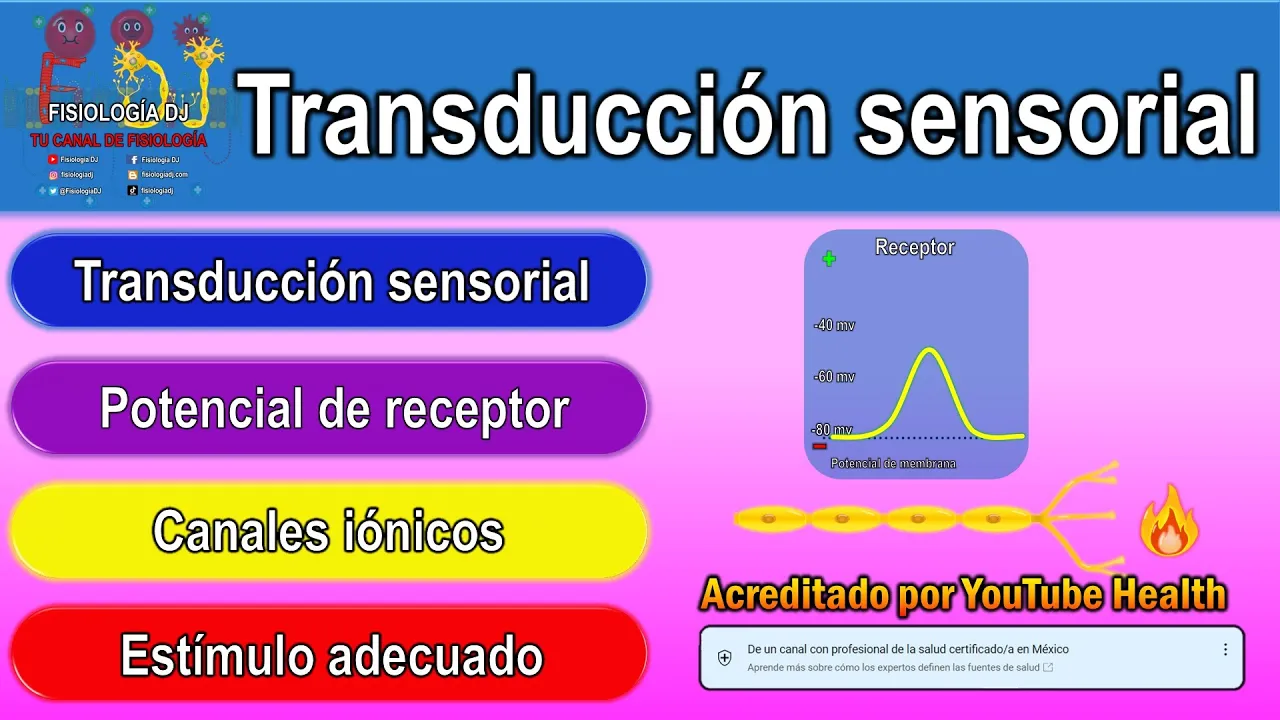
Fundamental neurobiology, including sensory transduction (how physical energy is converted into neural signals) and basic brain anatomy.
The concept of 'Umwelt'—the idea that different organisms experience different subjective realities based on their specific sensory capabilities.
The theory of Embodied Cognition, which investigates how physical actions and environmental interactions directly shape cognitive processes.
Predictive Processing and Active Inference, exploring how the brain functions as a prediction engine to guide behavior and minimize sensory surprise.
Evolutionary Psychology, specifically how ancestral survival challenges continue to influence modern human decision-making and social behaviors.
Bio-inspired Robotics and Artificial Intelligence, applying biological sensory-motor principles to the development of autonomous machines and computer vision.
128 views2likes21:15Original Release: 2024-11-26
welcome to the Deep dive you know uh we've gotten some pretty cool sources from you for this episode um textbook chapters scientific diagrams and even like some real world examples that really make you go wait a minute what am I seeing here so our goal today is to like really like dive deep into all this stuff and explore how our brains take in information about the world and then create like your own reality particularly through vision yeah it's a topic that has FAS ated scientists and philosophers like forever right really and it continues to reveal these surprising insights about how our brains work you know we all kind of learned about the five senses back in school sight hearing touch smell and taste but our sources here are hinting that there's even more to it than just those five absolutely the five senses are a good starting point right but they only scratch the surface really okay we also have senses like balance which helps you stand upright oh right pain that alerts you to danger and proprio ception which yeah that one's a little less familiar but it's basically your sense of like where your body is in space even when your eyes are closed so it's not just about what we traditionally think of as the senses it's like a whole bunch more information that our brains are always taking in precisely think about it like how do you go from light waves oh bouncing off of objects to actually seeing a colorful world with depth right it's more complex than it seems at first glance yeah it really is when you you stop and like think about it it's kind of like magic well scientists actually call the process that our brains use the inverse mapping problem inverse mapping problem yeah imagine trying to recreate a 3D World from a flat 2D image oh that's essentially what your brain is doing yeah all the time taking the 2D images from your retinas and like reconstructing a 3D understanding of like everything around you that sounds really hard it is and yet we do it all the time without even thinking about it exactly and what's even more fascinating is that our perception isn't always like a perfect representation of reality okay our brains sometimes take shortcuts or make assumptions that lead to illusion illusion yeah those moments where what you see right doesn't quite match up with what's actually there so it's like our brains are filling in the gaps kind of yeah making guesses based on what we've experienced before it's one way to think about it our brains are constantly trying to make sense of the world right using the information they have even if that means creating perceptions that aren't totally accurate let's talk about some of those Illusions CU you included some really cool examples uh one that caught my eye was the canisa Triangle right it's just like a bunch of Pac-Man shapes and lines but you actually see a triangle that's not really there it's a classic example of how our brains complete incomplete information you see a triangle because your visual system is wired to look for p patterns and like familiar shapes right it's so powerful that it can even create the illusion of Contours where none exist so our brains aren't just passively receiving information they're actively constructing right what we see exactly and this active construction process actually begins before the information even gets to your brain oh really the cells in your eyes specifically those in the retina uhuh do a lot of processing and filtering there was another illusion the Herman grid yes that shows this yeah what what's happening there The Hermit grid with those gray dots that pop up at the intersections of the white lines shows how cells in the retina okay interact with each other right and it's a phenomenon called lateral inhibition lateral inhibition yeah where cells responsible for like detecting edges and contrast suppress the activity of their neighboring cells oh interesting this helps sharpen our perception of edges but also creates those weird gray dots so even at this basic level our visual system isn't just just sending information but also shaping it exactly like highlighting some parts and suppressing others it's like an artist sketching the basic outlines of a scene before filling in all the details okay our visual system starts by enhancing contrast and detecting edges and then uses that information to build a more complete picture let's add some color to this now okay you included information about the TR chromatic and opponent process theories right of color vision can you explain how those help us understand how we see color sure the tri chromatic Theory explains how our eyes actually detect color okay it proposes that we have three types of color receptors called cones cones yeah and our retinas that are each sensitive to a different range of wavelengths of light okay red green and blue so like mixing paint just like mixing paints these three primary colors can be combined in different proportions to create like the full spectrum of colors that we see so the tri chromatic Theory explains how we detect the different colors but how do our brains actually process and interpret that information that's where the opponent process Theory comes in okay it suggests that color information from the cones is then processed in opposing pairs oh red versus green and blue versus yellow okay these color pairs are fundamentally opposed in our perception which is why you never see reddish green or bluish yellow it's kind of like a seesaw it is one color goes up the other one goes down yeah and those weird color After Effects like when you stare at a red image for too long and then everything looks green yeah those after images are a great example of the opponent process theory in action oh cool when you stare at a red image you fatigue the red sensitive cells in your retina then when you look at a white surface the green sensitive cells which haven't been fatigued okay are more active and that's why you see a green after image so we've covered how our brains figure out brightness and color from light uhuh but I'm curious how we go from these flat images on our retinas to seeing the world in 3D how do we perceive depth that's another remarkable thing our visual system can do right our brains use a variety of cues yeah some based on information from just one eye and others that require both eyes working together okay these are called monocular and binocular cues monocular and binocular yeah let's start with the binocular cues okay because these are the ones artists use to create the illusion of depth in paintings and drawings like using linear perspective to make things further away look smaller exactly or using overlapping objects to show which ones are in front exactly and you included some really cool examples of how these monocular cues can be like manipulated to create optical illusions right the ases room for instance distorts our perception of size by playing with our assumptions about perspective and distance so people look like they're shrinking or growing yeah even though they stay the same size yeah it's a cool illustration of how our brains constantly rely on contextual Clues right to make sense of what we're seeing and those cues can sometimes mislead us another illusion you included was the ponzo illusion where two lines of the same length look different sizes because of converging lines in the background right the converging lines in the ponzo illusion create a sense of perspective oh okay making our brains perceive the top line as further away and therefore larger even though it's the same length as the bottom line exactly it shows how our perception of size is always relative and influenced by the context around so even though these Illusions are tricking us they're also revealing how our brains work absolutely Illusions are like Windows into how our visual system works oh cool they help us understand the assumptions and shortcuts okay that our brains use to construct our perception of the world so we've covered some of the monocular cues yeah what about binocular cues okay so binocular cues provide even more precise information about depth uhuh especially for objects that are close to us okay one important one is called convergence convergence yeah when you focus on an object your eyes rotate Inward and the angle of that convergence tells your brain how far away the object is so the closer something is the more our eyes have to converge exactly it's like our eyes are acting as a rangefinder oh using that angle to figure out the distance okay cool and what about stereopsis so stereopsis or stereoscopic Vision yeah is the other key binocular Cube okay because our eyes are slightly apart they each get a slightly different image of the world right your brain Compares these two images and uses those tiny differences to create a sense of depth it's like having two cameras taking pictures from slightly different angles exactly that's how 3D movies work oh right they present slightly different images to each eye mimicking the disparity our eyes receive in real life okay and enhancing that illusion of depth so we've explored how our brains figure out brightness and color and depth yeah but there's another important piece we have haven't talked about yet motion perception oh that's right motion perception is crucial for survival it lets us move around avoid danger and interact with the world yeah and just like other parts of vision our perception of motion is subject to some really interesting Illusions okay that reveal a lot about how our brains process movement this is getting really interesting but we're also at the end of part one of this deep dive okay I can't wait to keep going and learn about motion perception in part two sounds good welcome back to the Deep dive in part one we explored like how our brains create this visual reality right from perceiving brightness and color to like understanding depth now let's get into motion perception okay it might seem simple at first you know things move we see them move right but there's a lot more to it than meets the eye yeah motion perception is this complex process that involves these special cells in our brains oh wow and uh some pretty cool illusions okay so how does our brain actually detect motion well our sources say that our brains have these things called motion detectors motion detector yeah they're like tiny little sensors that analyze changes in an object's position over time they're constantly monitoring how the images on our retinas are shifting okay and then they calculate the speed and direction of that movement so like if I'm watching a car drive down the street yeah are these motion detectors firing off signals as the car's image moves across my retina exactly those motion detectors are working hard okay helping your brain track the car's movement but what's really interesting is that these detectors don't just respond to real physical movement oh they can also be activated by something called apparent motion apparent motion that's the illusion of movement we get from still images right exactly like those old flip books where you flip through the pages and it looks like the drawings are moving that's so cool your brain interprets those rapidly changing static images as continuous motion even though it's an illusion right and it's the same princip Behind movies and animation it really it's amazing how our brains stitch together those individual frames right to create this fluid experience that's like magic yeah but there's also this thing called the aperture problem aperture problem yeah which makes things a bit more complicated okay what's that the aperture problem happens because our motion detectors have these tiny receptive Fields receptive Fields yeah they're like little windows that they see the world through each detector only sees a small part of the overall motion and that can sometimes be confusing confusing how like imagine trying to figure out which way a car is moving but just looking at one of its Wheels okay through a tiny hole right you might not be able to tell if it's going forward backward or even sideways so each motion detector only has a limited view exactly and they have to work together to figure out the whole picture right and that's where the aperture problem comes in okay these local motion detectors with their limited views mhm can sometimes be fooled M which leads to some pretty cool visual Illusions one of the Illusions you included was the barber pole illusion oh yeah that one always gets me it's a classic can you explain how it works sure so picture a barber pole with those diagonal Stripes yeah now because of the aperture problem the motion detectors that are focused on the stripes uhhuh they only see the stripes moving up or down but we know the pole isn't actually grow or shrinking exactly so our brains have to do something to make sense of those conflicting signals right your brain integrates information from multiple motion detectors to figure out what's really happening it combines those local motion signals with other cues to resolve the ambiguity and perceive the true motion of the barber pole exactly so our brains are always like doing this complicated dance behind the scenes trying to figure out how things are moving right and it's not just about detecting motion it's also about adapting to all this constant visual information okay a really interesting example of this is motion After Effects like the waterfall illusion exactly you stare at a waterfall for a while then look at the Rocks next to it right and suddenly the rocks look like they're moving upward it's so weird our visual system adapts to that prolonged exposure to downward motion okay when you stare at the waterfall the motion detectors that are sensitive to downward movement yeah they get tired so those downward motion detectors are taking a break break yeah and then the upward motion detectors become more active making the stationary rocks look like they're moving up exactly it's like a seesaw side goes down the other side goes up our brains are so adaptable they are constantly recalibrating based on what we've been seeing right even when the world is still unning our brains can create a sense of motion that's incredible so we've talked about how our brains use motion detectors to see both real and apparent motion how the aperture problem can trick our brains and how motion after effect show us how adaptable our visual system is right but this is just one part of how we perceive the world absolutely we've been focusing on Vision right but our brains don't just process information from one sense at a time oh okay all of our senses work together really constantly sharing information and influencing each other this interplay between the senses is called multisensory integration multi- sensory integration okay yeah that's a perfect segue into the next part of our Deep dive okay I'm excited to explore how our brains combine all this sensory information it's going to be a wild ride welcome back to the Deep dive we've been exploring like how our brains create visual reality from light and color to depth and motion but now get ready because we're about to enter the world of multi-sensory integration it's an area of research that's really changing how we think about perception yeah for a long time scientists studied the senses in isolation but now we're realizing how interconnected they really are right it makes you wonder why we even talk about like senses when it's really this like web of information going on in her brain it's a simplification for sure but it doesn't really capture the full picture of how our brains actually work right think about it in everyday life you're rarely experiencing just one sense at a time you're seeing hearing feeling maybe even smelling and tasting all at once right your brain has to take all that information and combine it into a coherent experience one example of this that you included was the murk effect yeah it shows how what we see can actually change what we hear the murk effect is a classic example you see someone saying one syllable uhhuh but the audio is a different syllable okay and what you perceive is a third syllable altogether wow a combination of what you see and hear it's like my brain is trying to make sense of those conflicting cues and like coming up with a compromise yeah but why does vision dominate in this case that's a good question there are a few possible explanations one is that visual information especially lip movements right gives us more precise timing information than audio signals y another idea is that our brains have evolved to prioritize visual cues in speech right because we often rely on lip reading and noisy environments that makes sense if I'm at a party trying to understand someone watching their lips really helps exactly and it shows how flexible our perception can be our brains are always weighing different sensory cues okay depending on what's most reliable at any given time another illusion that shows this connection between vision and sound is the ventriloquist effect right the ventriloquist makes the puppet appear to be talking yeah our brains tend to link sand with the most obvious visual Source mhm even if that's not where the sound is really coming from so we see the dummy's mouth moving yeah and we just assume that's where the voice is coming from even though we know it's the ventriloquist doing the talking it's like our brain's taking a shortcut yeah it's a clever trick that plays on how our brains combin senses right our brains want the simplest explanation yeah and in this case the dummy's mouth moving is a strong visual cue exactly that overrides where the sound is actually coming from it's a good example of how Vision can sometimes be more dominant you also mentioned the rubber hand illusion oh yeah that one's a classic too it's where you see a fake hand being stroked yeah and your real hand is hidden but also being stroked right and then your brain starts to feel like that rubber hand is your own it shows how visual information can change our sense of body ownership wow your brain sees the rubber hand being touched at the same time as your real hand M and it starts to include that visual information into your body schema body schema yeah it's like the map your brain has of your body so it's like my brain is saying well if it looks like my hand and it feels like my hand then it must be my hand exactly and the rubber hand illusion is just one example of how our sense of touch can be affected by other senses right there's also evidence that what what we see can influence how we perceive temperature really for example if you see a blue light you might feel colder even if the temperature hasn't changed that's wild it seems like our brains are constantly mixing information from different senses they are it creates a much richer experience than just using one sense at a time right and this multisensory integration isn't just some random thing no it's actually important for survival okay by combining information from different senses our brains create a more accurate and reliable picture of the world that makes sense like if you're trying to find a predator in the dark yeah using both hearing and vision would be really helpful exactly and this is happening all the time without us even realizing it it's pretty amazing it is it's a remarkable feed of neural engineering we've talked a lot about Illusions but you also included synesthesia where one sense triggers experiences in another sense right this isn't an illusion though right no synesthesia is a real neurological phenomenon okay the lines between the senses get blurred mhm some people might experience sounds as colors or taste shapes wow or see numbers is having personalities it's like having an extra Dimension to your senses yeah and it tells us something about how perception Works what does it tell us it shows how adaptable our brains are oh and the connections that can exist between different senses so this deep dive into perception has been quite a journey yeah we've covered a lot of ground we've explored how our brains create our visual world how we see motion and how our senses work together right to create this amazing experience of reality and what's really cool is that we've only scratched the surface there's still so much we don't know there is so much more to explore what are some of the big question scientists are still trying to figure out one of the big ones is how all these sensory processes lead to our conscious experience conscious experience yeah how do we go from electrical signals in our brains to the feeling of the sun on our skin or the taste of chocolate right how does the brain create that subjective feeling of our experiences those are big questions do you think studying Illusions could help us understand Consciousness better it's definitely possible okay Illusions show us the gaps in our perception where our brains make assumptions and take shortcuts by understanding how our brains create these Illusions we might learn more about how Consciousness works so as we wrap up this deep dive what are some key takeaways for our listener I hope they learned how complex and amazing their senses are yeah the world you experience isn't just a reflection of what's out there okay it's actively created by your brain wow your brain is always taking information from your senses filtering it interpreting it and creating meaning and sometimes that creates some pretty cool illusions exactly it's a testament to the power of our brains so to our listener the next time you see a sunset or hear your favorite song or taste something delicious yeah take a moment to appreciate what's happening ins inside your brain it's an incredible process it really is and remember there's always more to discover absolutely keep questioning keep observing and keep exploring that's a perfect way to end this thanks for joining us on this deep dive into human perception until next time keep exploring
Up Next
7:52
Neurotransmitters: Types, Structures, and Functions Explained
@ProfessorDaveExplains
265.9K views•2019-09-11
21:55
Deciphering Neural Circuits Controlling Anorexia in Mice | Richard Palmiter
@AllenInstitute
2.3K views•2011-10-10

4:10
Vagus Nerve (CN X): Anatomy, Nuclei & Functions Explained
@Alilamedicalmedia
305.2K views•2022-10-31
13:03
How Exercise Benefits Your Brain: Science Explained
@TED
11.4M views•2018-03-21
Related Study Plans & Knowledge Roadmaps
Structured learning paths in Neuroscience
neuroscience
Appetite Regulation: Brain Circuits & Hormones
01Foundations of Endocrinology and Brain Anatomy
02Introduction to Energy Homeostasis
03Peripheral Signals: Leptin, Ghrelin, and Insulin
+ 2 more learning modules
14h5 modules
Explore Roadmap
neuroscience
Neuroeconomics: Value, Risk & Brain Mechanisms
01Foundations of Neuroscience and Brain Anatomy
02Introduction to Neuroeconomics and Subjective Value
03Dopaminergic Prediction Errors & Reinforcement Learning
+ 3 more learning modules
18h6 modules
Explore Roadmap
neuroscience
Spatial Navigation: Cells, Grids & Brain Maps
01Foundations of Brain Anatomy and Memory
02Place Cells and Head-Direction Cells
03Grid Cells: The Brain's Coordinate System
+ 2 more learning modules
12h5 modules
Explore Roadmap
neuroscience
BCIs: Neural Decoding & Prosthetic Control
01Neuroscience Foundations: How the Brain Signals Intent
02Signal Acquisition: Recording the Brain's Activity
03Neural Decoding: Translating Brain Waves into Data
+ 2 more learning modules
25h5 modules
Explore Roadmap