















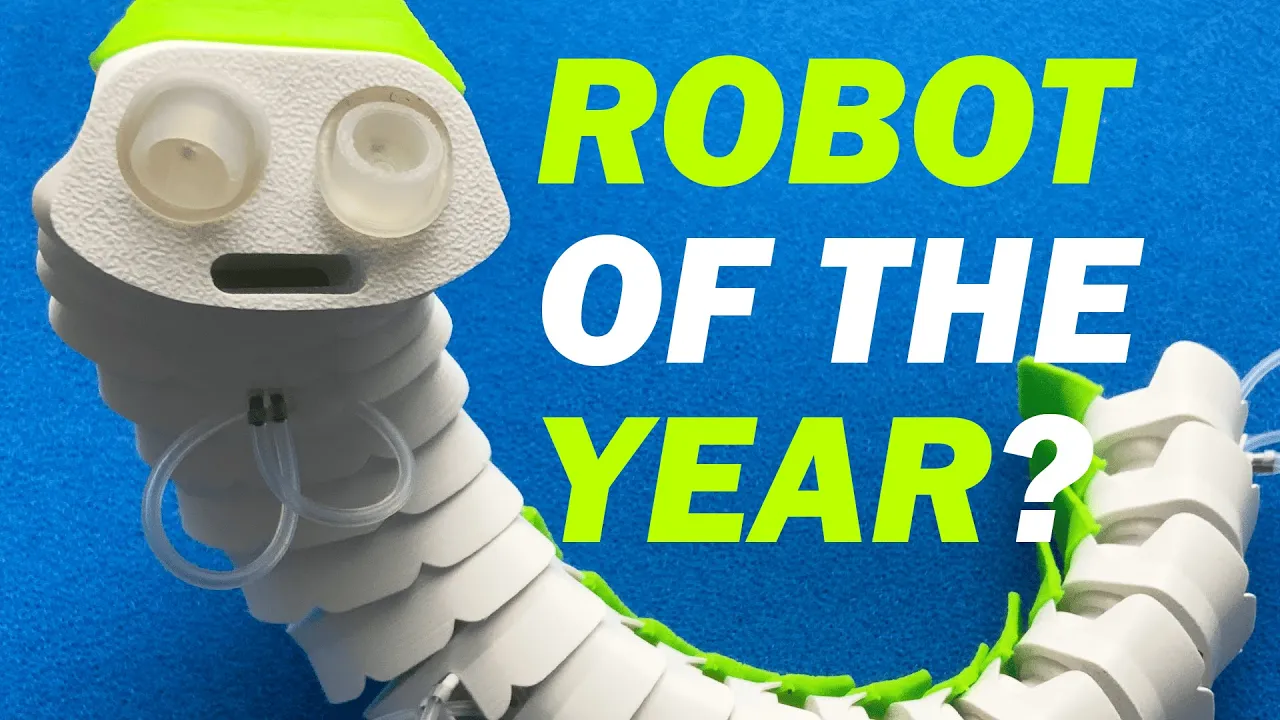



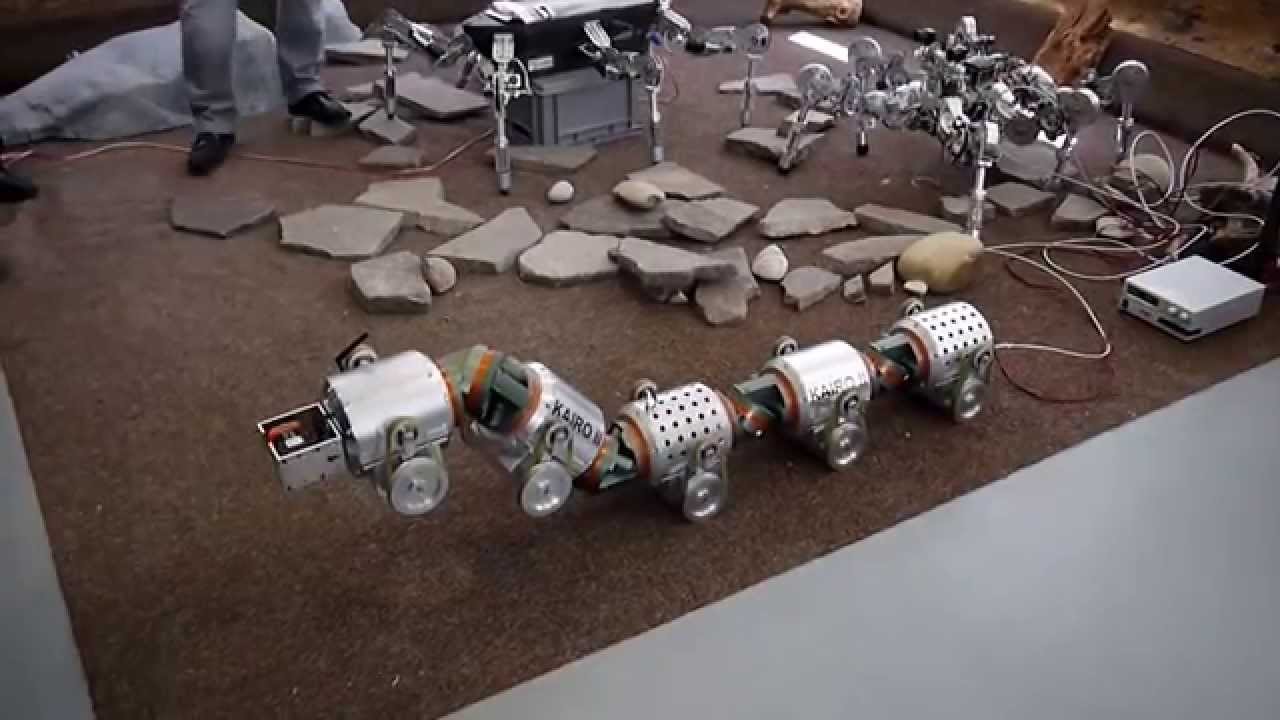






Snake-like robots can replicate four primary locomotion modes—sidewinding (using two sine waves for desert sand movement), lateral undulation (single wave for typical slithering), concertina (for tunnel navigation), and rectilinear (still under development)—by implementing simple mathematical wave patterns on servo motors, though current robots remain tethered due to high energy consumption and lack sophisticated skin actuators for full biomimicry.
Bio-Inspired Snake Robot Locomotion Explained by Computerphile
Added:Fundamentals of robot kinematics, specifically multi-joint systems and degrees of freedom (DoF).
Basic concepts of biomimicry (bio-inspired engineering) and how biological systems inspire mechanical design.
Introduction to control systems and feedback loops used to coordinate multiple robotic actuators.
A foundational understanding of biological snake locomotion gaits (e.g., lateral undulation, sidewinding, concertina).
Design and implementation of Central Pattern Generators (CPGs) in software to control rhythmic robot locomotion.
Advanced study of tribology and anisotropic friction, focusing on how snake robots exploit surface contact to generate forward thrust.
Exploration of real-world applications of hyper-redundant robots in search-and-rescue operations, pipe inspection, and minimally invasive surgery.
Integrating machine learning and Reinforcement Learning (RL) to enable autonomous gait adaptation in unpredictable terrains.
118.2K views3Klikes12:08Original Release: 2019-02-06
sometimes she likes to wrap around me like this and it's a little extracting yeah getting her out again that's the problem so my area is bio-inspired robotics and how to learn from living animals to make robots that function as well as the living animals because anyone can string a bunch of servo motors together to make a snake robot for instance but what makes snakes so special is how they actually control their locomotion it's those control algorithms that we're trying to figure out that gives them the versatility they need to move through their habitat we start by analyzing how they move so we use motion capture cameras and study their motion we use instruments to study the forces we're currently embarking on a project to understand their muscles but also a key aspect is going to be understanding what happens when they encounter a disturbance if they're moving through a series of of objects and one of them yields and breaks how does the snake respond to that disturbance that gives us insight into what they're controlling are they controlling force velocity position how are they handling this we have a robot that's capable of three of the four modes of snake locomotion we're very limited motors are nowhere near as good as muscle yet in a variety of ways uh we can't our snake robot for instance has uh 24 servo motors whereas a real snake she has over 200 vertebrae in her body and several dozen more in her tail each of which has 40 different muscles crossing every single joint yeah we're still a ways away from replicating the true elegance of snake locomotion so yeah you're obviously well known for the uh having the snake yeah the snake is arguably the most famous part of the lab and i'm finally i'm i'm working on a grant for him but she's poking through the sideburns [Laughter] oh radiance move this and this i really need to pay them to put more power outlets in this place so what's your lab then is if you say it's um biology inspired robotics yeah by biology comparative biomechanics bio-robotics because it goes both ways we can use the animals to help us understand how to build better robots but the great thing about robots is unlike animals robots will do what you tell them to do every single time and they'll do the same thing every single time so it makes it easy to test hypotheses including sort of what if hypotheses what if the animal didn't do the thing that it does to adjust to a particular environmental change or what happens would it fail we don't know because the animal won't do it but the robot will so because we tell it to the robot is actually quite simple it's just a series of dynamics servo motors dynamics xl320s so these are commercially available servos and dynamic soles they have their own controller but it's basically a modified arduino arduino-based code so on and so forth so bring this around and it doesn't even it's not even that good of an arduino it's not like a mega or anything there we go oh i need to fiddle with those parameters so yeah so this one the snake robot is performing uh sidewinding let's give it a little boost for speed sidewinding is this strange mode of locomotion used by a variety of desert snakes and it can use sidewinding to move on shifting desert sands does sand is very hard to move on for a variety of reasons but the short version is you press it one way it solidifies like a solid if you press it another way it yields and flows like a fluid and predicting which is going to happen is very difficult and so snakes have evolved this method that allows them to move across a huge range of sand substrates very easily and it's robust to the different types of sand they don't have to test for exactly what the sand is doing so i did some previous work at georgia tech with the actual sidewinder rattlesnakes and that's how we came up with the algorithm for this which is really just two sine waves they have a vertical horizontal wave right to left along the body and a vertical wave you can see how it's lifted its body clear of the substrate here so it's got this lifting and lowering sort of system going on as a result it can transition to lateral undulation and then back to sidewinding but basically we have a sine wave for left to right a sine wave for up and down and they're slightly offset and that's it the actual code to produce this is maybe 15 lines and so similarly for lateral undulation let me fiddle with the parameters for that one before it swaps over so snakes can move through this typical slithering gate and this is still a pale imitation of the grace and beauty of real snakes but this is just a single wave we're working on more complex implementations and finally it can even perform something called concertina locomotion and so once it gets to that point it'll finish a cycle so this is what they do inside of a tunnel if it hit the tunnel wall it would be detecting that unfortunately i don't have the tunnel set up at the moment but basically it stretches its body forwards like you see here and then it feels for the wall of the tunnel and if there was a real tunnel it would detect that and automatically adjust itself and then inch worm its way forward just like the real snake it's actually not a terribly efficient form of locomotion and that's true for these guys as well their endurance drops dramatically when you do this it's sort of a last resort mode of locomotion so the only one it's missing so far is actually a form called rectilinear and that's actually where they can ripple their belly scales alone it's a form of locomotion powered entirely by the skin and unfortunately we don't have skin actuators that are good enough for that yet but we're working on it so can you say right go over there and that sort of thing this is a purely feed-forward mechanism so it does not yet have external sensors that's another area that we're working on how to control this thing so right now the biggest issue is they're still tethered because they wind up drawing a tremendous amount of energy when they i mean this thing is pulling over an amp at any given time so it sucks down the energy pretty fast it's yeah we're a ways away from fully autonomous snake bots but we're getting there bit by bit i like to say that snake robots are sort of where humanoid robots were 20 years ago and now look at boston dynamics and in fact boston dynamics is an excellent example of this all of those magnificent robots they're based on the uh the control mechanisms observed for human locomotion so when we walk we use an inverted pendulum we sort of vault over a stiff limb and when we run our limb becomes springy and by controlling those dynamics that's how boston dynamics is able to make their robots do amazing things is because they're trying to control just the center of mass trajectory and the springiness of the effective limb which can be multiple limbs if it's one of their quadrupeds and then they have sort of secondary processes i imagine that they handle all the little sort of details of what joint gets how many volts and things like that just like with us it's all handled in our spinal cord there's a lot of that stuff where we're walking our brain is just sending a few signals saying go roughly this fast in this direction and the spinal cord takes care of all of that stuff of which muscle turns on when and how and responses to a perturbation like missing a step or something like that so there's a lot of decentralization even in humans so is this something anyone could do absolutely this is just off the shelf servo motors xl320s with 3d printed brackets connecting them but i've built tons of others with regular high-tech servos and then you just uh impose a sine wave what i basically do is i i say here's a i compute a sine wave and i say every motor has a certain phase offset and then i impose a global phase offset on the sine wave at successive time intervals and the trick is i sort of tweak the time interval so that the motors have enough time to get where they're going the other thing is dynamic soles are great because you can daisy chain them so if i pop this out so it's not no longer doing anything so i can string one input along for six motors so this is the vertical lead the horizontal lead for these six you can technically go more than six but i wind up having problems with the voltage drops at the end and the motors aren't quite doing what they need to you could see that a little bit at the tail sometimes the voltage drops a little bit at the tail normal servo motors it's just a simple one one thing you can hook them up in parallel with a lot of soldering if you want but uh my personal favorite for snake robots that aren't dynamic souls is actually the linx motion controller links like the animal and it has 32 servo channels i use python because it's a snake name and i like snakes but also it's what my predecessor used and so you just send a serial command that says channel number 13 go to position 750 and take 700 milliseconds to do it and then you just repeat that send all the commands in a chain and the robot will go to that position and then you wait for a little bit go to the next time step move it to the next position so on and so forth these are more sophisticated than regular servos for all sorts of reasons but yeah the ultimate end game for this is snakes the whole reason snakes evolved the whole reason they lost their limbs and got this elongate body form is to move through cluttered complex and confined environments so they're really good at dealing with those sort of things like say exploring mars or a building has collapsed and you want to find out if there's people under there or you want to go sneak into a bad guy's house and see what they're talking about through the walls and the cabling and things like that that's what snakes are excellent at and that's why this elongate limbless form of body has actually evolved over 24 independent times just in lizards snakes are merely the most successful of those there's actually 23 other groups of limbless lizards plus a bunch of other times so it's a very very common strategy and it's always associated with these cluttered confined environments which is where limbed robots and things with more sort of chunky boxy bodies don't do as well in fact if you or a dog or an insect runs across a cluttered field of rocks and logs and debris in order to not fall down we get slower we have to slow ourselves down to accommodate this complexity snakes actually get faster because when they're doing that undulating form of locomotion what they're doing their body is hitting those obstacles and using them as push points so they get faster the more cluttered their environment is and so that's a real advantage and something that people are keen on capitalizing on so we've got this motion capture system and we're going to be looking at the arboreal locomotion of snakes and so the idea is that we'll take a snake and we'll put little reflective markers message maybe you're sending a video suddenly the bandwidth becomes actually a bit of a problem this may not be an issue depending on the application
Up Next
5:00
Designing a 3D Printed Snake Robot: Body and Mechanics
@BrainergiserTube
5.5K views•2019-01-20

58:25
MathWorks Virtual RoboSub Simulation Environment | Webinar 2026
@RoboNationInc
209 views•2026-03-10

22:36
Haptic Rendering Explained: Robotics & Force Feedback (Computerphile)
@Computerphile
932 views•2026-03-26

25:22
Micromouse: The Fastest Maze-Solving Robots on Earth
@veritasium
23.5M views•2023-05-24
Related Study Plans & Knowledge Roadmaps
Structured learning paths in Robotics
robotics
Building Delta Robots: Kinematics & Pico
01Foundations of Delta Robots & Mechanical Design
02Electronics and Microcontroller Setup with Pi Pico
03Delta Robot Kinematics and Coordinate Math
+ 3 more learning modules
65h6 modules
Explore Roadmap
robotics
Building Ballbots: Dynamics, Kalman & LQR
01Embedded Electronics & Omniwheel Actuation
02Ballbot Kinematics & Rigid Body Dynamics
03IMU Sensors & Kalman Filter State Estimation
+ 2 more learning modules
42h5 modules
Explore Roadmap
robotics
Micromouse: Hardware, PID Control & Flood-Fill
01Electronics & Teensy Microcontroller Basics
02Sensors and Actuators: Motors, Encoders & IR
03Precision Movement: Implementing PID Control
+ 2 more learning modules
35h5 modules
Explore Roadmap
robotics
CDPR: Kinematics, Arduino & Winch Control
01Foundations of Arduino & Basic Electronics
02Stepper Motors and Winch Mechanics
03Kinematics of 2D Cable-Driven Robots
+ 2 more learning modules
28h5 modules
Explore Roadmap