




















![The Secret of Retropolis - A Robotic Film Noir Story [Full Playthrough] (VR gameplay, no commentary)](https://i.ytimg.com/vi/vWG0eNu0570/maxresdefault.jpg)
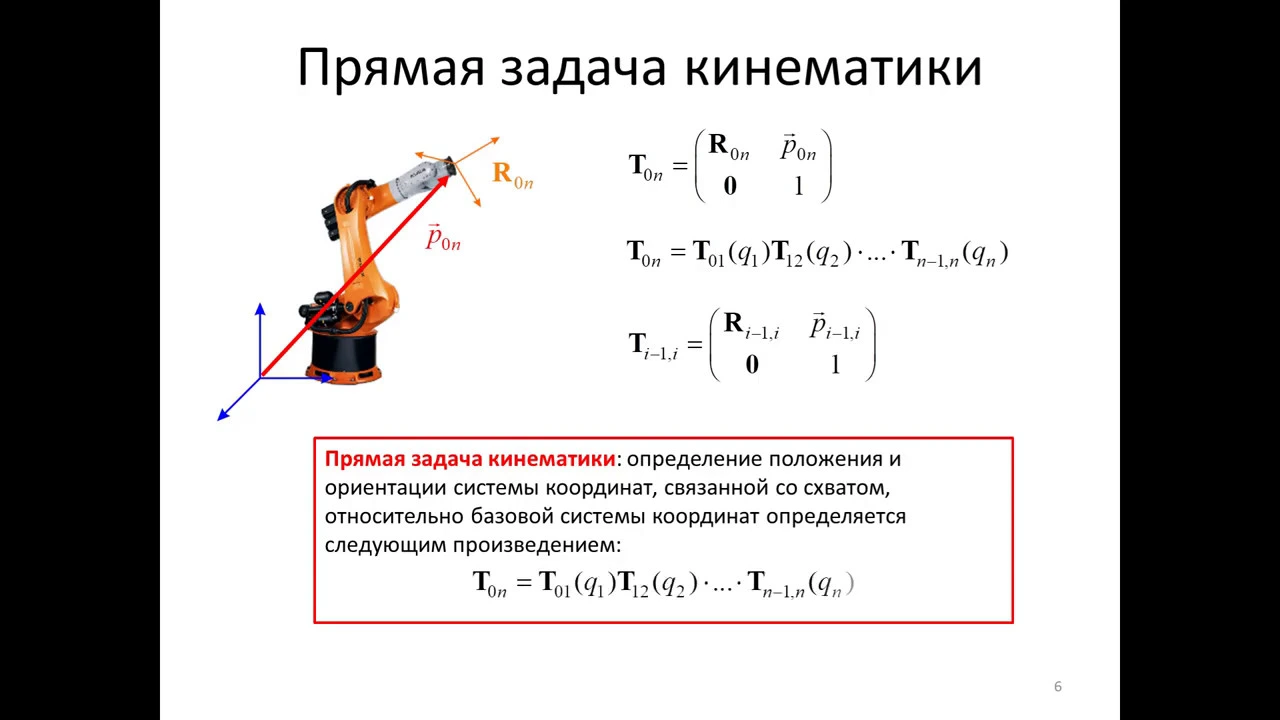
Robot kinematics involves modeling the position and orientation of robotic links and joints using generalized coordinates, where a manipulator with n one-degree-of-freedom joints has exactly n degrees of freedom; the configuration space represents all possible robot configurations as points in n-dimensional space, while the operational space describes the end-effector's position and orientation, with homogeneous transformations enabling the combination of rotation matrices and translation vectors to model the relationship between successive links in a robotic chain.
Introduction to Robotics: Kinematics & Manipulator Fundamentals
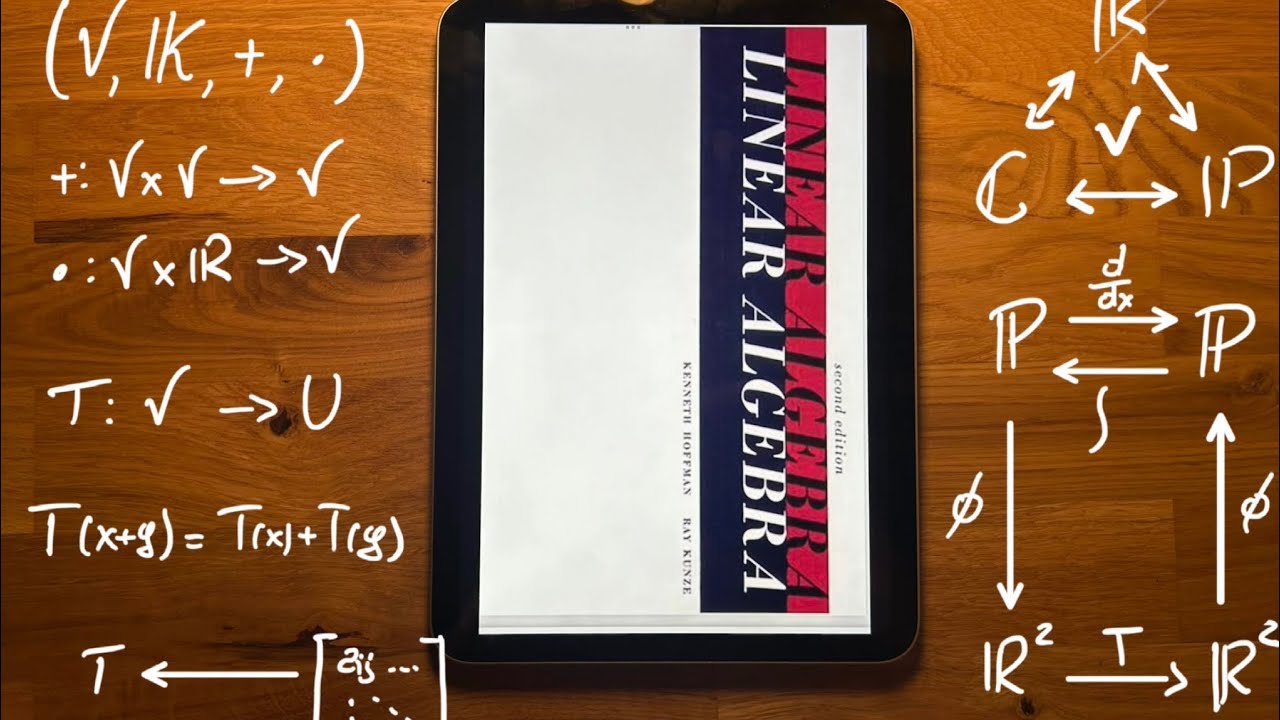
Added:Linear Algebra: Familiarity with vectors, matrix multiplication, determinants, and identity matrices.
Trigonometry: Understanding of basic trigonometric functions (sine, cosine) and identities in 2D and 3D space.
Coordinate Systems: Conceptual understanding of Cartesian coordinate frames and relative positioning.
Basic Physics (Classical Mechanics): Fundamental concepts of rigid body motion and degrees of freedom.
Forward Kinematics & D-H Parameters: Formulating coordinate transformations using the Denavit-Hartenberg convention to locate a robot's end-effector.
Inverse Kinematics: Analytical and numerical methods to determine joint angles required for a target end-effector position.
Velocity Kinematics & The Jacobian Matrix: Mapping joint velocities to Cartesian velocities and identifying kinematic singularities.
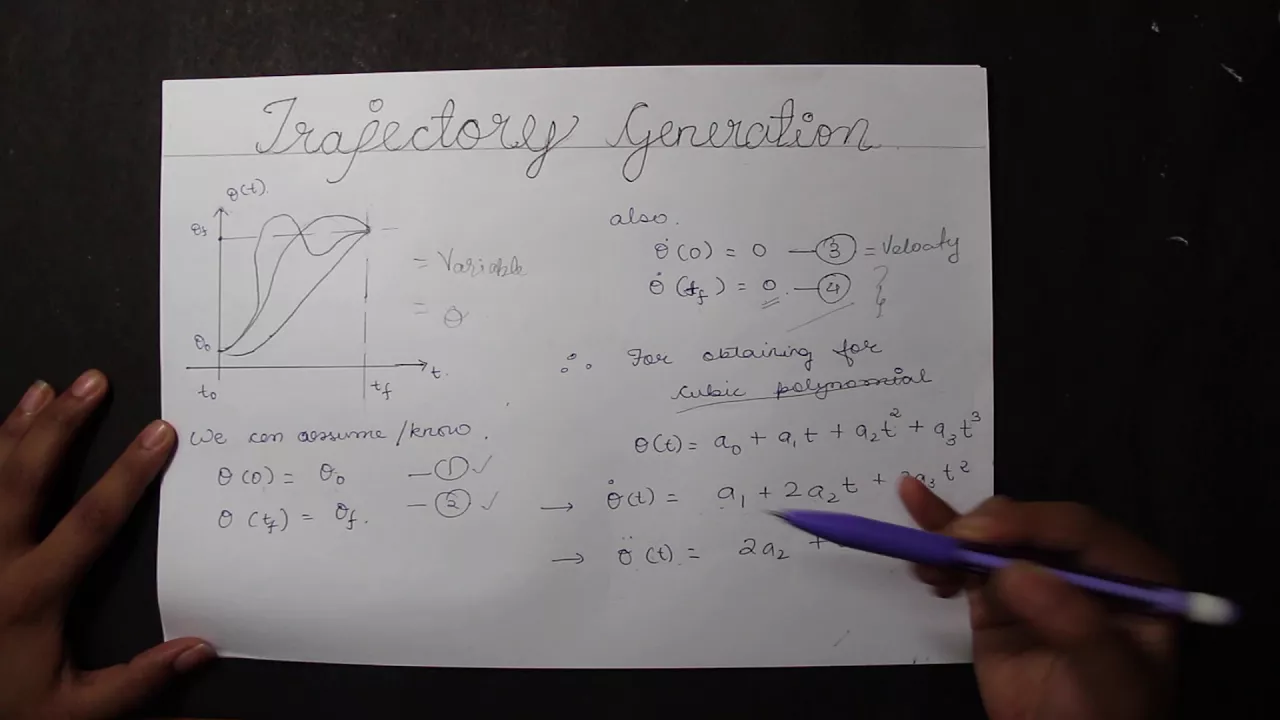
Trajectory Generation: Planning smooth paths and timing laws for manipulator joints to transition between configurations.
Robot Dynamics & Control: Applying Newton-Euler or Lagrangian formulations to model forces, torques, and feedback control loops.
268.5K views1.4Klikes1:08:11Original Release: 2008-07-22
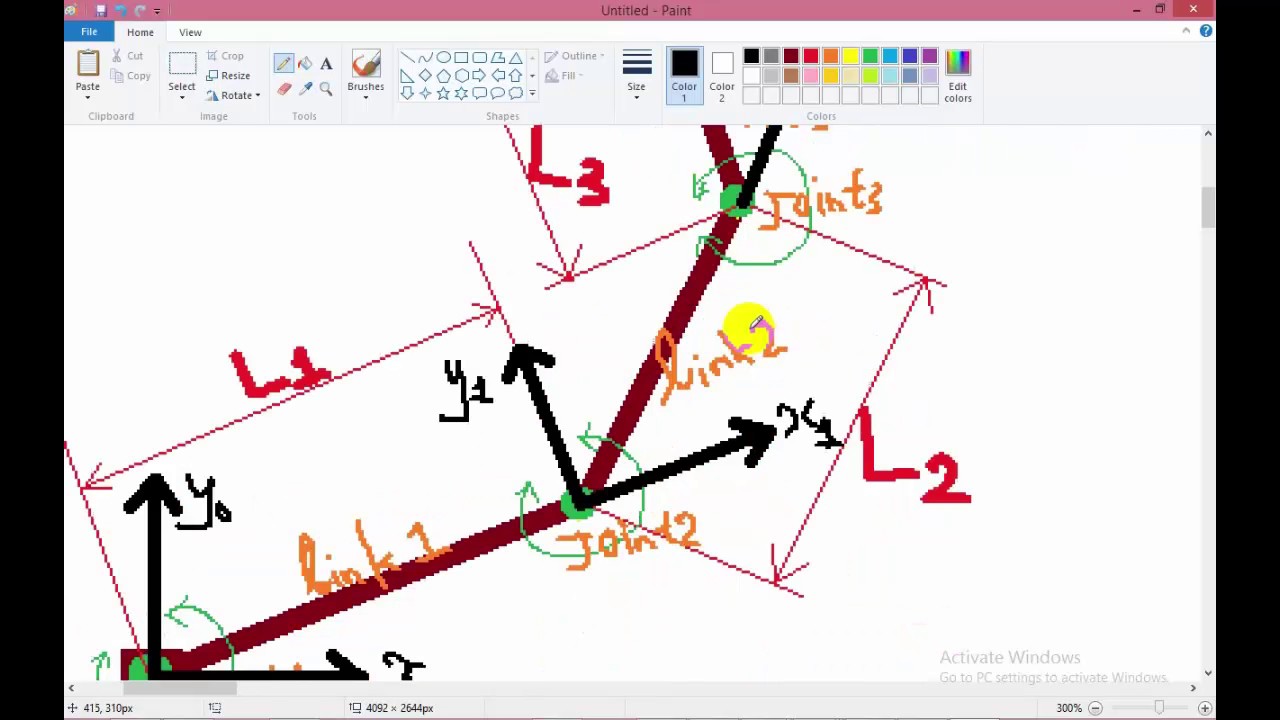
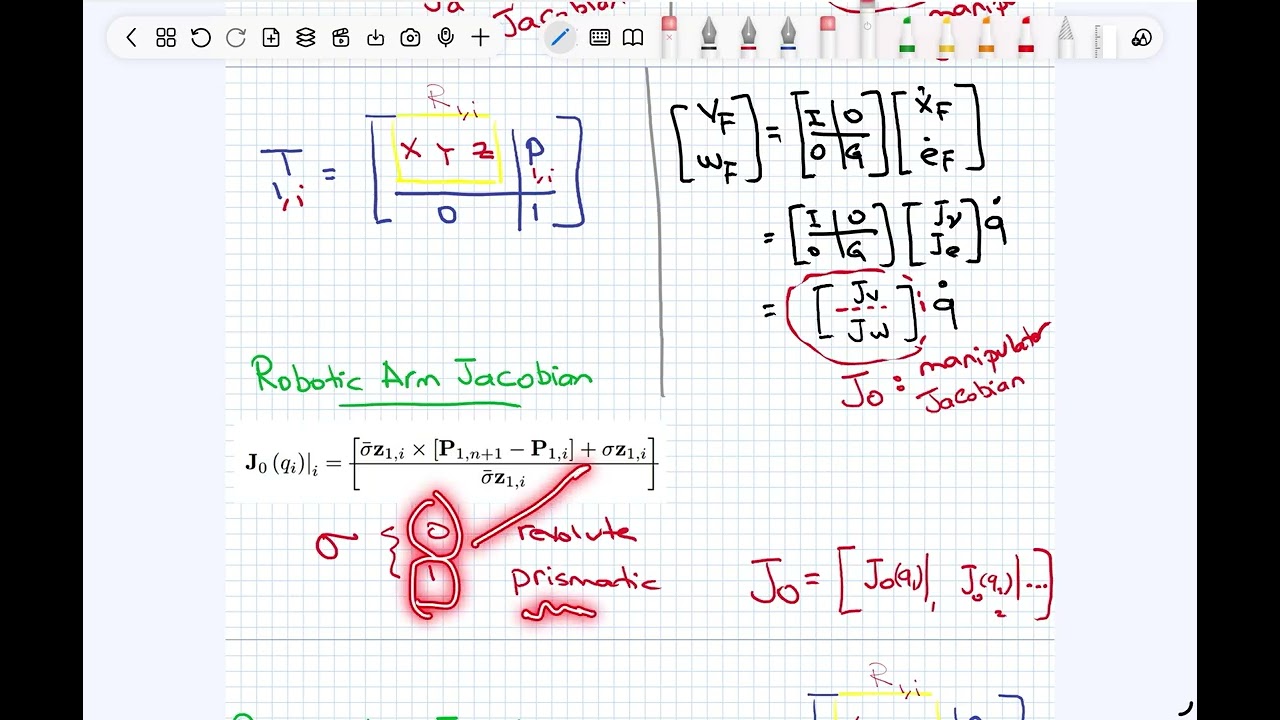
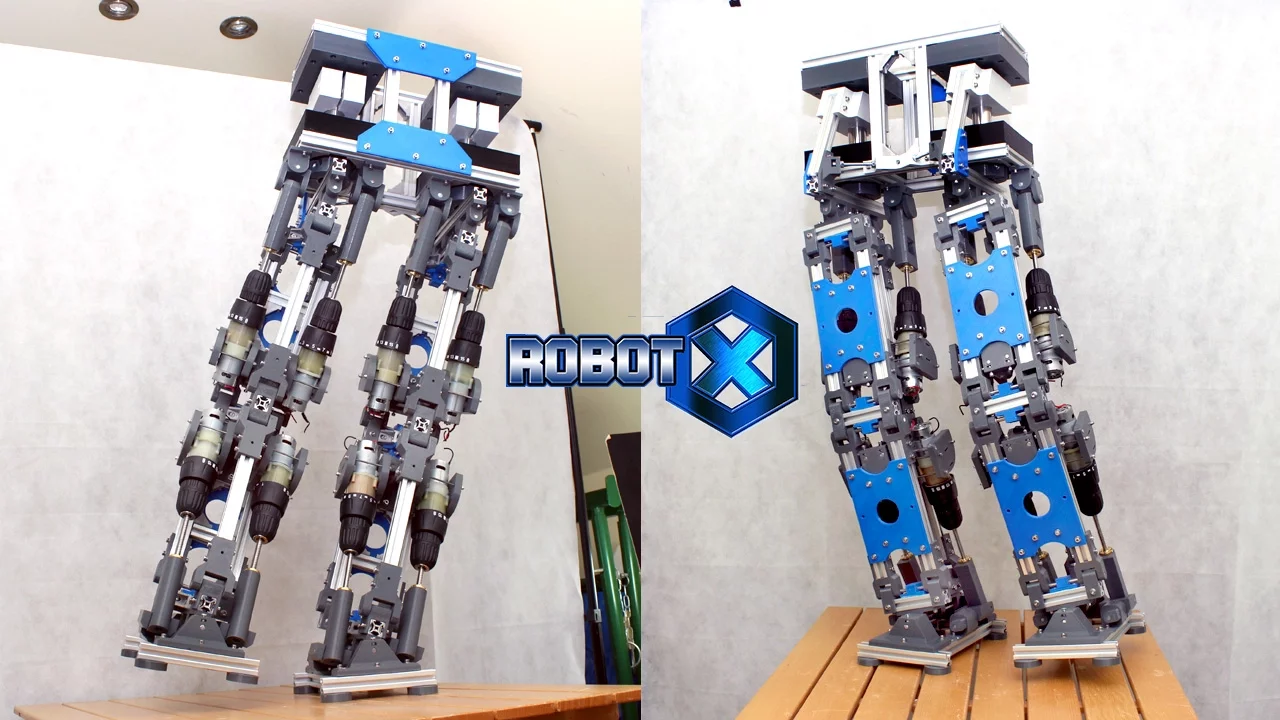
this presentation is delivered by the Stanford center for professional development okay let's get started so as always uh the lecture starts with a video segment and uh today's video segment comes from 1991 and uh from uh the group uh at British Columbia and it deals with byet walking so there should be some sound [Music] okay so this is passive walk no Motors [Music] counting on Bal [Music] V well maybe we need some Motors right okay So today we're going to start covering kinematics and kinematics as I mentioned last time kinematics is very very important the models that describe the robot position uh the robot uh frames and links and Joints so we're going to go over the basics in uh descript describing a task the models that we can use to uh determine the position and orientation uh of the end of factor then obviously when we determine the location of a link we need to be able to transform that description to the next link or to describe the position and orientation of the end factor in a previous link so we need really to uh handle Transformations then we need to discuss how we represent uh the position and orientation there are many different ways uh through which we can describe a position or an orientation and we will discuss few uh different representations and uh I'm going also to describe a little bit what is a manipulator what is a robot arm and then uh what are these joints what are the degrees of freedom of a manipulator how we count represent uh the position of a manipulator so a manipulator is defined by a set of links connected through joints the first one the first of those link is fixed we call it the base and the last one is actually the this gripper the the whole purpose of the manipulator is really to move this gripper and place it in space uh to do manipulation obviously uh later we we will see that it is possible to use the body the links themselves to do manipulation we call it whole body manipulation but for now we are really interested in locating this end of factor uh at the same time locating any other links uh that is moving so we will see that there are two types of joints that we are going to consider there will be other possible type types of joints but we can see that any set of joints could be reduced to those two type of joints the revolute joints and the Prismatic joints a revolute joint allows you to rotate about a fixed axis and a prismatic joint allows you to translate about a fixed axis and this motion is done along or about one axis so it is one degree of Freedom motion so as I said we have links and those links are in number of n we're going to call n is the number of moving link plus one base link the fixed link and we have joints of two types revolute joints and Prismatic joints so the idea is we are going to work with one degree of freedom and this is interesting because knowing that we have only one degree of Freedom joints then we will be able to connect these to the generalized coordinates as we will see and as I said if we have a joint like a spherical joint would you know what how many degrees of freedom a spherical joint would would have two three three yeah three so what we would do is we will then use three revolute joints with zero links length and then we will introduce uh these joints and links to represent a pris uh a spherical joint okay okay now we have this manipulator in this configuration and the question is how can we represent the configuration of the manipulator what would be a good way to represent the configuration because we need to know where the manipulator is in space with respect to a fixed frame so well I mean there are many different ways we can go to each link and try to to fix that link so we can take uh maybe a given link and say we're going to locate this link with several vectors that lock it there so if we use like three vectors at three different points the link is defined and that would give us the configuration of that link now we are going to use in that case uh three vectors each Vector has three parameters in 3D so we have nine parameters to describe each link and we have n links moving links so we will need N9 NS a lot of parameters and this is this would be one of the representations so the description of the position using a set of configuration parameters can involve a large number of parameters and each of them is fine so any set of parameters that describe fully the configuration is called a set of configuration parameters so in this case here we have nine parameters per link now we are really interested in a particular set of parameters configuration parameters that has minimal number of parameters involved we don't need all these parameters in that three vectors three points because the points are fixed so so there is a Constance between these points and that is going to show us that these three vectors are not independent in fact we will see that we will be able to describe the configuration of the link with much much less parameters so that brings us to generalized coordinates so a jaliz coordinate is essentially a set of configuration parameters that brings parameters that are completely independent and working with those coordinates is very interesting because you can use them to find the Dynamics later as we will see we can use them we can count them and the number of geniz coordinates gives you directly the number of degrees of freedom of your robot so let's uh analyze how many parameters you would need to describe the configuration of a manipulator with a set of geniz coordinates so we have this manipulator connected through uh joints and in order to count how many degrees of freedom we have what I'm going to do I'm going to remove the joints so let's remove these joints now you have n rigid body in space right if we take one of those regid B this one of the links how many parameters you need to describe the position and orientation six three for the positions and three for the orientation so with six parameters we have a description of one rigid body now we have n moving rigid body in total we need 6 n now let's think about those constraints introduced by the joints if we put back the joints we are going to introduce constraints now a joint has one degree of Freedom right we said one degree of Freedom so how many constraints the placement of a joint is going to introduce each joint will introduce how many constraints five five exactly because it is going to allow only one degree of Freedom so if we think about the number of constraints we will see that we will have five constraints per joint and that leads to five n constraints yes re joint whether it's a um position parameter or an orientation parameter that's well let's let's look at it so if we have uh a joint it's going to introduce constraints on the rotations and uh the position so if we place a revolute joint it's not going to allow any displacement and it's not going to allow rotations about orthogonal axis to the axis of rotation so that's five P strengths three positions constraints and two rotation constraints in the case of Prismatic a prismatic joint is not going to allow any rotation it's just translating and translating about one axis so the two other axis are eliminated doesn't matter it is still five constraints so now let's do the count so we said we have six n parameters before placing the joints and now we place the joints and we have five n constraints so the question to you how many degrees of [Music] freedom it is going to be it is going it is going to be the difference right so 6n minus 5 n the answer is n Okay so indeed we have just n degrees of freedom which is really nice if we have one degree of Freedom joints in a manipulator in a robot we can we can be sure that we are going to have nend degrees of freedom the number of joints now I'm talking about a manipulator with fixed base if I take a humanoid robot and I do the same things at a given configuration if we lock one of the feet of the humanoid robot this is correct but a humanoid robot can move so in that case the base is moving and the base has six degrees of freedom so it will be n + 6 unfortunately those last six degrees of freedom of the base are not not actuated there there are no Motors and that what makes the control of a human age robot very hard however in the case of a manipulator if the basis fix we have n degrees of freedom for n jointed robot okay clear okay so let's go to the end of factor now the end of factor is this last RIT body in the system system so it has all the freedom be before to position and Orient the on end effect so we can think about a point at the end of factor that we are locating and we can think also about the orientation of the end of factor how we Orient this ector so there is a sort of frame attached to the ector rotating with it and that allow us to describe the position and orientation of the end Factor so if we have just one end of factor in the robot essentially we have just one rigid body at most we need depending on the freedom because some some robots can only move in the plane some robots can move with restricted rotations or orientations or positions so at most we're going to have six degrees of freedom for the end of factor but again we can represent that freedom of the end factor that is the configuration of the Endor with many different parameters so we can talk also about configuration parameters for the end of factor and we can see that some of those parameters can be dependent and when they are independent they form a set of generalized coordinates and then we can have a description of the end of factor using a set of generalized coordinates task coordinates or what we call operational coordinates so if they are just configuration parameters without the condition of Independence then we can talk about these M parameters describing the position and orientation of the end of factor so this is the definition that is we have a set of parameters describing the position and orientation with respect to a fixed frame let's see give me an example any example of set of parameters that describe the position and orientation of a rigid body and a factor so to describe the position and orientation of a rigid body this is arid bu here is arid bu I would like to describe the position and orientation with respect to this Frame so well for the orientation sometimes tilt uh ya and roll okay you you you use three angles so if we use uh like three alert angles or fixed angles we can uh find this position orientation for the ector and for the position XY X Y and Z so we can take a vector and locate one point fixed point so with one vector and three angles we can describe the position and orientation of the end Factor yes isn't that perfect six parameters oh I was talking about how a joint introduces five constraints on a rigid body and uh instead of so a rigid body so imagine the base imagine the next rigid body it's was free completely to move and now I put a joint and now it has only one degree Freedom left yeah so so here we have a very nice example of of uh um a representation that is minimal representation so anyone can give me a representation that is not minimal three points select three three vectors to three different points that will be nine parameters so that would be a set of configuration parameters well we will see also that have you heard about alert parameters how many of them you have four so you Quan or well the reason we will we will see later that when we use three angles we have a problem we have a problem tracking this rotation continuously there are configuration where the representation becomes singular and we need a different set of parameters really to keep track of the orientation and we introduce ler parameters have you heard about Direction cosines no vaguely okay you heard about rotation Matrix we're going to see this in a few minutes but you heard about rotation Matrix right so you have a frame you have a frame and you you're looking at the relationship between the two well the rotation Matrix if you take this rotation Matrix between two frames so the description of this frame with respect to a fixed frame essentially if you take this Matrix which is three columns of three vectors so it's nine parameters well if you take that Matrix these three vectors uh these three vectors form the so-called Direction cosines of the this frame with respect to this Frame and we can use directly that Matrix that description so we will have nine parameters only for the orientation plus the position three parameters so we will end up with 12 parameters describing the end of factor and we will see why we will go that way or why we go to other parameters and we will examine those singularities of the representation so a particular set of coordin that we are interested in is this set of independent coordinates we call them operational coordinates or task coordinates essentially there we are looking at the operational point where the robot is acting where we Define the task so for instance the task could be if I'm going to grasp the task is somewhere in the middle between the the two jaws as I move this is the point I'm controlling but if I have a tool the task will be here and the operational point would move depending on where I'm going to do the the interaction so this is the first definition is operational point so you have three degrees of freedom and then you add three degrees of freedom like the the angles the three angles to form a set of independent parameters and that gives you a set of uh generalized coordinates or operational coordinates so this number uh so before you remember it was M if it was not independent when it is independent we call it m0 to to to point that this is independent set of parameters and that gives us again the number of degrees of freedom of the end Factor so an Endor of a robot with six degrees of freedom moving in the three-dimensional space the end Factor itself can be positioned anywhere and oriented anywhere so it has six degrees of freedom and that is the most number of degrees of freedom it can have have now if we if we go to the plane if we have a robot J is moving just in the plane how many degrees of freedom you expect to see for the end of factor my plane a robot it's moving only in the plane cannot go out of this plane for for the position how many we need in the plane two X and Y and for the orientation one only one so three so if we have a planer robot then we will be talking about m0 equal 3 and you have different robots with different characteristics that ends up to gives you m0 that is equal to four or five or six but at most you have six for one and a factor so now we defined operational coordinates or task coordinates we defined joint coordinates and here is an example if we take a a planer robot so just uh three revolute joints Theta 1 Theta 2 theta 3 and this robot is moving in the plane so we have we have U sort of representation of the joint so for uh here you have uh I don't know 80° U 45° and uh 50° representing this configuration of the of the manipulator so one way to think about it is to go and represent this whole manipulator as a point in a three-dimensional space and that space is Theta 1 Theta 2 theta 3 and that would be the joint space where this point Theta which is the vector Theta 1 Theta 2 theta 3 represents the configuration of this manipulator so we call this the joint space or the configuration space and this space plays a very important role in motion planning we we talk about configuration space and we talk about planning motions in configuration space so planning the motion of theta and we talk also about all these obstacles that we have in this space in the physical space that we map to that space that becomes configuration space obstacles or C obstacles that represent the uh how obstacles for in the real world are mapped to that abstract configuration space and then we can do the planning around those obstacles now for the end of factor we as I said we locate the end of factor with a vector XY but that doesn't Define completely the pos position and orientation of the end Factor we need also to define the orientation or some angle so we need Alpha and then x y and Al represent fully the position and orientation of the ector and that defines the three coordinates operational coordinates for the IND Defector and obviously we have with that a space the operational space which is now the combination of X Y for this example and the orientation Alpha of the end factor and that is a point so the robot is reduced uced to a point Theta in configuration space and its end factor is reduced to a point XY Alpha in the operational space and that represents the manipulator and the Endor now these two spaces so the first space is fully describing the configuration of the robot but imagine that we add one more joint on this robot the ector is fixed but the robot configuration can vary because of the redundancy we introduce by adding one more joint so redundancy in this example here you can see we have four joints and the end Factor still has three degrees of freedom so for the same configuration you have different possible configurations of the structure of the links and that means we have redundancy so we talk about redundancy and we call the robot redundant if the number of degrees of freedom of the robot n is greater than the number of degrees of freedom of the end Factor m0 so if we have this situation m0 here is equal to 3 and N equal to 4 then the robot is said to be redundant and redundancy is very important in order to to reach and have accessibility you cannot just work with uh the motion of the robot with for instance three degrees of freedom in the plane you're going to hit obstacles so when you have redundancy that helps you to move around obstacles and position the robot in different configurations and we measure the degree of redundancy by the difference of N and m0 okay so essentially we're not going to really discuss redundancy which is very important but we're going to uh to focus on non redundant robot F first in fact uh in Spring we will cover extensively redundancy we will talk about the use of redundancy to control control the robot make make uh use of the mechanical advantage the dynamic reduction that is introduced by redundancy and also the motion planning uh in collision avoidance using redundancy and how we combine and control redundancy in a way that would allow us to achieve a task while redundancy is is maintained to achieve different criterias and uh different goals so redundancy we will not not come back to it uh in int robotics uh but it is a a very important notion that you you need to at least know about in term of the def its definition what we're going to do we're going to go to the basics now and we're going to start by building the models that would lead to the forward kinematics so I'm going to start with the simple definition of a vector that is def finding a point in space and we are going to go from there to building the models for representing an object in space which requires position and orientation and then we connected these objects but before that we will talk little bit about representations of those different parameters I mentioned earlier so we will talk about iller parameters we will talk about lert angles and Direction cosines and uh probably this week we will cover all of that we will cover Transformations how we move between frames and we will be ready next week to build the forward kinematics so a point in space a point in space p how can we Define a point in space and what are the things that really fix uh that point or Define it with respect to some uh reference so what is really important is to think about a point is the fact that the definition of a point everyone of you probably think vectors right we can use a vector to define the point but what really is going to determine the vector is another point a reference point the the origin that uh you're using to define the point if you change the origin you will change the vector so we will talk about the description of a point with respect to another point to some origin and this point is going to be represented by a vector p and this Vector P will describe this point with respect to this origin if we change origin we will change the vector okay so if we have two points we Define again the origin and then we will have two different vectors representing this point and these are those vectors built by taking the connection between the origin to the point very simple now I'm insisting in this because now we're going to introduce this origin and then we will be able to describe the vector component so the vector is independent of this X Y and Z which frame we are taking now we're going to put a coordinate frame and then we can express this Vector in the that frame if I change the orientation of the frame the vector is the same the coordinates the components of the vector will change and we're going to be interested in those Transformations between different descriptions that involve different frames we will work with oron normal frames X Y and Z and we will go from one frame to another so in this case X Y and Z and we did small rotation and so about the same origin and we end it up with a different frame and we need to know how we can take a description of the coordinate of p in the the frame X Y and Z and then go to a description in frame X Prime y Prime and Z Prime and this is going to happen using Transformations now this transformation is just rot in the the the uh the frame about the same point but we might have a prismatic joint and then we are going to translate the origin so there will be a translation so we need not only to deal with rotation in the frames but also translations of the frame well a frame really is related to something Beyond a point the fact that if if we we just are we're working with points we we just don't need really to worry about the whole orientation what is really happening is that you have different points on a rigid body and when we rotate we are kiing the distance but the orientation is changing so a frame is really related to the description of a rigid body so if we take this rigid body take a fixed point and attach to it a frame I'm calling this Frame B so the coordinates are going to be described with respect to those axis XB so this is the frame B we denote XB YB and ZB and the frame itself is B and the question is how we describe the frame B with respect to a fixed frame a so as you know we need to find the relationship between the origins so there is an origin of frame a An Origin of frame B we need this Vector between the two and that is defined by a vector and this Vector is going to locate the origin of frame B with respect to frame a and we have its description in frame a so this is PA the orientation of the frame is these vectors XB YB and ZB these vectors can have descriptions in different frames now we are describing them in frame a so XB in a and this is the notation we denote XB and here we put a to say these are the coordinate of XP in frame a so these vectors are going to describe the rotations of B with respect to frame a If It Moves so essentially if you think about those vectors and the relationship with the frame a we really going to find the rotation Matrix which is the the first uh model that we need really to use in order to describe the rotations of one rided body with respect to another rid body so because we are concerned with the just the rotations I'm going to slide this Frame and make PA equal to zero so we will just move to the origin and just think about the rotation and in this case we will focus only on the rotation Matrix and the rotations of that frame with respect to frame a so we're now concerned with the rotation of frame B with respect to frame a this rotation is described by a matrix it's called the rotation Matrix and it has nine components we are calling them R11 2 1 31 these three columns okay I know some of you know very well the rotation Matrix how many of you knows like perfectly the rotation Matrix I remember how many of you remember okay all right this is very important so pay attention those of you are seeing this for the first time but I I I think I'm sure everyone has seen it some in some form or another so what I'm going to do I'm going to say State a a description of what is the relationship between XB this Vector XP and XA XB Define find in frame B is obtained by this rotation Matrix and the vector the resulting Vector is XB in frame a so the description of XB in B is now transformed into a description of XB in a using the rotation Matrix what is XB in b 1 0 0 uh the X vector in its own frame has unit uh one unit along the X Direction so it's 1 0 0 so what about y it is the same thing 0 1 0 right about z0 Z1 you you these are the unit Vector x y z in their own frame right and now using the rotation Matrix we have the description we have their component in the a frame so the rotation Matrix is basically just this right I'm just using that definition so if you multiply the First Column is XB in a the second column so what is the rotation Matrix the rotation Matrix between b and a is simply the component of x b in a component of Y in a and component of Z in a okay so always remember this definition this is very very important because uh we are going to find the rotation Matrix uh through many different ways but sometimes you are looking at a problem and you are looking at the frames look at the component of that frame in the other frame and you you will make sense of your result and this is all always the definition the rotation Matrix essentially The Columns of the rotation Matrix are the component of the uh uh axis x y z of the new frame in the reference frame okay all right so this is the definition of the rotation Matrix from B to a it is XB in a YB in a and ZB in a so how do you obtain XB in a how do you obtain the component of XB in frame a you just do the dot product so essentially if you do the dot product of x b with X Y and Z you will obtain XB and a right you agree good so which means the rotation Matrix is is essentially the dot products of XB with a x y and z YB with X Y and Z ZB with X Y and Z right okay good so look focus on this and look look look look look look look at this row do you see anything any anything like special so here you have x x x XYZ here you have anything constant x a x a XA so it's the dot product of x a with XB YB and ZB which is you see this which is X A and B written as a row which means it's transpose this is very interesting because if we start looking at these properties we see that this rotation Matrix is either the component of b in a or the transpose of the rows of a in b so b in a a in B inverse relation going from B to a going from A to B so going from A to B we are able to see that it is just the transpose which means that b to a the rotation from B to a is equal to the transpose of a to B A to B is the inverse of P to a so we have this property if I'm trying to compute the inverse of the rotation Matrix B to a which means it's a to B it is simply B to a transpose so the transpose of this Matrix is simply I mean the inverse of this Matrix is simply its transpose and that's a very important property and this property comes naturally because the rotation Matrix formed with these unit vectors that are orthogonal so the Matrix is called utto normal and this uton normal Matrix is always going to have this property its inverse is its transpose all right example so can you compute the rot I think you have it don't look at your notes now for this examp so could you give me the First Column of the rotation Matrix from B to a what is the First Column going to be so it is the component of XB on a and xB B on a you see XB and x a are aligned so so anyone could say what are the component so one z0 what about y y has a component only along the z-axis right Y is only along the z-axis and zero above others what about Z Z has a component along the minus y AIS and its full component minus one z z very simple example but it illustrates what we have done essentially what we are doing we are doing either dot product between the two vectors or looking at the component of that Vector in frame a at the same time if you think about this this is XB in a YB in a and ZB in a this is our definition and in the other direction if you look it is X a transpose in B so if you take x a and express it in B it's going to be 1 Z 0 transpose so these rows represent x a in b x y a in b and Za in B all right so now we know the rotation Matrix let's let's build finally this representation for a rigid body so we know how to represent the frame the rotation of the frame we need the translation of the origin and by combining X the description of the rotation that is those vectors and by locating the origin of the frame B with respect to a we are going to Define fully the frame B with respect to frame a so the frame B is essentially defined by this rotation Matrix B2 a and by the location of the origin with respect to a Okay so there is uh different ways of thinking about the use of those rotation Matrix matrices and in fact uh we can think about it as we have done so far which is to say we have a vector P we have a frame a and a frame B and essentially we are expressing the component of frame B in frame a in frame B and we are looking at the relationship between the two so this is what we call mapping that is we are changing the description of a vector from one frame to another frame but the vector remain the same there is another way of thinking about it which is so this is uh the way we are looking at it you have a vector p and this Vector p is going to be described by it's dot product with a to give you its component in a and this is the same thing I'm just removing the vector outside and putting it as a matrix so it's a transpose Y and Z transpose you see this writing it's the same writing right I'm here I'm I'm doing Dot product and just if you move P outside it means you are doing that multiplication with the different uh rows so now if you have this relation you can say p can be expressed in any frame I mean this operation could be represented in any frame which is let's select B the frame B or C or D so but you have to be consistent you have to take the same description and if you do that essentially you are obtaining that mapping that is you are obtaining p in B rotated to give you p in a so this is a changing the description of the same Vector P from one frame to another frame in the translation we are going to start by considering the same problem but while maintaining the same orientation of the frame so I'm going to slide this Frame and change the location of the origin of the frame so frame B and frame a has the same orientation and we're going just to move uh along the direction of the vector P so if we have a vector if we have a point in space it is located with respect to origin B and described by the vector P the same point in space is described with respect to another origin a with a different Vector PA a so it is the same point but described with with respect to two two different points two different Origins attached to two different frames and you end up with two different vectors so this was our initial description in frame B and now we have a new description and this transformation is resulting in two different vectors you have to realize contrary to the case when we were doing just rotations now when we do a translation we are going to change the description by changing the vectors involved in the description so so this operation that involve a translation of a vector P defining this origin of the frame B it's changing the description from origin B to origin a and the relationship between the two that is the relationship between the Green vector and the red Vector is essentially this relation that is giving us the vector with respect to a origin a as the sum of the vector with respect to origin B and the translation of the origin so this fact that we have now two different vectors is going to uh appear later in the homogeneous transformation and make the transformation uh little bit different from rotation matrices because we are introducing a translation and we are introducing this nonhomogeneous relation in the model so when we come to uh General transformation so now I'm saying I'm going to have a description of this this same point P but with respect to an arbitrary frame B that is rotated with respect to a then we need to account for this rotation and that means that in the description here it's not simply the sum but I have to do the sum with respect to descriptions in the same frame that is I cannot add this Vector directly with this Vector I need to rotate this Vector to frame a and that means we have this relation this General relation that is we take the description of P we rotated to frame a we have its description of a and we have the origin description of a and now we can add them together and the result is this Vector we we haven't changed anything we still are talking about this Vector plus this Vector equal this Vector but what we have to make sure is that this description is rotated correctly to frame a all right well this is the general transform and in fact using this applying this between links we should be able to uh compute and propagate go from this link to the next to the next to the next but this description is not uh not simple to carry when you have multiple links because you you don't H it's not like a rotation metrix where with a rotation Matrix if you know the first rotation with the frame with respect between two frames and you know that the the two are rotated with respect to a different frame all what you need to do is to multiply the rotation matrices in here uh you have to carry sums and you have to carry those relations so a better way to handle this transformation is to try to put it in a homogeneous form how can you you do that this is sum of two vectors in three-dimensional space you cannot have it in homogeneous form but if you go to four-dimensional space then you can put it in a homogeneous form do you want to see how H yeah okay so I'm just rewriting the same thing and I'm going to just add one more Row for for nothing so this row is saying 1 is equal to one right if you multiply this vector by this Matrix you obtain the the first relation right and the second part is 1 = to 0 multiplied by the vector p + 1 so 1 equal to 1 but now we have captured the homogeneous property that is this Vector is transformed into this Vector this description is transformed to this description using the rotation Matrix and the translation do you see that and this is what we call the homogeneous transformation it's a 4x4 Matrix you have four component that are doing nothing except help them math to make this transformation homogeneous in that when we go from A to B to C to D then essentially we are going just to multiply matrices but we have to handle 4x4 matrices instead of 3x3 matrices okay so this is this is a very important component now by the way sometimes 0000 01 uh the definition uh is uh on the top so sometimes you define one p instead of but it is ex exactly the same uh computation so here is an example of the homogeneous transformation now we have two vectors I'm taking the frame you remember the frame we the example we saw earlier the example where we had a rotation Matrix with rot rotating about the x- axis so I'm just translating now the origin of B with this Vector 031 so the homogeneous transformation so it is the same rotation Matrix as before and 031 is the vector describing the origin of frame B in frame a and your homogeneous transformation is Here and Now using this homogeneous transformation you can compute the new position of the point P so the point p in frame B is described by 011 this is the the point I'm looking at and to find this Vector you all what you need is to take this transformation and multiply this vector by this transformation but you have to add one so we take the 0 one one we add one and the multiplication leads to 0 2 2 and one you drop the one the answer is 0 22 so if you look over there this was happening in this plane so essentially here we have one and this is two and one and two so it's just two two okay clear okay now that you understood everything I'm going to confuse you uh normal I I mean once you understood mapping now we have to to to to completely change the the intuition now instead of mapping we're going to to so a rotation Matrix I said allows you to uh describe the same Vector in two different frames but now I'm going to take the rotation Matrix and use it to rotate a vector so the vector was here I'm going to rotate it by uh the rotation Matrix so I said the mapping is changing descriptions okay an operator is moving those points in space well that could be useful so you have a vector you have one frame you have a description another frame you have a description now what I'm going to do I'm going to do a rotation and this rotation will rotate the vector so in fact a rotation Matrix which could describe the relationship between the component of a the same Vector in two different frames in this way can be also used as an operator that would operate on a vector P1 to produce a vector P2 and this is very useful later when we compute representations you will find very useful to compute transformation between different frame so all or here is operating on P1 to produce P2 okay so P2 is the rotation applied to the vector P1 and of special interest are those rotations that take place about some specific axis like the x axis or the y axis or the z- axis with some rotation so then you can talk about RX with some angle Theta and that will will be very useful in some of the operations so in general we can talk about a rotation about a k Vector not the XYZ but any arbitrary vector and it rotates a vector P1 into Vector P2 so here is an example this is a rotation about the x-axis so the xaxis is 1 0 0 and the rotation about the x-axis is of theta it is cosine Theta minus s you know this familiar Matrix rotation about the x-axis so if you take P1 which is has component on Y and Z so it's 0 to 1 0 to 1 if you take this much you end up with 01 2 which is over there 1 2 you see P1 and P2 so this is the vector 0 2 1 2 and 1 and now 0 1 2 is 0 1 and two okay translations the same thing we can now instead of describing a point with respect to uh two different frames we are going to translate that point using an operator so in the mapping we take took the vector with respect to B and produce a vector with respect to a in the operator so in the operator this is what is happening we are changing the point we're going from P2 to P1 so this point P1 moved so we have two different points and two different vectors so when you are translating you are thinking about it like in the rotation the rotation we had Vector we have P1 we rotated to P2 now we have here a vector P1 with this translation is essentially is producing is producing this point so I have to remove this you can see it better so we are moving P1 to P2 with the translation uh Q so P2 is P1 + Q so this is an an operator of translation and you can have this operator Q along the x axis y AIS Z Axis or any arbitrary Vector so a translation through the operator Q would result into a different Vector P2 and now you have to describe it you can describe it in frame a or any other frame but through always maintaining the same relation I mean same description for all the vectors when you apply the when you apply the components for describing the frame you have to make sure that Q is is described in the same frame as P1 and the result will be in the same frame so now we can think about this operator as the this operator 11 one that is there is no rotation at all but there is only translation QX qy qz and this is defined by the Q Vector so the translation is done by QX qy and qz and now you can combine the two you can combine the rotation and translation so you could have an operator operating by translating and rotating so the general operator that you can imagine is this operator rotating about some vector k with some angle Theta and translating Q so the point P which was in P1 now is rotated and translated and the result is P2 and this is without any definition of the frame then you define the frame in which you want to express all these vectors but you have to make sure that you are using the same frame for all the operations so this is the most general form of transformation between two different uh points it is the same homogeneous transformation it is the interpretation uh of that transformation whether it is a changing the description or operating and changing the points okay are you enough confused good so two things we we we we saw the transformation it is the same homogeneous transformation that is has two components rotation translation rotation Matrix translation of the origin of those frames and that can give us mapping changing the description and I just discussed the other uh interpretation that you could have which is to change the vector itself and that means change the points describing uh uh those uh uh rotations so when you rotate a a vector you are going from one point to another point or when you're translating you are going from one point to another and you can apply both of them and now we're going to look at the inverse now in the case of rotations the inverse is very simple what is the inverse of the of R rotation Matrix from B to a transpose now for the homogeneous transformation this is not the case we we cannot just say it is transpose that is this Matrix is not auton normal because the presence of this translation so the inverse is not exactly the trans trans transpose of this Matrix but it is almost because if you look at the inverse of this Matrix it involves the transpose of because if you take it by block you you will see that you have the inverse here this is the same the only thing you have here is the description of the inverse of this Vector what is this actually I mean if we were thinking about this inverse it is going from A to B so this is the origin of a in frame B so basically you are just writing here the origin of frame a in B that's it okay so now we know the forward we know the inverse of the homogeneous transformation and it is going to be essential the homogeneous transformation uh we're going to use it to describe the uh kinematic chain of the manipulator and we will see that the this this uh transformation it could be described by those four parameter the DH parameters so we will be able to describe each relation between successive links just using four parameters the DH parameters so I will not reveal the movie segment for next time but unless you have any questions we can stop here any questions no okay we will stop here and we'll see you on Wednesday for
Up Next
12:08
Bio-Inspired Snake Robot Locomotion Explained by Computerphile
@Computerphile
118.2K views•2019-02-06

58:25
MathWorks Virtual RoboSub Simulation Environment | Webinar 2026
@RoboNationInc
209 views•2026-03-10

66:36
Robotics Lecture: Frame Attachment & Forward Kinematics
@stanford
85.8K views•2008-07-22
25:22
Micromouse: The Fastest Maze-Solving Robots on Earth
@veritasium
23.5M views•2023-05-24
Related Study Plans & Knowledge Roadmaps
Structured learning paths in Robotics
robotics
Building Delta Robots: Kinematics & Pico
01Foundations of Delta Robots & Mechanical Design
02Electronics and Microcontroller Setup with Pi Pico
03Delta Robot Kinematics and Coordinate Math
+ 3 more learning modules
65h6 modules
Explore Roadmap
robotics
Building Ballbots: Dynamics, Kalman & LQR
01Embedded Electronics & Omniwheel Actuation
02Ballbot Kinematics & Rigid Body Dynamics
03IMU Sensors & Kalman Filter State Estimation
+ 2 more learning modules
42h5 modules
Explore Roadmap
robotics
Micromouse: Hardware, PID Control & Flood-Fill
01Electronics & Teensy Microcontroller Basics
02Sensors and Actuators: Motors, Encoders & IR
03Precision Movement: Implementing PID Control
+ 2 more learning modules
35h5 modules
Explore Roadmap
robotics
CDPR: Kinematics, Arduino & Winch Control
01Foundations of Arduino & Basic Electronics
02Stepper Motors and Winch Mechanics
03Kinematics of 2D Cable-Driven Robots
+ 2 more learning modules
28h5 modules
Explore Roadmap