









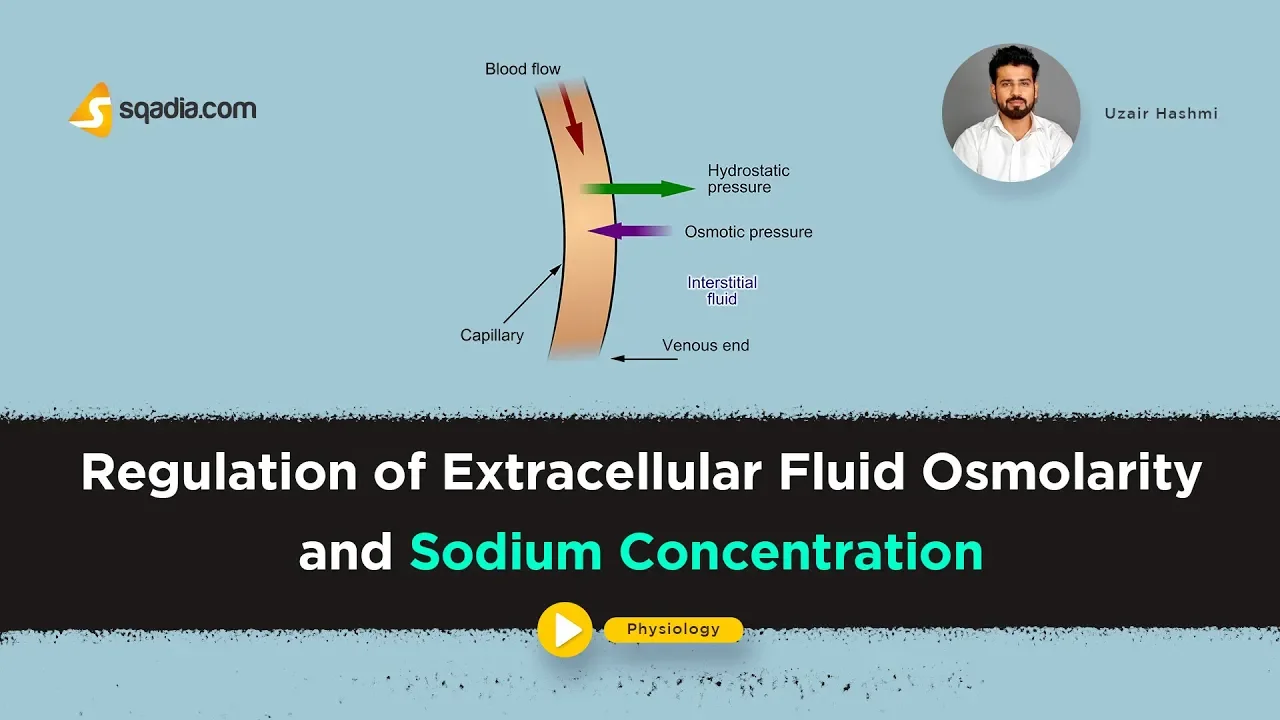
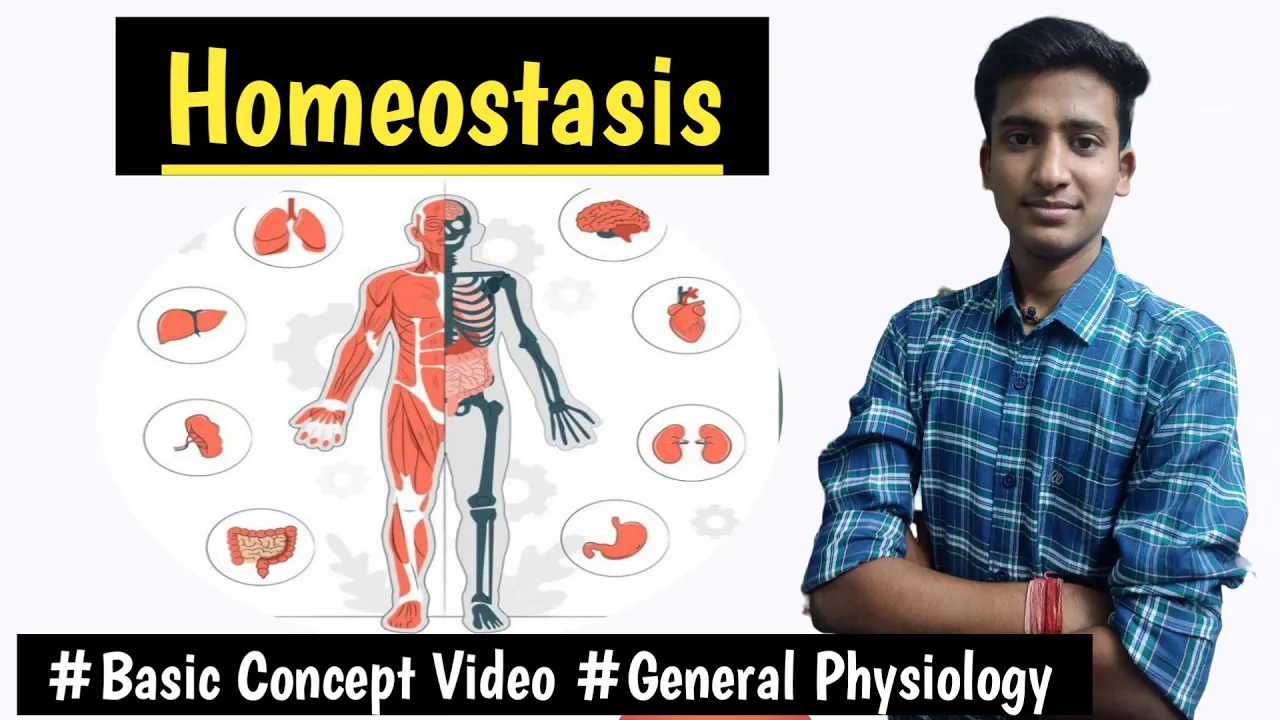






Homeostasis is the body's ability to maintain constancy in essential parameters like blood pressure, blood glucose, temperature, and ionic composition through three control systems: negative feedback (which corrects deviations, such as the baroreceptor reflex for blood pressure), positive feedback (which amplifies responses and can be both harmful, like in hemorrhagic shock, and beneficial, like in ovulation and labor), and feed-forward control (which anticipates needs before actual stimuli occur, such as gastric juice secretion when thinking of food). The human body consists of approximately 60% water in adults, divided into intracellular fluid (about 28L, 75% of total body water) and extracellular fluid (about 14L, 25%), which further divides into plasma, interstitial fluid, and transcellular fluid. Key determinants of body water content include sex (males have slightly higher water content than females), body fat percentage, and age (children under puberty have approximately 75% body water).
Homeostasis, Body Fluids & Control Systems | Physiology Lecture 1
Added:Hello. Good morning everyone. Today we are going to start a series of physiology lecture. The style of the lecture that we are going to adopt will be classroom teaching. In this series of lecture every day we would be understanding one topic from the systems in details and that way we are going to cover all the systems and physiology in details. The purpose for this is for you to have a very clear concept on physiology and that is important because if you have a clear concept on physiology it will help you connect to the clinical subjects especially pathology and internal medicine.
To get started with we start with the first topic in the general physiology which is homeostasis.
Now what does the term homeostasis mean? Now if we go by the definition the meaning of this homeostasis is maintenance of constancy.
Now when I use the term constancy what do I mean? What is constancy?
Constancy means like there are certain parameters of the body. The parameters that is essential in our body to maintain the physiological function of our body are the blood pressure.
Then we have blood glucose.
we have temperature and also various ionic constitution.
Okay. Now every day when we wake up in the morning right after we sleep this there are certain changes that happens in the body. Say for example when we wake up the heart rate changes which also affects the blood pressure. Every time we have a meal then also there is spike or increase in the blood sugar but that does not make us fall sick. That does not make us go to the hospital.
Have you wondered why that happens?
Because of the system that are helping in maintaining of the constancy. So systems in homeostasis.
Now systems that are helping us to maintain the homeostasis are primary of three types. They are the positive feedback mechanism.
Then we have the negative feedback mechanism. And third we have the heat forward control system.
Now one thing that one must remember about the system is that none of this system is like so perfect that it will 100% correct the changed parameter but all this system will make sure the normaly the constancy is nearly maintained. Now we will start actually with the second parameter that we discussed here which is the negative feedback system. Now what happens in this negative feedback system here? Anything anything that increases a response is immediately is sensed by a special receptor which is present in the various blood vessels especially in the iota and all of it we will discuss as we move into the systems. Now this is sensed by the receptor which we call as the stretch receptors.
See the term stretch.
Stretch means when the blood volume increases the blood vessel gets stretched and the receptor in that feels that sense that there is increase in the blood pressure. As soon as the stretch receptor feels it, what it does next is it immediately it immediately via centers in the medela.
Sense correction mechanism to the periphery especially to the sense correction to the structures like blood vessel and the heart. So their function is altered like the heart rate is decreased by a mechanism that we will discuss. The blood vessel also get dilated so that the blood flow also decreases. Now all this thing together will correct the blood pressure to near okay to near normal. So what do we see?
Whenever there was increase in the blood pressure immediately via this reflex which we call as the barrow reflex there is correction of the blood pressure. A beautiful way in which this negative feedback mechanism work is also another very good example is also the hormonal or endocrine functions.
Okay. So here in the endocrine functions what happens in the hormonal or the endocrine functions what happens hormones like whenever there is increase in certain hormone like thyroid thyroid hormones when it is increased in the circulation ction it will decrease or rather it will inhibit the thyroid stimulating hormone as a result of which the further formation of the thyroid hormone in the blood will be stopped that way the normal level of the thyroid hormone is maintained.
Now second this negative feedback mechanism how do we remember there are like multiple examples and the way to remember is by a classical pneummonics like you know C L A S P. Now this C actually stand for the mechanism of coagulation of blood.
L is the LH like you know search.
A is the action potential.
S is the calcium entry in the cycloplasmic reticulum and E is the part region. Okay, this is how we remember the maintenance of the NOS.
coming through the positive feedback mechanism. In positive feedback mechanism, the whole mechanism is different. It is nothing like the negative feedback mechanism because in positive feedback mechanism here it is quite contradictory to the negative feedback mechanism here actually the normal is disrupted.
Yes, you heard me correct. it is disrupted. The normaly is not at all maintained. What happens in the positive feedback mechanism? The mechan thing that happens in the positive feedback mechanism is that this apprecates the response.
Okay. And it is a vicious cycle. It is a vicious cycle. Vicious cycle means if this positive feedback mechanism is allowed to go on then the homeostasis instead of being maintained it will get broken up. So few examples we are going to discuss. You say a person a person suffers from hemorrhagic shock. Now what is hemorrhagic shock? It is certain loss of large volume of blood from the body. Now if this happens what will happen you know this thing it will deliver it will deliver less blood to the heart.
Okay. Now when the heart see that there is very less blood coming to the heart then it will start pumping more. Though the heart is getting weaker here what is happening? This will actually weaken the heart muscles.
when it weakens the heart muscles, the heart feels like it is not getting enough blood to pump to the periphery.
So in this trial, in this process, it will try to pump it will try to pump even stronger.
So this tendency of the heart to pump the blood whatever is coming to it though it is in very less quantity because the person is having loss of blood maybe due to some accident due to some mishap anything. So this tendency will further weaken the heart ultimately ultimately causing arrest of the heart. So here you see if positive feedback mechanism is actually allowed to happen then rather than restoring the normaly it is pushing the person towards a fatal condition the person is going to die. But this positive mechanism positive feedback mechanism is not only fatal it is also useful in certain physiological processes. The useful the useful part of positive feedback mechanism.
Now what is the useful part of this positive feedback mechanism?
This helps in the example one. It helps in the ovulation.
Ovulation.
It helps in the ovulation. How does it help here? Before like 24 to 36 hours prior before to oulation the estrogen level increases. It becomes very very high. Now this estrogen level in turn increases the LH hormone luteinizing hormone that's a hormone LH hormone to increase by many fold. Now this increase the sudden spike in the LH hormone ultimately it results in release of over. So this is one physiological process in the body in which the positive feedback mechanism is actually helping. Another important mechanism in which the positive feedback mechanism is helping that is example two which is the partation.
Now in partation the role that the positive feedback mechanism plays it plays via the perusen reflex. Okay. Now what happens in fusense reflex here when there is completion of the term which is about 38 to 40 weeks of the pregnancy here what happens the head of the meters pushes through the uterus touching the cervix. Now when that happens immediately here will be uterine contraction and survival relaxation.
the cervix will dilate. It will relax.
Now when this happens, it opens up many oxytocin receptors.
Now this oxytocin receptors will allow the oxytocin to bind on it. And once it is bound further further the process of this uterine contraction and cervical dilation will happen.
Further uterine contraction and survival dilation will happen which will push the heaters for part two.
So these are actually two processes in which the positive feedback mechanism is actually helping. Other than that it is not at all a normaly maintaining process. In other physiological processes, it is the negative feedback mechanism that is helping to maintain the normaly of the body. Okay. The third one, the third control system which is also very important is the feed forward control system.
Now this feed forward control system it is quite different from the first two that we have discussed. Now feed power for powerward control system the stimulus for it is not actually an actual stimulus like in the in the negative uh feedback mechanism. What did we see? There was an increase in the parameter increase in the response means either the blood sugar has gone up or down or the blood pressure has gone up or down. Right? Same for the positive feedback mechanism also there was a trigger there was a thought but contrary to both this in the fit forward control system there is no actual trigger or no actual stimulus. Then what makes it happen? It is most like you know like a psychological thing an anticipatory thing like you're thinking of something and the physiological process is already happening. Like for example here the example one is like say you are thinking of your favorite food. Suppose you're thinking of your favorite food whatever it is. So immediately you without even having seen it or smelled it or even even ingesting it, there will be secretion of the gastric juice.
I think I'm getting some imply. Let me just Okay.
So this is how it works. Another good example of it is example two like you think of walking basically walking or even running like any kind of motor function. Suppose you're thinking of any motor function without actually doing it. You are sitting in a place, you are thinking of it or you are like actually uh running in a place and you are thinking of it or you just sleeping lying down on your bed and thinking of it. As soon as you start thinking of it, the cerebellum the cerebellum starts coordinating and balancing act for the part in which you have the activity to be carried out. Okay.
Another example we can talk about here is also like if you go to a cold place.
Suppose you were outside in a hot place and the temperature was like really really high and all of a sudden you enter into a room that is AC and it has been like precooled and the temperature over there is like say below 60. So this sudden exposure immediately what it will do it will anticipate the hypothalamus will anticipate and the hypoalamus will prevent the fall of cold temperature. So as a result of which you may also start shivering. Okay, these are the few example of the fit forward control system. So I hope the concept of the homeostasis is clear. So what did we study in the homeostasis? We studied the control system which is a negative control system positive and feed forward. To sum it up, negative control system actually maintains the normaly or the balance. Whereas the positive control system, it destroys the normaly or balance. And feed forward control system, it is something which happens even when we are not actually getting the stimulus physically. The thought process is doing the activity. Okay. Now our next topic that is the body fluids.
Our body it is so beautifully composed. It has got solid, liquid, gas everything. And the fluid that is inside our body it's not only blood. Other than blood there are like other liquid components also that runs through the body. Okay. Now body fluid it comprises in an adult. in an adult. One thing here I must tell you now hereafter whenever we would be discussing like standard values we will always mean this values in a normal 70 kg male who is an okay not a child not an old person elderly person okay so in a 70 kg normal adult. What is the composition of the body fluid? The body fluid maximally contains the water.
Okay.
Up to 60% is comprised of water.
It has got broad greens which is about 18%. This percent is a comparison to the body weight assuming the adult the norm is like 70 kgs of weight and fat about 15% minerals and other ali compounds 3%. Okay. Now here we see in a normal 70 kg male it is 60% though it is slightly you know different in case of females that we will come later. So this 60% of water that is present in the body fluid we call it as total body water. So going by the formula going by the formula or the calculation 60 person of 70 kg is how much it is 42 L.
So in an adult 70 kg weighing normal meal there is about 42 L of water. Rest at the fat, protein and mineral and add components. Okay. Now how are this body fluid? This body like water and this fluid are oriented. Okay. So see here we know the basic unit in a human body is what is our own?
Cell. Cell is the basic unit of our body that we know. So say hypothetically just in a simplified manner say I'm drawing a cell. This is a human cell.
The human cell is you know it's it's not like a planet cell just a hypothetical diagram for our understanding. So if this is a cell here you see there are certain fluid that is inside the cell right and also there are certain fluids which are outside the cells.
So obviously the cell which is within the cell that is inside the cell it is intra cellular fluid because it is inside intra and the one that is outside the cell they are the extracellular fluid.
Now the next question that comes to mind is that are they all like in same quantity like do we have equal quantity of this intracellular fluid and extracellular fluid? No, we don't have it is that if we make in a flowchart form it stands out to be like total body water.
Okay, this is ICF or intracellular fluid and this is ECF or extracellular fluid. Now ICF it comprises about 23 or 75% of the total body water. Okay. And ECF it comprises about 25%.
or it comprises about like 1/3 of total body water. Now if we understand it in percentage of the 60%.
What do we know? Like 60% is the total quantity of the body water. So in terms of the 60% if we are to understand in a very simple way, okay, we don't even have to remember the other things. What do we have to remember? It is that like out of this out of this 60 person 40% is in ICF and 20% is in ECF. So if we calculate it stands out to be 28 L here and 14 L there that is in the ECF. So 28 and 14 it is 42. So for you it is just enough if you remember in ICF we have 28 L and in ECF we have 14 L.
And you have to remember this because soon we will connect to the different condition in which this shifting happens, movement happens. Okay. Now ICF is ICF within the cell it is just this 28 L and there are no further compartments or division but you know outside the cell outside the cell there are various region right there are various region. So this 14 L is also again is also again further divided into other components like in ECF itself there are certain components like here the plasma in plasma there is about 3 to 3.5 L. Okay. Then there is this interial.
There is this interial fluid which is about 9.5 to 10.5.
And then we have the trans cellular fluid which is very less which is about 1 to 1.5 L. Okay. Now what does this plasma this interstial fluid is transcendular fluid mean? So very easy way to remember all this is what is plasma?
Last one.
[clears throat] It is the fluid part of the blood.
Okay. Now this plasma is about 25% of the ECF that we have. Second that we have is the interstial fluid. What is interstatial fluid?
It is the fluid present outside the vascular system. So since it is outside the vascular system what it does it it includes lymph. Okay. It includes lymph. Okay.
But not the blood. So interstatial fluid does not include the blood at all though it includes the lymph and where does it lie? It lies outside the vascular system.
Then we have is the trans cellular fluid.
Now this fluid is present in the CSF.
It is present in the as synovial fluid. It is present in the or as the plural fluid pericardial fluid.
Okay. and also aquas and vitrus humor right so basically this transellular fluid which is like very little in quantity only 1 to 1.5% it does the function of it does The does the function of lubrication and it prevents formation of any kind of friction within this area where it is lying. Okay. Now there are certain methods to measure this one because whenever there is any clinical condition or suspecting something measurement of this becomes very essential. So there are certain way to measure these. The first criteria, the first criteria is to choose a dye. Now why? How that dye should be when you are measuring something that has to be intravenously extracted, intravenously injected like you have to push it inside the body. The first thing that one has to say is that the dye that you are injecting it is it is non toxic non reactive.
Okay. And it should be easily administered and easily measured.
Now this thing that we are discussing will help you to understand the practical part of the physiology also.
That's why we are discussing this into totally details.
So the substances the different body fluid. It's not that we can use a single type of dye and we can measure all the body fluid. No, it will not happen. So what are the specific dies which are already standardized and are in use to measure this various body fluid like the total body water. It is measured successfully by renewing.
Okay.
Second, Lasma by Evans Blue.
Third, the blood volume by like chromium labelled radioactive rather chromium labelled R B C then the here the extracellular fluid. This one we study by meaning real.
The intracellular fluid we study by subtracting the extracellular fluid from total body water. These are the various methods to study and there are certain formulas also like the formula to calculate plasma volume This blood volume into 1us bridge value. Okay, these are the formulas to measure the different body fluid.
Here when we study this body fluids one thing we must remember this body fluid also contains minerals which is in small in numbers. So when we talk about minerals, what do we mean? The minerals the minerals we refer to are the like kions and annions basically. Okay. And this cations and annions they are the very important electrolyte which maintains the ionic composition of the body also.
Now the ECF it has got sodium in largest number and ICF.
It has potassium in largest number and the distribution is not same like it's not that amount of the sodium that is present outside the cell is same like that of inside the cell and all this in details also gradually we will study how and why it is like how and why it is affecting the cell in which manner that we will cough. So for now just remember the major kine in the ECF is the sodium and the major kine in the ICF is the potassium. Okay. Now all this thing is also impacted by substances by substances which are not ionic like the sodium potassium they're in ionic in condition like they dissociate whenever there is water they dissociate in water that we know from our chemistry knowledge. Now there are other substances also which are essential for life like glucose.
They do not stay in ionic condition.
Okay. Now presence of this glucose along with the sodium potassium does impact a lot in the ionic composition of the body fluid as well as the physiological response of the body fluid in various conditions.
To understand this a very very basic concept of physics which of chemistry which is applied here we have to remember it is the concept of osmo I'm sure most of you know what is osmol means osmole what is the definition chemistry definition that we have studied in our higher secondary classes The definition of osmol is like any substance which is osmotically active.
Or if I try to make it even more simple then what does it stand out to be? It means it means any substance that is soated easily in water.
So how do we understand that one?
Why the concept of this osmone is needed? It is very much needed to study the various hydrated and not so hydrated and dehydrated condition. What will be the electric uh like the ionic condition of the body in this clinical condition?
Whenever there is deviation from this normaly. Okay. So say for example glucose it does not dissociate in water, right?
It will not dissociate in water. It dissolves in water but it never dissociates in water. So one molar of glucose contributes to one or small because it is not breaking down into any charged particle.
Whereas if we take the example of say if we take the example of N A C L. So NaCl in water what it happens NaCCl when it is in water it will break down into Na+ and Cl minus. Now both this Na plus and Cl minus they're osmotically active right? So one mole. So one mole or one molar solution of this NaCCl will give to osmold.
Okay.
Another example just for our understanding.
Calcium chloride what it will do in water it will break into calcium plus plus fluoride minus right and here the calcium it will be two right so here actually from one mole from one mole or molar of this calcium chloride solution what we are getting we are getting three osmo substances substances three osmotically active substances we are getting now in context to that determinance of the body fluid I'm coming let's understand this one a bit more like now in context to that two more term do we have to understand one is the osmo larity and osmo L see talking these are absolutely chemistry terms right. So talking about chemistry we know that if I have to think it in form of chemistry what do I mean? It is like it is the number of [snorts] os moles per liter of solvent.
Right. per liter of solvent and here what does osmolarity means? Here it is number of osmo per kg of salt.
Okay, this is what is the definition in the chemistry. But see our body it is not a perfect liquid means the body fluid that we have it is not a perfect liquid right it has got like uh fat also it has got proteins also and then it has got glucose it has got all those kines and annions so the direct definition of this chemistry it won't apply to our body it will be slightly different so here within physiological limit in a human body this osmolarity This osmo lit and osmo lit.
They are roughly used as same. Roughly roughly they are used as same. Not very precisely roughly they used are same. So here when we are talking of this osmolarity say osmarity of glucose or osmolarity of a solution that has to be infused in our body. Okay. It usually means like osmo per liter of plasma. That is what it means in context to human body. And why it is important? It is very important to decide whenever there has to be any fluid infused inside the body considering the condition of the patient like whether the patient is dehydrated.
If he or she is dehydrated to what level he or she is dehydrated and what is the cause of this alteration of the osmar or the osmolar dt all this thing another concept that we have to understand here is the osmoity gap and it is very important in the diagnostic tools. Now this is of course a lab functionality gap it is the difference between the calculated and measured osmo.
9.
Okay. And this is normal value is less than it is less than 10 m os per kg. Okay.
Now here when we are counting the osmolarity and we are thinking in term of plasma we use it in kg. The si unit that we use is kg because osmolarity and osmolarity in physiology can be interchangeably the error is very less. Now what actually causes increase in osmo empty gap like what is its significance that we have to study that it is seen that this increase happens when there is an I founded osmotically active substances.
Suppose due to whatever reason there is increase in the sugar like sorbital, manditol or there is also increase in substances like lipid, protein in that condition the osmoly cap will be more than 10 m osmo per kg. Okay. The common conditions.
The common conditions in which oin gap increases are hypermia.
fiber polus gerolia and also in elevated sugar in the blood. Okay.
Now further extension to this osmolarity and osmolarity we will continue in our next class how the shifting happens. We will start with what is the normal osmarity of the plasma from that we start. Now another thing that is needed to discuss remain to discuss is the determinance of the body fluid. What determines the body fluid in normal condition? In normal condition we have seen that in a 70 kg adult male 60 person is water.
Right? Now in same 70 adult female it is seen that there is about 50 to 55% there is water. So what can we say? One of the essential or important determinant is like sex. If it is a male, the water content is small. If it is a female, the water content is slightly low. That is assuming both are healthy, fit and fine and perfectly okay. So sex is one of the primary conditions determinants.
Second determinant is the body fat.
This body fat. Now the above example also connects to this determinant body fat. We know that in females the subcutaneous fat is more. In females theaneous part is more.
So the water the fluid.
is less comparatively less than that of the male because generally in male the lean muscle that is the skeletal muscle p your muscle is in higher quantity compared to that in a female.
Third third determinant is the age. Okay. Now this is an important thing that one must remember how does age effects it is seen that in children children means from one year like toddlers rather like right after infants see from babies toddler all the way until they attain puberty until they attain puberty in children until puberty.
Both male and female have 75% of body water. That's why prevention of dehydration is very important in children. This is also one of the reason you would have like very commonly heard right. If there is hyperothermia in children means both male and female until they have attained the puberty what we do we tell the child to be made sure that he or she drinks enough fluid enough you know os so that the hydration is maintained okay so these are the important determinants of the body fluid so the points in today's lecture that we covered is from the first chapter.
Homeostasis, body fluids, the types of homeostasis. We discussed the various types of the body fluids. We have discussed the determinance of the body fluid and the various locations of the body fluid. So hope this is of use to you. You understood. In case you have any doubt, please tell me to text me whenever we are having the session.
Tomorrow I will continue with the osmolarity. We will start with osmarity of the plasma and we will discuss the shifting of the how it is affected in various condition when the water level in the body is increased or decreased.
Okay. Thank you. See you tomorrow.
Up Next

How Hormones Control Hunger & Satiety | Huberman Lab
@hubermanlab
366.2K views•2025-02-27

Bacterial Communication: Quorum Sensing and Biofilm Formation Explained
@JHUAAP
12.6K views•2011-06-28
Sodium-Potassium Pump | Active Transport & ATPase Explained
@doctorbhanuprakash
611.1K views•2015-04-25

Bacteriophages: Earth's Deadliest Killers and Future Antibiotics
@kurzgesagt
34.6M views•2018-05-13
Related Study Plans & Knowledge Roadmaps
Structured learning paths in Biology