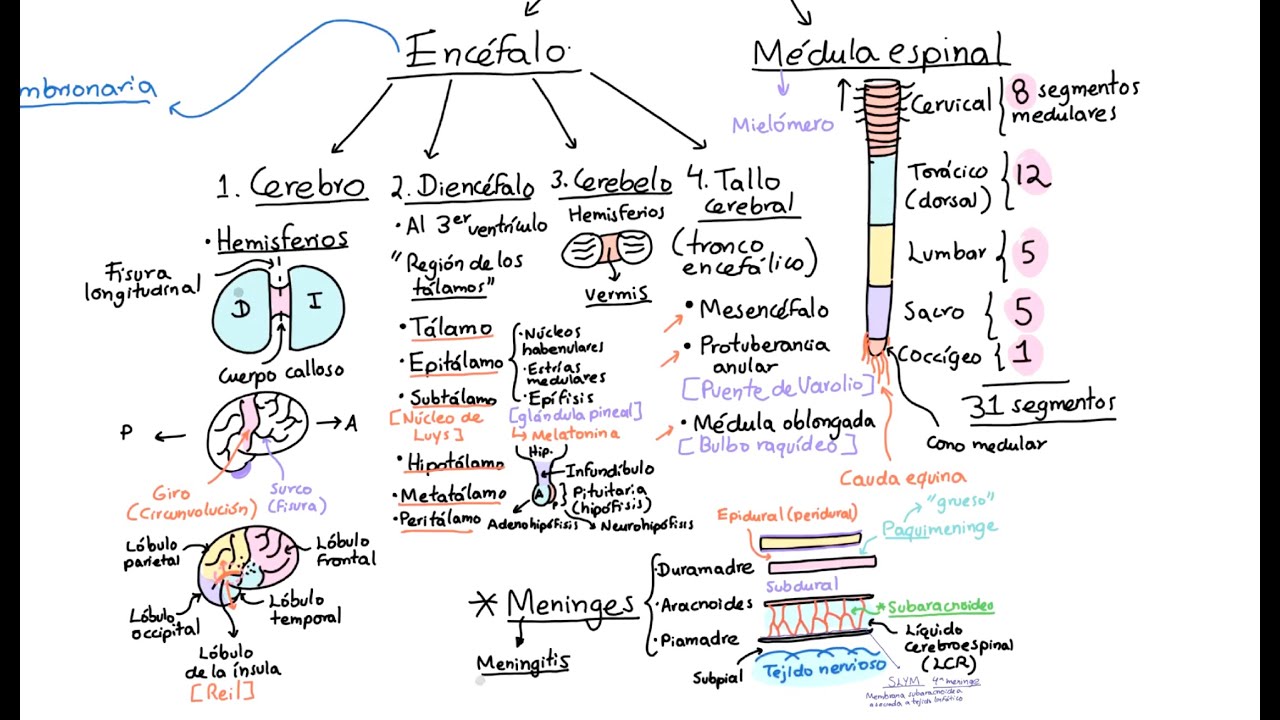
















The hypothalamus is a critical brain structure located in the diencephalon that serves three primary functions: regulating the autonomic nervous system (sympathetic and parasympathetic responses), controlling endocrine functions through the hypothalamic-pituitary axis (releasing hormones like CRH, GnRH, TRH, and inhibiting hormones), and participating in the limbic system for emotions, feeding behavior, and memory; it contains distinct nuclei including the pre-optic, supraoptic, tuberal, and mammillary zones, with key connections to the pituitary gland via the hypothalamic-hypophyseal portal system and tract, and to limbic structures like the amygdala and hippocampus.
Hypothalamus Anatomy and Function: Diencephalon and Nuclei Explained
Added:Basic neuroanatomy, specifically the location of the diencephalon and its structural relationship to the cerebrum, brainstem, and pituitary gland.
The fundamental concept of homeostasis and how the body regulates internal variables like temperature, fluid balance, and energy expenditure.
An introductory understanding of the endocrine system, particularly how hormones function as chemical messengers and the concept of feedback loops.
Basic cellular neuroscience terms, such as 'nuclei' (clusters of neuronal cell bodies within the central nervous system) and 'synaptic pathways'.
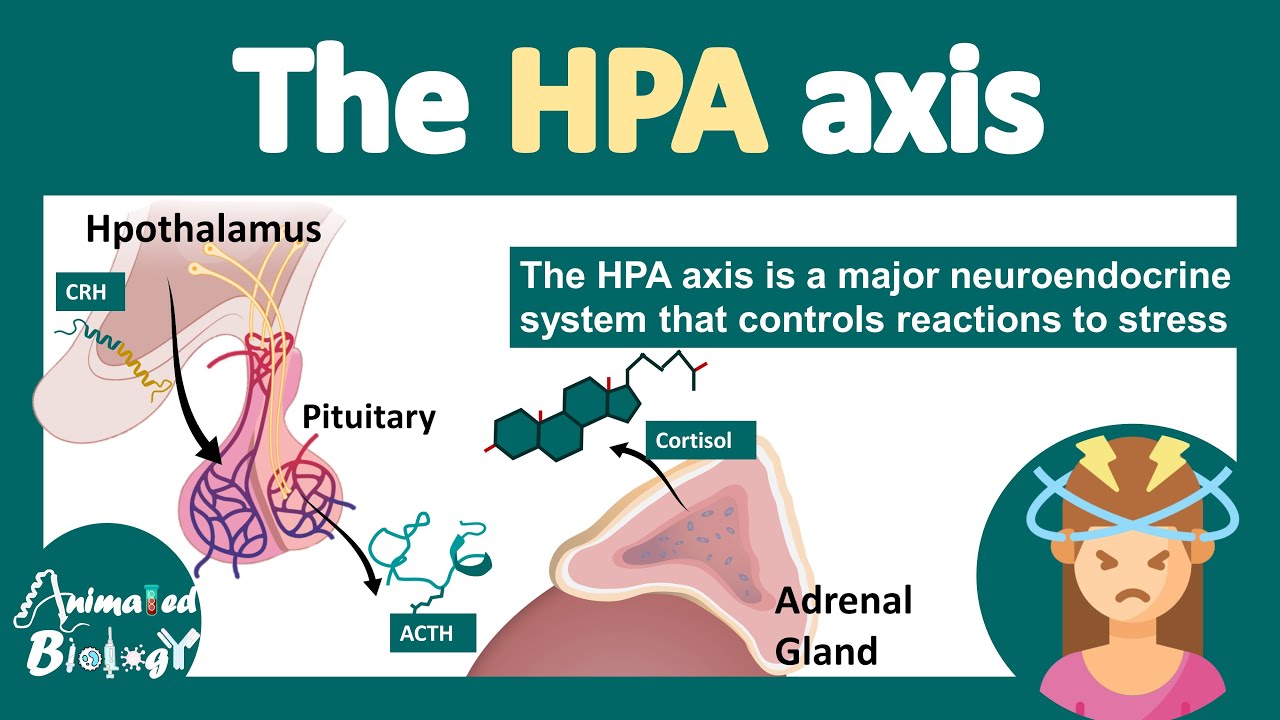
Detailed study of the Hypothalamic-Pituitary-Adrenal (HPA) axis and its role in coordinating the body's response to stress.
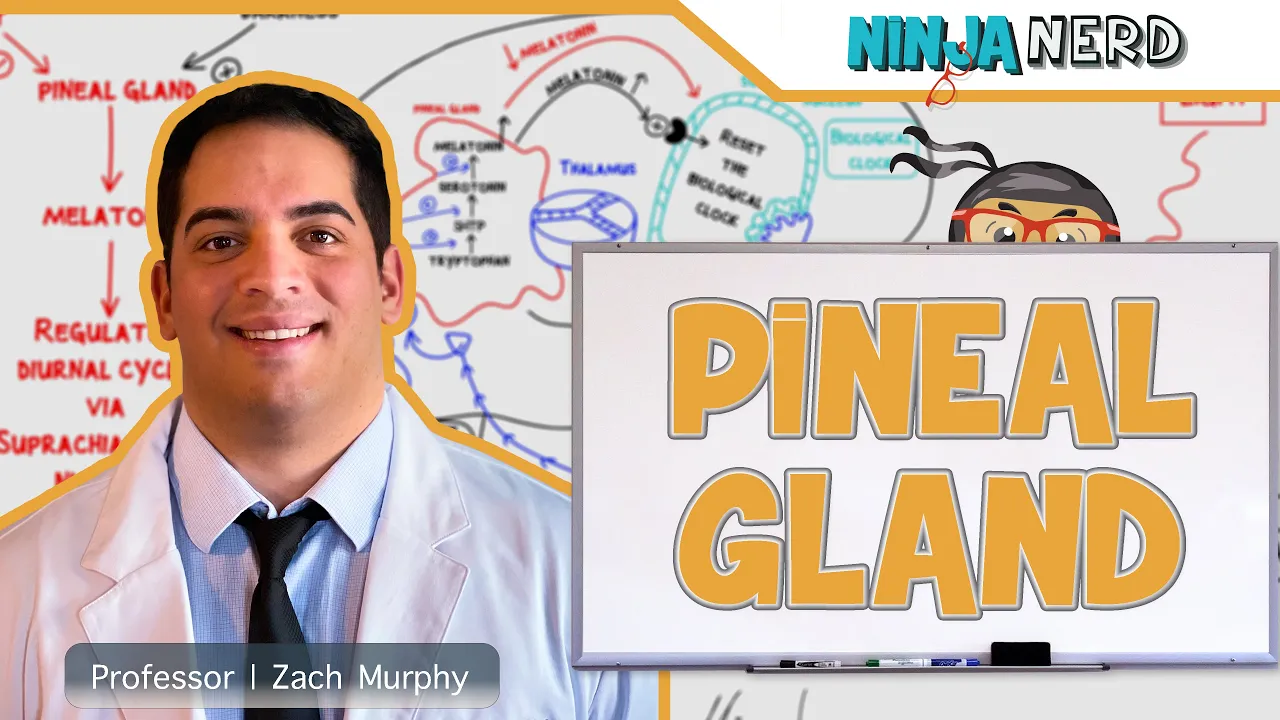
The neurobiology of sleep-wake cycles, focusing on how the suprachiasmatic nucleus (SCN) regulates melatonin secretion from the pineal gland.
Clinical pathologies of the hypothalamus, such as diabetes insipidus, Kallmann syndrome, and hypothalamic obesity.
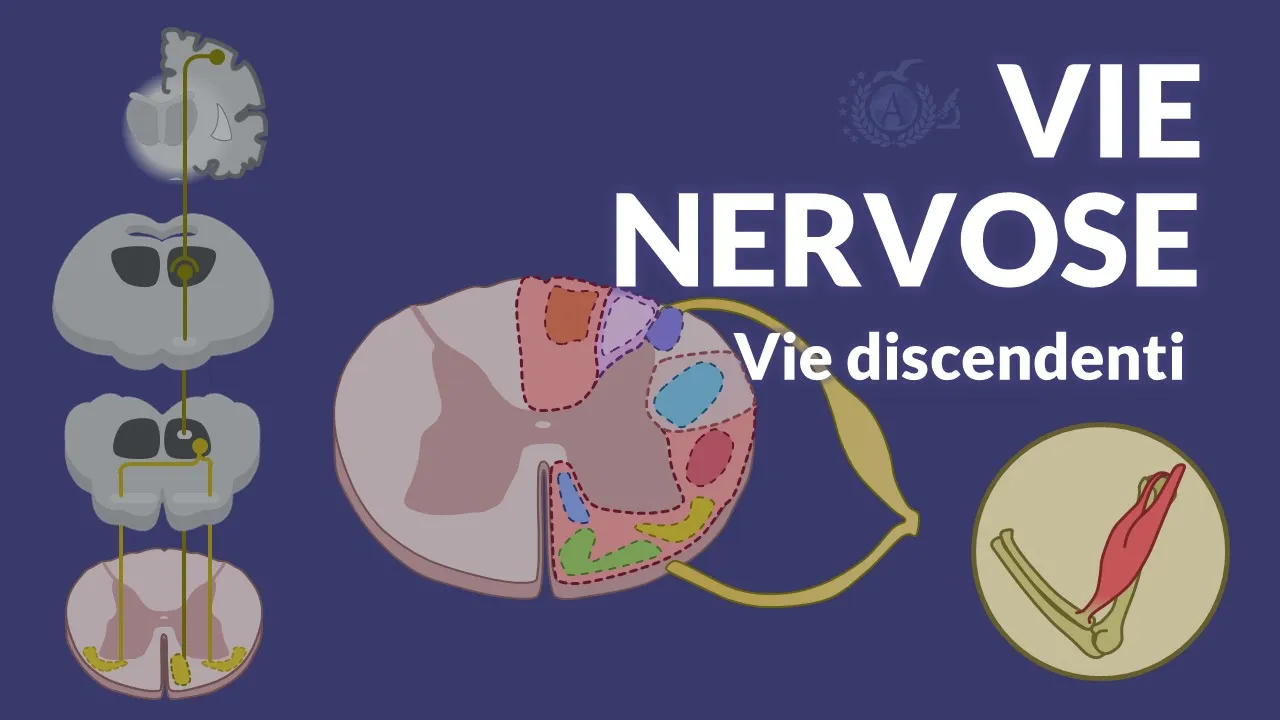
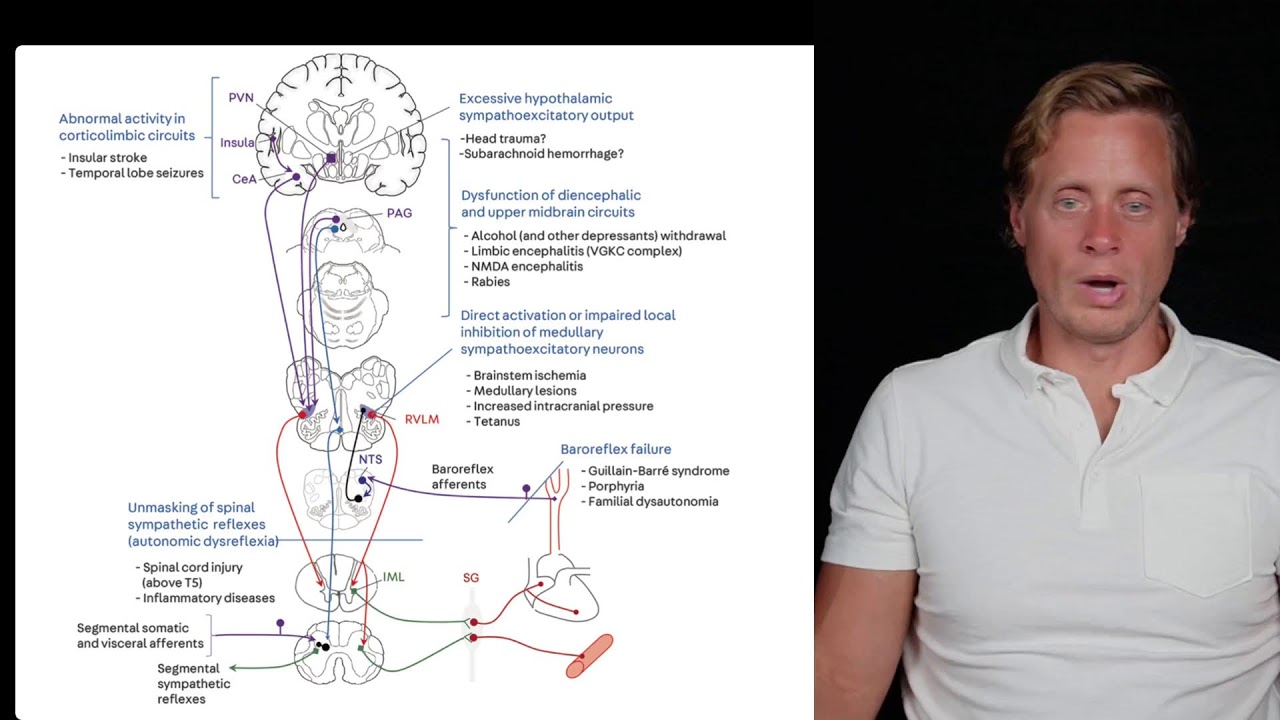
The descending autonomic control pathways, exploring how the hypothalamus interfaces with the brainstem and spinal cord to modulate sympathetic and parasympathetic outputs.
676K views19.3Klikes56:38Original Release: 2020-11-10
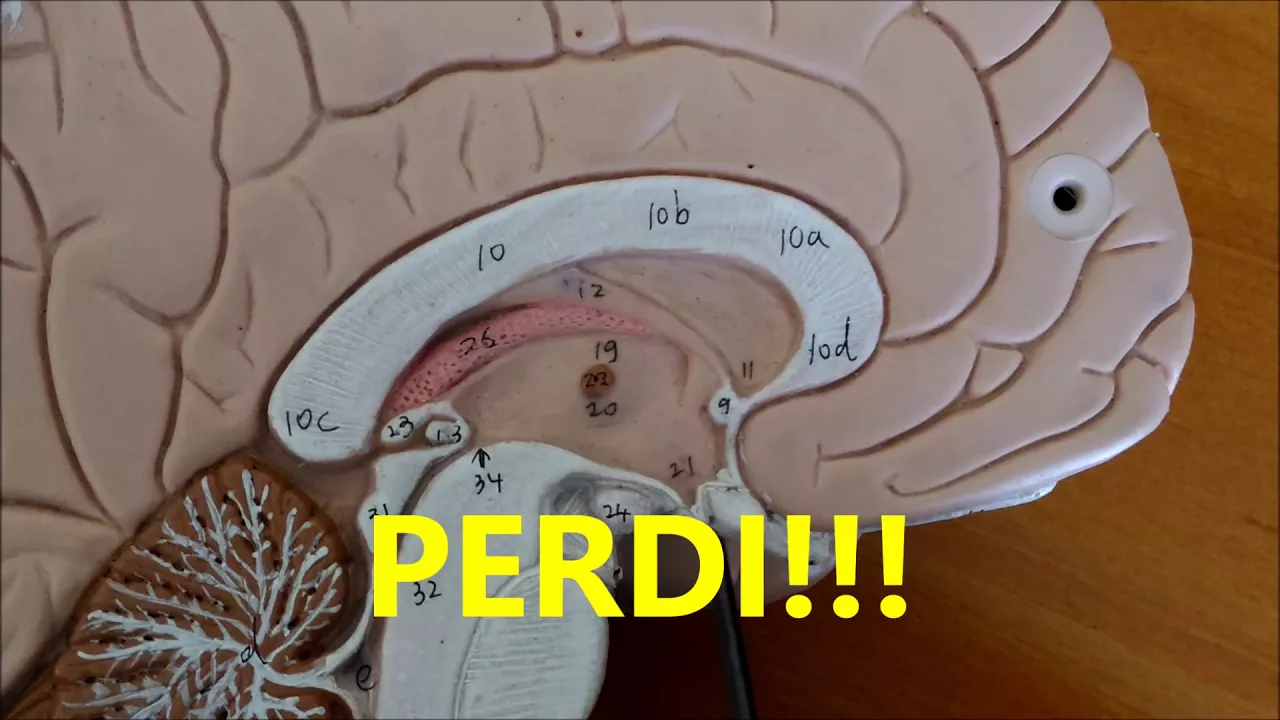
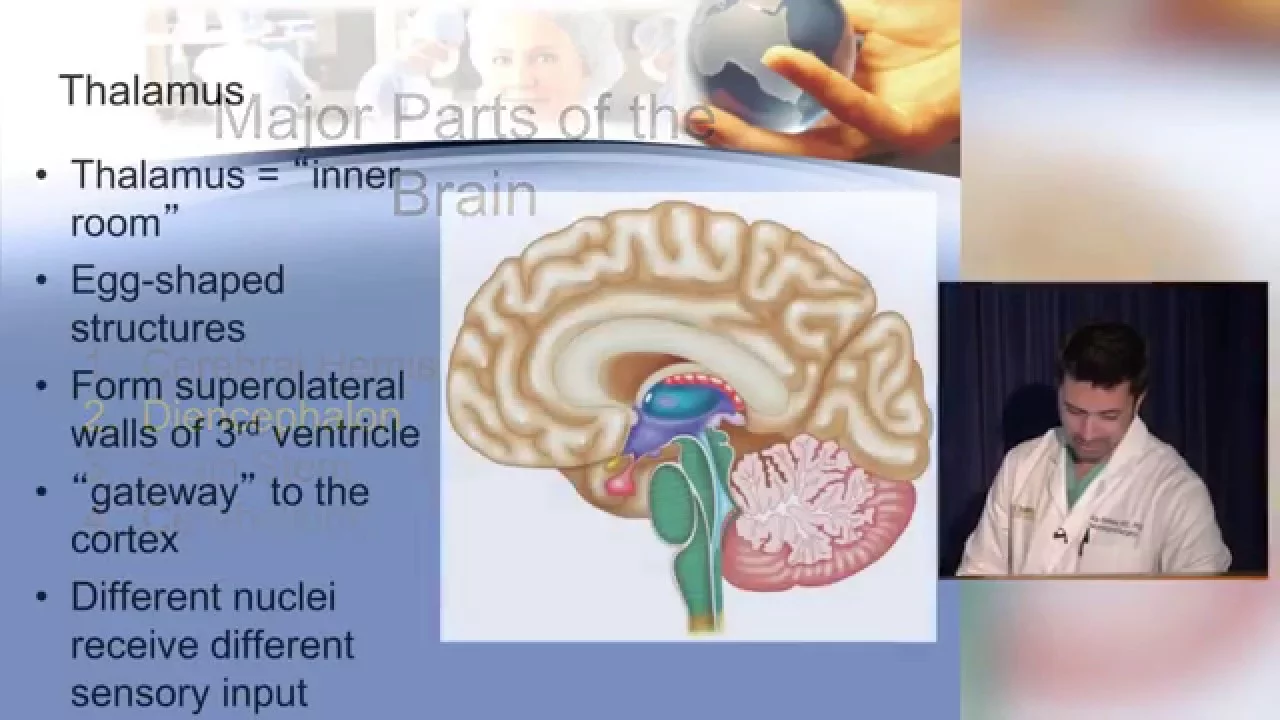
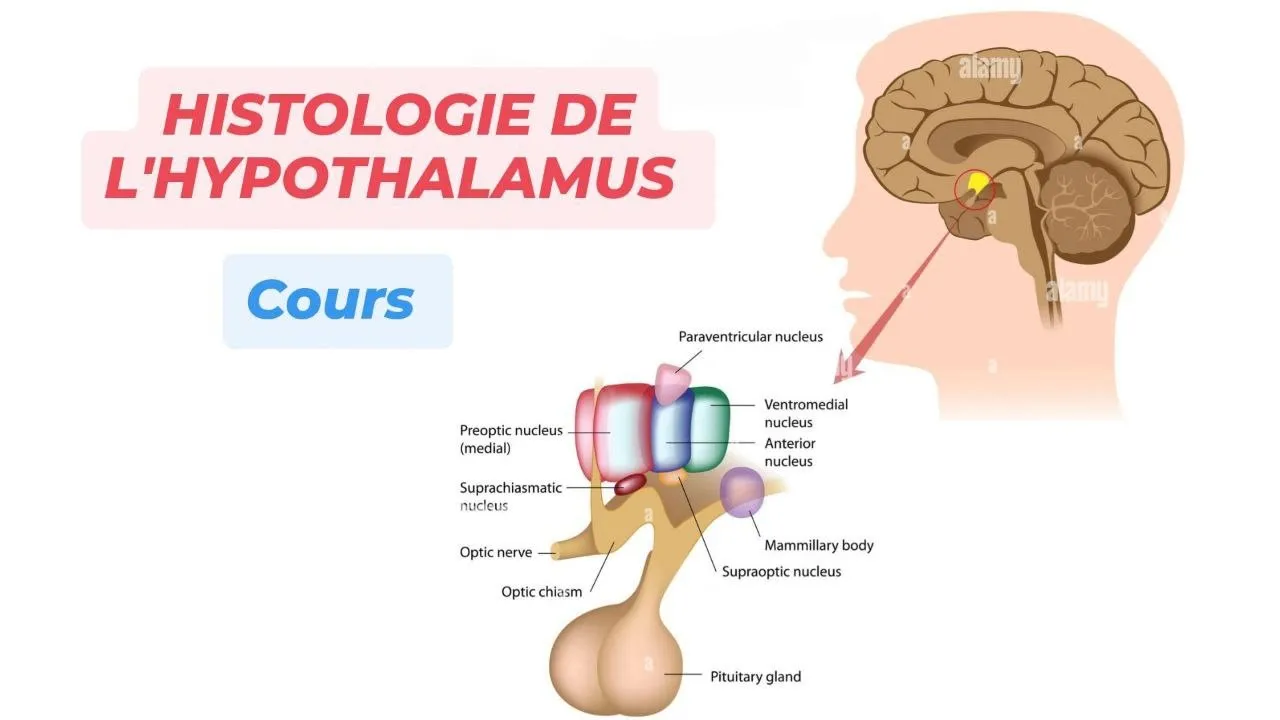
hi ninja nerds in this video today we're going to talk about the hypothalamus we're going to cover the basic anatomy first then the basic function of the hypothalamus then what we'll do is we'll dig into the nitty-gritty talk about the different nuclei really expand on the overall functions of the hypothalamus and then have a tid little bit of a conversation on the pathways or connections between the hypothalamus and other structures and their relevance all right so let's go and get started all right engineers so let's start talking about the basic anatomy of the hypothalamus really what i want you more to understand rather than going into all the details on the neural anatomy is to know that the hypothalamus is a part of a structure in the brain deep within the cerebrum a gray matter structure called the diencephalon that's the big thing i want you to know so it's a component of what's called the diencephalon now that leads us to the question that the diencephalon it's a it's kind of a cluster of gray matter deep within the cerebrum right well there's a bunch of different structures that actually make up the diencephalon and that's what i want you guys to really focus on so the epicenter of the diencephalon is actually this blue structure here you see this blue egg-like structure here this blue egg-like structure here is called the thalamus this thalamus is kind of the center of the diencephalon and all the other names of the components of the diencephalon are named based upon the position related to it so one of the components of the diencephalon here is the thalamus that's the big one right the second one what we're going to do is is we're going to take the thalamus and we're going to move posterior right so if you go post so this is the anterior portion of this diencephalon this is the posterior portion of the diencephalon so here in the posterior portion you have this pink like gland on the back of it you know what i'm sorry purple gland i'm going colorblind the purple gland on the back here this is called the pineal gland and the pineal gland with a couple other structures what other structures well really if we wanted to there's kind of like i can draw like a little asterisk there there's what's called the habenula right and then you have the another structure called the habenular commissure and then you have this other structure back here called the posterior commissure but really the posterior commissure the habenula and the pineal gland make up what's called the epithalamus so let's write that down epi thalamus is another component of the diencephalon and what are the things that makes it it is the pineal gland and it is the habenula and it is the posterior commissure beautiful so we understand two parts of the niencephalon thalamus epithalamus okay now let's move a little bit just kind of inferior just a little bit inferior maybe even a little bit posterior to the thalamus you see this red structure this kind of maroon colored structure here just kind of inferior to the thalamus this right here is called the sub thalamus this is called the subthalamus this is another important component of the diencephalon the last component which is actually what we're going to be talking about primarily here i'm going to shade it in here in green all of this area here that i'm shading in that's anterior and inferior to the thalamus what is this called the hypothalamus so this is the hypo thalamus and these are the main components of our diencephalon now a couple other just anatomical things that you should know because it's clinically relevant here you have your hypothalamus right there's these little things that are kind of it's a part of the hypothalamus but it's a little nucleus a little nugget hanging off of it you see this thing here this kind of like little boob structure here hanging off that's called germamillary bodies we'll talk about this in more detail but it's actually a part of the hypothalamus the other thing that's really important here you see these things here these hanging off of the hypothalamus this is your pituitary gland so this is called your pituitary gland this is another important structure that's associated with the hypothalamus one more that's really important you see this structure here that's kind of cross it actually crosses you have your optic nerves they're moving backwards as they move backwards they cross called the optic chiasma that happens just around the area of the hypothalamus so this right here is called the optic chiasma so it's kind of important here to understand some of these things one other thing just to kind of define the borders here you see you have this thing here coming down from the corpus callosum here's your corpus callosum right you have this structure coming down here this here is actually important it's called the lamina terminalis it's called the lamina terminology just kind of gives you what the border of this hypothalamus and then really this little nugget here is called the anterior commissure okay but the basic thing i want you to know taking away from the anatomy is that the hypothalamus is one of the four components of the diencephalon now what i want to do is is to take this portion of the hypothalamus cut it out and zoom on it a little bit more so we can talk about the zones of the hypothalamus and the nuclei that occupy it all right so the next thing that we need to do here is that we're going to zoom in on the hypothalamus okay so you kind of have again that anterior border that's why i kind of mentioned it was that lamina terminalis and the anterior commissure and then here you have your optic chiasma right the other thing here is that we have this kind of remember how i told you this is coming into the pituitary gland well this here imagine this is like a large funnel right here's this kind of like large funnel shaped portion here this actually has a special name sometimes they like to ask this on exam it's called the tuber cyanerium and what happens is the tuber sinerium will start narrowing is going to be called the infundibulum okay and then it obviously extends downwards into your pituitary gland all right good now the next part here is that we have four zones that i need us to know because there's nuclei in each one of these zones the first one here the first zone okay this first zone is called the pre-optic zone this is called the pre-optic zone there's one nucleus present within the pre-optic zone we're going to abbreviate it for now but we'll actually write it out in more detail later but this is called the medial pre-optic nucleus okay so the pre-optic zone is the most anterior portion only made of one nucleus which is the medial pre-optic nucleus the second zone here the second zone here is actually very important lots of nuclei in this one it's called the supra optic zone and in the supraoptic zone there's tons of nuclei one of these nuclei is called the suprachiasmatic nucleus so the suprachiasmatic nucleus is one you know another one is called the supraoptic nucleus that's another one then above that is the periventricular nucleus and then lastly very important one here is the anterior hypothalamic nucleus okay so we have the pre-optic zone the supraoptic zone move a little bit posterior you have your third zone here this third zone is called the tuberal zone it's called the tuberal zone so you have pre-optic anterior superoptic and then tuberal zone is the third posterior portion because again we're going anterior to posterior here the nuclein here there's three nuclei here one of them is actually called the arcuate nucleus we're going to put arc this one's a monster does tons of functions we'll get into detail on that one then you have a nucleus which is actually located more anterior or ventral so we call this the ventral medial nucleus then you have one that's a little bit more dorsally so this is called your dorsal medial nucleus okay so we have the pre-optic superoptic tuberal the last and final zone remember that structure i told you that these little things are hanging off of the hypothalamus towards the back it's called the mammillary bodies right we told you that that was a part of the hypothalamus well this zone here thankfully is called the mammillary zone and the mammillary zone is actually made up of two primary nuclei one is called the mammillary nuclei right and the last one which is a very important one here is called the posterior hypothalamic nucleus beautiful now there's one last thing that i have to mention here just really quickly because you can't see this other part of the hypothalamus if you imagine here that we have like this is the third ventricle on both sides of the third ventricle you have kind of these this sheet of gray matter right so here's our third ventricle right with the dots on the sides here is the hypothalamus well there's actually two parts of the hypothalamus the medial portion and the lateral portion what we're looking at here we're only seeing the medial portion we don't see the lateral portion which is actually kind of if i were to punch my hand through this wall it'd be behind this okay so there's one last nucleus that i need you guys to remember and it's actually so we already talked about all the nuclei here in the medial right and imagine this is anterior to posterior so you'd have your pre-optic your super optic your tubule your mammillary there's one nucleus all the way lateral and this is very simple thankfully it's called the lateral hypothalamic nucleus and it actually extends almost the entire length of all the zones that we talked about in the medial portion of the hypothalamus which is the pre-optic superoptic tuberal and mammillary beautiful okay now the last thing that we have to talk about here since we've established the basic anatomy okay and the basic kind of zones and nuclei is the functions what is the basic functions if you had to boil down the functions of the hypothalamus you know what i like to do i like to think about it in three functions so if someone were to ever ask me what's the functions of the hypothalamus i could tell them three things one is it's involved with our autonomic nervous system what does this mean that means it has the ability to either work with the sympathetic to speed us up fight or flight parasympathetic slow us down rest digest we'll talk about how it also is a part of our endocrine system it's our master endocrine regulator so it's involved with a lot of hormone production okay we'll see about how that how that happens later and the last thing that it's actually really important for is the limbic system it's actually one of the epicenters of the limbic system very important for the limbic system okay so if someone asks you three basic functions of hypothalamus you say autonomic endocrine limbic let's go ahead and get into the details now all right engineer so now let's go start talking in detail remember i told you that there was three basic functions right limbic autonomic endocrine when we talk about limbic obviously we could just say oh it's involved in the limbic system but we should know a little bit more expand on that a little bit so what is the limbic system responsible for right if i were to ask you what is the limbic system responsible for i want you to remember it's involved in emotions and when i talk about emotions what am i talking about i'm talking about fear aggression anger right it's also involved with sexual behaviors okay so sexual behaviors preferences it's also involved in feeding behaviors as well so satiety hunger and it's also involved in learning and memory so when we talk about the limbic system i really want you to remember that that it's involved in memory learning your emotions and sexual and feeding behaviors so now let's talk about how it's involved in that the main one that's really kind of involved with this is these mammillary bodies so you see this part here i'm going to draw a dot there and this little like thing coming off here that's our mammillary bodies now the mammillary bodies we kind of touched on this when we talked about the thalamus the mammillary bodies are important because they have two primary functions one is again they're involved in this limbic system but one of the big things that it's involved with is memory consolidation so it's involved with our memory particularly the type of memory is episodic memory but it also has an involvement reflex particularly maybe some type of reflex with olfaction what is olfaction smell so there might be some type of involvement of this structure with this memory behind smells all right so i want you to remember that it's involved with episodic memory and particularly maybe even memory reflexive memories involved with smells okay how we're not going to get into the nitty-gritty here but i want you guys to remember that the the mammillary bodies are connected to a couple structures here do you guys remember there's a structure here called the fornix you guys know this structure this orange structure here what is this orange structure here called it's called the hippocampus right it's called the hippo campus and the hippocampus has this structure here called the fornix and the fornix is this kind of white matter structure here that moves all the way around here and then connects to the what mammillary bodies and then do you guys remember what the tract is called between so here what is this structure here called this orange structure here this is called your fornix then there's actually the next connection which is between the mammillary bodies and the nucleus of the thalamus do you remember what nucleus of the thalamus this is i know you guys know it's the anterior thalamic nucleus right anterior thalamic nucleus and this connection between the mammillary bodies and the anterior thylamic nucleus is called what it's called the mammalothalomic tract mammalian bodies thalamus pretty self-explanatory right then from the anterior thalamic nucleus it works its way up to the cingulate gyrus and then from the cingulate gyrus it works its way down eventually back to the hippocampus what did we say that we started with the hippocampus and ended with hippocampus what was the name of this circuit that we talked about with the thalamus do you guys remember it's in it's called papay circuit so it's called papay's circuit and if you guys remember pepe circuit is involved with memory damage of paper circuit can result in conditions like alzheimer's and it can also result in conditions such as wernicke's encephalopathy right the other connection remember i told you that the the hypothalamus has many different functions right limbic functions is one of them well guess what you know there's another structure here sitting kind of just on top of the hippocampus here it's called the amygdala so what is this structure here called it's called the amygdala the amygdala is involved with fear anger aggression olfaction and this can connect from the amygdala there's some pathways here that can connect to the hypo thalamus and actually some specifically the mammillary bodies do you know what this pathway is called it's called the straya terminalis we'll talk more in detail when we get over there to the connections but for right now we're just going to abbreviate it as st stria terminalis there is another small pathway we're not going to get into detail but it does connect the amygdala to hypothalamus a real short one called the ventral amygdalofeugal pathway i just want you to know that the way that we connect the hypothalamus via the mammalar bodies to the limbic system is via the fornix to the hippocampus and the stryoterminalis to the amygdala and this whole circuitry that the mammillary bodies are involved in for memory is called papay circuit okay all right that's the first thing the mammillary bodies now we've got to talk about some other nuclei the other nuclei that are somewhat involved with the limbic system because remember what i told you the limbic system is involved with emotions right so fear anger aggression also motivation drive feeding behaviors there's a nucleus here called the arcuate nucleus remember we we abbreviated arc the arcuate nucleus the arcuate nucleus receives signals from different parts of the body but here's where it's important the arcuate nucleus has connections to two other nuclei that we talked about in the tuberal zone one of them is called your ventral medial nucleus of the hypothalamus and the other one we talked about is the one that you couldn't really see but it was making up the whole lateral portion of the hypothalamus this is called the lateral hypothalamic nucleus now the arcuate nucleus can can actually modulate the activity of these two centers by the types of neuropeptides it releases if the arcuate nucleus releases certain types of peptides alpha melanocyte stimulating hormone and cocaine amphetamine regulating transcripts this modulates the activity of the ventral medial nucleus right so it may stimulate it so the ventral medial nucleus when acted on by these neuropeptides will release a hormone called corticotropin releasing hormone and when this hormone is released it induces satiety so what i want you to associate ventral medial nucleus with is satiety center what does that mean satiety it makes you feel full right so the ventral medial nucleus is involved with satiety the argue in nucleus can also release certain types of neuropeptides that act on the lateral hypothalamic nucleus such as what neuropeptide y and aguti-regulating peptide and this can stimulate these nuclei and stimulate these nuclei to release what's called orexins and orexins when released induce hunger i feel like this is always activated in my body so this is kind of the involvements when i when i want you to remember is ventral medial nucleus satiety center later hypothalamic nucleus hunger center all right so now that we understand the basic functions of these two centers now what i want to do is talk about how these centers can be modulated from different types of hormones and other and food within the git so let's come down here for a second all right so now what i want us to know is not just the fact that this is the satiety center for ventral medial and hunger center for lateral hypothalamic but how they're influenced by different types of hormones and actual chemical factors and stretch signals we'll talk about that so you know within our adipose tissue whenever we have an increase in fat storage right whenever there's an increase in are fat storage so sometimes what i have a lot of this increase in fat storage will stimulate your adepocytes their fat cells to release a hormone called leptin and leptin is very interesting because leptin tries to basically induce satiety so you don't keep eating more food and getting fatter okay so that's one hormone that i want you to remember the next one is your pancreas whenever you have really high glucose levels okay so really high glucose levels what that does is that stimulates your pancreatic beta cells and your pancreatic beta cells make a hormone called insulin and insulin is basically going to again try to induce satiety because you don't want to increase your glucose levels even more you've already eaten the last thing here is whenever you have food within your gastrointestinal tract right so let's say that there's food here within the gastrointestinal tract it's going to distend the git right so maybe it distends the small intestine and whenever you distend that portion of the small intestine remember we have nerves remember what nerve is actually coupled with the git that responds to stretch do you guys remember which nerve that is that is your vagus nerve so cranial nerve 10. so the vagus nerve will send signals up to your hypothalamus insulin can send signals to your hypothalamus and leptin can also send signals to your hypothalamus okay so whenever there is stretching so we'll put here stretch okay that's going to activate the vagus nerve there's one more hormone that we have to mention i don't want to get it confused here so we're going to draw it here in pink there's another hormone that's made by your stomach whenever you are fasting okay what does that mean you're not eating and this hormone is called grillin and grillin will also go and act on the hypothalamus so now let's come back up here for a second and see how all of these hormones regulate the activity of these satiety and hunger centers all right so now what i want you to think about here is satiety right and hunger for these two centers if we take leptin on both sides leptin is released whenever there's increasing fat storage so do you want to activate the satiety center if you already have a lot of fat storage yes because you don't want to continue to keep eating and eating and eating more food and building up fat storage so the leptin should stimulate the ventral medial nucleus right insulin insulin is released whenever there's high glucose levels so that probably means that you've already eaten if you've already eaten and your blood glucose levels are high do you want to keep eating more and actually increasing your glucose levels no you should induce satiety so insulin should do what it should stimulate this area about the ventral medial nucleus that you induce satiety what about the vagus nerve whenever there's lots of stretch if there's a lot of food in the git stretching the git then you don't need to be eating anymore and filling up your gullet even more so what should stretch do via the cranial nerve 10 vagus nerve that should also stimulate the ventral medial nucleus and the opposite should be over here so if you come down to it leptin should do what to this area leptin insulin and the vagus nerve should inhibit this nucleus the lateral hypothalamic nucleus insulin should also inhibit the lateral hypothalamic nucleus and the last thing is your cranial nerve 10 due to the stretch signals this should also inhibit this nucleus right because you don't want to be hungry the last thing is this grilling remember i told you grilling is released whenever you're fasted so you don't have any food in the stomach so what should that be now i gotta eat so grillin is gonna do what grillin is going to stimulate the activity of this nucleus and inhibit the activity of this nucleus because ghrelin is your hunger hormone it's a dinner bell to let you know the last thing here for this entire thing for the limbic is this really simple structure there really isn't much to it it's the dorsal medial nucleus we talked about it before really all i want you to know is that this is involved with certain types of behaviors that are non-specific and whenever there's damage to this nucleus sometimes people can develop savage behaviors all right so just now to quickly understand because remember i want you guys to understand when we're talking about the anatomy and physiology of the hypothalamus it's not just important just to know this is the structures this is what they do you should know those things because if there's damage to this ventral medial nucleus let's let's assume that you have destruction of the ventral media nucleus well what does the ventral media nucleus is responsible for satiety if you damage the satiety center you'll never ever be you'll never have saturation you'll never be full and so because of that people develop obesity and a term called hyper phasia which is where they want to eat and eat and shove food on their goal at all the time okay if you think about the other situation if there's a lesion of the lateral hypothalamic nucleus lesion of the lateral hypothalamic nucleus this is responsible for hunger if you damage the hunger center right now you're never going to be able to you're never going to have this sense of wanting to eat so because of that in children and infants this is very important this can lead to what's called ftt failure to thrive right and in some cases maybe more in the adults this may be responsible for anorexia nervosa okay damage the dorsal medial nucleus this is responsible for certain types of behaviors if you damage the dorsal medial nucleus guess what this can lead to savage behaviors and what does that mean that means you're very cruel you're very rude you know so it leads to a lot of savage behaviors whenever there's damage to the dorsal medial nucleus and then again to put into to all the connections here remember we told you mammalian bodies are very important for memory if you damage the mammillary bodies right it can lead to a particular condition what is that condition it's called wernicke's right or particularly corsicoff syndrome corsicoff syndrome so wernicke's encephalopathy or corn korsakoff syndrome and one of the big things that develops in this is what's called confabulation and that's basically where these people they have a lot pieces of their memory that are lost and they fill in those empty spaces with things that are actually not real that's called confabulation okay so these are the important things that i want you to remember from the limbic function of the hypothalamus now let's talk about the endocrine all right so now that we've talked about the limbic function let's talk about the endocrine function now we've gone over a lot of this stuff already in our endocrinology playlist so we're not going to go into tons of detail we'll cover the basics first things first when we talk about the hypothalamus right we've already covered some of the structures already ventral medial dorsal medial nucleus lateral hypothalamic nucleus and we even talked a little bit about the arcuate nucleus so let's kind of march out here we'll start with this go from left to right and kind of cover some of these other nuclei here in the hypothalamus this first one here this orange one here is called the arcuate nucleus now the arcuate nucleus i want you to remember this guy as responsible for the releasing factors and inhibiting factors i'll explain what that means so the arcuate nucleus is pretty much the site for where you release a lot of the releasing hormones and inhibiting hormones let me explain the argument nucleus has its actual cell body here in hypothalamus right but then the axons extend down towards like the meat the actual tuberculum and what they do is they release specific types of hormones into this portal circulation and then from this portal circulation this portal circulation connects the hypothalamus to this the anterior pituitary so from here it'll release multiple hormones and these hormones will then move through the portal system to these different types of cells so for example one of the hormones that it makes is called growth hormone releasing hormone what will that do well that will actually act on specific types of somatotrophic cells and stimulate those somatotropic cells to release a particular hormone called growth hormone and you know what growth hormone does it's involved in stimulating the liver it acts on the muscles it acts on bone cartilage all the adipocytes we have more detail on this if you guys want to go watch it in our endocrinology playlist all right but on the other side if you want to inhibit the release of growth hormone what else would you have not just growth hormone releasing hormone but you would also have another hormone to counteract this the growth hormone inhibiting hormone so you have both of these to modulate the activity of growth hormone production all right so there's another hormone that the arctic nucleus releases it's called corticotropin releasing hormone and then again there would be the corticotropin inhibiting hormone these act on these corticotropic cells in the anterior pituitary and stimulate the anterior pituitary cells to release acth acth then acts on the adrenal cortex and stimulates the production of cortisol and we know that cortisol has many different functions okay so crhcih they modulate the activity of cortisol eventually okay the next one is going to be it releases another interesting hormone here the next hormone it releases is very interesting this one is actually called prolactin inhibiting hormone but you know what the prolactin inhibiting hormone really is it's just dopamine so we're going to put prolactin inhibiting hormone and the prolactin inhibiting hormone is really the only main hormone acting on these lactotrophs but i want you to remember i'm going to write it here prolactin inhibiting hormone really is just dopamine so that activates uh well actually regulates the activity of these lactotrophs and then the lactotrophs will release a particular hormone here called prolactin and prolactin will act where it'll act on the mammary glands and stimulate the production of milk within the mammary glands okay okay next another hormone that this actual arcuate nucleus releases is called trh thyrotropin releasing hormone and the other one will be thyrotropin inhibiting hormone and these act on the thyrotrophs and the antipituitary and stimulate the production of a particular hormone called tsh tsh will then act onto the thyroid gland and stimulate the thyroid gland to make t3 and t4 which collectively are the thyroid hormone beautiful and we know that this has tens of thousands of functions right all right the last one here that's actually really important because we're actually going to kind of that's in for that's it for the arcuate nucleus the other function that i want you guys to know here another nucleus here is this purple one we're going to skip these for just a second so we covered all the arcuate nucleus it releases the releasing factors and inhibiting factors for what we just spoke about the other one here this purple nucleus over here more in the anterior portion this is called your medial pre-optic nucleus right and this in that pre-optic zone this guy releases a particular hormone called gonadotropin releasing hormone and it can also release gonadotropin-inhibiting hormone but regardless this acts on these gonadotrophes all right now the medial pre-optic nucleus releases gonadotropin-releasing hormone or inhibiting hormones that can act on the gonadotrophs within the anterior pituitary the anterior pituitary will then start releasing what types of hormones if it's that gonadotropin releasing hormone that's really the one that's acting there do you guys know the main hormones that it's releasing is fsh and lh follicle stimulating hormone and luteinizing hormone now follicle stimulating hormone and luteinizing hormone can act differently between male and female in the female it's responsible for what types of things it's responsible for estrogen production right particularly from the fsh and then the lh is important for progesterone production right and obviously it's important for the entire reproductive development and secondary sex characteristics within the male fsh is really mainly for sperm production right sperm production whereas in the lh within males it's responsible for testosterone testosterone production so that leads us to this next point here with the medial pre-optic nucleus because it functions differently between males and females this nucleus is sometimes referred to as sexually dimorphic so it's sometimes referred to as a sexually dimorphic nucleus because it functions differently between males and females okay we talked about the medial pre-optic nucleus right and its involvement primarily with the gonadotropin releasing hormone we talked about the arcuate nucleus and their involvement with the releasing hormones and inhibiting hormones right now let's talk about these other two nuclei that have endocrine functions so this one here this blue one is called the supraoptic nucleus so this is called the supraoptic nucleus and then this maroon colored one here this guy is called the periventricular nucleus this is called the para ventricular nucleus now the supraoptic nucleus actually is very interesting because it responds to two things two things mainly let's actually draw it in pink so we really know that this is the big stimulators so the supraoptic nucleus can respond to your water balance within the body right so what does that mean so it really can respond to what's called osmolality osmolality meaning kind of the solute concentration within the blood so whenever a patient has decreased water in the blood and high amounts of solutes maybe that's sodium maybe that's glucose whatever and these kinds of situations where you have a hypertonic plasma what that may do is is stimulate okay your supraoptic nucleus another thing that can stimulate the supraoptic nucleus is a hormone that's released okay it's actually made through what's called the renin-angiotensin aldosterone pathway and it's called angiotensin ii this also can stimulate the supraoptic nucleus now the superoptic nucleus has its nuclei in the hypothalamus but its axons extend from the hypothalamus all the way down to the posterior pituitary this is anti-pituitary posterior pituitary it then will release because it has little vesicles that are storing the hormone here in the terminals it will release a particular hormone when stimulated this hormone is called antidiuretic hormone adh also sometimes referred to as vasopressin adh we know that will act on the blood vessels and it can also act on the kidneys when it acts on the blood vessels it induces what's called vaso constriction now vasoconstriction is important because that can increase the actual resistance within the blood vessel potentially increase blood pressure whereas it acts on the kidneys to increase the water reabsorption okay so it increases water reabsorption and that can increase blood volume which can increase your blood pressure but also if you increase water reabsorption guess what else you do you increase the water in the body and so that kind of helps to even out because remember before the problem was you had low water and high solutes so you're kind of remedying this by increasing the amount of water for the increased solutes okay so we have that part now the other nucleus here is the paraventricular nucleus this paraventricular nucleus is actually stimulated by two things one is actually called suckling so one is called suckling so whenever the baby suckles okay on the nipple of the mother that can be one stimulus the second thing that can be a stimulus here is uterus the uterine stretch so whenever a mother is in labor it can stretch the actual stretch receptors within the uterus and that can send a reflex up to the paraventricular nucleus when this stimulates the paraventricular nucleus the nucleus is in the hypothalamus but the axons extend all the way down here into the posterior pituitary has vesicles here that store the hormone and then releases it based upon the stimulation this hormone released is called oxytocin oxytocin will then act on the uterus to induce uterine contractions and it'll act on the muscle within the breast around the milk glands and cause milk ejection so that is the thing i want you to know here for the paraventricular nucleus with oxytocin now there's an important thing and we'll talk about these over here but just to give you the name of them the vascular connection between the argument nucleus and the medial pre-optic nucleus and the anterior pituitary this portal system is called the hypothalamic hypophyseal portal system the connection between the hypothalamus and the posterior pituitary via these two fibers here this is called the hypothalamic hypophyseal tract we'll talk about that a little bit later and remind you guys of that okay so we talked about these nuclei there's one more nuclei that we got to mention here that's involved with hormone production all right the next nucleus here is called the suprachiasmatic nucleus the suprachiasmatic nucleus this one what i want you to remember is that this is our biological clock this is our biological clock that's all i want you to remember and how that's involved in that is really simple you have your eye right which has obviously your retina here when light hits the retina okay it can send impulses down the optic nerve well the optic nerve is connected to the suprachiasmatic nucleus via tract called the retinal hypothalamic tract regardless of that light and darkness can then act on the suprachiasmatic nucleus the suprachiasmatic nucleus through multiple connections can be eventually connected with the pineal gland and when it acts on the pineal gland do whenever there's darkness so whenever there's darkness this will activate the suprachasmatic nucleus who will then stimulate the pineal gland to release a particular hormone here called melatonin and melatonin is involved in our sleep and wake cycles right so the suprachasmatic nucleus is really when we talk about it it's involved with are sleep and wake cycles right so our circadian rhythm so if you have damage to the suprachiasmatic nucleus what will happen man you will have what potentially insomnia okay because this is involved in regulating your sleep in wake cycles so super chasmatic nucleus biological clock involved with sleep wake cycle damage can result in insomnia all right so the last type of activity of the hypothalamus right we said the three big functions is limbic endocrine and autonomic so the autonomic functions it's actually really straightforward this shouldn't take very long so remember we had in the hypothalamus we had two types of nucleus i know you guys remember this so here in blue this one's obviously more anterior so we're going to call this the anterior hypothalamic nucleus all right then here in orange okay we'll kind of zoom out on this one the one in orange here this is called our posterior hypothalamic nucleus so what do i want you to know out of this let's start here with the anterior hypothalamic nucleus what i want you to remember is the anterior hypothalamic nucleus is involved with our parasympathetic nervous system there's two primary functions of the anterior hypothalamic nucleus the big one i want you to know right now is that it's involved in our parasympathetic nervous system now parasympathetic nervous system do you guys remember all the cranial nerve nuclei and the structures within the spinal cord that are involved in your parasympathetic nervous system i know you guys know remember it's called craniosacral outflow so what happens is from the hypothalamus it has this structure here called the dorsal longitudinal fasciculus that as it comes down from the hypothalamus it descends all the way down here right we're going to keep her going it's going to come down here and it can innervate all of the structures so here in the sacral portion it can innervate structures within the brain stem look at that so many different structures this sucker's innervating okay so let's talk about this so if it's connecting if the hypothalamus is connecting to the actual parasympathetic nervous system you guys got to remember all the cranial nerve nuclei and the level of the sacral spinal cord so what cranial nerve here in the midbrain is actually involved with pupillary constriction cranial nerve three so what nucleus is this that it's associated with the particular nucleus is called the ettinger westfall nucleus and again this is involved with the third cranial nerve right so cranial nerve three which is involved particularly with the pupillary constriction then if you come down so not only is this parasympathetic part of the hypothalamus connected with the edding or westfall but it's also connected with these two nuclei that are involved with salivation this one is going to be this nucleus is higher up so this is the superior salivatory nucleus so this is called your superior salvatory nucleus this one is inferior so this is called your inferior salivatory nucleus the superiors associated with cranial nerve what seven this is facial nerve and the inferior salvatory nucleus is associated with cranial nerve nine glossopharyngeal nerve beautiful then the last parasympathetic nucleus that it's associated with here is cranial nerve 10 but particularly the dorsal nucleus of vagus and this is associated obviously with cranial nerve 10. and this is all a part of your parasympathetic cranial nerve nuclei so you come down here what remember craniosacral outflow so here in the sacral spinal cord from s22 s4 what is this this is where your preganglionic preganglionic parasympathetic nervous system neurons are located particularly the cell bodies are here and then it will come out and supply all the sacral area okay so there's many different structures if you guys want to know that go watch that in our parasympathetic videos okay now the next thing is it also connects not only does this dorsal longitudinal fasciculus connect the anterior hypothalamic nucleus to the cranial nuclei and the sacral nerve nuclei but it also connects it to this pink structure here with that expands the entire length of the brainstem what is this pink structure here called that extends the length of the brainstem this is called the reticular formation and this is very very important with uh kind of alerting or arousing the cerebral cortex of all sensory types of information the last aspect here it's really minut i don't really want us to get too crazy in it but there is another thing here here in the uh deep part of the medulla you have what's called the nucleus of tractus solitarius technically the nucleus of tractus salitarius can send fibers up with this dorsal longitudinal fasciculus that actually go to [Music] the anterior hypothalamic nucleus to let them know of all the types of taste sensations cardiovascular visceral sensations that are going on okay beautiful that covers the parasympathetic part now we've got to cover the sympathetic part thankfully this is very simple the posterior hypothalamic nucleus has sympathetic fibers and these sympathetic fibers they only really go to one place thank goodness let's descend these guys down here it's going down down down down and as it goes down it only stops at one location these pre-ganglionic sympathetic motor neurons located in what part of the spinal cord i know you guys know this this is the t1 to l2 so from t1 all the way to l2 what do you have here t12 l2 this is going to be your preganglionic sympathetic nervous system neurons and this is for that sympathetic types of activity and this connection between the hypothalamus and the spinal cord is called the hypothalamus spinal tract okay now that we've covered the basics of this remember i told you there's two functions of these nuclei anterior is parasympathetic and then posterior is sympathetic activity well there's another function they're involved in thermal regulation let's talk about that really quickly all right so quickly what i want to talk about is how the anterior remember we said here let's talk about this here the anterior hypothalamic nucleus remember we said that this is involved with parasympathetic nervous system well guess what also it's involved with thermal regulation now here's the way i like to remember this aspect of the thermal regulation parasympathetic is you're resting you're digesting you're cooling down you're cooling your body temperature down so the job of the anterior hypothalamic nucleus is to what to decrease your body temperature when it's necessary so whenever your body temperature is too high or you just need to drop it a little bit so how does how does your parasympathetic nervous system or particularly your anterior hypothalamic nucleus decrease your body temperature there's two ways one way is it causes vasodilation of your cutaneous vessels so vasodilation of the cutaneous vessels so the vessels within the skin if you vasodilate your cutaneous vessels you know blood is relatively warm so if you dilate the vessels that are close to the skin surface it's going to radiate some of that heat off of the skin surface trying to cool your body down so one of the ways that it does that is vasodilation of cutaneous vessels the second way that you cool your body down is relatively straightforward you have these little glands that can be stimulated sweat glands acron sweat glands and what can they do they can produce sweat and that sweat will coat the skin and whenever the heat hits that actual wet perspiration through a process called evaporative cooling that also helps to cool the body down so the second thing is sweating that's another way that we can regulate our body temperature and who is responsible for doing this for sweating and cutaneous vasodilation this is the responsibility of the anterior hypothalamic nucleus which has parasympathetic function and decreasing your body temperature functions now come down to the next thing here the next aspect here is going to be your posterior hypothalamic nucleus let's do this here in orange since we stuck with orange your posterior hypothalamic nucleus what do we say about this son of a gun the posterior hypothalamic nucleus is involved with sympathetic nervous system activities and it is designed to do what your sympathetic is trying to increase your fight your flight it's trying to rev you up so increasing your body temperature revving up your body temperature right so it will increase your body temp well how does it increase your body temperature the posterior epithelic nucleus it does it by doing the exact opposite of what we said here instead of having the blood flow through the cutaneous vessels it actually tries to prevent that squeeze those vessels like a son of a gun and so what is that called it's called vaso constriction and we're going to do that for the cutaneous blood vessels if you constrict the vessels near the skin that warm blood won't go to the skin and radiate that heat off of the body that's going to be interesting it shunts it to the actual internal organs the other aspect you know whenever you shiver it actually generates a little bit of heat so shivering can also generate heat and that can also help to increase your body temperature all right so these are the ways that your autonomic activity of the hypothalamus is occurring so again who does this actual process here just to recap at the vasoconstriction and shivering this is the job of the posterior hypothalamic nucleus which has sympathetic and increasing body temperature functions all right so to quickly highlight because sometimes this can be asked on exams the names of the pathways are connections from the hypothalamus to other structures what are some of those names now one of the pathways that connects your amygdala to your hypothalamus is called the stria terminalis okay this is a long pathway that connects the amygdala to the hypothalamus the other one i mentioned is a really short pathway that connects the amygdala to the hypothalamus we're not going to write this all out it'll take forever it's called the ventral amygdalofugal pathway okay so that's connecting the amygdala to the hypothalamus remember this is the limbic function of the hypothalamus so connections between amygdala and hypothalamus is involved in limbic function hippocampus this is also another limbic system structure but it's involved with the memory amygdala is more the emotional and olfaction aspect the hippocampus is connected to the hypothalamus particularly the mammillary bodies via the fornix okay all right so then you have another important connection that's involved in limbic types of activity there's a connection between a part of the cerebral cortex you have what's called the prefrontal cortex and then you have another area here called the septum septal area subceptible nuclei near like the lamina terminals not super important what i want you to know is there's a connection between these structures and the hypothalamus and there's also a connection between the reticular formation of the brain stem and the hypothalamus and that connection between the reticular formation and the primarily the pre frontal cortex the connection between that and the hypothalamus is called the median forebrain bundle okay so these are the connections for limbic functions between these following structures and the hypo thalamus look at that perfect spacing all right next one is the connections that are involved with endocrine functions now remember i told you there was a name of a tract remember we had the paraventricular nucleus and then you had the supraoptic nucleus they're nuclear within the hypothalamus but their axons went down to the posterior pituitary there's a special name for this tract do you guys know what this is called it's called the hypothalamic hypophyseal oh my gosh tract okay then you have another connection here and this is between the arcuate nucleus remember that guy and the anterior pituitary and we call that connection here the vascular connection between the two the hypothalamic hypophyseal portal system and that's involved in the endocrine activity of the hypothalamus come into the autonomic functions or connections of the hypothalamus and again that these connections of the autonomic nervous system what was this nucleus here in the hypothalamus that went to the sympathetic this was our posterior hypothalamic nucleus right and the connection between the posterior epithalic nucleus and the t1 to l2 portion of the spinal cord and remember what is this portion of the spinal cord here this is called your lateral gray horn so the lateral gray horn this connection is called the hypo thalamo spinal tract beautiful then the name of the tract that connected the what is this nucleus that's involved with parasympathetic this is our anterior hypothalamic nucleus and it connected to the cranial nerve nuclei and the sacral portion of the spinal cord and then you add the connections from the nucleus attractive salitarius back to the anterior epidermis this whole bundle of tract is called the what dorsal longitudinal fasciculus beautiful and that covers the hypothalamus all right ninja nerds in this monster of a video we'll covered so many things i'm sorry guys but i hope it made sense i really do i hope that you guys enjoyed it if you guys did learn a lot from this and understand a lot i beg plead please hit that subscribe button comment down in the comment section like this video also down in the description box we've links our facebook instagram patreon go check that out follow us on instagram and also on facebook and if you guys have the ability to donate on patreon we would truly appreciate it all right engineers as always we thank you love you appreciate you and until next time [Music] you
Up Next
4:26
Brain Insulin Resistance and Its Impact on Whole-Body Metabolism
@medscape
704 views•2022-11-12

48:47
Graphic Medicine: Comics for Collaborative Healthcare Communication
@nationalpatientadvocate
189 views•2023-12-04
80:51
Jaundice Types Explained: Pre-Hepatic, Hepatic, Post-Hepatic | Clinical Guide
@NinjaNerdOfficial
567.6K views•2018-06-25
3:05
Stages of Labor and Vaginal Birth | Childbirth Animation
@nucleusmedicalmedia
52.1M views•2017-08-18
Related Study Plans & Knowledge Roadmaps
Structured learning paths in Medicine
medicine
Abnormal LFTs: Diagnostic Workup & Pathology
01Liver Anatomy and Basic Physiology
02Introduction to Liver Function Tests (LFTs)
03Hepatocellular vs. Cholestatic Patterns
+ 3 more learning modules
12h6 modules
Explore Roadmap
medicine
Analyzing Blood Smears: RBC, WBC & Platelets
01Introduction to Blood Components & Smear Preparation
02Normal Morphology of Blood Cells
03Erythrocyte Pathologies & Morphological Variants
+ 2 more learning modules
12h5 modules
Explore Roadmap
medicine
Mechanical Ventilation: Waveforms & Alarms
01Anatomy and Physiology of Breathing
02Introduction to Mechanical Ventilation & Core Modes
03Ventilator Settings and Waveform Interpretation
+ 2 more learning modules
12h5 modules
Explore Roadmap
medicine
Neuro Exam: Localization & Stroke Syndromes
01Foundations of Neuroanatomy and Vascular Supply
02The Neurological Examination: Step-by-Step
03Principles of Neurological Localization
+ 3 more learning modules
18h6 modules
Explore Roadmap