

![FISIOLOGIA DO SONO PARTE 1/2 [Neuro 07]](https://i.ytimg.com/vi_webp/RTld1FjktJs/maxresdefault.webp)







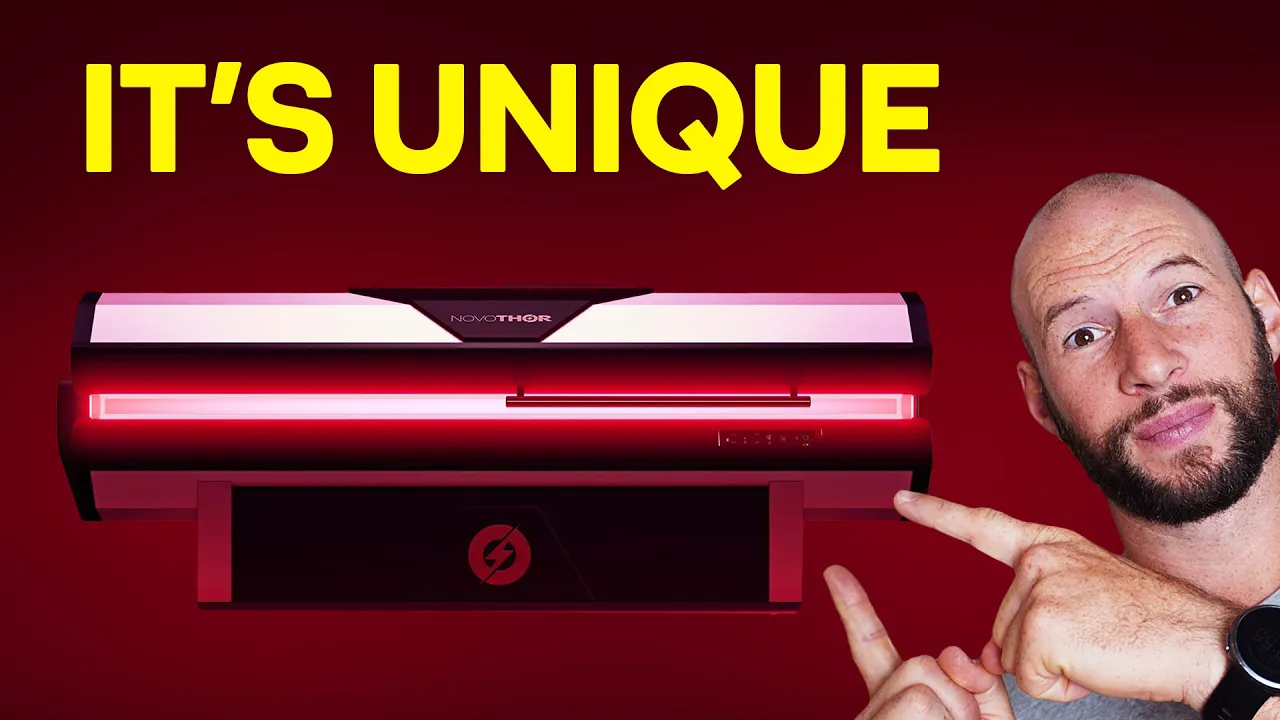








Light exposure fundamentally regulates human health through three key wavelengths: red/infrared light that penetrates deep into tissues to directly stimulate mitochondrial function and ATP production; blue light that serves as the primary circadian signal for regulating our internal biological clock; and UV light that activates the POMC cascade to regulate appetite, metabolism, and vitamin D synthesis. Modern indoor environments lacking natural light exposure disrupt these biological processes, contributing to chronic diseases like obesity, diabetes, and cardiovascular issues. Optimal health requires balancing light exposure through strategic outdoor time, using full-spectrum lighting indoors, and understanding individual mitochondrial genetic heritage to personalize light exposure needs.
Light, Mitochondria & Optimal Health | Dr. Alexis Cowan, PhD
Added:welcome to the Dr Gabrielle lion show in this episode I sit down with Dr Alexis count she's a PhD from Princeton she did a postto at University of Pennsylvania she is an expert in metabolism on this podcast we talk about things related to health and wellness and movement but do we talk about how our environment impacts our metabolism our environment impacting our overall health and wellness well today we do you're going to learn everything about light and impact of light on your overall well-being and as always if you like this episode please take a moment to share subscribe if you want more information if you are interested in the data and the studies and the guests that are coming out please take a moment to subscribe to my free newsletter go to my website Dr Gabriel line.com and please enter your email we will not spam you we will give you free information to make You Forever Strong [Music] Dr Alexis Cowen welcome to the show um you are a repeat guest I am hopefully people won't get sick of me we're gonna be talking about new things today though so I think it'll be exciting yes no one could ever get sick of you and I just want to um give people a little bit of background as to our friendship so you and I met through Dr Tracy Anthony and Dr Josh Anthony both of whom are incredible scientists and trained under Dr Donald Layman as well and you and I met while you were still finishing your PG prate yeah um and then went on to do a post talk at pen yep you and I collaborate on many projects I'm so grateful and today you are bringing us light mitochondria and something you called bioharmonic I did yes I mean the term biohacking is common but I prefer the term bioh harmonizing because we're not trying to hack our biology we're trying to find out how our biology is working and work with that instead of trying to cut Corners let's say I love that yeah and you and I again you and I are friends we talk all the time I asked you what is new what are you really interested in and you said light and light biology that's right why and by the way you have been a guest who is staying at our house I find you in the morning outside sitting on grass um seemingly very productive my favorite time of day it's so the best way to start your day why light great question so I went down the rabbit hole in light about 14 months ago um after hearing a podcast with Rick Rubin and Jack Cruz who's a like a Quantum biologist light biologist also a neurosurgeon um and Andrew Hub was also in that conversation it was on Rick's podcast last year and as Jack was explaining this story and kind of unfolding it I was just having I mean ironically light bulbs were going off in my head like I can't believe I missed this like this is crucial because prior to that I was really thinking a lot about the gut in the microbiome and I was like this is the most important thing this is what I need to focus on and then right when I started hearing this story unfold I was like basically back to the drawing board because I realized that this was actually the most foundational piece that almost everybody is missing and nobody's talking about that if we can get it right it's going to improve our health in literally every Arena of health and every organ system and our cognition and our mood and our relationship quality and our ability to critically think it's so fundamental that I'm just like all about it now and I I just can't stop talking about it h and it's it's interesting to hear you say that you had a light bulb moment because you're a very well-trained PhD which is why at number one why I have you on the show but also I really appreciate the way in which your brain works as a friend and as a human do you remember the moment do you remember the moment where and again you had been focusing a lot on gut gut muscle access you and I talk about that frequently but why the light there had to have been something uh I can appreciate the conversation but again you are trained at Princeton post talk at pen there must have been something yeah well I mean circadian biology was on my radar when I was in grad school and in my post but I it didn't really occur to me I thought you know it's it's important but I didn't realize how important important it was and how that interfaces those processes interface with light until after hearing this podcast and then doing my own deep dives into the research and understanding the science behind this and so I mean the biggest moment for me was probably just reflecting on the differences between the ancestral environment and the modern environment so a lot of people will think you know it's the food we're eating a lot of processed foods um or maybe you know it's living outside of a natural environment maybe you know we're living indoors that's kind of a new thing for our species um but you know light isn't something that people think a lot about just because at least for all generations alive now we all grew up with just having artificial light in our lives and also being propagandized with information about the sun being toxic and bad and so it's something that kind of just gets ingrained from a very young age and doesn't really elicit a second thought um but I started thinking twice about it I started thinking twice about it and and going into the research and understanding just how nuanced and how specific different wavelengths of light um have these differential effects on our biology and what they're doing to regulate our mitochondrial function and regulate our neurochemistry and our hormonal milu um and once I started going into that research I it became very apparent to me that this is a crucial piece that almost everybody is getting wrong because we just don't even have this isn't even on our radar are as like a a culture do you think that it's that we're getting it wrong or is it that so so I think about my dad my dad lives in Ecuador he spends most of the time outside you've met my dad he is um pretty unusual and unique in his behavior patterns spends a lot of time outside walks if it is going to take three hours or less he'll walk it but I I wonder from what you're saying is it is it that being outside would not necessarily be optimization but would be almost standard operating procedure for the body versus being deficient so for example does my dad have better health because he's outside maybe do people that are outside working in the field or if this is part of their life do they have better health because they're moving they're doing those things or on the flip side is it the deficiency of light that's the problem so this is why I really like thinking about light as the specific wavelengths of light as like essential nutrients because if we think about it that way we can very clearly see that depending on how we're living Our Lives we may be very deficient in certain wavelengths of light and we may have an excess of other other kinds of light and the three wavelengths of light that I really like to focus on in this conversation as it relates to regulating our biology are red and infrared light which is a very long wavelength light um Blue Light which is a shorter wavelength light and UV light which is perhaps the most important of the three and yet also the most demonized and so those are kind of the three pillars of light that I like to think about because if we're we're seeing an indoor you know artificially lit environment we're virtually getting zero red and infrared light because all energy efficient modern light sources including our device screens fluorescent LED bulbs they're highly enriched in blue light and completely devoid of red and infrared light and that's because like they're energy efficient quote unquote infrared light is just another word for heat um and so if a bulb gives off heat gives off heat it's thought to be like a waste of energy meanwhile there's a disconnect between not understanding that that heat that red light is actually a really important let's say um nutrient for our cells and so by eliminating it from artificial light sources we're actually doing our biology a disservice even though it's you know more energy efficient when it comes to like the electrical bills let's say um so there's a major disconnect there with regards to Tech development and like pushing technology forward and at the same time not building Tech that actually respects the way that human biology functions and where would someone say their red a blue and UV light where would someone in nature get red and infrared light naturally would that be from the Sun yep great question so I mean if you think about it in the ancestral environment we weren't really living indoors we were primarily living an outdoor lifestyle and we would have encountered Sun throughout different times of the day so if you're outside around Sunrise you're encountering primarily red and infrared light um that's why it looks like a reddish Hue on the horizon it's because um sunlight at the Horizon has to pass through more atmosphere and that means the the shorter wavelengths of light are basically being scattered because they're not able to penetrate through the atmosphere so the red and infrared light gets through along with you know maybe some yellow orange Etc so then as the sun rises up towards the center of the sky we're getting more penetrant of the short wavelength light which includes the blue UVA and UVB um which maxes out around solar noon and then as the sun settles towards the West we are starting to again re-enrich that red and INF Fred light and kind of deplete out the blue nuv light and but importantly though midday sunlight is still over 50% red and infrared light and that's actually the reason why sun feels warm on your skin it's the infrared light that's literally vibrating your tissues to generate heat so the sun itself isn't actually you know if it doesn't interact with matter it's not going to feel warm it's the interaction between sunlight the infrared light and matter that actually generates heat through VI vibration that's really interesting how long so there's sunrise sunset um does the length of time do you think that there's a natural Cadence with our biology the length of time that it takes for sun to rise um meaning again I I don't know this answer that it is sunrise red infrared and then eventually that light source changes from what I'm hearing you say the time it takes from Rise what that might be what 10 minutes so it's actually a really interesting question and it also is highly dependent on the latitude at which you're living so if you live really close to the equator um there's a very short window of time of about 15 minutes let's say like as you come towards the summer months it's pretty like uh stable there throughout the year but um a 15-minute window where you're going to get primarily red and infed light in the sunrise time but then very quickly the UVA light starts penetrating um and so if you download this app called the Circadian app you can look at the UVA and UVB rise for your latitude and so it will it will tell you so this time of year in New Jersey where I'm living and I'm just visiting here in Houston 24 north latitude I'm coming from about 40 north latitude uh how does she know that what's it called the circadian app we got to try thatc Matt we got to try that the Circadian app we're on it okay yep so in New Jersey if I look at my app you know Sunrise is around 6:30 let's say um by 7 o'clock UVA is already starting to enter um into the wavel wavelengths of light that are present there um UVB doesn't come up until roughly 45 minutes to an hour later because UVA is slightly longer wavelength than UVB um so it's able to penetrate more um efficiently uh earlier in the day and it's actually really interesting because we have specific photo receptors on our surfaces on our eyes on our skin and actually deeper in our body too which we can get into what about muscle so actually that's a good question I'm not sure if these receptors are present on muscle we'll have to look into it um but there's three receptors maybe four that we could get into one's called melanopsin it's a blue light detector it's present on the skin it's present on the cornea and it's also present in the retina um and its job is essentially to relay information about the blue light in your environment to the master clock in your brain the supermatic nucleus or the scn um which is the master circadian clock and so blue light is the primary input that's regulating our body's interpretation of what time of day it is um so you know if you think about this in the context of the modern environment it can become abundantly clear why being under artificial lights at inappropriate times of day is detrimental because we're putting in the signal that it's the middle of the day roughly because blue light is highest around solar noon even if it's you know the evening time and we're just working you know out of sync with natural light rhythms um because we're you know productive modern humans one would argue though that maybe that would make us more productive well so it does increase alertness and awakeness but the problem with that is that when your body is out of sync with Nature's rhythms now you know it's kind of you know I think that disregulated maybe yeah it's highly disregulated and I think you know our bodies as it relates to Nature like a part of nature we're not separate from it Although our frontal loes make us think that we are that we're somehow above it when we extract ourselves from nature I think we see the consequences of that in the modern day with just the in incredible rise in um chronic diseases and we can also see and as we'll explore with the different wavelengths of light and how they're interacting with our biology to let's say Stave off some of these diseases including diabetes obesity including um high blood pressure and cardiovascular disease including depression mental health problems and multiple types of cancers as well um all through just optimizing the light environment and so we can unpa some mechanisms of that um but just to Circle back to the photo receptors really quick so we talked about melanopsin we also have neuropsin so neuropsin is a UVA light detector that's present on the skin and the eyes the cornea and so in that Morning Light you know you're outside you're getting your red and infrared light that red and infrared light is actually penetrating into your body it can penetrate multiple centimeters into the body and it directly stimulates mitochondrial function it interacts with cytochrom SE oxidase which is complex four of the electron transport chain directly stimulating ATP production and improving mitochondrial function so the way that I kind of think about this is that we don't need receptors for long wavelength light because it's able to just penetrate in but with the short wavelength light the UV and the blue it's not able to penetrate very deeply and so we need receptors on our surface in order to actually relay that information to you know deeper parts of our system um and that's UVA light that's able to penetrate directly no U so red and infrared can penetrate directly UVA is interacting with neuropsin which is a light detector on our surfaces um so we have the melanopsin we have neuropsin um we also have one called inphy opsin which is another blue light sensor it's also called um pinopsin um so we have a couple you know different ways for our bodies to sense short wavelength light in our environment which you know as Jack Cruz says like does nature make mistakes if we have receptors for these wavelengths of light clearly they're really important for regulating some aspect of our bodies and it's our job to figure out what it's doing and there is an abundance of research that actually is unpacking this and I'm I'm guessing that you would say spend as much time as you can outside so yes maybe not good well I would say as much time as you can that doesn't mean you have to be in direct sun the whole time so depending on your skin type you know some people have more or less Mel uh is kind of dictating where your ancestors came from right so for me like I'm mixed my dad's side is black my mom's side is Scandinavian so my mitochondrial genes my maternal genes are from Scandinavia so I'm used to getting essentially you know mitochondrially speaking cold in the winter and then better quality sun in the summer versus somebody who has maternal mitochondrial genes from more equatorial regions will be more accustomed to getting high quality Sun year round and that's why they also is associated with more darker skin because you have to be able to assimilate that light so that it's not actually damaging your skin um and so that's really the purpose of melanin is to help absorb that especially short wavelength light so that it's not creating DNA damage and other things um but even pale skinned Fitzpatrick type one skin individuals can make melanin it is a human Birthright but there's a lot of things that we're doing as a species in the modern day that's going to block melanin production which is problematic if we're trying to you know prevent sunburn and skin cancers as an example um um actually you mentioned something earlier about outdoor workers and like you know whether or not they're more healthy there's actually really cool research showing that if you're an outdoor worker you're less prone to developing melanoma than indoor workers and I think we should at some point talk about melanoma because I think there's a lot of prop around it yeah and is it um I definitely want to come back to that because I'm curious is are they just more diligent are they staying more covered up um could that be the reason that they're more resistant as opposed to just overall exposure yeah yeah so I mean one really important aspect for melanoma that we need to just like address head on is that low vitamin D status is highly associated with melanoma now vitamin D we didn't supplement with vitamin D in our ancestry you know in Antiquity we were getting primarily our Vitamin D from UVB light exposure specifically UVB light when it interacts with seven dehydr cholesterol in the skin produces previtamin D3 that gets processed in the liver and the kidneys to the final active form the the 125 hydroxy vitamin D um obviously you know today we have access to Vitamin D supplements but the research actually suggests that vitamin D supplementation has next to no benefit for health other than um preventing or reversing rickets so at the very very low deficient status of vitamin D you can improve and like protect against rickets or reverse rickets but outside of that you're not getting any improvements on cancer incidents for example or diabetes which are linked with vitamin D status so but we would say that um there is so there are vitamin D receptors on skeletal muscle and we would say that those with low vitamin D status are at fall risk it seems that those individuals suffer more uh from Falls so potentially vitamin D supplementation if you are very low that definitely would impact that so this is this is a really important point and I want to really now frame vitamin D as a bio marker for your time spent outside and so if you're thinking about vitamin D as like it's low I just need a supplement it's going to solve my problems I don't think that's true I think uh especially once we unpack all the other benefits of UVB light it's going to become increasingly apparent that supplementing with vitamin D is going to be a very very myopic way to approach the problem and I think that a lot of the interactions and associations we see with low vitamin D status are really a reflection of not being in outdoor environments not encountering UVB light regularly routinely because think about it people are going outside they're putting on sunscreen they think that's what they're supposed to do to protect themselves they think you know that they're going to get melanoma if they don't put sunscreen on but it's actually really there's really striking evidence to show that yes sun exposure might increase your risk of uh Squam cell or basil cell carcinomas that is a link that's shown but the mortality rate of these cancers is extremely low meanwhile there's evidence on the same token that vitamin D and and Sonic exposure actually can decrease your risk of a whole host of other cancers that have a much higher mortality including colorectal prostate and breast cancers um there's actually some quotes I'd like to read at some point from yeah I would love because I'm curious you know when we're talking about cancer um our dear friend Dr Joe zandell you guys should definitely give him a follow he will always question me and say okay well if you think that what's what's the mechanism so what would be the mechanism behind vitamin D and sun exposure helping um with coloral cancer great question um what you do you got some uh you got some quotes for us I'll take it well okay yeah I'll just read the quotes really quick so here's a quote from uh study there's like pmids we can link it in the show notes if people are interested so it says studies in the past decade indicate that insufficient sun exposure may be responsible for 340,000 deaths in the US and 480,000 deaths in Europe per year and an increased incidence of breast cancer colar rectal cancer hypertension cardiovascular disease metabolic syndrome multiple sclerosis Alzheimer's disease autism asthma type 1 diabetes and myopia I actually thought all those things were due for uh to red meat oh I know right that's what you would be led to think in this in this culture right uh we also have another quote here frequent regular sun exposure acts to cause cancers that have a 3% death rate with 2,000 us fatalities per year this is the secc and the BCC skin cancers I mentioned and acts to prevent cancers that have death rates from 20 to 65% with 138,000 us fatalities per year that's the breast colon and blood cancers primarily and my understanding is the reason that you're pointing this out is because we've been told a lot to stay out of the sun uh we do spend a ton of time indoors I'm curious as to what the numbers are um and potentially that is doing us a tremendous amount of harm and so then we are told to go outside put sunscreen and and I can appreciate what you're saying um from that perspective that we are not getting enough sunlight but it's more complicated than that isn't it well so I would really as as it relates to mechanisms of like cancer and sun exposure I'd like to unpack another part of the story um maybe briefly to wrap up the vitamin D side of the story when UVB light hits your skin it's not only that previtamin D that's made there's also over a dozen other vitamin D like molecules that are made in response to UVB light so if you're supplementing with vitamin D you're not your missing out you're getting a very narrow Spectrum result but if someone couldn't get outside let's say they're institutionalized um or in the hospital they have limited exposure to sunlight what could someone do would they have to change their light bulbs what would be um an opportunity for change so I mean I think this is one reason why this story has not really been popularized because there's a lot of implications as to actually how we're living Our Lives how people are being led to think in a certain type of way and actually an inability to critically think due to a lack of sunlight which we will talk about very soon um but you know if you can't get access to sunlight there are light devices that you can use indoors um so for example red and infrared light devices they can that can re-engineer that red and infrared that long wavelength light back into your indoor life which is largely not present due to Modern light sources um there's also UVB lights available so spury is a brand that makes UVB panels they also make UVA panels um and we use that actually for scan for eais it's used for and then the red light we use BGE I'll put a link there for you guys yep yep so red panels can be great if you're not accessing outdoor light and you want to re-engineer some of that light back into your you know indoor lifestyle you can absolutely do that um the UVB panels are great I would just recommend that people try to time the use of them at the right time like to make it so that it's kind of concordant with when you would EXP have those exposures outside so if you're going to be having UVB and UVA light that should probably be more around like solar noon time like middle of the day because those receptors especially like the neuropsin is going to be telling your body like this is the signal coming in that means it's midday is thank you to Ned for sponsoring this episode of the show let's talk about Mello magnesium Mello magnesium is a three form magnesium with 70 different Trace elements in it and by the way it comes in four amazing flavors like lavender Berry and pomegranate naked if you want it plain but let me tell you about this melam magnesium is a three form magnesium with eleanine Gaba a whole bunch of other things in it in a tiny little pack that you can take with you and why do you need this 75% of Americans are deficient in magnesium magnesium is a critical mineral for bodily function and that means three out of four of you are actually deficient in it here's when I take my Mello magnesium I take it later on in the day like around 4:00 or 5 and oftentimes I will take it before bed it is an amazing product if you Google it you will see over 5,000 fstar reviews it that's not schlubby that is an amazing product go to Hello Ned that's h e l l n d.com use the code Dr lion for 20% off that's right 20% off your order hellon ned.com use the code Dr lion this episode is brought to you by timeline nutrition uh mure the product that I wish I had developed but didn't so I've teamed up with timeline nutrition to bring you one of my ultimate favorite products and that's mitop pure mitop pure is a science-backed urethan a urethan a sounds like a species of of something or other what it is it's a postbiotic and 30 to 40% of you humans cannot make it why is it important it's important because it's one of the first gut muscle access connection mitop pure helps the muscle and all mitochondria when you take it you can take it in pill form you can take it in um powder form I recommend trying the starter kit they have ginger and Berry I put some in my yogurt it's amazing here's what it does for you it will improve your potentially your energy your strength your endurance again mitop pure helps with mitochondria hence the name mure it helps with the Regeneration and cleaning out old mitochondria and if you remember anything about I don't know fifth grade science mitochondria they are the PowerHouse of the cell so you have to have good mitochondria to have good energy and one of the Hallmarks of Aging is a decline in this mitochondria so if it sounds like you need more energy more strength more endurance and something that tastes great mitop pure is a way to go go to timelin nutrition.com /d Lion that's timelin nutrition.com lion and you'll get 10% off your first order I recommend either the starter pack or the pills try it I know that you're going to feel great back to the episode you'd mentioned that there are skin receptors does someone need to sit in front of the light naked do they have to not wear glasses what what are what should they be doing and for how long Okay so really important question by the way Dr Alexis at our house we walk down we're why are you naked in front of the red panel now that did not actually happen but it was close I know right I mean hey I was trying to wear a crop top outside I'm always in crop tops shorts so for how long and in what kind of capacity yes so there's another really important part of the story that we didn't mention that's also related to UVB light and that is a molecule that's a pro hormone called proopiomelanocortin or Palm C so Palm C is produced in the skin and in the brain in response to UVB light and palm C is cleaved into 10 distinct hormonal products three of those are alpha beta and gamma msh or melany stimulating hormone so if you're not getting alpha beta and gamma msh stimulated in your skin and in your brain you're not going to to effectively Tan in response to UVB light you're going to burn so this becomes you know becomes very clear that if you're wearing contact sunglasses or prescription glasses outside and you're blocking the ability of U UVB light to get into your eyes that doesn't mean stare at the sun it just means getting ambient light into your eyes you're not going to effectively stimulate your melanocytes to make melanin which is tanning um same with your skin if you're blocking that UVB light with sunscreen you're not going to be able to generate that melanin and melanin is really interesting actually because melanin is to mammals as chlorophyll is to plants which something a lot of people don't know but chlorophyll light comes in interacts with chlorophyll chlorophyll can split water molecules into molecular hydrogen molecular oxygen and two free electrons melanin actually does the same thing and the papers that show this are quite old this has been known for quite some time um and so when we're developing melanin in our skin and interacting with sunlight we're actually able to cultivate more free energy so it's a way of actually eating by just being out side it's a way of cultivating and releasing liberating electrons into our system same with grounding wait wait wait what do you mean eating do you mean we're just leveraging ATP utilization ATP utilization is happening because we're not actually eating food per se well I'm glad you asked because I think it's really important to think about a light diet and a food diet as being you guys heard it here first this is very fringes um Matt my producer is laughing but you have to understand before ideas come into the mainstream they typically come from very intelligent people that are thinking about things that are very well steeped in the literature so this is what my listeners are experiencing from you um so it's it's amazing it will make perfect sense in just about one minute as I expl no no 10 years you guys will get this in 10 years is along with myself when you eat food you're not your mitochondria don't see carbohydrates fats and proteins mine do they see electrons no no mine mine definitely are like this was steak I know right ground beef steak salmon good stuff but so when you're extracting you're when you're breaking down assimilating nutrients the whole purpose of eating is to extract electrons from macronutrients so that those electrons can enter into the electron transport chain and support ATP production in mitochondria so anywhere that you get electrons is food technically so you can get free electrons from eating so by extracting those electrons from food that's powering your mitochondria ATP production you can also get free electrons from grounding so getting your bare feet on the Earth gives you free electrons from the earth there's plenty of resarch to show this also to show that grounding you know reduces inflammatory inflammatory response and inflammation within the body um which is related to mitochondrial function we also get free electrons from having Sun interacting with melanin so they're all different ways of getting access to electrons your mitochondria to access with electrons they're all equally important and they're all equally accessed within the ancestral environment too we would always encounter all of those things we weren't wearing rubber sold shoes outside we're in contact with the Earth we were getting sun on our skin if we weren't getting high quality sun on our skin we were getting cold because that's just how nature works if you don't have high quality Sun year round you're going to get cold in the winter that's interesting pause there I I'd love to hear more about that basically what you're saying is there's an interface if it is warm you're going to have less clothes on hypothetically speaking you're going to be outside that makes a lot of sense but if it's not we would it would if it was cold we would obviously be covered and I mean that's just I've never thought about that Matt have you thought about that if you are so it's almost like that that show naked and afraid but different um the more the less exposure on your skin to Sun the colder you should be is that is that what you're saying yeah because cold actually has a lot of reciprocal effects on the body that sun does so if you're I mean think about it in ancestral environment if you live in a Northern latitude you're encountering high quality Sun for part of the year in the other part of the year it's winter time you're getting poor quality Sun there's not much UV light the Earth tilted away from the Sun and you're getting cold because you know it's winter time so that cold is very very potent medicine for our mitochondria it upregulates mitochondrial biogenesis it increases mitochondrial ATP production mitochondrial density mitochondrial function in general also increases mitochondrial light production so we know you know we make infrared light we make heat in our bodies if you look at you know somebody on infrared camera you can see them because they're literally making light in their mitochondria um there's actually also some evidence that mitochondria can make their own UV light as well that stems back to the 1920s you that must have blown your mind and you probably couldn't sleep that night yeah absolutely and I mean it's really important too because UV and infrared light they're outside the visual Spectrum so we can't see it with our eyes I think that's probably by Design I think nature probably didn't want us to see it because then we would muck around and like mess it up it's probably quantized to our system meaning that like we need infrared and UV light in order to actually function internally um and we can either get it from outside in or we can make it internally so it has to come from One Direction or the other and we see you know basically all chronic disease are rooted in dysfunction of mitochondria and I think that's honestly rooted at a failure to produce light that's actually regulating so many of the biolog biological functions in our tissues and our cells and you would say that if they weren't able to get light they may they have to spend a lot of time being cold y exactly this this does really bring up major challenges for living in in an environment that is going to support what I'm hearing you say mitochondria and I'm sure that there are other lifestyle factors that one could layer on like exercise y aerobic exercise uh resistance training why did you care about the mitochondria kind of the connection between light and mitochondria yeah I mean mitochondria is something I've thought a lot about for a long time um you know my PhD was in rabitz lab at Princeton very metabolically centered lab and obvious for you guys um listening so I know these answers to the questions that I'm asking about her but I want you all to get a perspective of where her training comes from um Rabinowitz is a world-renowned um PhD and researcher yeah and actually I'm dying to go back and give a talk on this topic to them because I know it's not on their radar right now maybe somebody in the lab will listen to this podcast and be like Yep this is really cool we need to study this but there's no my dream is actually to make a sunlight research lab do you think that it changed it it has changed the outcome of results because of the light that the the studies in mitochondria are under yes exactly there's no Dr Jack Cruz talks about this a lot there's no light controls in our our translational research so on one hand that is kind of consistent with the modern environment because everybody's under blue light artificial light all the time that makes me feel better that's true but on the other hand we're not actually understanding how biolog is working because we're looking at it in a in a weakened State due to artificial light being the predominant light source um and I also as a little bit of an aside I really think it's funny that if so when I was at Princeton I was working a lot with rodents and if you wanted to go into the mouse room at night you it was Pitch Black you had to go in you had to turn on the red lights you could go inside it was only red lights because they know that red light is going to be far less disruptive to circadian biology and to you know how that Mouse's biology is happening um and then you know I do whatever I have to do in the mouse room at night red light and I go back to my lab that's blasted with fluorescent lights and we're just totally not putting the pieces together that on one hand we understand the role of light in you know regulating the mouse physiology metabolism and we're being sure to not disrupt that and that's because in all fairness they're nocturnal creatures it's not not because of that so I mean if you they're on um different light cycles so yes they're nocturnal but we're as dial mammals we require light to regulate our physiology they are sleeping during the day they still have a requirement for light exposure but at nighttime they become active and they know that it's time to become active when the light goes away we are know we know how to become active when the light comes out but if we're never in sufficiently bright light so also if you look at indoor lighting um it's very very dim compared to the power of the Sun and bright light is also important for stimulating alertness cognition Focus um and then of course the blue light component the UV light component that comes out midday is also serving to stimulate those circadian Pathways to tell your body it's the middle of the day um so you know if you're getting artificial light in your eyes during middle of the day it's not the end of the world because you're supposed to be getting some of that blue stimulus though I would argue that it's problematic because the blue light that's coming from these you know lamps let's say or whatever lights you're exposed to is devoid of red and infrared light and we talked about the power of red and infrared light to support mitochondria blue light actually has the opposite effect on cytochrom SE oxidase it actually inhibits cytochrom SE oxidase on our surfaces our eyes proximal brain regions and our skin so if we're encountering blue light in the absence of red and infrared light we're actually going to be harming our mitochondria because we're not encountering that balancing force of the long wavelength red light um my question is the these lights all exist together um red light infrared light blue light and there's a a third light UV UV light M um we are supposed to have them together and they we they are just going to be in different ratios yes and that is the way in which we were designed to experience light now we've come into a very unnatural environment whereas the ratios are different the amount if any um especially now because how often are people even outside y um and what you're saying is these have these situations have significant impact on our overall health and what we've heard you say so far is everything in anything related to mitochondria I would love for us to uh for you to teach us all the wavelengths that we should be looking at if we had to design a life around modern living yes we want to be outside as much as possible but what are the wavelengths that we're looking for what are the things that we're going to do I use a red light easily three times a week um actually probably more we were sitting here working um we're working on a again we have a few projects coming up we were sitting here working and being exposed to the red light I'm not sure if that's going to balance these overhead blue lights um yeah so I would love for you to take us through that yes so um depending on the time of day uh I I will preface this by saying if you can get outside that is the best solution for how long um so for some okay let me also contextualize this it would depend on your health status if you're very sick you need to kind of go all out because your biology is very disregulated at that point if you have cancer if you have diabetes if you're very very sick you have autoimmunity you want to kind of go gung-ho but if you're well and you just want to stay that way you can get away with maybe 15 minutes Rising with the sun trying to see the sun rise because then you're getting that red infrared and then you're also getting the rise of UVA which stimulates that neuropsin it kind of turns your circadian biology on not to the full extent because the blue light needs to come up as well so you're getting some blue and UV that's Rising as the sun rises um that's going to help turn your brain on turn your bodily functions on there's over 3,000 genes regulated by in a circadian fashion um is that also in the acute immediate yeah yeah I would say so I mean the acute immediate is primarily like an endocrine story but there are knock on effects of course to the like the regulation of gene expression as well um and actually that reminds me to Circle back to Palm SE at some point if you want to bring us back there um there's many other important things we need to talk about there as it relates to obesity and also well we have to talk we have to talk about light and body composition yes that's going to come into that story wonderful okay yes so if you're you know trying to re-engineer light into your life in a more circadian fashion you want to get red in the morning then you can add some UVA you can get UVA bulbs for your room UVA light is actually extremely important it's a major Liberator of nitric oxide in your well it forms in your skin and then it can actually diffuse into your blood vessels so nitric oxide is what's required for regulation of blood pressure it's required for vasod dilation for reaching of blood vessels into tissues to deliver nutrients and oxygen and one of the major problems with modern living is we're not really getting UVA light um if we're living indoors we're not getting it and so we're going to have higher blood pressure we're going to have issues with hypoxia too because we're not getting that proper profusion into the tissues so obviously there's other things that impact that as well like like Arginine you guys need to get enough dietary protein so you can make in to Arginine nasal breathing it's a big one um if you're breathing through your mouth a lot not only is it going to push you into a more sympathetic state but you're also not going to be producing nitric oxide which you can get through nasal breathing and friends will make sure that you remain single if you've ever seen a mouth breather it's so reason that's an insult mouth breather um so take me back to before we move on um red light wavelength wavelengths what again we use Bond charge you uh have a company that you love how do we there's so many red light devices that are sold for skin for hair what are the wavelengths that people are looking for yeah so there's been research on a handful of them um in contrast if you think about sunlight you're getting a full spectrum because if you look at the curve of sunlight Spectrum it's like it Peaks somewhere kind of closer to the red side and then it kind of goes down but it's like a full curve so you're getting every wavelength in between um and you get some far infrared too which it kind of like goes down at the IRA near infrared and then it comes back up in the far infrared around 3,000 nanometers but you're basically getting all the wavelengths in between in the devices we're getting kind of these targeted wavelengths so we have like 630 we have 660 or 670 um we also have U like closer to a th which would be like the near infrared um some wavelengths in there and each of them are kind of going to have a little bit of a different effect on mitochondria and I think that's why it's oh that's interesting yeah um basically what you're saying is there are a lot more different wavelengths that we have access to oh yeah so it would almost be the equivalent of taking vitamin D but there are so many different forms or you know metabolites Y is that is that am I understanding that right yeah I actually posted a meme on my Instagram a couple weeks ago that was like I don't know if you've seen like the very intricately drawn horse butt part and then it goes to like definitely not seen Stick Figure Head of a horse and that's like the vitamin D supplement and the beautifully drawn other side of the horse is like the sunlight exposure but basically it's like a shant like a faximile kind of got it um it's not going to be a perfect representation but the re there was research of course conducted to understand like okay which wavelengths of light are interacting the most with cytochrom the oxidase for example example so 670 NM lights a really good one 630 is also good those are like in the Deep Red part of the spectrum and actually there was a paper that came out I believe in January that showed that if you get about 15 minutes of this deep red light exposure 45 minutes before a meal well they didn't oral glucose tolerance test but you could kind of translate that to like a carbohydrate Rich meal that your total glucose Spike over you know the course of processing that carbohydrate input was about 30% less um so that's just showing the power of when you support your mitochondria you're going to be able to clear those nutrients from your system better because you're going to have higher flux State Higher clearance rate of those nutrients within mitochondria so if you just take your meals outside if that's possible you don't have to buy a red light device you can just you know eat your lunch eat your breakfast or some or someone could even uh try it again this is kind of complicated because in order to figure out an exact reproducible steady state it would require you to have a consistent diet before but if someone wanted to try it oh yeah they could try it themselves you could eat watch your um blood sugar eat the same you know get on the same track for a week eat the same meal outside I I think that would be awesome yeah I mean you could easily you could easily wear a continuous glucose monitor eat your meal inside under artificial lights on your device screen and then do the same meal the next day outside under the sun and see the difference you can see it for yourself um I personally have done that and I know it works for me and there's research now showing that it also works for other people too so I would I would encourage people to try it themselves too an individual who can't get outside can use artificial quote red light if they need it near infrared if you know um you carry devices you use devices what wavelength are you looking for or do you yes so I'm looking for at least a couple red and a couple near infrared to have somewhat of a full it's like more of a broad spectrum not a full spectrum um so the device I brought on the plane I was eating steak at the airport before I came here with my red light on me and en myself everybody probably thought I was crazy it's a good conversation starter though definitely not how long would someone want to use a red light 20 minutes a day yeah so um the counterbalance I guess what I'm asking is how do we create an environment where we can counterbalance uh to give ourselves the best opportunity to get in this flow of proper light because we do have to talk about performance and weight management and sleep as it relates to light yes absolutely so I mean first of all you can get full spectrum bulbs that have red and Fred in them that's probably your best option for the house everyone should get full spectrum bulbs yep so if you come to my house we have full spectrum bulbs inside but we also have red bulbs so if you come to my house around Sunset everything is red every room is red there's no white light in my house we have we filter all of our screens our computers we use like this Iris program called Iris filters out flicker filters out blue light why do you care about flicker flicker is very activating the sympathetic nervous system it's also completely unnatural there's no flicker give me the flicker I'm G to develop a flicker special oh yeah gonna be cracked out like me on coffee right now okay um that's a a great practical thing for someone to do is to just get full spectrum like is there a brand that you like do you do you care um so chroma makes a sky portal which is cool because it essentially clamps onto your desk and then it kind of comes up pretty high and angles down at you and it has a knob that you can turn depending on the time of day so you can have it on the full white that's also has red infrared and you can gradually turn it to being almost entirely red and infrared by the night time um and it's also coming from that upper angle down which tends to be more stimulating to the central nervous system so if you need to focus more during the day in your office having that light that white light that's coming down at you from above is going to be more supportive to your cognition and focus would there be any negative to running a red light all day long so I would say from a therapeutic standpoint you would want to be in front of the like right in front of the red light um as opposed to having it coming down or on the yeah for like the red light panels those are really meant to interface directly with your body um and so you want to reduce your distance from them in order to get the biggest dose essentially four inches how yeah I I would say within a foot do you um do you remember who Charles Paquin was yeah okay so Charles was a mentor of mine before he passed away and this was Prior he was always talking about athletes he was talking about these Olympians that he was training and he was so excited when the red light first came out he would get these huge panels and and put these athletes in this in this spot where they were surrounded by red light and he was like Gabrielle you won't believe this is it's almost too good to even share with the world and you know anyone that knows Charles or new Charles he's a little wacky um but brilliant and amazing in so many ways and now we're seeing a lot more of it yeah so I mean if if you want to use red light therapeutically I would stand right in front of it but I also would if I'm if I have to work inside you don't have to actually because the long wave length FL can penetrate through clothing you will get a higher dose if your skin is directly exposed um and dose also decreases as you move farther away so you want to get closer and have more skin exposed if you need a higher dose for you know whatever you're dealing with if you're trying to improve your skin quality or rehab an injury or reduce inflammation you probably want to maximize your dose and I would say maybe you could do it 20 minutes you could do it once or twice a day um but just for increasing the red and infrared light in your ambient environment throughout the day I like to run my red and infrared light panel just in the background so it's kind of just in my sphere but it's not like directly in front of me or like right next to me because I don't necessarily want the therapeutic dose I really just want like the ambient light to be more balanced that makes sense and the mechanism of that are that's a whole host I mean you named three light receptors is there more especially when it comes mitochondria yeah I mean I'm sure there is I think this field is in its infancy in a lot of ways so I think as I mean hopefully this conversation stimulates some bright Minds out there to want to look into these things more I don't think there's red and infed light receptors in our body like I mentioned earlier I think because the long wave link light can penetrate in we don't need to sense it on the outside we can just directly interface with it in our you know in our deeper parts of our body um but I'm you know I would not be surprised whatsoever if there's other light receptors out there that are playing an important role um in regulating our physiology and Metabolism response to the light environment palmy tell me about that you know because again what are practical things that people can think about leveraging so that they can be become better and why yes so this is like one of my favorite parts of the story so paly we talked about earlier it Cleaves into 10 different products three of those were alpha beta and gamma msh mosite stimulating hormone now outside of stimulating melanin Alpha and beta msh specifically the alpha we'll talk about first is one of the most tightly Associated Gene products with obesity we know Alpha Ms is disregulated obesity and as it turns out both Alpha and beta msh directly suppress appetite they work in the hypothalamus they suppress appetite and they increase energy expenditure so imagine how powerful that is if let's say you know you're trying to lose weight the the Holy Grail is being able to eat less and just burn more calories at rest which it's like the opposite of what happens if you're d dieting and you're not leveraging the system as you diet and restrict calories your basil metabol rate goes down because your body's trying to be Thrifty and hold on to what it has because it thinks it's going into like some sort of starvation mode the leptin story also comes into this and we can come back to that um but just by exposing your skin and your eyes to UVB light specifically you're going to get activation and and synthesis of this Palm SE molecule and cleavage and where is it where is the pom SE located the pom SE is going to well it's made in a lot of different types of cells it's made in immune cells it's made in the skin um It's Made in the brain different parts of the brain region different parts of the hypothalamus um um and uh basically that's going to influence your brain chemistry largely to not only help to suppress appetite and increase your basil metabolic rate there's also influences on lipolysis so being able to liberate more fatty acids from adapost tissue and also a link to your muscle ability to burn fat as well this Palm C cleavage these cleavage products also influence that ability to burn fat and mitochondria of muscle someone sees light they view light they get light exposure light exposure activates palmy in various locations and then it Cleaves to Alpha and beta subunits of um msh that what you're saying is that can become disregulated yeah absolutely if you're not exposing yourself to This Light you're not going to so you can access pompy in certain brain regions uh in respon to leptin but you you will never produce pom sey in your skin unless you're exposed to UVB light and we're meant to in the ancestral environment in counter UVB light on our eyes and our skin simultaneously and together that's like a concerted Force that's going to enhance the response on our bodies um so simply by leveraging that UVB light and getting more of it in your life you can dramatically you know suppress your appetite and especially if you're highly disregulated and have leptin resistance that's a real problem because your body is not your fat isn't properly communicating with your brain about how much of it there is so you're kind of your brain's always kind of thinking it's running on empty so it's constantly trying to fill up it's constantly trying to you know have you eat more because it can't sense how much fat is actually present that's what's happening you have data on that that yeah so that's what um Jeffrey fredman's lab in New York I don't remember what university is at I have a friend that is doing a postto there but he discovered leptin back in the 9s and they are largely on Le in resistance now and the mechanism for light so I'm curious about um for obesity do we know that those that do better with light exposure are going to lose more weight and need studies we haven't done that we haven't done them we haven't done them we know atically that this is the Cascade that happens anecdotally I mean I think a lot of people will attest to if you're outside let's say you're on the beach all day you don't tend to feel hungry you kind of just feel fine and one on one hand that's because you're getting like like maximal grounding effect you're getting electrons from the earth because salt water is basically like a soup of electrons and you're getting direct access with you know sand water salt that's kind of supercharging the grounding effect plus the sun it's like a perfect marriage of inputs um so all of those inputs are basically telling your system like we're good we don't need to eat food we have electrons coming from elsewhere um and yeah I think ultimately my dream is to build a sunlight research lab so that I can answer these questions definitively that I already know to be true for myself I want to provide the evidence that's going to convince everybody in the field and in science that this is actually really important um and that and I think it's also very hopeful too because it's not like we just can't use technology and we can't live modern lives we can just do it in a more thoughtful and thoughtful way that's going to be more more coherent with our biology I don't think it has to be like world ending it's just going to be Shifting the Paradigm in which we're building new technology do you think that um we could give people recommendations there would be a minimum amount of time that they should be outside would it be 4 hours I yeah I love this question and this is why I love thinking about vitamin D as a biomarker because we know at minimum you need about 40 nanograms per Mill vitamin D in order to fully suppress par thyroid hormone which is the hormone that kind of kicks on in response to insufficient vitamin D so minimum 40 nanograms per M from the Sun if if we're doing it from supplementation we're not going to be able to see how much we're actually making from the sun which is the most important thing because then we're going to be activating pom C Cascade we're going to be activating vitamin D and all the other vitamin D like pom C is not activated by vitamin D alone no both are activated and synthesized in response to UVB light that's what they share in common thank you to Apollo nuro for sponsoring this episode of the show I have been using the Apollo wearable for quite some time you might see me in my stories wear a tiny little square device sometimes I wear it on my wrist sometimes I wear it on my ankle and here's why I love the Apollo number one it is a tiny little device that sends small vibrations throughout my body so I put it on my wrist it almost is like a tiny little tapping and you can adjust the intensity and duration there are multiple different programs and here's why I suggest you try it it helps regulate your nervous system there is a lot coming at us whether it's our phones or uh demands and the wearable allows me to almost I don't know reset my nervous system I think that there's a lot of great science behind it it is a safe effective non-stimulant non-medication way to manage your nervous system it helps with my heart rate variability it can help me with sleep it helps people with anxiety it was created by a psychiatrist with whom I trust Dave would love to have you on the show um it's really amazing and if you are going to add one thing to your regiment that is nons supplement I highly recommend that it's this go to to apollon neo.com that's apollon neo.com use the code Dr lion for 15% off that's Dr lion for 15% off now back to the show so if we're using vitamin D as a biomarker for our sun exposure then it becomes really easy to dose our unique requirements for sun um so 40 NRS per Mill minimum but we know if you're leading a more outdoor lifestyle and also trying to optimize Health that you're going to be closer to 60 n grams per Mill maybe even a little bit higher um and so if you're able to do that track your vitamin D in response to sun exposure that's going to be the best way for you to dose your individual Sun needs and that's going to take into account how melanated your skin is because if you have more melon in your skin you need more sun if you have less you need less that would be interesting for people to do stop I listen I'm not your doctor for some of you I am but if you were to stop your vitamin D supplementation see where you're at give it how long would you give it three months how long for like a wash out yeah yeah I would say probably at least six weeks maybe wash out and then I mean obviously don't avoid going out in the sun during that time but just stop maybe you know cease taking the supplement go outside get some of that midday Sun we'll talk about strategies to prevent sunb burning too because it's really important um in order to like fully harness um UVB light without the drawbacks um and then you know track your vitamin D maybe check it again three months later after you've been in the Sun the summer's coming up and gonna have access to high quality sun do we know how fast it changes I mean vitamin D yeah I don't know actually it's gonna somewhat depend on um probably polymorphisms in the genes that are responsible for making the enzymes and the kidneys and the liver that actually make that conversion I know some individuals also if you maybe your kidney function or liver function is impaired in some way your body's not going to prioritize that conversion also nutrient deficiencies and things like Boron and magnesium also affect that conversion efficiency um so there will be some variability what we do know is that when UVB light hits your skin that conversion to 7D hydroch cholesterol assuming that that's present in the skin I think there's some evidence that suggest that if you're very if you're living in like a city environment you have a lot of non-native emfs in your environment that could prevent EMF so natural emfs would be like sunlight um like the Schuman resonance which is like the magnetic field of the earth 7.83 Hertz um non-native emfs would be things that are powered by the AC power grid essentially the alternating current power grid which was incepted at the you know World's Fair in 1893 before that we did not have electricity indoors people didn't have light bulbs they were using fire if they wanted to have light at night um but 1893 everything changed within you know 10 15 years the power grid was up and going and people were you know increasing their productivity they were working at times that they never worked before um we had you know the industrialization happening factories and all of these things were happening that were pushing us away from our Roots as a species and so I mean if you think about that it's only been you know less than 150 years that our species has been encountering this and the AC power grid it runs on alternating current which is not congruent with the kind of power that our bodies use our bodies use a DC power direct current or mitochondria essentially are biobatteries they make energy through separating charge they separate protons from electrons then when those protons come back into the inner part of the mitochondria that powers ATP production so our mitochondria literally B batteries that are creating DC power they're creating direct current power AC power grids that's not that's completely something differenta the emfs that come from these things you know if we're plugging anything into a wall and going into the grid that's running on AC power it gives off emfs also are things like Bluetooth Wi-Fi 5G 4G 3G all these things that we're encountering in the past let's say like 20 years or so 30 years um are novel they're running on frequencies that are part of the electromagnetic spectrum but they're not frequencies that we encounter here on Earth because our atmosphere blocks almost all of them so the radio frequencies for example and would you say being outside helps mitigate some of these effects absolutely it makes your biology so much more resilient also because melanin we talked about earlier melanin is really cool it can split water melanin also absorbs all parts of the electromagnetic spectrum including memfs so if you are building melanin on your surfaces on your skin that means you're going to be mitigating the exposure of your tissues to these frequencies because your melanin is able to actually absorb it instead would you say that people should be tanning yeah absolutely you just shouldn't be burning I think that's the problem and maybe this is a good segue to talking about how to avoid burning yes and I just made a post on this yesterday on my Instagram people want to check it out so number one would be to not wear sunglasses because if we're not making the alpha beta and gamma msh in our brains we're not going to be effectively stimulating melanin production in our skin so we need to expose both our skin and our eyes to Sun in order to effectively tan wait a second that means that if you're at the beach wearing sunglasses you're more likely to burn than if you weren't wearing sunglasses but what if your eyes were just closed and you were sleeping that's fine you can close your eyes I mean you're still getting penetration of light through your eyes obviously I me through the lid yeah through the lid but not through the glasses well yes the glasses are blocking UV light specifically some blue light um they're going to be blocking some red light as well um if you're you know your eyes are closed you're getting red light and then red light wait but do you think that's fair to say that someone would if they had glasses on they would burn burn more yeah and honestly if you want to hear my really hot take I think the rise I do I'm putting Matt Matt is going to now sit outside with sunglasses let's just see if he burns Matt for the first time listener is my producer we're going to work on getting him a camera and I M because he's just hilarious my really hot take is that the rise in skin cancers is largely due to sunglasses contacts and prescription lenses being worn outside constantly we're never exposing our eyes to you like what that's take all right well we can't say that that is convincingly science but that is Dr Alex somebody need to go study it eventually they will no we need you for muscle studies I do all the things okay how does someone not burn so don't wear don't wear glasses and you guys probably don't stare at the sun don't stare directly at the sun no come on guys no you don't need to do that you can get just ambient light in your eyes no need to it's going to harm your retina if you do that so don't do that um outside of that the foods we eat influence our our burning risk tell me more so in the cestal environment we were eating a ratio of omega3 to Omega 6 let's say 6 to3 of about uh 1:1 to 3:1 ratio of Omega 6 to omega-3 the modern day intake tell us what that is though tell us Omega 6 versus omega3 where are we finding Omega 6 versus omega3 so Omega why was that ratio like that so largely the Omega 6 ratio which is now 20 to1 to omega-3 has increased because of the industrialization of food production so we're using a lot of processed oils we're using the corn soy sunflower um you know all of these oils are very enriched in omega-6s and like kind of devoid in Omega-3s any Omega-3s that are in these oils like let's say flax or chia seeds or something like that is in the Ala form uh it's not in the form that our bodies actually use to support you know function and anti-inflammation we need the EPA and specifically we need the DHA which is the longest chain um omega-3 in order to actually facilitate anti-inflammation um um and convey actually one of the major roles of DHA is in the eye and it it's used to actually help penetrate light into our brains it is a conductor of electrons essentially um and so DHA and EPA you can only get from animal foods you can take it like an algo oil but there's actually research to suggest that the vegan algal oil sources of these EPA and DHA Omega-3s are less bioavailable because they have their double bonds at the wrong position um and that would probably go in line with the conversion of of plant sources of ala yeah exactly and well another problem of consuming your Omega-3s in ALA form is that so let's say you're consuming only ala you're only going to convert about 5 to 10% of that to EPA about 0o to 5% of that to DHA so very low conversion rate on top of that the Machinery that's used to convert omega-6 um lenic acid LA and ala which is alphal linolic acid for the for the listener alphal linolic acid is the plant form of of Omega-3 the same Machinery is used to elongate both of them and so if you're consuming a lot of Omega 6es and not so much of Omega-3s you're going to be out competing that machinery and you're going to be preferentially converting the the LA Omega sixes into the longer chains and one of those longer chain fats is arachadonic acid which is an inflammatory precursor um that our immune system uses to essentially incite inflammation um so if we're consuming a lot of Omega sixes relative to Omega-3s we're going to be more prone to an inflammatory response in general General that's also true at the level of the skin um The Skin Barrier can be weakened the skin will be more prone to burning with the consumption of an unbalanced Omega 6 to3 ratio where in the blood work would you like to see it yeah so that's like the Omega Quant test will tell you the ratios between them I think that's a good way to go about checking and I would shoot personally for a more ancestral ratio of about a 4 to One Max um I would say that would be a good goal to have and if you're getting your Omega-3s in I would try to get those from fatty fish or shellfish that's going to be the most bioavailable the most concentrated sources and of course if you can't you can supplement I don't need a ton of fish I just don't really like the way it tastes so I end up supplementing what about other Foods um that are rich in beta carotene for burning things of that nature or certain polyphenols yeah so asoan zanthin will probably be the most validated antioxidant to use to help prevent burning basically just helps to also absorb some of that light that melanin will also do um so I don't think that's a bad Approach at all I think that's a pretty good way to go about it um with regards to burning I'm trying to think actually let me just check what my post said because I was very thorough here so we have okay Jack Dr Jack Cruz talks about building a solar callus which basically means you want to gradually increase your sun EXP exposure you don't want to just go Z to 100 um so that means mid dayon maybe start with just 10 minutes see how your skin responds gradually increase over time if it's a summer month you know you may want to gradually increase even more slowly depending on how pale your skin is but you can make melanin even if you're super pale it is possible for you it's just going to take a little bit more time to adjust and by the way have you ever looked into any of the peptides um for example melanotan mean yeah so yes um but I personally subscribe to the notion that if possible we shouldn't exogenously take something that we can endogenously produce because it tends to decouple the system and like the regulation that's in place so obviously there's a place for like hormone replacement therapy things like this maybe even vitamin D supplementation if you're very deficient but if you or if you're my patient no just kidding but what you're saying makes a lot of sense we're te have to then if you can do it naturally then I would leverage that for because then your natural regulatory mechanisms will be in place to make sure that system is running as smoothly as it can um we mentioned the sunglasses but that's also relevant for the contacts prescription lenses and sunscreen because all of those are going to be blocking UV light UVB light what about if someone is driving in front of a window what kind of light penetration do we have yeah so we're basically getting everything but the UV we're going to we're going to get some uh about 40% of red light will be blocked and infrared a light will be blocked by the window so it is creating like this alien Sun Spectrum if we're behind a window um even if you're you know in your home you have good natural light it's not actually natural light unless you open up that window because the glass itself is going to be filtering the light and making it let's say unnatural or alien to our biology um there is actually a type of glass that will allow UV light to penetrate through it's called quartz glass it's very expensive um not practical at this point but hey maybe this podcast will also Inspire somebody to go make a a GL company of quartz glass windows I mean not a bad idea what about um body composition in sunlight and training outside and Sun's effect on skeletal muscle you and I have talked again my interest is in skeletal muscle about muscle clock genes we certainly don't have to talk about that here but I am curious as to the interface between training outside and does that make Muscle more efficient more effective does it allow us to you know increase power or strength maybe it doesn't even work on those domains please yeah so I love this question I also think there's just a Darth of research in this area we need more research in this area but having said that just on first principles like axiomatic presuppositions to understanding this light interaction with Biology we know red and Fred light can penetrate into the body and support mitochondria so doesn't it just make perfect sense that if you're working out outside you are demanding energy production from your muscles well what better way to support that than actually getting red and in red light on your skin penetrating into your body that's going to support that muscle energy production capabilities um so I mean I personally have noticed that doing my workouts outside I'm virtually not sore at all and actually I had a gym membership that was frozen unfroze like a month ago I went to the gym it's now thawed yes it's thawed now I went in I did my normal you know it wasn't anything crazy I was like crippled for 4 days after that workout and prior to that I had been almost exclusively working out outside or if I was working out indoors I had my red and ined light panels on why do you think that is yeah so I think it's you're putting more stress on your muscle and it's not in like an Adaptive way necessarily either it's just in a way that like your muscle not able to to um optimally respond to the signals that you're demanding from it um through like sustained contraction or you know weight whether it's weightlifting or cardiovascular exercise your muscles need to produce energy um obviously if you're doing like very glycolytic exercise like you know let's say Sprints or lifting there's less of a role for mitochondria but there is still a role for sure because even the most glycolytic muscle still has mitochondria it's just not as dense as some of the more red muscles and do you think that that definitely played a role in your recovery and soreness I personally feel that and I think it would be an easy enough question to ask scientifically we can easily do this um so again something I would love to study personally what about behaviors and time frames of doing things training in the morning training late in the afternoon do you believe that there's a certain time frame to do various activities yeah so I would say um based on my understanding of the current state of the research and and these biology interactions that probably a more intense workout is better to do let's say in the late afternoon I think if you're doing it too early in the morning it May compound the stress response that you just naturally get when you're waking up obviously for those of you who don't know cortisol spikes in the morning actually in accordance with bright light so that's why it's really important to get ideally natural light into your eyes as soon as possible after waking up it helps to um optimize that corol response which is actually really important for mobilizing fat and glucose so that your tissues and your and your brain have energy to be able to kind of turn on for the day and get you going for the day um so we want to be able to optimize that cortisol response but if we're also like mainlining caffeine and exercising first thing I think that creates an excess of stress that's not necessary like we we could just simply if it's possible retime that exercise to be at a point in the day that's maybe more um slow for us so typically in like the mid to late afternoon people kind of get that slump part of that is because their light environment is not optimized and they kind of their cognition is kind of declining because maybe you know they ate a car Rich lunch and they're getting a sugar crash or whatever it is um but part of that is also a natural rhythm of our biology kind of getting more quiescent during that time of day so if you want to work out during that time of of day it could be a good idea because you can like kind of turn your system back on um and combat that slump that some people will experience during that time have you looked at any data regarding female specific information female fertility as it relates to sunlight I know that that's a very odd question but we definitely see more rise and more rates of infertility we see more challenges with Perry postmenopausal experiences for people where do you think light and some of this bioharmony plays a role regarding environment so something that a lot of people might not know is that leptin is actually responsible for initiating puberty in girls so that leptin system goes far beyond just you you know a thermostat for how much body fat we have it's tightly regulated with the pituitary gland the interaction between the hypoth hypothalamus and the pituitary gland we know there's like the HPT and HP AIS um they're all communicating with each other and so the leptin story is very far-reaching in its in its implications with regards to fertility and hormone production and regulation of hormone production red and infrared lighter actually they help to turn on sex hormone production and and that's also why it's really good to get it's through the the leptin molan Corton pathway so leptin interacts with we talked about the alpha beta and gamma msh um these are involved in the M Corton pathway as well these interactions between leptin and the Brain um is also very tightly tied in with this light story and again I think we need more targeted research on these questions too that are frankly very easy to answer we just haven't been asking the right questions with regards to this topic um but at the same time there's also some researchers to suggest that um UV light actually will turn down sex hormone production and that's not necessarily a bad thing it's just about a timing mechanism like there's certain times of day where you should be producing your sex hormones and largely that's going to be in the morning and in the evening which is when you would encounter sunrise and sunset light that's red and infrared dominant um and so I think those those are probably The rhythms that nature kind of intended for our hormone pulses to occur and we're not really encountering that red and Fred light in modern day um modern Lifestyles and I think um we're paying the price for that in a lot of different ways and one of them I think is the fertility problem obviously there's things like endocrine disruptors and uh you know we'll talk about sleep because that has major implications with the hormonal system and and brain function and neurochemistry and all these things um as it relates to circadian biology but there's lots of inputs that are affecting these phenomena these you know these crises of infertility and um hormone disturbances but I think light is certainly one of them where would first of all that's fascinating to think that light has any role in sex hormones and any role in relation to when puberty starts when it doesn't again these may not be direct relationships but certainly with the influence of leptin that's fascinating I have to say I don't know much about that but I'm sure we're going to start to hear more about it as we become increasingly aware of the environment and the environment's impact on us from a health entirety standpoint you mentioned sleep how important is light to sleep it's the most important you know it's funny you and I have known each other for years and I've watched you think about a lot of different aspects and you're always increasing the layers to the depth of your knowledge um and it's fascinating that light has become such an interest because again your background is in human metabolism nutrition exercise and now you're getting involved in the more external environment which is is just fascinating it it creates a much bigger picture we all know that sleep is important I could do a lot better job at it personally so I'm not telling you guys to do anything that I don't do because I don't sleep much unfortunately how would one who wants to be able to get to sleep early feel energized leverage light so you can probably attest this I used to be a night owl I know it's terrible I and I woke up with the sun today this is just awful it's awful because unfortunately for me I seem to work close to around the clock now you are no longer available at 11:30 at night when I'm asking you a question about mortality and whatever it is terrible yeah well see this is the power because when I started delving into this I realized how much I was personally doing that was out of alignment with just biological constraints and I started seeing changes immediately so I'd always been a night owl I'd never really paid attention much to like blue light at night or light at night or like not watching TV in bed or whatever like that um and as soon as I started learning all this stuff I was like I got to change everything that I'm doing but it's also pretty small stuff it's not like life altering things it's pretty small changes so for example um using redl at night if you can that's a really simple change that you can make that's not going to provide that blue light signal that's telling your body it's the middle of the day that's going to allow your system to naturally produce melatonin we know that blue red light red light produces melatonin or this suppression of blue light allows for the the absence of blue light allows melatonin to come up um we know that blue light specifically is what's called melanopic light it suppresses melatonin secretion but I have a quick question wouldn't it make more sense to just not have light because would the red light stimulate mitochondria should we just be actually sitting in a dark room so ideally yeah but in some cases that's just not going to be possible whatever definitely not whatever responsibilities people have um so there's kind of two features of light that are that could be disruptive to melatonin it's both blue light content and brightness so if you're going to use light ideally make it dim red light or like a dim amber light that's going to be the best case scenario outside of not having any light on at all what about candle light yeah you can do candle or that the color of it doesn't matter for from that perspective so I would say light is still going to be somewhat disruptive but it is pretty dim and it's more on the red side of the spectrum so it's going to be less far less disruptive than having a white LED or fluorescent bulb on um those are highly suppressive to melatonin secretion and we need that rise of melatonin in order to trigger sleepiness reduce sleep latency the you know enhance the ability of you to fall asleep quicker and also stay asleep and then naturally you know melatonin is going to start waning throughout the night and once it reaches like a nater then cortisol starts rising up and we naturally wake up and that that's the cycle that our body requires and both cortisol and melatonin are circadian um are circadian regulated I like to call them like circadian biosensors so they're both regulated in accordance with light um I will also mention here that light and dark are equally important for human biology and I would argue for like Maman biology in general light isn't itself the most important thing both light and dark are of equal importance and we need both of them we need need light bright light from the sun ideally and dark darkness daily at the right times in order to have a regulated physiology that's pretty profound it people might think well goodness that makes sense but how many of us really sleep in Pitch Black rooms and also wake up to the Sun or bright brightness nobody yeah and I mean this is one of those things that like you don't think about until you see it and then it's like you can't unsee it I agree why does someone have to get up and get outside I'm just thinking from a practical standpoint my kids MH I they get up and I try to get them ready for school MH I should probably get them up and we should all get ready outside for school how important is that time frame so it's important in the sense that if you're Rising with the sun you're going to access that red in for light in the morning helps to regulate the hormonal milu helps to turn on your mitochondrial function helps to regulate that cortisol response and then you're also encountering some of that morning UVA that's right in shortly after Sunrise depending on your latitude that's going to also start to engage that circadian mechanism through the neuropsin sensing um opsin molecule and so yeah if you can you know what I like to say and what I personally do is like whatever I'm going to do inside I just try to do it outside if I can obviously you know weather permitting but what I've done a lot in my life is like I stopped spending my money on supplements and I started spending my money on making like a beautiful outdoor environment for myself that I can just enjoy being in have like a nice patio with an umbrella if I need to get some shap or if it's raining I can go under there still encountering natural light um and just making a space that's enjoyable and that's going to be I mean in my opinion far money that's far better spent than on like some dubious supplements that we have no idea if it's working or not and it's like makes some bold claims but we know that light is so important that why you know let's spend our money in doing what we can to optimize that light environment and you'll see the benefits immediately like I without a doubt and you and to be fair you live in New Jersey which it gets really cold in the winter how does one begin to think about balancing the light and the cold if you are inside more do you need more cold exposure if so how do we think about it are we thinking about cold plunge thinking about being outside and so frame it up for us as to what someone would do and how they they can think about it yeah so I would say the beautiful part about this is that you you don't have to be cold all day in the winter it's your body doesn't require that much of a dose to be functioning well um so what you can do is if you're using cold water immersion that's going to be the most effective way to actually get the Adaptive responses to cold exposure because water has what's called a very high specific heat capacity which means it can hold a lot of heat which means that if you're doing cold water immersion that heat is wicked away from your body very quickly and then you get that adaptive mitochondrial activating response and the increase of brown fat activation and beige fat production that helps to produce metabolic heat um in a shorter period of Time Versus going for a walk in like shorts and a t-shirt outside in the cold you will still get a benefit but it's like let's say you can do 5 minutes of cold water immersion or you can do like 45 minutes of a walk outside um it's just a much more effective and efficient way to get that cold exposure adaptive response and how um cold does it have to be so for the metabolic benefits the research would suggest between 50 and 55 de um water would be optimal or ideal or sufficient let's say to get those metabolic adaptations um Dr Tom Seager who's a professor in Arizona he talks about for the psychological benefits that it may be good to go colder because you actually need to a real challenge to kind of like develop grit um and this may be particularly true for men I think uh women's physiology tends to be a bit more delicate with regards to the stressors that we experience we tend to get a bit more disregulated from it intense stress and strain on the on our physiology but I think you know women can probably even benefit from this too if it's like 1 to 3 minutes three would be like a Max at like 37 degrees like that's cold that's like you know ice bath status and um but that's when you can really develop like more psychological resilience in response to cold so depending on your goals I think most people a lot of people would just really want the metabolic benefits um so if you're leveraging the cold in that way you can do 55 degree water and get a lot of those benefits um you may need to go for a little bit longer as you get more adapted it depends on how robust your mitochondria are responding how much Brown fat and beige fat you have um as you become more adapted you kind of need to increase your time spent similar to the melanin story as you have more melanin you need more sun to get the benefit same with cold if you have more of that adaptive response already in place you need more cold um have you thought much about the interface between all of them the light and the cold particularly and how they work together yeah absolutely I mean I think um with regards to like doing cold exposure in the Sun for example so yesterday we did exactly what I was thinking about yeah we did our cold plunge and you opened up the garage and the sun was at the perfect angle that was just like beating down on you while you're in the cold and I was like by way it was still very cold and we actually had it set again we will never hear the end of winter hell week it was said at 54 degrees but um I thought that was that's plenty cold it was good it was plenty cold um yeah so what is the interplay between light and cold I'd actually never thought about that prior to our having a discussion yeah so I mean if you think about what we talked about with regards to the infrared and red light stimulating mitochondria we know we need to stimulate mitochondria in order to make metabolic heat so the metabolic heat is what's happening when our mitochondria responding to cold and so if you're stimulating your mitochondria with red and and Fred light while simultaneously getting cold you're going to get a better more robust response to that cold exposure you're going to be able to tolerate you know potentially longer periods of time you're going to have a more adaptive response it's just going to be far more supportive and um like Health fortifying experience versus let's say doing a cal plunge being blasted with blue light for example which is not going to give you that same benefit I I love that and again that's one of the reasons that we use plunge which um Ryan if you're listening to this Dr Alexis Cowen she needs a plunge because it is my absolute favorite but we try to plunge you know in natural light it just seems to feel better um I'm also going to say anec data so this is anecdotal data my own data it feels less stressful quite frankly when I'm am almost outside doing it oh yeah versus in a contained environment yeah and I mean if you think about that in nature we would encounter cold bodies of water in nature it's I'm pretty sure nobody in nature would willingly go into a cold plunge or a cold oh sure they did bathing and rivers and things like this oh yeah I guess they would have to I never thought about that yeah I actually never thought about that yeah I think there's even cold bodies of water near the equator too just you know from all the flow and depending if it's coming up from down from a mountain then think about it those that live in warm environments like my dad would never be exposed to cold water I think there's still some cold bodies of water if there's like you know rivers or streams coming down from higher altitude could still be on the colder side maybe not in the 30s but it could be in the high 50s let's say um I mean we know the Pacific Ocean is like in the 50s right so it doesn't get very warm just due to like the way the the water currents are occur occurring in the like the ocean system um so I think it's safe to say that even if you're in more equatorial regions you still might encounter some cool water and that that would be natural to encounter in the presence of more intense sunlight as well and that they actually synergize very nicely let's talk about protein specifically first forms Natural Way protein Formula 1 people ask me all the time what kind of protein powder I use what kind of protein powder I recommend Formula 1 makes many different kinds of protein powders different flavors a natural one you pick it it mixes amazing it makes it extremely easy to get your protein in and really they're it's a whey protein isolate so you're getting the majority of your calories from protein in the shake tastes great super easy to travel with great breakfast dinner maybe even lunch whatever you need it's got you covered and it has all the amino acids necessary will help improve body composition muscle mass all the things that protein does and by the way when do you need protein well you need it every day and that's why I love first forms protein powder their Formula 1 go to First form.com lion that's first form.com lion have you done your blood work uh if you haven't I have a solution for you and that is one of the sponsors of the show inside tracker why is blood work so important well you know I use inside tracker my friends use inside tracker also my parents use inside tracker inside tracker makes getting blood work very easy and user friendly they have an amazing interface you can check it out on your phone you can check it out on the desktop which you know hopefully you're using a small one inside tracker allows you to look at really important biomarkers like hormones iron thyroid insulin the list goes on apob it never stops and by the way if you are a professional and you have clients insid tracker also has a pro platform amazing I really feel that inside tracker has revolutionized Healthcare and listen blood work can be expensive but it doesn't have to be inside tracker is offering my listeners 10% off 10% off anything on the store in the store anything uh as it relates to subscriptions 10% off go to insid tracker.com like insid tracking your body use the code Dr lion and do not wait if you are due for your blood work give this a shot it's extremely valuable back to the show so we do I I think that that's all brilliant um and I have to ask you our five questions which by the way they're different for everybody okay and your answer has to be yes or no okay and because you're talking about um cold equator you know equatorial type environments I'm going to choose some of those questions so um skinny dipping yes or no yeah um strength training inside yes or no o this is a hard one God I know so normally she would say yes a year ago you would have said yes I would have absolutely I mean okay I'll be Pro I'm gonna be provocative sure Gerard jfo okay said sure I asked him a question and he said sure um diet soda no hell no hell no um sleeping with an eye mask yeah so that was a sure yeah sure if you have no other option sure um wax earplugs because we actually didn't talk about sound stimulation but I'm just gonna leave it as wax earplugs sure I never thought about it either I mean obviously sound can wake you if you're sleeping um if you don't have control of your environment very well then yeah could be good where it PLS fasting for mitochondrial Health this is a hard one Gabrielle I know uh generally speaking I'm going to say no I would I would also say no yeah so we've been talking about Palm C uh beta msh Alpha msh there are other Downstream components whatever you want to say byproducts of palmy what are they yeah so among those 10 cleavage products three of the other ones are alpha beta and gamma endorphin and these are huge you may have heard of endorphins in the context of like mood or even in exercise nope never heard it well yeah amazing okay tell me yeah so these molecules make us feel great not only that they reduce anxiety they improve our Baseline feeling of well-being they actually also increase our ability to think well and they enhance our Baseline dopamine levels which is huge and if you think about this like so many people in modern society are going through life with really just burned out dopamine systems because they're constantly seeking for these quick hits because we're not getting that Baseline elevation from UVB light exposure that facilitates the Endorphin production so if your dopamine system is kind of shot because you're never getting that elevation of Baseline you're going to constantly reach for the junk food for the junk media for the you know alcohol for the drugs whatever it is to get that hit because you're not operating from a place of fullness you're operating from a deficit and you're always looking for a next Quick Fix to that problem and you're saying sunlight would help balance that yeah because you're getting the production of the alpha beta and gam endorphins which release dopamine in the brain they help to just increase your your mood your felt sense of wellbeing also your ability to critically think because if your dopamine system is shot you're also not going to be able to think in a way that's more Curious and open-minded you're going to naturally be more dogmatic and myopic in your view of life also this ties into the blue light story too because blue light also pushes you into a more sympathetic state in a sympathetic State you have blinders on you're like very focused on what's in front of you you're not able to see the bigger picture both literally and figuratively like it literally shuts off your peripheral vision but it also doesn't allow you to think in a more holistic connected way that's connecting disparate pieces together to actually critically think effectively um so there's so many implications with the light environment as it relates to your ability to think properly which obviously has KnockOn effects to everything like your ability to have high quality relationships your ability to navigate challenge in your life you're um you're reaching for vices like the the urge to even do that is largely rooted in this operating from like a deficit that it's a really good point these are the tips that you've given us that you continue to give us are clear and easy things that we can do to leverage our environment give me your top five give me three to five things that you wish you had known that you think everybody should Implement daily great love this question so number one would be the sun light specifically is I would say in in it's an invaluable aspect of our environment that's regulating our bod so the more that you can leverage the Sun directly the better off you're going to be and the more you can be outside in natural environments the more synced up your biology is going to be with nature um which means that it's just going to be a better fit for you your body's going to be able to be more adaptive to your specific environment um so leveraging sunlight would be number one um number two would be that figure out where your mitochondrial genes come from so this basically means find out where your mom's side of the family came from because you inherit all your mitochondria from mom if your mom side of the family comes from more equatorial regions you know let's say they have darker skin you don't need to do your genetic testing you can just see their skin tone and see you know whereabouts they might have come from if they have darker skin they probably came from equatorial regions without a doubt what that means then is if they come from these regions you have a more coupled mitochondrial hype which means that your mitochondria are really good at making energy but they require a lot of sun year round because equatorial regions have an abundance of sunlight coming in year round they're not having seasonality if on the other hand your mitochondria come from more Northern regions so for example my mom's side of the family is from Scandinavia that means my mitochondria are Scandinavian and that means that they're exhibiting what's called an uncoupled phenotype or hype the uncoupled hype is really good at dissociating energy production from the flow of electrons which means that you're able to generate more heat from your mitochondria if you have an uncoupled mitochondrial hype if you have an uncoupled mitochondria that means means that you're going to be really good at getting cold and you may lose some of that ability if you're never getting cold but you will adapt to it relatively quickly because you have this built-in mechanism in place already interestingly if you have an uncoupled H type it's actually advantageous because if you even move to a more equatorial region your mitochondria can actually kind of shape shift into a more coupled hype um and then if you go back to more Northern Region it has more let's say adaptability and I think this is also one reason why a lot of um equatorial communities in the United States are suffering healthwise like we see uh black people we see um Latinos and Latinas we see cultures that come from more equatorial regions their individuals here in this country have very poor health outcomes and part of that is certainly socioeconomic but part of it's also they're not getting sufficient sunlight for their specific mitochondrial genetic needs um so I think understanding that aspect is huge when it comes to optimizing your health understand where your mitochondrial jeans came from so that you can better optimize your lifestyle to suit them um number three would be to definitely block or avoid blue light at night so that means either you know switching all your light bulbs to Red um or Amber and if you can't do that at least popping on a pair of blue blocking glasses that will block 100% of blue light bonch charge sells great ones I love theirs I use them I carry them with me all the time there's also daytime blue blocking glasses that block about 60% that you can use if you're going to be under blue light like in excess during the day obviously we need some blue light during the day to tell our body it's the middle of the day but if we're getting an excess it can be very draining to our nervous system what do you mean excess how would someone know if they are getting excess blue light so if you're under LED and fluorescent lights all day and you're also on screens all day that aren't being filtered of blue light you're going to be in an excess that's a lot yeah unless you're actively balancing with a red and INF Fred Light Panel for example so that's one way you could balance if you can't do that then wear a pair of daytime blue pluging glasses take frequent as frequent as you can breaks to get some natural light Outdoors that would be my tip there um number four I would say the more electrons you can scavenge from the earth the better off so if you can ground you know even 15 minutes a day getting your bare feet on some natural surfaces concrete also works but grass is great too the optimal would be like a beach sand and salt water and Sun simultaneously um but getting some grounding in Daily is a great way to support your mitochondria red inflammatory burden um and overall just support your system's ability to make energy in an effective way um so I think those would be some of my top tips maybe the last thing I would say is just not to fear UV light knowing that we need to work with it um but that if we can harness the power of UV light from Full Spectrum sunlight we have immense potential to facilitate healing process facilitate our ability to critically think support our mood support our appetite regulation and and basil metabolic rate and then also of course the red light part of the story too supporting our mitochondria directly all of these things synergize together to help create a system that's more resilient and robust to its environment those are great tips thank you so much for coming on and you guys listening or watching Dr Al Alexis Cowen will be on frequently as she is and she typically brings new and innovative ideas thank you as always and we will link where to find you thank you so much thank you so much this was so fun he [Music]
Up Next
Robert Sapolsky: The Biology & Psychology of Depression
@stanford
760.4K views•2024-03-14

Graphic Medicine: Comics for Collaborative Healthcare Communication
@nationalpatientadvocate
189 views•2023-12-04

Neuroanatomy: Central and Peripheral Nervous System Divisions Explained
@AKLECTURES
136.2K views•2014-09-20

Stages of Labor and Vaginal Birth | Childbirth Animation
@nucleusmedicalmedia
52.1M views•2017-08-18
Related Study Plans & Knowledge Roadmaps
Structured learning paths in Medicine