










![That BIG Piano! [16] Hermitcraft 11](https://i.ytimg.com/vi_webp/boVh1kOtvZw/maxresdefault.webp)


![Drops/MFSU/Casa - Nova Aventura Tekkit [ft.SOX e Rezendeevil] EP.8](https://i.ytimg.com/vi/5ShtEo22KEQ/maxresdefault.jpg)


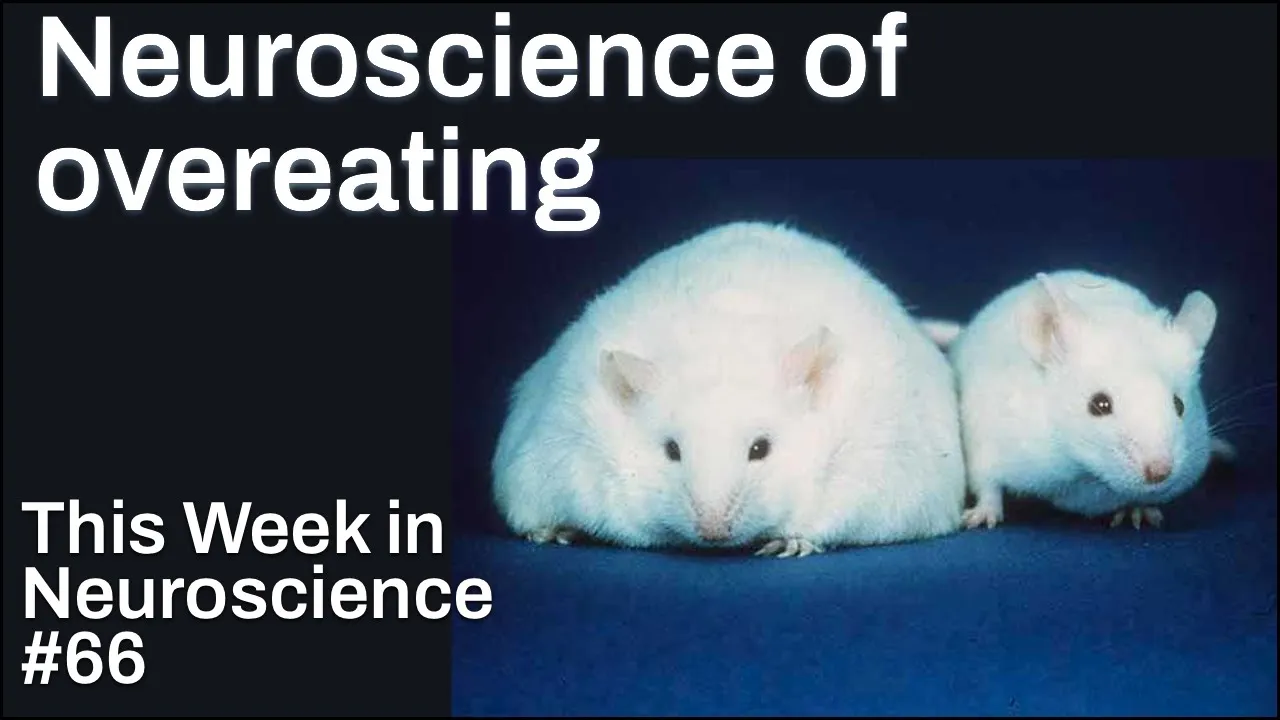






AgRP neurons in the arcuate nucleus of the hypothalamus normally provide inhibitory GABAergic input to the parabrachial nucleus; when these neurons are eliminated, unopposed glutamatergic excitation from the nucleus tractus solitarius (via NMDA receptors) causes severe anorexia and starvation, but this can be prevented or reversed by enhancing GABA signaling or blocking the excitatory inputs, demonstrating that the parabrachial nucleus integrates peripheral and metabolic signals to regulate feeding behavior.
Deciphering Neural Circuits Controlling Anorexia in Mice | Richard Palmiter
Added:Fundamentals of Hypothalamic Function: Understanding the role of the hypothalamus, specifically the arcuate nucleus, in regulating hunger, satiety, and energy homeostasis.
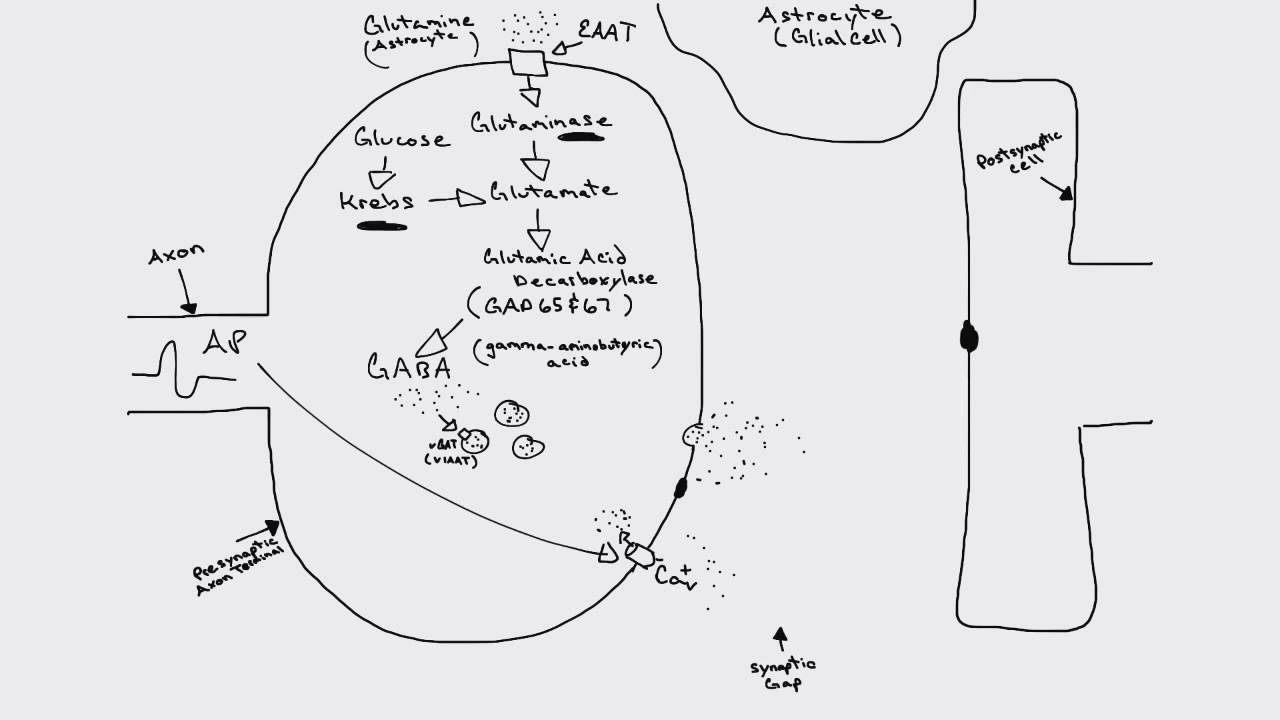
Synaptic Transmission and GABAergic Signaling: Knowledge of how inhibitory neurotransmitters like GABA function to modulate neural circuit activity and behavior.
Neuropeptides in Appetite Control: Familiarity with key appetite-regulating neuropeptides, particularly AgRP (Agouti-related peptide) and its reciprocal relationship with POMC.
Experimental Methodologies in Neurobiology: A basic understanding of how researchers use transgenic mouse models to study human-analogous psychiatric and metabolic conditions.
Clinical Translation to Human Eating Disorders: Exploring how neurocircuitry findings in rodent models can be translated into targeted therapies (e.g., deep brain stimulation or pharmacotherapy) for anorexia nervosa.
Advanced Circuit Manipulation: Investigating optogenetics and chemogenetics (DREADDs) used to dissect, stimulate, or inhibit specific neuronal populations in real-time.
Crosstalk Between Homeostatic and Hedonic Feeding: Studying how homeostatic neural centers in the hypothalamus interact with mesolimbic dopamine pathways to influence the rewarding aspects of food intake.
Neurobiology of Stress and Eating Pathology: Examining how stress hormones and the HPA axis interact with AgRP and GABAergic pathways to trigger or exacerbate pathological self-starvation.
2.3K views12likes21:55Original Release: 2011-10-10
so we're particularly interested in using genetic techniques in the mouse for dissecting neuros circuits and the neurotransmitters that are involved in those circuits to control interesting behaviors or physiological processes I guess I think so anorexia is as you all know is the loss of appetite uh and it occurs in response to satiety you've just had a big meal it occurs in response to unpleasant stimuli for example an awful smell you're not probably going to want to eat anything nausea is a good example where if you're nauseated if somebody offered you a piece of chocolate cake you'd probably say no thank you uh if you're dehydrated your interest in eating uh is very much reduced in some kinds of cancer uh appetite is reduced and in anavia nervosa and bulimia uh children or young girls typically are more concerned with their body image and try to maintain uh very low body weight so they have cognitive control over their eating Behavior oops I want so over the last really 15 years there's been a tremendous interest in neurons that live in the arcu region of the hypothalamus and there a population of neurons that make proopiomelanocortin palc when those neurons are activated they make a neuropeptide called melanocortin that acts on melanocortin four receptors and downstream nuclei and that activation of that pathway inhibits feeding and it's stimulates metabolism and that pathway is activated by a large number of inputs especially hormones for example like leptin and insulin and it's counteracted by the neurons that I want to tell you about called agrp neurons agrp neurons Express this neuropeptide a goody related protein only in the AR we're going to take advantage of that uh they also Express neuropeptide Y which was the original marker for these neurons and they express Gaba the major inhibitory trans mitter in the brain which you'll see from my story is the critical neurotransmitter that these neurons make so here you see that arrp neurons are made uh in the in the AR reside in the aru and they live right next to the Palm SE neurons and they send projections to many different brain regions from the aru to the parabrachial nucleus which I'm going to talk about but also to the pair of ventricular nucleus to the nucleus tract to solitarius many other uh outputs so what I want to do today then is tell you about Audi related protein expressing neurons and I want to concentrate on their projection fairly minor projection but a very important one to the parabrachial nucleus and I want to basically use or describe our functional mapping technology which involves the use of drugs and two viruses Ado Associated virus and canine adov virus to map uh the circuitry I'm going to tell you about the importance of Gaba and glutamate in the circuit and I'm going to tell you about an interesting adaptation phenomena that occurs oops so just as an overview here's where we're going the neurons the arrp neurons that live in the arcu send a projection to the parabrachial nucleus that lives right next to the locus cerus underneath the cerebellum and what I'm going to tell you is that if you kill the arrp neurons that the parabrachial neurons become hyperactivated and that somehow inhibits feeding leads to severe anorexia and complete starvation the idea is that the LW loss of inhibitory tone to the parabrachial leaves unopposed glutamatergic excitatory input to the parabal and that's what's driving the anorexia and what we the object of the last few years has been to try to identify the source of that excitation so the goals of the talk then are to tell you that agrp neurons are important that they signal via Gaba they lead to hyperactivity in the parcul nucleus and uh we're going to map the source of the parabrachial neuroactivity and I'm going to tell you that the output of the glut of the parabal neurons is in fact glutamate and the critical question is where does it go so agrp neurons are important a recent experiment by Scott sternson at janelia Farm Ed channel ropson to selectively activate a JP neurons and as you can see on the right there are when they turn on the light activate the neurons the animals uh increase food intake manyfold you turn off the light they stop eating uh Brad lol's group at Harvard did the converse experiment they expressed a modified G protein coupled receptor that they can activate with a synthetic ligan CNO and that inhibits these neurons because it's G Alpha I coupled receptor and you can see in the red line that that inhibits food intake likewise we did an experiment we went into the aru nucleus and removed Gaba selectively from the agrp expressing neurons uh with a with a virus this would be ad no Associated virus and as you can see in the pink line food intake decreased when sge L was in the lab we targeted deox the human deot toxin receptor to arrp neurons taking advantage of the fact that there are no other arrp expressing neurons in the in the body and so you can give dther toxin this big protein you can give it peripherally gets into the brain and it kills all the hrp neurons the experiment you see here is taken there the figure you see here was taken a few days probably about six days after injecting deot Toxin and you can see the complete loss of the Inu hybridization Pro signal for agrp and coincident with that loss of hrp neurons the if you see on the right food intake gradually decreases and eventually goes to nothing and not surprisingly body weight falls and if you don't intervene the animal will starve to death interestingly as they stop feeding they stop initiating feeding but even if you put food in their mouth they won't swallow it so they don't want to so it's as we thought it's as if they're nauseated because if if you were nauseated you wouldn't want to go to the food and even if you put food in your mouth you'd probably spit it out so here's the hypothesis again we knew that this phenomenon would occur in mice that lacked hrp and npy the two neuropeptides so we speculated that Gaba might be important and the idea was that if we kill the arrp neurons come on there's the hrp signal going away that now you have unopposed excitation and that leads to the would lead to the induction of Foss so at this point we collaborated with the Allen Institute and did whole brain Inu hybridization I'm only going to show you one figure showing one of the outputs of the of the arrp neurons the par of ventricular nucleus and as you can see on the right you get very robust induction of Foss when you kill arrp neurons so you remove it Gaba and there's unopposed excitation and you get FAL induced in fact you could have mapped all the projection sites of agrp neurons using this technology so guessing then that Gaba might be involved Chi Wu who just came to the lab a few years ago had the idea of well let's try to promote Gaba synthesis Gaba uh excitation of the parabrachial neurons by providing a benzodiazapine benzodiazapines are partial this one anyway that we use Brasil is a partial Agonist and it will potentiate any residual Gaba signaling and so he puts a mini pump into into the mouse then kills ARP neurons and what you can see is that in the black curve that body weight begins to go down and then recovers over a period of 10 days or so and likewise food intake goes in parallel so they actually recover and interestingly at the end of the experiment the mini pump is run out at that point the mouse will continue to eat just fine so it has adapted to the loss of agrp neurons but it takes about 10 days so we've basically provided some protection of these critical neurons we don't know where they are in the body yet at this stage but but providing an extra gabaergic inhibitory input someplace in the brain is providing protection against severe anorexia so the question is where does that occur so CH modified the protocol and instead of delivering the pazel systemically he has a pump on the back of the mouse and he has leads that go in to five different brain regions and ask where bilaterally will B prasil protect against uh anorexia and as you can see the curve labeled pbn worked you get this dip and then a recovery and the other four brain regions all led to starvation so that was our first indication that there's something about the parabrachial nucleus where Gaba signaling can prevent the severe anorexia oops we also did an experiment where instead of injecting dther toxins selectively or systemically we inject it selectively in the parabrachial nucleus and that also leads to severe anorexia so the strategy then or the idea is that hrp is providing an inhibitory input into the parabrachial nucleus you remove that and you get anorexia so then we wanted to map where is the excitation where's X in this figure and so the idea was that if we could inhibit either the X in either the input to the parab braal or the output of the parab braal we should be able to prevent the anorexia and you're going to see in the next few slides that that strategy Works to give you a preview of what I'm going to tell you we think that there's a glutamatergic input that's providing the direct excitation it's coming from the nucleus tract to solitarius and it's acting on nmda receptors in the parabrachial nucleus the NTS in turn is activated by serotonin acting on 5 ht3 receptors an ionotropic receptor in the NTS and the output of the parabrachial nucleus is glutamate so the next few slides I'll show you the evidence that substantiates that little circuit so remember I mentioned that when these mice uh stop feeding even if you try to put even if you put food in their mouth they won't swallow it and that gave us the idea that this is sort of like a nausea pathway and there's good evidence in the literature that nausea signals from the Vegas do in fact impact on or are transmitted from the NTS through to the parabrachial nucleus so there was some anatomical reason to suggest this as well the point is that if we introduce an antagonist in this case on Dan cetron of a serotonin receptor and we do it in the nucleus tractus solitarius but not in the pbn we can get the same kind of dip and feeding body weight and then a recovery so the next thing we wanted to know was where is the serotonin then coming from that's acting on the serotonin 5 ht3 recept for this experiment we begin to use viruses we're going to use K9 adov virus which has a nice property that it's retrogradely transported so we have a mouse that has tph2 conditional it's functional but it can be inactivated by the action of cre Rec companies so you can inject Cav cre into the target we know the NTS is the Target and then we can let it inactivate tph2 all the serotonin coming from the neurons that inate um the NTS should now be removed and then we can kill the hrp neurons with duther Toxin and see what happens and as you can see they recover and what's nice then is you can go back and ask okay where have youve lost tph2 where you still have other markers of serotonergic neurons and the answer is in the ventral RAF nuclei that are in general known to inate hindbrain uh structures the next experiment we're going to um explore the connection between the nucleus tractus solitarius and the parabrachial nucleus we're going to make a guess that it's glutamate and we have a mouse that has a conditional V glute 2 alil V glute 2 is the vascular glutamate transporter that's necessary for getting glutamate into vesicles so it can be used as a neurotransmitter we're going to inactivate BL vlue 2 in the uh nucleus tractor solitarius and ask what whether you Rescue the Animals from severe anorexia when you kill arrp neurons and the answer is yes you can also do the same experiment by going into the parabrachial nucleus and taking knocking down really uh one of the critical glutamate uh receptors the nmda receptor and that also protects oops boy this is really if one goes into the parabrachial nucleus itself and takes out uh the ability to put glutamate into vesicles using the same V glute 2 conditional Mass one can also protect against anorexia suggesting that the output of the parabrachial nucleus that's critical is in fact glutamate and in this experiment it's kind of the it's a little shows the converse if you take out V glute 2 from the parabal nucleus but you don't kill the agrp neurons now you actually get weight gain okay so we're beginning to get the idea that too much activity of the parabrachial nucleus inhibits feeding and leads to anorexia to little activity actually promotes feeding so here's kind of the final model we have the parabrachial nucleus which which can be activated by a number of inputs I've only concentrated so far on the NTS input but they're probably cortical inputs that directly or indirectly impact here they're gustatory Al taste stimuli vagal stimuli all come through this parts of this pathway um dehydration probably impinges on the parabrachial nucleus and so just as I said a minute ago our model is that too much activity of the parabal inhibits feeding too little uh stimulates feeding and so here's the pathway once again uh basically there's an inhibitory input from the aru that's probably sensing overall metabolic balance how much uh energy reserves the animal has uh then there are inputs from the periphery and sensory systems that are coming in through the NTS and they're meeting in the parabrachial nucleus to influence feeding Behavior and the pathway that I've just shown you is shown at the bottom where we've used genetic techniques and viruses that are either retrograd transported or acting directly to manipulate the production of important neurotransmitters to affect an interesting behavior and so there are other inputs that need to be mapped we're currently in the process of doing that and for the future the parabrachial nucleus like we like the cortex that you heard about today and other brain regions is incredibly complex there are lots of different neurons in there and likewise in the NTS lots of different neurons we need to identify the specific cells within the paricle that are mediating the anorexia currently the only marker we have is they become FAL positive when you kill arrp neurons what markers do they actually make and once we have those molecular markers then we have can have cre driver lines and then get much more sophisticated about what's actually going on a key question is what is the output of the parab braca where does it go we know it's glutamate where does it go and how does it actually lead to anorexia what are the direct and indirect targets and I've kind of glossed over there's this interesting adaptation phenomenon if you kill arrp neurons and you can protect them with either Brasil and dancon or these viral approaches about 10 days later they adapt what's what's going on there what kind of adaptation are we talking about is this rewiring or changing in synaptic plasticity changing in glutamate input uh gabic input to get it back in Balance how does it work until we have molecular markers and can look in specific cell types it's going to be very difficult to answer that question but it's a very key one I think and so in and finally this work is started by sah luk uh and chiu has done much of the work that I talked about today we've had some help from several people in the lab and particular Marine Bole here at the Allen Institute uh helped us identify the parab brachial nucleus as being really critically involved supports come from hhmi The claran Institute and NIH thanks
Up Next
28:49
Hypothalamus Structure & Function | Neuroanatomy Lecture
@DoctorNajeeb
335K views•2017-09-27

50:36
Dynamic Functional Connectivity in fMRI: Methods & Challenges
@MGHMartinosCenter
326 views•2025-04-04

19:45
Sleep Function & Synaptic Homeostasis | Giulio Tononi | Allen Institute
@AllenInstitute
28.2K views•2011-10-07
13:03
How Exercise Benefits Your Brain: Science Explained
@TED
11.4M views•2018-03-21
Related Study Plans & Knowledge Roadmaps
Structured learning paths in Neuroscience
neuroscience
Appetite Regulation: Brain Circuits & Hormones
01Foundations of Endocrinology and Brain Anatomy
02Introduction to Energy Homeostasis
03Peripheral Signals: Leptin, Ghrelin, and Insulin
+ 2 more learning modules
14h5 modules
Explore Roadmap
neuroscience
Neuroeconomics: Value, Risk & Brain Mechanisms
01Foundations of Neuroscience and Brain Anatomy
02Introduction to Neuroeconomics and Subjective Value
03Dopaminergic Prediction Errors & Reinforcement Learning
+ 3 more learning modules
18h6 modules
Explore Roadmap
neuroscience
Spatial Navigation: Cells, Grids & Brain Maps
01Foundations of Brain Anatomy and Memory
02Place Cells and Head-Direction Cells
03Grid Cells: The Brain's Coordinate System
+ 2 more learning modules
12h5 modules
Explore Roadmap
neuroscience
BCIs: Neural Decoding & Prosthetic Control
01Neuroscience Foundations: How the Brain Signals Intent
02Signal Acquisition: Recording the Brain's Activity
03Neural Decoding: Translating Brain Waves into Data
+ 2 more learning modules
25h5 modules
Explore Roadmap