















![What is consciousness for? | Robert Wright & David Chalmers [The Wright Show] (full conversation)](https://i.ytimg.com/vi/oVt40z5JIYY/hqdefault.jpg)


Free will is an illusion because human decisions and actions are determined by prior causes (neurophysiological events, genetics, environment) that operate outside of conscious control; scientific evidence shows that brain activity precedes conscious awareness of decisions, and since we cannot inspect or choose our own underlying causes, we cannot genuinely be considered the ultimate source of our thoughts and actions.
Sam Harris: The Illusion of Free Will (Science Lecture Series)
Added:Understanding the basic philosophical distinction between Determinism (the belief that all events are determined by preceding causes) and Libertarian Free Will.
Familiarity with Compatibilism, the philosophical view that free will and determinism are compatible, allowing for moral responsibility.
Basic knowledge of neuroanatomy and cognitive science, particularly how unconscious brain processes precede conscious awareness and decision-making (e.g., Benjamin Libet's experiments).
The traditional relationship between free will, moral agency, and the justification of praise and blame in ethics.
Exploring the implications of hard determinism on criminal justice, specifically the shift from retributive justice (punishment) to restorative and rehabilitative justice models.
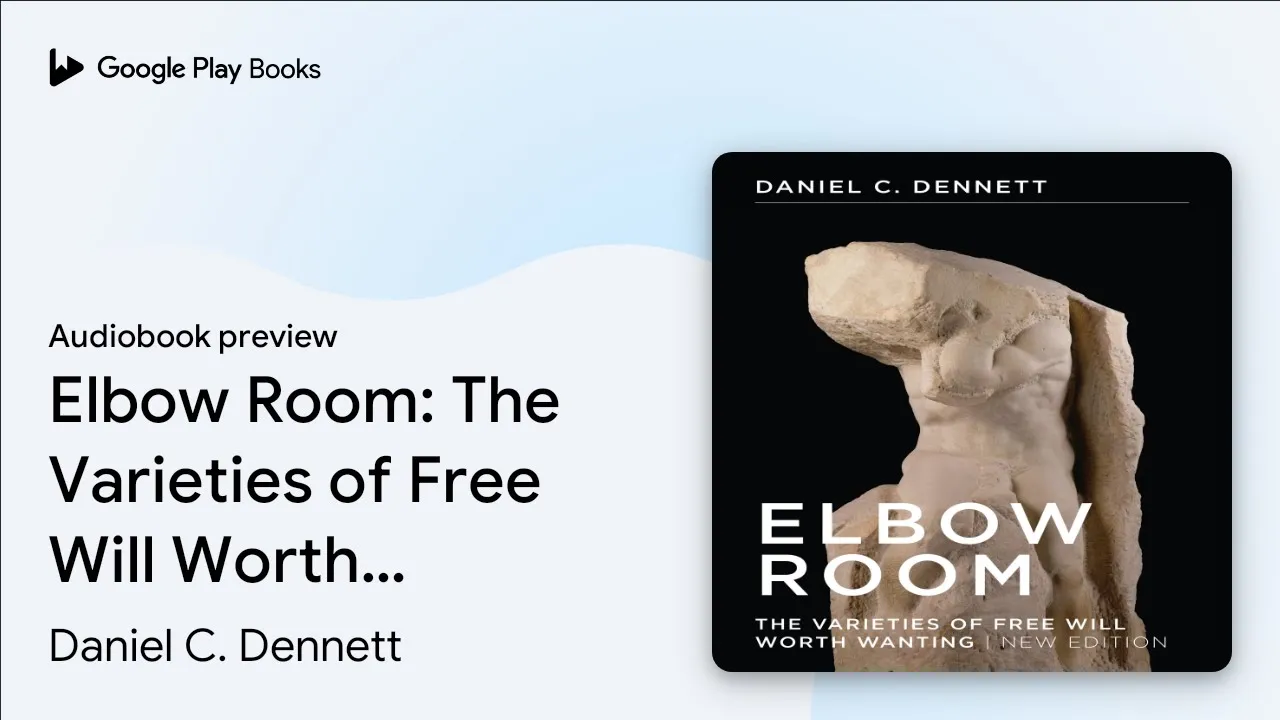
Analyzing philosophical critiques of Sam Harris's stance, such as Daniel Dennett's compatibilist arguments regarding 'elbow room' and degrees of freedom.
Investigating moral psychology studies on how the disbelief in free will impacts human behavior, empathy, and ethical decision-making.
Advanced study of the mind-body problem, epiphenomenalism, and the degree to which consciousness plays a causal role in human behavior.
1.9M views23.3Klikes1:18:52Original Release: 2012-03-28
so you all know Sam from his first book the end of faith that put him on the map uh and as one of the Four Horsemen of the Apocalypse or the non- apocalypse I guess it would be along with uh dennet and Dawkins and Hitchens and Harris like a law firm Sam has the unique ability to translate difficult subjects into really Crystal Clear writing an economy of words and the letter to a Christian Nation was the embodiment of that a perfect statement of those arguments and a nice short addition and then the moral landscape laid out his his arguments as he presented it here on stage last year on the uh sort of Foundations using science for some sort of moral reasoning and now he's moved on to free will uh and I want to note par it's a great read I've already read and you could tell it's a it's a thin read well so the future of publishing is moving more toward uh get to the point which is good uh because a lot of authors ramble on too long Sam can say in you know 10,000 words what it takes a philosopher like 400,000 words to do right so uh this is uh I think is a good sign it's uh uh of sort of cutting through all the obfuscation and getting straight to the point uh and so with that please help me welcome Sam Harris [Applause] thank you Michael um first let me say that was a great debate that was a lot of fun and I thought a a um a really good format for a debate and I want to thank Michael and denesh and Shan and Ian for for T letting me tag along for this event and you'll have to forgive my cold I've got uh more cough medicine on board than is uh advised and um so if I do anything very strange over the course of the next hour like convert to Christianity you'll know what happened now as many of you know I I spend a fair amount of time arguing that there's a conflict between religion and Science and the conflict is deep and unavoidable and worth taking seriously and I think science must simply win the argument in the end without any apologies but the truth is that s science has far more inflammatory things to say about religion than we tend to admit it's it's always struck me as very odd that the the point of conflict between science and religion for nearly a century actually over a century now has been the subject of evolution why does anyone care about Evolution yes it renders the account of human origins in Genesis false and therefore by association casts the the rest of script scripture into some doubt but nothing about our day-to-day lives depends upon our not acknowledging that we share a common ancestor with chimpanzees I can can sort of understand why religious people are uncomfortable with the fact that our ancestors made it with the ancestors of chimps and not just once for a million years took us a million years to get those chimps out of our system apparently so that's a little embarrassing uh but apart from that it's hard to see why anyone would care now I want to speak today about a far more sensitive subject and it is in fact sensitive to many atheists and that's the illusion of Free Will and I want to talk about this because the ucer of Free Will is as certain a fact as the truth of evolution in my mind and unlike Evolution understanding this truth about the human mind has the potential to change our our sense of of U moral goodness and what it would mean to to create a just Society the question of Free Will touches nearly everything people care about religion public policy Politics the the legal system feelings of personal accomplishment emotions like guilt and pride and remorse so much of of of human life seems to depend on our viewing one another as conscious agents capable of free choice so if the scientific Community were ever to declare Free Will and illusion as I think we eventually must I think it would precipitate a culture War far more acrimonious than the one that has been waged on the subject of evolution now I hope to do two things in this talk I hope to convince you that Free Will is an illusion and so I hope to take up the challenge that denesh laid down the debate and it's worse than an illusion it's it's actually a totally incoherent idea uh which is to say it's impossible to describe a universe in which it could be true not only is it untrue it's it's it's hard to make sense of what's even being claimed to be true uh and I also hope to convince you that understanding this truth about the human mind actually matters and then it can change the way we view morality and and questions of Justice now the the popular conception of Free Will seems to rest on two assumptions the first is that each of us was free to behave differently than we did in the past you became a fireman and you yet you could have become a policeman you chose chocolate but you could have chosen vanilla it certainly seems like this is the world we're living in the second assumption is that we are the conscious source of our thoughts and actions and so that the your experience of wanting to do something is in fact the proximate cause of your doing that something you feel that you want to move and then you move okay you are doing it you the conscious witness of your life now unfortunately we we know that both of these assumptions are just untrue the first problem is that we live in a world of cause and effect and there's no way of of of thinking about cause and effect that allows us to say that the buck stops here okay the buck never stops okay it either our Wills are determined by prior causes a long chain of Prior causes and we're not responsible for them or they're the product of chance and we're not responsible for them or there's some combination of chance and determinism but no com ation seems to give you the Free Will that people cherish now consider a generic serial killer okay his his choice to commit his last murder was determined by neurophysiological events in his brain which were in turn in turn determined by prior causes bad genes the developmental effects of an unhappy childhood the a night of lost sleep because a car alarm was going off down the street these these events precede any conscious decision to to act so what what does it mean to say that this murderer committed his crime of his own free will okay if this statement means anything it must mean that he could have behaved differently he could have resisted the impulse to commit the murder or he could have declined to feel the impulse altogether and and not on the basis of some random influences over which he had no conscious control but but because he was actually the the conscious author of his thoughts and actions now the problem is no one has been able to describe a way in which mental and physical events could arise that would make sense of this claim of Freedom now when we assume that violent criminals have such freedom of course we reflexively blame them for their actions but when we when we look at this wider net of causality the basis for placing blame seems to evaporate the moment we catch sight of a stream of causes that reach back into childhood and Beyond the the sense of his culpability begins to disappear and to say that he would have done otherwise or could have done otherwise had he chosen to is is simply to say he would have lived in a different Universe had he been in a different Universe now as sickening as I might find such a person's Behavior I have to admit that if I were to trade places with him Adam for Adam I would be him there there's no extra part of me that could could resist the impulse to victimize innocent people and know and even if you believe that every one of us Harbors an immortal soul this problem of responsibility remains I cannot take credit for the fact that I don't have the soul of a psychopath so if I if I had truly been in this person's shoes if I had his genes and life experience and in an identical brain or an identical soul in an identical State I would have behaved as he did and for the same reasons that nobody picks their parents or the society into which they were born nobody picks the the life influences that shape the development of their nervous system you are no more responsible for the the micro structure of your brain at this moment than you are for your height so so the role of luck in our lives appears decisive one has to be very unlucky to have the mind mind and brain of a psychopath now but but the significance of luck is very difficult to admit because it seems to totally destabilize our sense of of morality and yet in specific circumstances it's it's very easy to admit so if you imagine this murderer was discovered to have a brain tumor in in the appropriate spot in his brain that would explain his violent impulses well then that is obviously exculpatory then he is just a victim or we view him as a victim of biology and our moral intuitions shift automatically but I would argue that a a brain tumor is just a special case of physical events giving rise to thoughts and actions okay and if we fully understood the neurophysiology of any murderer's brain that would be as exculpatory as finding a tumor in it if we could see how the the wrong genes were being relentlessly transcribed if we could see how how this person's genome and and entanglement with other people and ideas and events in throughout life had sculpted the micr structure of his brain so that it would was guaranteed to produce violent states of mind and violent Behavior the basis for placing blame in the sense that we usually do would disappear now of course this is a problem that scientists and philosophers are well aware of and many people think they have arguments that allow us to keep Free Will in play even in light of of these facts and I'll I'll talk about some of those but I want to suggest to you that the problem of Free Will is actually deeper than this is deeper than the problem of cause and effect and most people think that we we have the problem is we we have a subjective experience of free will but it can't be mapped onto physical r it you I'm about to argue that Free Will doesn't even correspond to any subjective fact about us and and if you pay attention to your experience closely you can notice this if you pay attention you can see that you no more decide the next thing you think than the next thing I say thoughts simply appear in Consciousness very much like my words May what what are you going to think next what am I going to say next I could I could suddenly start talking about the pleasures of snowshoeing where did that come from from where from your point of view it came out of nowhere okay but the same thing is happening in the privacy of your own mind you you've all made an effort to be here and to stay this extra hour to hear presumably to hear what I have to say about free will but there's also a voice in your head that is just saying things haven't you noticed and and and many of these things have nothing to do with what I'm talking about you're struggling to to follow my train of thought but there's competition you're you you suddenly start thinking things like I should probably stop drinking diet soda thoughts just emerge in Consciousness we are not authoring them to that would require that we we think them before we think [Laughter] them if you can't control your next thought and you don't know what it's going to be until it arises where is your freedom of will now at this moment many of you are thinking what the hell is he talking about here here's what I'm talking about you didn't pick that thought either we we'll come back to this point okay so now of course in a sense we do think our thoughts before we think them or at least our brain does and much of this thinking is is something we never hear about we're conscious of only a tiny fraction of the information that our brains process in each moment and we continually notice changes in our experience in thoughts and moods and Sensations and behavior but we are utterly unaware of the neurophysiological events that that produce those changes we consider the sensation of touching your finger to your nose you feel free to try this there's no shame in this the the the contact appears simultaneous okay but we know at the level of the brain that it can't be we know that that the input reaches from the finger reaches sensory cortex after the input from the nose and this is true no matter how short your arms or long your nose if if you're of a a mind to experiment it works with your toes also so the our brains correct for this timing discrepancy by clearly buffering the inputs in memory and then delivering the apparent simultaneity to Consciousness so so your so our experience of the present moment is in in a very real sense a memory of the present moment and even the simplest conscious Sensations are built upon unconscious mechanism and unconscious processing of which we are fundamentally unaware now needless to say this unconscious Machinery also governs what we think and feel and do and intend as well not not just perception and that is where Notions of Free Will and moral responsibility begin to get squeezed and many people have now demonstrated in a lab that a person's choices behavioral choices can voluntary choices can be detected some moments sometimes seconds before they are consciously aware of of having made the choice so the physiologist Benjamin leay quite famously did this with EEG but this basic Paradigm has been replicated with fmri and even direct recordings from the cortex in surgical patients in each of these experiments people are given a very simple task to push a left Button as opposed to a right button or to move their left hand versus the right hand and they just have to watch a clock and decide when they were first consciously aware of of committing to the left or the right okay and you do this and and and several experiments over the years have shown that people can go back and forth as much as they want they become iously aware of when they've when they're committed they make their choice and yet the experimenters by scanning the brain through one modality or another know some half a second a second depending on what the decision is even several seconds before they do what they're going to do okay so so as a result of this work it is is actually scientifically uncontroversial to say that some Mo moments before you were aware of what you are going to do in a simple in making a simple voluntary action at a time at which you appear to be subjectively free to do whatever you want your brain has already determined what it is you will do and then you become gradually aware of this decision while while you still think you're in the process of making it now needless to say this this is very difficult to reconcile with a conventional notion of free will because this timing discrepancy demonstrates that it would be possible for someone to know what you're going to do before you do and while you still think you you're free to make up your mind but the truth is I think actually too much has been made of this research the truth is even if there were no time lag even if a conscious intention were truly simultaneous with its neurophysiological underpinnings there would still be no room for free will because you still wouldn't know why it is you do what you do and again this is a a fact you can notice about yourself directly let's let's run a little experiment think of a city any anywhere in the world you can choose any City you want you know of course I I could have primed you I could have artfully placed cues in my speech in the last few minutes that would make you more likely to think of Las Vegas for instance so just to be on the safe side don't pick Vegas but pick a city any City and and just be pay attention to what this conscious process is like now the first thing to notice about this is this is as free a decision as you are ever going to make in your life okay you have all the cities in the world to choose from and I'm just asking you to pick one now several cities have probably occurred to you and just focus on one so everybody got a city well I'm I'm sorry to say that you all picked the wrong City uh don't ask me how I know this but I do so I just want you to do this again just so you can see what the process is like pick another city can't be the first and notice what that experience is like okay did you see any evidence for free will now we better be able to find it here I if it's not here it's not anywhere so let's look for it first let's set aside all those cities whose names you don't know and therefore could not have picked okay because you you couldn't have picked one of those if your life depended on it there's no freedom in that obviously okay and then there are many other cities whose names are quite well known to you but which simply didn't occur to you to Pi I for instance perhaps Cairo didn't occur to you you absolutely know that Cairo is a city but for whatever reason your Cairo circuits were not engaged okay as As a matter of neurophysiology Cairo was not in the cards so I want you to think about this were you free to choose that which did not occur to you to choose right based on this on the state of your brain a few moments ago Cairo was not coming okay where is the freedom in that of course if you did think of Cairo you should consider yourself a genius now so you probably thought of several cities and then you fit let's say you thought of Paris and New York and Tokyo then you then you thought I love Paris I'm going go with Paris and last minute you thought no no Tokyo Tokyo I'll go with Tokyo and now this is the sort of decision that motivates the idea of free will this is you've got two or more choices and you're picking between them and it's just you and your thoughts there's no coercion from the external world you are doing it apparently but when you look closely I think you'll find that you are in no position to know why you picked what you picked in this case why you chose Tokyo over Paris I you might have some additional story to tell about it you might think well I had Japanese food last night and so I I remembered it and I I picked Tokyo now of course we know from psychology that these kinds of stories are are rather often false whenever people are manipulated in a lab they always have some tale to tell about why they did what they did and it it never Bears any Rel a ship to the actual variables that that that cause them to behave that way so if you give people uh you can cause people to like one person more than another or to to cooperate more in economic games by simply giving them a hot beverage to hold as opposed to a cold one and they never tell you that the reason they were biased as they were was because they were because the temperature of the cup in their hands okay there psychology is replete with evidence that we are very poor judges of of why is we retrospectively why it is we we do what we do but even if you are right in this instance okay even if your choice of Tokyo over Paris is based on your memory of having Japanese food last night okay you still can't explain why you remembered having Japanese food last night or or why the memory had the effect that it did Why didn't it have the opposite effect why didn't you think well I I just had Japanese food last night so let's go with something new let's go with Paris the thing to notice about this is that you as the conscious witness of your inner life are not making these decisions you can only witness these decisions I mean you you no more picked the city you settled on in subjective terms than you would have if I picked it for you so there was this first moment I said pick a city and there's this Hiatus where nothing has occurred to you and then the names of cities start to get promoted into Consciousness for reasons you can't inspect and you can't choose the the cities you think of before you think of it it's almost like me saying Tel Aviv Vancouver Paris and you simply hearing the words in Consciousness so if you if you pay attention to how thoughts and intentions arise and how decisions get made moment to moment I think you can see that there's no evidence for free will that actually our experience in life is compatible with the truth of determinism now it's also important to recognize that the case I'm building against Free Will does not depend upon philosophical materialism the idea that reality is at bottom physical now there's there are very good reasons to believe that the mind is at bottom physical or certainly most mental events are the product of physical events I me the brain is a physical system entirely beholden to the laws of nature but even if we have souls even if the human mind were made of Soul stuff that we don't understand nothing about my argument would change the the unconscious operations of a soul Grant you no more freedom than the unconscious neurophysiology of your brain does if you don't know what your soul is going to do next you're not in control of your soul and this is obviously true where people behave in ways that they wish they wouldn't you know so you think of all the committed Christians whose Souls just happen to be gay this is that's obviously not an argument for free will but it's also true when you do exactly what you wish you had done in retrospect the soul that allows you to stay on your diet is just as mysterious as the soul that tempts you to eat a hot fudge Sunday so I think it's safe to say that no one has ever argued for free will because it holds great promise as an abstract idea the endurance of Free Will as a philosophical problem in need of a solution is born of the fact that that most of us feel that we freely author our thoughts and intentions and actions therefore however difficult it may be to make sense of this in logical or scientific terms and the idea so the idea of Free Will emerges from a felt experience now the the moment the only philosophically respectable way to defend Free Will in light of what we know to be true scientifically is to endorse a view that's usually termed compatibilism in philosophical circles and to argue in essence that Free Will is compatible with the truth of determinism now compatibilists generally claim that a person is free as long as he's free from any outer or inner compulsion that would prevent him from acting on his actual desires and intentions so if if a man wants to commit murder and he does so because of this desire well then that's all the free will you need but from a both a moral and scientific point of view this seems to me to just miss the point where is the freedom in doing what one want wants when one's wants are the product of Prior causes which one cannot inspect and therefore could not choose and and one had absolutely no hand in creating I from my point of view compatibilism is essentially the the dictum a puppet is free as long as it loves its strings now comp it's true that compatible ISS push back here and they say that even if our thoughts are the product of unconscious causes they're still our thoughts and actions okay anything that your brain does or decides is something that you have done or decided so on this account the fact that we can't always be aware of the the causes of our conscious thoughts and and actions does not negate does not negate free will because your your un the unconscious neurophysiology of your brain is just as much you as your conscious thoughts are but this seems to me to be just a bait and switch this trades a psychological fact the subjective experience of being a conscious agent for a conceptual understanding of ourselves as persons the psychological truth is that people feel identical to and in control of a certain channel of information in their conscious minds and they are mistaken about this the the compatibilist comes in and says actually you're much more than that you are the totality of unconscious processing in your brain as well okay but this is like it's like saying you're made of Stardust okay which of course you are but but you don't feel like Stardust and and the knowledge that your Stardust is not driving your moral intuitions or determining our our system of Criminal Justice you can't honestly take credit for your unconscious mental life in fact you're making countless decisions quote decisions with organs other than your brain at this moment are are you making red blood cells at this moment now hopefully your body is but if it decided to stop you wouldn't be responsible for that change you would be a victim of that change there are more bacteria in your body than human cells 90% of the cells in your body are microbes like ecoli 99% of the functional genes in your body belong to them you you don't feel identical to these creatures and and many of them perform necessary functions they are you in some larger sense because your your well-be depends on them so to to to say that you are responsible for everything that goes on inside your skin because it's all you is to make a claim that bears absolutely no relationship to the the actual experience that has made free will a problem for philosophy the truth is we we feel or presume an authorship over our our own thoughts and actions that is ucer if I could detect all of your conscious thoughts and intentions and subsequent behaviors with a brain scanner some moments before you were aware of them you would be rightly shocked because it would undermine your sense that you are the the the prime mover of your inner life how can we be free as conscious agents if everything we we consciously intend was caused by events in our brain which we did not intend and over which we had no control we can't so what does this mean well first here is what it doesn't mean okay the the fact that our choices depend upon prior causes does not mean that choice doesn't matter this is one point of confusion that people have they they they confuse determinism with fatalism and they think well if if it's all determined why should I do anything why not just sit back and see what happens to sit to sit back and see what happens is also a choice that has its own consequences and it's it's very difficult to do you just try just try staying in bed all day waiting for something to happen you you'll very quickly feel the urge to get up and do something and resisting this impulse will actually take more effort than going with it it actually becomes harder to do nothing than to do something very quickly so you can't you can't step out of this stream of choices and efforts and this is and and clearly choice and effort is the is a is part of the causal chain of life if I hadn't decided to write a book on Free Will it wouldn't have written itself so effort and discipline and willpower these are these are all causal states of the brain that that beget their own behaviors and and behaviors lead to outcomes in the world so the choices we make in life are as important as most people think but the next choice you make will come out of a Wilderness of Prior causes that you can't see and did not bring into being so well it's true to say that a person would have behaved differently in the past had he chosen to this doesn't give the kind of free will that that most people seem to want because from the pers perspective of your conscious mind you are no more responsible for the next thing you think and therefore do than you are for the fact that you were born into this world you you have not built your mind and in moments where you seem to build it where you make a an effort to learn a new skill or to improve yourself okay you the only tools at your disposal are those which you've inherited from moments past now I'm not even slightly suggesting that we all just blame our parents for everything that has gone wrong in our lives and do nothing it is possible to change in fact from my point of view viewing oneself as an open system open to Myriad influences makes change seem even more possible okay you are by no means condemned to be who you were yesterday in fact you can't be that person the the self is is a process this is what makes growth possible the self is not a stable entity but subjectively speaking the unfolding of Our Lives is a fundamentally mysterious process none of us know how it is we came to be in this moment and we don't know what's going to happen next on really on any level we don't know what we're going to think and feel next now this might sound scary to some of you but I think recognizing this can be quite liberating the the present moment is a mystery no matter how much you know about the world the present moment is still a mystery you are simply discovering what your life is in every moment I mean you may think you're doing something but you again don't know what you're going to do next so our our choices matter and there are there are clearly paths toward making wiser ones I there's no telling how much a a conversation with a smart person could change you but we can't choose what we choose in life and and what we and when it seems that we choose what we choose perhaps when going back and forth between two options we don't choose to choose what we choose there is a regress here that that ends in darkness we we have to take a first step or a last one for reasons that are subjectively mysterious and and therefore to to think the thought I could have done otherwise is really just to think I could have done otherwise after doing whatever I in fact did and so and what I'm going to do next remains a mystery that is fully determined by a prior state of the universe and the laws of nature including whatever contributions come from chance quantum mechanical or otherwise quantum mechanics doesn't get you Free Will and to declare my freedom in this context is really just another way of saying you know I I'm not sure why I did that but I I I don't mind doing it so I don't mean to belabor this point but in my experience people have a really hard time with this just think about the context in which your next decision will occur I mean a decision of any size to get married or not to go to graduate school or not to wear the red shirt or the blue shirt anything that you could decide okay you didn't pick your parents you didn't pick your genes you didn't pick the interactions or the effect they had upon you of your of of every event and conversation and exposure to ideas you had in life and where is where is the freedom in this yes you are free to do what you want even now but where do your wants come from okay so let's return to this issue I raised at the beginning of the talk because the great worry obviously is that any honest discussion of the underlying causes of human behavior seems to leave no room for moral responsibility in fact the Supreme Court of the United States has said has just come out and said this that Free Will is incompatible with our uh or rather inconsistent with the underlying precepts of our Criminal justice system and that it's a a universal and persistent foundation for our system of law so this idea of Free Will is actually doing work in our world this is not just an academic discussion now the problem obviously is that if we begin to view people as neuronal weather patterns of a sort it becomes very difficult to make sense or seems to become difficult to make sense of Notions of right and wrong and and Good and Evil well happily I think we can maintain a very strong sense of morality and an effective criminal justice system without lying to ourselves about the causes of human behavior you what do we most condemn in people both morally and legally it's it's really the conscious intention to do harm now why is the conscious intention to to victimize another person so blameworthy well Consciousness is is the place where you where most of your mind seems to be active where the global properties of your mind get invoked Consciousness is where your beliefs and desires and prejudices and goals get together our conscious premeditated Behavior says the most about us and about what we're likely to do in the future if you decide to kill your neighbor after weeks of Library research and debate with your friends okay well then killing your neighbor really says a lot about you but the point is not that you are the sole independent cause of your actions I mean after all you didn't make yourself the point is that for whatever reason you have the mind of a murderer now you're not ultimately responsible for having this mind in fact when we look at the details we see that you're not even partially responsible for it in the same way that a grizzly bear isn't responsible for the fact that it's a grizzly bear but a bear really is a bear and it really will eat you if you see one in the parking lot it's worth worrying about but you can worry about it without ever attributing free will to it and you can take defensive action without doing so now certain criminals are clearly more dangerous than bears and we have to lock them up for a very long time in many cases for ever or till the end of their lives to keep them from harming us and the moral the moral justification for this is entirely straight forward everyone is better off that way but retribution on this view doesn't make much sense we we don't we don't seek retribution against Bears the the idea of punishing people because they deserve it doesn't make much sense and but I would argue that dispensing with the illusion of Free Will allows us to focus on the things that actually matter mitigating harm assessing risk detering crime all of the variables that that that govern the well-being of people and so I'm not arguing that everyone is Not Guilty by reason of insanity and that we just have to empty the jails okay and there's clearly a difference between voluntary and involuntary action and there's a difference between the moral respons abilities that we can we can demand of an adult and those of a child but you don't need free will to make sense of these differences these are differences about that that relate to the global property of individual minds and of what it's reasonable to expect of those Minds in the future there are 13-year-olds serving life sentences in this country not based because not based on the idea that we have determined that rehabilitation in their casee is impossible but based on this on on the fact that some judge or jury felt they really deserve this punishment that they were the the the true Locust of their behavior now it seems to me that certain moral intuitions begin to relax the moment you see this wider picture of causality and once we recognize that even the most Terri terrifying people are in some basic sense unlucky to be who they are the logic of hating them as opposed to merely fearing them goes away and once again this is true even if you believe that that everyone Harbors an immortal soul I mean anyone born with the soul of a psychopath is profoundly unlucky so one consequence of of viewing this world viewing the world this way is that it reduces hatred which I think all things being equal is a very good thing it also increases empathy and compassion we take one of the the worst people who've ever lived take um you know my current candidate is Saddam Hussein's eldest son UD Hussein he really is about as odious a person as I can think of this is a guy who when he would see a wedding in progress in Baghdad would descend with his Thugs and rape the Bride In some cases he killed and tortured and killed the bride he did this more than once uh I mean the fact that he couldn't be he couldn't be captured and therefore the fact that we killed him I think is a very good thing if unless you are a total pacifist you have to admit that this is what guns are for to kill people like UD Hussein okay but but simply walk back the timeline of his life think of him as a four-year-old boy you know he might have been a a strange child he could could have been a scary child I me there are actually Psychopathic children but he was also a very unlucky child he had Saddam Hussein as a father how unlucky can you get he was the four-year-old boy who was destined to become the psychopath UD Hussein if we could have intervened at any point in his Lifeline at four or five or six or seven and helped him that would have been the right thing to do and compassion would have been the right motive so on my view this is actually a doorway into feeling compassion for even the worst people who have ever lived so ironically to to Desha's concern if you want to be like Jesus and love your enemies or at least not hate them one way of doing it is to take a larger picture of scientific causality into account now I'm also not arguing that it would be easy to adopt this perspective if you were someone you love has been the the victim of a violent crime It's Perfectly Natural to hate the person who is victimized you but I'm talking about how we need to view the world in our more dispassionate moments when we and this is the place from which we make public policy and do science obviously to see how fully our moral intuitions would need to shift just imagine what would happen if if we had a cure for human evil if we fully understood psychopathy the its neural underpinings and we could cure it and just imagine for argument sake that this cure is is trivially easy to administer it's safe it's painless it's just you can just drop it into the food supply like vitamin D okay so now evil is just a nutritional deficiency now now imagine imagine this cure for evil exists and imagine the moral logic of withholding this cure from a murderer as part of his punishment that makes no sense imagine imagine withholding surgery from a murderer with a brain tumor when we know that the brain tumor was actually the cause of his violent Behavior as a punishment withholding that surgery that makes no sense so I would argue that this reveals that our urge for Retribution is act actually an artifact of our not seeing the causes the true causes of human behavior so this this leads me in conclusion to the subject of religion because of course God's justice is purely a matter of Retribution religions like Christianity and Islam entirely depend on this notion of free will it's not an accident this is the only answer they have given to the problem of evil as in you know why is it that a good God would allow Nazis to kill millions of innocent people God in all his omnipotent goodness couldn't intervene because people have free will this is the the usual line now obviously this doesn't cover all the other Mayhem born of tsunamis and epidemics and but this is the best religious people have to justify the otherwise Psychopathic morality of God and Free Will is also what makes sense of this idea of sin you our religions tell us that that sin is what justifies Eternal punishment in the next slide so that's why this is to my mind the the mother of all culture War issues but this is where science really pulls the Keystone out of out of religion see just recall the general picture we we've all inherited original sin because Adam and Eve Adam and Eve misused their Free Will okay and then for eons God God gave us no guidance whatsoever and then he wrote A Few uneven books that were filled with rumors of ancient Miracles and then he holds us responsible for the slightest doubt we have about his existence on the basis of these books though he has stacked the deck against us by giving us a faculty of reason and strangely an ability to write better books than the ones he's supposedly written and and we are deemed the ultimate source of our turning away from him by our own free will we are the cause of our doubts I am the self-sufficient cause of my lack of faith now again this this is not only untrue It seems impossible to describe a universe in which it could be true beliefs are the product of Prior causes either determined or random or and there's no way of of turning those dials that gets you standing on the hot spot where you are the ultimate cause of your beliefs so without free will this actually does the the the the worldview of mono istic religion this idea of God's Eternal Justice stands revealed for what it is a completely sadistic and insane view of the world now and ironically one of the fears that religious people have that you hear about over and over again is that that a complete understanding of us in scientific terms would dehumanize us okay rather I think it it humanizes us what could be more dehumanizing than the view that that most of the people people most of the time by virtue of the fact that they were born in the wrong place to the wrong parents given the wrong theology exposed to the wrong intellectual influences were nevertheless crucially responsible for the fact that they they didn't believe in God or believed in the wrong God and therefore as a result deserve to be burned in fire for eternity so to conclude I just want to bring this back to the to our direct experience of Consciousness In This Moment now it's generally argued that Free Will presents us with this compelling mystery on the one hand we know we've got it on the other we can't seem to map it onto the world again I think this is a sign of our confusion the problem is not merely that Free Will doesn't make sense objectively it doesn't make sense subjectively either okay not only only are we not as free as we think we are we don't feel as free as we think we do so so on my view the the illusion of Free Will is itself an illusion but that there is no illusion of Free Will thoughts and intentions simply arise in the mind what else could they do now some of you might think this sounds very depressing okay this it seems to take something away from us it does it takes away an egocentric view of life but I think this can be tremendously liberating okay we are not truly separate we are linked to each other and to our past and to history we are part of a system and therefore what what we do matters you can't take credit for your talents but it matters that you use them you can't really be blamed for your weaknesses but it matters that you correct them so so pride and shame don't make a lot of sense in the final analysis but they weren't much fun anyway these are isolating emotions what does make sense is a commitment to well-being and to to improving your life and the lives of others love and compassion make sense and of course nothing that I've said reduces the value of political Freedom or or social freedom I mean having a gun to your head is still a problem worth rectifying wherever intentions come from but the idea that we as conscious beings are deeply responsible for the character of our own minds is just impossible to map onto reality and if we want to be guided by reality rather than by the the the the Fantasy Life of our ancestors I think our views on this topic have to change thank you very much thank you thank you so we have a few minutes for a Q&A maybe 15 20 minutes if you want to line up here the format for the rest of the day is immediately after the questions uh behind the curtain are uh books and Sean myself and Sam will be signing your books you can get them there afterwards or you can pick them up now uh so let's go ahead and get started go ahead sir yes hello hello yep just go ahead it's it's on yes uh I agree with you completely and of course let me be the first to make the joke of course I didn't have a choice but um I'd like to actually take it a step further and that is that um uh you know you could see how you can have a neural network with random firing there's random elements and its firing potentials and has so many complex inputs coming into US I mean in the state that we are developed at now and it's such a complex Network and there's so many possible connections that it's it's you know there's some random element but basically it's it's pre-programmed in in our in our uh output which is these thoughts um but I maintain that not only is our the Free Will an illusion but Consciousness itself is therefore an illusion well yeah it depends what you mean by by Consciousness I I think what I mean by Consciousness Consciousness is the one thing in this universe that that can't be an illusion it it's Consciousness is the fact of experience the fact that that that something is happening you know the fact that the lights are on in some basic sense even if we don't understand anything and so that's the so even if I'm a brain in a vat what I'm calling Consciousness is still a manifest fact of reality and is the is the basis for every other fact that I would would experience or aduce or or otherwise bring into the conversation so I think Consciousness can't be an illusion um the self however is an illusion um I hate to break it to you uh but yeah so the sense of the sense of the ego the sense that you are sort of in your head riding around the driver of your experience is that you're not that you're having an experience you're appropriating the experience from a position inside that is separate from the experience this sort of dual this dualistic sense that you there's your experience on the one hand and you on the other that is a a a construct uh which makes no neurological sense and and ultimately no experiential sense though it's a obviously we feel it very strongly most of us most of the time let's go over here my question is a a wee bit off topic but it has to do with the um length of your recent uh work is U I enjoy reading your books a lot and um the last two books have both been relatively short yeah so I was wondering uh when's the next time that a book might emerge out of your Consciousness that's nice and long like three 400 Pages maybe um good question it's actually it's a um I don't know I mean I have one that I'm I'm supposed to write um it's actually on the subject of of uh the self and its uh elcer um and which is what how how you scientifically can understand the notion that the self is a is an illusion um the truth is as a both as a reader and a writer I'm now just a real fan of short books I like for for many reasons I I find just as a reader there's so much competition for the bandwidth of my own attention and I'm now so fickle as a reader that um unless somebody is just killing it over the course of 10 pages I begin to feel the con the the um the competition of of all the other books all the other books I'm never going to get to you know everything is in competition with everything else and um so uh and I often wonder why someone needed to go on for 300 Pages if I could really get their argument in 50 and with all with the and so obviously not every discussion is amendable to a short treatment you know if you're going to write the history of England you're not going to do it in 100 Pages you need a thousand Pages otherwise it wouldn't be the history of England But but so there's room for big books but if it's an if it's an argument that you're making I feel like most of the time books are too long and they're and just as a point of interest if you don't happen to be in the publishing business you there's no reason you would know this but books are as long as they are because Publishers have to find some way of charging $30 for books you can't so they can't they can't stand stay in business publishing just 100 page books so um it is an artifact of the business model of of of traditional publishing to some degree but um I'm sure I'll write longer books than than uh than this one um but there is there's also something satisfying as a writer knowing that if someone actually starts the book they're very likely to finish it because it only takes an hour to finish okay whereas when I mean I can't tell you how much anguish I have felt over all the people who think they have read the end of Faith or the moral landscape because they read the first 100 pages of of either and then just Piller me for like in the end of I get pillared by by people who think I know nothing about self-transcendence or religious experience or I just I just have written it all off as completely valueless and they claim to have read the end of faith and clearly they just didn't get to the end of the book and I I I know what it's like not to get to the end of a book but um so anyway writing short books is a is a prophylactic against being totally misunderstood I suppose thank you let's go over here um I guess a more personal question I was wondering what experiences you'd say LED you to this train of thought and this kind of opinion I'm just curious on the on the um Free Will um well too both objective classically objective third person scientific and subjective it's just from a third person point of view a philosophical point of view I more mean where did it start for you more personally not uh well so the the person side is when I really paid attention to the what it's like to be me I mean even now in this in this moment you know the TR I don't know how I get to the end of this sentence sometimes I do and it works and sometimes I fail to and that's that's also a surprise I mean there's just there's no you know how you parse the sounds that are coming out of my mouth as English all of that's happening unconsciously it's just there's our conscious life is riding at top mysterious processes that we can understand in some in some ways through science but as a momentto moment fact of our conscious experience we are we are witnessing a display of of energy and change uh you the cont of Consciousness um and our own intentional life is part of that display and even the moments where you think no no I'm really going to take control now you know I'm going to go on a diet and I'm going to get a personal trainer and I'm going to get a life coach and I'm going to read all of that where I mean that suddenly comes out of nowhere from from the perspective of Consciousness and so this is actually something that can be witnessed about yourself moment to moment I think you touched up on this but I'll let you further clarify does quantum indeterminism present a challenge to these ideas no no I mean so so it's just people for the most part people who think this are not physicists I mean people grab something there's something spooky about quantum mechanics and deepo choa types grab that spookiness and say well this spookiness cashes out all the spookiness that now I want to talk about and that's and that to some degree that's been done in the Free Will debate um it's true that that that random if if there is a an unavoidable uh aspect of Randomness in our experience well then Randomness would make our make our Behavior unpredictable at some level even but but you don't even need Randomness for that just just just sheer complexity in a deterministic system would make it f functionally unpredictable and that's what chaos is so you know the weather is not perfectly predictable not because it has free will or because quantum mechanics is determining the the the weather but they're just enough B billiard balls colliding that we just can't it's computationally intractable we can't predict it uh as well as we would want so um and now I'm getting the distinct sense that the the the cough Med medication is answering the rest of this question which obviously doesn't attach to My Free Will um but yeah it's just Randomness you can think of Randomness so think of determinism as just you know there's just a clock there's Clockwork in the brain that's determining behavior and it's just you know for for argument sake just Newtonian physics and then introducing Randomness is just like introducing you know the role of the dice into that process occasionally um that doesn't get you I mean random events are precisely those events for which we can claim no responsibility you know if I roll the dice to make decisions I can't say well that's really me doing it it's just it's it's it's how the dice determine what I'm going to do so thank you y we'll do uh three more uh I'll just preface with a a quick comment that I uh um personally very persuaded by your argument I don't think that it would result in any mass chaos uh if we lost the concept of free will and you already started down the path of showing how that would be so because you still need to do something about dangerous people and so forth yeah um but my question is along these lines um in the debates about mental versus physical worlds uh there some of the people who were favored a strictly materialistic World kind of ridiculed the the whole dichotomy between the mental and the physical by talking about the homunculus that resides in the body or the man in the machine right or the ghost in the machine I should say uh the ghost being the mind the spirit that inhabits the body and pulls the levers of the body with of course leaving open an explanation of how a ghost entity or a spiritual entity right could actually grab physical levers which has been talked about a number of times yeah even today but uh isn't isn't there a parallel between that uh whole uh analog of of the mental versus the spiritual and this whole argument here about Free Will is it is it part of your analysis that in the same way that the mental physical dichotomy can be ridiculed as a ghost in the machine and there's a problem between the linkage between the ghost operating levers do we have a similar concept of the mind or the ghost making decisions pulling the left lever pulling the right lever uh but you challenge the the concept in the same way you're not really it it's an analog of The Ghost and the Machine does that yeah do that make any sense I don't really see that because it it um there's no self that's like the ghost in the mental physical analog there's no ghost sitting there that chooses between the levers doesn't have free choice to move the believer yeah that's true I mean I'm not I I don't actually subscribe to all the moves that people who make that argument against dualism make in the end I me I think there's there's a little bit more to be said about there not being a ghost than is usually said and I and so for one thing that does not run through for me at all is um a concern that was just raised by the a few questions before the idea that consciousness could be an illusion I mean Consciousness what we mean or should mean by Consciousness really can't be an illusion I that's just to to talk nonsense um so uh but I don't I don't actually see the connection you're making I think I think this nothing truly important changes Ian or nothing nothing that we really want to need is lost when we give up this the illusion of free will but a few things change and they're actually I think important changes and either benign or or very salutory changes I mean they are they change it really is an antidote to hatred you know so so there's there's an example I talk about in the book um that came from Jared Diamond who wrote he wrote a great article in in um The New Yorker a while back on the on the our psychological need for vengeance and and just the the dividends paid when we exact Vengeance for a wrong and what happens to us when we fail to do it and and just and the price we pay psychologically for for those failures and so he compared the experience of his friend in New Guinea I think his name was Daniel who's a a New Guinea Highlander who lived in this you know purely tribal Vendetta culture where if you killed my uncle I'm going to kill you or your uncle or or your brother it doesn't matter who I mean just instrumental violence was just the way they they they settled these disputes um and so Dan so someone killed his uncle and then he schemed for years and finally went to the next Village and murdered the guy and felt immense releas relief just a completely uncomplicated sense of having done the right thing and just slept like a baby for the rest of his life presumably um whereas uh Diamond's father-in-law was a holocaust Survivor and had um when he got out of of aitz or or uh some some concentration camp and joined um it's a slightly involved story but anyway he he he he managed to find the person who was responsible for rounding up his family in his home Village and killing everyone um and rather than kill that person himself he turned him over to the police and this person went to jail and only spent a year in jail and was released and Diamond's father-in-law spent the next 60 years of his life just racked by guilt I mean it was the worst thing it's just it was the thing that destroyed the rest of his life he never got over it now I would suggest to you that that is a kind it's completely understandable but is a is a kind of moral illusion it is a psych is an ultimately an unnecessary psychological illusion that produces that much pain because if he had if he had just found out that the person who murdered his family was actually suffering from some from a relevant brain tumor that explained his behavior or you know some virus attacking his his orbital frontal cortex and had been a perfectly moral and non- anti-semitic person until this thing took hold of him he would he'd still be unhappy his family was killed but he wouldn't have lived the rest of his life uh tortured by not having satisfied his urge for vengeance in the same way that he wouldn't if his family has been killed by an elephant or or CER or any other agent that we don't we don't uh ify in the same way that we do other human selves and and so it is kind of it is an antidote to to hatred and I think it's it's um if you can get a hold of it it's it's worth doing thank you last two questions here and here go ahead my question concerns the uh experiments that were done with your Consciousness not um registering the ideas before your brain does um I I subscribe to the determinism idea so I'm not really arguing against against free will but I'm just trying to understand better the relationship between Consciousness and the unconscious brain um so for example somebody that has a sleeping disorder where they sleepwalk and would uh maybe drive a car while sleepwalking which there's been cases right um or somebody that drinks to the point of blacking out and not being conscious of what their actions are they may perform actions that they would well conscious so what does that say about Consciousness on the effect of decision making um and your actions well so some of those cases are are a little hard to parse because it's very difficult to and I think ultimately impossible to distinguish a lack of Consciousness in these cases from a failure of memory you know so so I me one one uh concern about general anesthesia over the years is is are people really unconscious when we're operating on them or do they just forget all the pain they were in I mean have we just given them a perfect uh um Amnesia drug and um you know I'm I'm reasonably confident that that people are are not uh being tortured every time they they uh get surgery but the difference between being tortured and then having no memory of it and there being nothing that it was like to be you during surgery is is is a problem that visits all of these cases so so you know if you're on if you take a a bunch of Ambien and then you go into the kitchen and eat all the ice cream and then you come back the next morning and you just see empty cartons of ice cream and you say I was completely unconscious you can't distinguish a failure of memory from having been unconscious during that time but the other side is clearly a lot of our decision- making is made unconsciously I mean it's made it's made we know the time we know that in the moment uh there's just no way to get a hold experientially of what's going on and it's it's going on so like in a priming experiment if we put you we if we flashed pictures uh to you that were subliminal you know they there it's called a backward masking Paradigm where you show someone a picture for 30 milliseconds and then you mask it with a like like a a gray screen consciously they can't perceive the picture you just showed them but it but we know experimentally it can influence their subsequent decision- making so if you show them pictures of beautiful women or horrible car accidents or or provocative words versus boring words all of this modulates subsequent decision-making and and it's getting in there's no question it's getting in and yet people can't tell you what they what they just saw um so I I think that gets only part of your question but apologies um yeah so my question is more of um when how you feel about the implications that this idea leads to which I do agree with by the way but um if you look at it from um what maybe a futuristic point of view or futurist uh idea of that you know when you mentioned that maybe we'll have a drug that can you know cure evil I don't think that that's like such a crazy idea I think that with you know neurotechnology and I'm sorry nanotechnology and things like that there may become a day where we do have the technology to prevent um you know things that we deem objectively hopefully as evil and so what then when that um that happens and that occurs in our society what happens then to Identity and how does that affect us as human beings if we're able to kind of eradicate all the bad things and all we're left with is just the good things well it's you know it's we have a long way to go so I'm not I would true I would uh tuck in for the present and and uh expect a little more evil but um I think it's just yeah we certain things that seem bizarre to change about ourselves given the a a a a painless and and relatively risk-free way of changing them will'll just those changes will not only seem benign um in that people should just be free to do it do it but some of them will just seem you it'll seem immoral not to make those changes in yourself in your children Ian it's just like it's like orthodonture I mean orthodonture is kind of a bizarre thing right but you know people get braces and they getting I don't know when that started but I got I had braces and you know if my daughter needs braces I'll give her braces and and yet it is a sort of you know you could imagine someone from another culture or another planet coming and saying well what the hell is going on here um and there are many other you know if you needed surgery to correct your teeth then you it would it wouldn't be worth the risk Etc but if we had a truly uh and that's one of the problems with with psychopharmacology at the moment is it's all of our mood altering drugs have so many side effects and um and they they're not so good that so unequivocally good in that they solve the problem that they're targeted toward that uh so the it's easy to see someone's misgivings about you know taking a drug to alter mood say but if if they if they really worked and they and they really were without consequence then we get into an interesting uh conversation about what it means to change our our I just imagine forget about uh changing evil imagine being able to change what strikes you as evil I mean imagine like judgments of of Good and Evil like what is what is good good you know imagine if it was possible just to change us into a kind of a perfectly matched island of sadists and masochists you know and like and so like ask me I don't want to live in that world but but what if you could I could put on some goggles and actually experience what it's like to want to live in that world for half an hour and then take off the goggles and then you have to then I have to have a conversation about what is true now if you know anything about my my last book the moral landscape I don't think that erodes moral truth I think there's still I think you still can talk about there being a universal moral truth in that context but it's it's we have to think about what it means to play with our our experience of of morally Salient facts because I think that's probably coming uh so thank you thank you all it was been a pleasure you can line up here to get your book signed just give us one minute to get the curtains open and the uh
Up Next
9:46
Moral Luck and Moral Responsibility | Philosophy Explained
@crashcourse
1.1M views•2016-12-12

164:01
John of Damascus on Holy Images: A Theological Defense
@BannedBooks
139 views•2026-04-25

68:32
Should We Destroy the Machines? Big Tech Surveillance Critique
@TheStoriesWeTell303
167.9K views•2025-11-30
4:57
The Myth of Sisyphus: A Greek Legend of Eternal Punishment
@TEDEd
8.6M views•2018-11-13
Related Study Plans & Knowledge Roadmaps
Structured learning paths in Philosophy
philosophy
Frankfurt School: Critical Theory & Culture
01Foundations of the Frankfurt School and Critical Theory
02Horkheimer & Adorno: The Critique of Instrumental Reason
03The Culture Industry and Mass Deception
+ 2 more learning modules
12h5 modules
Explore Roadmap
philosophy
Philosophy of Language: From Frege to Austin
01The Linguistic Turn: An Introduction to Language in Philosophy
02Gottlob Frege: Sense and Reference
03Early Wittgenstein: The Picture Theory of Meaning
+ 3 more learning modules
15h6 modules
Explore Roadmap
philosophy
Feminist Epistemology: Standpoint & Injustice
01Introduction to Epistemology and Feminist Critiques
02Sandra Harding and Standpoint Theory
03Donna Haraway and Situated Knowledges
+ 2 more learning modules
12h5 modules
Explore Roadmap
philosophy
Environmental Philosophy: Ethics & Deep Ecology
01Foundations of Environmental Ethics & Anthropocentrism
02Biocentric Individualism and Animal Liberation
03Ecocentric Holism and Deep Ecology
+ 1 more learning modules
10h4 modules
Explore Roadmap