















![То, чего ты не знаешь об эпистемологии [S02:E25]](https://i.ytimg.com/vi/BLTpTUrSyfs/maxresdefault.jpg)
Moral luck refers to the phenomenon where external factors beyond our control—such as constitutive luck (our personality traits), circumstantial luck (our life circumstances), antecedent circumstances (our upbringing), and consequent circumstances (how our actions turn out)—affect the moral quality of our actions, challenging our intuitions about praise and blame; philosopher Thomas Nagel argues that since we can only be morally responsible for what is within our control, we should assign less blame than we typically do, though some philosophers maintain that praise and blame still serve important social functions regardless of whether they reflect true moral responsibility.
Moral Luck and Moral Responsibility | Philosophy Explained
Added:The Control Principle in Ethics: The foundational intuitive belief that individuals should only be morally assessed for actions and outcomes within their control.
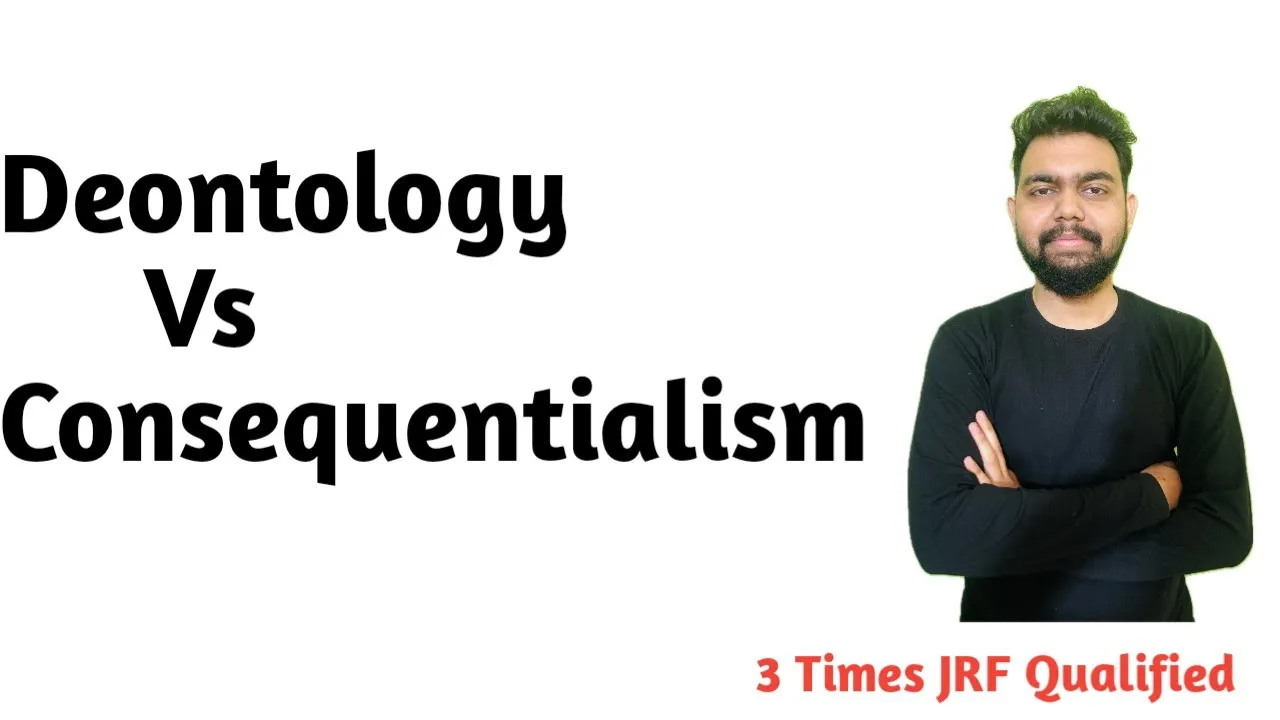
Deontology vs. Consequentialism: Understanding the tension between ethics based on duty/intent (Kantianism) and ethics based on outcomes (Utilitarianism).
Concepts of Moral Agency and Responsibility: Knowing what it means for an agent to be held morally accountable, praised, or blamed for their actions.
The Free Will and Determinism Debate: A basic awareness of how human choice and physical determinism impact our assignment of moral praise and blame.
Nagel and Williams' Taxonomy of Moral Luck: Studying the four specific categories of moral luck: constitutive, circumstantial, causal, and resultant.
Application to Criminal Law: Analyzing how the legal system punishes completed crimes more severely than attempted ones (e.g., murder vs. attempted murder) despite identical intent.
Moral Skepticism and Revisionism: Exploring philosophical views that suggest we must either abandon the concept of moral responsibility or drastically reform our practices of blame.
Epistemic Luck: Examining parallel philosophical debates in epistemology regarding how luck affects claims of knowledge, justification, and belief.
1.1M views21.4Klikes9:46Original Release: 2016-12-12
Crash Course Philosophy is brought to you by Squarespace.
Squarespace: share your passion with the world.
Here’s the scene: A and B are next door neighbors.
They both go to the same party, and they both get equally drunk.
Then, A and B each get in their identical vehicles and drive home, A leaving just minutes before B.
As A drunkenly wends their way back home, the roads are deserted, and they make it back without incident.
But as B drives down the same road just a few minutes later – a child darts into the road.
B’s reaction time is impaired by the alcohol, and they are unable to stop or swerve in time to avoid striking and killing the child.
So who deserves more blame?
Thinkers including 20th century British philosopher Bernard Williams and contemporary American philosopher Thomas Nagel have used examples like this to illustrate some really thorny issues regarding moral responsibility.
We talked about some of these issues when we met W.K. Clifford in our discussion of epistemic responsibility.
But now that we’ve got some ethics under our belts, we can examine these questions more closely.
Now, it probably seems to you like B is clearly more blameworthy, because B killed a child and A did not.
But let’s look closer.
A and B made the equally blameworthy choice to drive while intoxicated.
B encountered an external factor – a child in the road.
Had a child crossed A’s path, A would also have been unable to avoid hitting the child.
Both intended to drive while drinking, and neither intended to hit anyone.
So what does that mean?
It looks like A just got morally lucky.
[Theme Music] What does it mean to be morally responsible?
In philosophy, moral responsibility refers to acts or states of affairs for which you can be praised or blamed.
But, how do you figure out if you really deserve praise or blame for something that happens?
Well, there’s a principle in moral philosophy known as “ought implies can.” This means that if you ought, or should do something morally, then you first must be able to do it.
In other words, you’re only morally required to do things that are possible for you.
And this makes some good sense, right?
“Ought implies can” is one of the few philosophical principles that basically everybody agrees with – it just makes logical sense.
And most people agree that, since ought implies can, you can’t be held morally responsible for situations that are out of your control.
If someone cuts the brake lines of my car without my knowledge, and that leads to me being in an accident, most people would say that I am not morally responsible for any injuries or damage that occur.
Yes, I was still part of the chain of events that lead to the damage, because if I hadn’t decided to drive to that place at that time, the accident wouldn’t have happened.
But I can’t be blamed for it.
Now you see the distinction between causal responsibility – where you’re one link in a chain of events – and moral responsibility, which means you deserve positive or negative judgment for what happened.
But the concept of moral responsibility is reserved for moral agents – that is, those who have the ability to think in terms of right and wrong, and to make decisions accordingly.
If a coconut falls on my head, it is causally responsible for the lump that it gives me.
But, because it is an unthinking thing, it’s not blameworthy, in the way that you would be if you deliberately chucked a coconut at me.
You are a moral agent; coconut trees are not.
Now, this looks pretty straightforward.
But what if I’m aiming a coconut at a pyramid of bottles that I’ve set up for pitching practice, and you suddenly run in front of me, and the coconut hits you instead?
Or what if you’re standing near my target, and I just have really bad aim?
Thinking back to our drunk drivers, if we’re only morally responsible for what’s in our control, then it looks like A and B are equally morally blameworthy.
Because, B couldn’t help that a child ran into the road, just like I couldn’t help it if you ran in front of my coconut.
So let’s now take another angle on moral responsibility, over in the Thought Bubble for some Flash Philosophy.
We often think that what makes something wrong is that it causes harm.
But consider this creepy scenario.
Imagine you’re changing in a store’s dressing room, and outside, there’s some creep who takes pictures of you, and you never know it.
This creep then shares the pictures with his creepy friends.
They don’t know who you are, and you experience no ill effects, no uncomfortableness of any kind, because you never know the pictures were taken.
So here’s a couple questions: Were you harmed?
And did the creeps do wrong?
It’s hard to see how you were harmed by the pictures, because harm seems to be the type of thing that has to be experienced in order for it to exist.
But most people would agree that the creeps did do wrong, that a violation of privacy is still a violation, even if you don’t know that it happened.
The possibility that harm and wrongdoing are actually two different things might not have occurred to you before, but when you think about it, it seems pretty right.
The falling coconut could harm me without anyone having done wrong.
And likewise, wrongdoing doesn’t have to lead to anyone being harmed.
Thanks, Thought Bubble!
So the distinction between doing wrong and causing harm – just like the case of our drunk drivers A and B – is probably making you realize that the issue of moral praise and blame is trickier than you thought.
Thomas Nagel thinks a key to figuring this out is to look deeper into the different aspects of our actions – ones that are both in and out of our control.
These external factors can affect the moral quality of our actions, he says, and he describes their effects in terms of different kinds of luck.
Constitutive luck, for example, is luck that has to do with our own constitution – our disposition, or personality.
We all have different temperaments.
Some of us are more prone to anger, and others are easy going.
Some seem to be naturally generous, while others have to remind themselves to share.
Now, we can definitely work against these dispositions that we have – and good parents and teachers will help us do this as we grow up.
But Nagel says, that doesn’t change the fact that some of us have to work really hard not to be greedy, cranky, or anti-social, while others are just naturally gifted with a tendency toward harmony and generosity.
Then there’s circumstantial luck.
This relates to the situation you find yourself in, and plays a huge role in whether you manage to do good or bad things.
It’s easy to blame the officer in the concentration camp, and to praise the 9/11 firefighter.
But what would have happened if that firefighter had been a member of the German military in 1933?
Or if that SS officer had been a firefighter living in New York City in 2001?
Our circumstances play a really strong role in our actions.
An ordinary person given the chance to be a hero might step up, but that same person might also take an opportunity to become a monster, if it’s offered in the right way.
Nagel says there’s also luck due to antecedent circumstances.
In other words, your character is shaped by things that have happened to you.
Some people get a lot of breaks in life, while others face hard knocks that lead them to viciousness.
People can come out of the best possible environment and still be total jerks, and amazing people can rise out of terrible circumstances.
But where you come from isn’t in your control, and it has an undeniable role in who you’re going to become.
And finally, Nagel says, there’s luck regarding consequent circumstances – that’s the way your actions actually turn out.
Sometimes the best intentions fall flat, and awful plans can produce something that’s unexpectedly awesome.
We don’t cheer for the person who fails to save someone’s life – even if they tried just as hard as the person who succeeded.
This is why most of us find it pretty hard to blame A as much as we blame B – because the fact remains, B’s actions left a child dead, and A’s didn’t.
So, Nagel argues that all of these factors affect the morality of our actions.
But if they’re out of our control, does moral praise and blame even make sense?
In this light, it looks like, usually, we shouldn’t assign any praise or blame.
And even when we should, we should assign less than we do.
After all, if ought implies can, then we should only be blamed for the aspects of our actions that are in our control - and external factors shouldn’t be considered.
So by this logic, Nagel says the two drunk drivers should be blamed equally.
Now maybe that just seems wrong to you.
Maybe you believe that praise and blame are only partially about assigning responsibility for people’s actions.
Perhaps you think we should still praise and blame people, because it’s important for society at large.
In this view, it’s ok, even right, to assign praise and blame for things that are outside of a person’s control.
For example, we want to shun drunk drivers because of the harm that they do, so we’d like to blame every one of them.
But if someone makes it home safely, we don’t necessarily know they drove drunk, so they can’t be blamed.
But we can make examples of the ones we do catch – and assign them loads of blame – even though the ones who didn’t get caught are really just as blameworthy.
And it works the same way with praise.
It’s in our interest to make heroes out of people who risk their lives to save others – whether they succeed or not – because we want to encourage that kind of behavior in society.
So we praise the behavior when we see it, even though it’s the disposition, the intention to do good, that actually deserves praise.
So in this view, praise and blame isn’t really about moral responsibility at all.
It’s just about encouraging and discouraging different behaviors.
Which could explain why you might think B should go to jail, while A, well, A just got morally lucky.
Today we learned about moral luck.
We considered the difference between moral and causal responsibility, and the reasons we assign praise and blame.
Next time, we’re going to talk about justice.
This episode is brought to you by Squarespace.
Squarespace helps to create websites, blogs or online stores for you and your ideas.
Websites look professionally designed regardless of skill level, no coding required.
Try Squarespace at squarespace.com/crashcourse for a special offer.
Squarespace: share your passion with the world.
Crash Course Philosophy is produced in association with PBS Digital Studios.
You can head over to their channel to check out a playlist of the latest episodes from shows like: The Art Assignment, Blank on Blank, and Braincraft.
This episode of Crash Course was filmed in the Doctor Cheryl C. Kinney Crash Course Studio with the help of all of these awesome people, and our equally fantastic graphics team is Thought Cafe.
Up Next

32:27
The Ethics of Punishment: Free Will & Moral Responsibility
@greatgig1nthesky
279 views•2018-04-30

164:01
John of Damascus on Holy Images: A Theological Defense
@BannedBooks
139 views•2026-04-25
9:20
How Can We Talk About Nonexistent Objects? | Philosophy
@crashcourse
872.8K views•2016-09-27
4:57
The Myth of Sisyphus: A Greek Legend of Eternal Punishment
@TEDEd
8.6M views•2018-11-13
Related Study Plans & Knowledge Roadmaps
Structured learning paths in Philosophy
philosophy
Frankfurt School: Critical Theory & Culture
01Foundations of the Frankfurt School and Critical Theory
02Horkheimer & Adorno: The Critique of Instrumental Reason
03The Culture Industry and Mass Deception
+ 2 more learning modules
12h5 modules
Explore Roadmap
philosophy
Philosophy of Language: From Frege to Austin
01The Linguistic Turn: An Introduction to Language in Philosophy
02Gottlob Frege: Sense and Reference
03Early Wittgenstein: The Picture Theory of Meaning
+ 3 more learning modules
15h6 modules
Explore Roadmap
philosophy
Feminist Epistemology: Standpoint & Injustice
01Introduction to Epistemology and Feminist Critiques
02Sandra Harding and Standpoint Theory
03Donna Haraway and Situated Knowledges
+ 2 more learning modules
12h5 modules
Explore Roadmap
philosophy
Environmental Philosophy: Ethics & Deep Ecology
01Foundations of Environmental Ethics & Anthropocentrism
02Biocentric Individualism and Animal Liberation
03Ecocentric Holism and Deep Ecology
+ 1 more learning modules
10h4 modules
Explore Roadmap