











![【哲學讀書會】別無選擇也要負責?|《另類可能性與道德責任》[美]Harry Frankfurt (Alternate Possibilities and Moral Responsibility)](https://i.ytimg.com/vi_webp/J6YbRlmNSfY/maxresdefault.webp)
![Am I Responsible Even If I Couldn't Do Otherwise? [Frankfurt Cases]](https://i.ytimg.com/vi/Y4ZlfY1gCas/maxresdefault.jpg)




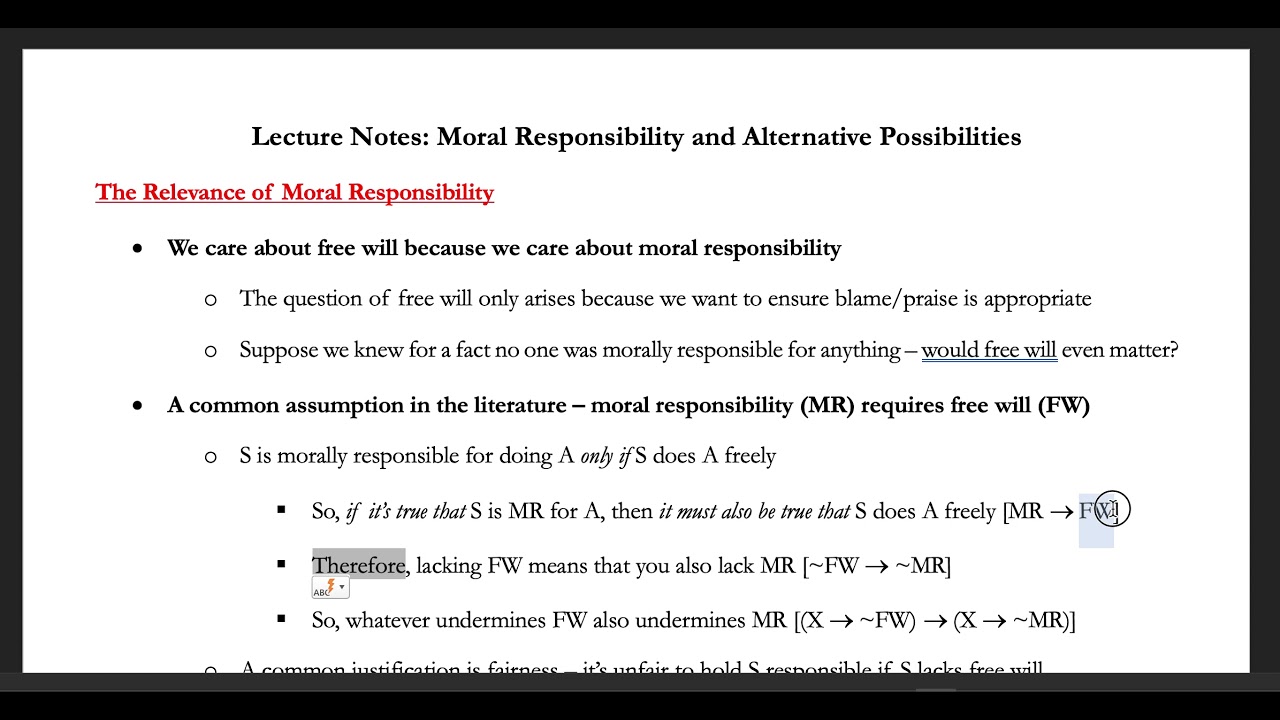




Compatibilism is a philosophical position that reconciles free will with determinism by defining free actions as those that are self-determined—caused by internal factors within the agent rather than external forces—allowing for moral responsibility based on the degree of control individuals have over their actions, as demonstrated through Frankfurt Cases and Patricia Churchland's emphasis on control levels rather than strict free-or-not-free dichotomies.
Compatibilism Explained: Free Will in a Deterministic World
Added:The basic philosophical definition of free will and its historical significance in ethics.
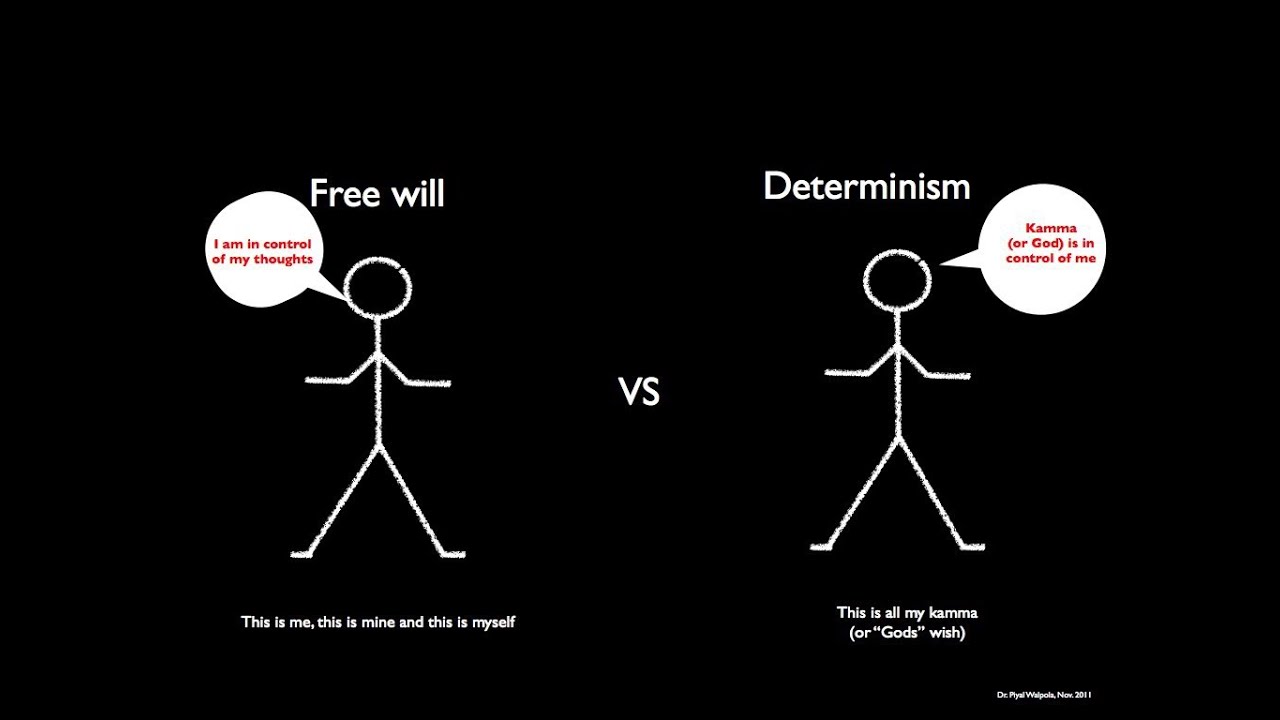
The concept of determinism, specifically physical or causal determinism, which posits that every event is necessitated by antecedent events and laws of nature.
The core tenets of Incompatibilism, including Hard Determinism and Libertarian Free Will.
The 'Principle of Alternate Possibilities' (PAP), which states that a person is morally responsible for what they have done only if they could have done otherwise.
The debate on moral responsibility, particularly P.F. Strawson's theory of 'reactive attitudes' and how it shifts the focus of the free will debate.
John Martin Fischer's 'Semicompatibilism', which argues that moral responsibility is compatible with determinism even if freedom to do otherwise is not.
Neuroscientific challenges to free will, such as the Libet experiments, and how compatibilists respond to empirical evidence.
The implications of compatibilism on the legal system, specifically regarding criminal responsibility, retribution, and rehabilitation.
1.7M views35.3Klikes8:55Original Release: 2016-08-22
Crash Course Philosophy is brought to you by Squarespace.
Squarespace: share your passion with the world.
Let me tell you a story that is disturbing, but true.
In the year 2000, a 40 year old man was arrested for possessing child pornography, and molesting his 8 year old stepdaughter.
The man had no previous history of pedophilia, and he said that he was baffled and dismayed by what appeared to be a sudden turn in his sexual behavior.
While he was awaiting his day in court, the man began to complain of terrible headaches.
A brain scan revealed a large tumor in his orbitofrontal cortex, the part of the brain known to control sexual impulse.
The tumor was removed, and, it turned out, so were his pedophilic impulses.
But about a year later, those impulses returned.
Another scan revealed that the tumor had returned as well.
So, a second surgery removed the tumor, and the pedophilic behavior diminished, this time for good.
Now, here’s a question: Was that man’s really horrible behavior a matter of free will?
Or was it determined – by what turned out to be a medical condition?
Or was it neither?
Could it even have been both?
[Theme Music] So far we’ve considered two metaphysical positions regarding the freeness – or not – of our actions: hard determinism and libertarian free will.
If you’ve found both of them to be wanting, well, compatibilism might just be for you.
Compatibilists believe, somewhat like hard determinists, that the universe operates with law-like order, and that the past determines the future.
But they also think there’s something different about some human actions; that some of the actions we take really are free.
This view, known as soft determinism, says that everything is actually determined, but we can still call an action free when the determination comes from within ourselves.
It’s like the difference between someone being pushed off a diving board, as opposed to jumping.
The result is the same – you end up in the water – but it does look like the cause is different.
In case 1, the cause is the pusher, while in case 2, the cause is the jumper.
Compatibilists say that in both cases, the action is determined – that is, it couldn’t not happen.
But when the action of an agent is self-determined – or determined by causes internal to herself – the action should be considered free.
This means that we might have moral responsibility for our actions, since the determination for some of our acts can come from us alone.
And this was something, you’ll recall, that hard determinists seemed to have to give up.
But, it’s unclear how meaningful moral responsibility really is, in this view.
After all, if we’re still determined, just by our own internal factors, then in what sense are we actually responsible?
Which brings us back to the man with the brain tumor.
If a growth in your brain, which you have no control over, causes you to have impulses that you also have no control over – do you act freely if you act on those urges?
Pedophilia-inducing brain tumors are, luckily, rare, but there are much more common cases that are similar.
For example, should we hold people who suffer from severe mental illnesses responsible for their actions?
After all, the causes of their actions are internal to themselves.
So a compatibilist might be inclined to say that they’re free.
Yet it seems wrong to blame someone who’s in the grip of, say, hallucinations in the same way that we’d blame someone who’s not.
What about someone who becomes flirty after a few drinks?
Do we assign that behavior to the drinker, or on the drinks?
The drinker’s actions are caused by factors internal to themself – the alcohol, sure, but also their body chemistry, how much they ate before drinking, and who knows how many other factors.
Last time, we learned about the Principle of Alternate Possibilities, and the long-standing belief that, in order for an action to be free, an agent has to have been able to do something other than what they’ve done.
But contemporary American philosopher Harry Frankfurt challenges this idea, by arguing that an agent could, in some cases, be morally responsible for things he does, even when he couldn’t have done otherwise.
We call these situations Frankfurt Cases, which brings us to the Thought Bubble to explore one in this week’s Flash Philosophy.
Suppose there’s a fervent supporter of the Democratic party, and he comes up with a crazy plan to make sure his party wins in the next election.
He decides to abduct voters and plant devices in their brains – – something that, as far as I know, neither party has tried yet!
Now, these devices are designed to remain dormant unless a voter is going to vote Republican, in which case it’ll activate, and compel them to vote Democratic.
Now, suppose that you were one of the unlucky abductees, and you head to the polls with a device in your brain.
But, you’ve always been a lifelong Democrat, and device or no device, you have every intention of voting Democratic this time.
You enter the polling booth, vote a straight Democratic ticket, and head home.
Since you never had any intention of doing anything other than voting Democratic, the device was never activated.
However, if you had decided to vote Republican, you would have been prevented from doing so.
The Principle of Alternate Possibilities says you were not free in this case, because you couldn’t have done otherwise.
Even if you’d tried to vote Republican you would still have voted for Democrats.
But, Frankfurt argues: You were still clearly responsible for your vote.
You were responsible, because you did what you wanted to do, even though you could not have done otherwise.
Thanks, Thought Bubble. So what do you think?
Not about the next election – I mean, can you be responsible without being able to do otherwise?
If you wanted to watch Crash Course, and would’ve watched it on your own, but now it’s playing in class and you don’t actually have any choice, are you watching me freely?
Frankfurt Cases play on an intuition that many of us share – the idea that you’re responsible for actions you’ve chosen.
And your choice needs to come from within yourself, rather than from outside factors.
But it’s unclear whether we can actually separate internal factors from external ones.
A group of friends pressuring you to get high is an external factor, but your desire to conform, or maybe your desire not to care what others think of you, comes from within you.
Or does it?
Isn’t your personality – and how you respond to different situations – shaped by your parents, and friends, and earlier experiences?
Many think these kinds of examples reveal deep problems with compatibilism.
If we can’t separate internal and external causes, maybe the answer is to simply say that actions are “more or less free.” And how free they are depends on how many internal factors are influencing us, and how many external, and how much control we really have over what we do.
This is the view taken by contemporary Canadian-American philosopher Patricia Churchland.
Churchland points out that, as social animals, we can’t help but hold people accountable, and assign either praise or blame for their actions.
But it also makes sense to think about how much, or how little, someone is in control of their actions, when assigning praise or blame.
After all, some actions are beyond our control, like sneezing.
So I won’t blame you for sneezing, because you can’t really control that.
But I definitely will blame you for sneezing on my lunch, because you do have control over where you sneeze.
Likewise, I might blame you less for rude behavior when you’ve been drinking, as opposed to when you’re sober, but I probably won’t let you completely off the hook, because, at least under normal circumstances, you had control over your decision to drink.
So, Churchland says, asking “Am I free?” is really the wrong question.
Instead, we should be asking, “How much control do I have?” And the more control we have, the more responsibility we also have.
This view lets us keep what we know about the deterministic nature of the universe, while also making sense of our subjective feeling of freedom.
So really, “feeling free” really just means “having control” We know disturbances in the brain can undermine our control, from seizures and tics to the pedophilic impulses that developed in the brain tumor patient.
But we also know that our brains can be trained to develop control over many aspects of our behavior.
Like the way you used to just pee whenever your bladder was full, but now you’re able to control when and where you pee.
Congratulations on that, by the way.
But this means that we can choose to develop stronger levels of control over many of our actions, which is what we do when we work to break a bad habit, or ingrain a good one.
Now, libertarians will point out that being caused to do something by internal factors still keeps our actions from being truly free.
These folks won’t be satisfied with Churchland’s answer, because it says that every one of our choices is still determined by something.
So we can’t ever make an undetermined choice.
But today, whether determined or not, we talked about compatibilism.
We considered whether our internally motivated actions can be understood as free in a deterministic world.
We also talked about Frankfurt Cases.
And we looked at Patricia Churchland’s rejection of the free-or-not-free dichotomy and her focus on the amount of control we have over our actions.
Next time we’re going to move into a new unit, on the philosophy of language.
This episode is brought to you by Squarespace.
Squarespace helps to create websites, blogs or online stores for you and your ideas.
Websites look professionally designed regardless of skill level, no coding required.
Try Squarespace at squarespace.com/crashcourse for a special offer.
Squarespace: share your passion with the world.
Crash Course Philosophy is produced in association with PBS Digital Studios.
You can head over to their channel and check out a playlist of the latest episodes from shows like PBS Game / Show, The Good Stuff, and Gross Science.
This episode of Crash Course was filmed in the Doctor Cheryl C. Kinney Crash Course Studio with the help of these awesome people and our equally fantastic graphics team is Thought Cafe.
Up Next
3:33
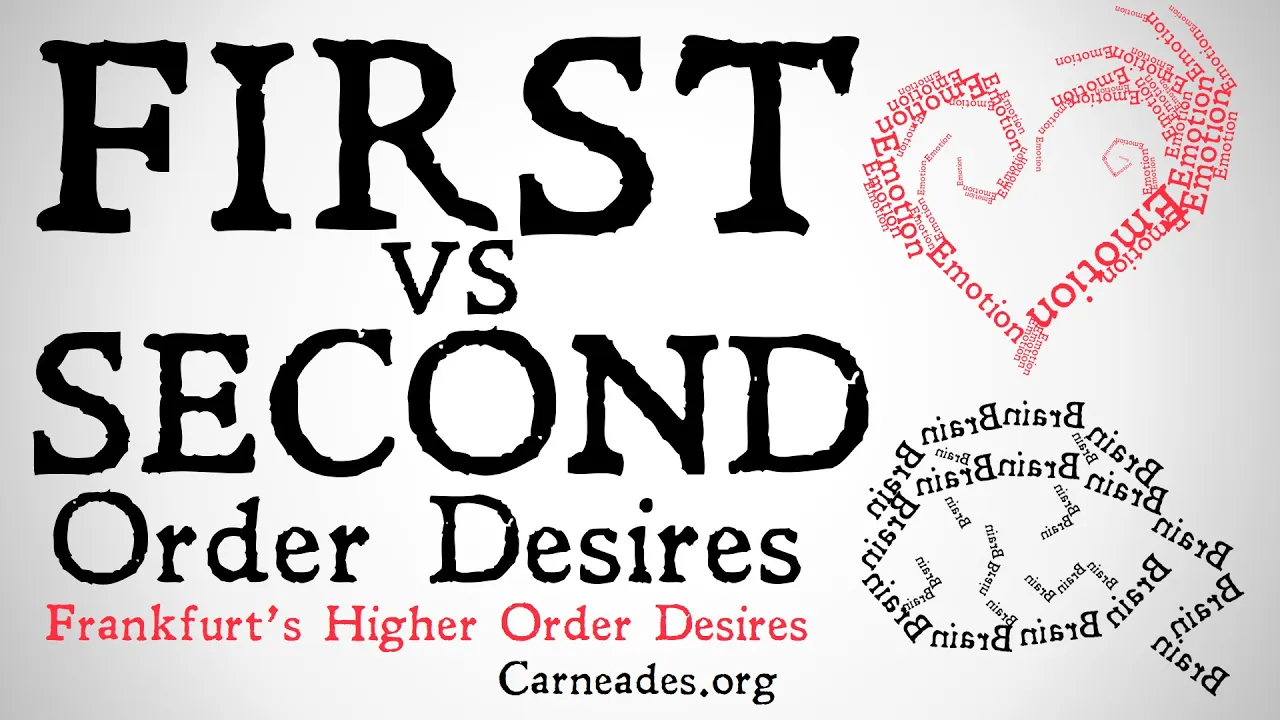
Frankfurt's First vs Second Order Desires: Higher-Order Volitions
@CarneadesOfCyrene
9.2K views•2021-02-01

164:01
John of Damascus on Holy Images: A Theological Defense
@BannedBooks
139 views•2026-04-25
9:20
How Can We Talk About Nonexistent Objects? | Philosophy
@crashcourse
872.8K views•2016-09-27
4:57
The Myth of Sisyphus: A Greek Legend of Eternal Punishment
@TEDEd
8.6M views•2018-11-13
Related Study Plans & Knowledge Roadmaps
Structured learning paths in Philosophy
philosophy
Frankfurt School: Critical Theory & Culture
01Foundations of the Frankfurt School and Critical Theory
02Horkheimer & Adorno: The Critique of Instrumental Reason
03The Culture Industry and Mass Deception
+ 2 more learning modules
12h5 modules
Explore Roadmap
philosophy
Philosophy of Language: From Frege to Austin
01The Linguistic Turn: An Introduction to Language in Philosophy
02Gottlob Frege: Sense and Reference
03Early Wittgenstein: The Picture Theory of Meaning
+ 3 more learning modules
15h6 modules
Explore Roadmap
philosophy
Feminist Epistemology: Standpoint & Injustice
01Introduction to Epistemology and Feminist Critiques
02Sandra Harding and Standpoint Theory
03Donna Haraway and Situated Knowledges
+ 2 more learning modules
12h5 modules
Explore Roadmap
philosophy
Environmental Philosophy: Ethics & Deep Ecology
01Foundations of Environmental Ethics & Anthropocentrism
02Biocentric Individualism and Animal Liberation
03Ecocentric Holism and Deep Ecology
+ 1 more learning modules
10h4 modules
Explore Roadmap