

















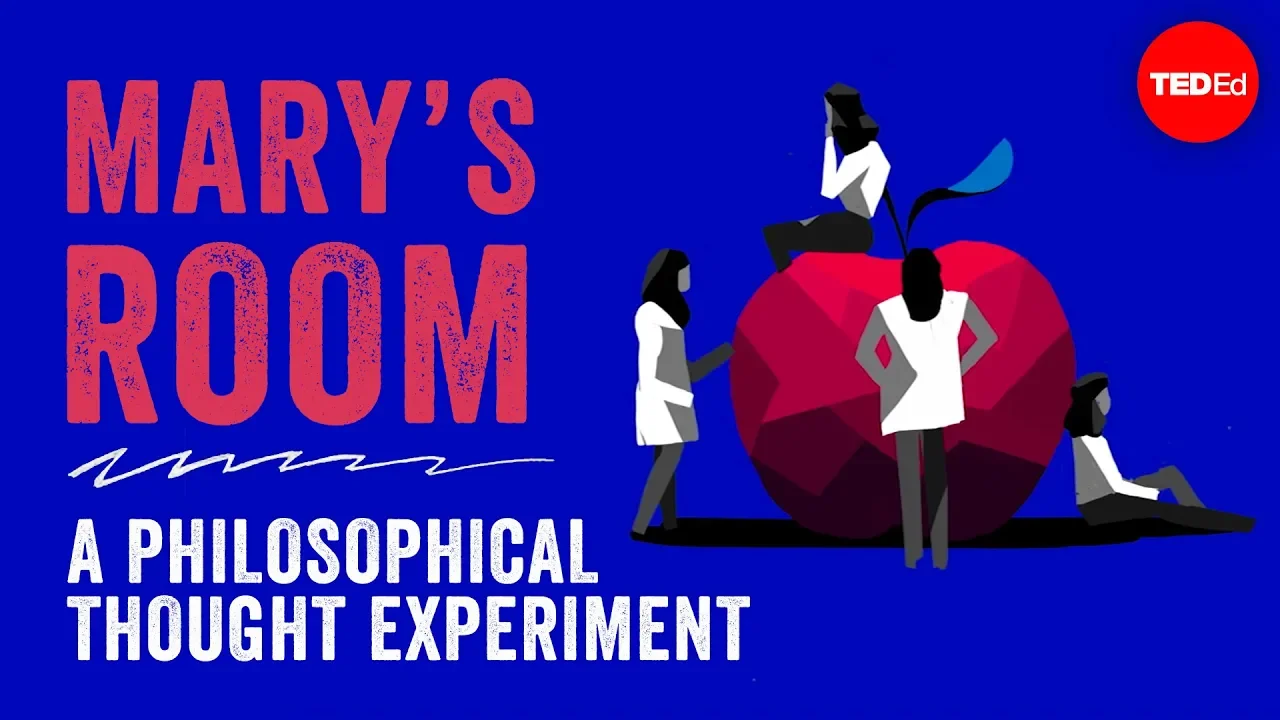



Frank Jackson's Mary's Room thought experiment argues against physicalism by presenting a scientist (Mary) who knows all physical information about color vision while living in a black-and-white room; when she emerges and sees a red object for the first time, she learns something new—what red looks like—which demonstrates that physical information is incomplete and there must be non-physical information about conscious experience.
Frank Jackson's Mary's Room Thought Experiment Explained
Added:The Mind-Body Problem: The foundational philosophical debate regarding the relationship between mental properties (consciousness) and physical properties (the brain).
Physicalism (Materialism): The metaphysical thesis that everything in the universe, including mental states and consciousness, is ultimately physical or dependent on physical entities.
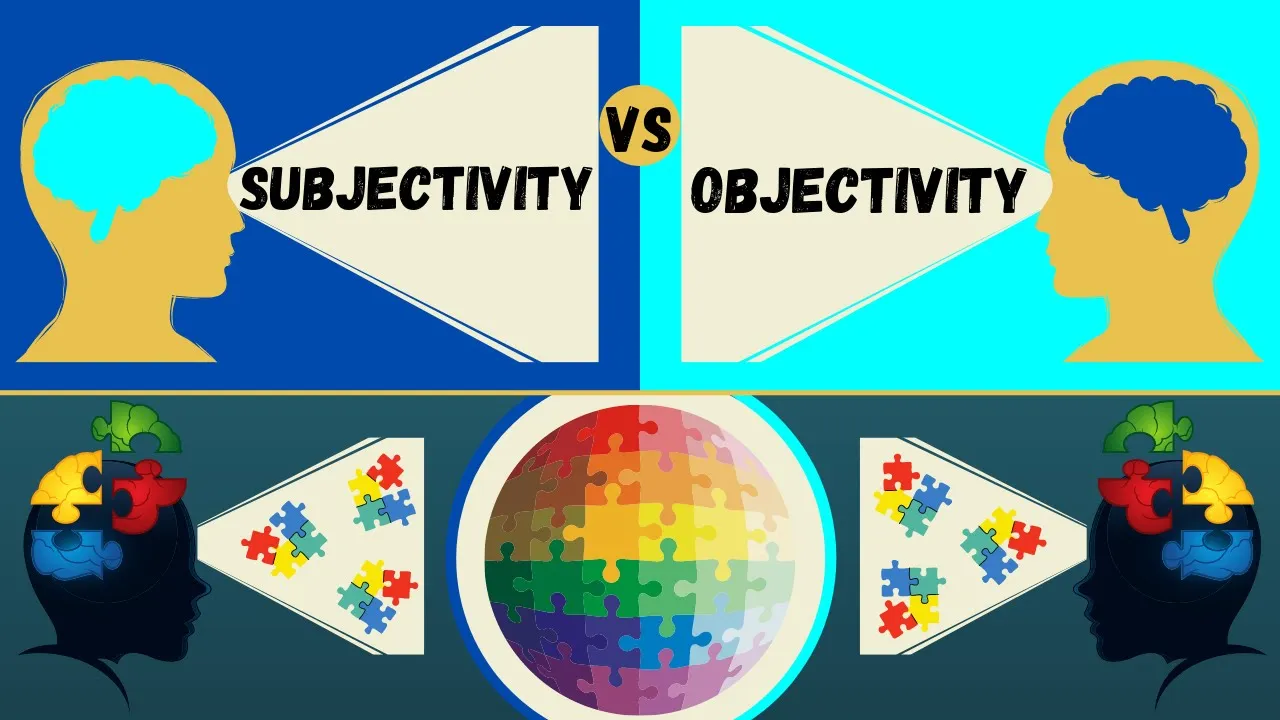
Subjective vs. Objective Experience: The distinction between third-person objective facts (such as the physical wavelength of light) and first-person subjective experiences.
The Methodology of Thought Experiments: Understanding how philosophers use hypothetical scenarios to isolate variables, test intuitions, and challenge established theories.
Physicalist Counterarguments: Exploring major replies to the Knowledge Argument, such as the 'Ability Hypothesis' (learning how vs. learning that) and the 'Acquaintance Hypothesis'.
Daniel Dennett's Critiques: Investigating cognitive philosopher Daniel Dennett's rejection of the experiment's premise, particularly his 'Robo-Mary' and 'Blue Banana' counter-thought experiments.
The Hard Problem of Consciousness: Delving into David Chalmers' formulation of why physical processing in the brain should give rise to subjective, qualitative experience at all.
Frank Jackson's Retraction: Analyzing why Frank Jackson eventually changed his mind and rejected his own Knowledge Argument in favor of physicalism later in his career.
285.3K views6Klikes21:11Original Release: 2020-09-04
Mary would walk out of the room and it would be an incredible experience for her, right? She would see a red object for the first time and all of its redness would hit her all at once and it would look that reddish way. Today we're talking about a super famous philosophical example that was introduced in the 1980s by Frank Jackson. It's the example of Mary's room.
This example comes from actually a series of papers. Uh first Jackson published a paper in 1982 called epifenomenal qualia and then a different paper in a very prestigious philosophical journal called what Mary didn't know. He published that in 1986.
These are both parts of an attack on physicalism. Right? We remember physicalism was the theory that all of the stuff in the universe is physical stuff. And so the mental stuff too, the mind, thoughts and hopes and desires and emotions and sensations, all of that stuff, that's physical stuff too if physicalism is correct. And we talked about three different versions of physicalism in this course. Behaviorism, the mindb brain identity theory, and functionalism. If Jackson is right though, and if this Mary's room thought experiment works the way that Jackson thinks it works, then all of the different versions of physicalism are false. And some version of the opposing theory, dualism, has to be true.
Dualism, as you remember, is just the theory that says that there's dual, that there's two kinds of stuff in the universe, mental stuff and physical stuff, and they are distinct. Okay, so let's just start with the example. It appears on page 275 in the reading for today. Mary is a brilliant scientist who is for whatever reason forced to investigate the world from a black and white room via a black and white television monitor. She specializes in the neuroysiology of vision and acquires, let us suppose, all the physical information there is to obtain about what goes on when we see ripe tomatoes or the sky or use terms like red, blue and so on. Let me just pause to make sure that we understand the initial setup. Right? So there's a woman who lives her whole life in a black and white room. We can suppose if we want that her skin is painted um you know a pure black or a pure white color the and all of the objects in the room are black and white and she gets to learn things on a television screen but the television screen is just in black and white. Okay. So she's never seen any colored objects but nonetheless she gets to learn lots of information. And we're going to suppose in this fictional thought experiment that she learns all of the perfect future science of vision.
Vision scientists today, they know quite a bit about color vision, right? They know about cones and rods. The cones are the ones that detect color and they know that the cones are filled with photo pigment and and signals are sent from the cones into the visual cortex or whatever part of the brain processes whatever they know a whole bunch of stuff. take what they know and add all of the stuff that scientists will discover in the future and assume that scientists get all the way to the end of vision science and they discover all of the facts, all of the physical facts about human brains and how light works and all that stuff about color and color vision. Take all of that information and teach it to Mary in the room. She's in a black and white room and she learns all of this science and she's super smart if you want and understands all of the science that she's being taught and memorizes it and internalizes it.
She discovers, for example, just which wavelength combinations from the sky stimulate the retina and exactly how this produces via the central nervous system the contraction of the vocal cords and expulsion of air from the lungs that results in the uttering of the sentence, "The sky is blue." That's the setup. Mary is in a black and white room. She's only ever seen black and white things, but she knows everything that science can teach us or that it ever could teach us about color vision.
The key thing is that she gets all of the physical information and that it's totally possible that she could get all of this physical information because the kinds of physical information that science discovers is the kind of information that you could have explained to you, you know, when you're locked in a room through a black and white television. It might be boring and it might be hard to focus on the information that you're being given, but let's just suppose that Mary doesn't get bored. She has a very long attention span and she retains the material. Okay, so she knows all of the physical information, all of it. What will happen when Mary is released from her black and white room or is given a color television monitor? Will she learn anything or not? It seems just obvious that she will learn something about the world and our visual experience of it.
But then it is inescapable that her previous knowledge was incomplete. But she had all the physical information. Airgo there is more to have than that. That is there is more information than just physical information. And physicalism is false. Okay, that's the argument. Got it? Mary had all of the physical information and then she stepped out of the room. Once she leaves her black and white room for the first time, would she learn anything new? Of course she would.
She would learn what red looks like. Mary would learn something new.
What it is like to see red. Mary would walk out of the room and it would be an incredible experience for her, right?
She would see a red object for the first time and all of its redness would hit her all at once and it would look that reddish way, a way that she had not experienced before. So she knew all the physical information, but then she learned something additional. So that something additional must be additional to the physical information. It must be some non-physical information, some non-physical facts. Well, then there are non-physical facts. And if there are non-physical facts, then physicalism is just false. So, physicalism is false.
That's it. We're done. Notice though that something has changed. Previously in this course, when we were talking about physicalism, it was a theory about stuff in the universe. It was a theory about objects like physical objects like particles or the human brain. And the thought was that there's no mental stuff beyond just physical stuff like particles and neurons and brains and and stuff like that. Okay. So physicalism was natural for us to define as a thesis about stuff in the universe things. But Jackson is now talking about physicalism not in terms of stuff but in terms of information. Now we're talking about physical information. Hm. And it's in terms of information that Jackson initially defined physicalism initially defined the thesis that he was attacking. This happens in the first and second paragraphs of the reading. Here's what he says. The physical, chemical, and biological sciences have provided a great deal of information about the world we live in and about ourselves. I will use the label physical information for this kind of information. That is the kind of information provided by physics and chemistry and biology. That information he's calling it physical information. Then he simply defines physicalism as the thesis that all correct information is physical information. Okay. So maybe there's something fishy going on there. I don't know what it is. I'm not going to say whether it's fishy or not. It's just unusual. Like we were initially inclined to define physicalism in terms of objects in the world and now we're talking entirely in terms of facts or information about objects I guess. So that's a little weird. Maybe that's not a problem at all. But it is the crucial move, right? Because the example of Mary's room is an example of someone who doesn't encounter some new objects.
Exactly. It's an example of someone who learns a new type of fact, a new piece of information, what red is like or what it's like to see red, right? That's what she learns. And so, because the example works that way, maybe because it has to work that way, it can only attack a version of physicalism that's defined in terms of information. It seems to me like once we grant Jackson in the very first few sentences of the paper, once we grant him that physicalism, the the thesis that we care about and are interested in and want to talk about, once we grant him that that can be defined as he defines it, as the view that all of the information, all of the true facts in the universe, all of that is physical information. Once we grant him that, this argument is going to work. Like it definitely seems like it works because Mary could totally learn all the physical information from a black and white television in a black and white room and then if she left the room she totally would learn something new and so there's got to be some information that's not physical information. So if you've been with me in this course so far, you remember that we just read a paper by Thomas Nagel and in that paper too we were talking about consciousness or we were talking about experience and we were getting what seemed to amount to an attack on physicalism. So the question you might have and the question that I want to answer very briefly is how is Nagel's stuff different from Jackson's stuff? How are their arguments different? Jackson actually addresses this in the reading. I don't know if it's the part of the reading that I required you to read or if it was in some of the bits of the paper that I said you could skip. But anyway, there are two main ways in which what Jackson is doing according to Jackson is different from what Nagel was doing like a decade earlier. The first thing is that Jackson is very directly attacking physicalism. He defines the thesis and attacks it. Nagel is sort of giving some very interesting, very broadreaching considerations. He's putting them forward. He's noting that they seem to be a problem for physicalism. But as we talked about in that previous video which I will la link to in the description or whatever as we talked about there Nagel's claim might even be a problem for dualism too. Okay. And then the second difference is that the kinds of things that Nagel was saying they were primarily epistemic. The word epistemic is a philosophical term. It comes from the Greek word epistem which means knowledge. And so it it means having to do with knowledge. The point here is just that everything Nagel was saying was about certain perspectives or certain points of view or what you can or can't imagine. Right? The point part of the point was that you cannot imagine what it's like to be a bat. You can't know what it's like to be a bat. Jackson at least claims that his argument isn't epistemic in this way. His argument is not about points of view or perspectives. His argument is about qualia, right? This this thing in the world that there are facts about and those facts aren't captured in physical language. Okay. The last thing that I want to talk about is just a term that appears in the title of the paper by Jackson that we read and that is epifenomenal.
I think it's just sort of part of my responsibility to explain terms that appear in the reading, right? You took the time to do the reading and so it's my job to explain what happens and part of that is to explain terms like this.
Let me explain first what an epipenomenon is. So this right here is a very crude drawing of a train like a steam engine or a coal train or whatever. Do you know how steam engines work? Very quickly, here's how they work. You get some coal, you burn it. The coal heats up like a container of water. The water boils.
When water boils, it transforms from its liquid state to its gas state. So, it becomes steam or air vapor or whatever.
And so, then the steam has to escape because now there's all this steam being created out of the water. and it goes through like a tube or a pipe or something and inside the pipe is a little like wheeliedoo that it spins and it spins that you know paddle or whatever and then it's that spinning that gets transferred that paddle spins and so it makes the wheels spin and the train go. That's how a steam engine works. I think the steam engine has some byproducts like one of the byproducts is smoke, right? That's the smoke from the coal. And the smoke from the coal is different from like the steam. The steam is coming from the water. Water is different from coal. So you've got these byproducts that come off of the steam engine. You got the steam and you've got the smoke and then maybe you've got the like the sound. Oh god, how do I draw like a musical note? Is that what musical notes look like or something? You have the sound of the whistling sound of the steam coming out of the whatever. Okay, so you've got a bunch of byproducts. The sound, the steam, and the smoke. What makes them byproducts? Well, it's the fact that they're actually not needed for the working of the engine. What needs to happen for the engine to work is for that little wheel in here, wherever it is, to spin. Right? that the wheel needs to spin and that makes other wheels spin and then the other wheel spin and the train moves forward. The smoke and the steam and the whistling sound, those are just byproducts that get tossed off.
They get thrown out by the engine as it's going forward. That's what an epipenomenon is. An epiphenomenon is some byproduct. The crucial thing though is that the smoke once it comes out of the smoke stack, it no longer causes anything to happen in the engine. The coal burning causes the smoke. So there's causation going in one direction from the coal to the smoke, but there's no causation going in the other direction from the smoke back down into the engine or anything like that. So there's no downward causation as it were. And the same thing with the sound, right? the whistling sound. It comes out of the engine and you hear the whistling sound. But that sound doesn't then cause anything more to happen in the engine.
It's just a byproduct. So we get causation in one direction, but we don't get it in another direction. If you're the thing up here that gets caused but doesn't cause anything else to happen, then you are an epipenomenon. You're a byproduct. Steam goes here. Smoke goes here. And the whistling sound, they all go here. They are epifenomena. Epi, by the way, just means extra or whatever.
They're extra phenomena. It's extra stuff.
Epiphenomenalism is the theory of mind.
It's a version of dualism that says that consciousness, mental experiences, qualia, that stuff that doesn't cause anything to happen in the body. It's just a byproduct that gets thrown off of the physical system. That's epifenomenalism. To get a sense of why someone might adopt epifenomenalism as a theory about the mind, think back to Princess Elizabeth's problem. I'll put a link in the description hopefully if I remember to the video about Princess Elizabeth's problem. Very quickly the problem was just look Decart said that the mind and the body were distinct. But obviously of course mental stuff causes physical stuff to happen in the world like my thought or my desire to move my hand causes the physical event which is the moving of my hand. But Princess Elizabeth points out that seems totally impossible if the mind is not itself physical. If the mind is not material stuff extended in space, then it can't get into space to move things around like move the move the the fingers or move the neurons in my brain or anything like that. That was Princess Elizabeth's problem. The problem was you can't combine the claim that mental stuff is not physical spatial stuff with the claim that mental stuff causes stuff to happen in the world. And so that seemed like it was a problem for dualism. But instead of dropping the dualist part, you could be an epifenomenalist. That is, you could drop the causal interaction part. You could say, "No, Princess Elizabeth, you're right. The mental stuff doesn't move physical stuff. It doesn't cause physical events in the world. It's distinct, non-physical. It's just a byproduct.
There's no causal arrow going in the down direction." We haven't read any thorough defense of epiphenomenalism.
Though I think at the time that Jackson wrote the Mary's room thought experiment, he was an epifenomenalist and I think he's not anymore. Doesn't really matter. The point is just that's a view that's a version of physicalism on which you say the mental stuff is non-physical. It's not spatial. It doesn't exist in space and it's caused by physical stuff. It's a byproduct the same way the steam and the the steam and the sound and the smoke are. But it never causes physical events in the world. Okay, we can't leave our explanation of this term epiphenomenal.
We can't leave our explanation of it without noting how absolutely bonkers and radical epiphenomenalism is. It's totally cuckoo in a certain sense. It's radical in the sense that it denies like a huge percentage of the claims that we ordinarily just totally accept. Think of any action that any human performs or any animal for that matter, right? You pick up an umbrella on your way out the front door. Why do you do that? Because you think it's going to rain. You believe that it's going to rain and you don't want to get wet. So, you pick up the umbrella. Well, picking up the umbrella is a physical event in the world. It's an action. It's a moving of your arm. But the way that we explain that is as being caused by some mental stuff. A belief, your belief that it's going to rain and a desire, your desire not to get wet. So if epifenomenalism is right, then it's not true that you pick up the umbrella because you believe that it's going to rain. That's an extremely bold claim because it sure seems like you pick up umbrellas because you believe something and you desire something. And it's not just umbrellas and beliefs and desires. It's everything you every person you talk to, every movement you make. If we had to explain any of it, any interaction in the world, why you turn left or right in your car, why you reach out your arm anytime you reach your arm for anything purposefully, we explain that in terms of some mental stuff causing you to do it. And so if epifenomenalism is true, it's incredibly radical. It says that almost all of the things we're saying, a huge huge percentage of the stuff that we say all the time and assume is true, all of that stuff is false. So that was epifenomenalism. And before that, we talked about Mary's room, which was an argument against physicalism.
Up Next

8:28
Cartesian Dualism: Descartes' Mind-Body Separation Explained
@PhilosophyTube
312K views•2014-02-07

164:01
John of Damascus on Holy Images: A Theological Defense
@BannedBooks
139 views•2026-04-25
20:57
Bertrand Russell's Theory of Descriptions Explained
@profjeffreykaplan
43.7K views•2026-01-19
4:57
The Myth of Sisyphus: A Greek Legend of Eternal Punishment
@TEDEd
8.6M views•2018-11-13
Related Study Plans & Knowledge Roadmaps
Structured learning paths in Philosophy
philosophy
Frankfurt School: Critical Theory & Culture
01Foundations of the Frankfurt School and Critical Theory
02Horkheimer & Adorno: The Critique of Instrumental Reason
03The Culture Industry and Mass Deception
+ 2 more learning modules
12h5 modules
Explore Roadmap
philosophy
Philosophy of Language: From Frege to Austin
01The Linguistic Turn: An Introduction to Language in Philosophy
02Gottlob Frege: Sense and Reference
03Early Wittgenstein: The Picture Theory of Meaning
+ 3 more learning modules
15h6 modules
Explore Roadmap
philosophy
Feminist Epistemology: Standpoint & Injustice
01Introduction to Epistemology and Feminist Critiques
02Sandra Harding and Standpoint Theory
03Donna Haraway and Situated Knowledges
+ 2 more learning modules
12h5 modules
Explore Roadmap
philosophy
Environmental Philosophy: Ethics & Deep Ecology
01Foundations of Environmental Ethics & Anthropocentrism
02Biocentric Individualism and Animal Liberation
03Ecocentric Holism and Deep Ecology
+ 1 more learning modules
10h4 modules
Explore Roadmap