






![¿PUEDE LA IA PENSAR? (Documental de Filosofía) - El EXPERIMENTO de la HABITACIÓN CHINA [EP.2]](https://i.ytimg.com/vi/syNX0o914r4/maxresdefault.jpg)








![Все предопределено, значит свободы нет? [Алипов и Кузнецов]](https://i.ytimg.com/vi_webp/3qcawrUwe-A/maxresdefault.webp)
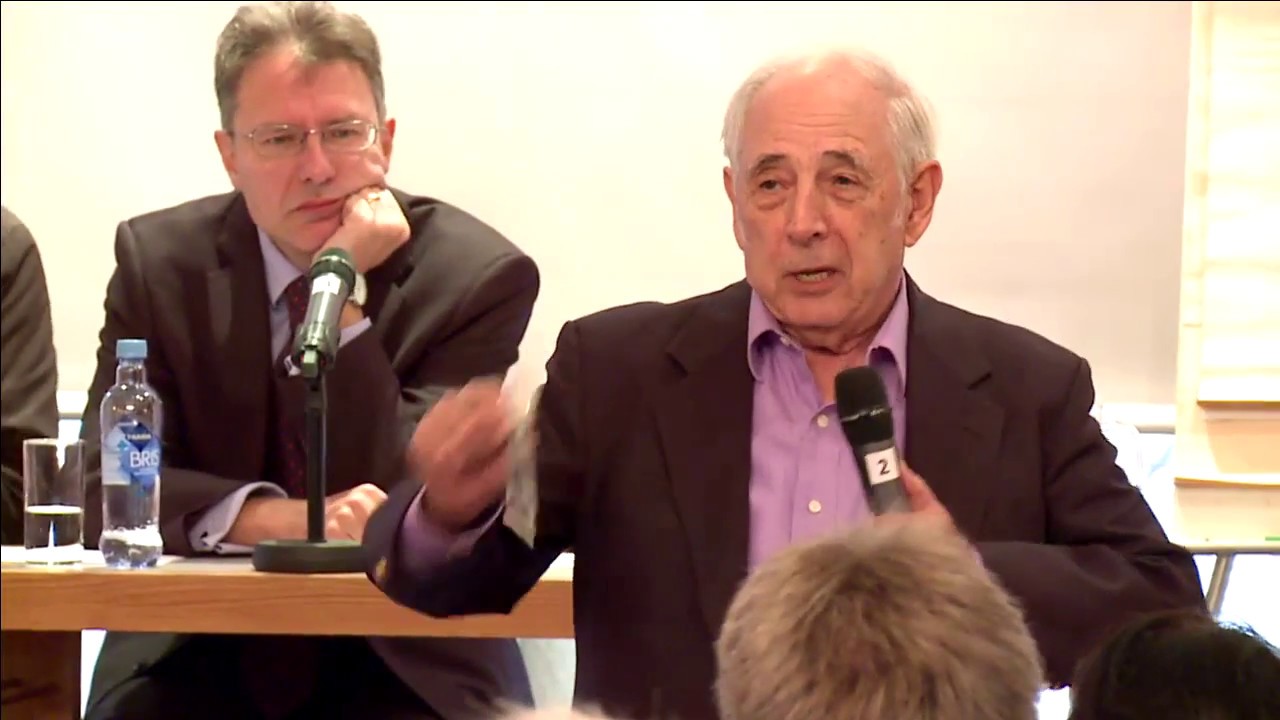


John Searle argues that the traditional problem of free will—how conscious, rational agents can have genuine choice in a seemingly deterministic universe—can only be resolved by accepting that consciousness itself must have a quantum mechanical explanation, allowing for genuine indeterminacy in human decision-making without resorting to pure randomness; this approach preserves the rational structure of our explanations for actions while accommodating the experiential reality of alternative possibilities.
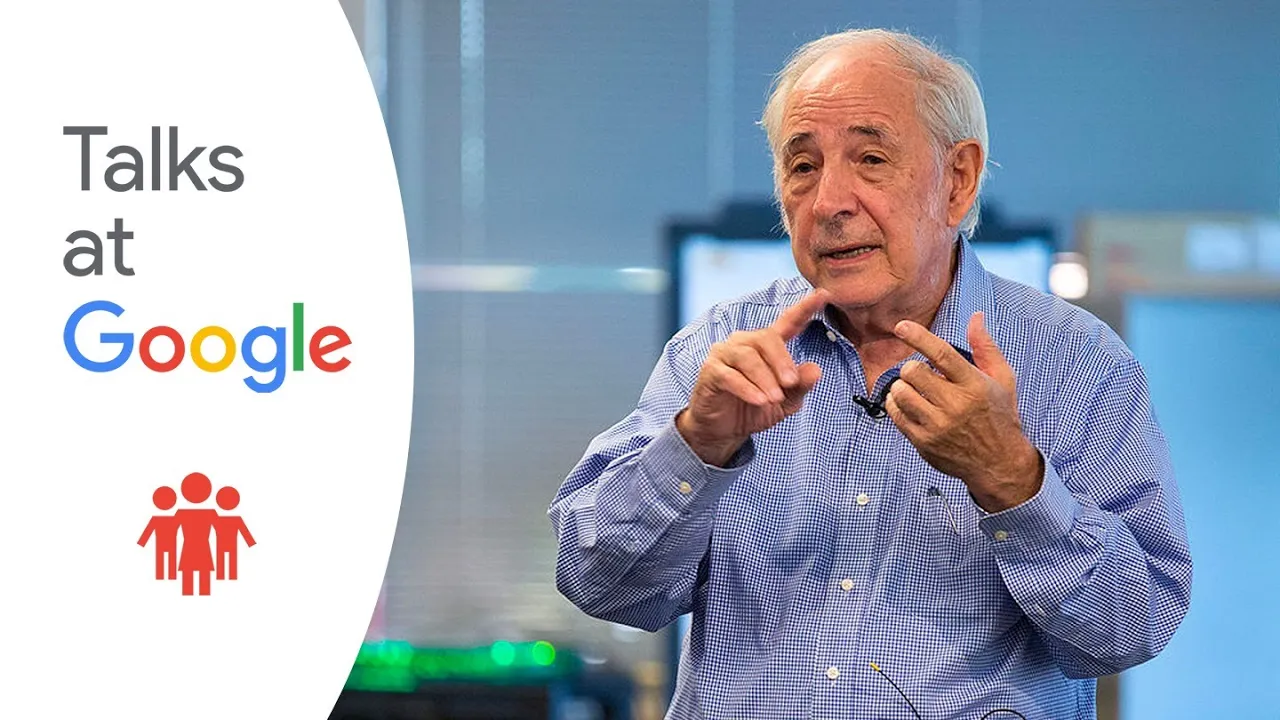
John Searle on Free Will, Language, and Political Power at Google
Added:The fundamental debate between determinism, libertarianism, and compatibilism regarding human agency and choice.
The mind-body problem, specifically the distinction between physicalism (materialism) and dualism.
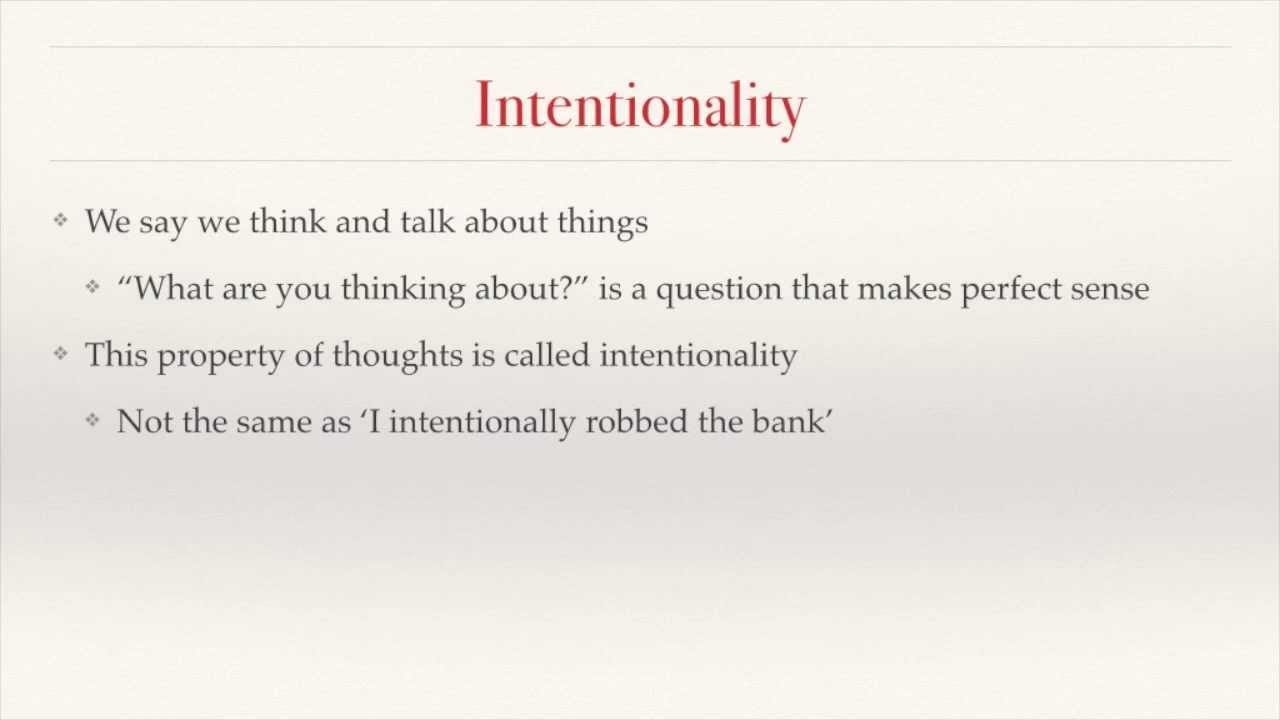
The concept of 'Intentionality' in philosophy of mind—how mental states are directed at or about things in the world.
John Searle's 'Chinese Room' thought experiment and its implications for semantic understanding versus syntax manipulation.
Searle's theory of Biological Naturalism, which posits that consciousness is a higher-level physical feature of the brain, rather than an illusion or a separate substance.
Social Ontology: How collective intentionality and speech acts construct institutional facts, social status, and political power.
Empirical challenges to free will from cognitive neuroscience, such as Benjamin Libet's readiness potential experiments, and the philosophical rebuttals to them.
The application of Searle's philosophy of language and mind to the contemporary ethics and capabilities of Artificial General Intelligence (AGI).
110.8K views1.1Klikes1:05:32Original Release: 2007-11-09
We have a very special guest with us today as part of the authors at Google program. It's quite an honor to have professor John Surl visit us here at Google because I think we can say with very little risk of hyperbole that he is one of the uh most respected philosophical minds of this generation.
And professor Surl is widely known for his contributions to the philosophy of language, mind, consciousness and artificial intelligence. Today he's here to speak with us about his book, Freedom and Neurobiology: Reflections on Free Will, Language, and Political Power.
I also wanted to share with you one quick thing. While perusing the reviews for this book, I came across something that you usually don't see or see very often written about a philosophy book that Professor Surl's book is quote eminently readable and eminently empirical. Uh I think this combination of lucidity and relevance uh certainly helped to define Professor Surl's distinguished tenure as a UC Berkeley uh professor of philosophy. And just as a quick reminder, if you have any questions or comments to please walk up to the microphone we have set up in the middle of the room so that all of your fans on YouTube can hear how smart you are. Um that being said, let's please all welcome John Serl to Google.
Thanks a lot. Um, this I assume is probably the first lecture that any of you have ever attended that was not on PowerPoint. I I hope it's not the last.
I I actually dread those scenes where the guy gets up and then reads off of the PowerPoint. Have you you know the kind of stuff I'm talking about? I I don't have anything to read and to truth to tell I'm always kind of surprised to find out what I just said because I didn't plan on saying it quite that way but anyway it makes it the lecture more surprising for me. Now I have to tell you a little bit about this book because the book really was a surprise. Uh it is the first time that I published a book that I didn't know I had written. Uh what happened was this. I went to Paris and gave a bunch of lectures. one in French. That was just I mean because they're so damn conceited about their language. Um I wanted to show them how to speak it.
Uh and uh the others in in English. And at the end of this some guy came up to me and said, "Look, do you mind if we publish a couple of these in France, a couple of these lectures?" And I said, "Sure." And I obviously signed something and forgot all about it. And then I thought I assumed they'd bring out a couple of articles in journals or something like that. A whole box of books arrived on my doorstep containing a book in French tiny called Libert by me. So I thought well you know look I went to Paris and had a good time forgot all about it. Nine months later a package arrives on their doorstep and the sign says you are the father. You are the father. Okay. So anyway if this is fatherhood I'm going to make the most of it. Now there the two articles really are totally unrelated. One is about political power and the other is about free will and I the book was immediately translated from French into Spanish, German, Italian and Chinese. By the way, there's a a great improvement from a point of view of authors. The Chinese now don't steal you outright. They actually sign a copyright paper, not like the old days where they simply stole your copyright. But I after I I was attacked in all of these languages, I got a request from Columbia University Press. Could we do an English translation? Well, thanks a lot. I actually have English versions of these lectures. So, I gave it to Colombia and then they said, "Surprise, you know, it's kind of a small book uh with just two articles. Could you write a kind of longish introduction?" So, I did. I wrote an introduction when I where I explained what the hell I'm trying to do in philosophy and how these fit into the project. Anyway, I'm going to start with that and then since we don't have time to talk about all the issues, I and I'd like to leave plenty of time for questions because for me that's always the most fun part of any session like this. Uh so what I'm going to do is I'm going to summarize the nature of the overall project and then I will discuss the specific problem of freedom of the will in part because I don't really know what the right thing to say about it is.
I'm still very much uh o open-minded. I can give you what I think are good solutions to a lot of philosophical problems, but the problem of free will is still a tough one. I don't know how to crack it, but I'm going to tell you why it's tough. Okay. What's the overall philosophical project? Well, I think myself that in the course of my lifetime there has been a sea change in the nature of philosophy. Uh we have there has been a major shift in intellectual life of which uh Google is a is an important part and that is uh the central intellectual fact about the present era is that knowledge grows. It just continues to grow. We know a lot more than our grandparents did. Our our children will know a lot more than we do. I people like to say knowledge grows exponentially, but they probably haven't thought about what an exponent is. So, we better be cautious about saying that, but this is a hell of a lot of knowledge out there. And that means that the a traditional conception of philosophy that goes back to the 17th century that says our main task is to place knowledge on a secure footing. Our main cha task is to overcome skepticism. And you get this in in Lach and Daycart famously that the task of of philosophy is essentially epistemic. Epistemology is a fancy word means having to do with knowledge. It's the theory of knowledge.
And it's based on answering skepticism.
And I think now there's a sense in which we can't take skepticism seriously in a way that in the 17th century people could. Knowledge was very much seriously in question in the 17th century.
Remember, educated people in the 17th century routinely believed in unicorns.
That was not a a uh not an oddball or eccentric view. Uh but nowadays we just know too much. It's very hard to send men to the moon and bring them back and then wonder does the real world actually exist? Uh uh you know it you just you can't we can't take it seriously in a way that our great great grandparents did. Uh, now that isn't to say there's no room for skepticism, but I regard the traditional skeptical puzzles. You know, how do I know that I'm not now dreaming, hallucinating, that I'm not a brain in a vat? How do I know that you're not all zombies without any conscious? You know, you're the familiar litany. I regard those as nice philosophical puzzles, but they're no longer the center of the subject. They're like they're a bit bit like the old puzzles about space and and time. uh how is it possible uh to across the room if first you got across halfway and then before that you got across half of that and before they got across you're all familiar with this what's the name of the guy can't do names in yeah right well in any case somebody got an A in the course uh and now nobody seriously doubts the existence of space and time because of those skeptical puzzles and similarly I don't think anybody should doubt the existence of knowledge okay but now if we got out of the skeptical frying pan And it seems to me we're in the on we got out of the epistemic frying pan.
We're now in the ontological fire.
Ontological is another big word just means having to do with existence. Why?
Well, here's the puzzle. I said we know a lot, but mostly what we know is I the solid based stuff is in physics and chemistry and geology and in the so-called hard sciences. And we get a conception of reality from those basic sciences that says at bottom the world consists of mindless meaningless physical particles.
They're organized into systems and some of those systems have evolved over about five billion years into people and and other organisms like us. But now that leaves us with a interesting set of philosophical questions. If at bottom the universe is as described by atomic physics and chemistry, throw in your favorite hard sciences. I then how do we fit in? That is how do we make our self-conception consistent with what we know about how the world is? Anyhow, we think of ourselves as conscious, mindful, intentional, rational, free will having, speech, act performing, political, aesthetic, and ethical human beings. Now, how does that fit in? How does that self-conception fit in with what we know about how the world is anyway? That the world is I I use the word particle. It's probably not right, but nobody's listening. I mean I uh I maybe it's wavicles or now the latest is strings or points of mass energy but point is whatever the ultimately true physics tells us are the basic building blocks of the universe we have a serious intellectual problem. How do we make what we know about those building blocks consistent with a certain conception we have of ourselves? How is it that there can be consciousness? How can there be free will? How can there be ethics? How can there be aesthetics? How can there be society and so and politics and political obligations? How can all of those exist in this mindless meaningless universe? Okay. Now, I'm going to take uh as my target of questioning what I think is the toughest of those questions and that's free will.
And let's always a good idea in philosophy to step back and ask yourself why do we have a problem here? Why do we why is there a problem about free will anyhow? And the answer to that is that and this is typical in philosophy. We have two impulses both of which are very powerful and we do not see how to render them consistent and yet we don't see how to give up on either one of them. The two impulses are to say that any event that occurs in the natural world must have co a causal explanation or explanations. Just anything that happens has got to have an explanation. If the if the Oakland freeway collapses and somebody wants to know why did it collapse, it you won't get very far by saying, well, it's just one of those things, you know, it didn't have any cause. It just it's just that's the way it goes. It's just the brakes. uh you can't get away with that. You h we have to accept as a general principle that everything that occurs in the natural world has a causal explanation.
And typically causal explanations don't just explain how something happened, but they explain why it had to happen. They give what philosophers call causally sufficient conditions. Given the LMA Pria earthquake and given the the transfer of energy through the earth's crust, the lom the the oak the cypress freeway was bound to collapse. Now that's a typical causal explanation and we think all causal explanations have to be like that. But now we have a puzzle and the puzzle is in our own case we think well there are an exception to that. A lot of my behavior I explain, but I do not explain it in a deterministic fashion. I do not explain it by citing causally sufficient conditions. If you ask me who I voted for at the last election, I can tell you who I voted for and I can give you reasons for voting. I voted for that person, but the reasons didn't compel me. I wasn't forced to vote. I could have voted for the other guy. I happened to vote for that candidate, but I could have voted for the other candidate. It was not like being pushed off a cliff.
It was up to me. I had a sense of alternative possibilities open. So, the reason that we have a problem about free will is in our own case, we sense a gap between the causes of our decisions in the form of reasons and the actual making of the decision. There's another gap between the making of the decision and the onset of the action. You made up your mind you're going to vote for this guy, but you get in to the ballot booth and you look at these names on the paper and you you know you still got to haul off and do it. And furthermore, if if it's a a a long sequence of events like swimming the English Channel or learning French, then you got a third gap between the onset of the sequence and the continuation to its continuation to conclusion. In short, there seems to be three gaps or more precisely put, there are three parts of a continuous causal gap of free action. And the gap consists in the fact that we sense alternative possibilities open. We sense that there are genuine choices available to us that we don't just have to sit back and watch blind forces operate that we are capable of acting in the gap. That's why we have a problem of free will because we all sense alternative possibilities open.
But now the first reaction to that is to say yeah but maybe it's all an illusion.
You know the whole thing might be a total illusion. We have lots of other illusions optical illusions. Maybe color is an illusion. Why shouldn't the gap similarly be an illusion? Maybe it is, but it has an interesting asymmetry with other illusions. And that is you can't shake it off. You see, whenever you make a decision, you have to act on the presupposition that your action is free. that you're not compelled by simple blind causal forces the way that the Cypress Freeway was compelled to collapse by the forces caused by the earthquake.
Take a an imaginary case. You're in a restaurant and the and the waiter says to you, "Look, you got a choice between the vegetarian dish or the beef dish.
That's all we got. You got the choice between the two." You can't say, "Look, I'm a determinist. I'll just wait and see what I order. Uh, I'll just wait and see what happens. Because notice, if you say that, that's only intelligible to you. The refusal to exercise free will is only intelligible to you if you assume that it was an exercise of your own free will. See, I I gave a lecture on this once in London, and a guy got up in the question period and said, "Look, if determinism were shown to be true, would you accept it?"
Now, I I pointed out to the guy, think about the form of the question. The form of the question is, if it were demonstrated that there's absolutely no such thing as free, voluntary, rational action, would you freely, voluntarily, and rationally accept that conclusion?
Okay, so we got we're not going to get out of it simply we're not going to get out of the problem of free will simply by saying well you know it's one of those illusions uh that we have to live with like the Miller liar illusion or other sorts of optical illusions because in those cases we can go through life making our decisions on the assumption uh that the two lines really are equal even though they look uh different distance they look different lengths we can't do that with the problem of free will because even if we become theoretically convinced that all of our behavior is determined, we can't act on that presupposition.
All right. So, we got this problem. We have I mean this is this is a typical of philosophical problems. You got two different and conflicting reasons where you have very powerful arguments for both and you don't see how to give up on either. All right. Well, a lot of philosophers think there's an easy solution to this and that is it's called compatibilism. Really, free will and determinism are compatible. And a lot of famous guys like Hume and Hobbes and and uh uh Lock and a lot of 20th century people like 20 like Stevenson and he were compatibist and compatibilism I think is a copout. But let me tell you what it is. Compatibilism says, "Look, there are some actions that are free in the sense that they're caused by your own inner states. I decide to raise my arm and the damn thing goes up." Okay?
But that's still determined. But there are other actions where somebody grabs your arm and lifts it and that is also determined. So all events are determined. It's just some are determined by inside causes. And those inner mental causes are what we call free actions. So you have you can have your free will and eat your determinist cake on this account because so the story goes free will just names a certain class of determined actions actions determined by your own thought processes. Now that won't do I I think that there there is a use of freedom and determinism where they are compatible. I mean, when when people are marching in the streets with signs that say freedom now, they don't mean they want a sessation of the laws of physics, you know, they just want the government to get off their back or something like that. So, I agree. I uh leave me alone to act freely. There is a use of that where it's consistent with determinism.
But that's not the problem that worries us. The problem that worries us is this.
Is it the case that for every event that occurs, every event that occurs, including all conscious voluntary human actions, there were antecedently sufficient conditions for causal conditions for that event? Given that I made the decision and given that I acted on the decision, was it the case that there were conditions prior to my making the decision and acting on the decision that were absolutely sufficient to fix that decision and that action? That's the question that worries us. And I like to think of these as engineering problems. Uh suppose you were designing a beast and you had a choice. You could design a beast that had free will or you could design a beast that was completely determined. What would you do? Well, that's it's a it's a real engineering problem. Uh to begin with, you got to design a conscious animal because free will only arises the question only arises for consciousness. It only arises for this conscious experience we have of making up our mind and doing something in the gap. If it seems to me we would have two hypotheses. One is hypothesis one. Everything is determined including all human behavior. And our beast if we design one might we might give him the illusion of free will because we might put in a consciousness mechanism that had this illusion of free will. But it it it'd be this would be a straight problem in traditional artificial intelligence. So we'd simply put a program uh in that was where the algorithms in the program determined a a a a fixed response to every conceivable stimulus. So this would be a case on hypothesis one. It looks like a rather simple engineering problem. I mean the hard part would be to put in consciousness, but otherwise it doesn't look like there's any theoretical obstacle to building a conscious robot that was completely determined. So that's hypothesis one. But how about hypothesis two that determinism is not true universally. But there are certain class of human actions namely those that we think of as free voluntary rational actions where there is a certain amount of scope where you have a leeway given the causes operating on you. You have a choice. You could have voted for Bush or you could have voted for Kerry. Now, you didn't have an infinite range of choices. You couldn't have voted for George Washington or Abraham Lincoln.
They were not on the ballot. Uh they were not candidates. But within a a range, you did have a choice available to you. And the question is how what what would the world have to be like if that choice was something other than an illusion? Well, let's slow down a bit and and get examples that will enable us to think this through. And again, I like to think of historical examples, even imaginary ones. Uh there's a famous case, if you ever go to European art museums, one of the favorite topics in European museums is the judgment of Paris. Uh and the reason it's a favorite topic is it gave the artist a chance to paint three beautiful nudes. Uh and artists always love chances like that. I mean, this is why the the u Protestant Reformation was such a disaster. Kronach had to put clothes on all of his nudes.
But in any case, uh if you remember how the judgment of Paris went, here's how the the story goes. It's mythological, but it's it's a it gives us a good way to state our problem.
Um Paris was the son of the king of Troy, and he had what nowadays we'd call a summer job tending sheep.
And Zeus had a problem. He had to give a golden apple to one of three beautiful goddesses, palace, Athena, Hera, and Aphrodite. And Zeus didn't want to hassle. He didn't want to fight with these uh women. Well, with these goddesses, so he gave the apple to Paris, and he said, "You decide. You pick which is the most beautiful." Now, I always thought he had to make a decision as to which was the best looking. But I did a little research on this starting with Google of course uh and I came up with the following. In fact, what he did was choose between bribes. Uh they the three offered three different bribes. Hera offered to make him ruler of Europe and Asia. Uh Athena offered to uh enable him to lead the Trojans to victory over the Greeks and Aphrodite offered him the most beautiful woman in the world. Okay. Now, we assume that it wasn't a complete no-brainer that he had to think about it for a few seconds at least. Now, in the end, we know that he chose uh Aphrodites offer with absolutely disastrous consequences as you remember from reading your Greek history. But anyway, let's describe the situation he has. Let's suppose it took him 10 seconds to make up his mind. Uh and in that 10 seconds, there were no outside stimuli. he that all of the data available to his brain were already present uh when the time when the 10-second period begins. So you have a period of beginning at T1 where he has to make where he gets the choice and at T2 where he makes up his mind. But now this is the experience he has which is gappy. He has the experience of of operating in the gap where he has to make up his mind, where he's not compelled. But of course, all of that is grounded down here in the neurobiology. And in the neurobiology, there are no gaps. Rather, the neurobiology at any given point is sufficient to fix what's happening in the mind, what's happening in his consciousness. Okay. But now we can state our problem with a little more precision. On hypothesis one, it's true that he has the illusion of freedom up here, but it's all fixed down here in the plumbing. At any given state of his conscious thought processes, what happens is entirely fixed by what's going on down here at the level of the neurons and the synapses. That's hypothesis one. What's hypothesis two?
Hypothesis two is that you'd have to have gappiness here. And that seems just crazy. I mean, I read a lot of neurobiology textbooks and I can tell you there aren't any gaps in the brain.
So, let's slow down a little bit and think about this. Now, this diagram where you have a higher level of consciousness, this is CS up here and this is neurobiology or neurohysiology down here. That's common in the textbooks and in fact I've used it. But maybe that's misleading because it gives us the impression that consciousness is sort of like a varnish. It's kind of like the frosting on the top of the cake. And a better picture might be this where you think of the whole brain as moving from T1 to T2 where he made the decision and then you have all these neurons and of course the neurons are in a state where they are conscious where the consciousness is not a separate it's not a separate phenomenon that is it isn't some juice squirted out by the neurons but it's the condition or state that the neuron are in. Now, if that's the diagram we draw, then at least it becomes intelligible that the gappiness should go from top to from bottom to top. But what on earth is that supposed to mean? Well, think about it. Is there any part of the universe that we have solid evidence to believe is not fully determined? And the answer is of course we know from quantum mechanics that at the most basic level it's not deterministic. Now I I dread saying this because it's Sorl's third law is whenever philosophers talk about quantum mechanics what comes out is hot air at best. Uh and I won't use even more obscene expression. And by the way that applies to a lot of things physicists say about quantum mechanics. Uh I mean I I I Fineman said, "Look, don't try to think what quantum mechanics means. Just do the equations. For God's sake, don't try to think you understand it." Well, unfortunately, I get paid to try to understand things. There is a part of the world that is not deterministic. You see, here's what's amazing about quantum mechanics. Prior to quantum mechanics, randomness was always epistemic. See, you flip the coin and it comes up randomly, heads or tails. It's totally determined. It's just we don't know. We don't know which it's going to be. We don't know what the how the roulette wheel is going to come out. Whether or not the king of spades is going to come up, but it's totally determined what randomness has to do with our state of knowledge, not with a sequence of events. There's nothing random about them. But what quantum mechanics did was take randomness out of epistemology and put it in ontology. The universe itself is contains randomness. Furthermore, uh, philosophers and physicists often talk as if quantum indeterminacy only goes on down at the itsybitsy micro level at the quarks and the muons. But of course, it goes all the way up. It just it cancels out at the level of baseballs. Uh, because the indeterminacy at the micro level tends to cancel out. But the indeterminate determinism is not the the default position in physics. The default position in physics is that the indeterminacy goes all the way up. So we have to take that seriously. All right.
Now then there's an argument though that says this has nothing to do with free will. And for a long time I used to believe this argument. It it goes as follows. What quantum mechanics gives you is randomness. But randomness is no help with a free will problem because we don't want the result that oh well of course my voting for the Democratic candidate uh wasn't determined. It was absolutely random. It's just one of those damn things that happened. I mean it had no explanation at all. We don't want that uh uh conclusion as well.
However, strictly speaking, that is a a fallacy to infer from the fact that a phenomenon at the lowest at the lower level is responsible for a phenomenon at the higher level that therefore the predicates true at the lower level must be true at the higher level. It's got a name. It's called a fallacy of composition. So if the neurons are firing at 40 hertz, let's suppose for the sake of argument all the neurons are firing at 40 hertz. It doesn't follow that the brain is firing at 40 hertz because the firing is at the the rate of firing is attributed at the synaptic and neuronal level not at the level of the whole system. Now similarly from the fact that the system is random at the micro level it doesn't follow that it would be random at the macro level that it would be random at this level or rather random at the level of the whole system. So it's at least possible on hypothesis 2. Let's make the following assumption. Make the assumption that the only part of the universe we know is the indeterministic is quant is quantum mechanics. But of course that means the whole universe is indeterministic because the quantum indeterminism goes all the way up. It's just for practical purposes for for purposes of baseballs and projectiles the indeterminacies cancel themselves out. Uh but assume then that that's the only part of of uh nature that we know for a fact is indeterminate. But that does go all the way up. uh then we would have to assume on hypothesis 2 that the explanation of consciousness must be quantum mechanical. That there must be a quantum mechanical explanation of consciousness and that the consciousness of free rational decisionmaking inherits the indeterminism of the quantum level without inheriting the randomness. I have to say I want to throw up when I hear myself say that because it sounds so preposterous. Now we're trying to do something. You see, we're trying to follow out to the absolute limit and see where the argument leads. Now the argument for hypothesis one that everything is deterministic. That's easy to do. That's classical mechanics and actually it's classical artificial intelligence. You might even uh put it, you might even put some randomizing element in the algorithm to give the poor beast the illusion uh uh that his behavior was unpredictable even though we know that it's totally uh determined. But unfortunately I though at the end if that may be the conclusion we'll come up with we can't literally live with that conclusion because we have to continue to act on the presupposition of freedom.
So we have to take hypothesis 2 seriously. And hypothesis two says well if there is any indeterminacy in the universe then we would have to use that element of indeterminacy to explain the apparent indeterminacy of free rational decisionmaking. The only indeterminacy we can find is indeterminacy at the quantum level. And we would have to assume that the quantum level would give us an explanation of consciousness. And that that would also give us an explanation for why certain forms of consciousness ma manifest freedom in the sense that it's possible for the agent to act on decisions where the decisions are rational without it being the case that the decisions are forced by causally sufficient anticedent conditions or that the decisions themselves set causally sufficient conditions for the subsequent actions.
So that's hypothesis one and hypothesis two. Uh if we had to choose today, we have a show of hands. I think uh most of us would probably vote for hypothesis one. That is we would exercise our presupposed free will to argue that there's no such thing as free will. I hypothesis two is the best I can do uh to try to come up with a plausible ex explanation for why it might be the case that nature has played has has not played a a nasty trick on us and given us the illusion of free will. Is there any independent argument for hypothesis 2? Any argument against hypothesis one?
Well, the only argument I can think of is this.
If hypothesis one is true, that everything is completely determined, that we are a conscious robots, but but everything we do was laid down in the book of history 15 billion years ago at the time of the big bang. It was at that point determined that at this instant I would raise my right arm and at this instant I would raise my left arm.
Everything is written in the book of history. What's the argument against that? Well, the only argument I can think of is this one that it's unlike evolution. It's just unlike anything we know in evolution for us to have such an expensive phenotype as free rational decisionmaking. as what we think of as free rational decisionmaking. If it plays no role, if it is totally epiphenomenal, epiphenomenal is another fancy philosophers word just means it rise along the surface. It like the froth on the wave, it doesn't make any difference. It it it is extremely biologically expensive for uh us to have the process of rational decisionmaking to begin with. It takes a lot of blood flow to the brain. uh but I uh over the long haul it takes an enormous amount of education, training, uh all all kinds of uh efforts put into it to enable our children to make better decisions. If it should turn out that those that those decisionmaking processes make no difference whatever to what actually happens, that the stuff down here in the plumbing is determining what happens and what's going along here is just going along for the ride. Okay. Now, I I could I keep going about this uh all day, but I'm going to bring it to a close because I'd like to save plenty of time for questions. Um again, once when I gave a a lecture on this, it was the same lecture in London. I had a wonderfully hostile audience. Um another guy said, "Well, why do you just go with the science we got today? You know, maybe there's going to be some much better physics that will explain how this is possible." And I told him, you know, I can't wait around for a couple hundred years. I I got to go with the materials available today. And the materials available today tell me if there is going to be if if indeterminism is a fact of nature. If if free will is a genuine fact of nature, then assuming that our physics is generally right, there's only one possible physical explanation and that is a quantum mechanical explanation. Let's see if we can try to work that out. By the way, other things that people propose like um chaos theory. Now, you know, remember in chaos theory, the butterfly flaps its wings in the Amazon basin and that causes a a big thunderstorm in in uh uh in San Francisco because of the uh exponential effects of of the of the distributions of forces. And this is always excused by weather predictors for why they can't why they never seem to get it right. Um, but that's not a case of indeterminism. That's just a case where you've got a very large number of variables bigger than we can possibly compute even with with all the computers in the world. So the only genuine quantum mechanic only genuine indeterminacy I can find in the physics textbook is quantum indeterminacy. But of course that's pervasive. However, let me tell you what I seem to have given you assuming that hypothesis 2 is even plausible. Hypothesis one fits our common sense conception that everything in nature ought to have a deterministic explanation. Why should human actions be any different? Hypothesis two at least satisfies our urge to square with the fact that we cannot live except on the presupposition of our own free will.
There's no way we can escape that. On the other hand, we started out with the mystery of free will and now I've given you three mysteries for one. The mystery of free will, the mystery of consciousness, and the mystery of quantum mechanics. Thanks a lot.
Okay, now I try to leave plenty of time for questions cuz uh for me that's always the most fun part. So now I'm open to questions. I have lots more stuff I could have said, but but I I think I got some of the basic problems out. Yeah. So about these choices we we make, I'm pretty opinionated. And so I always feel when I get to the ballot box, like uh you know, the decision I've made really is determined pretty well ahead of time, you know, maybe not millions of years, but um you know, what's wrong, you know, from the standpoint of uh our personal perception of things? What's wrong with the notion that we're some agent, but that agent, you know, has nature from birth and uh you know, free will is certainly will, although maybe then that means it's not really free. Yeah. Okay. Uh, no that I I I appreciate this question and I think a lot of people feel this that look I the fact that we can give reasons for our action suggests that that they have causal conditions. Uh the reason doesn't isn't just some logical property but it's actually functions causally. I actually voted for that guy because he was he seemed to me the best candidate.
But now I want to say there's an important difference between the case where you voted for the guy because you thought he was the best candidate and you voted for the guy because you were suddenly stricken with an attack of eps epilepsy while you were in the ballot box and your arm shot out and punched the hole in the ballot at that point. And and the and the distinction is in the case of the rational decisionmaking, you sense alternative possibilities open and you sense that you could have chosen the other. Now maybe politics maybe you're so uh deeply wedded to your political views that the possibility of making an alternative choice doesn't seem plausible. Uh and maybe that you you think that the party system isn't giving you a very live choice. But uh take restaurants in in the San Francisco Bay area. It seems to me there you do have a sense of free choice. And it's true uh that I did chose this and I can tell you why I chose the ve rather than the spaghetti. But all the same I could have chosen the other one. And that's the difference between free voluntary human action and natural events like earthquakes. There's a an explanation for why you did what you did. And the reason you give does site a cause, but it's not causally sufficient. The form of the explanation is not like explanations in physics. You see, if I ask why did this object fall this far when I dropped it, I can cite a law from which I can deduce that it's going to fall that far. S= 1/2 gt² and it's a straight deduction. But you can't do that for things like your own decision to vote. Let's say you chose to vote for the Democratic candidate. You can't do that with that. You get reasons why it happened but there the form of the explanation is not deterministic. It does not follow from the explanation that it couldn't have happened otherwise. Whereas given the laws this could not have happened otherwise. It would be inconsistent with the law to suppose that it would fall some different distance given the time that it fell. Yes. Next question. Uh so if if we're going to look to quantum mechanics to uh find free will, why would it manifest itself only in the human mind?
And then as a followup, is there any way to look toward the notion that maybe ideas and concepts don't hold physical properties the same way physical objects do and that's why you can't treat them as determined? Is there a way to kind of look at something not, you know, like a conscious as a as a varnish, but some sort of gestalt where the structure of our minds allows our ideas to interact in a different way than physical things in the universe? Okay. Okay. No, two two good questions. Uh if what I'm saying is right, uh that I mean if and again I'm not endorsing hypothesis 2, but if hypothesis 2 is at all plausible, then it seems reasonable, I suppose, that there would be some kind of free will in all sorts of higher animals because the kinds of consciousness where you have a sense of alternative possibilities open uh and you choose among those alternatives that's certainly present among the primates. Now again I the study of animal cognition is only getting going but but uh I just came back from Leipzig and there's a wonderful guy there runs the Max plank institute he's an American Mike Thomasello and he works with these primates and it's clear uh that they also have a sense of making up their mind and they I they will play games with him and and do various things that suggest that they think they're making up their minds where to do one thing where they could have done another thing. So it would not be confined just to humans. What is special about humans is we get these higher order levels of reflection where you can not only um reflect on what you're going to do but you can reflect on the very act of reflection. So you have higher order reflection on the lower order reflection. And of course I mean if you ever read Henry James his characters have about seven motives for my one. Uh and they're always busy reflecting on why they have these motives. Or if you ever had any friends who were in psychoanalysis, they're always saying things like, "Why did I say that? Why did I ask you why I said that?" And so on, you know, because they have because they always have these higher order reflections. And I think that's another part. I didn't go into that, but a lot of the the problem here arises that you don't just have a linear movement, but you have a whole lot of reflections on reflections and a whole lot of higher level states of consciousness. Now I'm not sure I understood the second question which was about consciousness and the and the the point I want to make about it and tell me if this answers the question. A lot of philosophers think look there's a real problem. Uh I raised I decide to raise my arm and the damn thing goes up.
But we know independently that the only way it can go up is if uh the um that the secretion of acetylcholine across the synaptic cliffs is sufficient that when it's eventually reaches the axon in plates of the motor neurons, it cranks them up. It cranks up the meiosin and the actin filaments. So how do those two stories fit together? I think they're perfectly consistent. You see, of course, my decision to raise my arm caused my arm to go up. But of course, anything that caused my arm to go up in that way had to cause the secretion of acetylcholine. Otherwise, the arm doesn't go up. No acetylcholine, no movement. What follows from that? What follows is that this picture has to be better than that picture because this picture says one in the same event has a level of description where it is a conscious decision. a decision to raise your arm and another level of description where it has these wonderful biochemical properties where it involves specific neurotransmitters with specific electrochemical properties. So that's I mean this is another beautiful problem the the so-called mind body problem. How is it possible that my thoughts can move my muscles? Just watch. It happens all the time. And there's always some philosopher will tell you you know thoughts can't make any difference.
Yeah. Mind can't affect matter. You just watch. I I I decide to raise my arm and the damn thing goes up. And notice we don't say well that's the thing about the old arm. Some days she goes up and some days she doesn't go up. You know it's not like a weather in San Monteo.
No, it's up to me. I It's up to me to decide when it goes up. But what that tells me is one in the same event has to have psychological and neurobiological properties. You're on. Um, this is a question relating to hypothesis 2. Yeah.
Um, it seems to me that suppose we simulate a human brain in a computer.
Yeah. And we drive it with a pseudo random number generator. Then it's deterministic even if it still appears to act as a brain. That's right. Then suppose we replace the pseudo random number generator with something that samples a quantum event like radioactive decay. Does suddenly this artificial intelligence poof become conscious even or have free will or whatever even though externally nobody could tell the difference whether it was a pseudo random number generator or an actual you know random quantum mechanical system. I I love this question. I think it's only a question that you can get in a place like Google. I think it's just absolutely wonderful question. Look, uh, the I the case is undercribed because we don't know whether or not the machine is conscious and what you told me wasn't enough to give it consciousness. Uh, that is if it's just a a big uh touring machine and we put in it some randomizer and we put in it um, we put in it some a quantum decay that puts it at randomizer, we still haven't given it consciousness. You see, if my h and I'm embarrassed by hypothesis, too, because it sounds so preposterous, but it's the best I can do if I'm come up with what would the world be like if free will were something other than an illusion.
But it's essential to understanding hypothesis 2 that it's got the following three elements. There must be a quantum mechanical element in the exercise of free will. There must be a quantum mechanical explanation of consciousness.
And the quantum mechanical explanation of consciousness must be such that the higher level of consciousness, this whole system inherits the indeterminism of the lower level without inheriting the randomness of the lower level. Well, I told you when philosophers talk about uh quantum mechanics, it sounds like hot air, but that's the best I can do if I'm trying to take seriously the idea that maybe free will is real. But we don't get it just by having a touring machine. I which has got some randomizing element in it. That's not going to be enough.
Yes, you're on.
I was wondering if you could comment on um the idea that crossed my mind when you were talking about the indeterminism of quantum mechanics, how on the one hand, if it it requires some uncertainty to have free will. You have to choose between a couple options. And when you're making something that we call free will, a choice that's conscious, it's one thing, but sometimes, you know, you're deciding whether to have a piece of cake and you call it weakness. Oh, I I had the cake versus I chose I exercise free will not to eat that piece of cake.
So, I was wondering if you could comment on on the distinction there. This is a very serious question and I didn't go into this, but the point is the problem of free will only arises for consciousness. It's only for a conscious being. And this is why in traditional accounts of of psychology like Freud's account of the unconscious, the whole point of the analytic process is so you can bring the repressed motivation to consciousness and thus you can deal with it rationally. As long as it remains unconscious, you don't have free will.
You don't have free will in in your evaluation of it. However, there are a whole lot of complexities to this because often later on you thought what was a conscious decision you realize was unconsciously motivated. You realize that well I thought I was acting freely uh when I insulted Bill. uh but I now realize that it was motivated by those horrible things that I thought build well I won't you fill in your own uh details of the story here but the point is there are very complex relationships between the consciousness unconscious repression and selfdeception now for the sake of this argument I just put all that stuff on one side of course a lot of the times I Paris might be thinking well I didn't give it to Aphrodite uh because I really wanted the best looking woman in the world. But really, I wanted to get back at my father for all the times that he had given me a hard time over girls or something like that. But but that's too complicated for me. I'm just trying to take a very simple case where we don't have those issues. But you're absolutely right to point out that in real life, those are real issues. And often it happens. I mean, if you look back on your childhood, things that you felt guilty about, you now realize, well, really, I I didn't really have a choice.
It seemed to me at the time that I was responsible, but I but I was not. Now, could we treat all of our behavior like that? I doubt it. Yes.
Could we actually get a remote question?
A remote question. Is there time for a remote question? I I don't even know.
Well, you you guys own the technology.
All right. This is a question from Santa Monica. Um, it seems like you've tried to answer the question, you know, does does consciousness push the atoms around or do atoms push our consciousness around by hypothesizing that the quantum is actually pushing the atoms around on behalf of our consciousness? But wherecious where does our free will get the power to control quantum behavior? Okay, let me I try to address that. Let the the first problem foses poses for me a false dichotomy. Is are are the atoms pushing consciousness around or is consciousness pushing the atoms around? That was the whole point of my saying think about what it is to raise your arm consciously and you'll find there's a single event that has both a micro level of explanation and a higher or macro level of explanation. Or I actually prefer this picture. It has a microlevel explanation in terms of the of the uh con of the configurations of the event of the micro structure of the event but it's got a macrolevel features at the at the level of consciousness. So consciousness is caused by lower level properties of the brain but it's not something that gets squirted out. It is itself a feature of the brain at the higher level. And this these higher levels and lower levels are common in nature. When your car doesn't start, what do you say to the mechanic? Uh, do you say look the passage of electrons between the electrodes is insufficient to sustain the oxidization of the hydrocarbon molecules? I don't say that.
I say things like, I think the plugs are no good. The damn thing won't start.
Now, it's true in Berkeley, we got a lot of unemployed physicists, and you might say that bit about the agrocarbons. Um but the point is what I'm trying to say is those are not independent descriptions of two different events but they're descriptions of one event at different levels. And similarly there's a level of this event where it's a conscious event of my raising my arm and another level where it's an event of a of a a sequence of neurobiological processes. Okay. But now having said all that, there still remains the problem of the freedom of the will. And that is given that this description of the thought processes allows for the reality both of the micro and the macro levels all the same, what would the world have to be like for this to be other than a totally deterministic system? And that's the question we were addressing. But it's not a question of the the microcausing consciousness or the consciousness causing the micro because they're part of a of a single unified causal system. It's true that consciousness is causally explained by the firing of the neurons in a way that the firing of the neurons at that instant isn't explained by consciousness. But the whole system now exiting. Y you're on uh one of the or maybe somebody else is on. I don't mean to block off people in remote parts of the world. Yes. One of the arguments against hypothesis one that you briefly mentioned was that doesn't seem to go well with evolution.
I'd like to know why you think that is because it seems to me that uh if uh free will is an illusion. It's an incredibly useful illusion biologically.
I mean it gives us all these wonderful concepts like uh good and evil and ability to build communities with other humans. It's incredibly useful in terms of uh competitive advantage. Yes. Well, I I think that's a serious question and I did not go into this, but let me say a little bit about it. Uh, the only argument I can think of against hypothesis one. The only serious scientific argument would be that it's unlike what we know about evolution to give us an extremely biologically expensive phenotype, this conscious, rational decisionmaking properties, uh, if it isn't playing any role, if it's just going along for the ride. Now you suggest well it might have some nice side effects but it looks like the way you describe them those side effects would be epiphenomenal. Uh that is um we do things like condemn people for what we think is their immoral behavior and we think this behavior is good and that behavior is evil. But of course on the on hypothesis one, all of those condemnations and all of the um apparent I urge to hold people responsible for their actions is entirely an illusion. Uh this stuff goes along up here like the froth on the wave, but the actual work is being done down here in the plumbing. Now the point I made against that I as far as evolution is concerned is it's very expensive in the plumbing to have this stuff up here if it's not doing any work. You see it's not like the appendix. I mean we got this uh appendix that doesn't do anything but it's is it isn't expensive for the system to support an an appendix but it is very expensive to support consciousness and it's very expensive to support free conscious rational decisionmaking. It just takes an awful lot of the biological effort of the of the system to sustain that if in fact it doesn't play any work. It's just going along for the ride. That that was my worry.
However, it's hardly conclusive. I don't think that's a conclusive answer. You're on. Yes. I wait a second. Should we be looking at other uh how how we doing for uh our remote friends?
Okay, they all speak up. They're not shy. Yeah. Okay. Go ahead. All right. So suppose you take away away one molecule from me then you take another molecule then another molecule etc. Yeah. Or suppose you kind of devolve me into my father then his father then his father then his father. Yeah. You mentioned primates having uh consciousness. But my question basically is is do you think there's like a certain amount of critical mass that it takes to have consciousness or if it's like a continuum down to zero? Yeah. Well, no, this again is a very good uh question and the short answer to is we don't know how far down the phoggenetic scale consciousness goes. Um again, there are it's always some philosopher will tell you that animals aren't have conscious aren't conscious and Dan Dennett has actually said in public that babies aren't conscious because they don't yet have language and I I mean it's just I don't take these views seriously but we don't know how far it goes down. I mean, there's no question that my dog Gilbert is conscious. He's great big uh Bernese Mountain dog. You want to see consciousness in action? Come and have a look at Gilbert. There isn't any question that he's conscious. But so when some philosopher tells you, "Well, dogs aren't conscious." No, Gilbert is definitely conscious and no question about it. Um but now, how about termites? See, your average household termites only got 100,000 neurons. And I suppose we lose that on a big weekend. I mean uh so I I I don't know that that's enough. How many do you have to have to get in a game? I don't know. But now you ask a serious question. How far what is there a principal distinction? And the answer is yes.
Consciousness is like a riostat in that you can have greater or lesser degrees within the system. And we know that from our own case between just about being uh ready to fall asleep and being 100% fully alert. But the existence of consciousness itself is an onoff switch.
So I I have less consciousness when I'm falling asleep than I do when I'm fully awake. But it isn't that my comb only has a little bit of consciousness. It hasn't got any. I mean, it's just not in that ball game at all. It doesn't think very quietly. I wish that guy quit rubbing me through his hair. It's just not that that kind of a it's not a candidate for that. So the the short answer to the question is that conscious the existence of conscious is onoff switch. Some systems are conscious others aren't but once you have a conscious system and once you have consciousness and then there are degrees of consciousness and we don't know how far down the phoggenetic scale of consciousness goes. I really that's a question for experts. I mean we just don't know enough yet.
Hi. Hi. I have uh two questions. The first one is could you say a little bit more about what you mean by the difference between indeterminism and randomness? Yeah. Okay. Let me say a little bit more about that. Um by indeterminism I meant that the causes of the event even causes which serve to explain the event do not state causally sufficient conditions. And now it's a fact about the explanations we give of human behavior. Why did you vote for that candidate? That the answer I give is not deterministic in form. It might be deterministic in fact, but the form is not such as to show well then given those causes it had to happen in a way that the explanation of this falling is deterministic in form. It follows logically from the statement of the of the Newtonian laws together with the description of the initial conditions that it's going to fall. But that's not true of my explanations of my own behavior. So that's what I mean by indeterminism, absence of causally sufficient conditions. Now randomness and what I said was that there was a major intellectual shift brought about by the introduction of quantum indeterminacy and I'm not sure it's been fully appreciated. Randomness prior to that point was always tacitly epistemic.
the the the we say the fall of the coin or the movement of the roulette wheel or the come or the of the turning of the cards is random but of course it's completely determined a a Newton a perfect Newtonian mechanics will predict everything but now what quantum mechanics does is introduce a randomness in the very structure of the universe you see imagine that God exists well then she knows how the coin is going to turn up she knows how the uh the cards are going to all but even a perfect God would not know the quantum indeterminacies because there isn't anything to be known there's no fact to be known and that was that is what is uh revolutionary about quantum indeterminacy now what I've said is I the only way I could imagine that we could give an explanation whereby free will would come out as something other than an illusion it would come out as a real fact of the universe given what we know about physics now is to suppose that there must be some quantum element in consciousness. Now, one thing I didn't say that I should say, and that is I I I deal with these guys a lot with neurobiologists because I, you know, it's one of my favorite organs, as Woody Allen says. Uh a and one of the things that worries me is that no uh respectable neurobiologist, no leading figure in neurobiology takes the quantum mechanical explanations of consciousness seriously. There are various efforts to give quantum mechanical explanation of consciousness but they're very much out of the mainstream. None of the people who are really uh leaders in the field.
I mean that doesn't mean they're right but it does mean it it gives me pause that they the current explanations for consciousness are not quantum mechanical. Now it's true they're not getting very far either. I mean it progress has been very slow. But but anyway those answers to the two questions. Oh. Oh sorry. So sorry. My second question, okay, was uh was basically about does does quantum indeterminacy actually get us out of um consciousness being an illusion? Because if you believe in quantum mechanics, you can't take option one. Um but in option two, the human is not actually different from the bridge. They with the bridge, you can say it was caused by the earthquake, but there's a an infantessimal chance that it wouldn't fall down because of quantum indeterminacy. And with the human explain the initial set would behave differently but for all intents and purposes it was deterministic. No if but it's not that's not the picture that I have it the picture that I have is not look I there's a minute chance that the bridge won't collapse because the maybe the quantum indeterminacies didn't cancel each other out. So the Newtonian laws really had an exception here. Now, my hypothesis was not, well, that's how it would be with free will. It's not like that. That really would be randomness.
What I'm suggesting is you'd need two steps. You'd need the idea that consciousness itself has a quantum mechanical explanation. And I we don't know that that's that that's so because we don't know what causes what explains consciousness. We have no explanation.
But give me that as step one that consciousness has a quantum mechanical explanation. And then step two is that the higher level system feature of consciousness inherits the absence of determinism of the quantum mechanical level without inheriting the randomness. that the actual conscious thought processes have to realize the micro structure in such a way that rationality gets a gets a grip here in a way that it doesn't on the way you describe it as just a a matter of randomness. Now again that sounds crazy when I say it and I'm embarrassed to say it in public. Uh maybe nobody's listening but unfortunately there probably lots of people but that's the best I can do. I mean if you take seriously you just make up your mind you're going to follow this out to the very limit that's where I come up with anyway thanks for the question thanks so kind of a followup to that um you had rejected standard compatibilism of determinism and free will but it seems like you've sort of traded that for a different kind of compatibilism of this u quantum indeterminacy and randomness with free will how do you respond to all of the problems that raises is about the compatibilism of randomness and free will and how is that any more of a tractable problem than the compatibilist problem of free will and determinism. I appreciate this question that that is the question that would be asked by a professional philosopher. I mean, I don't know. I don't know if you're complimented by that, but anyway, that's uh but that's that is a very outed for the useless degree. Sorry.
Very high level question. Okay. The uh the objection that I made to compatibilism does not apply to hypothesis 2. The objection I made to compatibilism is it changes the subject.
uh the subject was the question was are there uh rational explanations of events of of actions where the form of the explanation explains the action but it's not deterministic in form and it's clearly we give those explanations every day but then the next step is yes but what corresponds to that in reality was it the case that the event was preceded by causes that were not causally sufficient to fix to determine that specific event and I'm saying if if free will is real then there must be such cases there must be human and some animal actions where the causes of the uh event were not causally sufficient to determine that event now the compatibleist changes the subject and says look of course all events are causally determined it's just some are determined by inside causes and others determined by outside causes but that for me doesn't address the question that just avoids the question the question is I are there some events where the causes are not causally sufficient. Now you say, "But then wouldn't that objection, wouldn't my objection apply to hypothesis 2?" And I don't think so.
Because the whole point of hypothesis 2 was to try to imagine could there be an explanation of human consciousness that would allow for rational decisionmaking where the rational uh decisions explain the event that that is the rationality explains why you voted for that candidate as opposed to that other candidate. But the form of the explanation isn't deterministic. it explains adequately without being deterministic and that's I want to preserve that and but that's what's lost in compatibilism. It's all deterministic incompatibilism. So my I move on uh my examination of hypothesis 2 is does is not subject to the same objection that I made to compatibilism.
Any questions from a remote office?
Sorry, distributed office. Okay. Anyway, I'd like to thank you for coming to Google today and uh that concludes our session. Well, thank you. Thank you for having me.
Up Next
97:06
Free Will: Science, Philosophy, and Theology Explored
@CloserToTruthTV
1.8M views•2016-11-04

164:01
John of Damascus on Holy Images: A Theological Defense
@BannedBooks
139 views•2026-04-25

68:32
Should We Destroy the Machines? Big Tech Surveillance Critique
@TheStoriesWeTell303
167.9K views•2025-11-30
4:57
The Myth of Sisyphus: A Greek Legend of Eternal Punishment
@TEDEd
8.6M views•2018-11-13
Related Study Plans & Knowledge Roadmaps
Structured learning paths in Philosophy
philosophy
Frankfurt School: Critical Theory & Culture
01Foundations of the Frankfurt School and Critical Theory
02Horkheimer & Adorno: The Critique of Instrumental Reason
03The Culture Industry and Mass Deception
+ 2 more learning modules
12h5 modules
Explore Roadmap
philosophy
Philosophy of Language: From Frege to Austin
01The Linguistic Turn: An Introduction to Language in Philosophy
02Gottlob Frege: Sense and Reference
03Early Wittgenstein: The Picture Theory of Meaning
+ 3 more learning modules
15h6 modules
Explore Roadmap
philosophy
Feminist Epistemology: Standpoint & Injustice
01Introduction to Epistemology and Feminist Critiques
02Sandra Harding and Standpoint Theory
03Donna Haraway and Situated Knowledges
+ 2 more learning modules
12h5 modules
Explore Roadmap
philosophy
Environmental Philosophy: Ethics & Deep Ecology
01Foundations of Environmental Ethics & Anthropocentrism
02Biocentric Individualism and Animal Liberation
03Ecocentric Holism and Deep Ecology
+ 1 more learning modules
10h4 modules
Explore Roadmap