











![HOW TO FLOW (take notes) FOR A DEBATE TOURNAMENT [tips from an LD and PF debater] | Alexia Kaybee](https://i.ytimg.com/vi/IXqi-2T_7CI/maxresdefault.jpg)







Lincoln Douglas (LD) debate is a one-on-one competitive format where students analyze moral, political philosophy, and social interaction issues rather than policy or current events; it centers on theoretical questions of justice, morality, rights allocation, and governmental responsibilities, requiring students to research both sides of a resolution and develop skills in research, logical writing, critical thinking, and persuasive speaking.
Lincoln Douglas Debate Format Explained by Coach Joe Vaughan
Added:Basic understanding of competitive high school debate structures and general terminology.
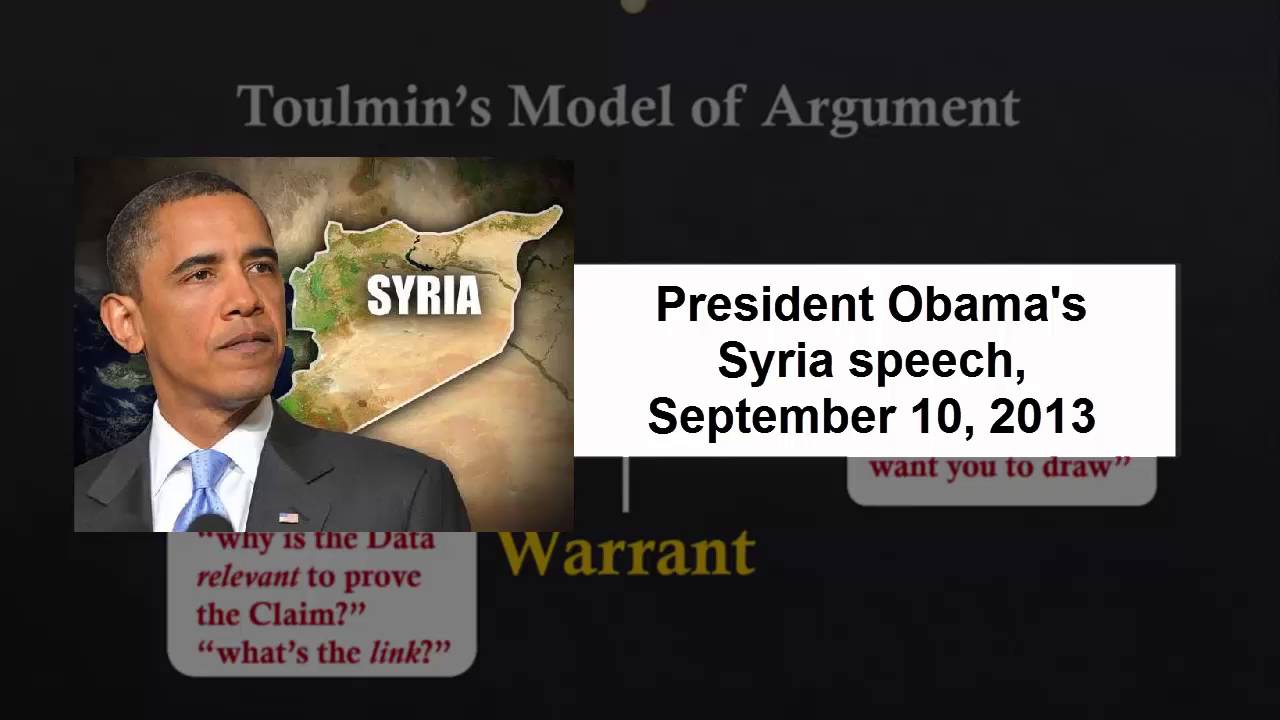
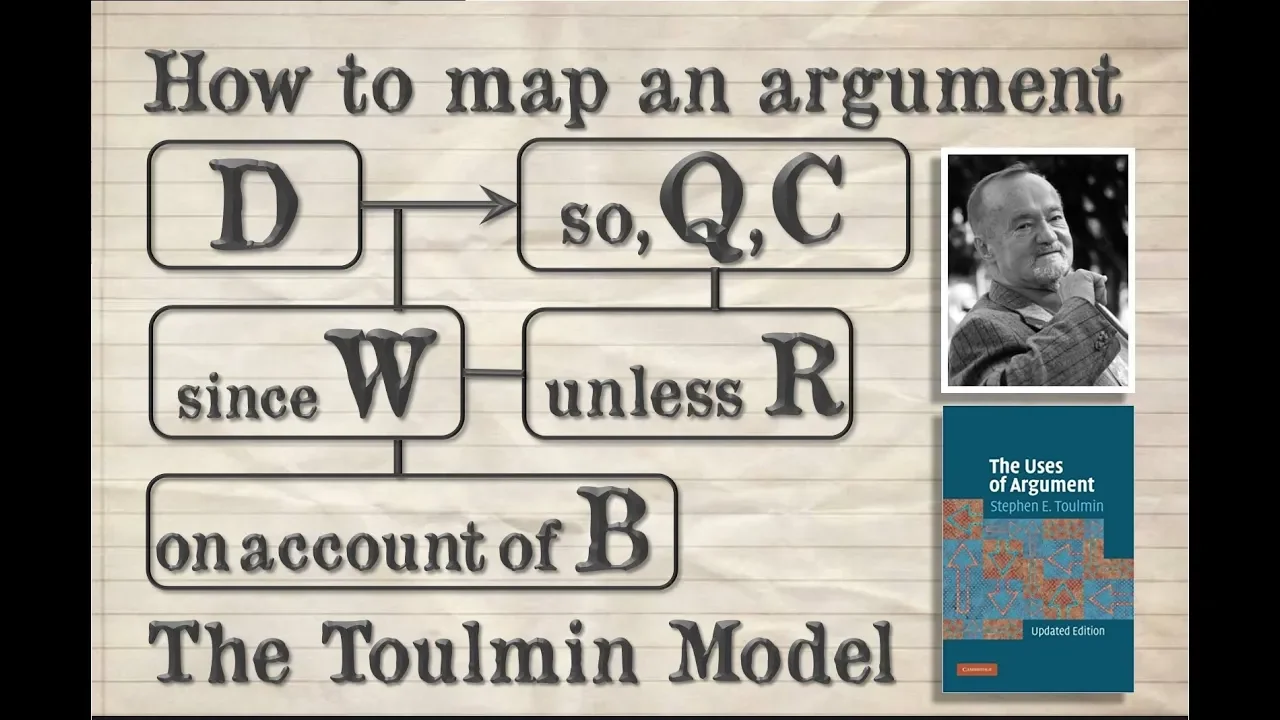
The fundamental structure of an argument, specifically the components of Claim, Warrant, and Impact (the Toulmin Model).
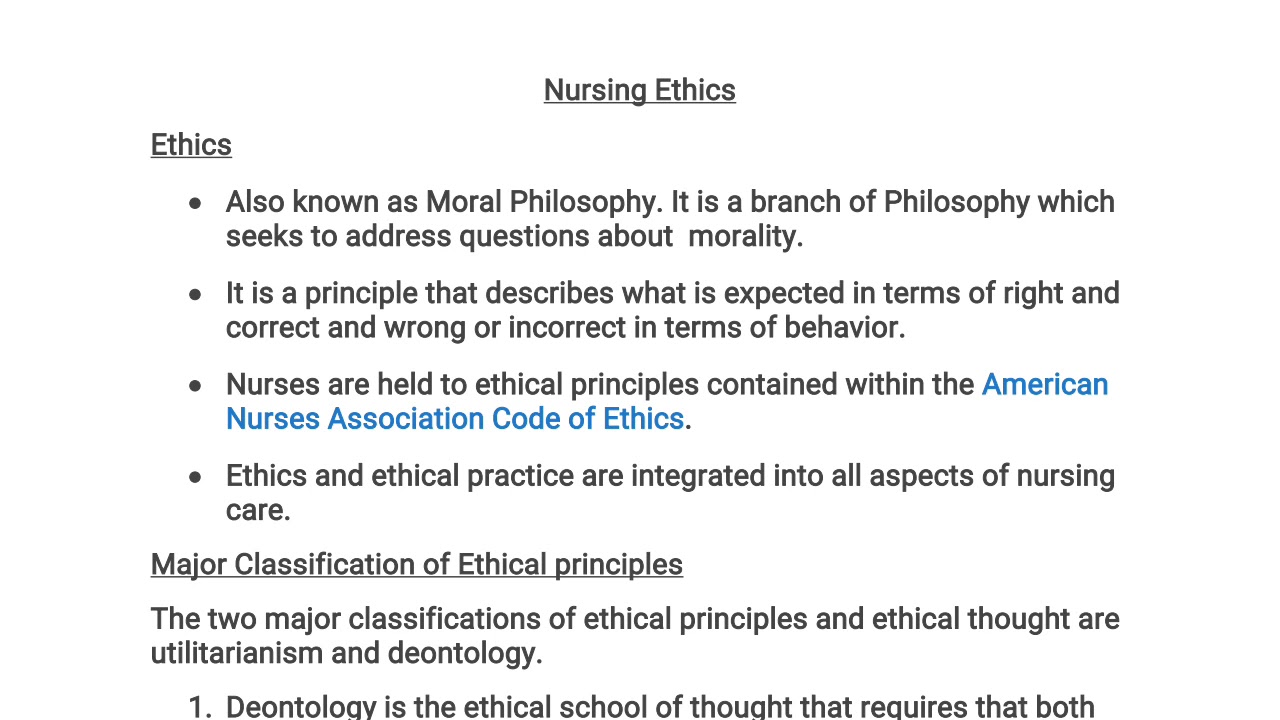
An introductory awareness of philosophical ethics and moral reasoning, such as utilitarianism and deontology.
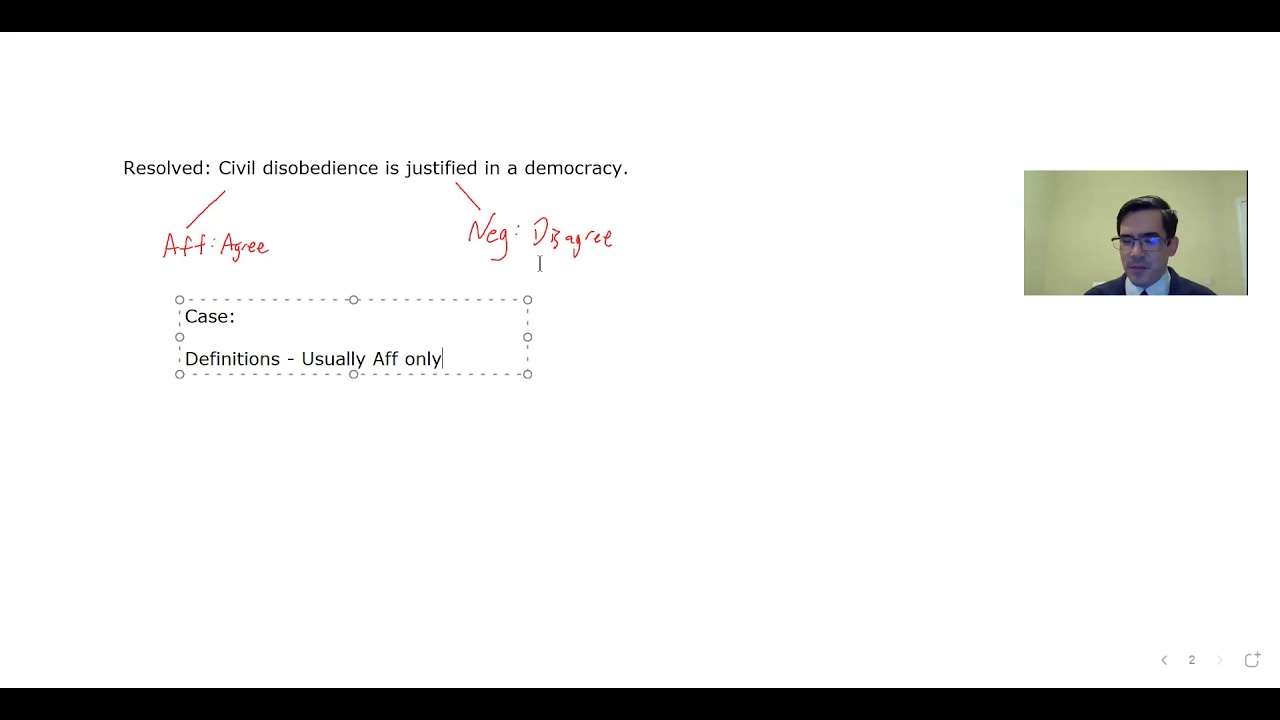
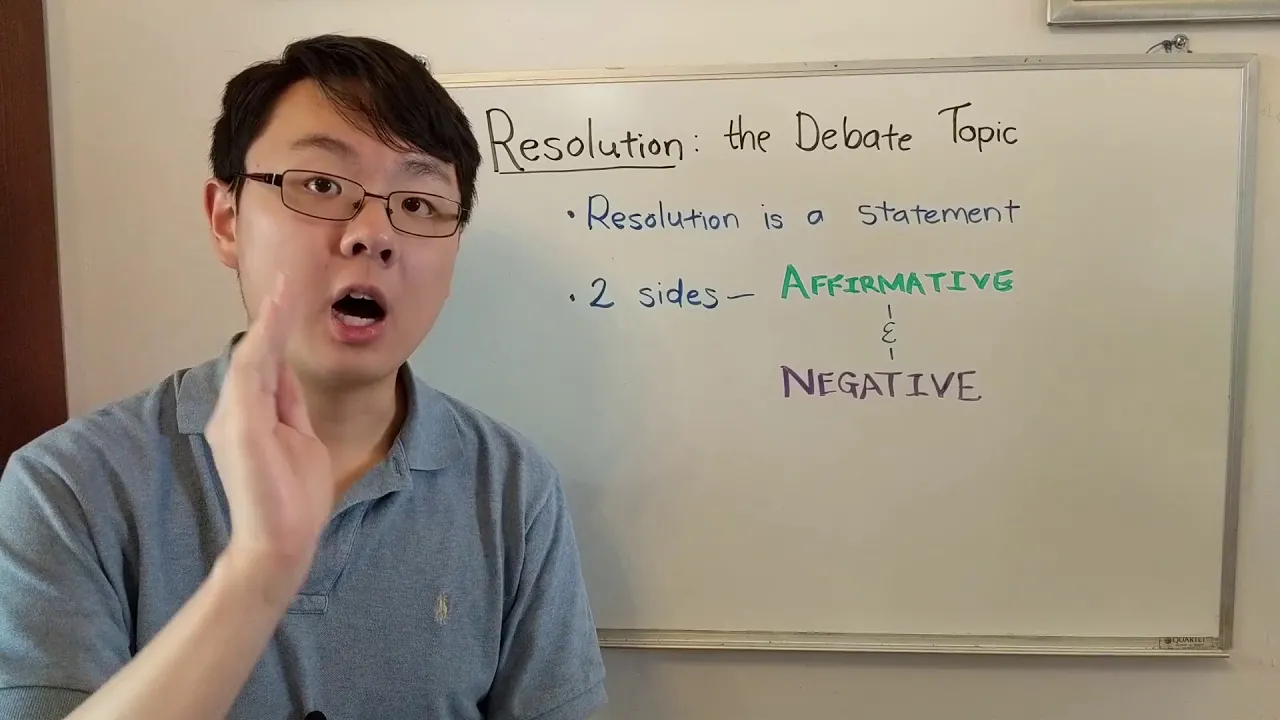
The concept of a debate resolution and how affirmative and negative sides divide the ground of a debate.
How to select, define, and defend a Value Premise and Value Criterion framework for specific LD resolutions.
Advanced techniques for 'flowing' (the specialized note-taking system used to track arguments in real-time during a round).
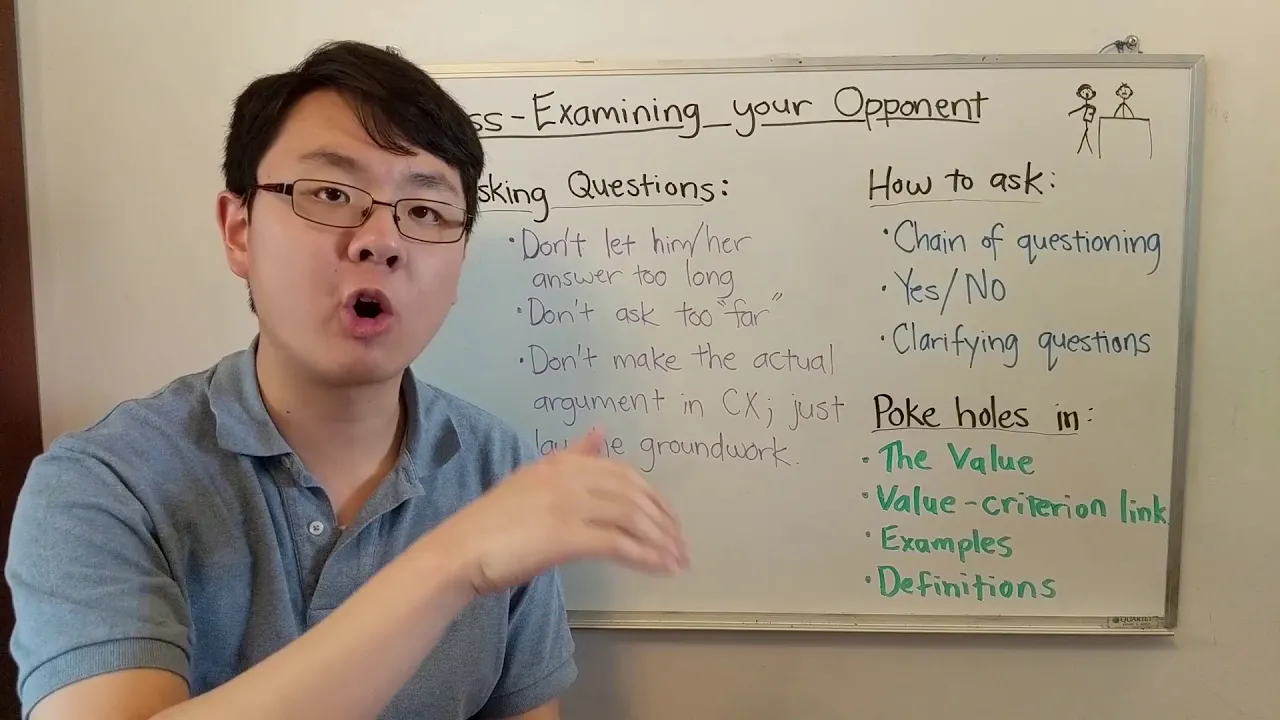
Strategies for effective cross-examination (CX), including strategic questioning and setting up future rebuttals.
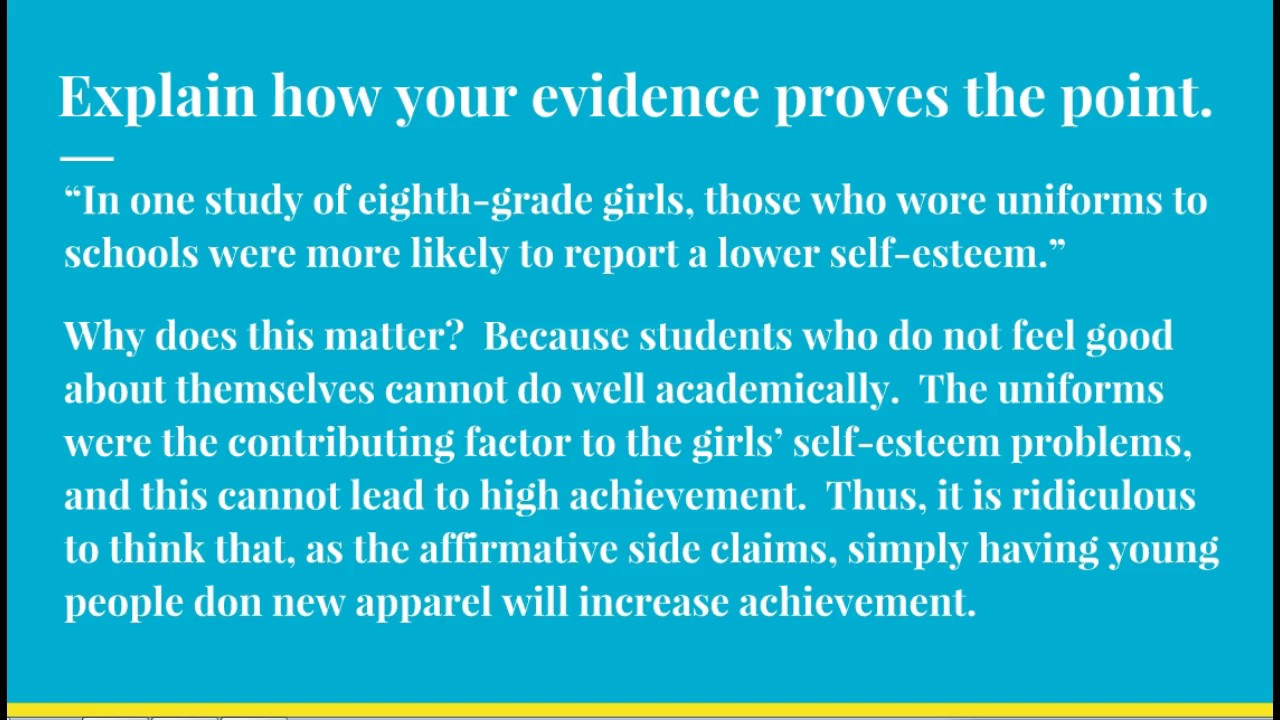
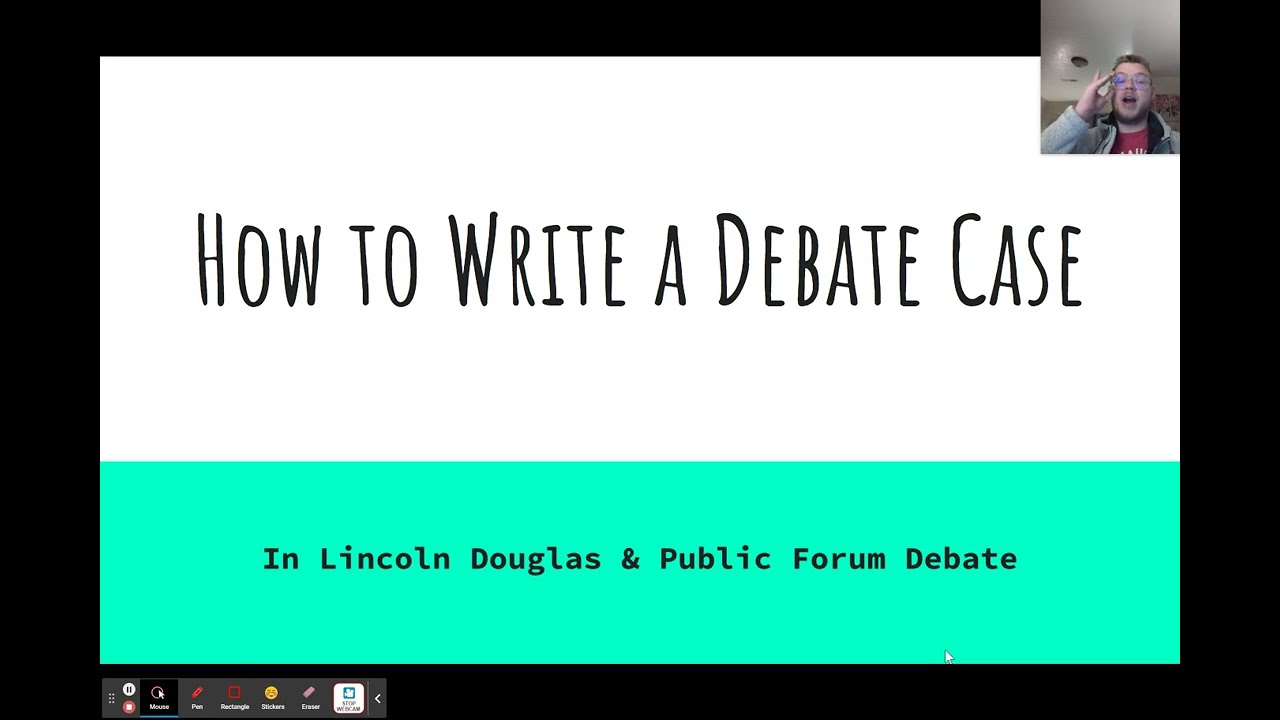
How to research, draft, and block evidence for both Affirmative (Aff) and Negative (Neg) cases.
Introduction to progressive or 'circuit' LD debate concepts, such as plans, counterplans, Kritiks, and theory arguments.
97.8K views349likes34:57Original Release: 2012-11-08
hello my name is Joe vaugh and I'm the coach of the Scarsdale High School speech and debate team from New York and I'm here to talk to you about one of the debate opportunities available through the national forensic League Lincoln Douglas or LD debate Lincoln Douglas is a one-on-one form of debate in which students explore issues of morality political philosophy and social interaction rather than focusing on what actions the United States should take as policy debate does or current issues in the news as public forum does link Douglas debate asks the fundamental theoretical issues that underpin these conflicts and primarily centers itself on a debate of values therefore Lincoln Douglas concerns itself more with what things ought to be or how things should be rather than what is just to give you a sense of the types of issues that LD tackles some recent resolutions have included resolved on balance violent revolution as a just response to political oppression resolved a just government to provide Health Care to its citizens and resolved the United States has a moral obligation to promote democratic ideals in other nations so as you can see LD deals with issues of Justice morality the allocation of Rights and the responsibilities of governmental bodies among other questions the LD topics are announced by the NFL on NFL line.org about a month in advance of when the students will be debating them with each topic lasting for two months for each topic students will be expected during a competition to debate both sides therefore students should research from topic specific literature and appropriate philosophical texts to prepare arguments both in favor of and against the resolution when going to a competition a student must have written both an affirmative and a negative constructive which outlin lines the students reason for affirming or negating the resolution although may sound initially daunting the best way to get introduced to the activity is to watch a few rounds of LD and see the flow of a round and see how it all plays out what you will hopefully notice is that effective LD Debaters are ones who are convincing because of the rigor accessibility and logical flow of their analysis their ability to be responsive to their opponent's arguments and and how to effectively and persuasively present their speeches to an audience be it an experienced LD coach a former ler or a parent judge volunteer the backbone of the activity my students who compete in Lincoln Douglas act debate learn a wonderful variety of important and valuable skills they must become excellent researchers be concise and logical in their writing have the flexibility of intelligence to think on their feet during the round develop the speaking skills needed to be both eloquent and highly informative in a limited amount of time and most importantly learn how to become members of a community many of my students cite that the people that they have met and the ideas that they have explored during their debate careers have been some of the most important experiences in their High School careers thanks for your time and I hope you and your program will have the same great experiences with Lincoln Douglas that my team has enjoyed so against the affirmative case you talk about Florida as an example of political oppression and you agree that the resolution is a question of on balance general principles right I understand that you're going to make the argument that this is one example my argument however is that nowhere in the affirmative case do you prove that political oppression always or on balance has to be violent before we begin I want to thank the national forensic league for this incredible opportunity and for my debate education over the past 4 years thank you to the Lincoln Financial Group whose sponsorship of this tournament and great League have made this learning possible thank you to the NFL president Billy Tate executive secretary Scott one and the NFL executive Council for their tireless dedication thank you to the LD tournament chair Pauline Kochi as well as Vicky Fellers Dalvin and Becky joerger and the entire Derby Witchita steering committee for making this tournament an unforgettable one and to the city of Witchita Kansas we appre appreciate you opening your doors to us I'd also like to congratulate my opponent as well as all of the other competitors who've made this a wonderful experience I owe much appreciation to many members of our community for helping me grow not only as a debater but more significantly as a person to John Cruz Mike beats and Joe vaugh your confidence in me has helped me develop a faith in myself to my coaches Stacy Thomas and Tom evman your endless guidance has taught me to always approach challenges in life with perseverance compassion and humor to my hockey day teammates first always supporting me as my family away from home thank you but most importantly to my grandfather mother and father for their infinite love support and understanding and for always giving me the strength to achieve my goals to my sister Shani you are my best friend and I love you I will always be grateful to have shared the memories of my last debate tournament with you and finally thank you to God for his Blessing and guidance in my life and hopefully in the years to come with that I would now like to present my affirmative case those who deny freedom to others deserve it not for themselves because I agree with Abraham Lincoln I must affirm today's resolution on balance violent revolution is a just response to political oppression to clarify I'd like to offer two observations observation one explains the evaluative terms the qualifier on balance requires an evaluation of general principles in addition in the phrase a just response a according to the Random House dictionary means not any particular one given these operational terms the question for today's debate is if violent revolution should theoretically be included among the legitimate responses to oppression not if it is the correct response in an isolated situation or categorically the best option observation two explains the nature of political oppression oppression is defined by the Oxford English Dictionary as the prolonged cruel exercise of authority the modifier political makes the agent of Oppression a government political oppression goes beyond the basic restriction of Rights because even just states must restrict some degree of autonomy to preserve social welfare additionally all societies can pass bad laws but if the people have Avenues to fix these mistakes then the system isn't politically oppressive since citizens ultimately have control politically oppressed people are denied political rights and thus do not have legal recourse so oppression has two components a it is arbitrary and B it is without checks finally Ted hrid philosophy professor at the University College London defines a violent revolution as an act of considerable or destroying Force which is prohibited by law and directed to change a system of government I value justice as it is the ultimate good implied by the resolution while there are different conceptions of Justice all are centrally based on the notion of fairness and that people should be treated as their actions Merit so Justice is defined as giving each their due the Criterion is respecting human dignity which is the innate worth that separates people from objects dignity makes Justice meaningful because only beings with Worth or do something for example it would be absurd to discuss what my water bottle maybe do to respect human worth citizens must be allowed to exercise their fundamental rights my case will prove that making the choice to violently Revolt is one of these fundamental rights and as such an affirmation is required to validate people's dignity and recognize this due course of action contention one people have an inherent right to violently Rebel subo a an oppressive government has lost the authority to demand Allegiance governments are formed to protect innate rights and in return people Grant States a monopoly on coercive force all social contract theories which explain the existence of the state are founded upon this idea an oppressive government not only fails to fulfill its obligations but proactively uses the rule of law to abuse its people turning the social contract on its head the power given over to the state no longer safeguards citizens but becomes a weapon of persecution in these circumstances the state forfeits its right to monopolize violence the right returns to the people who may now reclaim this Force as their due power it is crucial to note here that the resolution prescribes parameters for when violence is just and those are when it is a response to the oppression initiated by another agent so an affirmation isn't an overarching endorsement of violence but recognition of its legitimacy as a check on certain social conditions subo B the right to violently Rebel is Justified as a form of self-defense historically despotic regimes have killed their citizens this is the norm not the exception political storian R.J Rummel proves this in his book death by government his research shows that 262 million people were slaughtered by their rulers worldwide from 1900 to 1987 he summarizes this figure far exceeds the 34 million battle deaths thought to have resulted from the international and civil wars during the same time period RL identifies 218 regimes that committed democide during this time period and adds that the murder rates are assuredly underreported since oppressive leaders try to hide their death tolls thus empirically oppression threatens lives to further this point analytically any right you have in an oppressive regime is bankrupt because it is granted solely on the state's wi your life is always threatened since your dignity can be stripped at any time making all rights insecure oppressive rulers by definition no longer exercise control legitimately and thus physical coercion becomes Common Place making violence against the state a proportional response every person has the right to self-defense when threatened just as we cannot condemn the individual use of violence when assaulted we cannot condemn citizens who use VI violence for their Collective benefit both criminals and the oppressor have willfully created a situation in which Justice is achieved at their detriment with these sub points in mind violent Rebellion is proven in two distinct ways to be an inherent right as a liberty due to people an affirmation is already supported since the link to justice is clear however I will move on to my next level of analysis which addresses the Practical objections often raised to Revolution contention two any Revolution to restore rights will include violence even the most renowned nonviolent uprisings had some violent support the Indian independence effort was sparked by the SEO Mutiny a bloody Rebellion against the British similarly Malcolm X and the Black Panthers provided the threat of violence that enticed the state to take Martin Luther King seriously during the Civil Rights Movement King even warned us officials that if they ignored peaceful resistance they would risk bloody riots making the fear of violence a powerful negotiating tool non-violence only has any hope of working when targeted against states that are otherwise Democratic and worry that a Crackdown would undermine their liberal IDE ology back home on balance this is simply not true of oppressive regimes even political philosopher Hannah orent who is an advocate of nonviolence admits this failure and States if Gandhi had met with a different enemy Stalin's Russia or Hitler's Germany instead of England the outcome would not have been decolonization but Massacre and submission England had good reasons for their restraint as they enjoyed domestically the blessings of a constitutional government a negation guarantees Perpetual violations of dignity since the oppressed people have no pure Avenue for change the only potential for justice is to allow citizens their fundamental right to violently Revolt thus I urge an affirmative ballot and now stand ready for [Applause] cross-examination let's imagine for a moment that I'm being mugged okay okay do you think it's just for me to retaliate against my aggressor I would say that that is a right of self-defense so it is just that would be just okay now would it be just for me to subdue my attacker tie him up and then proceed to beat him with a baseball bat I the question you seem to be asking is a little the answer is a little more complicated sure because okay when somebody attacks you every individual has that fundamental right to self-defense okay so what that means is that in a question of justice and what people are do that right is something that matters no matter how you imp is there some of proportionality to self-defense like if you steal a dollar from me am I justified in breaking your kneecaps well my argument is is that when an oppressive government uses violence against no no no I'm just asking you a question outside of the scope of the resolution is there proportionality with self-defense that the individual is allowed to use violence so if I take a dollar from you right now can you beat me problem with your analysis is one no I wouldn't be able to beat you why not because like the situation you're drawing is not similar to the situation of an oppressive regime okay but we can say that there needs to be some sort of proportionality in terms of the response to political oppression correct well there I I just want to make sure that there's a distinction in terms of proportionality that's fine when we talk about proportionality all I'm saying is that if an oppressive government uses violence against the people the people are just in using violence in retaliation okay that's fine I'm kind of curious like I don't know what this has to do with your case but can you name me a violent revolution that produced a democratic government sure I can actually name three the American Revolution the ROM let's stop there the the American Revolution right now after the American Revolution isn't it true that one blacks were not allowed to vote two women were not allowed to vote and three if you didn't have property you weren't allowed to vote that may be true but it definitely set us on the path towards a democracy so your argument is that the violent revolution that we had in America was justifiable because eventually we used nonviolent methods to fix our problems I I never mentioned the words nonv right but how did we get rid of civil rights or how do we gain civil rights for African Americans we gained civil rights for African-Americans in the Civil War after the American Revolution which was a use of violence so there was no segregation or anything pardon there was no segregation after the Civil War there may have been but as I demonstrate in my second so your argument is that there may be harms out of violent revolution but it's okay to IGN if you'd let me finish my question go ahead what I explained in the second contention is that even with the issue of segregation Martin Luther King used the threat of violence and the reason that the state was able to take Martin Luther King seriously was because the Black Panthers in Malcolm X had already entice the state to do so okay thank [Applause] you I'd like to take a minute to thank everyone who has helped me get this far moments like this are very rare and I think that given the Rarity it's important to acknowledge everyone who's helped me come this far I was thinking about this yesterday and I realized that since the early stages of my debate career debate has been really good to me I've been surrounded by people that I wanted to emulate for example my two former coaches were two former national champions Adam Price and Oscar shine and from them I learned that if they were willing to put in hard work into me all I had to do was follow through group I also want to thank some of my former teammates people like Michael Josie Bon and Z Paul Baldo and my current LD coach Justin HOSA Justin I hope that this is proper compensation for all of the rede flights and the caffeine that we drank together and also I want to thank uh my family as well for their love and support and the NFL for providing me with this opportunity I also think it's important for me to thank my second family the James Logan High School forensics team I know that they care for me because all all of them are here sitting in the audience listening to two teenagers talk about morality for 45 minutes also I'd like to thank Mr Lindsay the head honcho of the family at James Logan High School I don't know what words I can find to explain how grateful I am for him and what he does for his students a few years ago a student explained that even when we don't put 100% into ourselves Mr Lindsay puts in 110% into us so thank you for everything that you've done for me Mr Lindsay and I hope that I can make you proud and with that I'm going to read over the negative case and then go on to refute the affirmative nonviolence is the answer to the crucial political and moral questions of our time the need for mankind to overcome oppression and violence without resorting to oppression and violence because I agree with Dr Martin Luther King Jr that violence is not the answer I negate the resolution that on balance violent revolution is a just response to political oppression since the resolution questions the justness of violent revolution the highest value for the round must be Justice defined as giving each their due all humans are fundamentally due basic rights and Liberties the clearest of which being the freedom from unjustified harm we would never condone that an innocent person be subjugated to a violation of freedoms just as we would object to excessive sanctions meded out for petty crimes human beings as the ultimate component of morality and Justice are intrinsically due dignity and respect this is why it is permissible for me to use violence to fend off a dangerous mugger but I'm not justified in torturing her after she has been subdued by causing unnecessary harm I have fundamentally disrespected the rights and Humanity of the person I attack respect for individuals thus requires that we attempt as much as as is humanly possible to refrain from bringing about unnecessary suffering thus the value Criterion for justice is the prevention of unnecessary suffering it is the thesis and sole contention of the negative that violent revolutions produce unnecessary suffering because of the existence of nonviolent Alternatives first non-violent change increases es the power and popularity of the revolution refraining from violence grants the revolutionaries the moral High Ground which AIDS in recruiting additional revolutionaries this allows nonviolent revolutionaries to co-op the vast power of the military ultimately soldiers are just people and when they're shot at their natural inclination is to shoot back but historically non-violent movements have posed the military with a moral dilemma that often helps the non-violent Revolution for example in the recent Ukrainian Revolution soldiers were sent to break up a massive non-violent protest however the soldiers were persuaded by the Revolutionary motives and tactics and promptly joined what became known as the orange Revolution which successfully overthrew an illegitimately elected leader violent revolution on the other hand escalates the violence of the state by giving a grounds to argue that its oppression is meant to stop chaos and Safeguard the peace second by engendering sympathy amongst the general population and the oppressors revolutionaries Force everyone to focus on the message rather than the act of violence itself the oppressive government is seem to be all the more oppressive for its use of violence against the nonviolent and indeed in recent history the vast majority of successful rebellions have been non-violent Peter arriman and Jack Duval writing for the International Center on nonviolent conflict explained that in 50 of 67 transitions from authoritarianism in the past 35 years according to a recent study by Freedom House it was not violent Rebellion but non-violent Civic resistance that was a pivotal Force non-violence with its dedication to reason diplomacy and democracy is the only method of rebellion which can ever hope to establish a just State based on democratic ideals the implication of the negative case is twofold first even if you believe that my opponent Criterion is the weighing mechanism in the round I meet it better because I provide that end without looking to unnecessary suffering Additionally you can vote negative based solely on the negative case I'm not providing an alternative I'm providing an alternative that doesn't have to harm people if we can choose between violence and non-violence we always have to choose the latter otherwise we're going to be unnecessarily harming the rights of innocent people now let's move on to the affirmative case there's something really important to understand about the affirmative case she's talking to you about how violent rolu ution can be necessary but that doesn't explain why it's Justified for example we can agree that sometimes killing is necessary but we always say that killing is not justified in self-defense it might be necessary so the conclusion then is that killing is permissible in the same way violent revolution is permissible so even if my opponent is winning every single argument on her side of the flow you're still going to vote negative because she's not proving the burden of the resolution she's proving to you that violent revolution is permissible in certain situations not that it's Justified Additionally you can look to her definition of political oppression there's a problem while there are definitely severe cases of political oppression my opponent fails to take into account the totality of the resolution for example in the year 2000 in Florida some people were not allowed to vote that was political oppression but it clearly was not harsh enough to call on the citizen R to pick up weapons and dismantle the government there are clearly nonviolent methods so you ought to air on the side of caution and vote negative because at least that way we don't allow violence to be a tool in the Arsenal of a revolutionary then you can look to the argument that she makes in the second contention and this is very important she says that the threat of violence is tantamount to violent revolution this doesn't make sense because if the framers of the resolution wanted to talk about the threat of violent revolution then they would have inserted the word threat so I would argue that the threat of violent revolution is not a way that you can affirm the resolution additionally the threat of violent revolution exists when you vote negative as well we classify it as unjust but people people can still threaten the government with violent revolution now you can look to her standard there's a few problems with her standard the first problem is that she's telling you that we're only looking at whether or not violent revolution as an idea is justifiable but if we know that violent revolution is going to produce harms then we wouldn't say that it's justifiable we know the history of violent revolution we know that it harms Innocents and it is generally unsuccessful given this knowledge we can't say that violent revolutionaries are idealistically charging in and all innocent deaths are incidental by knowingly engaging in Acts that produce undes desirable results the revolutionaries intend to do harm additionally she contradicts herself and this is very important she says in her Criterion that we need to respect human dignity but violent revolution necessarily requires violating human dignity in the long run oh sorry in the short run to have longterm benefits for example we're going to have to hurt innocent people to have some benefits at the end of the day moreover this Criterion is ends based she has the burden of proving that violent revolution can actually succeed otherwise you never know whether or not is's respecting human dignity first the use of violence especially by ideological revolutionaries tends to produce what is often euphemistically referred to as collateral damage this is the argument I made earlier in so far as violent revolutionaries have this idea that the ends justify the means they're allowed to violate innocent rights second violent revolution tends overwhelmingly to produce undemocratic and oppressive regimes the problem with violent revolutions is that the revolutionaries do not put down their guns while violent revolution may be an expedient means of removing a government from Power it also establishes a culture and society in which extra political methods are an adequate means of creating social change finally Peter Aran and Jack Deval explain that because of the nature of the state violent revolution is unlikely to succeed in a contest of violence against violence the superiority of the government has always been absolute people who choose guns and bombs as the way to rise up will find that the regimes they attack have far more experience in such contests which means that at the end of the day violent revolution will not be successful so she won't be protecting human rights then you can look to her first content while she's talking about the social contract she forgets that the social contract doesn't allow for the Innocents and their rights to be trampled upon Revolution is Justified but violent revolution is not we can always use nonviolence so you always prefer the [Applause] negative mhm okay so against the affirmative case you talk about Florida as an example of political oppression and you agree that the resolution is a question of on balance general principles right I understand that you're going to make the argument that this is one example my argument however is that nowhere in the affirmative case do you prove that political oppression always or on balance has to be violent okay but just answer my question please so would you say Florida is the norm for political oppression no but I also would say that the political oppression political oppression can I answer the question sure okay I would say that the cases of political oppression that you cite in your case are not the norm for political oppression so likewise if you're going to reject my example of what a or what political oppression is we ought to reject yours as well because it's also one-sided okay now let's go to the negative case you talk about the idea that if there's unnecessary suffering involved that's unjust right okay but let's say a lifeguard on duty is like sees a child drowning in the ocean or the pool or whatever the case may be they wherever they may be okay um and tries to save that child's life perhaps The Lifeguard fails but was the attempt to try and save that life unjust I don't see how any NE unnecessary suffering was created there well I just want to know would that be unjust trying to help people is a good thing darney so that's just it's a good thing yes it's just but I don't see why that creates unnecessary suffering okay and now your criterian is the prevention of unnecessary suffering right so necessary suffering then is just no it's permissible that's the argument I made against the affirmative case and it's also in the negative case in your own criterial analysis which has to have a connection to Justice you talk about unnecessary versus necessity so if your Justice is not a binary if something is unnecessary that doesn't make it necessary it could also be permissible I spent a lot of time against the affirmative case explaining why that's true so then why if something is unnecessary is that unjust because it's creating unnecessary suffering I that was simply a repetition of my question my question it's the answer to your question because there's never necessary suffering if it's unnecessary suffering it's unjust if it's necessary suffering it's permissible why I explained that we have this General Norm that killing is wrong we never say that killing is Justified we say that killing is permissible in certain situations which is what you bring up in your case in terms of self say that an act of self-defense is simply permissible it is not just yeah I wouldn't want to tell my kids that killing is Justified so when somebody is assaulted on the street and is protecting their life they are unjust in doing so no they are committing a permissible act sure but you're saying that permissibility is different from Justice that that doesn't Injustice that would be unjust that doesn't make it Injustice we can call it ajust in terms D guys language is fluid I can make up whatever in terms okay so then what are the necessary conditions for justice I don't know what the necessary conditions are my argument is that you're not meeting the condition that if you're creating unnecessary suffering it's unjustified I have to negate the [Applause] resolution MH okay so against the affirmative case you talk about Florida as an example of political oppression and you agree that the resolution is a question of on balance general principles right I understand that you're going to make the argument that this is one example my argument however is that nowhere in the affirmative case do you prove that political oppression always or on balance has to be violent okay but just answer my question please so would you say Florida is the norm for political oppression no but I also would say that the political oppression the norm for political oppression can I answer the question sure okay I would say that the cases of political oppression that you cite in your case are not the norm for political oppression so likewise if you're going to reject my example of what a or what political oppression is we ought to reject yours as well because it's also Al one-sided okay now let's go to the negative case you talk about the idea that if there's unnecessary suffering involved that's unjust right okay but let's say a lifeguard on duty is like sees a child drowning in the ocean or the pool or whatever the case wherever they may be okay um and tries to save that child's life perhaps The Lifeguard fails but was the attempt to try and save that life unjust I don't see how any unnecessary suffering was created there well I just want to know would that be unjust trying to help people is a good thing darney so that's just it's a good thing yes it's just but I don't see why that creates unnecessary suffering okay and now your Criterion is the prevention of unnecessary suffering right so necessary suffering then is just no it's permissible that's the argument I made against the affirmative case and it's also in the negative case but in your own criterial analysis which has to have a connection to Justice you talk about unnecessary versus necessity so if you're Justice is not a binary if something is unnecessary that doesn't make it necessary it could also be permissible I spend a lot of time against the affirmative case explaining why that's true so then why if something is unnecessary is that unjust because it's creating unnecessary suffering I that was simply a repetition of my question my question is no it's the answer to your question because there's never necessary suffering if it's unnecessary suffering it's unjust if it's necessary suffering it's permissible why I explained that we have this General Norm that killing is wrong we never say that killing is Justified we say that killing is permissible in certain situations which is what you bring up in your case in terms of self say that an act of self-defense is simply permissible it is not just yeah I wouldn't want to tell my kids that killing is Justified so when somebody is assaulted on the street and is protecting their life they are unjust in doing no they are committing a permissible act sure but you're saying that permissibility is different from justice but that do that doesn't make it injus would be unjust that doesn't make it Injustice we can call it ajust in terms dude guys language is fluid I can make up whatever in terms okay so then what are the necessary conditions for justice I don't know what the necessary conditions are my argument is that you're not meeting the condition that if you're creating unnecessary suffering it's unjustified I have to negate the [Applause] resolution let's go to the negative Criterion his Criterion is the prevention of unnecessary suffering and as we discuss in cross- examination it has a clear link to Justice which means that if he's preventing necessary suffering that would be unjust when he uses the own words necessary and unnecessary within his Criterion he himself is establishing a link between what would be necessary suffering and Justice what however my opponent fails to draw a distinction in how we determine what is necessary suffering in the affirmative case since we both agree that Justice is defined as giving each their due if human dignity and preserving human dignity is a necessity in terms of achieving Justice then it is just but he also fundamentally mishandles the affirmative Criterion when he fails to explain that if violent revolution is a fundamental right then it respects individual's dignity and thus it is a do thing to the people he's fundamentally mishandle that so the reason you care about preventing unnecessary suffering is due to a conception of human dignity and the way we protect human dignity is through the protection of fundamental rights so then you can go to the affirmative case first of all he says that I only explain why it's Justified and not necessary the problem is is that if it is necessary in order to achieve Justice it is a part of justice and thus is just so then we can go to Observation two which is the part where we talk about what political oppression is he says that I'm not encompassing for the total of the resolution the problem is in cross-examination he tells me that his example of Florida is not the norm of what political oppression is rather I would say that political oppression is where people have no political rights so it is both arbitrary and has no checks but when you get to contention one sub point B I give you analysis by rumel that says 218 regimes worldwide say that political oppression is killing of its citizens which is clearly on balance meaning that political oppression is violence against its own people so what that means is that back up into the Criterion if I respect human dignity by showing that violent revolution is a fundamental right then it is just he only makes a few answers to it two of which say that if violent revolution produces harms and it harms innocence then it's unjust but in cross-examination I ask him if a lifeguard were to try and save a life and may fail in Saving that life the action of trying to save that life was still unjust meaning that the end consequences of an action are not what determine the justness of an action but rather simp simply the action in and of itself so he's defeated his own arguments to my Criterion with his concession and cross-examination all of his other arguments talk about how violent revolution violates human dignity in the short term and that violent revolution doesn't actually succeed but remember I don't have to show you whether it succeeds or not simply whether or not violent revolution is a fundamental right so this is where you're going to come to subo B which is conceited completely remember that rumel says that politically oppressive regimes use violence against their people and kill their own citizens which means that every individual who has the right to self-defense which is a fundamental right is transferred to the collective body of citizens as a right to self-defense against an oppressive regime meaning that it is just for individuals to protect themselves using a violent revolution but then we can go to the negative case itself there are a couple of problems with it most of which are responded to by the second contention of the affirmative case which he mishandles badly he only makes two answers one that it doesn't make sense if we're talking about the threat of violence vience but remember that the threat of violence only matters because violence itself will be used ultimately and second that we can still use the threat of violence in the negative world in the negative world because he's saying he's preventing unnecessary suffering through nonviolence at the point where non-violence is only effective through the use of violence than it is just through a violent revolution which is specifically what my second contention outlines that both in terms of Gandhi and Martin Luther King the only reason they were successful is because of violent revolution his own analysis explains in the orange Revolution that that was within a democratic regime which on balance is not an oppressive government and that non-violence was only pivotal it was not the only thing that allowed the revolution to be successful thus I [Applause] affirm
Up Next

8:11
Feminist Epistemology: Three Standpoint Theories Explained
@shannonlove7288
896 views•2021-10-16

164:01
John of Damascus on Holy Images: A Theological Defense
@BannedBooks
139 views•2026-04-25

68:32
Should We Destroy the Machines? Big Tech Surveillance Critique
@TheStoriesWeTell303
167.9K views•2025-11-30
4:57
The Myth of Sisyphus: A Greek Legend of Eternal Punishment
@TEDEd
8.6M views•2018-11-13
Related Study Plans & Knowledge Roadmaps
Structured learning paths in Philosophy
philosophy
Frankfurt School: Critical Theory & Culture
01Foundations of the Frankfurt School and Critical Theory
02Horkheimer & Adorno: The Critique of Instrumental Reason
03The Culture Industry and Mass Deception
+ 2 more learning modules
12h5 modules
Explore Roadmap
philosophy
Philosophy of Language: From Frege to Austin
01The Linguistic Turn: An Introduction to Language in Philosophy
02Gottlob Frege: Sense and Reference
03Early Wittgenstein: The Picture Theory of Meaning
+ 3 more learning modules
15h6 modules
Explore Roadmap
philosophy
Feminist Epistemology: Standpoint & Injustice
01Introduction to Epistemology and Feminist Critiques
02Sandra Harding and Standpoint Theory
03Donna Haraway and Situated Knowledges
+ 2 more learning modules
12h5 modules
Explore Roadmap
philosophy
Environmental Philosophy: Ethics & Deep Ecology
01Foundations of Environmental Ethics & Anthropocentrism
02Biocentric Individualism and Animal Liberation
03Ecocentric Holism and Deep Ecology
+ 1 more learning modules
10h4 modules
Explore Roadmap