Hellenistic Ethics: Stoic, Epicurean, and Skeptic Paths to Tranquility
Learning Goal: Examine Hellenistic ethics as practical frameworks for life, comparing Stoic eudaimonia, Epicurean hedonism, and Pyrrhonian skepticism in their approaches to achieving mental tranquility (ataraxia).
- Prerequisites: None (An open mind and a willingness to question assumptions are highly recommended).
- Estimated Total Study Time: 12 Hours
Module 1: Introduction to Hellenistic Philosophy & Ataraxia
This module explores the monumental historical transition from the classical Greek polis (city-state) to the vast, fragmented multi-ethnic empires established after the death of Alexander the Great. You will examine how the collapse of direct citizen political agency ushered in an "Age of Anxiety," prompting ancient thinkers to shift philosophy away from political design and toward intensely personal, therapeutic ethics. Central to this historical pivot is the concept of ataraxia (unshakeable mental tranquility) as the universal goal of the Hellenistic mind.
Recommended Videos
Why this video: This video provides an engaging visual overview of the Hellenistic period (323–31 BCE). It clearly explains the fracturing of Alexander the Great's empire into competing successor kingdoms. It contextualizes the massive socio-political shifts that tore citizens away from local city-states and placed them into massive, unpredictable cosmopolitan empires, setting the stage for philosophies of personal survival.
Why this video: To understand Hellenistic ethics, one must understand its ultimate prize: ataraxia. This video delivers an excellent breakdown of this Greek term, translating to "unperturbedness" or "freedom from mental disturbance." It explores how Stoics, Epicureans, and Skeptics all aimed for this same target, despite choosing vastly different paths to get there.
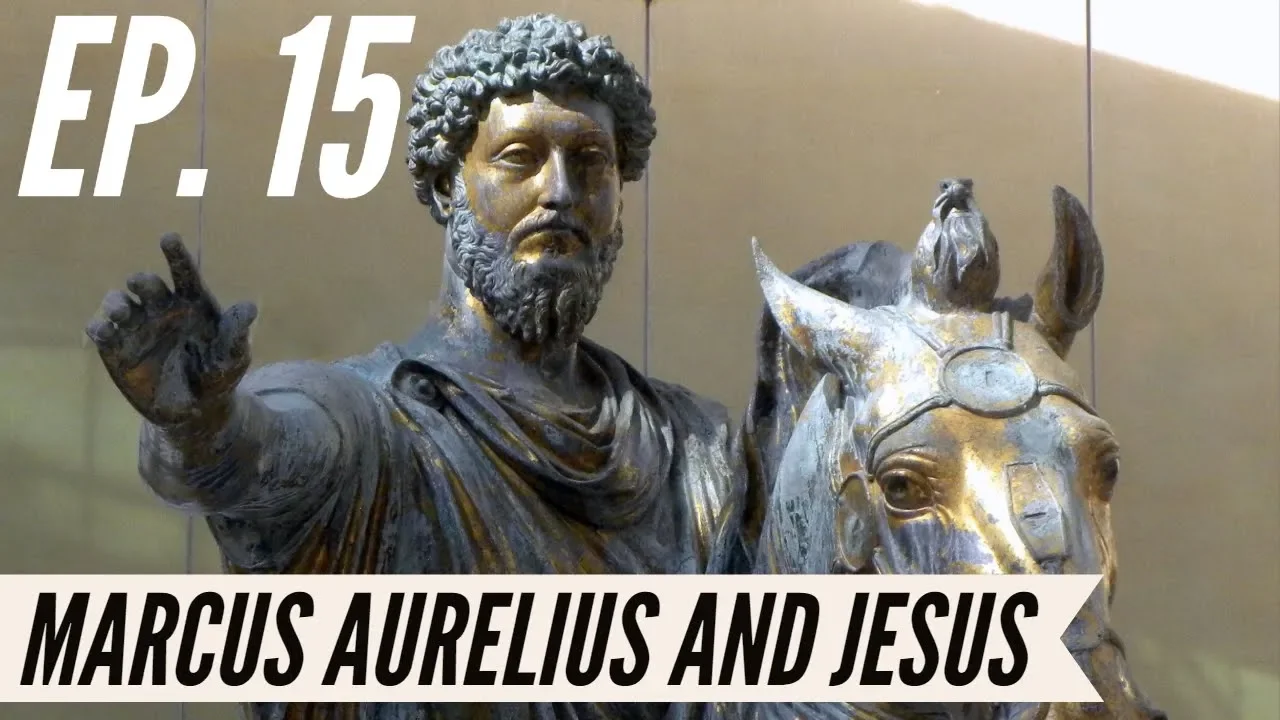
Why this video: Cognitive scientist John Vervaeke maps out the psychological shift from classical Greece to the Hellenistic era, illustrating it as a profound "meaning crisis." He describes the physical and spiritual disorientation of losing one's local democratic polis (home) and explains how wisdom cultivation changed from civic engagement to personal therapy.
Gap Acknowledgment
Note: High-budget, visual documentary-style accounts of the direct psychological transition from the classical polis to the rise of Hellenistic empires are scarce in this video pool. To supplement your understanding of this historical pivot, we recommend reading independent histories on the Peloponnesian War and the Rise of Macedon.
Knowledge Checkpoint
- Describe how the death of Alexander the Great changed the relationship between an average Greek citizen and their political government.
- Define the term ataraxia and explain why it became the focal point of Hellenistic philosophies.
- Contrast the primary philosophical aims of Socrates and Plato with the therapeutic goals of the Hellenistic schools.
Module 2: Stoicism and the Pursuit of Eudaimonia
This module dives deep into Stoic ethics, focusing on its radical claim that virtue (arete) is the sole good and the only prerequisite for a flourishing life (eudaimonia). You will study the "dichotomy of control," learn how to manage destructive emotions to achieve a state of rational composure (apatheia), and examine the lives and writings of key Stoic teachers, including Epictetus, Seneca, and the philosopher-king Marcus Aurelius.
Recommended Videos

Why this video: Massimo Pigliucci, a leading modern voice on Stoicism, provides an exceptionally accessible introduction to Stoic ethics. He details how the school was founded by Zeno of Citium and introduces the fundamental "dichotomy of control"—the practice of separating things within our control (our thoughts and actions) from things outside our control (external events, other people's behavior).
Why this video: This interview strips away modern "bro-ic" or superficial self-help interpretations of Stoicism, anchoring it firmly back in its ethical foundations. Pigliucci explains how Stoic eudaimonia relies entirely on cultivating moral character and virtue, and how external assets like health, money, and reputation are categorized as "preferred indifferents."

Why this video: Using the private journal of Rome's philosopher-king Marcus Aurelius (Meditations), this video outlines practical, day-to-day mental exercises designed to guard the mind against anger, betrayal, and despair. It serves as an excellent illustration of Stoicism as an active, lived operating system.
Knowledge Checkpoint
- Formulate a real-world scenario and divide its components using Epictetus's "dichotomy of control."
- Define what a "preferred indifferent" is in Stoic theory, providing three examples.
- Explain why Stoics claim that bad behavior from others cannot harm your character or mental tranquility.
Module 3: Epicureanism and Enlightened Hedonism
This module corrects centuries of slander against Epicurus, reclaiming his philosophy of "hedonism" as an elegant, highly structured practice of simplicity, minimalism, and peace. You will learn to differentiate true Epicurean pleasure (aponia—the absence of bodily pain, and ataraxia—freedom from mental anxiety) from modern, indulgent hedonism. Additionally, you will study the Tetrapharmakos (the four-part cure for anxiety) and analyze why Epicureans prioritized private friendships over political ambition.
Recommended Videos
![PHILOSOPHY - History: Epicurus’ Cure for Unhappiness [HD]](https://i.ytimg.com/vi_webp/E5f5smh7Keo/maxresdefault.webp)
Why this video: This video provides a brilliant, clear conceptual explanation of Epicurus’s approach to life. It introduces his division of desires (natural/necessary, natural/unnecessary, unnatural/unnecessary) and outlines how minimizing desires to the absolute basics is the only logical way to secure permanent happiness.
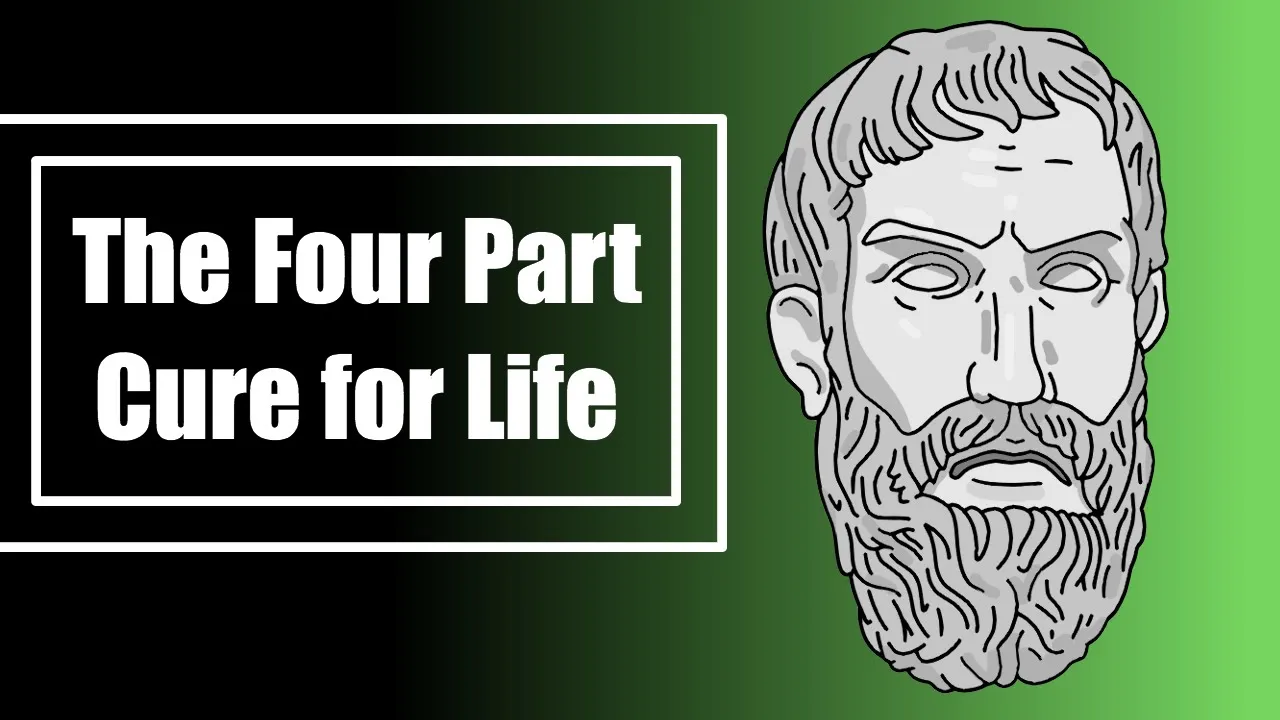
Why this video: This animated presentation breaks down the Tetrapharmakos—the famous "four-part remedy" designed by Epicurus to cure human anxiety. It walks through each maxim: (1) Don't fear God, (2) Don't worry about death, (3) What is good is easy to get, and (4) What is terrible is easy to endure.

Why this video: This video addresses the historical misunderstandings surrounding the term "Epicurean." It clarifies why Epicurus did not champion constant luxury, instead advocating for deep, lifelong friendships, intellectual conversation, self-sufficiency, and retreating from the stressful spotlight of public life.
Gap Acknowledgment
Note: While the philosophical concepts of the Tetrapharmakos are well-documented, highly-produced narrative accounts showing what daily communal life actually looked like in Epicurus's "Garden" (where women and enslaved people were uniquely welcomed as equals) are missing from the video pool. We suggest independently researching "The Garden of Epicurus and Hellenistic social dynamics."
Knowledge Checkpoint
- Explain the difference between "kinetic pleasure" (pleasure of movement/consumption) and "catastatic pleasure" (pleasure of rest/contentment).
- Recite and explain the logic behind each of the four components of the Tetrapharmakos.
- Why did Epicurus advise his followers to avoid public offices and political life?
Module 4: Pyrrhonian Skepticism and Suspension of Judgment
This module examines Pyrrhonism, a radical practical philosophy that seeks tranquility through intellectual surrender. Rather than treating skepticism as a dry academic exercise or a cause for despair, you will study how Pyrrho of Elis and Sextus Empiricus used epoché (the active suspension of judgment) as a therapeutic tool. By recognizing that we cannot know the true nature of reality, and by abandoning dogmatic beliefs, the skeptic achieves peace by simply letting go.
Recommended Videos

Why this video: This video does an incredible job of taking the complex, ancient skepticism of Sextus Empiricus and showing its practical utility in modern life. It discusses how our constant need to form opinions on social media causes endless psychological stress, and how practicing epoché acts as an immediate stress reliever.
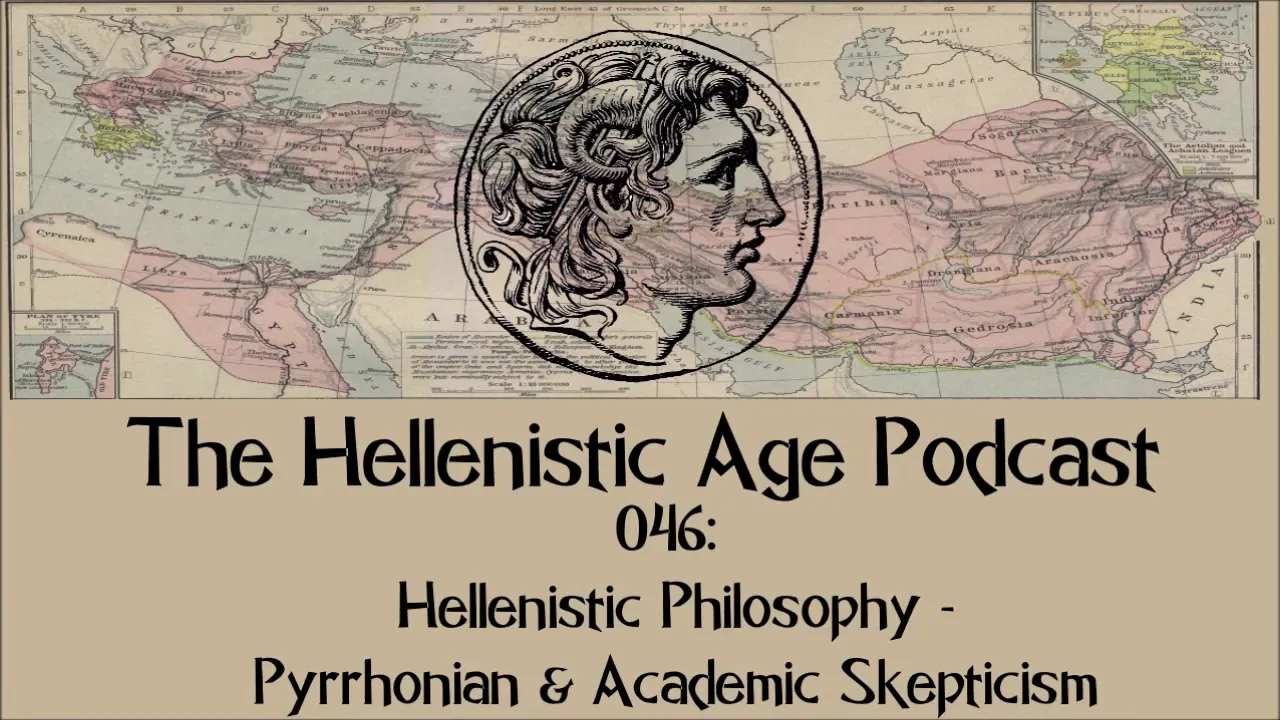
Why this video: An excellent, rigorous historical breakdown that contrasts Pyrrhonian Skepticism with Academic Skepticism (the school that claimed to "know that they know nothing"). It maps out Pyrrho's journey with Alexander the Great's army to India, where exposure to early Indian ascetics influenced his philosophy of absolute open-mindedness and quietude.

Why this video: Distinguished epistemologist Duncan Pritchard briefly explains how Pyrrhonian skepticism is fundamentally different from modern academic or Cartesian doubt. It is not an intellectual game or a logical trap, but a therapeutic "way of life" directly focused on emotional healing and peace of mind.
Gap Acknowledgment
Note: Popular philosophy channels often ignore Pyrrhonian Skepticism or reduce it to Cartesian epistemology. Highly visual, animated guides showing how to practice Pyrrhonist tranquility step-by-step are lacking. We recommend reading primary source translations, specifically Sextus Empiricus's "Outlines of Pyrrhonism."
Knowledge Checkpoint
- Define the term epoché and explain how suspending judgment is supposed to directly produce ataraxia.
- Contrast Pyrrhonian Skepticism with Academic Skepticism.
- Explain how a Pyrrhonist can navigate everyday life and make decisions without holding dogmatic beliefs.
Module 5: Comparative Synthesis: Three Paths to Tranquility
This final module brings the Stoic, Epicurean, and Skeptic schools into direct dialogue. You will compare and contrast how their different starting assumptions about nature, knowledge, and god lead to three distinct ethical remedies for human anxiety. Finally, you will critically analyze how these ancient tools can be synthesized to combat modern psychological challenges, such as information overload, comparison anxiety, and existential dread.
Recommended Videos
Why this video: This video functions as an ideal synthetic lecture, drawing on the scholarship of A.A. Long (one of the world's leading experts on Hellenistic thought). It compares the metaphysical foundations of all three major schools and shows how each school systematically constructed its unique path to human flourishing.

Why this video: This concise comparison focuses on the famous, long-standing debate between the Stoic and Epicurean paths. It weighs the Stoic call for public duty, virtue, and acceptance of fate against the Epicurean preference for private friendship, avoidance of pain, and a mechanical, indifferent universe.
Why this video: This video gathers and highlights core principles of Hellenistic wisdom. It serves as an inspiring concluding summary, demonstrating how modern individuals can internalize these various ancient frameworks as practical shields against anxiety and despair.
Gap Acknowledgment
Note: Very few high-production videos offer a complete synthetic framework that details all three schools (including Skepticism) specifically geared toward modern mental health. Most pop-philosophy channels isolate Stoicism. We recommend exploring academic papers on "Hellenistic therapies of the soul" to bridge this gap.
Knowledge Checkpoint
- Create a table comparing the Stoic, Epicurean, and Skeptic views on: The Divine, The Ultimate Good, and The Ideal Relationship to Society.
- Explain how a Stoic and an Epicurean would react differently to a sudden, catastrophic loss of financial wealth.
- Argue which of the three Hellenistic remedies is best suited for dealing with the psychological challenges of modern social media algorithms.
Course Map
This flowchart maps your journey through the curriculum. You must build a foundation in the historical landscape of the Hellenistic era before exploring the distinct paths to tranquility offered by each major school. Your journey culminates in a comparative synthesis of these practices for modern living.
Key People Index
- Alexander the Great (356–323 BCE): King of Macedon whose massive conquests ended the classical Greek era of independent city-states, inadvertently generating the cosmopolitan, anxious world that birthed Hellenistic philosophy.
- Epicurus (341–271 BCE): Founder of Epicureanism. He established "The Garden" in Athens, teaching a philosophy of simple living, friendship, and freedom from religious fear and bodily pain.
- Zeno of Citium (334–262 BCE): A Phoenician merchant shipwrecked in Athens who founded Stoicism, teaching that virtue is the sole good from his post at the Stoa Poikile (painted porch).
- Pyrrho of Elis (c. 360–c. 270 BCE): Founder of Pyrrhonian Skepticism. He traveled with Alexander the Great to India, where he was inspired by ascetic sages to seek peace through the total abandonment of dogmatic beliefs.
- Sextus Empiricus (c. 160–210 CE): A physician and philosopher whose surviving writings serve as our primary source of information on Hellenistic Pyrrhonian Skepticism.
- Marcus Aurelius (121–180 CE): Roman Emperor and dedicated Stoic whose personal, therapeutic journal (Meditations) stands as a masterclass in applying philosophy to severe public crisis.
- Massimo Pigliucci: A contemporary philosopher, evolutionary biologist, and writer who plays a central role in translating ancient Stoic ethics into practical guidelines for modern secular lives.
- John Vervaeke: A modern cognitive scientist and philosopher whose work on the "Meaning Crisis" analyzes the psychological parallels between the Hellenistic era and our current technological age.
Final Self-Assessment
Evaluate your mastery of Hellenistic Ethics by checking off each of the following statements. If you cannot confidently complete the task in a statement, return to the relevant module.
- I can describe how the collapse of the Greek city-state (polis) shifted the purpose of philosophy from political architecture to personal therapy.
- I can define ataraxia and explain why it was the ultimate, shared objective of Stoics, Epicureans, and Skeptics.
- I can explain the Stoic "dichotomy of control" and apply it to a major source of stress in my own life.
- I can define the Stoic concept of eudaimonia and explain why it does not require external wealth, fame, or health.
- I can list the four components of the Epicurean Tetrapharmakos from memory and explain the logic behind each.
- I can explain why Epicurus valued simple meals and deep friendships over luxury foods and political power.
- I can define the Skeptic concept of epoché and explain the psychological logic of how doubting everything brings mental peace.
- I can explain the historical connection between Pyrrho's travels to India and his development of therapeutic skepticism.
- I can clearly compare and contrast how a Stoic, an Epicurean, and a Skeptic would respond to a modern diagnosis of terminal illness.
- I can evaluate which of the three schools provides the most effective toolkit for managing modern technological distractions and social anxieties.