




























The Hellenistic Age (323-31 BCE) emerged after Alexander the Great's death when his vast empire fragmented into three successor kingdoms—the Ptolemaic Kingdom, the Seleucid Empire, and Macedon—leading to decades of civil wars among his generals (the Diadochi), which ultimately ended when Rome defeated Mark Antony and Cleopatra at the Battle of Actium in 31 BCE, marking the rise of the Roman Empire and the enduring global influence of Greek culture.
The Hellenistic Age: A Fascinating Historical Overview
Added:The life, military conquests, and sudden death of Alexander the Great, which served as the catalyst for the Hellenistic period.
The political structure of Classical Greece, specifically the concept of independent city-states (poleis) like Athens and Sparta.
An understanding of Classical Greek philosophy (specifically Socrates, Plato, and Aristotle) and cultural achievements prior to the 4th century BCE.
Basic geography of the Mediterranean, Nile Delta, and Western Asia to comprehend the scale of territorial changes.
The history of the Diadochi (Alexander's generals) and the resulting successor kingdoms, such as the Ptolemaic and Seleucid Empires.
The rise of the Roman Republic and its gradual military and cultural assimilation of the Hellenistic worlds.
In-depth study of Hellenistic philosophies, specifically Stoicism, Epicureanism, and Cynicism, and their legacy in Western thought.
The scientific and mathematical breakthroughs of Alexandria, examining the works of figures like Euclid, Archimedes, and Eratosthenes.
The phenomenon of cultural syncretism, including Greco-Buddhism in Central Asia and the fusion of Egyptian and Greek religious deities.
95.2K views1.4Klikes10:03Original Release: 2021-02-09
This video is brought to you by Captivating History.
Between the years 336 and 323 BCE, Alexander the Great spread the Greek culture across Europe, Asia, and Africa as he and his formidable army conquered city-state after city-state. However, it was upon Alexander's death that the era known as the Hellenistic Age officially began. In fact, the term "Hellenistic" reflects the original name of Greece, "Hellas."
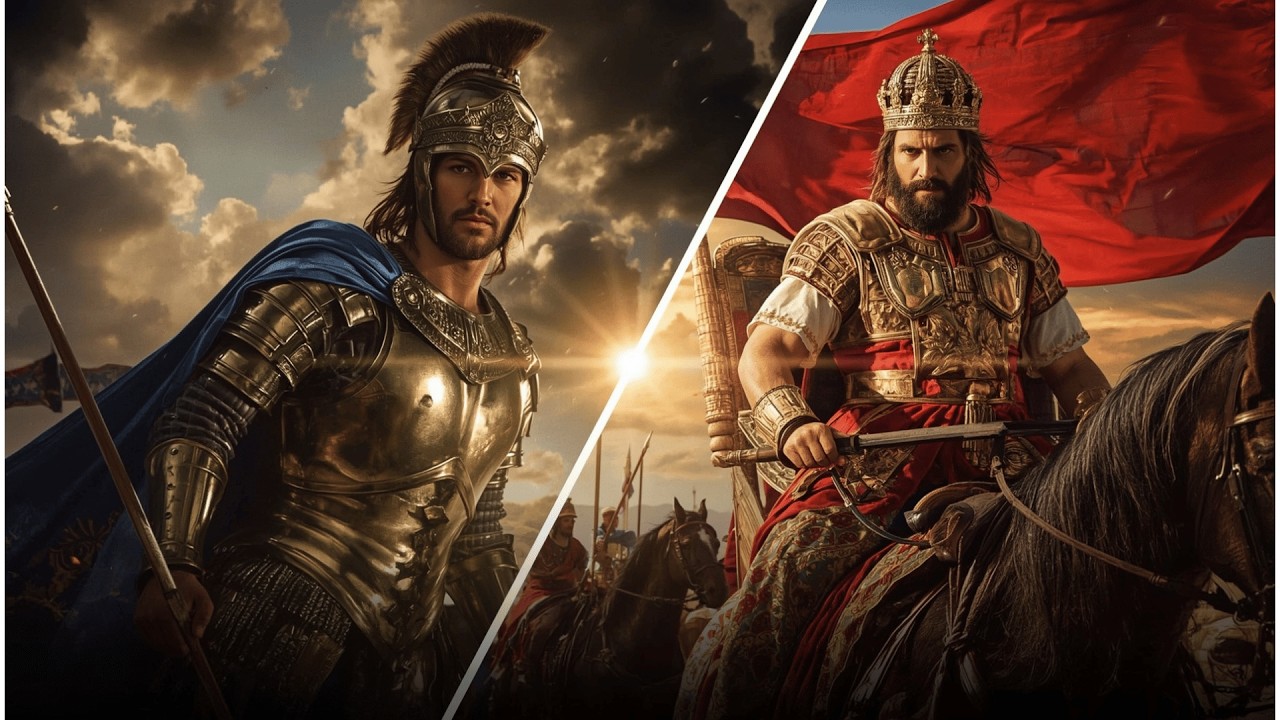
Although the empire of Alexander the Great was vast, it was spread thin and somewhat unstable. Following Alexander's death, it was too difficult to hold the empire together, so his successors divided it into three kingdoms, the Ptolemaic kingdom, the Seleucid Empire, and Macedon. True monarchies instead of the ancient Greek democracy, the three kingdoms retained many aspects of their Greek culture while ushering in new political, social, and economic changes. Chief among these changes was the focus on commerce and science. It was a step toward modernization. The Hellenistic Era ended in 31 BCE when the Roman army of Octavia defeated Mark Antony and Cleopatra's Ptolemaic kingdom at the Battle of Actium. In its brief existence, the Hellenistic Age influenced the ideology, philosophy, and academic knowledge worldwide.
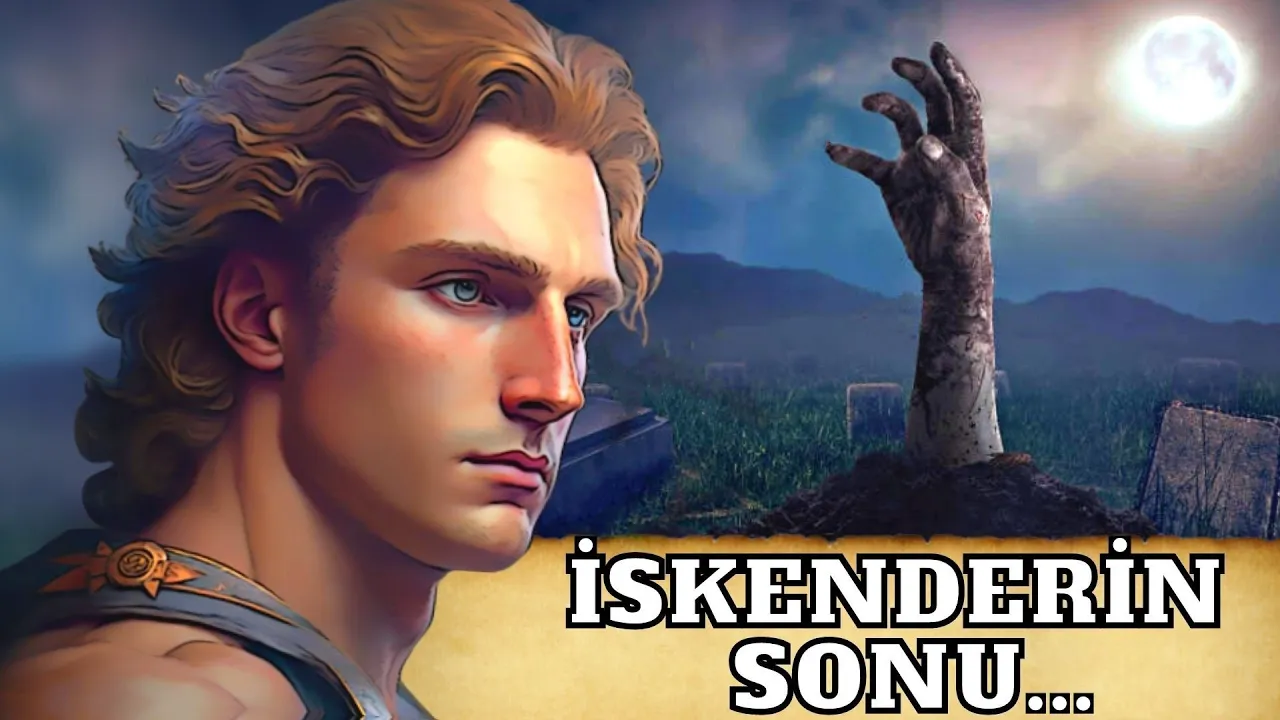
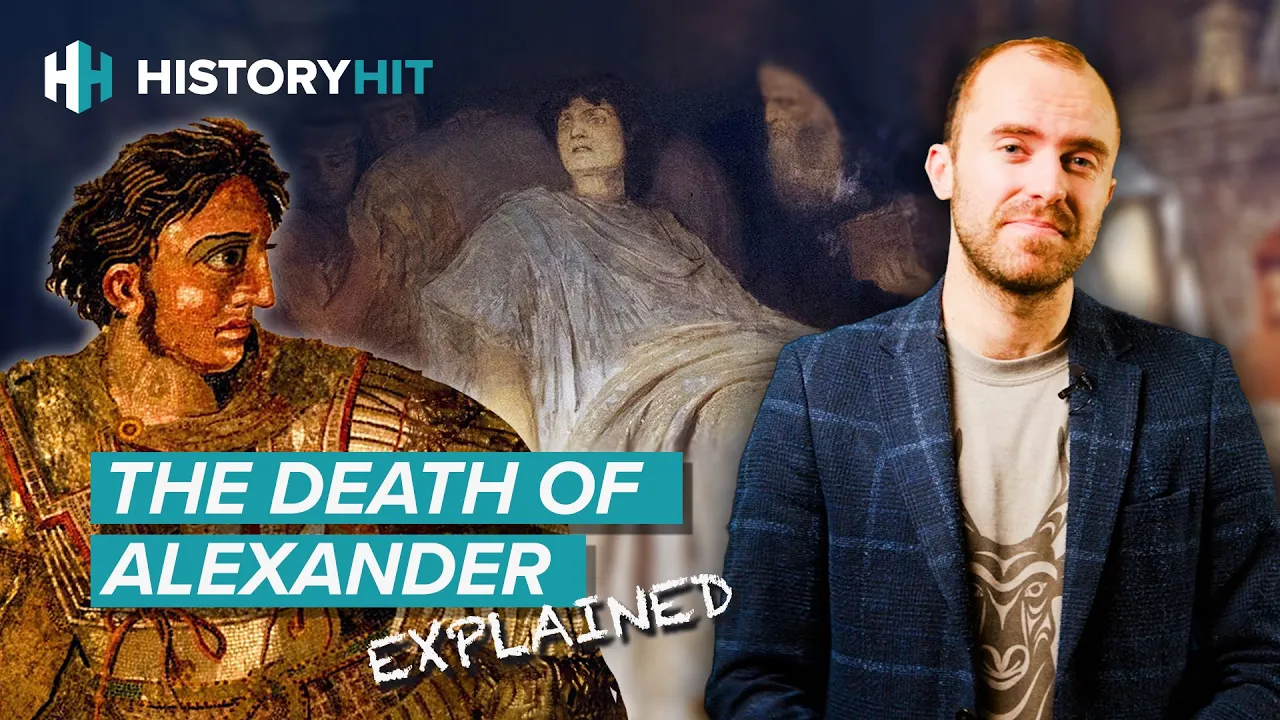
The powerful king and general, Alexander the Great, died unexpectedly at 33 in 323 BCE. He languished for ten days with a high fever before he succumbed. Historians disagree on his cause of death. Some say his symptoms are consistent with typhoid fever or malaria, but others speculate that he could have been poisoned, a common means of assassination at the time. Regardless of the cause, Alexander's death left the empire without a clear successor. His father was still alive but suffering from mental illness. He had one young son he never officially recognized, and his wife was pregnant. When she gave birth to a son, he was named the new king, but he was a newborn baby and incapable of leading the empire.
Alexander's regent, Perdiccas, was put in charge, as was one of Alexander's generals, Antipater, who was supposed to govern alongside Craterus. Other generals were assigned to different leadership positions, albeit temporarily, until a viable successor could be settled. Perdiccas and Antipater were initially rivals, but Perdiccas attempted to ally with Antipater by offering to marry his daughter.
On the cusp of the wedding, however, the beautiful Cleopatra, Alexander the Great's sister, arrived and presented herself as an alternative bride. Marriage to Cleopatra would have given Perdiccas a legitimate claim to the throne of Macedonia and all the power of the kingdom. Antipater joined with Antigonus and Craterus to form an alliance against Perdiccas. An army was sent to Asia as other generals, including Ptolemy, sided with Antipater. When Ptolemy stole the body of Alexander the Great and had it taken to Egypt, it ignited the first Diadochi War. In the end, Perdiccas was betrayed and killed by his own men.
The lack of a clear successor to Alexander the Great eventually led to war between the top generals of the empire; a group called the Diadochi. The generals sought to carve out their own kingdoms from the territories that Alexander had conquered. Some generals banded together to form alliances, but loyalties were tenuous and frequently switched. The Second War, or the Diadochi, which took place from 319 to 315 BC, resulted in Cassander (son of Antipater) named as the regent of the Macedon Empire. There were several other outcomes to the conflict. Polyperchon retained control of Corinth and Sicyon, even as he fled the region and hid in Peloponnesus. In addition, Antigonus was put in command of the Asian territories of the empire, a move that would render him vulnerable during the next conflict.
Several generals were reluctant to see Antigonus control all of Asia and the vast, rich resources there. In 314 BC, a message was sent to Antigonus demanding that several parts of his territory be ceded to other generals. For example, they wanted Ptolemy to take control of Syria, Seleucus to take over Babylonia, and Cassander to rule over Cappadocia and Lycia. Unwilling to give up his power and his holdings, Antigonus replied that the eastern generals should prepare for war. Antigonus succeeded early on but was forced to negotiate with certain generals to forfeit some territories.
During this time, Cassander ordered the murders of Alexander the Great's young son, King Alexander IV, and the child's mother (Alexander's wife, Roxane.) This act brought the end of the Argead Dynasty – Alexander's lineage that ruled Macedon for hundreds of years.
Between the Third and Fourth Diadochi Wars, another military conflict didn't get the same naming convention as the other four wars. This was the Babylonian War, which took place from 311 to 309 BC. It was not fought between all the generals but was strictly between Antigonus and Seleucus. With Seleucus's victory, the last hopes of restoring Alexander the Great's empire in its entirety were dashed. The Fourth Diadochi War once again pitted the generals against each other as several attempted to expand their territories. For instance, Ptolemy was pushing into the Aegean and to Cyprus, and Seleucus tried to lay claim to the far eastern areas of the empire. Antigonus sent his son, Demetrius, to reclaim Athens and then set his sights on invading Ptolemy's Egypt.
In 239, Antigonus died, leaving his kingdom to his son, Demetrius. The policies that Demetrius introduced were not popular with his people nor with the other generals. The Greek leagues formed an alliance against him. As a unified force, they took several cities away from Demetrius before he was eventually defeated.
Meanwhile, in Egypt, Ptolemy was introducing Greek traditions and philosophies into the Egyptian culture. An effort was made to improve the education system in Egypt. Universities were founded, libraries were built, and tax incentives were offered for teachers. Ptolemy started athletic competitions modeled after the Greek contests. He initiated the development of new urban centers and commissioned massive temple building projects. He even brought Greek-inspired art, poetry, theatre, and music to his land. The Mediterranean city of Alexandria was transformed into a trading hub. Commerce boomed in the city.
Back in Europe in 221, the death of the Macedonian king, Antigonus, left the crown to his cousin, the 17-year-old Philip V. Many people thought Philip was too young and inexperienced to rule, but the brash young man was eager to rid himself of his advisors and show his worth as a leader. In 215, Philip discussed allying with Hannibal, the Carthaginian statesman and general, but Rome intercepted their communications before the deal was finalized. Rome considered this to be an ultimate betrayal and responded by sending a fleet of ships. Philip found himself in a war against Rome, Elis, Sparta, Illyrian, and Pergamon and could not join Hannibal and his forces in northern Italy. In 205, the conflict, called the First Macedonian War, officially ended when peace with Philip was negotiated.
At the time of Alexander the Great's death, Rome was a small city-state of little significance. Quickly, however, Rome grew in both size and power. In fact, Rome was fighting a war against one group or another every year of its existence. As Roman influence spread and its military conquered more lands, the young republic posed a real threat to the remnants of Alexander's once-imposing empire. Statesman and general Julius Caesar held political and military power even as he was dealing with internal turmoil and civil unrest. Caesar was also immersed in foreign affairs. He had a relationship with the queen of Egypt, Cleopatra, with whom he had a son. His relationship with the Egyptian queen caused a further rift to develop between his senators.
On March 15, 44, they assassinated Caesar, forcing Cleopatra to flee for her life. Mark Antony, one of Caesar's top lieutenants, fought the betraying senators for control of Rome and allied with Cleopatra. Soon, he became her lover, and she bore him children. Mark Antony faced off against Gaius Octavius, who was Caesar's adopted son and presumptive heir. Their conflict came to a head when Octavius murdered Caesar and Cleopatra's son to remove him as a potential contender to the throne. Octavius seized the title of emperor of Rome, which soon passed to Augustus, the first true emperor of the Roman Empire, which lasted from 27 BC until 1453 AD. The rise of the Roman Empire marked the end of the short-lived Hellenistic Age. The Greek influence can still be seen throughout Europe, parts of Asia, and North Africa.
To discover more about the history of the Hellenistic Age, then check out our book, The Hellenistic Age: A Captivating Guide to an Era of Mediterranean History That Took Place Between the Death of Alexander the Great and the Rise of the Roman Empire. It's available as an e-book, paperback, and audiobook. Also, grab your free mythology bundle e-book for free while still available. All links are in the description. If you enjoyed the video, please hit the like button and subscribe for more videos like this.
Up Next

18:49
The Mos Maiorum: Origins of the Roman Republic's Ethical Collapse
@KingsandGenerals
347.5K views•2021-03-09

33:02
The Great Schism of 1054: Causes and Consequences
@SacredCathedrals
113.5K views•2026-02-19
11:30
The Maya Civilization: Rise & Fall Explained
@CaptivatingHistory
759.8K views•2020-06-02

17:05
Understanding the Cold War: Superpower Conflicts and the Road to Détente
@OverSimplified
46.1M views•2019-01-24
Related Study Plans & Knowledge Roadmaps
Structured learning paths in History
history
Byzantine Iconoclasm: Theology, Art & Politics
01Foundations of Byzantium and Early Christian Images
02The First Iconoclasm: Leo III and the Crisis of Images
03Empress Irene, Nicaea II, and the Second Iconoclasm
+ 2 more learning modules
9h5 modules
Explore Roadmap
history
Iranian Revolution (Causes, Events & Legacy)
01The Pahlavi Dynasty and the Roots of Discontent
02The Spark of Rebellion and the Rise of Khomeini
031979: The Fall of the Shah and the Climax of the Revolution
+ 2 more learning modules
8h5 modules
Explore Roadmap
history
Mali Empire: Mansa Musa, Trade & Timbuktu
01Foundations of the Mali Empire
02The Trans-Saharan Gold and Salt Trade
03The Reign and Pilgrimage of Mansa Musa
+ 1 more learning modules
6h4 modules
Explore Roadmap
history
1947 Partition: Politics, Borders & Legacies
01Foundations of British India and the Divide
02The Political Negotiations and the Mountbatten Plan
03Drawing the Boundary: The Radcliffe Line
+ 2 more learning modules
8h5 modules
Explore Roadmap