

![The COLD WAR, Explained [AP World History Review—Unit 8 Topic 2]](https://i.ytimg.com/vi/YtQVkJ973NU/maxresdefault.jpg)





![[#벌거벗은세계사] 만약 핵이 떨어진다면 나는 살아남을 수 있을까?😬 냉전시대 역사로 되짚어보는 핵폭탄의 위력들 | #편집자는](https://i.ytimg.com/vi/SqxwA4ZADtc/maxresdefault.jpg)













The Cold War (1947-1991) was a period of intense geopolitical tension between the United States and the Soviet Union, characterized by proxy wars, nuclear arms races, and ideological competition, which ultimately ended with the dissolution of the Soviet Union in 1991 following reforms under Mikhail Gorbachev and the fall of the Berlin Wall in 1989.
Understanding the Cold War: Superpower Conflicts and the Road to Détente
Added:The fundamental ideological differences between Western democratic capitalism and Soviet authoritarian communism.
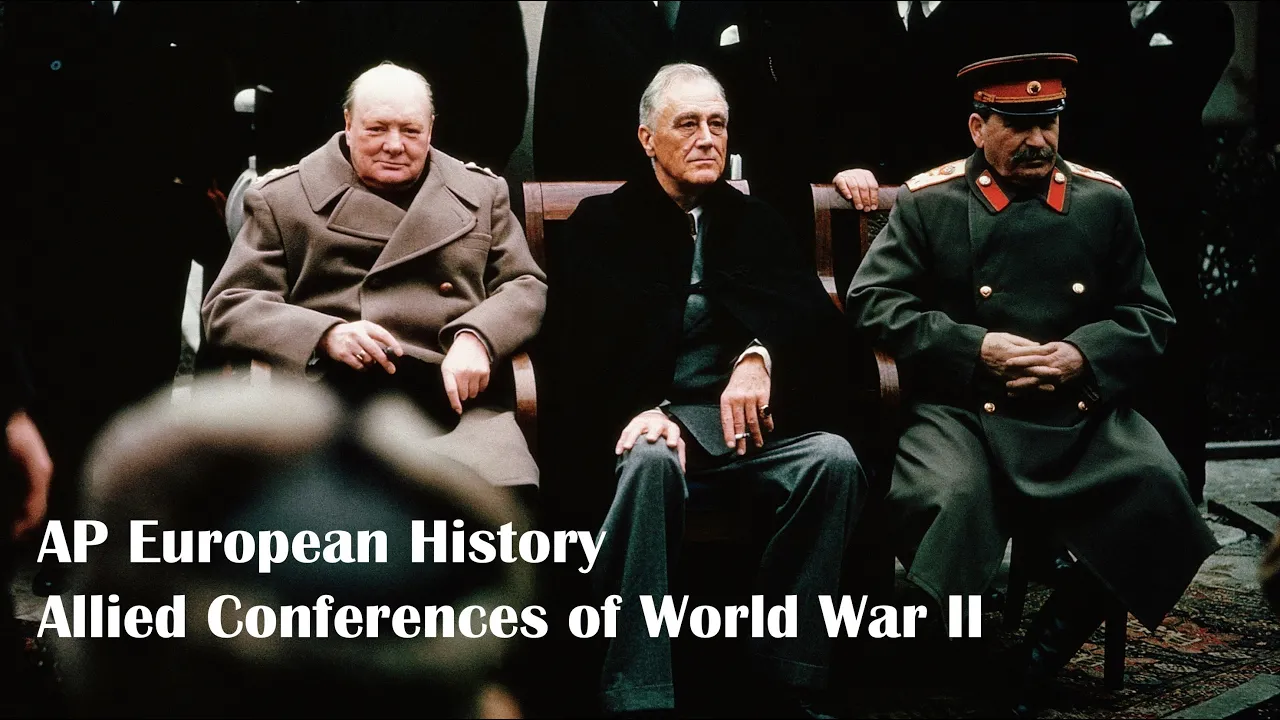
The geopolitical restructuring of Europe after World War II, including the Yalta and Potsdam conferences and the division of Germany.
The origins of the U.S. containment policy, specifically the Truman Doctrine and the Marshall Plan.
The basic concepts of the nuclear arms race, deterrence theory, and Mutually Assured Destruction (MAD).
The internal collapse of the Soviet Union, focusing on the roles of Mikhail Gorbachev's policies of Glasnost and Perestroika.
The transition of the global power structure from a bipolar Cold War system to a unipolar post-Cold War era dominated by the United States.
The enlargement of NATO in Eastern Europe and how it shapes contemporary diplomatic tensions between Russia and the West.
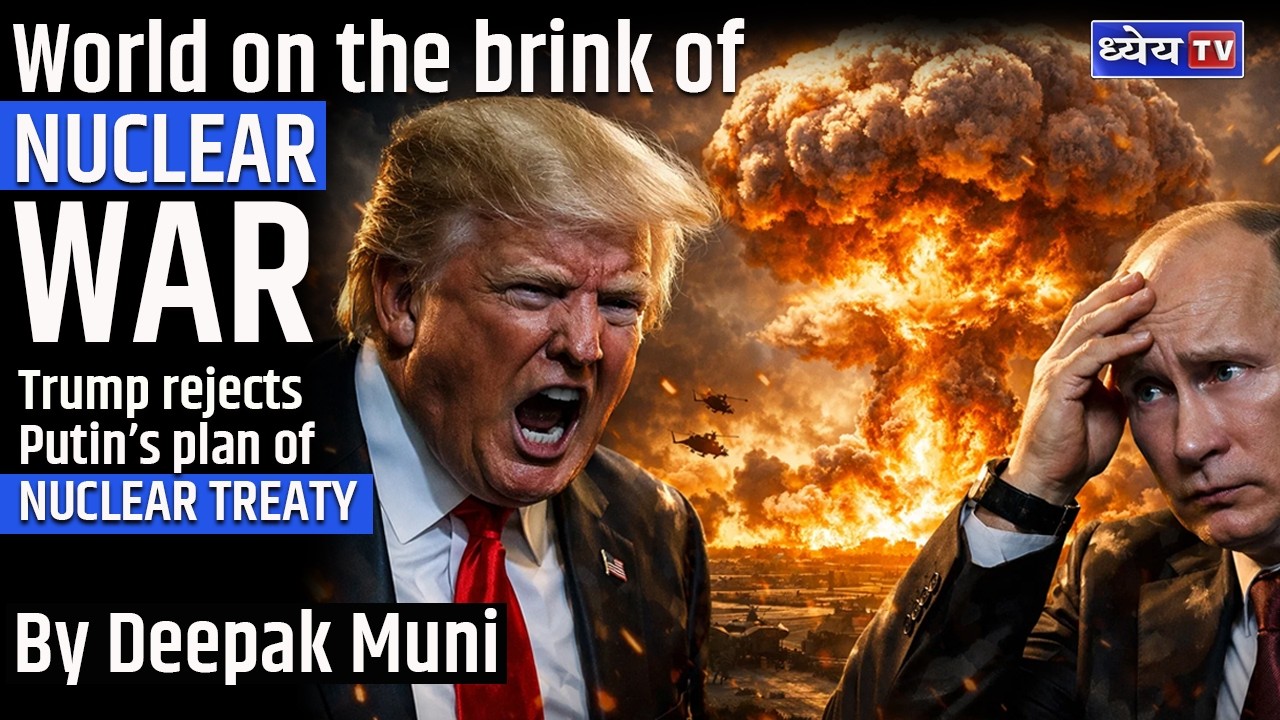
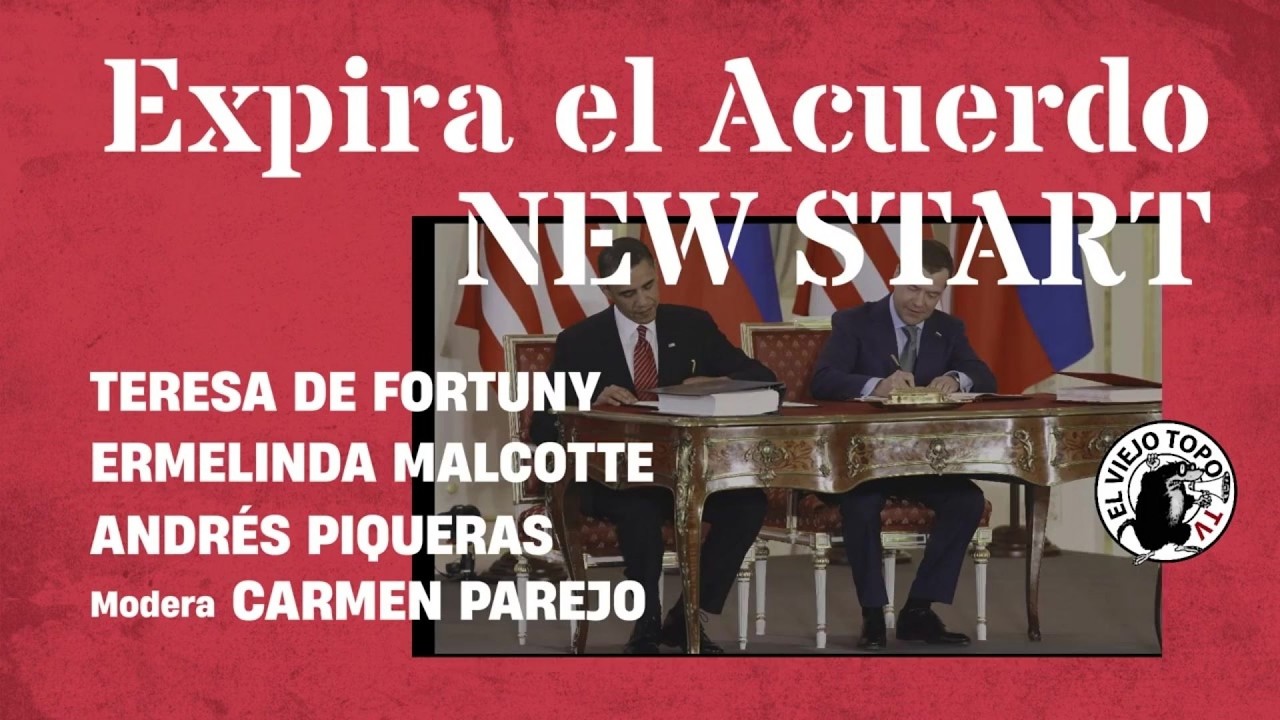
The history and modern status of nuclear arms control treaties, such as SALT, START, and the current state of global non-proliferation.
46.1M views662.6Klikes17:05Original Release: 2019-01-24
This video was made possible by Skillshare, an online learning community where you can learn just about anything.
Support my channel by signing up using the link below, and get your first two months for free.
For anyone who thinks recent US history has never been crazy as it is right now, allow me to present to you the 1960s.
Extreme cultural division, major political assassinations, and the closest the world has ever come to nuclear apocalypse.
Shocked by the CIA's intrusive methods for putting down socialism in Latin America, a certain Fidel Castro met with a certain Che Guevara in a bar in Mexico City, and the two of them decided they should grow some awesome beards and overthrow the Cuban government.
Which is exactly what they did.
Cuba had been America's summer playground, and America didn't like seeing a communist regime being set up in its own backyard.
So the US immediately began training up Cuban exiles to invade Cuba and overthrow Castro.
However, as the day of the operation came closer, Kennedy wanted to conceal any US involvement in the plan.
So he massively scaled back American air support, and as a result the Bay of Pigs Invasion was a humiliating defeat for America.
But Castro felt there was still an impending US threat to his regime.
Meanwhile in the Soviet Union, Khrushchev had a lot of medium-range nuclear missiles that couldn't reach America.
But they could if they were positioned, say, on an exotic Caribbean island off the coast of Florida?
- "Hey, I'm a communist who hates America.
You're a communist who hates America.
You know what that means?"
- "We should fall in love!"
- "Uh, I was just going to suggest you set your missiles up in Cuba."
- "Oh, no - no, you're right, that's a better idea.
Be still, my beating heart..." On October 14th 1962, a US spy plane over Cuba noticed something strange.
- "Sir, you need to look at this photograph."
- "You're right! That's the cutest dog I've ever seen!"
- "Sir, I was referring more to the Soviet missiles."
America freaked out as they realized what was going on.
They were completely vulnerable, and they had to act fast.
They knew that airstrikes or an invasion of Cuba would likely mean nuclear war with the Soviet Union, so Kennedy came up with another idea.
A blockade.
The US navy announced it would stop and search any Soviet ships heading to Cuba.
And would sink any that did not comply.
In response, the Soviet put its military into full combat readiness.
The US did the same, and began drawing up plans for an attack on Cuba.
Things were escalating fast, and both superpowers were getting ready for World War 3.
Emergency communications between the two sides broke down as Khrushchev rejected Kennedy's demands for the missiles to be removed.
And for the first time in history, the US strategic air command moved to DEFCON 2.
DEFCON 1 means nuclear war.
The Soviets shot down a U2 spy plane over Cuba.
A Soviet nuclear submarine in the Caribbean mistakenly believed war had already broken out and two of the senior officers gave the go-ahead to fire its nuclear torpedo.
Thankfully the third senior officer, this beautiful man, refused to authorise the decision.
The US finalised its preparations, and I kid you not, the day before the US were set to decide the day and time for the Cuban invasion, Khrushchev was like, - "Hey. You know if you just removed your missiles from Turkey, we'd remove ours from Cuba?"
- "Yeah. Yeah, that sounds good to me."
It was a bit more complicated than that, but at the last second, the two sides finally came to an agreement.
Soviet missiles were shipped out of Cuba and the world breathed one gigantic sigh of relief.
Except for one guy, who was bloody livid.
- "Phew! Let's hope that's the biggest crisis of my presidency!"
Unfortunately for him, his presidency was to end with one.
Having nearly blown up the planet, a few changes were made.
First, the superpowers agreed to a limited Test Ban Treaty.
Secondly, the Soviets ousted Khrushchev, and replaced him with Leonid Brezhnev.
Who was a kisser.
He liked to kiss.
Both sides were deeply concerned at the prospect of nuclear war, but still the arms race raged on throughout the 60s and 70s.
US intelligence worked out that the Soviets' nuclear arsenal was not as powerful as they previously thought, but in fact it was America that held the advantage.
ABMs and MIRVs were developed.
And the doctrine of MAD.
If both sides knew they would be completely destroyed by a nuclear war, neither would risk starting one.
But even without war, the world was already feeling the effects of nuclear weapons.
In 1966, above the pleasant town of Palomares in Spain, a US bomber collided with a tanker mid-air, and four hydrogen bombs fell and landed near the town below.
- "It hasn't exploded so I'm sure everything's fine.
Wooah, boy!
Uhh, hey, I wouldn't eat that if I were you."
- "Okay."
- "What were you going to do today?"
- "Go for a swim?"
- "Yeah. I wouldn't.
Are you breathing right now?"
- "Yeah?"
- "Yeah... I wouldn't."
It took the Americans two and a half months to find one of the bombs, which had gone missing in the ocean.
This was the fourteenth time America had lost a nuclear bomb since 1950.
Nobody knows how many bombs the Soviet Union lost.
So sleep well tonight.
After Kennedy's assassination, Vice President Lyndon B. Johnson took over.
And he inherited a developing crisis in the east.
Vietnam.
Back in the 50s, the Vietnamese had kicked their French colonisers out once and for all, and the country was divided into two.
In the North, a communist regime.
And in the South, an anti-communist regime.
Both were led by very sweet-looking old men.
But don't let that deceive you.
They were both ruthless dictators, and both dreamed of reuniting Vietnam under their own regime.
So the North established the National Liberation Front, also known as the Vietcong, to carry out a campaign of guerrilla warfare in the South with Soviet support.
The US sent advisors to help train the South Vietnamese to deal with the threat, but President Diem's brutal policies pushed more and more South Vietnamese to support the Vietcong.
And over the next decade, the situation escalated to a breaking point.
America feared the Domino Effect.
That is, if South Vietnam fell to communism, would Cambodia be next?
Then Laos? Thailand? Burma? India?
LBJ had to make a choice.
Between losing South Vietnam, or sending in the troops.
And so in they went.
From 1965, America found itself in a war unlike anything it had ever fought before.
Let's Play: Spot the Vietcong Soldier!
(ticking) (buzzer) Did you see him?
Of course not.
That's because millions of young American men were drafted and sent to fight a ruthless enemy who used the thick jungle as its shield.
It was nearly impossible to tell where the enemy was, Or worse, who it was.
And as a result, the civilian population got caught up in the brutal crossfire.
The city of Saigon found itself under regular attack, and America launched a bombing campaign in the North during Operation Rolling Thunder.
The Vietcong used the Ho Chi Minh Trail running through Laos and Cambodia to supply the campaign.
It was a long and brutal war, and I could never do it justice in this video.
But in terms of the Cold War, Vietnam was probably the biggest of many, many global conflicts that signalled a turning point.
Under the threat of nuclear war, the two superpowers began working to make their relationship more constructive.
And as a result their ideological battle shifted away from the potential of direct conflict, and more towards attempting to influence smaller proxy wars around the world.
In the Middle East, the Soviet Union provided aid against Israel during the Six-Day War, and then again when the US backed Israel during the Yom Kippur War.
In Africa, the Angolan Civil War saw US-supported South Africans fighting Soviet-supported Cubans.
In the conflict between Somalia and Ethiopia, the superpowers interestingly switched sides as regimes changed.
And the US continued fighting the spread of communism in its own backyard, funding the famous Contra groups to fight the socialist junta in Nicaragua.
These proxy wars were fierce enough to begin with, but superpower intervention amplified the destruction, and created alarming levels of human suffering throughout the Third World.
And in Vietnam, that human suffering was all being broadcast back home via good old television.
Going into the late 60s, America was a changing nation.
This became this.
This became this.
And this became this.
The new slogan that was taking route, "Make Love, Not War."
The majority of Americans did not approve of Johnson's handling of the Vietnam War.
And in 1968, a silent majority elected Law and Order candidate Richard Nixon.
As the Vietnam War appeared to be increasingly unwinnable, and public opinion turning increasingly sour, Nixon made the decision to begin bringing the troops home, and ended US involvement in Vietnam by 1973.
Two years later, the South fell.
The Cold War was now taking its toll on both superpowers.
In Russia, a huge percentage of the budget was still going to the military, people were still hungry, and they just didn't have access to the same lifestyle and goods as the West.
And what did they have to show for it?
They weren't even winning the Space Race anymore.
Both sides needed to reduce spending in order to rescue their economies, and so both welcomed with open arms an easing of hostilities.
Otherwise known as detente.
To improve relations, Nixon became the first US President to visit Moscow in 1972.
And Brezhnev returned the favour a year later.
A number of treaties were signed, including the 1972 SALT agreement, that limited nuclear weapons.
Relations with China were even improving via Ping-Pong Diplomacy, when the US table tennis team went on a tour of the People's Republic.
However, internally, China was still pushing anti-capitalist propaganda, which led to some mixed messages.
Nixon even visited China in 1972, and it was a barrel of laughs.
(jaunty theme music) Everything was going great for Nixon.
Until it was uncovered that back home he was being a very naughty boy and violating Constitutional Protocol.
- "I'm announcing today my resignation as President.
And I'm passing the office to my Vice President, Gerald Ford."
- "Wow! You mean in America the people can actually remove their leader when he breaks the law?
Why not just rule by force? Where's the corruption?"
- "And my first act as President is to pardon Nixon!"
- "Ah, there it is."
After the whole fiasco, Americans decided what they really wanted was just a nice, safe guy who wouldn't cheat on them.
So they elected Jimmy Carter.
And the two sides met in Vienna where they signed yet another Strategic Arms Limitation Treaty.
- "It's an honour, Premier Brezhnev." - "Likewise, President Carter."
(kiss) - "Please don't do that."
But that's not to say there was no longer any tension between the two sides.
Because there was, heaps of it.
Once again, the Soviet Union put down further attempts at reform and rebellion in the Eastern Bloc.
The Euromissile Crisis saw new and improved classes of intermediate-range missiles being deployed in Europe.
In 1979, the Soviets thought it would be a good idea if they had their own Vietnam and invaded Afghanistan to prevent a US-sponsored Islamic insurgency.
And in response to these various crises, Olympic Games were boycotted.
Conservatives were concerned that US policy had become too soft, and in 1980, they decided they wanted a President who would be tough on communism.
So they elected Ronald Reagan.
And Reagan came in guns-blazing.
Concerned at the Soviet Union's human rights violations, he made a speech calling them an "evil empire".
And he also wanted to renew the arms race using technological advances in computing and lasers.
He came up with the Space Defence Initiative, also known as Star Wars.
Which was basically a big, defensive anti-nuke shield around the country.
But a lot of people thought it was a pretty dumb idea.
The Soviet Union proceed the shift in rhetoric, as the USA getting ready for war.
And they were feeling especially threatened as their relationship with their communist ally, China had broken down.
Relations took a big hit in 1983, when the Soviets shot down a Korean airliner that had strayed into their airspace.
And it looked like the world was going right back to mid-20th-century Cold War tension.
But then Brezhnev got really old and died, and was replaced by this guy who was really old and died, and was replaced by this guy who was really old and died, and he was replaced by Mikhail Gorbachev.
Coming into office in 1985, he was the real game-changer.
His philosophy differed a lot from previous Soviet leaders.
He felt that the reason the Soviet system and economy was struggling was that it didn't allow the Soviet people to find satisfaction in their work.
Because they weren't allowed to speak freely, and lived in fear.
Gorbachev wanted the Soviet people to be happy.
But unlike previous Soviet leaders, he actually made the change happen.
Within the first couple of years he began the political movement for more openness and transparency.
And the restructure of the Soviet political and economic systems.
And change very quickly took effect.
People could criticise the government, they could enjoy Western pop culture, the media interviewed Margaret Thatcher, but most importantly the Soviet people could now enjoy Pizza Hut.
All hail to Gorbachev!
He also knew that the arms race needed to end in order to rescue the Soviet economy, and a positive relationship with the West must be established.
Constructive dialogue reopened and resulted in the INF Treaty, which saw all intermediate-range missiles eliminated.
Which was huge.
Reagan's tone towards the Soviet Union began to soften, and things were looking up.
But what would these reforms mean for the Eastern Bloc?
For decades, the Soviets had been brutally repressing any attempt at change.
Now would they be allowed?
And that was the exact question on Hungary's lips, when the Prime Minister visited Moscow.
Gorbachev's response, he didn't necessarily agree with the reforms, but he wouldn't stop them either.
He was prepared to let the Eastern Bloc choose its own future.
This was massive.
And the Hungarian leaders began planning free, multi-party elections.
Poland followed suit, and also held elections in June.
The anti-Soviet party, Solidarity, won 99 out of 100 seats in the Senate.
But not just that. In Hungary the barbed-wire border between East and West was removed.
The Iron Curtain was unravelling.
But not all Eastern Bloc leaders were happy.
Notably, East Germany was still ruled by a hardline Stalinist, Eric Honecker.
And many East Germans were still eager to get out.
They had been trapped by the Berlin Wall, but now they were doing the math.
If they could travel to Hungary, and Hungary's border with the West was loosening, could they now make it to the West?
That summer, East Germans decided Hungary was the latest top holiday destination.
They travelled there in droves, and using various methods, tens of thousands crossed the border into Austria and the West.
Honecker was furious, and blocked travel to Hungary.
But that civil liberties train had started rolling and it wasn't stopping.
Thousands more flocked to the West German embassy in Prague, where they stormed the fence around the embassy gardens, and a temporary refugee camp was set up.
In September, deals were struck to allow the refugees to travel West via train.
Back in East Germany, the people were running on a civil liberties high, and they wanted their next hit.
Dissent was growing, over time, demonstrations turned to mass protests, with plain-clothed secret police officers doing their best to put down the dissent, but it had grown well out of their control.
And worse, the biggest demonstration was yet to come.
- "We're gonna put all of this down by force.
Right guys?
Guys?"
Unfortunately, everyone had realised what he had not.
This was bigger than them.
And the entire East German Politburo voted him out of power.
On November 4th, over half a million East Germans took to the streets of East Berlin, for many, there was still one big target left in their sights.
That damn wall.
The pressure on the East German government was too great, and on November 9th, they made a bit of a chaotic announcement that the travel ban between East and West was being lifted.
The change wasn't meant to take effect until the next day.
And crossing guards still had orders to shoot on sight any who tried to cross.
But that night, huge crowds gathered at the crossing points, and the guards were overwhelmed.
In an astronomically historic moment, after decades of family separation and travel restriction, the people were allowed to pass through.
East and West Berliners couldn't believe it, and celebrated together throughout the night.
Some even climbed the wall, and began to topple it.
The Iron Curtain had fallen.
And a year later, Germany would be reunited.
Elections in Bulgaria, a peaceful revolution in Czechoslovakia, and a violent one in Romania, brought to an end communist authority in the Eastern Bloc.
America decided it would be best if it just stayed away and let the change happen, as the anti-communist movement continued all the way back to Moscow.
Gorbachev had given the people the freedom to demonstrate.
Now, they demonstrated for an end to the communist single-party rule.
And Gorbachev had to give in.
For the first time in history, elections were held in which candidates not officially endorsed by the party were allowed to run.
Ambitious rival of Gorbachev, Boris Yeltsin led a growing democratic movement.
Now things here get quite confusing.
The dissolution of the Soviet Union is a complicated topic.
So believe me, this is OverSimplified.
But it went a little bit like this.
The Soviet Union was made up of a number of smaller Soviet republics, the largest of which was Russia.
Yeltsin got himself elected the President of Russia, and began a struggle for sovereignty against Gorbachev and the Soviet Union.
Communist hardliners were horrified at what Gorbachev was allowing, so they briefly kidnapped him, and tried to set up their own emergency government.
But Yeltsin and his supporters all gathered around the White House in Moscow and were like, - "No. We have a tank."
So the hardliners had to concede, and released Gorbachev.
- "Wow. Thanks Boris, that was a close one."
- "No problem. And thanks to you for all the great freedom you've given us."
- "Anytime, pal!"
- "And just to inform you.
I've used that freedom you've given us to go behind your back and make a deal with Ukraine and Belarus to dissolve the Soviet Union and set up the Russian Federation.
In other words, You're no longer in charge, I am."
- "Dude.
So uncool."
And so decades of tension and the everlasting threat of nuclear war finally came to an end, as democratic governments were established in many of the old Soviet republics.
And the world got along together, forever after.
Right guys?
(dramatic music) - "Hey, this modern art thing is growing on me.
Where can I learn to do that?"
Skillshare!
Skillshare is an online learning community with classes in design, technology, business and more.
Learn how to code your own games and apps, learn a musical instrument, learn how to animate videos like mine, learn Japanese.
Premium membership gives you unlimited access to all of these classes and more.
And better yet, everything is taught by genuine experts working in their field.
Skillshare is also more affordable than other learning platforms.
With an annual subscription being less than $10 a month.
What's that? You wish you had an exclusive deal just for OverSimplified viewers?
Well wish no more, my friend!
The first 500 people to use this link which can be found in the description below will get their first two months for absolutely free!
Plus you'll be supporting my channel, and keeping these videos coming.
So be sure to use the link in the description box below, and learn something new today.
Up Next

26:16
The Assassination of Yevgeny Prigozhin: An Analysis
@warographics643
2.4M views•2023-08-25

33:02
The Great Schism of 1054: Causes and Consequences
@SacredCathedrals
113.5K views•2026-02-19
91:57
The Geopolitics of the Ukraine War and the Rise of Global Autocracy
@JordanHarbingerShow
468K views•2025-04-19
68:18
Mongol Empire's Rise: Genghis to Kublai | Historical Documentary
@KingsandGenerals
13.1M views•2018-08-26
Related Study Plans & Knowledge Roadmaps
Structured learning paths in History
history
Byzantine Iconoclasm: Theology, Art & Politics
01Foundations of Byzantium and Early Christian Images
02The First Iconoclasm: Leo III and the Crisis of Images
03Empress Irene, Nicaea II, and the Second Iconoclasm
+ 2 more learning modules
9h5 modules
Explore Roadmap
history
Iranian Revolution (Causes, Events & Legacy)
01The Pahlavi Dynasty and the Roots of Discontent
02The Spark of Rebellion and the Rise of Khomeini
031979: The Fall of the Shah and the Climax of the Revolution
+ 2 more learning modules
8h5 modules
Explore Roadmap
history
Mali Empire: Mansa Musa, Trade & Timbuktu
01Foundations of the Mali Empire
02The Trans-Saharan Gold and Salt Trade
03The Reign and Pilgrimage of Mansa Musa
+ 1 more learning modules
6h4 modules
Explore Roadmap
history
1947 Partition: Politics, Borders & Legacies
01Foundations of British India and the Divide
02The Political Negotiations and the Mountbatten Plan
03Drawing the Boundary: The Radcliffe Line
+ 2 more learning modules
8h5 modules
Explore Roadmap