Mali Empire: Mansa Musa, Trade & Timbuktu
Learning Goal: Investigate the economic, cultural, and religious expansion of the Mali Empire during the reign of Mansa Musa (1312–1337), focusing on his legendary pilgrimage to Mecca, the development of Timbuktu as a global center of Islamic scholarship, and the empire's dominance over trans-Saharan gold and salt trade.
- Prerequisites: None (A basic understanding of medieval world history is helpful but not required).
- Estimated Total Study Time: 6 Hours
Module 1: Foundations of the Mali Empire
This module explores the geopolitical setting of West Africa during the post-classical era, detailing the decline of the Ghana Empire and the rise of the Mali Empire. Students will study the legendary figure Sundiata Keita (the "Lion King" of Mali), the consolidation of the Mandinka clans, and how control of the Niger River basin facilitated the empire's initial expansion.
Recommended Videos
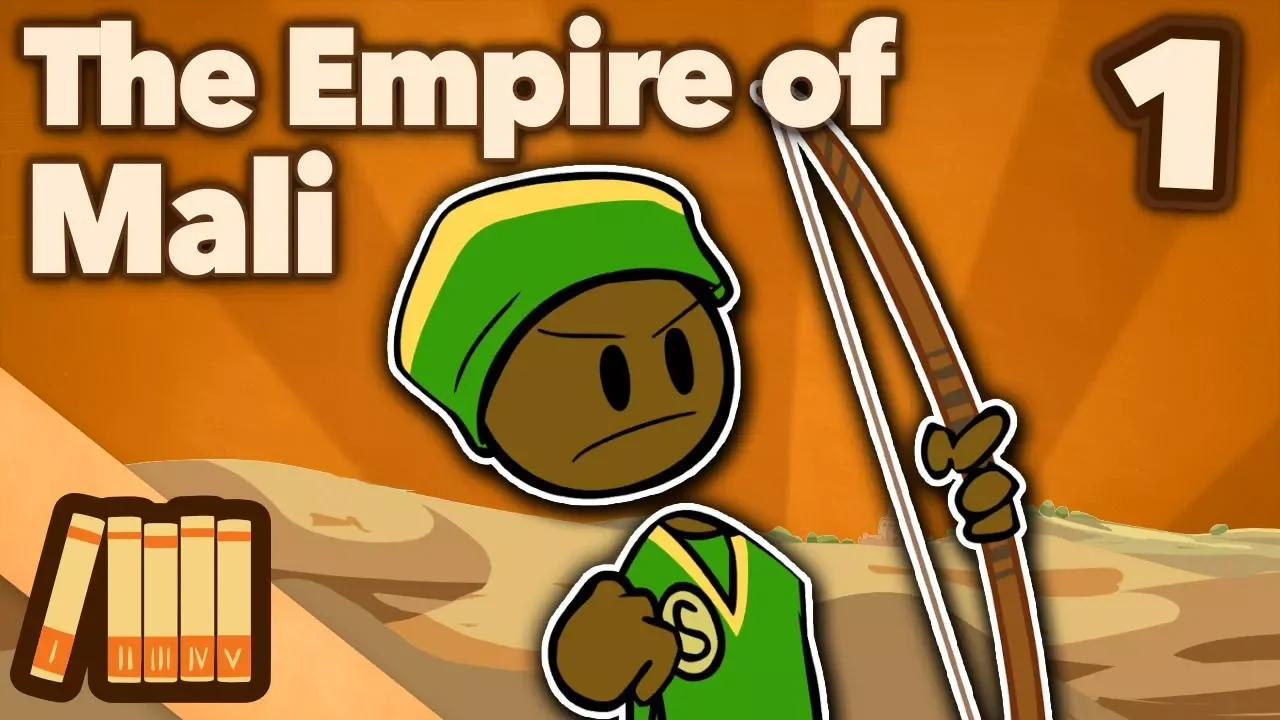
Why this video: This highly engaging, animated production provides the foundational narrative of the Mali Empire. It details how the empire emerged from the ruins of the Ghana Empire and highlights Sundiata Keita, a disabled Mandinka prince who overcame exile to defeat the Sosso kingdom at the Battle of Kirina in 1235.
Knowledge Checkpoint
- Explain how Sundiata Keita overcame physical exile to unite the twelve Mandinka kingdoms.
- Identify the historical impact of the Battle of Kirina (1235 CE) on the political landscape of West Africa.
- Describe the structural collapse of the Ghana Empire and how it left a power vacuum that Mali filled.
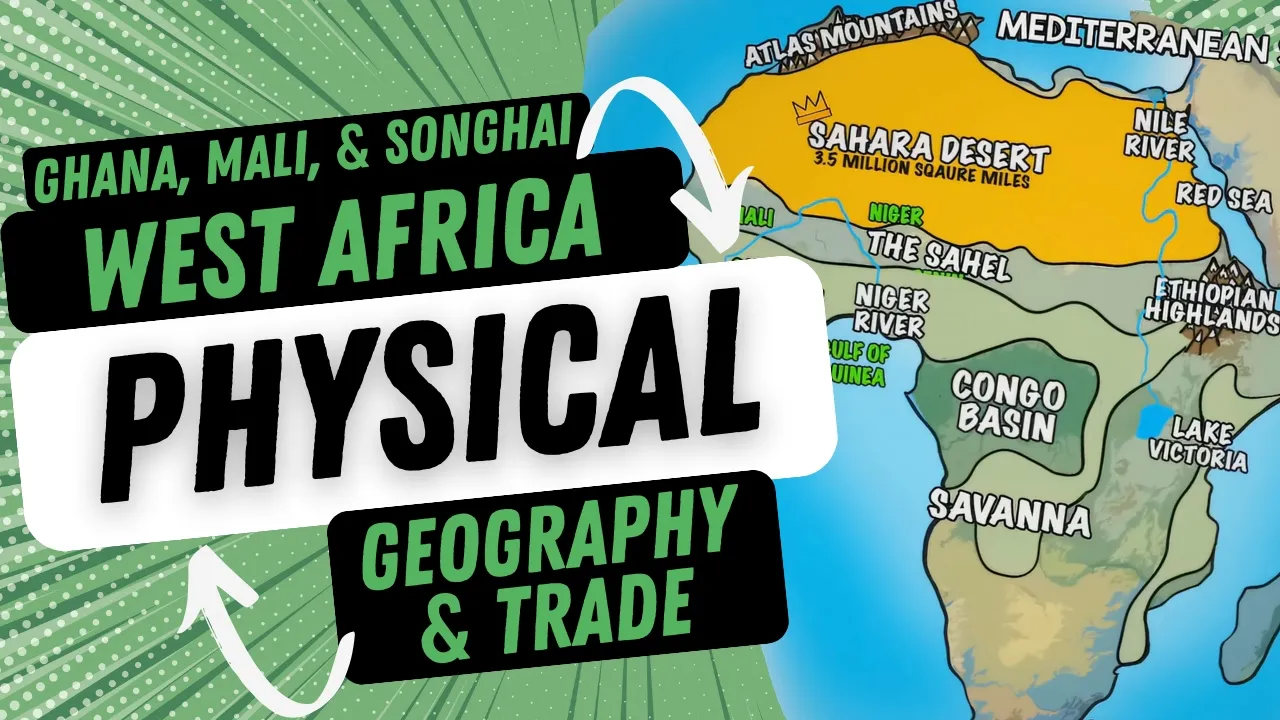
Why this video: This video offers a clear geographical layout of West Africa. It connects the physical environment—the Sahara Desert, the Sahel transition zone, and the fertile Niger River basin—to the economic rise of medieval kingdoms.
Knowledge Checkpoint
- List the primary geographical zones of West Africa and explain how they dictated regional lifestyles.
- Describe why the Niger River was referred to as the lifeblood of the Mali Empire's domestic communication and transit.
- Identify where the goldfields were situated in relation to Mali's northern urban trade hubs on a map.

Why this video: A comprehensive, feature-length documentary that provides deep historical context. The first portion of this video covers the transition from Sundiata Keita's early structural conquests to the economic foundations that his successors inherited.
Knowledge Checkpoint
- Detail how the early Mansas capitalized on their strategic location to levy taxes on international trade routes.
- Describe the composition and role of the early Malian military in securing trade routes from nomadic raiders.
Module 2: The Trans-Saharan Gold and Salt Trade
This module dives into the economic machinery of the West African empires. You will analyze the logistics of trans-Saharan trade caravans, the exchange of southern gold for northern salt, and the legendary, highly secretive practices of the silent barter system.
Recommended Videos

Why this video: This video explains the practical dynamics of trans-Saharan travel, detailing how the introduction of the camel and the innovation of specialized camel saddles allowed large-scale trade caravans to cross the unforgiving Sahara Desert.
Knowledge Checkpoint
- Explain why the introduction of the Arabian camel was a turning point for trans-Saharan commerce.
- Detail why salt was considered as valuable as gold in medieval West Africa, focusing on preservation and biological needs.

Why this video: An educational breakdown of "silent barter," an ancient system used to trade goods without face-to-face interaction or verbal communication. It explains how traders from different linguistic backgrounds negotiated fairly while keeping precious resources secure.
Knowledge Checkpoint
- Outline the step-by-step process of a silent barter transaction between gold miners and Salt caravans.
- Explain how silent trade protected the geographic locations of the gold mines from foreign invaders.
- Describe how the Malian state regulated and taxed these silent transactions even without direct oversight of the exchange site.
Coverage Gaps & Independent Study
⚠️ Curriculum Note: While the videos above provide an excellent overview of silent barter and caravan trade, they do not offer a granular look at the specific geography of the Taghaza salt mines in the north, or the southern Bure and Bambuk goldfields.
To fill this gap, please independently search for and read academic resources on:
- “How the trans-Saharan trade route worked gold and salt”
- “Bure and Bambuk goldfields history of Mali”
Module 3: The Reign and Pilgrimage of Mansa Musa
This module centers on Mansa Musa's rise to power, his domestic administrative strategies, and his historic 1324 pilgrimage to Mecca. You will study how his caravan of tens of thousands of people transformed regional economies and placed Mali at the center of the medieval world map.
Recommended Videos

Why this video: This short, animated map-based video visualizes the expansion of Mali's borders during Mansa Musa's reign and traces the exact geographic route of his historic Hajj caravan across Africa to the Arabian Peninsula.
Knowledge Checkpoint
- State the years of Mansa Musa's reign and identify how he succeeded the throne from Abu Bakr II.
- Trace the path of Mansa Musa's Hajj from Niani, through Walata, Tuat, Cairo, and finally to Mecca.
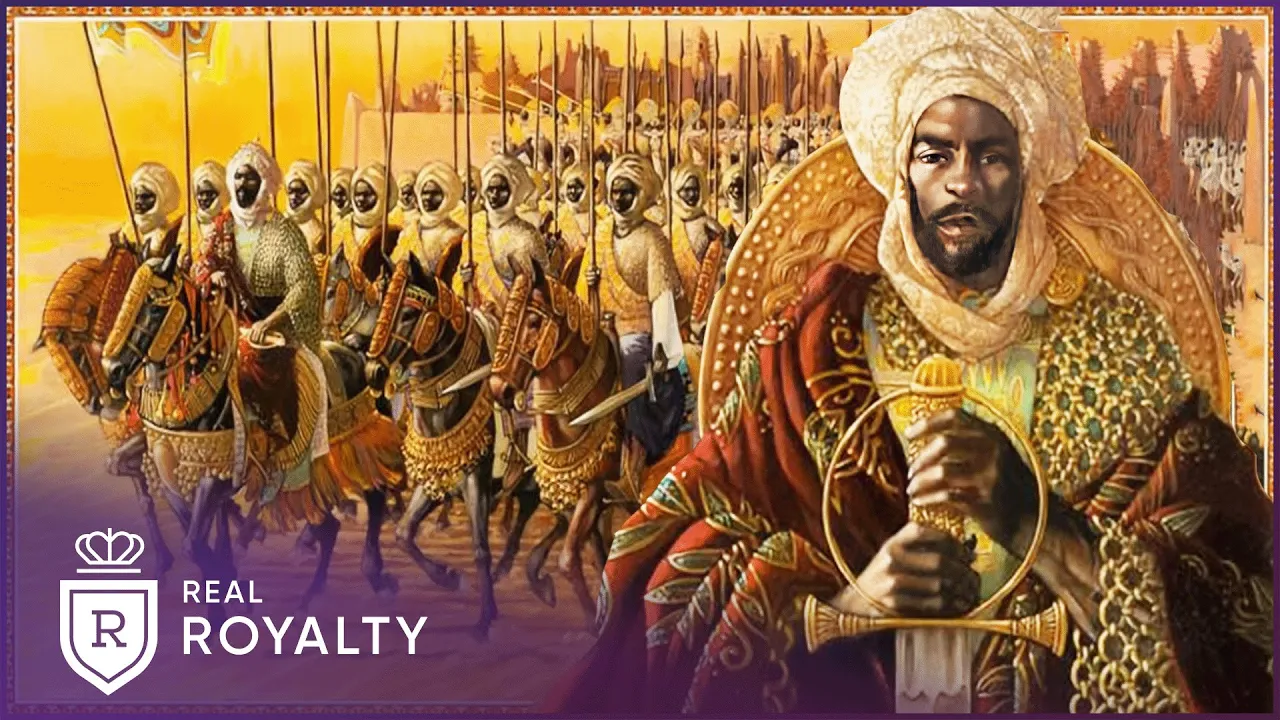
Why this video: This historical biography provides crucial administrative context. It explains how Mansa Musa managed his massive empire on a daily basis by employing a decentralized system of governance, allowing conquered states regional autonomy in exchange for tribute.
Knowledge Checkpoint
- Describe Mansa Musa's system of imperial administration, including the role of provincial governors (Farbas).
- Explain how Mali controlled military and foreign policy while allowing defeated kingdoms internal self-governance.

Why this video: This video analyzes the logistics of Mansa Musa's wealth, his famous Cairo spending spree, and the resulting economic shockwaves. It explains how his massive distribution of gold caused severe inflation in Egypt and the Levant, an effect that lasted for over a decade.
Knowledge Checkpoint
- Calculate the scale of the Hajj caravan (number of people, soldiers, and camels) and the estimated quantity of gold transported.
- Explain the economic phenomenon of gold devaluation and inflation that occurred in Cairo, Medina, and Mecca following Mansa Musa's visit.
- Describe how European cartographers reacted to news of Mansa Musa's wealth, specifically referencing his depiction on the 1375 Catalan Atlas.
Coverage Gaps & Independent Study
⚠️ Curriculum Note: While the videos address Musa's decentralized governance structure, detailed records of domestic legislative codes and judicial reforms under his reign are underrepresented in video media.
To study this area further, search independently for:
- “Mansa Musa administration government and laws of Mali”
- “Gbara assembly Mali Empire constitution”
Module 4: Timbuktu and Islamic Scholarship
This module investigates the intellectual golden age of the Mali Empire. You will learn how Mansa Musa transformed Timbuktu into an international hub of Islamic culture, established the historic Sankore Madrasah (University), and amassed hundreds of thousands of academic manuscripts.
Recommended Videos

Why this video: Dr. Abdullah Hakim Quick provides a brilliant historiographical overview of Timbuktu, tracing its evolution from a seasonal Tuareg camp into a world-class center of trade, literature, and Islamic jurisprudence.
Knowledge Checkpoint
- Detail how Timbuktu transitioned from a simple trading outpost to a global destination for scholars.
- Explain why books and manuscripts became some of the most expensive and highly valued import commodities in Timbuktu.

Why this video: This academic lecture details the architectural, educational, and structural features of the Sankore Madrasah (University) and the famous mosques of Timbuktu, exploring how Islamic education was standardized under Mansa Musa.
Knowledge Checkpoint
- Describe the distinct Sudano-Sahelian architectural style of the Sankore Mosque and University.
- Identify the academic subjects taught at Sankore University (including astronomy, mathematics, logic, and theology).
- Explain how the university was funded and how it functioned as a collection of independent colleges run by local scholars.

Why this video: A highly artistic and informative look at the modern history of Timbuktu's manuscripts. This video chronicles how local preservationists saved hundreds of thousands of historic scientific and religious texts from destruction during modern regional conflicts.
Knowledge Checkpoint
- Identify the environmental and geopolitical threats that have put Timbuktu's manuscript libraries at risk in recent centuries.
- Describe the heroic operations led by Abdel Kader Haidara to smuggle and preserve the manuscripts during the 2013 conflict in northern Mali.
Course Map
Below is the suggested progression map of this curriculum. Completing the modules in sequence is recommended as each module builds on the geographic, economic, or administrative foundations established in the previous one.
Key People Index
- Sundiata Keita (c. 1217–1255): The founder of the Mali Empire. Historically remembered as the "Lion King of Mali," he united the Mande clans and conquered the declining Kingdom of Sosso to set up Mali's initial administrative framework.
- Mansa Musa (c. 1280–1337): The tenth Mansa of the Mali Empire. He expanded the empire to its territorial zenith, accumulated unprecedented wealth through trade monopolies, and integrated Mali into the wider Islamic world through his famous 1324 pilgrimage.
- Abdel Kader Haidara: A modern Malian archivist and library curator. He is celebrated for organizing a clandestine operation in 2013 that evacuated and saved over 350,000 historic Timbuktu manuscripts from destruction by militant extremists.
- Dr. Abdullah Hakim Quick: A renowned modern historian, academic, and Islamic scholar whose research focuses on the history of Islam in Africa and the intellectual history of Timbuktu.
Final Self-Assessment
Test your mastery of the Mali Empire by verifying if you can confidently complete each of the following tasks:
- Describe how Sundiata Keita consolidated the Mandinka clans and established the empire's administrative center at Niani.
- Explain how geography (the Sahara, Sahel, and Niger River) shaped the trade lanes of West Africa.
- Detail the physical and economic steps required to execute a "silent barter" transaction.
- Explain why salt from Taghaza was exchanged at an equal value for gold from Bure and Bambuk.
- Trace the geographical route of Mansa Musa's 1324 pilgrimage to Mecca.
- Explain the economic mechanisms that caused gold inflation and devaluation in Cairo after Mansa Musa's visit.
- Describe how Mansa Musa's administration governed conquered lands using local regional leaders (Farbas).
- Identify the architectural characteristics of the Sudano-Sahelian style as seen in the Djinguereber and Sankore mosques.
- Detail the academic curriculum and structural organization of the historical Sankore Madrasah.
- Explain the significance of the Timbuktu manuscripts and how modern preservationists saved them from destruction.