







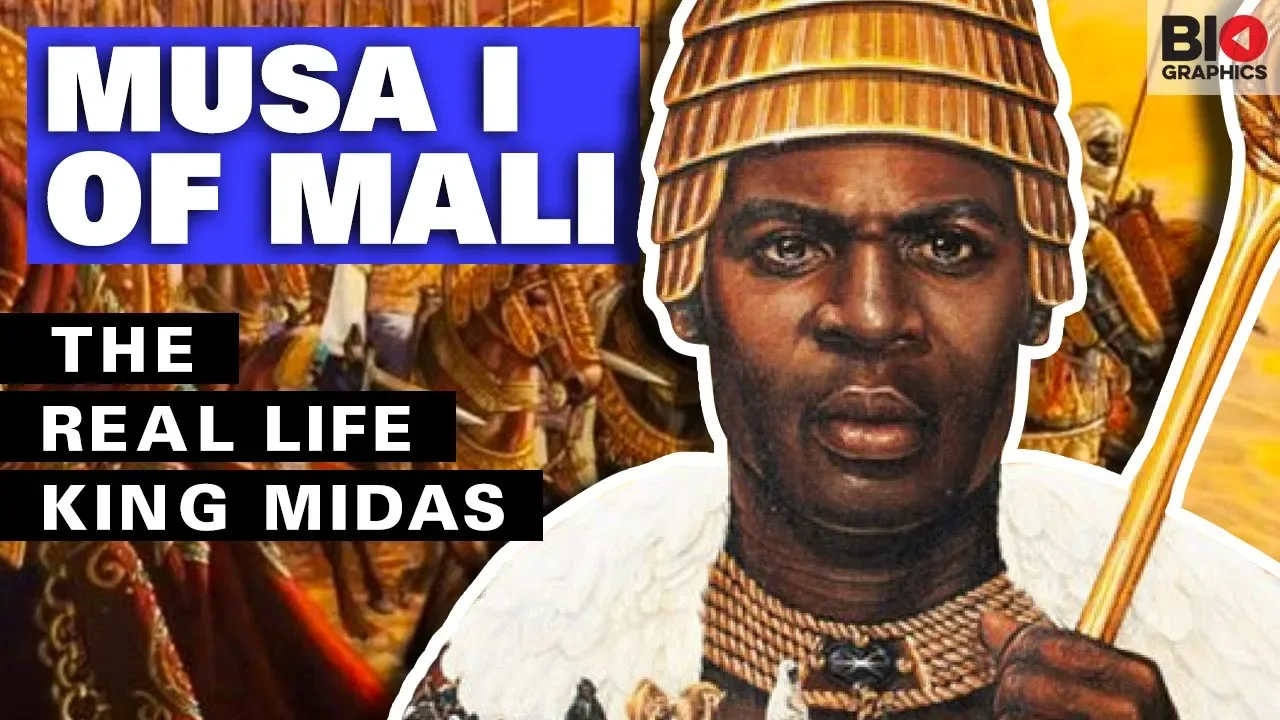










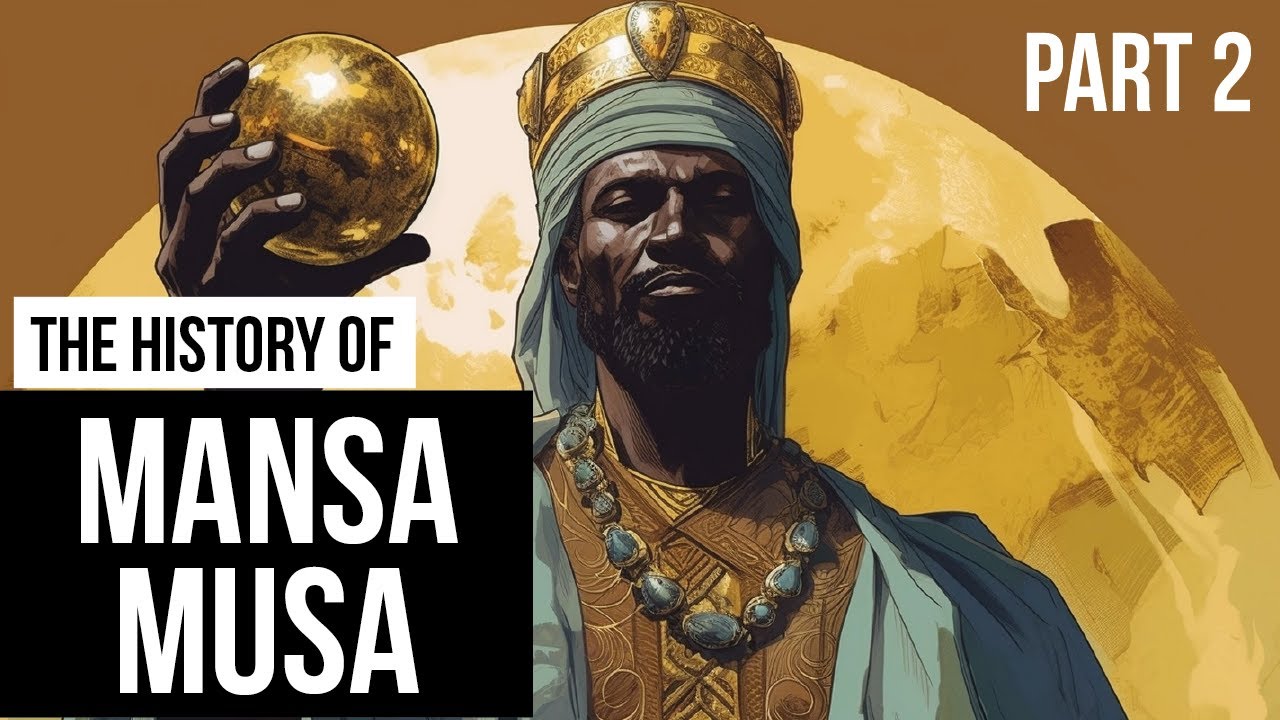
Mansa Musa, the 14th-century Emperor of the Mali Empire, is widely regarded by historians as the richest individual in history, possessing wealth so immense that it defies description; his legendary pilgrimage to Mecca in 1324, during which he distributed vast quantities of gold across Cairo and beyond, caused a significant economic crisis in the Middle East by flooding the market with precious metal, yet simultaneously elevated Mali's global profile and demonstrated the extraordinary prosperity of West African civilization during the medieval period.
Mansa Musa: The Richest Person in History? | Mali Empire Wealth
Added:The geography of West Africa and the mechanics of the Trans-Saharan trade routes, specifically the gold-for-salt exchange.
The fundamental pillars of Islam, with a specific focus on the spiritual and logistical significance of the 'hajj' (pilgrimage to Mecca).
Basic economic concepts of currency value, supply and demand, and how an oversupply of a precious metal can lead to inflation.
The historical context of the Mali Empire's establishment, including its predecessor, the Ghana Empire, and its founder, Sundiata Keita.
The macroeconomic consequences of Mansa Musa's pilgrimage on the Mediterranean and Middle Eastern economies, particularly the decade-long inflation in Cairo.
The golden age of Timbuktu as a global hub of Islamic scholarship, focusing on the University of Sankore and the preservation of its historic manuscripts.
The impact of Mali's wealth on European cartography, specifically analyzing how Mansa Musa's depiction in the 1375 Catalan Atlas fueled European exploration.
Sudano-Sahelian architecture, examining the construction of the Djinguereber Mosque and the influence of Andalusian architect Abu Ishaq al-Sahili.
The political succession struggles after Mansa Musa's reign and the eventual rise of the Songhai Empire.
539.4K views17.3Klikes14:21Original Release: 2021-11-14
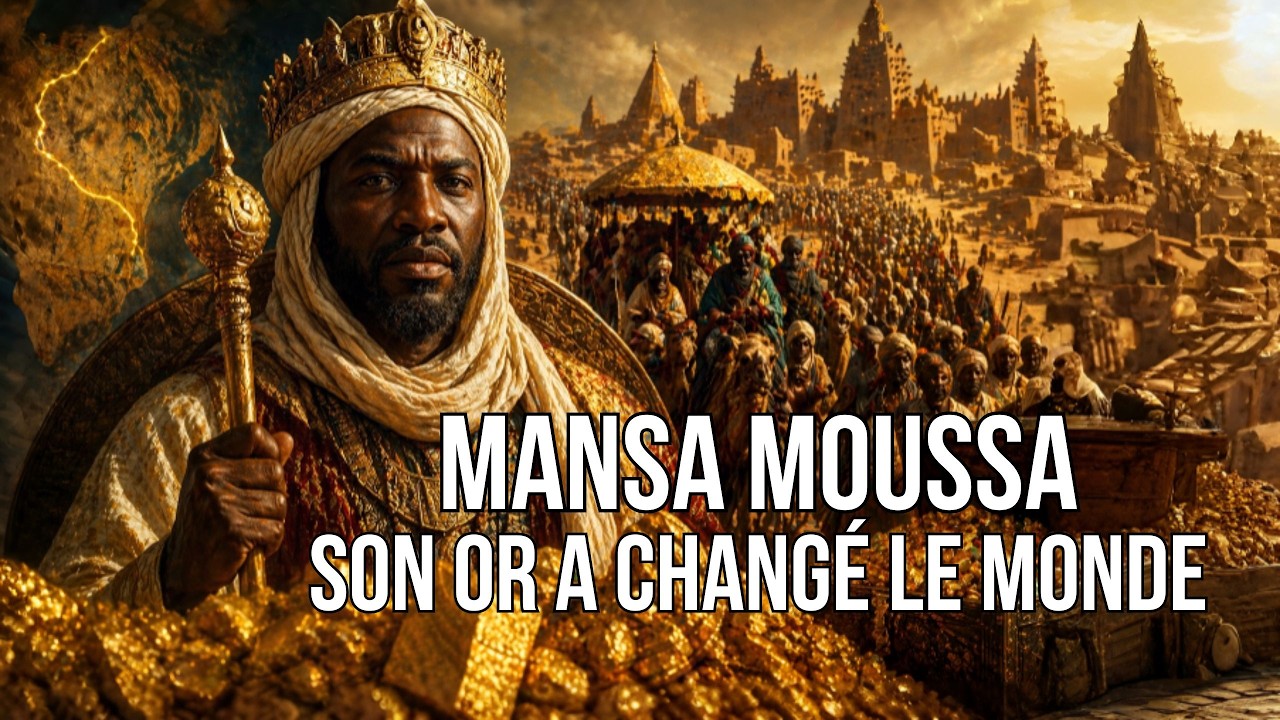
We often come across lists and rankings of wealthiest people in the world, which are tech entrepreneurs, oil magnates and heads of major corporations. And since we are living at the times when the 1% is only getting richer, we could assume that probably the richest men of our days are the richest men in history. But that is not the case, as many historians believe that the 14th century Emperor of Mali, Mansa Musa is in fact the richest individual in history, defining his wealth as “indescribable”. How has the relatively unknown monarch of a relatively unknown country managed to reach this status? In this episode of Kings and Generals we are going to talk about Mansa Musa, his noteworthy reign, his immense wealth, and how it was demonstrated to the world.
It is not a secret that we are fans of historical strategy games and Europa Universalis IV from Paradox Interactive is one of our favorites, so we are happy to announce that this video is sponsored by this excellent game and publisher! One of the best features of Europa Universalis is hundreds of factions you can play with and the new immersion pack called Origins is focusing on the Sub-Saharan Africa and its empires. Play with Mansa Musa’s Mali and halt the decline of West Africa’s greatest medieval empire and reassert control of former vassals. Kongo’s missions focus on uniting the peoples of the Congo River and confronting the growing European threat. Ajuuran is all about Indian Ocean trade, while Ethiopia needs to ensure religious unity and prestige in the Kingdom of Solomon while unifying the nations of the African Horn. Origin also adds new regional mission trees: for minor powers in Central, East and West Africa, as well as the African Horn, 4 new unit model sprites, two new missionary models, and, fans of the series will appreciate it, 12 minutes of West African and 12 minutes of East African themed music! Europa Universalis is an awesome strategy game that will give you thousands of hours of entertainment.
So support us and get this great game via the link in the description and pinned comment!
The biggest challenge to have a more detailed description of the Mali Empire and Mansa Musa’s rule is the lack of sources. There is a small number of works in Arabic of the historian Ibn Khaldun, the traveler Ibn Battuta and the geographer al-Umari.
In the 16-17th centuries some of the oral memories and traditions narrated by griots, equivalent to bards in Mali, had been written down as well. In the 15th century, the Portuguese explorers and adventurers mentioned Mali here and there, but the best source available to us is Ibn Khaldun, which is still helpful in reconstructing the history of the Mali Empire and Mansa Musa’s reign.
The story of the Mali Empire is told to us by the Epic of Sundiata. According to the Epic, Sundiata Keita was the son of the King of the Mandinka people. Upon the death of his father, his brother became the new king, while Sundiata was exiled to the court of King of Mema.
But when the Mandinka people asked Sundiata for help to repel the invasion by the Sosso Empire, 18-year old Sundiata raised an army from Mema and defeated the Sosso in around 1235 at the Battle of Kiriana, paving the way to the establishment of the Mali Empire and Sundiata Keita becoming its first Mansa (Emperor, King). The Mali Empire was ruled by the Mansa, but the emperor’s rule was balanced with Gbara, a type of entity, which reminds of the upper chamber of parliaments.
Gbara united almost 30 clans, with each assigned with their own task ranging from participation and leadership in military campaigns to expertise in religious matters. Gbara voted on Kurugan Fuga, collection of laws, a proto-constitution of Mali. The Kurugan Fuga determined the roles of clans, called for humane treatment of slaves, established social organization of the subjects of the Mali Empire and stipulated economic rules. The Empire of Mali was very rich in resources. It contained three large gold mines, which all belonged to the Mansa. At its apex, the Mali Empire owned almost half of the known gold reserves of the world. Mali also enjoyed a large supply of salt and copper, which was extracted through slave labour, essentially making the Mali Empire a slaveowner state. With Europe still short of its global appeal and power of the Roman period, the major trade partners of Mali were the Middle Eastern trade cities and states.
This was the context, to which Musa came to power. He was initially a deputy of the Emperor Muhammad ibn Qu (others dispute that it was Abubakari II), who dreamed of finding new lands across the Atlantic. Sometime around 1311 he embarked on the expedition with 2000 ships and left leaving the reign to his deputy Musa, who became Mansa, since Muhammad ibn Qu never returned.
Musa was no outsider to the Malian elite, as he was coming from the line of Sundiata Keita, the founder of the Mali Empire. He knew Arabic and was a devout Muslim. Mansa Musa is said to have expanded the trade network of the Mali Empire, making the country and him personally as a Mansa even wealthier. But while Mali and Mansa Musa were very rich, Subsaharan Africa was not really known much to the European and Middle Eastern peoples. Whether out of religious duty or as a campaign to demonstrate his and Mali’s power and wealth in 1324 he went on a pilgrimage to Mecca.
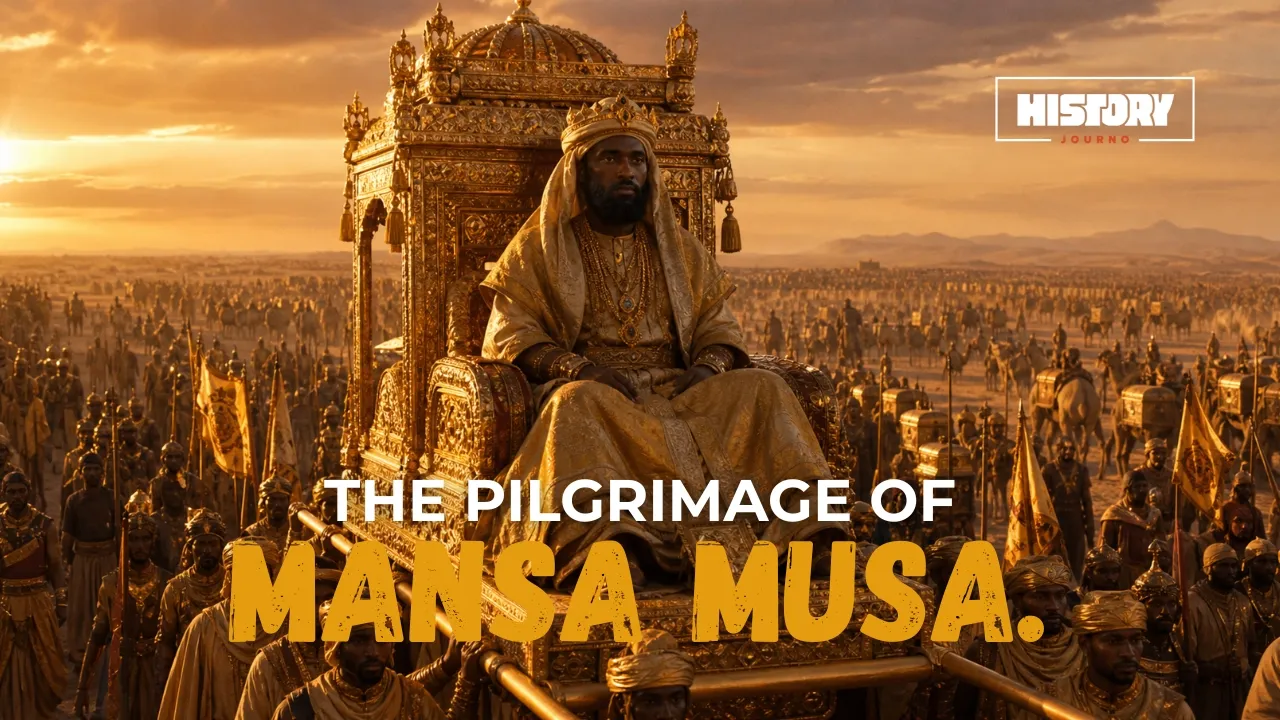
According to Ibn Khaldun, who had interviewed one of the participants of this pilgrimage later, "at each halt, he (Musa) would regale us with rare foods and confectionery. His equipment and furnishings were carried by 12,000 private slave women, wearing gowns of brocade and Yemeni silk".
Furthermore, thousands of soldiers, members of the Malian royal court, along with tons of gold and provisions accompanied Mansa Musa in his 4k mile pilgrimage to Mecca.
Undoubtedly, it was quite a spectacle. A massive golden tent city moving through the desert.
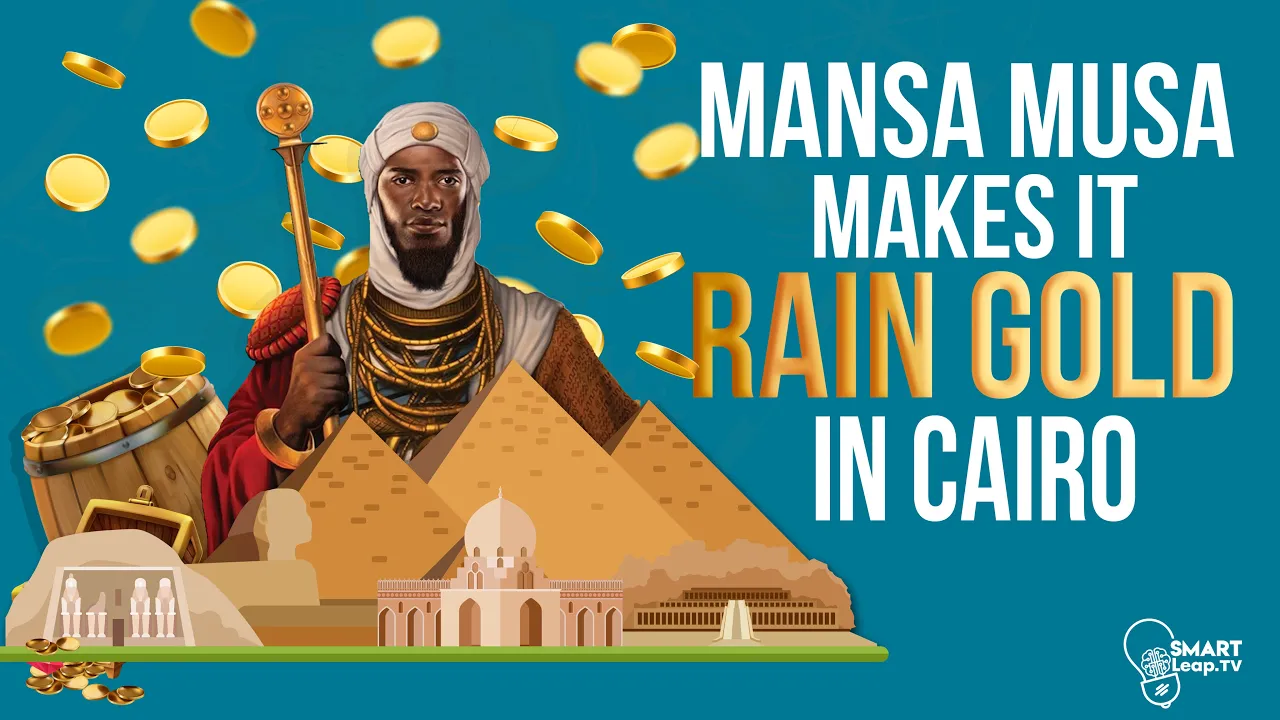
This was going to catch the attention of rulers of states through which Mansa Musa’s procession was going. There was an interesting episode of Musa’s visit to Cairo in 1324. According to al-Umari, the Mamluk Sultan al-Malik an-Nasir sent his envoy to invite Mansa Musa to his palace. The Malian Emperor initially refused to state that the sole purpose of his travel was the holy pilgrimage and nothing else. Nevertheless, Mansa Musa showed great courtesy and respect to the envoy and offered gold and other valuables to be sent to the Mamluk Sultan as a token of his respect. Probably the biggest reason for Musa’s initial refusal to see the Sultan was the fact that the royal protocol demanded all visitors to kiss the ground and Sultan’s hand. Finally, Mansa Musa gave up and agreed to meet the Sultan after long persuasion. When the moment of kneeling and kissing the ground came he said “I make obeisance to Allah who created me!” and kissed the ground, managing to avoid disrespecting his host, while also refusing to accept the Mamluk Sultan as his superior.
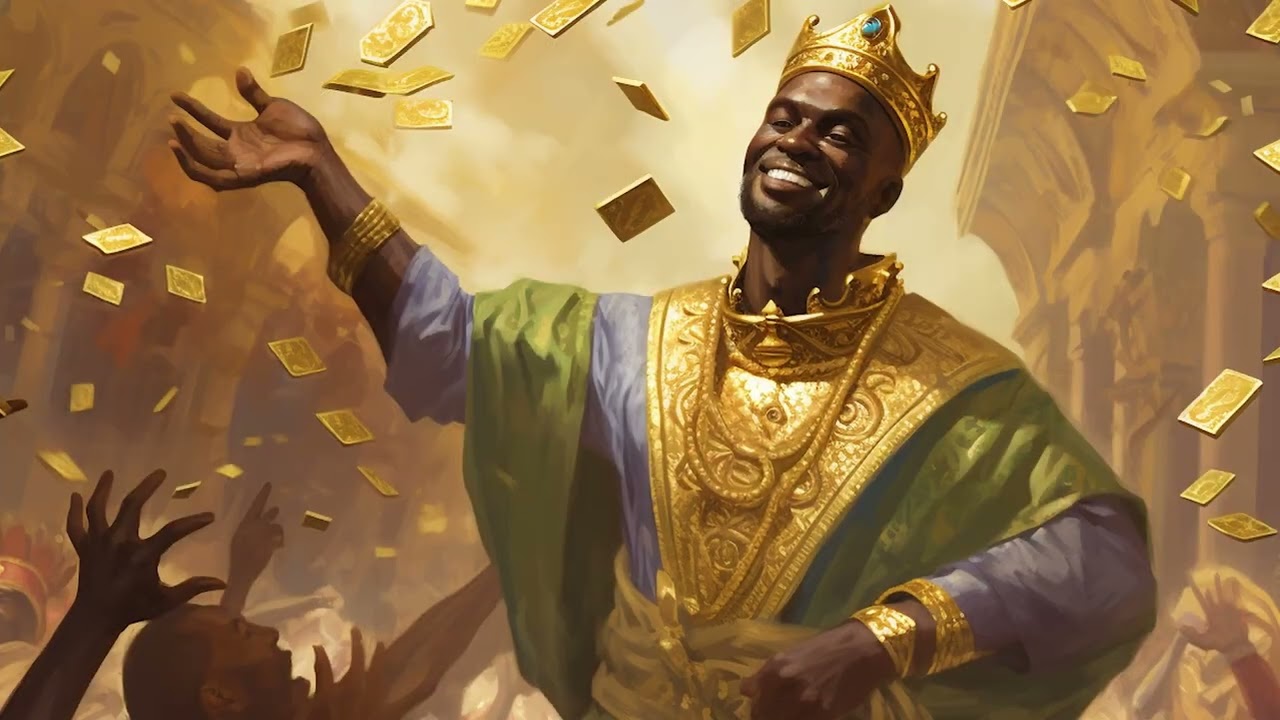
Mansa Musa flooded the Sultan, his court, the city of Cairo, and its poor with gold. So much gold that this most valuable commodity of that age had seen the decrease of its price due to high supply causing an economic crisis in Egypt for over a decade. Overall, Musa’s generosity during the pilgrimage actually hurt the region of the Middle East economically. The US-based technology company SmartAsset.com estimates that due to the depreciation of gold, Mansa Musa's pilgrimage led to about $1.5bn of economic losses across the Middle East. Some state that when Mansa Musa found out about the impact of his travel through Egypt, he tried to remove as much gold as possible from circulation in Egypt by buying the very gold he generously gifted to the people there.
Lucy Duran of the School of African and Oriental Studies in London informs that Musa gave away so much of the Malian gold that the local griots are unhappy with him: "He gave out so much Malian gold along the way that griots don't like to praise him in their songs because they think he wasted local resources outside the empire." But despite inadvertently causing an economic crisis in the Middle East, Mansa Musa managed to bring Mali to the attention of the Middle Eastern and European countries by demonstrating the immense wealth of his realm during the pilgrimage.
Probably, that is why there are more sources and information on Musa’s post-pilgrimage reign.
During Musa’s reign, the Mali Empire expanded. On the way back from the pilgrimage in 1325, he added the region of Gao with an important trading city of Timbuktu into the Empire, but sources do not really inform us on how it happened.
Regardless of how it happened, Timbuktu became an important part of Mansa Musa’s realm.
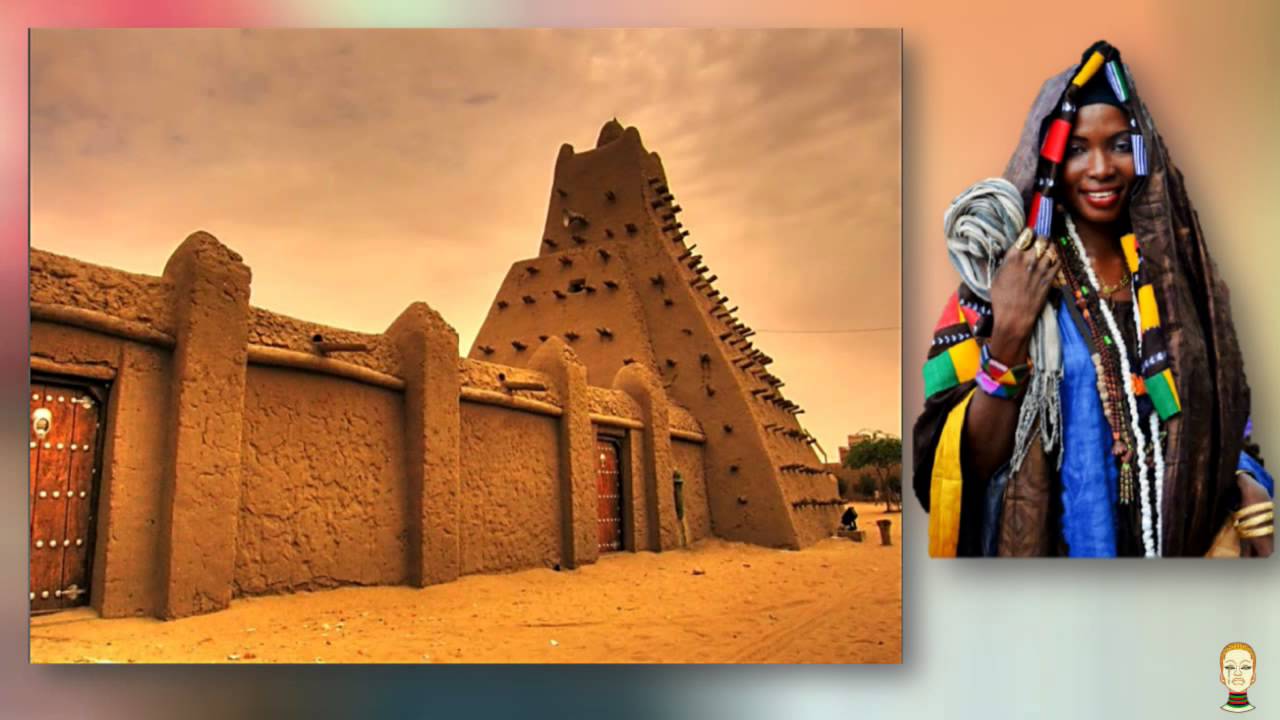
Mali’s wealth allowed Musa to embark on a massive construction effort throughout the Empire, particularly Timbuktu. During Mansa Musa’s reign the world-famous Djinguereber Mosque, which was built from mud brick and wood and is still standing, was constructed in Timbuktu.
Another important construction project was the University of Sankore of the Sankore Madrasah, which became one of the greatest centers of Islamic learning in the world. Law, astronomy, medicine, religion, and other disciplines were taught there. It is said that Musa brought scholars on the way back from the pilgrimage, who helped to establish the academic foundation of this university. An Andalusian poet and architect named Abu Es Haq es-Saheli, who is believed to be responsible for the design of the Djinguereber Mosque, was among this group. By the end of Musa’s reign, the University of Sankore is said to have almost 25k students with one of the largest libraries in the world in possession of 800k manuscripts, according to Casely-Hayford. Gao and Timbuktu were not the only regions and cities captured by Mansa Musa. He is said to annex 24 cities in total during his reign.
By the end of his reign, the Mali Empire stretched for approximately 2k miles from the shore of the Atlantic to the modern-day Niger, possessing lands of modern-day Mali, Senegal, Gambia, Guinea, Guinea-Bissau, Ivory Coast, Niger, Nigeria, Chad, Mauritania, and Burkina Faso.
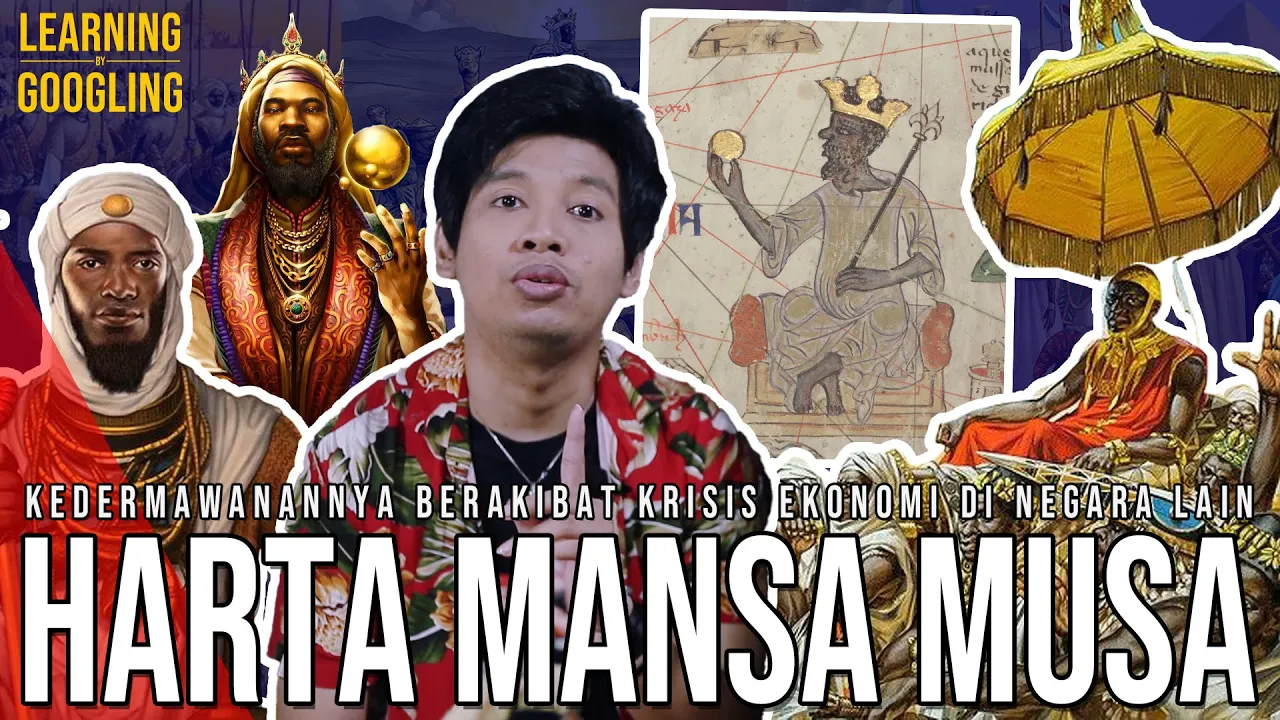
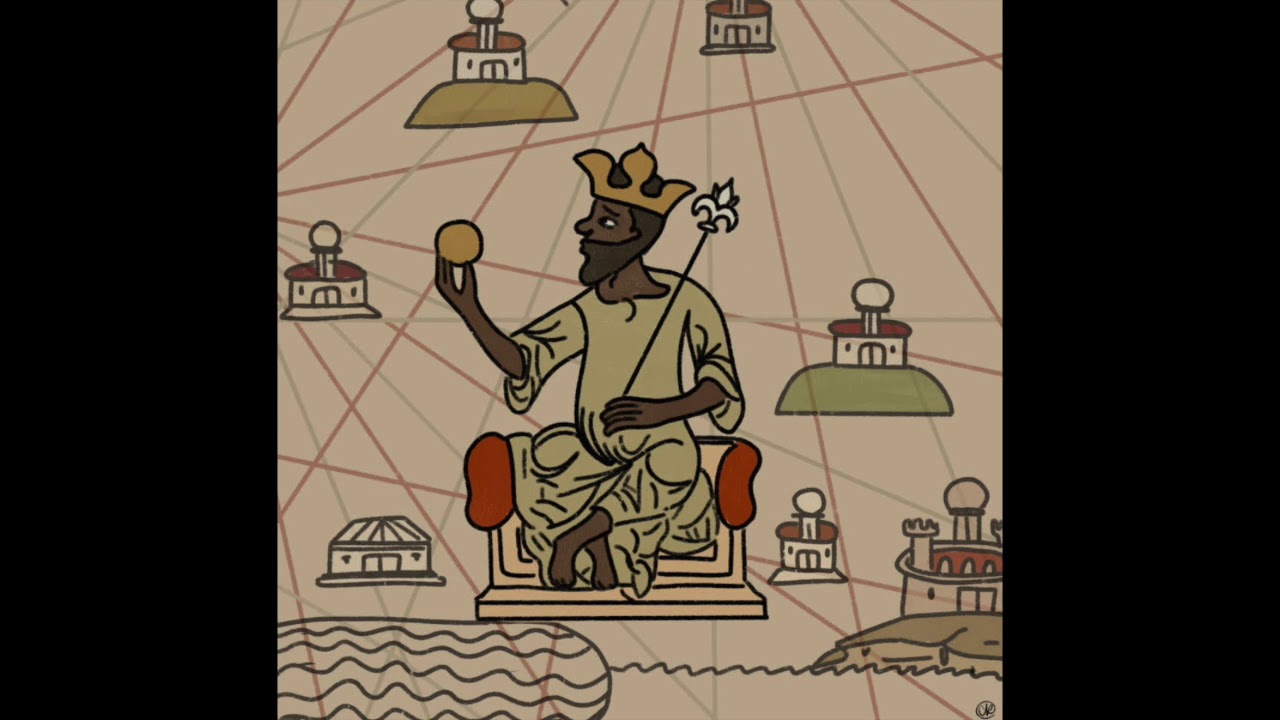
Mansa Musa’s impact made his Empire known to Europe and the Middle East. In 1375, the Catalan Atlas map added the Mali Empire with a drawing of an African king sitting on the golden throne in Timbuktu with a piece of gold in his hand. Musa’s reign ended sometime between 1332 and 1337 when he died. He was succeeded by his son, who was said to be a bad and profligate Mansa.
He was succeeded by his brother Mansa Suleiman, who helped to rebuild the Empire’s treasury and put it back on track of development. Later Mansas were less successful and from 1389 onwards the Mali Empire entered the state of disintegration. This shows that mere wealth was not enough to keep a huge empire like Mali together, hinting at Mansa Musa’s good administration skills as well.
But how rich was Mansa Musa exactly? We know that Mansas - the Emperors of the Mali Empire owned all the gold in the country. We are not aware of any sudden or drastic increase in gold production in Mali or the discovery of new gold mines during Musa’s reign, which would potentially make him richer than his predecessors or successors. So we can claim that all other major emperors of Mali were arguably as rich as Musa, but unlike the others, Musa had been able to put himself and Mali on the map thanks to his pilgrimage, amazing people in the Middle East with all his gold, glamour and generosity and making historians write about him.
There are different descriptions of his wealth. The history professor of the University of Michigan says: “Imagine as much gold as you think a human being could possess and double it, that’s what all the accounts are trying to communicate. This is the richest guy anyone has ever seen”.
Rudolph Butch Ware of the University of California argues that “Contemporary accounts of Musa’s wealth are so breathless that it’s almost impossible to get a sense of just how wealthy and powerful he truly was”. Some have tried to come up with a figure, with 400 billion dollars being a popular estimate adjusted for inflation. But probably the best way to explain Mansa Musa’s wealth was written by Jacob Davidson on Money.com. “Richer than anyone could describe”.
Unfortunately, there is a lack of sources to describe Mansa Musa’s reign, life, and wealth in more detail. But what we have is enough to argue that Musa was a successful military leader, since he is attributed with annexing 24 cities and expanding the Mali Empire. He could be described as a progressive person, who understood the importance of education and science for the prosperity of his realm. But Mansa Musa is mostly known for his wealth and is widely believed to be the richest individual in history. More videos on the economic history and history of Africa are on the way, so make sure you are subscribed and have pressed the bell button.
Please consider liking, commenting, and sharing; it helps immensely. Our videos would be impossible without our kind Patron supporters and Youtube channel members, whose rank you can join via the links in the description to know our schedule, get early access to our videos, access our Discord, and much more. This is the Kings and Generals channel and we will catch you on the next one.
Up Next

13:35
Timbuktu: West Africa's Empire of Knowledge | Dr. Abdullah Hakim Quick
@QuranSpeaks
14.2K views•2017-10-26

33:02
The Great Schism of 1054: Causes and Consequences
@SacredCathedrals
113.5K views•2026-02-19
19:41
The Great Schism: Catholic-Orthodox Rivalry in Medieval Christianity
@KingsandGenerals
2.6M views•2020-02-06

17:05
Understanding the Cold War: Superpower Conflicts and the Road to Détente
@OverSimplified
46.1M views•2019-01-24
Related Study Plans & Knowledge Roadmaps
Structured learning paths in History
history
Byzantine Iconoclasm: Theology, Art & Politics
01Foundations of Byzantium and Early Christian Images
02The First Iconoclasm: Leo III and the Crisis of Images
03Empress Irene, Nicaea II, and the Second Iconoclasm
+ 2 more learning modules
9h5 modules
Explore Roadmap
history
Iranian Revolution (Causes, Events & Legacy)
01The Pahlavi Dynasty and the Roots of Discontent
02The Spark of Rebellion and the Rise of Khomeini
031979: The Fall of the Shah and the Climax of the Revolution
+ 2 more learning modules
8h5 modules
Explore Roadmap
history
Mali Empire: Mansa Musa, Trade & Timbuktu
01Foundations of the Mali Empire
02The Trans-Saharan Gold and Salt Trade
03The Reign and Pilgrimage of Mansa Musa
+ 1 more learning modules
6h4 modules
Explore Roadmap
history
1947 Partition: Politics, Borders & Legacies
01Foundations of British India and the Divide
02The Political Negotiations and the Mountbatten Plan
03Drawing the Boundary: The Radcliffe Line
+ 2 more learning modules
8h5 modules
Explore Roadmap