











The Roman patronage system was a reciprocal social institution where wealthy and prestigious citizens (patrons) provided material benefits, legal protection, and political support to poorer citizens (clients), while clients offered loyalty, public advocacy, and social prestige to their patrons; this system, originating with Romulus's division of society into Patricians and Plebeians, became the glue binding Roman society for over a millennium, evolving from personal relationships into political alliances and eventually into the imperial beneficium system under emperors like Nerva, where the Emperor served as the ultimate patron granting benefits to senators, equites, and military commanders in exchange for their continued support and loyalty.
Roman Patronage System: Clientela & Social Order Explained
Added:Rome was one of the longest lasting societies in the history of the world, arguably lasting for 2,206 years from 753 BC with the founding of Rome, to 1453 AD and the fall of Constantinople, with many of its institutions even lasting into the modern age. Confucius; the ancient Chinese philosopher, was once asked which single word was wisest to live his life by.
He answered simply: Reciprocity, doing unto others as you would have them do to you. This would be one of the keystones of Roman life, and was arguably the glue which bound Roman society together for hundreds of years. Welcome to our video on the institution of Patronage in the Roman world.
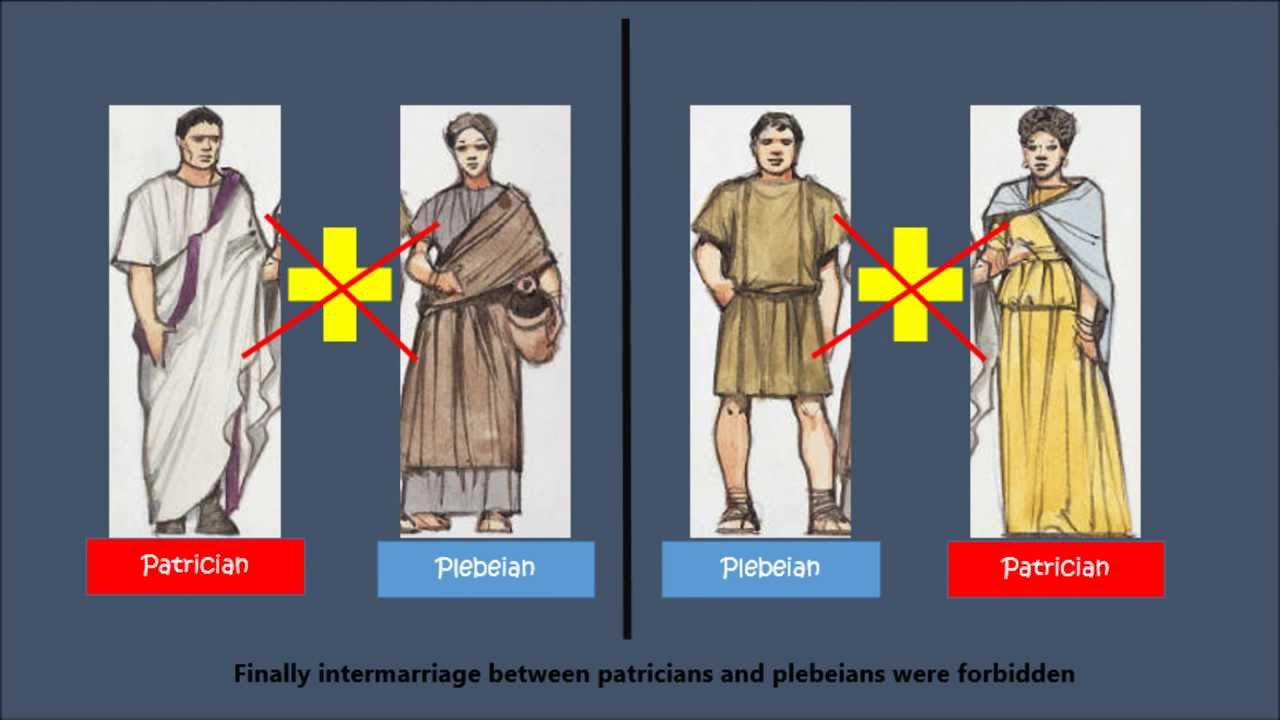
Like many things in Roman society, the origins of the fabled patron-client relationship began with the very earliest founder of the city - Romulus. The myths concerning those enigmatic days are likely just that, but they state that soon after the city’s creation, Romulus distinguished between the more powerful members of society; the Patricians, and those who were less powerful; the Plebeians. The former were appointed to functions which would run society, such as priests, magistrates and judges, while the latter were prohibited from this. They would perform the basest tasks such as farming and trading. However, unlike most cities, the founder put the plebeians in the guardianship of the less numerous patricians, allowing each plebeian to choose their patron. This would grow into the sacred institution of clientelia and patrocinium; which was essentially a series of reciprocal relations between richer and more prestigious citizens of the Roman state, and the poorer disenfranchised masses.
The give and take nature of these reciprocal interactions would provide both the patron and the client with benefits in their specific lives. Those granted to the client from the patron in an individual sense would usually be material; perhaps a donation of food to a poor client or even cash itself, which was called a sportula. As the patrician class also were magistrates and judges at the appointment of Romulus, they would offer legal advice in court cases which involved their clients, and even represent them in court using their oratory skills. Meanwhile, the duties of clients could be many things which are primarily oriented around increasing the prestige or dignitas of their patron, although there are exceptions.
For instance, the foundational relationship between an individual patron and client might consist of the client performing a morning 'salutatio’, or greeting in front of their patron's residence. From there, the many clients would follow their patron to their daily business, perhaps in the forum or the law courts. Regardless of their personal opinions on a particular matter, the client would be expected to applaud and promote the interests of their patron, honouring the reciprocal relationship. The more clients seen under the guardianship of a patron, the more dignitas they would accumulate among their peers. Rather than being an isolated relationship between one citizen and another, a patron of many clients may have a patron of their own of an even higher social status, creating a network comprising many of these interlinkages. As the Republican period went on, the nature of the Roman patron-client relationship changed and expanded, being seen in many areas of life. Some examples of this enlargement of the client system will be shown now. Perhaps the most prominent and visible of these relations during the turbulent late republican period was that of the conqueror and the kingdoms which were conquered. Instead of direct integration as a Roman province, Pompey initially installed 'client kings’ in those eastern regions subjugated during his command, such as Crimea, Armenia and Judea. These kings would rally for their illustrious patron at the battle of Pharsalus against Caesar in 48 BC. Caesar himself also functioned as the patron of Hispalis – modern-day Sevilla, where he gave many benefits and tax reductions to its citizens during his role as Quaestor. This made it even more galling and insulting when, during the Caesarian Civil War, this region sided with his enemy Pompey, breaking the sacred patron-client relationship.
The writings of Cicero also give us an idea of the extent that patronage reached during the late republic. He interceded many times on behalf of clients in his hometown Arpinum, for which he functioned as a collective patron of the entire settlement. They would sometimes request his oratory genius for assistance in court cases, or for financial assistance in various matters. Cicero has also politically benefitted by the many good relations he nurtured in the provinces he governed. Sicily had been one of the richest provinces of the Empire, but a corrupt governor named Verres changed all this. Under his administration, prosperous cities were sacked and positions were appointed through nepotism and bribery. This caused poverty to become widespread in the region until Cicero intervened. He used his skills to prosecute and remove the corrupt Verres, which eventually led Sicily to prosperity again, in addition to his own good governorship of the province. In gratitude, the Sicilians would always support Cicero in his political career, and played a significant role in his becoming Consul during 63 BC. In addition to these various types of patron and client; a freed slave and his former master often also adopted this position, with the ex-master functioning as the patron to his client ex-slaves. The profound impact of this system of mutual kinship among the Roman people was outlined by Dionysius, and it is clear in his writing that he believes Patronage was one of the most important Roman institutions; being directly responsible for 630 years of peace and harmony in public life, up until the violent suppression of the Gracchi brothers. It did this in several key ways. More educated and sophisticated patrons would be expected to explain the laws to their clients if they had no knowledge of them, hopefully making them into a better law-abiding citizen and functioning much as a father’s tutelage to their son. In gratitude for their legal and financial intercessions on behalf of the client, patrons would receive collective funds from their many clients for causes such as ransoming family members who had been kidnapped and raising dowries for prestigious marriages. These reciprocal links between specific clans and families were not especially individual, and often continued down many generations. It was possible that even the grandson of a client could still be patronised by the same man or family if they lived long enough, and because of this, fierce loyalty often developed to their patrons.
The progression of the Patrocinium system into the post-Augustan era is controversial and debatable; did the system decline and eventually disappear along with the significance of elections in the newly monarchical empire? Or did the institution merely evolve and morph into a new form to match the new political reality of the Roman state? While it is possible that the tradition patron-client relationships in the political sphere broke down, others argue that the Emperor’s position at the head of the empire was purely based upon patronal ties to their various supporters - meaning that the emperor’s position as a great patron was a key to their Imperial power. The system of patronage also acquired another more prevalent aspect during this time; beneficium, the granting of benefits by the Roman Emperor to their various subordinate clients; such as the remaining Senatorial class, Equites and military commanders in the provinces. An example of this type of relationship was Nerva; the first of the Five Good Emperors, who once stated that he had assumed responsibility for the empire “in order that I might confer new beneficia and preserve those already granted by my predecessors”. This seems like an odd thing to proclaim at first, until the dependence of the Emperor on those below him is understood. He naturally would wish to signal to the aristocracy and powerful men in the Empire that he would maintain and even heighten their status, so that they would support him. The continuity offered by Nerva to his aristocratic senatorial clients also would have made them realise this emperor was reliable and would not arbitrarily remove their position or property.
Imperial beneficium, related to the Imperial patron-client system, had many different categories of wide-ranging actions upon many different parties in the Empire. Pliny outlines an example of a few of them; emergency grain shipments to the suffering province of Egypt, the establishment of courts more sympathetic to the people, citizenship grants and immunity from inheritance tax. Many profitable governorships were also established in the empire at the sole jurisdiction of the emperor and his generosity. His clients and favoured individuals would be the main beneficiaries of these bonuses. In return, one possible reciprocal benefit given back to the Emperor could be the naming of the Emperor in their will, and it is possible that these material legacies comprised a significant portion of Imperial incomes. The Imperator would grant positions and favours onto his nominal subordinates and, in return, they would grant him wealth upon their deaths so that the cycle of reciprocity might continue.
The head of the Roman state was not the only highly positioned individual capable of granting boons to their favourites, and their wives and female family members also possessed this ability due to their proximity to the center of Imperial power. Many occasions in the reign of Augustus were noted in which his sister Octavia was thanked by various highly positioned men of the Empire for her favour that had assisted them in receiving their position.
Moreover, Livia was said to consistently assist in the career advancement of many favourites.
We will continue covering various topics on the Roman history, so make sure you are subscribed to our channel and have pressed the bell button. We would like to express our gratitude to our Patreon supporters and channel members, who make the creation of our videos possible.
Now, you can also support us by buying our merchandise via the link in the description.
This is the Kings and Generals channel, and we will catch you on the next one.
Up Next

Boss Tweed: The Rise and Fall of a Gilded Age Political Machine
@FORGOTTENHISTORYCHANNEL
100.9K views•2025-12-09

Zola, Baudelaire, Maupassant & the Transformation of Paris, 1852-1900
@SylviaSagona
5.6K views•2015-05-31

The Great Schism: Catholic-Orthodox Rivalry in Medieval Christianity
@KingsandGenerals
2.6M views•2020-02-06

Understanding the Cold War: Superpower Conflicts and the Road to Détente
@OverSimplified
46.1M views•2019-01-24
Related Study Plans & Knowledge Roadmaps
Structured learning paths in History