














Boss Tweed, leader of Tammany Hall in New York City during the Gilded Age, built one of America's most powerful and corrupt political machines by exploiting immigrant communities, manipulating elections through intimidation and fraud, and stealing an estimated $30-200 million from public funds through padded contracts, kickbacks, and monopolistic business practices; his downfall came in 1871 when political cartoonist Thomas Nast exposed his corruption through powerful imagery, leading to his arrest, conviction, and imprisonment, though the political machine itself survived and continued to dominate New York politics well into the 20th century.
Boss Tweed: The Rise and Fall of a Gilded Age Political Machine
Added:The definition and socio-economic dynamics of the 'Gilded Age' in American history, including rapid urbanization and industrialization.
The massive waves of 19th-century immigration to the United States (particularly Irish) and the socio-political challenges immigrants faced in urban areas.
The concept of political patronage and the 'spoils system' established in American politics during the 19th century.
The basic structure and functions of municipal (city) government and how local elections were historically organized.
The rise of the Progressive Era and the specific political reforms designed to dismantle machine politics, such as civil service reform (the Pendleton Act) and the secret ballot.
The role of media, investigative journalism, and political cartoonists (such as Thomas Nast) in exposing institutional corruption and mobilizing public opinion.
The subsequent history of Tammany Hall through the late 19th and 20th centuries, up to its ultimate decline under the New Deal and reformers like Fiorello La Guardia.
Modern-day parallels of political machines, clientelism, and the evolution of campaign finance and lobbying in contemporary democracies.
100.9K views4.9Klikes20:42Original Release: 2025-12-09
In 1871, a simple newspaper cartoon did what judges and politicians would not do. It showed a bloated man in an expensive coat standing on piles of stolen tax money, and instantly the entire city knew the face. People who could not read a word understood the truth in a single image. Their government had been taken over by a criminal empire built on bribes, intimidation, violence, murder, and exercised absolute control. At the center of it all was one figure [music] who ruled New York with money, muscle, and fear. The people already knew the name, a mob boss before there was a mob, a man known simply as Boss Tweed, one of the most corrupt and violent men in New York political history. Who was Boss Tweed? How was he corrupt? What did he do? What was his fate?
>> Hello, I'm Colin Heaton, former history professor, Army and Marine Corps veteran, and welcome to this episode of Forgotten History.
>> [music] >> William McGear Boss Tweed was born on April 3rd, 1823 in New York City. His grandfather had immigrated from Edinburgh, Scotland, and Tweed grew up in a working-class family. He left school at age 11 around 1834 to work alongside his father and later apprenticed as a saddler. In the late 1830s and early 1840s, he became a bookkeeper and invested in a brushmaking company. On September 29th, 1844, he married Mary Jane C. Scaden, and the couple lived with her family for the first two years of their marriage. In 1852, Tweed left the brush company and joined the family business.
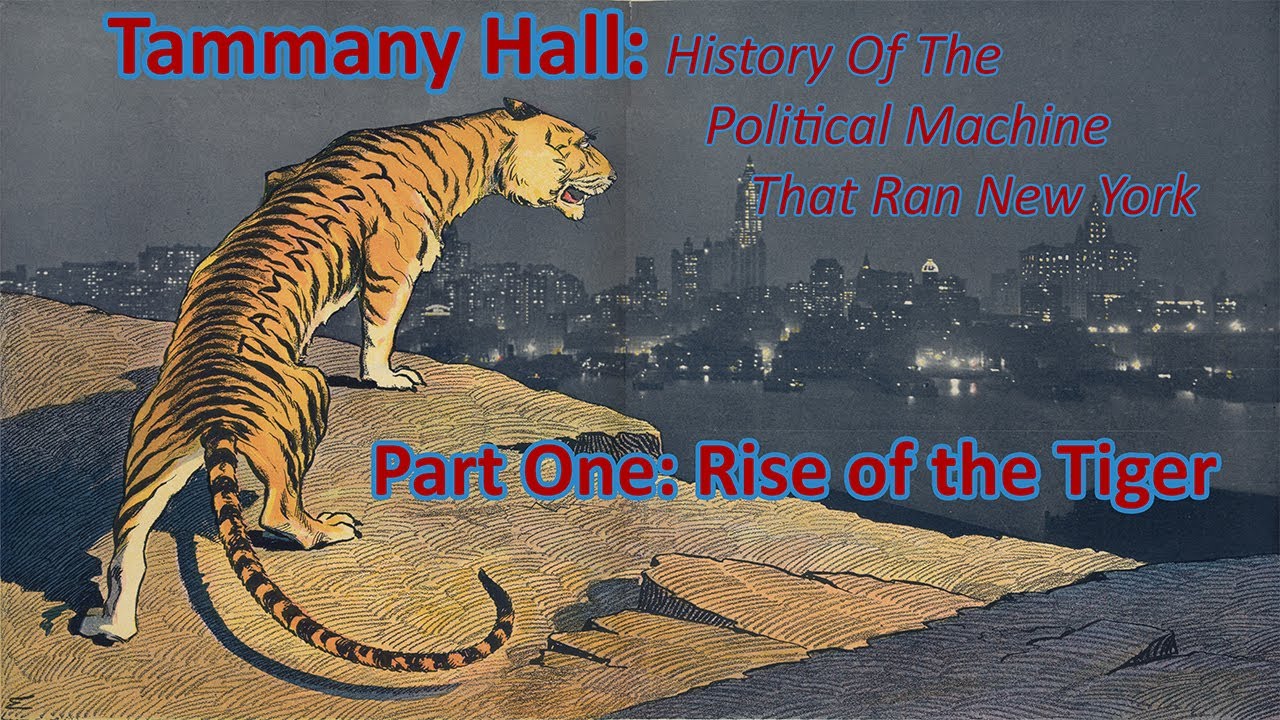
Tweed had political ambitions, so he became a member of the Oddfellows, the Masons, and became a volunteer fireman with Engine Company number 12. At the time, volunteer fire companies competed for territory, and many were partners with violent street gangs. Each company had an ethnic flavor, such as Irish, German, or Italian with strong allegiances to their respective immigrant communities. Often serious emergencies would be ignored and property burned because the rival fire companies were too busy fighting each other. The city leaders had to fix the problem. So in 1848, state assemblyman John J. Riley joined Tweed and others to create the Volunteer America's Fire Company number six, also known as the Big [music] Six. Their emblem was a Bengal Tiger, which became the symbol for both Tweed and Tam [music] Hall.
Tweed became known for his violence and intimidation using an axe during these confrontations between fire departments fighting for territorial control. He was seen as a reliable leader and was elected foreman of the big six. However, many people deplored his overt violence as it drew attention and chief engineer Alfred Carlson had Tweed removed from the company. But the fire companies, much like the police department, were fertile recruiting grounds for political parties at the time. And the Democratic politicians who ran the seventh ward promoted Tweed as alderman in 1850 at just age 26. He was elected to the United States House of Representatives in 1852, serving one term. Tweed was the kind of man they wanted. Afterward, he rose in prominence in the executive committee of New York City's Democratic Party organization called Tam Hall in 1856, starting his reign in city government, politics, and business.
Tweed himself was the central figure on the New York County Board of Supervisors in 1858 when he became the head of Tam Hall. Tweed joined the 40 Thieves, the most corrupt politicians in the city's history. Tweed joined the New York County Board of Supervisors, which had 12 members, six appointed by the mayor and six being elected. And Tweed fit right in. The board forced all businesses to pay a 15% tax to get contracts. The board had six Democrats and six Republicans, but Tweed often paid off a Republican to sway the board, such as when he bribed coal dealer Peter P. Vorhees, who received $2,500 to be absent for a critical vote along with Henry Smith. Tweed owned them, and he managed to have his friends who owed him appointed to other important city and county positions, which became known as the Tweed Ring. By 1860, Tweed chaired Tamonn Hall's general committee controlling the Democratic Party's nominations and appointments to all positions. Tweed's corruption even extended to Judge George C. Barnard, who certified him as an attorney, despite Tweed having no legal training. Tweed then opened a law office on Dwayne Street and received large fees from various corporations for his legal services. He ran for sheriff in 1861 and lost, but he became the chairman of the Democratic General Committee and was then chosen to be the head of Tam's general committee in January 1863.
The New York draft riots of 1863 displayed Tweed's moral bankruptcy as he did nothing to stop the violence against black residents. [music] Some Tam Hall crooks fueled anti-black sentiment to protect their Irish voter base. Afterward, Tweed helped pay for damages as a political gesture. He was also elected to the New York State Senate in 1867. And he became involved with the New York Mutuals, one of the first professional baseball teams, bringing in thousands of dollars per home game, by increasing admission cost [music] and gambling on the team. He started the practice of spring training in 1869 by sending the team to New Orleans. In 1868, he became a state senator and the Grand Satchum, principal leader of Tamony Hall, and he dominated the Democratic party in both the city and the state, having his various candidates elected as mayor of New York City, governor and speaker of the state assembly. Tweed took control of the New York City government after the election of 1869. His protetéé, former mayor John T. Hoffman, became governor, giving Tweed enormous influence at both the city and state levels. With support from industrialist Peter Cooper and the Union League club, Tweed pushed through a plan that returned power to city hall by dismissing the Republican state commissions. The move was secured with roughly $600,000 in bribes paid. Tweed's law firm extorted money by disguising bribery and kickbacks as legal fees. He then appointed himself deputy street commissioner, giving him direct control over contractors and city project funding. Tweed also purchased the New York Printing Company, which he turned into the city's official printer and bought the manufacturing stationers company as well. Together, these businesses formed a monopoly that routinely overcharged the city for goods and services, funneling public money straight into Tweed's pocket. Tweed accepted almost $100,000 in bribes from the Eerie Railroad in return for favors.
He also became one of the largest land owners of real estate in the city while creating the tweed ring with members holding public office such as George C.
Bernard, the recorder of New York City, Peter B. Sweeney, who was then New York County District Attorney, and Richard B.
Connley, the city comproller, along with several other members of the Tweed Ring.
They systematically plundered New York City of sums estimated at between30 million and $200 million. One bill charged $41,000 for brooms. Another $179,000 for chairs. Ridiculous even by guilded age standards. For example, the construction cost of the New York County courthouse begun in 1861 grew to nearly $13 million, about $360 million today. Tweed owned a marble quarry in Sheffield, Massachusetts, providing the marble. More corruption followed after the Tweed Charter to reorganize the city's government was passed in 1870. Four commissioners for the construction of the New York County Courthouse were appointed. The commission never held a meeting, though each commissioner received a 20% kickback from the bills for supplies.
Friends received no bid contracts. A carpenter was paid $360,751, roughly $10 million today, for one month's labor in a building with very little woodwork. A plasterer got $133,187 or about $3.6 million today for 2 days work. Tweed and the ring then received kickbacks.
The Brooklyn Bridge project was a shady deal. State Senator Henry Cruz Murphy asked Tweed if New York's alderman would approve the proposal. Tweed's response was that $60,000 for the alderman would close the deal and contractor William C.
Kingsley delivered the cash in a carpet bag. Tweed and two others from Tam Hall also received over half the private stock of the bridge company. The charter of which specified that only private stockholders had voting rights. So that even though the cities of Brooklyn and Manhattan put up most of the money, they essentially had no control over the project. Tweed and Tam Hall also controlled elections and polling stations, often using thugs to intimidate immigrant voters, ensuring voting fraud at elections was rampant.
They bribed voters, intimidated opponents, and padded ballots to keep power. He used repeat voting and fake registrations, sometimes having the same man vote multiple times under different names. Tweed became the third largest land owner in New York City and a director of the Eerie Railroad, the 10th National Bank, the New York Printing Company, the owner of the Metropolitan Hotel, etc. He was a major stockholder in iron mines and gas companies, a board member of the Harlem Gas Light Company, the Third Avenue Railway Company, the Brooklyn Bridge Company, and the president of the Guardians Savings Bank.
He had it all. When Grand Sasham Isaac Fowler, who paid $2,500 to buy off the Republican Vorhees on the board of supervisors, stole $150,000 in post office receipts. United States Marshal Isaiah Renders, a tweed crony, was sent to make the arrest, but the fix was in.
Renders allowed Fowler to escape to Mexico.
After the New York City charter passed in 1870, Tweed created an audit board where he and his cronies could take control of the city treasury. The Tweed Ring then proceeded to milk the city through such devices as faked leases, padded bills, false vouchers, [music] unnecessary repairs, and overpriced goods and services bought from suppliers controlled by the ring. In true fashion, Boss Tweed's relationship with black New Yorkers was questionable, as he was supportive of them when it benefited him and then indifferent or even hostile when it didn't. Boss Tweed never took a moral or legislative stance on child labor [music] because he profited from it. Seeing he saw the problem not as a social issue but as an economic and political resource. Children working in factories, sweat shops, brickyards, and on the streets as boot blacks and news boys was [music] common. Child labor reformers such as Charles Luring Brace and Jacob Ree fought against it. But Tweed and his cronies prevented change that would harm profits. A prime example was Tweed's public image building schools, churches, hospitals, supporting orphanages, and expanding public works projects to make him seem philanthropic.
But every project relied upon cheap child and immigrant labor with the contractors belonging to Tam Hall. Tweed understood that in 19th century New York, the flood of Irish, Italian, and German immigrants represented political power waiting to be organized. Newly arrived immigrants, mostly poor, Catholic, and often illiterate, were met at the docks by Tamin agents. These Tam hallmen found them jobs, often in city departments or on public works projects, helped them find housing in overcrowded tenementss, provided food, coal, or money in emergencies, and offered legal assistance or bailed them out if they got into trouble, which was easy because Tweed controlled the police department.
In exchange, immigrants voted democratic, always for tamy candidates.
It was transactional, loyalty for survival, and that system still exists in Democrat cities today, much to their own detriment. Tweed also created a voter base when his ward bosses offered work to children of poor families. But it served several purposes. Voter dependency, profits, and enhancing his image were paramount. These exploited families became political supporters and Tweed's Tamony Hall was in serious conflict with the Children's Aid Society opposed to child labor. But Tweed's position on child labor was the same as his position on everything else. If it made money and votes, he was for it. If it cost either, he was against it. He did the same for blacks who often worked more cheaply than non-immigrant whites, especially immigrant Irish who competed with blacks for low-wage jobs and were openly hostile to them. Tweed benefited from it. The system worked both ways. It gave poor immigrants a political foothold and a sense of belonging, but it also trapped them in a cycle of dependency [music] on Tam Hall, much like being trapped in welfare today.
Reformers called it benevolent corruption. Help wrapped in chains. But boss Tweed was on borrowed time. By 1871, Tweed had become the most powerful man in New York, controlling city contracts, elections, and even state appointments. But his arrogance drew attention. Reformers had long suspected massive graft, and the New York Times finally got his hands on the city ledgers, showing the staggering overcharges on public works, especially the new county courthouse.
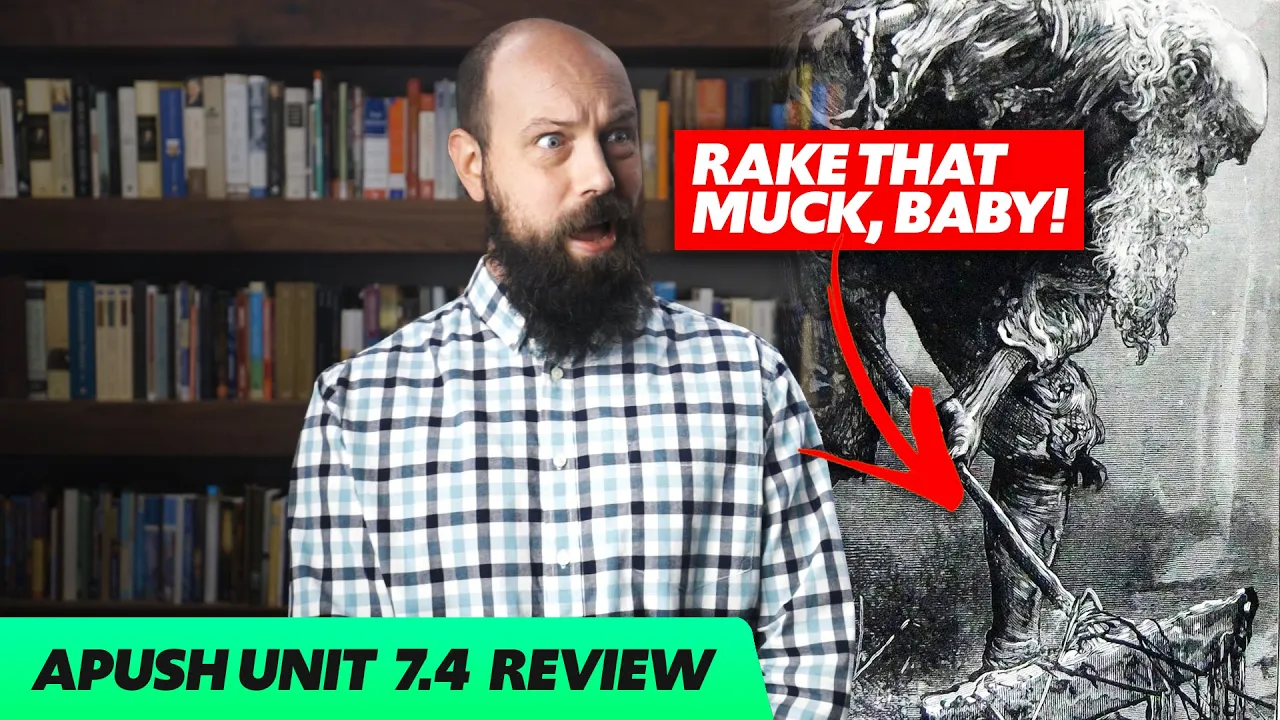
Thomas Nast, the political cartoonist at Harper's Weekly, attacked Tweed in his cartoons, creating a grotesque symbol of corruption. The bloated man in fine clothes surrounded by stolen gold. Tweed reportedly said, "Stop them damned pictures. I don't care so much what the papers say about me. My constituents don't know how to read, but they can't help seeing them damned pictures."
Public outrage spread fast. Reformers and rival politicians smelled blood. The committee of 70, a group of opposition and mostly Republican civic leaders and businessmen, organized to dismantle Tam's control. Although Tweed guarded Watson's estate in the last week before his death, and another ring member tried to destroy the records, the replacement auditor, Matthew Oor, an associate of former Sheriff James O'Brien, secured the books and turned them over to O'Brien. Tweed's image began to fall apart after the riot in 1870 after eight people died when a crowd of Irish Catholic laborers attacked the Irish Protestant parade. His public image decreased further after the Orange riot in the summer of 1871 which was even worse. Tammy Hall banned the parade of Irish Protestants celebrating the Battle of the Boone. After pressure was applied, Tweve gave it the green light.
The result was an even larger riot in which over 60 people were killed and more than 150 injured. In 1871, Tweed was still at the height of his political power, but county auditor James Watson, working in controller Dick Conny's office, kept the ring's books, and he had been approached by federal authorities. Watson died a week later after his head was mysteriously smashed by a horse in a sleigh accident on January 24th, 1871. An investigation of the bookkeeping saw a commission of six businessmen appointed by Mayor A. Oakley Hall, a Tam man, which included John Jacob Aster III, banker Moses Taylor, and others who benefited from Tam's actions. And they found that the books had been faithfully kept, letting the heir out of the effort to dethrone Tweed. But more problems surfaced when County Sheriff James O'Brien had tried to blackmail Tam by threatening to expose the ring's embezzlement to the press. And when this failed, he provided the evidence he had collected to the Times. Shortly afterward, county auditor Matthew J.R. Works supplied the additional details to the Times, which was reportedly offered $5 million by Tweed and Tamony not to publish the evidence. The Times also obtained the accounts of the recently deceased James [music] Watson, the Tweed Ring's bookkeeper. The paper published the records day after day, culminating in a four-page special supplement on July 29th titled Gigantic Frauds of the Ring Exposed. By August, Tweed had begun transferring ownership of his real estate empire and other investments to his family members. Tweed was arrested, charged, and released on $1 million bail. and Tweed was still reelected to the state senate in November of 1871 due to his personal popularity and influence. But in general, Tamony Hall did not do well and the members of the Tweed Ring began to flee the jurisdiction, many going overseas. At that time, Tweed was rearrested and charged with fraud, lararseny, and forgery. He resigned from his city position and was replaced as Tamy's leader. Once again, he was released, this time on $8 million bail. But Tweed supporters such as Jay Gould felt the repercussions of his fall from power and his empire crumbled. His allies turned on him and his fortune evaporated in legal fees and restitution claims.
Tweed's first trial in 1873 ended with a hung jury thanks to bribery and intimidation, but his second trial that same year convicted him on 204 counts of corruption. He was sentenced to 12 years in prison, later reduced to one year by a judge who was a Tam man. After serving time, the city sued him in a separate civil case for $6 million, which he couldn't pay. So, he was rearrested and jailed again. Then, in 1875, while under partial house arrest, Tweed escaped. He fled to Cuba, then to Spain using a fake passport. Ironically, he was recognized in Spain from a Thomas Nast cartoon. was arrested and then extradited back to New York. Back in US custody, Tweed tried to bargain for leniency by revealing how Tamy's corruption worked, [music] but the state wanted no part of a deal. He died in jail in 1878 at age 55 in the Lello Street Jail, reportedly [music] sick and broken. A former Titan surrounded by the wreckage of his own empire. Tweed's downfall didn't kill Tam Hall. It just mutated. The machine rebuilt itself under new bosses, continuing to dominate New York politics well into the 20th century.
Tweed became the cautionary legend, the face of unchecked political corruption and the reason Americans started demanding government reform and transparency laws. Today, many see modern-day comparisons in Democrat cities and states to the Tamin Hall days of Boss Tweed in New York, the master of graft and corruption.
Thank you for watching this episode of Forgotten History. If you liked what you saw, please click like, share, and subscribe. And if you would like to assist with the everinccreasing cost of production, please consider becoming a channel member and joining our Patreon page.
Thanks for watching.
Up Next

87:57
Irish in America: Al Smith's Rise from NYC Tenements
@vhsclassic90s
266.3K views•2011-09-29

93:30
Zola, Baudelaire, Maupassant & the Transformation of Paris, 1852-1900
@SylviaSagona
5.6K views•2015-05-31

12:11
King Leopold II and the Congo Free State Atrocities
@FORGOTTENHISTORYCHANNEL
219.1K views•2023-06-07

17:05
Understanding the Cold War: Superpower Conflicts and the Road to Détente
@OverSimplified
46.1M views•2019-01-24
Related Study Plans & Knowledge Roadmaps
Structured learning paths in History
history
Byzantine Iconoclasm: Theology, Art & Politics
01Foundations of Byzantium and Early Christian Images
02The First Iconoclasm: Leo III and the Crisis of Images
03Empress Irene, Nicaea II, and the Second Iconoclasm
+ 2 more learning modules
9h5 modules
Explore Roadmap
history
Iranian Revolution (Causes, Events & Legacy)
01The Pahlavi Dynasty and the Roots of Discontent
02The Spark of Rebellion and the Rise of Khomeini
031979: The Fall of the Shah and the Climax of the Revolution
+ 2 more learning modules
8h5 modules
Explore Roadmap
history
Mali Empire: Mansa Musa, Trade & Timbuktu
01Foundations of the Mali Empire
02The Trans-Saharan Gold and Salt Trade
03The Reign and Pilgrimage of Mansa Musa
+ 1 more learning modules
6h4 modules
Explore Roadmap
history
1947 Partition: Politics, Borders & Legacies
01Foundations of British India and the Divide
02The Political Negotiations and the Mountbatten Plan
03Drawing the Boundary: The Radcliffe Line
+ 2 more learning modules
8h5 modules
Explore Roadmap