















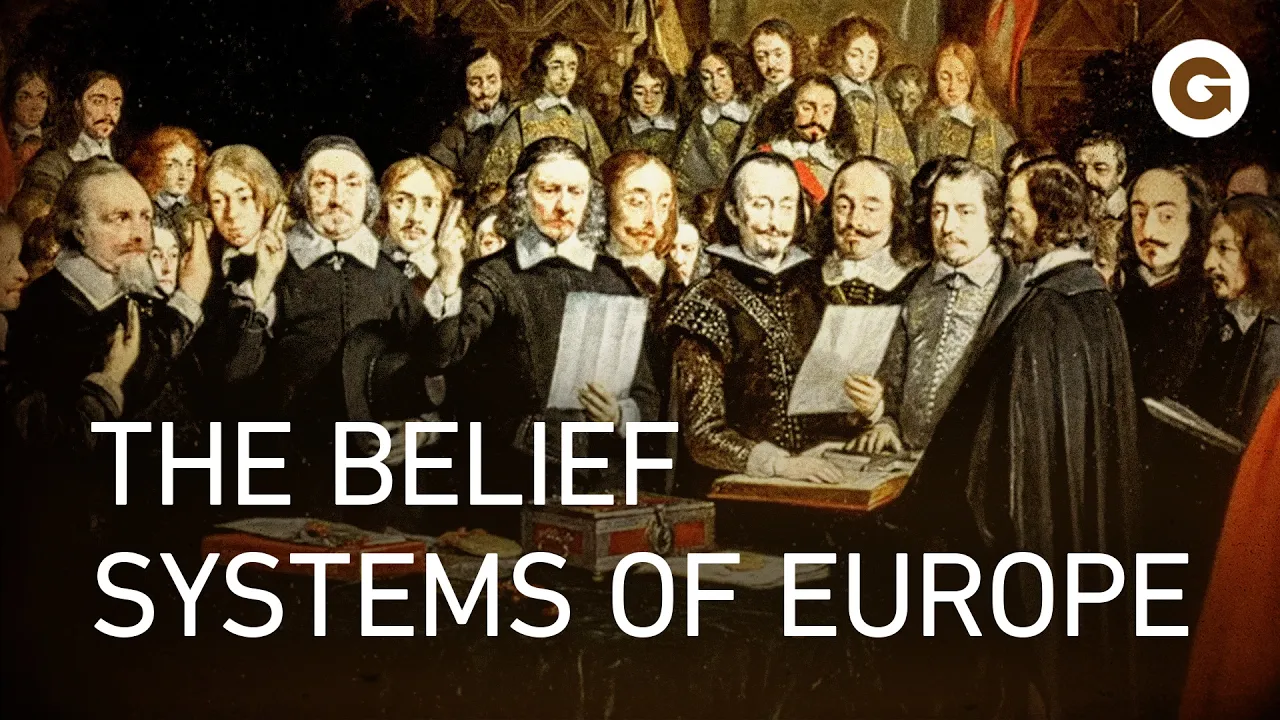
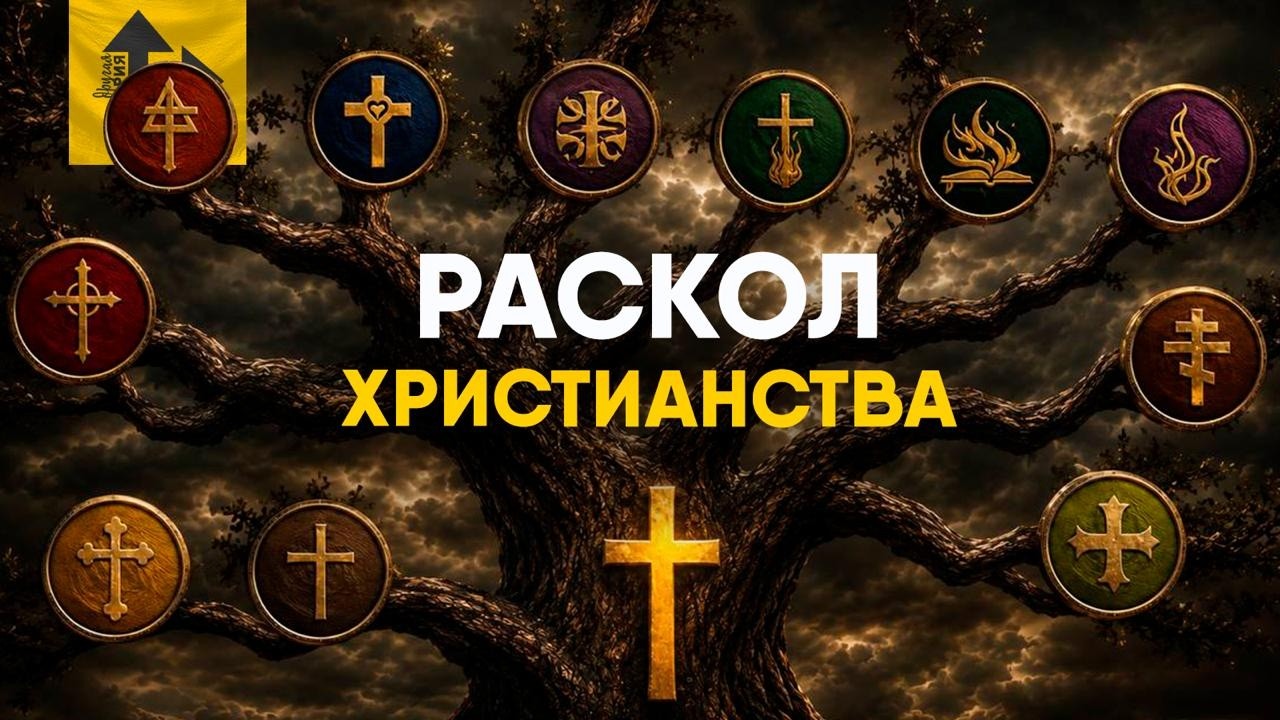
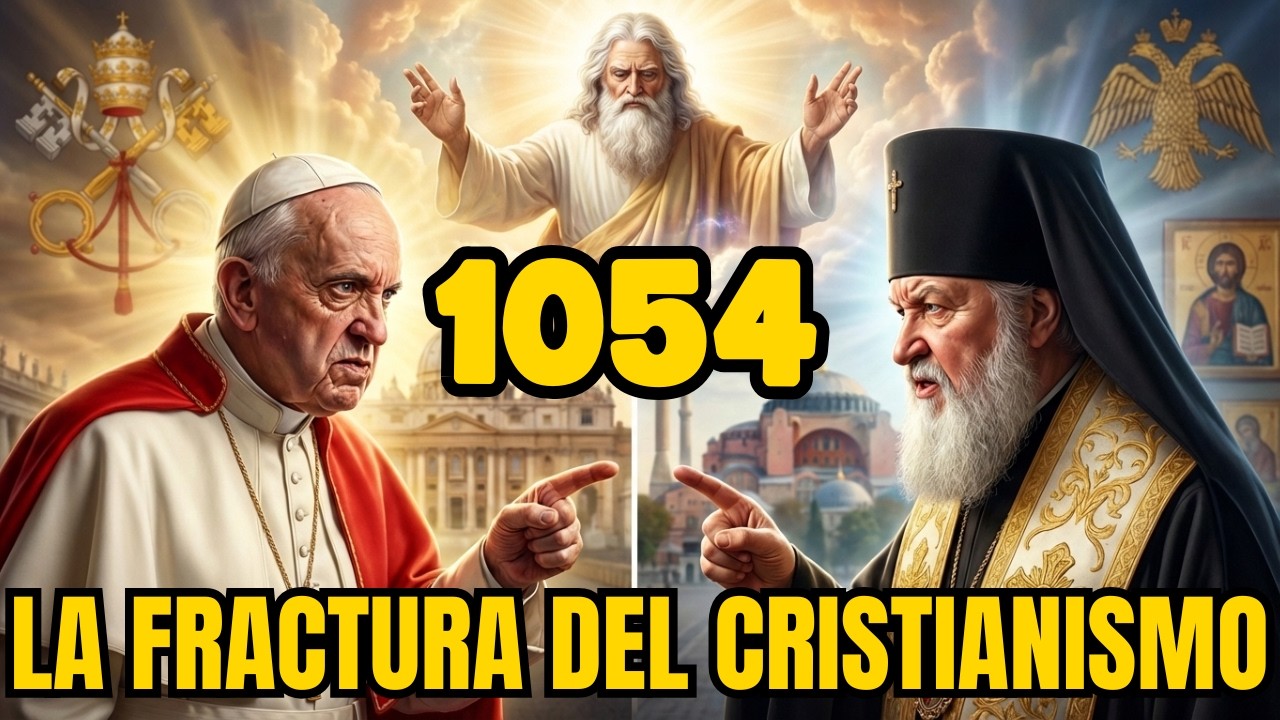


The Great Schism of 1054, which formally divided Christianity into Catholic and Orthodox branches, resulted from centuries of accumulating political, theological, and cultural differences between the Latin-speaking Western Church under the Pope in Rome and the Greek-speaking Eastern Church under the Patriarch in Constantinople, culminating in mutual excommunication when Cardinal Humbert placed an excommunication document on the altar of Hagia Sophia; this division was further exacerbated by events like the Sack of Constantinople during the Fourth Crusade in 1204, and has persisted to the present day despite modern efforts at reconciliation.
The Great Schism: Catholic-Orthodox Rivalry in Medieval Christianity
Added:The administrative and cultural division of the Roman Empire into the Western (Latin-speaking) and Eastern (Greek-speaking) Empires.
The early structure of the Christian Church, specifically the concept of the Pentarchy and the growing claim of Papal Supremacy by the Bishop of Rome.
The historical context of the early Ecumenical Councils (such as Nicaea and Chalcedon) which established core Christian doctrines.
The rise of the Byzantine Empire and the close relationship between the Byzantine Emperor and the Patriarch of Constantinople (Caesaropapism).
The long-term geopolitical consequences of the Fourth Crusade, specifically how the weakening of Constantinople facilitated the eventual rise of the Ottoman Empire.
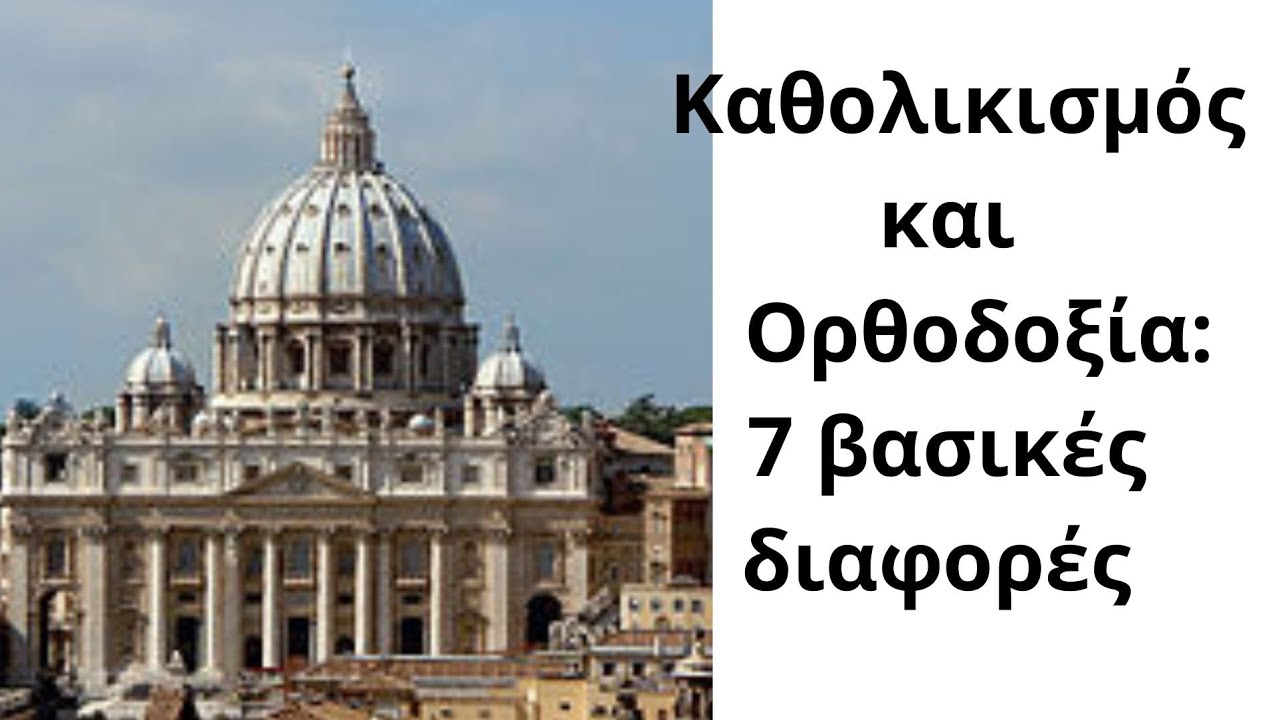
The theological and liturgical distinctions that persist today between Roman Catholicism and Eastern Orthodoxy, such as the 'Filioque' clause, purgatory, and papal infallibility.
The historical development of Eastern Orthodoxy after the fall of Constantinople, including the rise of Moscow as the 'Third Rome' and national autocephalous churches.
Modern ecumenical movements and dialogue aimed at reconciliation, such as the Joint Declaration of 1965 which rescinded the mutual excommunications of 1054.
2.6M views67.1Klikes19:41Original Release: 2020-02-06
Throughout the high middle ages, Christian civilization was notoriously divided. In one camp was the Catholic west, where the Pope in Rome reigned spiritually supreme, in the other, the Orthodox East, dominated by the Holy Patriarch of Constantinople. In this video, we will explain how the Eastern and Western halves of the Christian World drifted apart from one another, and ultimately, became two of the most bitter rivals of the medieval world.
Shoutout to atWar for kindly sponsoring this video! atWar is a free online strategy game in the best traditions of Risk, Civilization and Axis & Allies. atWar is multiplayer and browser-based, with no download required. Master the art of strategy fighting against other players for world domination on highly detailed maps with hundreds of cities and countries. Create your own maps, scenarios, and units based on real or fictional conflicts of the past, present or future. atWar features unique free troop movement, unrestricted by rigid movement paths. The game's warfare takes place on a massive scale with up to 20 players involved, dozens of different units, in-game politics and diplomacy options, Coalitions, Tournaments and much more to discover. Support our channel and this great indie strategy game, that we promise you will enjoy, by playing the game via the link the description!
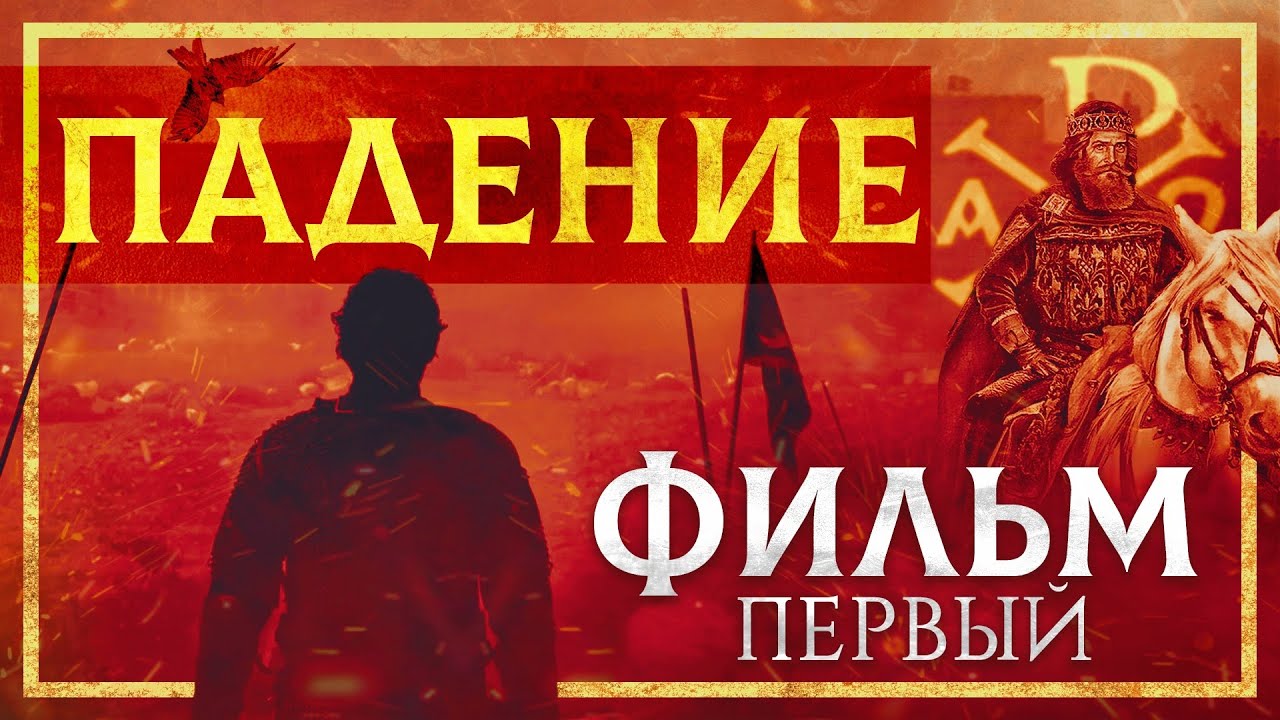
In the year 285AD, the Roman Empire stretched from Northern England to the Upper Nile. The Imperium was becoming too big to rule, and the Crisis of the Third Century had nearly seen it buckle under its own weight. As a response, Emperor Diocletian made the fateful decision to split the Empire into administrative halves. It was a divide made on cultural lines, for the Western Roman Empire was comprised of a predominantly Latin speaking population, while in the Eastern Roman Empire, known posthumously as the Byzantine Empire, classical Greek was the language of prestige. Meanwhile, a young religion born in Judea was rapidly spreading throughout the Mediterranean. While the early Christian movement endured wanton oppression at the hands of various Roman emperors, especially Diocletian, their fortunes changed when Constantine the Great arose as Emperor of both East and West, and legalized their faith. Christianity quickly supplanted the pagan Gods of old, and became the dominant religion of the Empire. By the 4th century, the four most important Christian Churches existed in Antioch, Alexandria, the old capital of the west in Rome, and the shining new capital of the east - Constantinople. In 476, after decades of decline, the Western Roman Empire fell not with a bang, but a whimper. Presiding over its corpse was a panoply of Germanic tribes, long considered by the Romans to be the barbaric bogeymen beyond the borders of civilization. These tribes settled into their newly conquered lands with relative ease, adopting the Christian Faith and the Latin language of their subjects.
Meanwhile, the Eastern Roman Empire remained wholly intact, while their capital in Constantinople [became?] a hub of classical culture and education. Not only did they now consider themselves to be the sole heirs of the Roman Empire, they saw it as their burden to reunify the lost territories by retaking the west from “Barbarian hands”. In this, Emperor Justinian was the most successful, as his conquests saw most of the former western Empire, including all of Italy, brought under his rule. Byzantine supremacy was not to last, as in the 7th century, an unexpected threat arose out of the southern deserts. The Arabs of the Rashidun Caliphate, embodying a new religion - Islam - swallowed up the southern half of the Mediterranean. This had a polarizing effect upon Christendom, for Antioch and Alexandria were now in Muslim hands. There were now only two major centers of Christianity, one in Rome, and one in Constantinople, making it inevitable that the two would eventually feud over which one was the ultimate ecclesiastical authority in Christendom.
While the Holy Patriarch in Constantinople was a massively influential man, formally speaking, the Bishop of Rome, known otherwise as the Pope, was the highest power in the Christian world. Established in the era of Imperial Rome, the Papacy had maintained a relatively peaceful coexistence with the Christianized Barbarians in its midst after the fall of the Western Empire. Meanwhile, back in the 6th century, the Germanic Lombards had swept into Italy and conquered most of the Byzantine holdings in the peninsula.
However, the Eastern Emperors had managed to retain the city of Rome, and through it, political control over the Papacy. The Byzantines hoped that through the Church in Rome, they could maintain spiritual and cultural primacy over the Germano-Latin west.
For over two centuries, the Pope, for all his spiritual power, dared not defy the will of Constantinople. In fact, rarely would one become Pope in the first place without approval from the Emperor. However, this control would not last, and friction soon developed between the Empire and the Church. In 726AD, Emperor Leo III forbade the worship of images and icons of Christ. This movement, known as Iconoclasm, was vehemently opposed by the Pope, and served as a watershed moment in the Papacy gravitating away from Constantinople.
In the year 751, the Lombards conquered Ravenna, the last Eastern Roman holding in the North of Italy. The fierce Germanic warriors turned their attention south, and threatened to attack Rome. By now, the Papacy had become thoroughly disillusioned by the Byzantines, so they turned away from their Greek benefactors, and looked westward for help. It is here that the Franks enter the story. As one of the many Germanic tribes that had settled in Roman territory following the collapse of the West, they had quickly risen to eminence. Under the Kings of the Merovingian Dynasty, the Franks had come to conquer much of modern-day France and Germany, during which time they had converted to Latin Christianity.
The current King of the Franks was Pepin the Short, who had deposed the last Merovingian Monarch to form his own dynasty- the Carolingians. It was to Pepin whom the Pope called for aid against the invading Lombards. King Pepin was happy to oblige, and with his army drove back the encroaching enemy. Taking his piety one step further, he declared that the strip of land from Rome to Ravenna was not to be returned to the Byzantines, but instead gifted magnanimously to the Papacy, laying the foundation of the Papal states, a sovereign Kingdom ruled from Rome by the Pope himself. Owing to the Donation of Pepin, the Pope was now functionally the King of an independent Kingdom in central Italy, albeit under Frankish purview. This was a seminal moment in the history of Christianity. From here, the Papacy continued to gravitate towards the Franks for protection, and the Byzantines turned away from the Pope and towards the Patriarch in Constantinople for religious legitimacy.
The rift between Eastern and Western Christianity was slowly widening.
In the year 797, a fateful figure rose to power in Constantinople. She was Irene, Empress of the East, and one of the most powerful women in early medieval history. In truth, she had been in power for 17 years already, ruling as regent for her young son, Emperor Constantine VI. The relationship between mother and son was anything but harmonious, and the two were perpetually locked in a bitter struggle for power. In 797, Irene dropped the pretense of co-rulership, and had her son’s eyes gouged out, deposing him entirely and becoming sole ruler of Eastern Rome. Irene’s rule was a productive one, and her most notable act was to end the iconoclasm controversy that had plagued Constantinople for decades. In theory, this should have pleased the Pope in Rome, but in reality, the reign of the iron-willed Empress simply provided a catalyst that would further the divide between the two halves of the Christian world. In the West, the rising star known as Charlemagne was proving to be a champion of Christianity. The King of the Franks had conquered the Saxons and the Avars, introducing these pagan peoples to the faith of the Roman Church. While conquering Italy, Charlemagne had taken territory in the south at the expense of Constantinople, but had adhered to the will of his father, King Pepin, and respected the sovereignty of the Pope’s domain. Needless to say, the ambitious warlord was quickly becoming a favorite of the Papacy. In the winter of 800 AD, Pope Leo III invited Charlemagne to Rome, and on Christmas Day, crowned him as Augustus - Emperor of Rome.
It was a mutually beneficial arrangement. With support from the Pope, the newly christened Emperor gained spiritual legitimacy to rule his large, multiethnic domain, while the Pope gained a powerful protector against any threats to his religious and temporal interests.
There was, however, a small hiccup in this plan. Ever since the fall of the old Western Empire, the Emperors in Constantinople had been the only sovereigns in Christendom with the legitimacy to style themselves as Roman Emperors. Their sole ownership of this prestigious title remained unchallenged by the barbarian Kings of the west for 300 years. Now, however, there was no Emperor in Constantinople, but an Empress. The Pope argued that, as women were unfit to rule, the position of “Roman Emperor” was technically vacant, which gave his champion Charlemagne every right to claim a title that was currently not in use.
Naturally, this development infuriated Empress Irene, but there was not much she could do to exert her power over the west while struggling to maintain her own Empire’s borders against the encroachments of Bulgars and raiding Arabs. Allegedly, she tried to enter into a marriage alliance with Charlemagne to preserve her prestige, but this was foiled by Aetios, her favored eunuch adviser, who derailed the union in a bid to maintain his power in court.
In 802, Irene was deposed by the nobles of Constantinople, and exiled to Lesbos. She was replaced by Nikephoros. Naturally, neither the Papacy or the Frankish King relinquished their claim on the Imperial title following this development, and for the first time since antiquity, there were two Roman Emperors once more. The Holy Roman Empire, a nation that would endure for another 1,000 years, existed forevermore an indignation to the Emperors of Constantinople. In function, Charlemagne’s coronation was the death blow to any hopes of political unity between the two halves of Christendom.
Although the Eastern and Western Empires were now separated secularly, in theory, the Church they both adhered to was still one united body, with the Pope in Rome as its ultimate authority. In practice however, political interference between the Frankish and Greek Emperors often caused disharmony in religious affairs. In 863, a political rift known as the Photian Controversy erupted over the right of the Eastern Roman Emperor to depose and appoint the ecclesiastical Patriarch of Constantinople without the approval of the Pope; after all, the Pope was the highest Christian authority, and Church positions could not be interfered with without his input. This event ended in a tenuous compromise, with the Pope recognizing the Emperor’s chosen Patriarch, and the Emperor paying lip service to the Pope.
Despite this, the illusion of unity continued to weaken, and soon, the last ecclesiastical tether feebly holding together the Christian world would finally snap. Over the centuries, eastern and western Church rituals had developed slight deviations from one another. The Latin rite used unleavened bread to represent the body of Christ, while the Greeks used yeast-risen bread in their Eucharist. The Latins adopted Filioque [fili o kwee], the theological belief that God the Son had a role in the procession of God the Holy Spirit, while the Greeks rejected this interpretation of the trinity, believing the Holy Spirit proceeded from the Father alone. Previously, the two Churches had more or less tolerated each other’s practices. This changed at the turn of the millennium, when the Normans ventured down into southern Italy. The Latin speaking Knights conquered the Eastern Roman holdings in Apulia, and ingratiated themselves with the Pope, who saw in them an opportunity for political gain. Having formally been Byzantine-run, the Churches in the Normans’ new territory practiced the Greek rites. In 1053, the Papacy declared that these Churches had to convert to the Latin rite, or be forced to close. The Ecumenical Patriarch of Constantinople was thoroughly enraged by this, and in retaliation ordered the closure of all Latin Churches in the Eastern capital. To deal with what was quickly becoming a diplomatic crisis, the Pope sent Cardinal Humbert [french] of Silva Candida to Constantinople, who, on July 16th, 1054, laid a letter of excommunication to the Patriarch on the altar of Hagia Sofia, the greatest Church in eastern Christendom. This was the most extreme insult the Latins could possibly have delivered. In response, the Patriarch and Emperor Constantine IX excommunicated Humbert and his legates in turn, and officially divorced themselves from the ecclesiastical authority of the Pope in Rome. This was the final schism, Eastern and Western Christianity were officially, and totally severed, while the Latin and Greek worlds had never been more divided. The chroniclers of the high middle ages described their religious counterparts with unflattering prose. Eastern authors imagined the hardy lands of Western Europe producing only the most brutish, backwards and warlike of barbarians.
Western Chroniclers described the wealthy lands of Byzantium as full of hedonistic, two-timing, no-good schemers, while both sides described the other as schismatic heretics.
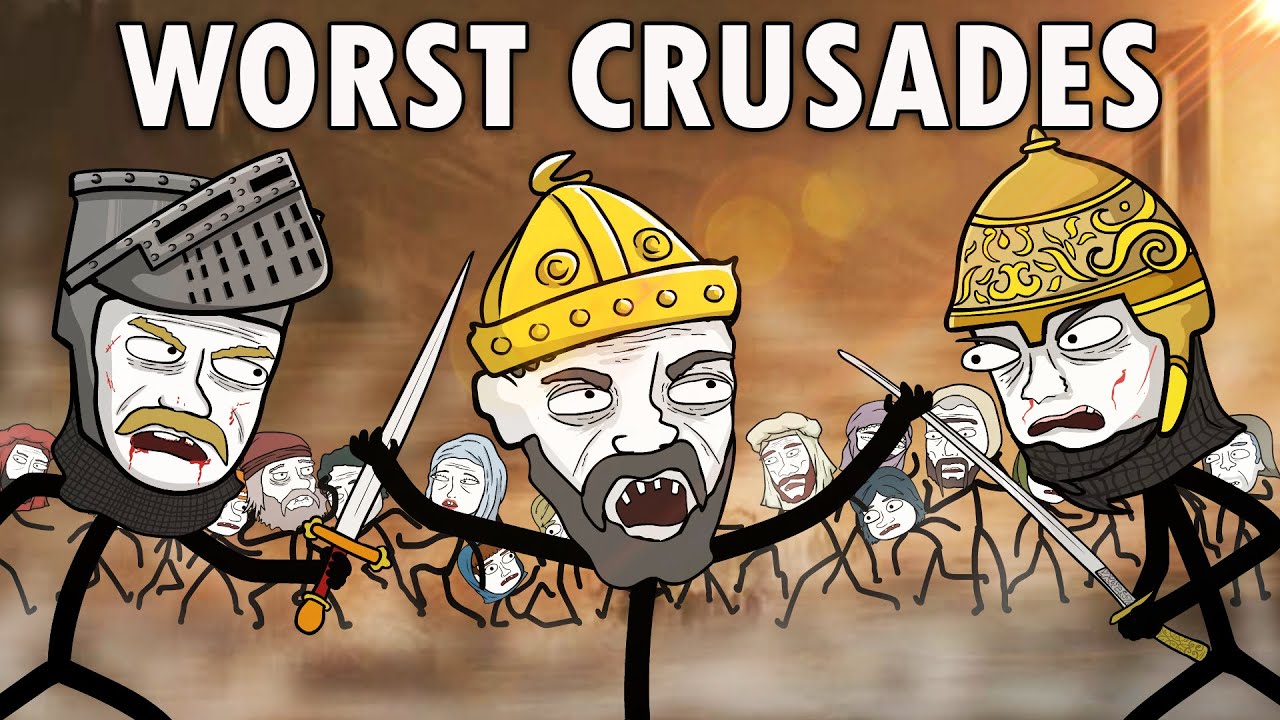
With that said, relations between the two peoples after the great Schism were often cordial as well. At the beginning of the 12th century, the Norman Kingdom of Sicily had become a unique specimen of a realm where Byzantine Greeks and Northern Latins lived side by side in relative harmony. It is important to note that the common folk were rarely affected by the feuding of Popes, Patriarchs and Emperors, and lived peaceful lives unaffected by ecclesiastical or political conflict. With that said, the turn of the 13th century would see a deterioration of these public relations. By the late 1100s, there existed a well-established community of Italian Merchants within the walls of Constantinople, primarily from the Republics of Genoa, Pisa and Venice. While these Latin traders lived amicably among the Greeks for a time, relations quickly began to deteriorate. The locals began to resent the fact that the Italians had a near total monopoly on seabound trade, and were accumulating vast land estates at the expense of the natives. With their economic livelihood imposed upon, the Greeks took to dredging up old religious rhetoric, making a row about the Latins’ status as traitors to their church. In 1182, tensions boiled into a riot, and an angry mob of Constantinople’s population stormed into the city’s Latin quarter, massacring the Italian population in a racially motivated pogrom. This event led many in Latin Christendom, who already saw the Eastern Romans as troublesome heretics, to now label them as blatant enemies of the west. In the year 1204, a Latin Crusade, headed originally for Egypt, was diverted to Constantinople at the behest of an exiled Byzantine Prince, who promised them riches in return for their help in reclaiming his rightful throne. The grim end of this tale is already well known to many, and we have covered it in a previous video. Suffice to say, when debts were not paid, and diplomacy crumbled, the Latin Crusaders committed one of the worst human atrocities in medieval history. Remembering the massacre of their countrymen twenty years earlier, the Crusaders raped, looted and slaughtered the innocent people of Constantinople for three days, before dividing the Byzantine Empire among themselves. The Sack of Constantinople was ultimately the culmination of centuries of deteriorating relations. From that point on, any hope of reconciliation between the two branches of Christianity was dead in the water. In the centuries that followed, the two schismatic churches that had dominated medieval politics turned their attention away from each other. In the east, the Byzantines would later reclaim their capital, but tired and broken, they were conquered by the rising Ottoman juggernaut, and the center of the Orthodox church moved North, to Moscow. Turkish domination was a fate many Eastern Christians accepted duly, for relatively tame Muslim overlordship of the time was surely better than the atrocities of Latin rule.
In the west, reformations were the order of the day, as the Protestant movement gained traction, and the Catholic Church found itself rocked to its foundations. In time, western Europe was too busy tearing itself apart in a revolutionary fervor to concern itself with the Christians of the East. To this day, the Catholic and Orthodox churches remain separated from one another, and while modern relations are cordial, it can be safely assumed that they will forever remain two culturally, linguistically and politically distinct branches of Christianity.
We always have more stories to tell, so make sure you are subscribed to our channel and have pressed the bell button. We would like to express our gratitude to our Patreon supporters and channel members, who make the creation of our videos possible. Now, you can also support us by buying our merchandise via the link in the description. This is the Kings and Generals channel, and we will catch you on the next one.
Up Next
6:19
The Second Council of Nicaea 787: Icons, Incarnation, and Doctrine
@TheHelpfullChristian
211 views•2026-01-16

33:02
The Great Schism of 1054: Causes and Consequences
@SacredCathedrals
113.5K views•2026-02-19

14:21
Mansa Musa: The Richest Person in History? | Mali Empire Wealth
@KingsandGenerals
539.4K views•2021-11-14
17:05
Understanding the Cold War: Superpower Conflicts and the Road to Détente
@OverSimplified
46.1M views•2019-01-24
Related Study Plans & Knowledge Roadmaps
Structured learning paths in History
history
Byzantine Iconoclasm: Theology, Art & Politics
01Foundations of Byzantium and Early Christian Images
02The First Iconoclasm: Leo III and the Crisis of Images
03Empress Irene, Nicaea II, and the Second Iconoclasm
+ 2 more learning modules
9h5 modules
Explore Roadmap
history
Iranian Revolution (Causes, Events & Legacy)
01The Pahlavi Dynasty and the Roots of Discontent
02The Spark of Rebellion and the Rise of Khomeini
031979: The Fall of the Shah and the Climax of the Revolution
+ 2 more learning modules
8h5 modules
Explore Roadmap
history
Mali Empire: Mansa Musa, Trade & Timbuktu
01Foundations of the Mali Empire
02The Trans-Saharan Gold and Salt Trade
03The Reign and Pilgrimage of Mansa Musa
+ 1 more learning modules
6h4 modules
Explore Roadmap
history
1947 Partition: Politics, Borders & Legacies
01Foundations of British India and the Divide
02The Political Negotiations and the Mountbatten Plan
03Drawing the Boundary: The Radcliffe Line
+ 2 more learning modules
8h5 modules
Explore Roadmap