














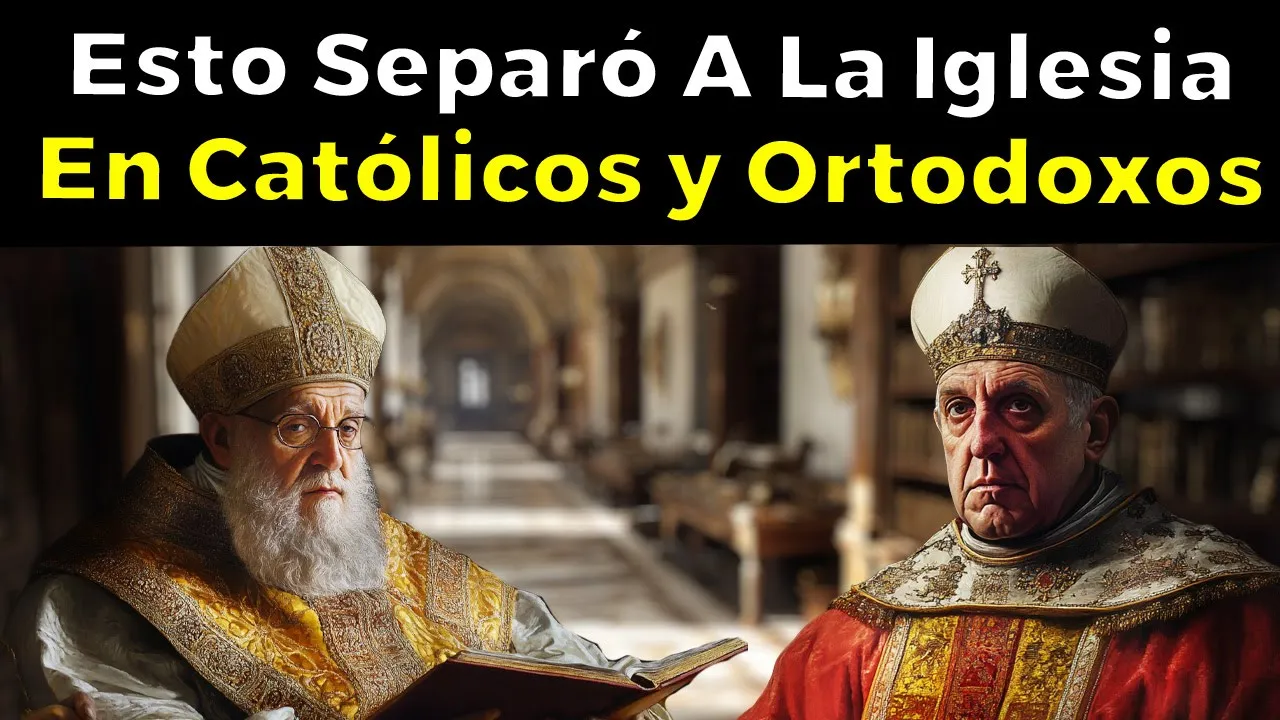


The Great Schism of 1054, which split Christianity into Roman Catholic and Eastern Orthodox churches, resulted from centuries of accumulated tensions including cultural differences (Latin vs. Greek), theological disputes (particularly the Filioque addition to the Nicene Creed), political power struggles between the Pope and Patriarch, and the transformation of the papacy into a secular power after the fall of the Western Roman Empire. The schism was formally triggered when Cardinal Hbert placed an excommunication document on the altar of Hagia Sophia in July 1054, though Pope Leo IX had already died three months earlier, raising questions about its canonical validity. The division was further deepened by the sack of Constantinople in 1204 and the fall of the Byzantine Empire in 1453, and was only partially healed in 1965 when Pope Paul VI and Ecumenical Patriarch Athenagoras I lifted the mutual excommunications.
The Great Schism of 1054: Causes and Consequences
Added:On a Saturday afternoon in July of 1054, a French cardinal named Hbert walked into the Hajia Sophia, the most sacred church in the Eastern Christian world.
Afternoon prayers were about to begin.
Hundreds of worshippers were gathered inside. But Hbert had not come to pray.
He marched straight up to the main altar, placed a document on it that excommunicated the patriarch of Constantinople, turned around, and walked [music] out. At the door, he shook the dust from his feet and shouted a Latin phrase that translates to, "May God see and judge." What happened next would tear Christianity apart for nearly a thousand years. And here is the dark secret that most people never learn.
When Hbert placed that document on the altar, the pope who had sent him was already dead. He had been dead for 3 months. The excommunication that split the Christian world may have been completely invalid from the very start.
[music] Before we begin, we want to mention that everything in this video is based on our in-depth research from trusted sources. We have made every effort to ensure that our facts from dates and names to key events are as accurate as possible. [music] However, if you notice any mistakes or have additional insights, please let us know in the comments so we can update our findings.
The Great Schism. It is one of the most important and least understood events in all of Christian history. Most people know that Christianity eventually split into Catholics and Protestants during the Reformation. But 500 years before Martin Luther nailed his thesis to a church door in Germany, Christianity had already been ripped in half. The Greek Orthodox Church and the Roman Catholic Church, two traditions that today claim a combined two billion followers worldwide, were once a single unified faith. They shared the same creed, the same sacraments, the same Bible. So, how did one church become two? What drove them apart? And why, after nearly a thousand years, has the wound never fully healed? The answer is more surprising than you might think. Because it does not begin with a dramatic theological showdown. It begins with a map.
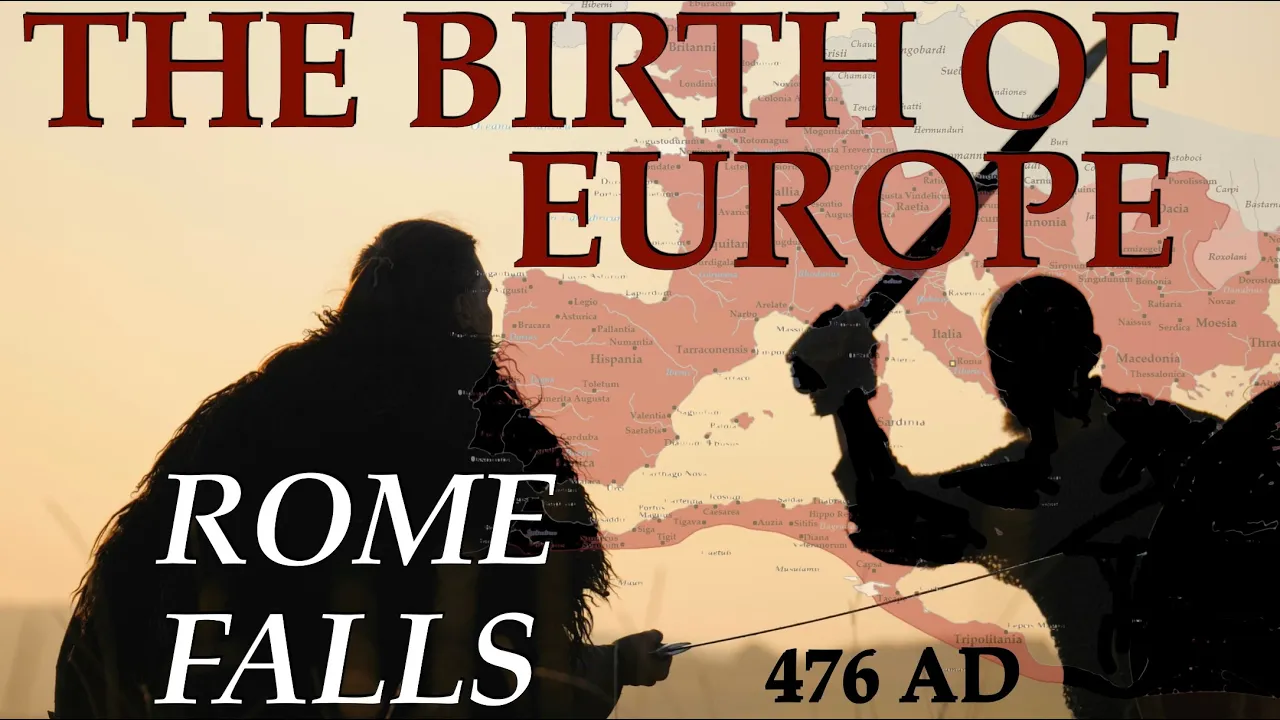
Back around 285 AD, the Roman Empire was the most powerful civilization on Earth.
It stretched from northern England all the way down to the upper Nile in Egypt.
At its peak, the empire covered more than 5 million square miles. To put that into perspective, the entire United States is only 3.8 million square miles.
Emperor Dialesian looked at this vast territory and came [music] to a simple conclusion. It was too big. Too many borders to defend, too many peoples to govern, too many languages to manage. So he did something no emperor had ever done before. [music] He split the Roman Empire into two halves. A western half with its center of power in Rome and an eastern half which would eventually center on a city called Constantinople.
This decision was purely [music] administrative. It was about logistics, not ideology.
Nobody at the time imagined it would have any impact on religion. [music] But it set in motion a chain of events that nobody could have predicted because once you divide an empire, you [music] divide its culture. And once you divide a culture, you begin to divide its faith.
Over the following centuries, the two halves of the empire grew apart in almost every way imaginable. The west spoke Latin, the east spoke Greek. two completely different languages which meant two different ways of reading scripture, two different ways of writing theology, two different ways of thinking about God. Western theology rooted in Roman law emphasized precision, [music] structure, hierarchy, and clear definitions. Eastern theology rooted in Greek philosophy emphasized mystery, beauty, contemplation, and spiritual experience. Both sides were Christian.
Both worshiped the same God. But they were slowly, almost invisibly beginning to worship him in different ways.
[music] Now in 330 AD, something happened that would reshape the Christian world forever. Emperor Constantine took an ancient Greek fishing village called Baantium and transformed it into a breathtaking new imperial capital. He called it Constantinople from the Greek words Constantinos and police meaning city, literally [music] the city of Constantine.
Over the next two centuries, Constantinople grew into one of the greatest cities the world had ever seen.
At its height, it had a population of more than 300,000 people. By comparison, the largest city in Western Europe at the time, Venice, had only 80,000.
London had perhaps 30,000. [music] Constantinople was not just a city. It was the city, the crossroads of the world, a hub of trade between Europe and Asia, a center of scholarship, art, philosophy, and most importantly, [music] Christian worship. Visitors described streets lined with marble, forums decorated with statues from ancient Greece and Rome, and libraries containing manuscripts that existed nowhere else on Earth. [music] And at its heart stood the Hagia Sophia, a cathedral so vast and so magnificent that when it was finally completed in 537 AD under Emperor Justinian, the emperor is said to have whispered, "Solomon, I have surpassed you."
Visitors said the great dome seemed to be suspended from heaven itself by a golden chain.
Before Constantinople rose to greatness, the young Christian faith was fighting for its very survival from within.
not from Roman persecution which had largely ended under Constantine. It was an internal crisis that threatened to destroy Christianity from the inside. In 325 AD, church leaders from across the Roman world gathered at the Council of Nika to confront a question so [music] dangerous it had already caused riots in the streets of Alexandria.
Was Jesus truly equal to God or was he something less? a created being, powerful and exalted, but not divine in the same way the father was divine. A charismatic priest named Aras had been teaching that there was a time before the sun existed, [music] that Jesus was the first and greatest creation of God, but still a creation not co-eternal, not equal. This [music] belief called Aryanism was spreading through the Eastern Church. It was not a fringe position. For a time, it was the majority view in parts of the empire.
Entire regions of Christianity were Aryan.
If Aryanism had won, the very concept of the Trinity as Christians understand it today would not exist. The stakes could not have been higher. The council responded by creating the Nyine Creed, a statement of faith meant to settle the question once and for all. It begins with the Greek word peumen, which means we believe. Every line was carefully chosen to establish what all Christians should hold to be true. 56 years later in 381, church leaders gathered again at the first council of Constantinople under the guidance of Emperor Theodocious I. They expanded the creed adding a crucial clarification about the Holy Spirit. The creed stated that the Holy Spirit proceeds from the Father and is equal to both the Father and the Son.
This language drew from scripture, particularly John 15:26, where Jesus tells his disciples that the spirit of truth comes from the father.
At that moment, every Christian in the known world, east and west, Greek and Latin, agreed on these exact words. They were the foundation of a shared faith.
But that agreement would not survive.
Centuries later, the Western church did something the Eastern Church would never forgive. They changed the creed and they did it with a single word. By the sixth century, many western theologians writing and thinking in Latin rather than Greek felt the original creed did not fully capture the relationship between the three persons of the trinity. They believed the holy spirit did not come from the father alone but from the father and the son together. To make this explicit, they added one Latin word to the creed filioquay which means and the son. So the creed no longer said the Holy Spirit proceeds from the father. It now said the holy spirit proceeds from the father and the son. In 598 at the council of Toledo in Spain, [music] the western church officially adopted this addition. The addition was meant as a clarification to make the full divinity of Jesus even clearer. But when the eastern church found out, the reaction was fury. They had two devastating arguments to make. First, the question of authority.
The creed had been written and approved at ecumenical councils, gatherings of the entire church. In 431 at the council of Ephesus, church leaders had explicitly and unanimously forbidden any further revisions to the creed. The west changed it anyway without calling a council, without consulting the east, without permission from anyone.
For the Eastern Church, this was not just a theological disagreement. It was a fundamental violation of how the church was supposed to work. It was one branch of Christianity claiming the unilateral right to alter what the whole church had agreed upon.
Second, the theology itself. [music] The Eastern Church believed that the father is the single [music] source, the single origin of both the son and the holy spirit. This preserved the unique primacy of the father within the trinity. In their view, inserting the words and the son confused the distinct roles of the three persons and undermined the father's unique position.
Western theology deeply shaped by the writings of the great theologian Augustine of Hippo [music] saw things very differently. Augustine had taught that the spirit proceeds from both the father and the son and this view had become foundational to Latin Christian thinking over the centuries.
Both sides could point to scripture.
Both sides were sincere and neither side was willing to back down. A seemingly small change, one word in Latin, had created two enormous problems. A crisis of [music] authority and a theological divide. And the gap between east and west would only continue to grow. What makes this so fascinating is that most ordinary Christians in both east and west had no idea any of this was happening. [music] They went to church.
They received communion. They prayed using the version of the creed their local bishop taught [music] them. The theological wars were being fought by scholars, patriarchs, and popes. While the average believer simply lived their faith. But the decisions made in those council chambers and papal [music] courts would eventually reshape the lives of billions.
After the fall of the Western Roman Empire in 476 [music] AD, the Pope in Rome found himself in a dramatically new situation. With no emperor in the west, the Pope began to fill the power vacuum. He became not just a spiritual leader, but increasingly a political figure, a ruler of territories, a broker of alliances.
In the east, [music] the emperor in Constantinople still reigned and the church existed within the framework of imperial authority. These were two fundamentally different models of how church and state should relate. In 482, Emperor Zeno and patriarch Aacius of Constantinople [music] attempted to resolve one of the era's most bitter theological disputes. Two [music] camps within the Eastern Church were at war over the nature of Jesus Christ himself. [music] The Chalsedonians held that Jesus had two distinct natures, both fully human and [music] fully divine, united in one person. The Myaphosites maintained that Jesus [music] had one united nature. To bridge this divide, Zeno and Acacius issued a document called the Hinaticon from the Greek word henosis, meaning union [music] or unity. It was deliberately written in vague, careful language, avoiding anything that might provoke [music] either side. But vagueness, it turned out, pleased no one. Pope Felix III in Rome saw the Hanoticon as a dangerous compromise on essential doctrine. If you blur the lines of what Christians believe, [music] he argued, you destroy the faith itself. In 484, he excommunicated Patriarch Acacius.
This sparked what historians call the Acacian schism, a split that lasted 35 brutal years before unity was finally restored in 519.
35 years where East and West refused to recognize each other. It was a clear warning sign. The bond between East and West could snap. And every time it [music] snapped, it became harder to put back together. Each break left scar tissue. Each reconciliation was a little less complete than the one before.
In the centuries that followed, the relationship continued to deteriorate.
Emperor Leo V 6th of Bzantium caused a scandal by marrying four times which violated Eastern church law. The disputes over his marriages drew in both church and state further muddying the line between spiritual authority and political power. Then came one of the most provocative acts in medieval history. On Christmas Day 800 AD, Pope Leo III placed an imperial crown on the head of Charlemagne, King of the Franks, and declared him emperor of the Romans.
Constantinople was outraged. In the eyes of the Byzantine Empire, there was already a Roman emperor, and he sat in Constantinople. [music] He had an unbroken line of succession going back to Augustus Caesar. The Pope had just created a rival emperor out of thin air, a barbarian king who could barely read Latin. This was not merely a political insult. It was, the Byzantines believed, an act [music] of schism within the empire itself. The creation of the Holy Roman Empire in the West instead of drawing Christians closer together pushed them further apart than ever. For the East, it confirmed their worst fear. The Pope was no longer content to be a spiritual leader. He wanted to be a kingmaker.
Meanwhile, the donation of Pepan had granted the pope control over large territories in central Italy, creating the Papal States. The Pope was no longer simply a bishop. He was now a head of state, commanding armies and governing lands.
This transformation of the papacy into both a spiritual and secular power fundamentally changed the dynamics of Christianity.
The Eastern Church looked at this development with growing alarm. In 867, another crisis erupted when patriarch Fodius of Constantinople was appointed without Rome's approval. But Fodius was no ordinary patriarch. [music] He was one of the most brilliant scholars of his age and he was not afraid of Rome.
He struck back by raising the Felio dispute as a weapon. Formerly accusing the West of heresy for altering the creed. For the first time, the Felio was not just a theological disagreement. It was being used as ammunition in a political war. Both sides issued excommunications. Although the immediate confrontation was eventually diffused, [music] the distrust it created never went away. It hardened into something permanent. Every generation inherited the suspicions of the one before and the list of grievances grew longer and longer. But here is something that most people overlook. The disputes between east and [music] west were not only about grand theology and papal authority. They were also about the everyday practices of ordinary Christian life. Things that may seem trivial to us but carried enormous symbolic weight at the time. The Western church used unleavened bread for the Eucharist, flat and plain, like the bread of the Jewish Passover. The Eastern Church used leavened bread, risen bread, [music] which they saw as a powerful symbol of the resurrection. To the east, [music] using unleavened bread seemed like a denial of the resurrection itself. To the west, [music] using leavened bread seemed like an abandonment of the tradition Jesus established at the last supper.
A dispute about bread became a dispute about what communion actually means. And it did not stop there. The West required all priests to be [music] celibate. The East allowed married men to become priests, though bishops had to be unmarried.
The West baptized by pouring water over the head. The East [music] insisted on full immersion three times, once for each person of the Trinity. Even the way priests wore their beards became a point of contention. Eastern priests wore long beards as a sign of piety. Western priests were clean shaven. It sounds almost comical. But each of these differences represented a deeper conflict about how to live out the Christian faith. Each side looked at the other and saw not just an alternative practice, but a corruption of the truth.
By the middle of the 11th century, [music] the situation had become a powder keg waiting for a spark. The spark came from an unexpected [music] source, the Normans. Norman warriors had been conquering southern Italy, a region that had historically been under Byzantine influence and home to many Greekeaking Christian communities. As the Normans took control, they [music] forced these Greek churches to either close or adopt Latin practices.
Greek priests [music] were told to shave their beards, use unleavened bread, and submit to Roman authority.
It was a humiliation that enraged Constantinople.
In 1053, Patriarch Michael Sarilius of Constantinople struck back. He ordered every Latin church in Constantinople to be closed. Every single one. And he did not stop there. He ordered that the consecrated unleavened bread used by the Latin churches be thrown into the streets and trampled underfoot.
According to the historian JB Barry, the patriarch's purpose was to cut short any attempt at reconciliation.
This was not a negotiating tactic. It was a declaration of war.
Pope Leo I 9th, who desperately needed Byzantine help against Norman invaders threatening southern Italy, sent a delegation to Constantinople led by Cardinal Hbert of Silva Candida. It was a fateful choice. Hbert was born around the year 1000 in Burgundy, France. He had entered a Benedictine monastery as a teenager and had risen through the ranks to become one of the most powerful men in Rome. He was a formidable scholar, fluent in both Latin and Greek, and an expert on church law. But he was also arrogant, inflexible, and contemptuous of anyone who disagreed with him. He had already written trackcts calling Eastern Christian practices heretical. One source records that he described Eastern Christians who allowed their priests to marry as being like prostitutes.
This was the man the pope chose to send as his ambassador of peace. He arrived in Constantinople not to seek compromise but to demand submission.
Emperor Constantine I 9th received Hbert warmly hoping for a productive alliance against their shared Norman enemy. But patriarch Serilarius refused to even meet the cardinal. [music] He would not grant Hbert an audience. He would not dignify his presence. Weeks of frustration followed. Hbert grew angrier by the day. And then on Saturday, July 16th, 1054, [music] during the celebration of the divine liturgy with the church full of worshippers, Hbert and two other legots stroed into the Hagia Sophia. They walked directly to the high altar and placed upon it a papal bull excommunicating the patriarch and all who supported what Hbert called his folly. The bull was filled with accusations, some of them absurd. Among other charges, Humber [music] accused the Greeks of removing the filioquay from the creed when in reality the Greeks had never added [music] it in the first place. It was Rome that had altered the original.
Hbert then turned and marched toward the door. At the threshold, he and his companions shook the dust of the cathedral from their feet, and they shouted in Latin, "May God see and judge." He returned to Rome, convinced he had won a great victory for the papacy.
4 days later, Patriarch Serillarius convened [music] a cinnid. He burned the papal bull, and he excommunicated Cardinal Hbert and his companions.
Notably, Serarius did not excommunicate the pope himself or the Roman church. It was a targeted response to specific individuals, but the damage was done.
The lines had been drawn. And now the dark secret. When Hbert placed that bull on the altar, Pope Leo I 9th had already been dead since April 19th, [music] 1054, nearly 3 months.
Some historians argue that without a living pope, a paple leot has no authority to act. The excommunication that is traditionally seen as the moment Christianity split may [music] have had no canonical validity at all. It may have been the unauthorized act of one furious man. And yet, it [music] became the symbolic fracture point for a billion Christians.
What makes this even more extraordinary is that at the time almost nobody noticed. The chroniclers of the era did not record the events of July 1054 as a major turning point. Negotiations [music] between Rome and Constantinople continued for decades. Eastern and Western Christians lived and worshiped side by side in many communities.
[music] When Pope Urban II launched the first crusade in 1095, he did so partly at the request of the Byzantine Emperor. There was no sense that the churches had formally split. The real schism was still taking shape slowly and silently.
And then came the catastrophe that made the division permanent. By the late 12th century, Latin merchants, particularly Venetians and Genoies, had become enormously powerful in Constantinople.
They controlled much of the city's trade and flaunted their wealth. Resentment among ordinary Greeks had been building for decades. In 1182, that resentment exploded in a violent anti-Latin massacre. Thousands of Western Christians living in Constantinople were killed. The survivors who fled back to Western Europe carried with them stories of Greek cruelty and treachery. When 22 years later, the armies of the fourth crusade found themselves at the gates of Constantinople, the memory of 1182 was still fresh. It did not excuse what came next, but it helps explain it.
In 1204, the armies of the fourth crusade attacked Constantinople. [music] Think about what that means. Christian soldiers who had taken holy vows to liberate [music] Jerusalem from Muslim control instead turned their swords on the greatest Christian city on earth.
The story of how this happened is a tale of debt, greed, and betrayal. [music] The crusaders needed ships to reach the Holy Land. Venice offered to build a fleet for 84,000 silver marks.
But when the crusaders gathered in Venice, far fewer arrived than expected, [music] and they could not pay. The Doge of Venice, Enrico Dandolo, a man who was old and blind, but possessed a ruthless cunning, saw his opportunity. Political turmoil in Constantinople provided a pretext. A deposed prince promised [music] the crusaders vast wealth if they would help him reclaim the throne.
The crusaders agreed. When the [music] promised money did not materialize, they decided to take it by force. On April 13th, 1204, the crusaders breached the walls. What followed was 3 days of unspeakable destruction. They stormed through the greatest city in Christrysendom, looting everything in sight. [music] Churches were ransacked, palaces were stripped bare. The altars of the Hagia Sophia [music] were smashed and their gold melted down. According to the Byzantine historian Nicadus [music] Choniats who was an eyewitness, the crusaders seated a prostitute on the patriarchal throne inside the Hajia Sophia where she sang body songs while soldiers drank and urinated on the sacred relics around her. Monks were slaughtered at their own altars. Nuns were assaulted. Priceless [music] manuscripts and artworks accumulated over a thousand years by generations of emperors and scholars [music] were burned, stolen, or destroyed.
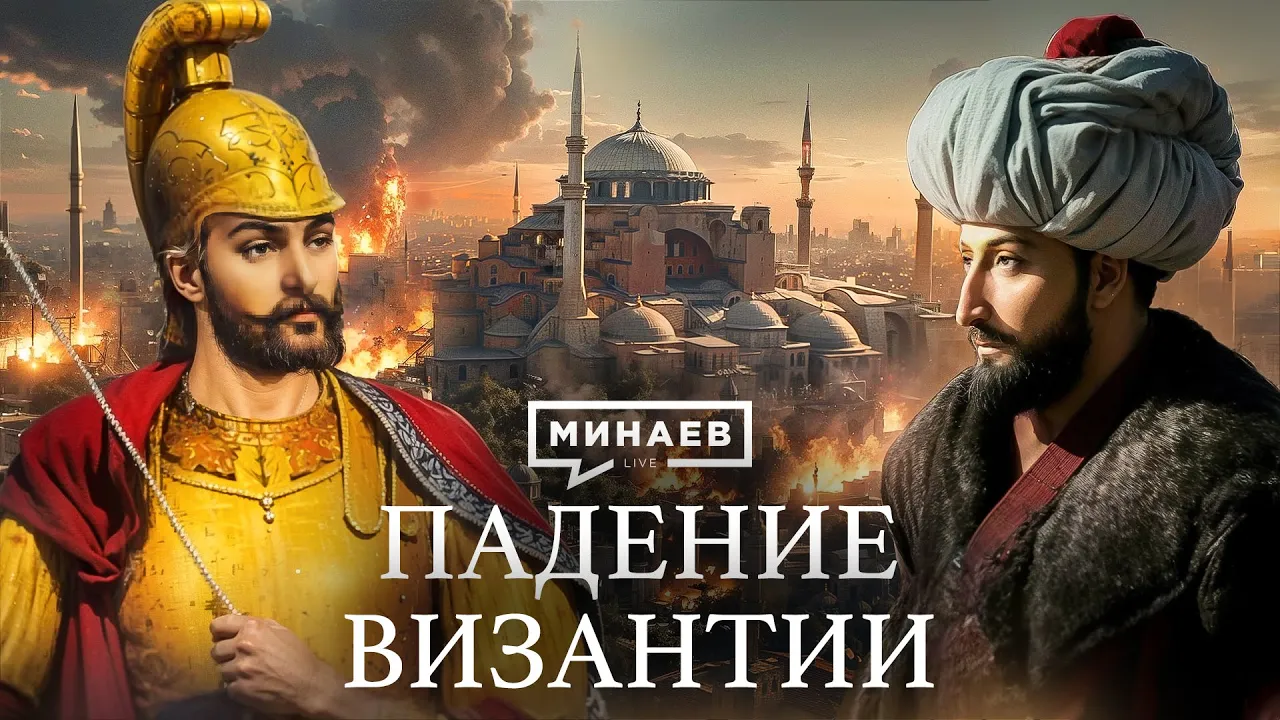
The famous bronze horses that had stood at the Hippodromeome for centuries were torn down and shipped to Venice [music] where they were mounted above the entrance to St. Mark's Basilica. They remain there to this day. The total value of the loot was estimated at 900,000 silver marks. Some chronicers noted this was seven times the annual revenue of the entire kingdom of England. The medievalist Sir Steven Ransomman wrote that there was never a greater crime against humanity [music] than the fourth crusade. The crusaders established a Latin empire in Constantinople that lasted until 1261 when the Byzantines finally managed to reclaim their capital, but the damage was permanent. The empire that had stood as a bull work of Christian civilization for a thousand [music] years was now a hollow shell stripped of its wealth, its art, its [music] confidence, and its trust in the west. Some historians have argued that the crusaders [music] by destroying Constantinople effectively destroyed the shield that had protected Europe from Eastern invasion. They weakened the one power that could have held back the Ottoman Turks. And in [music] 1453, the final chapter was written. Sultan Mamemed II, just 21 years old, laid siege [music] to Constantinople with an army of 80,000 men and a fleet of over 100 ships. The Byzantines, reduced to a fraction of their former strength, could muster only about 7,000 defenders. After nearly 2 months of siege, on May 29th, 1453, the Ottomans breached the great Theodocian walls that had protected the city for a thousand years. Emperor Constantine XI 11th, the last Roman emperor, died fighting on the walls. The Haga Sophia, the church where Cardinal Hbert had placed his excommunication four centuries earlier, was converted into a mosque. The ecumenical patriarch survived under Ottoman rule, but his authority was reduced to a shadow. He became in effect a subject of the Sultan. Far to the north, a new power was rising. Moscow, having embraced Orthodox Christianity centuries earlier, now declared itself the third Rome. A monk named Phylotheius wrote to the Russian Grand Prince, "Two Romes have fallen. [music] The third stands, and there will be no fourth." Moscow claimed the mantle of leadership for all of Eastern Orthodoxy, reinforcing Eastern traditions and deepening the separation from the West even further. The center of Orthodox Christianity had shifted from the warm shores of the Bosphorus to the frozen rivers of Russia. Later events only widened the divide. The Protestant Reformation in the 16th century fractured Western Christianity into dozens of new denominations, but it did nothing to bridge the gap with the East. If anything, it made the Catholic Church more defensive, [music] more centralized, and less willing to compromise on questions of papal authority. the very issue that had driven the East away in the first place.
For 911 years, the mutual [music] excommunications of 1054 stood. Think about that number. 911 years. Roughly 40 generations of Christians grew up knowing nothing else but division. There were attempts to heal the wound. At the second council of Leyon in 1274 and again at the council of Florence in 1439, leaders from both churches met and tried to find common ground. Both times agreements were signed. Both times the agreements collapsed. The people in the pews would not accept what the leaders at the table had negotiated. The distrust ran too deep. Then in January of 1964, something [music] extraordinary happened. Pope Paul V 6th traveled to the Holy Land where he met ecumenical patriarch Athenoris I [music] on the slopes of the Mount of Olives in Jerusalem. It was the first time a pope and a patriarch of Constantinople had stood face to [music] face since 1438 at the Council of Florence. 526 years of silence broken on the very hillside where Jesus had once prayed for his followers to be one. When journalists asked patriarch Athena Goris why he had come, he answered with a warmth that disarmed everyone. He [music] said, "To say good morning to my beloved brother, the Pope. You must remember that [music] it has been 500 years since we last spoke to each other."
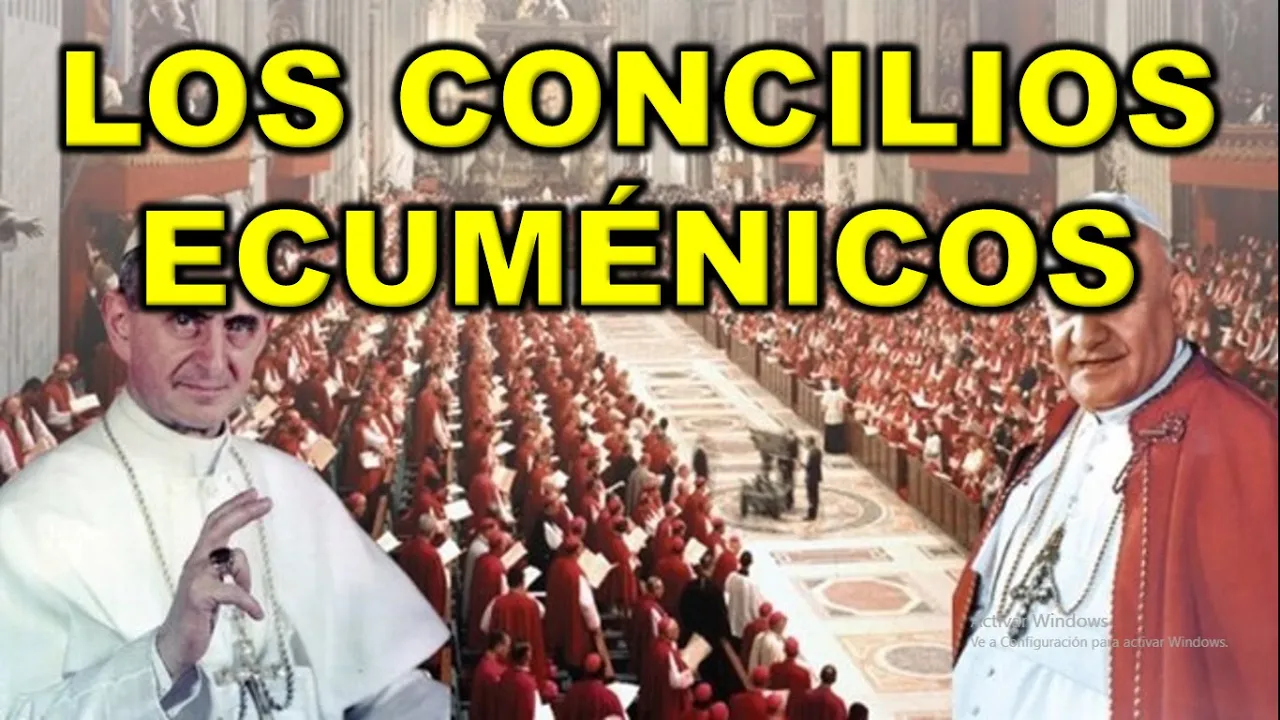
On December 7th, 1965, one day before the close of the Second Vatican Council, Pope Paul V 6th and Patriarch Athena Goris jointly issued a historic declaration. They expressed regret for the offensive words, unfounded accusations, and reprehensible gestures on both sides. And then they [music] did something that would have seemed unimaginable for nearly a millennium.
They lifted the mutual excommunications.
[music] They committed them, in their own words, to oblivion.
The schism itself was not healed. The theological differences remain.
The question of papal authority is still unresolved. The filioke remains in the western creed, [music] although recent popes have chosen to omit it when praying alongside Orthodox leaders, a [music] gesture that the Metropolitan of Pacidia, one of the co-chairs of the ongoing Catholic Orthodox dialogue, has described as a sign of hope. In December of 2025, the ecumenical patriarch held a special ceremony commemorating the 60th anniversary of the lifting, calling Christian unity an imperative in our tumultuous times. The theological dialogue between the two churches continues to this day, producing what both sides describe as significant progress, even if full reunion remains distant, and signs of hope continue to emerge. In 2025, both churches celebrated Easter on the same day, April 20th. A small thing perhaps, but symbols carry weight, especially when the original division started with something as small as a single word. It all began with one change. Adding the Latin word felioquay to the nyine creed and [music] the sun. Two syllables. It seems so small, but that one addition ignited a conflict that has lasted centuries. A conflict about who has the right to define what Christians believe, about how much power any single leader should hold, about whether unity requires uniformity, or whether faith can hold together despite difference. Early schisms cracked the foundation.
Political power plays widened the gaps.
The mutual excommunications of 1054 gave the split a date. The sack of Constantinople in 1204 gave it a wound that has never fully closed. And yet underneath all the centuries of division, both traditions still carry the same ancient word at the heart of their faith. [music] The word from the creed that was supposed to hold them together. Pist I believe not I argue not I divide not I condemn I believe today nearly 1.4 billion Roman Catholics and roughly 220 million Eastern Orthodox Christians share that word. They share the same Bible, the same baptism, the same belief that Jesus Christ is the son of God.
What they do not share, what they have not shared for almost a thousand years is communion. They cannot break bread together at the same table. And that perhaps is the deepest wound of all because it started with a disagreement about bread. And it may yet be healed by it.
If you found [music] this story fascinating, please hit subscribe and click the bell icon so you do not miss what comes next. We have many [music] more stories like this waiting to be told. Thank you for watching.
Up Next
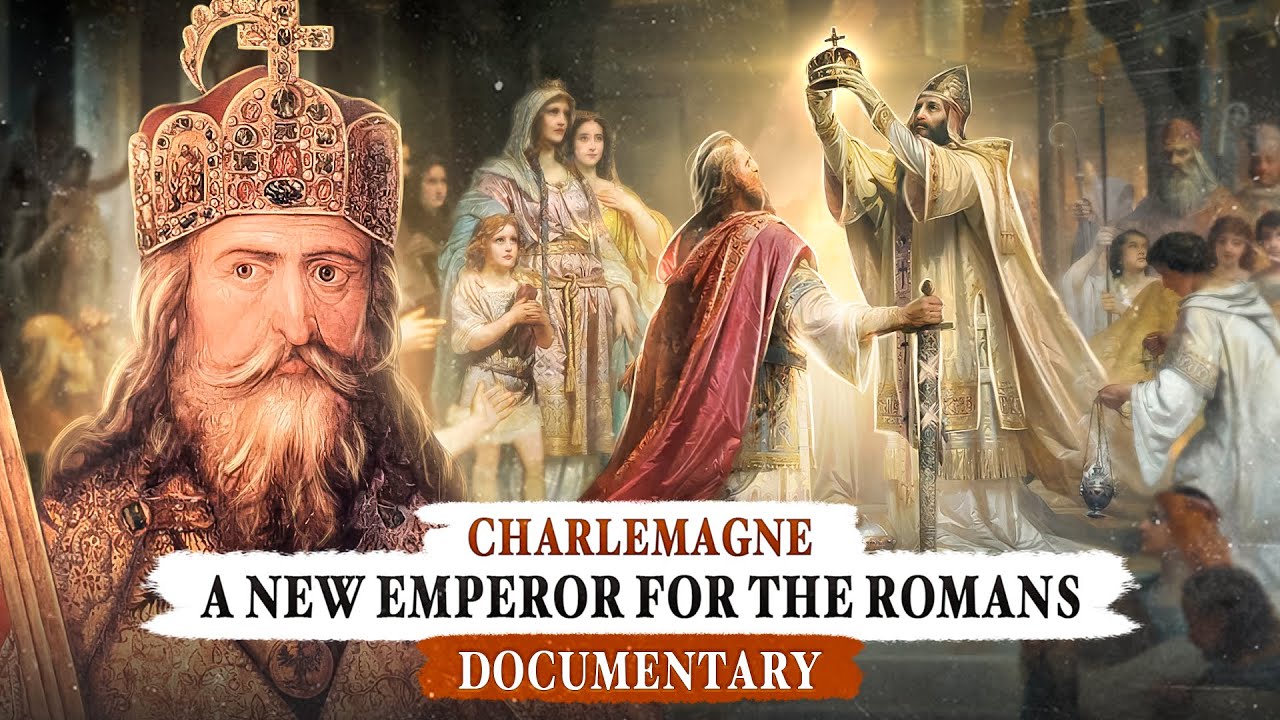
Charlemagne: The Imperial Coronation of Charles the Great
@RealCrusadesHistory
123.5K views•2022-01-05
5 Legal Successors to the Roman Throne Explained
@UsefulCharts
4M views•2019-10-18
The Geopolitics of the Ukraine War and the Rise of Global Autocracy
@JordanHarbingerShow
468K views•2025-04-19
Understanding the Cold War: Superpower Conflicts and the Road to Détente
@OverSimplified
46.1M views•2019-01-24
Related Study Plans & Knowledge Roadmaps
Structured learning paths in History