
![[음악수업영상] 서양음악사 고전시대 | 모차르트 교향곡 25번 | 베토벤 합창교향곡 | 서양음악사 낭만시대 | 슈베르트 송어 | 리스트 헝가리광시곡 2번](https://i.ytimg.com/vi/6iEst1aINHY/hqdefault.jpg)















Modern classical music encompasses diverse 20th-century styles that broke from traditional Western classical conventions, beginning with Romanticism's emotional individualism and progressing through Impressionism's atmospheric moods, Expressionism's psychological intensity, Futurism's industrial sounds, Microtonality's expanded pitch systems, Musique Concrète's recorded sound manipulation, Serialism's mathematical rigor, Indeterminacy's chance operations, Stochastic Music's probability-based composition, Sonorism's textural exploration, Minimalism's repetitive structures, Holy Minimalism's spiritual meditations, Post-Minimalism's eclectic evolution, Totalism's rhythmic complexity, Spectralism's overtone analysis, and New Complexity's extreme notation demands.
Modern Classical Music Styles Explained: A Historical Overview
Added:When we hear the term modern classical, we are immediately presented with a contradiction. Is it modern or is it classical? Can't be both. Unless it's general fluid. The thing is modern classical is actually a misnomer. Classical is a period. So anything not made during this time is simply not classical. Rather, when we speak of modern classical music, we actually mean a particular approach to composition and performing that breaks from the traditions of classical music while still being influenced by it. Perhaps a better term would be postcl classical, even if we already have too many posts, especially because a lot of modern classical is more than a century old. Hello and welcome. In this video, I will briefly explain the main characteristics of modern classical music and talk in chronological order.
I've learned my lesson about the many different styles that stemmed from this departure of western classical traditions. I will also play short snippets from each style. I can't make these any longer because then the copyright mob will come and dear my ass on this one. Meaning don't be lazy and look them up. Now, a word of warning to accurately describe some of these styles. I'll have to get a bit into elementary music theory. I wouldn't be able to explain, for instance, the ideas behind serialism if I didn't also analyze its approach to composition. So, get your other now. Still, I'll try to make it simple enough so that anyone, even lacking the fundamentals of music theory, may understand it and go home feeling an expert. Get ready to become the most annoying person at the party.
If you make it through this video without opening another tab of Subway Surfers, please remember to like and subscribe. Of course, do this only if you think I deserve it. Also, please leave a comment and tell us what your favorite modern classical style is, or maybe suggest a style that I've missed.
This will grant plus 10,000 pretentious aura. So, don't waste a chance. Without further ado, let's begin. How can we define modern classical? Like I've said, the term modern classical actually refers to an approach to music that is directly influenced by western classical traditions at the same time deciding to deviate from some of the more restraining principles of classical music. What are some of those principles, you may ask? Anything you can imagine. From the departure of tonal centers, the heavier emphasis on dissonance, the inclusion of unorthodox instruments, new tuning systems, and even the implementation of non-musical elements. It's the kind of stuff that would probably scare your grandma and make most people go, "When do they stop tuning their instruments and play the music?" Naturally, modern classical compositions come in different shapes and sizes. I'd go as far as to claim that most of these styles have very little to do with each other. Anyways, composers didn't just suddenly crank [ __ ] up to 11 from the start. It was a departure that occurred gradually and sometimes in parallel. In fact, there is a clear bridge between the two periods.
We are of course talking about romanticism. Romanticism was the last style associated with the common practice period which also included the baro and actual classical movements.
Romantic composers wanted to break away from the more rigid aspects of the classical period and instead sought to create music that was based on a more emotional individualistic sensibility.
It was also common for romantic composers to take inspiration from non-musical sources and tried to evoke nature the nocturnal and the poetical.
This led to for example the more common inclusion of program music and tone poems which held an extra musical narrative. A clear example of this is Gustaf holds the planets. Besides this preoccupation with the sublime, romantic composers were also discontent with traditional classical forms. In turn they started deviating from some of its purely musical conventions. to name a few.
Romanticism music experimented more with chromaticism. That is, they used more frequently all of the 12 tones in an octave rather than the diatonic 7 which led to some deranged stuff like [Music] [Applause] [Music] this. There was also a greater emphasis on melody rather than harmonic interplay. Modulation, that means changing keys, also became more common.
dynamics were expanded in a way that you could hear a very quiet passage followed by a jump scare and the tonal range became larger.
You know, I paid for all 88 keys, so I may use all of them. For this reason, romanticism is the link between the common practice period and the modern period. It still held close to many of the classical conventions, but composers were deviating each time further from the norm. Beethoven may possibly be credited with the transition from one style to another as exemplified in his ninth symphony which includes a chorus, a quite uncommon element for the [Music] time. After that, innovation was the name of the game. So while Beethoven was considered an early romantic, a few years later came the high romantics.
Holy [ __ ] You may not like it, but this is what peak romanticism. Looks like high romantics were experimenting even further with musical form and became even busier with the tragic and passionate. Frederick Chapan, Robert Sherman and friends list are some of the most famous composers associated with the high romantic movement. Richard Vagner was also going apeshit with compositions such as Tristand Uni Sold, expanding chromaticism to limits unheard of at the [Applause] [Music] [Applause] time. Finally came the late Romantics in which classical forms were finally dissolved to oblivion. This marked the definite transition to modern music with composers such as Gustaf Mer and Sergey Rahmaninov. During this period, musical expressiveness was thought to have met its absolute limits. What else was there to discover? Impressionism.
Impressionist music originated in France in the late 19th century. It is widely considered as the next logical step to romanticism. A worthy sequel really, more adventurous, more abstract, and successfully built upon the foundations of its predecessor. In general, impressionism is usually regarded as the first movement which is part of the modern classical era. How can we define impressionist music? Have a look at this painting or maybe this one and this one.
These are impressionist paintings. You can probably notice that these works didn't aim to depict its subjects in an exactly realistic way, especially in terms of perspective and color. The technique was also less bothered with the academic principles of the time. The brush strokes, for example, were clearly visible when in those days the painting process was preferred to be concealed.
Impressionists didn't care about such conventions. They were more interested in portraying a spontaneous freespirited vision, an impression, if you will.
Academic and [ __ ] off. The same characteristics may be used to describe impressionist music. Impressionist music was focused on creating a specific mood and conveying emotions in a more intimate way rather than being based on fixed concepts such as was lately becoming the case for romantic music.
Even though romanticism had already sought to create a more individualistic emotional atmosphere, there was still lots of emphasis on virtuosity. As we heard, some romantic compositions are sure to give anyone the carpal tunnel syndrome or were just impossible to play if you weren't a goddamn giant like Rahmanov was. However, the focus on wonky techniques was mostly gone by the time of impressionism. So instead of playing as fast as they could, impressionist composers tried to express more with less. The rhythmic parts were less rigid, more sparse in a way that the structure became more ambiguous. The obsession with counterpoint and chromaticism had mostly disappeared as well. Instead, impressionist composers explored other musical vocabulary such as the use of a typical scales and modes, further use of dissonance to create tension and release, and more static, often unresolved chord progressions. This could create a rather disorienting character with a less definite sense of tonality than romanticism got people used to. Leo get filtered [Music] plebs. Some famous impressionist composers were Claude Deisci, Eric Sati, Maurice Rall, and Liu. Not everyone liked the term impressionism. In a letter, the BC described the critics who used the label impressionism for his music as imbeciles. Havl didn't think the term could be applied to music at all. Good to know death of the author is a thing. According to Holland Bach, they're also literally dead. So, no harm done. Expressionism. Just like impressionism, the term expressionist music is also derived from an artistic movement mostly applied to painting. One of the most famous paintings of all time. I know you've seen this guy. Is an expressionist painting. Right off the bat, you can see there's a huge difference between the mood of this work and the ones I've shown you in regards to impressionism. While impressionism was very bright, very mindful, very demure. Expressionism was concerned with some heavier [ __ ] Forget this nonsense about capturing the purity of a blossoming flower or the reflection of the sunrise on the lake. No, expressionism was all about what lies hidden in the darkest depths of the human soul. It was decidedly ugly, confusing, scary, and hallucinatory. The only way expressionism captured reality was through the distorted lens of human emotions with an intense use of color and form in the attempt to oppose the more traditional definitions of beauty.
You think this is beautiful, I'll show you real beauty. In turn, expressionist music also tried to defy the more quiet, delicate approach of impressionism. Some composers such as friends list were already flirting with some characteristics that would become a staple of expressionism, such as unresolved dissonance and an overall darker atmosphere.
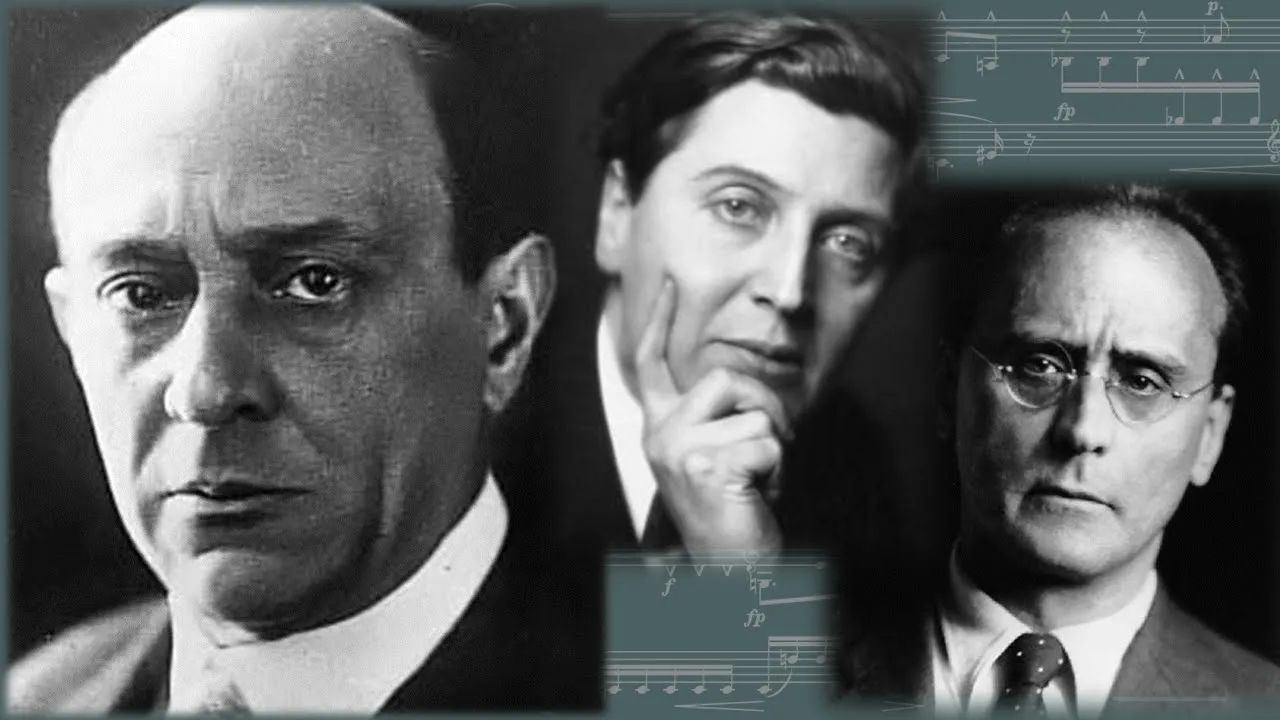
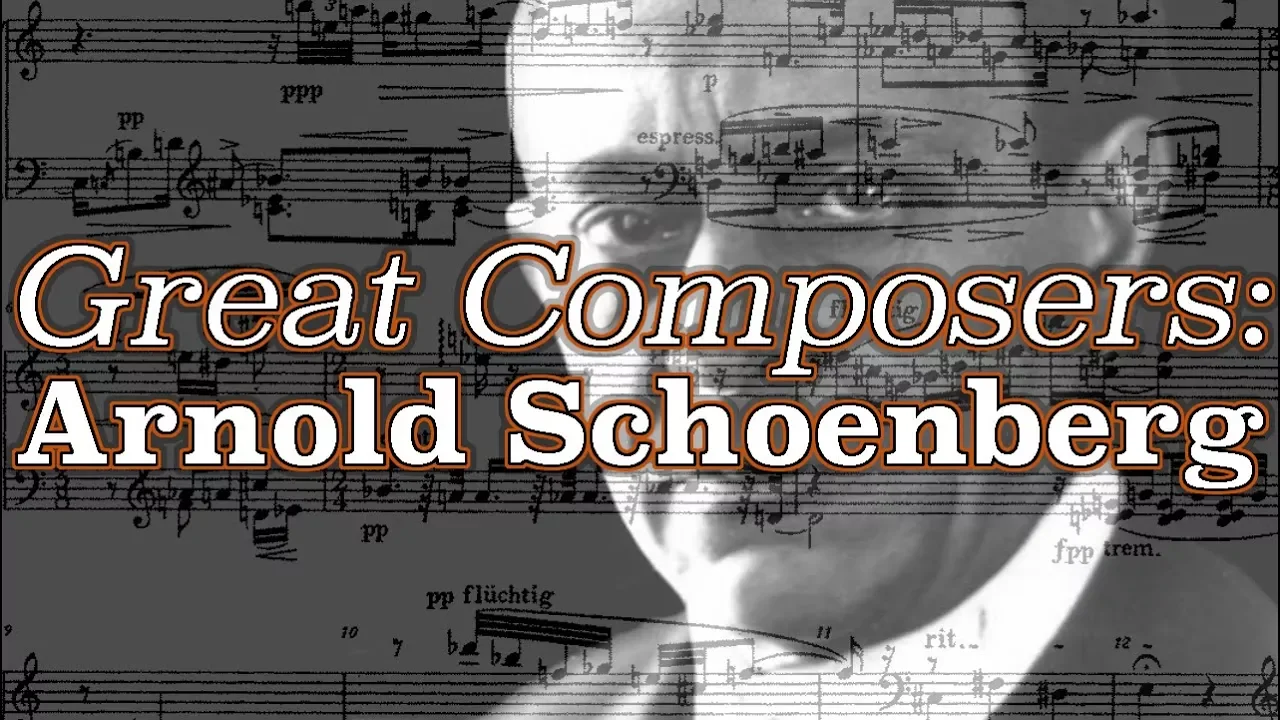
This nightmarish approach was also used later by Rickard Straws and Malor. I'm sure their audience had a pleasant experience. However, the definitive expressionist composer was Arnold Shonberg who in 1909 released his opera Ervartung. The theme was of course of the Marriest Sensibility.
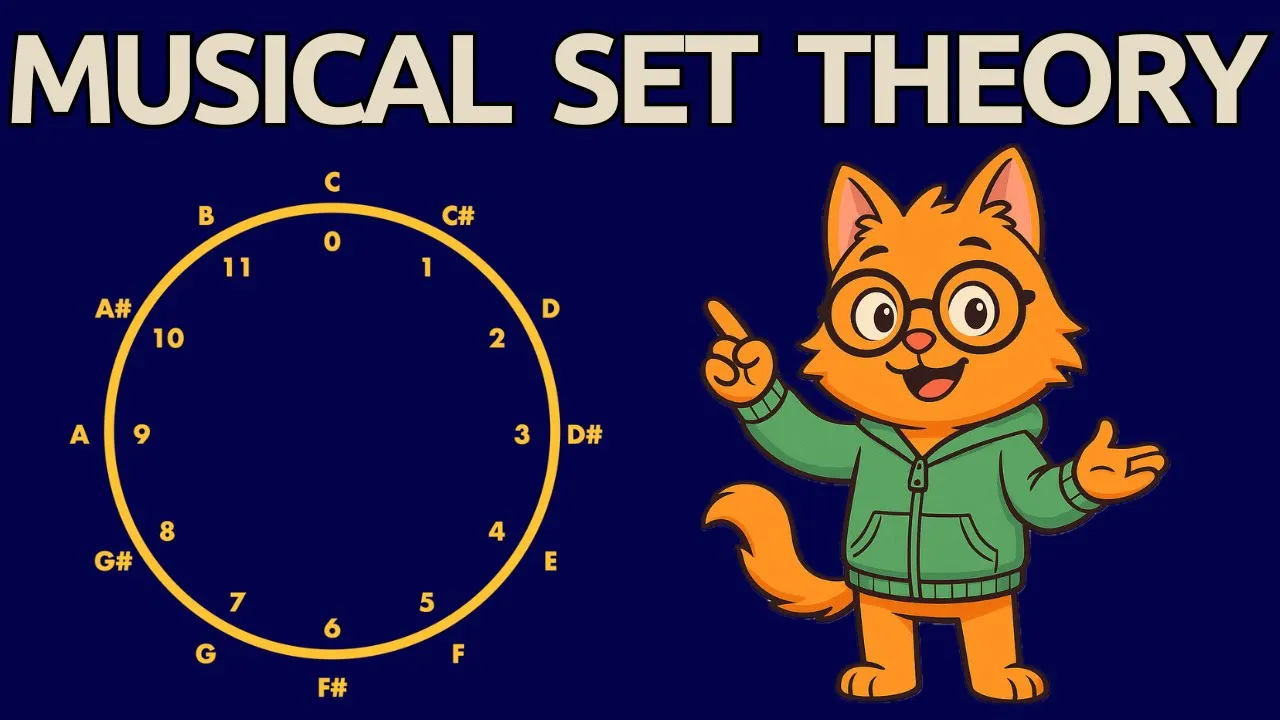
[Applause] [Music] This work is about a woman who wanders in a forest and finds the corpse of her unfaithful partner. Good for her. The music was completely a tonal quick theory lesson. In music, most composers choose to work with a limited set of notes. This is what we call tonality.
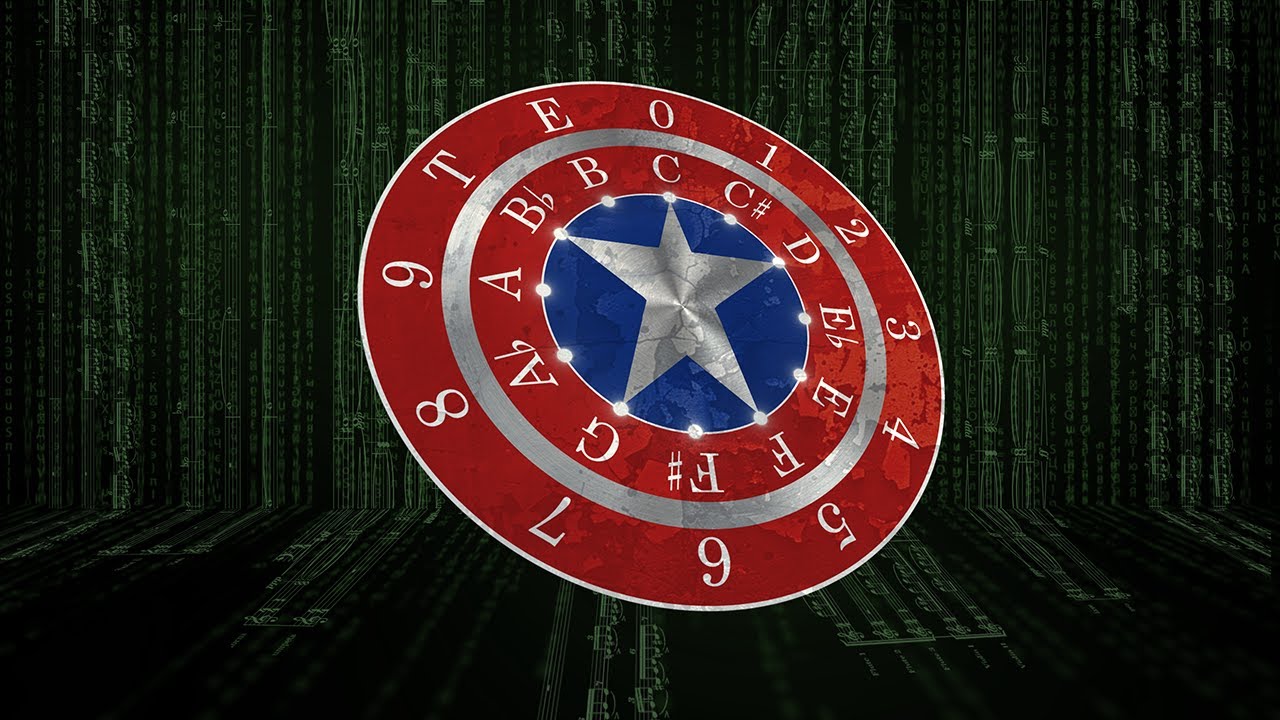
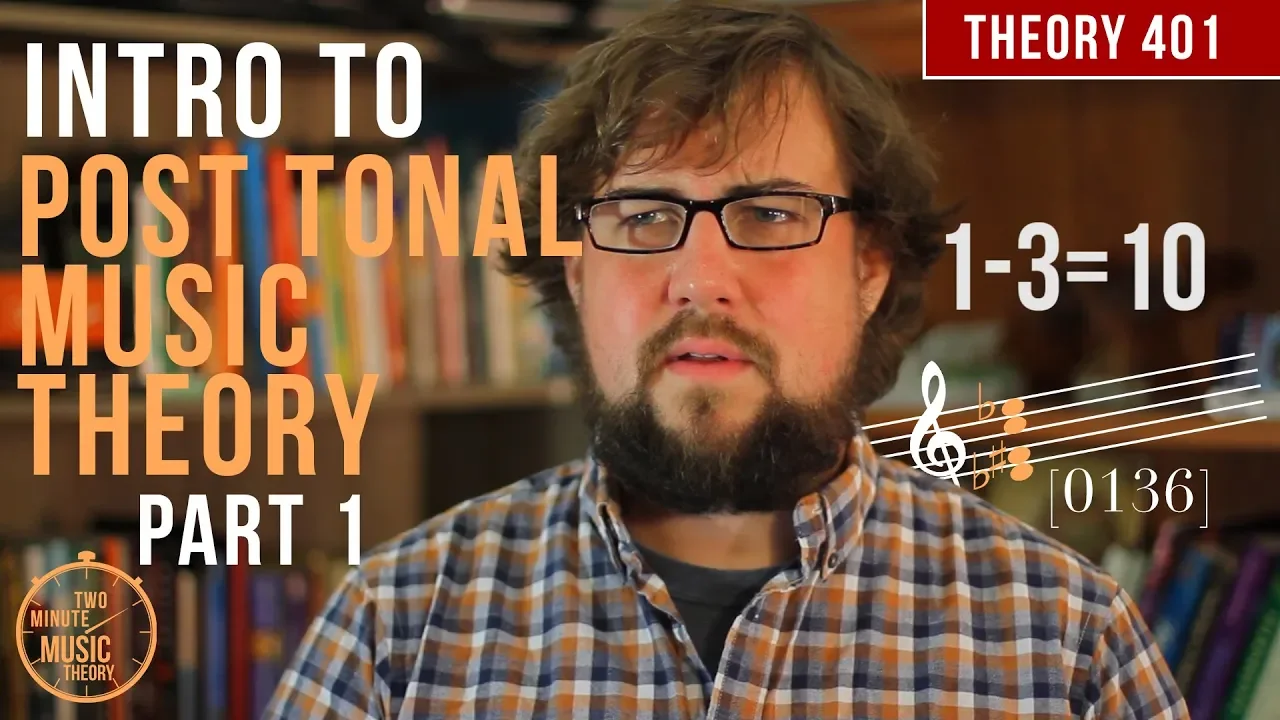
So, while an octave has a total of 12 notes, we tend to use about seven, sometimes even fewer. Some guitarists, for example, can make a whole career playing only five of those. My favorite genres, I like pentatonic. So when we say a piece is in C major or F minor or whatn not that means we don't play some of those notes in the octave when playing tonally every note in the scale has a function we call this functional harmony some of them feel tense some of them feel at rest most music is built on the foundations of tonality and functional harmony Shamberg's music was as I was saying a tonal in short the music had no clear center to which it would return all and everything was possible harmonically speaking none of the notes played any distinct function complete anarchy naturally this led to some heavy dissonance and quite an ambiguous uncomfortable musical character. Shamberg was doing the same as expressionist painters did challenging the preconceived notions of beauty. Arnold Schamberg also created a system called the 12 tone technique in which he would further explore his approach to a tonality making it even more rigid and methodical. The idea behind 12 tone compositions was that every note would have more or less the same degree of importance. He would place all 12 notes in a sequence called a row and then play them in all sorts of manners. The basic idea is that one note mustn't be repeated until all other 11 have been played. Now, this was truly dei. All notes matter. The 12 tone technique is considered a form of serialism, but we'll get to that later.
The influence of expressionism reached later composers such as Bella Bartok, Eganis, and Igor Stravinsky.
Additionally, the 12 tone technique by Shamberg was of inspiration for Alenberg, Anton Vber, and other Burks of the time. Futurism. Futurism was a movement that encompassed a variety of arts including painting, cinema, poetry, theater, and even gastronomy. I'd like mistake with a side dish of nuts and screws, please. Naturally, the style also influenced the creation of music.
In music, futurism intended to pay homage or imitate the sounds of machinery, sometimes literally including machinery as part of the instrumentation. Take a look at bal mechanique, which is a composition written for three xylophones. Okay. Four bass drums. That's nice. A tam tam. All right. Three airplane propellers. Wait.
Seven electric bills, a siren, two live pianists. Attention here, and 16 synchronized player pianos. So why the emphasis on live players there? Do you mean there was another part for dead players? Not really. In part, futurism also wanted to contrast the differences between the music that humans and machines could play. It was Filipo Tomaso Marinetti who coined the term and initiated the movement with his manifesto of futurism.
At first, the term was used to describe any music that was experimental or extremely unconventional. Later, the movement was solidified by several principles, including independent musical study, a departure from traditional music conventions and the promotion of new work rather than old material. Musicians Luigi and Antonio Rousolo went as far as to create their own instruments called Intoni, the absolute fever dream you see in this picture. It was basically an acoustic noise generator. Emphasis on the word noise amongst others. The Inonado Morei could produce the sound of explosions, hissing, whispers, screeching, creaking, metallic beating, and any other annoying sound you can imagine. It was truly the sound of the future, very much like being in the middle of a busy urban landscape.
Futurism had an impact on later composers such as Eager Stravinsky and Arthur Haner. Microonal classical.
Remember how I said we normally use 12 tones in Western music?
Hello, it's for you. It's 1824 and they want their equal temperament back. Get modern girl. We usually call this a tone and this a semi- tone. Sometimes steps and half steps in freedom units. But did you know there are actually more frequencies in between these two? This is what micro tunnel music try to exploit. Musical pitch is measured in hertz. I know that plays 440 Hz will be double the frequency in the next register. Because of this, it would be rather impractical to say five htz up from a certain note because that would be a different frequency in a different register. Rather, we use sense that is a 100th part of a semi- tone. Some composers started noticing a lot of interesting possibilities in between these musical liinal spaces if you will.
It's possible for example to use intervals of a quarter tone which if you know your math you'll know it's half the distance of a semmitone. The widely regarded pioneer of microonal music was Mexican composer Julian Caro. He studied the use of micro tonality as early as 1885 in his system, but first demonstrated his theories until 1922 in his piece preludia [Applause] [Music] colon. Microonality also inspired some composers to build their own microonal instruments. For example, Jorg Maga, a pioneer of electronic music, designed what he called the sperhone, which could play quarter tones. Other composers such as Maurice Martino, built instruments that went as far as eighth tones. Today, making micro tunnel music is easier than ever. Just turn this knob down a bit, and there you go. Such patrician taste, you wouldn't get it. Interestingly, most micro tunnel works are acoustic based. Fine-tuning this [ __ ] is a nightmare. So, we better stick to our DAWs. You see, when you think of the raw materials for music, what comes to mind? You might come up with aspects such as pitch, volume, tambber, or rhythm. All of which may be produced by a wide variety of instruments. Put them in the mix and voila, here is music. Chefskis, the music exists regardless of the medium.
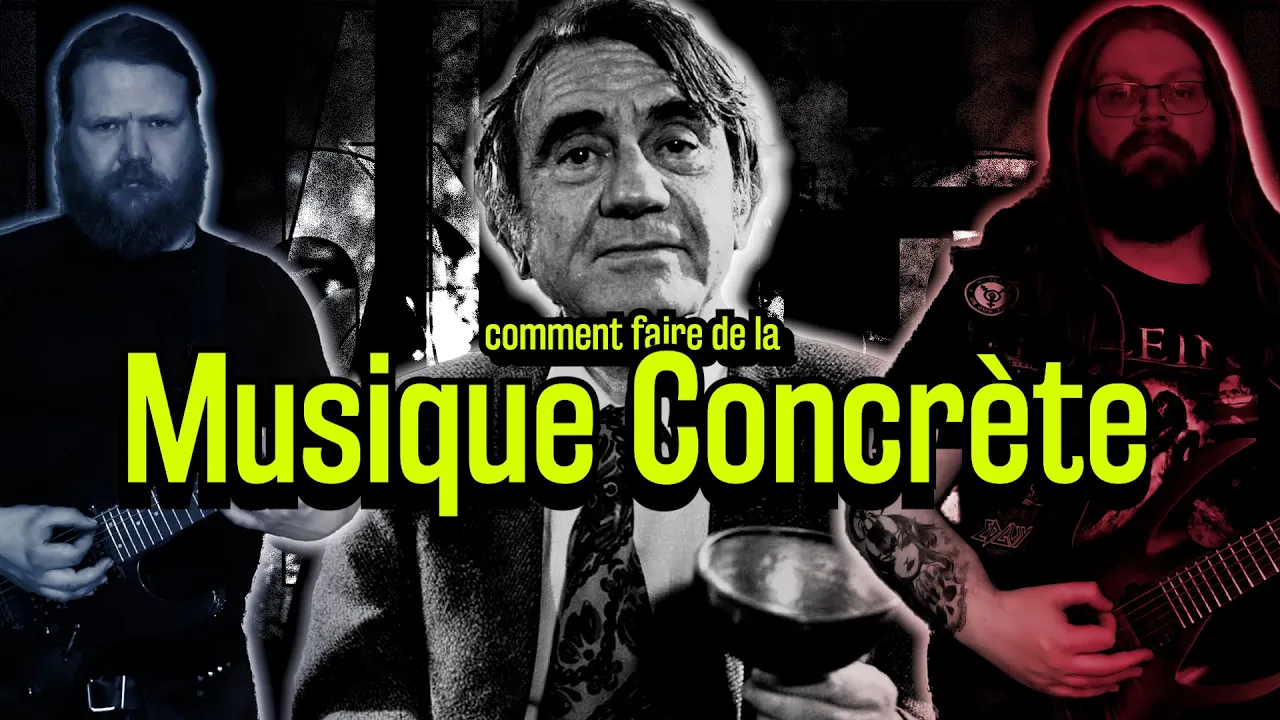
However, in 1948, Pier Shafer developed a concept which he called mic concrete, which is an approach to composition that uses recorded sound as its raw material.
These sounds may then be processed, modified, distorted, reassembled. The result is often a sort of collage.
Notice I use the phrase recorded sound.
This is because mic concrete may utilize the recordings of musical instruments, but may also include natural sounds, human voices, and even digitally produced noises. In many ways, music concret is a precursor of electronic music. That means we can expect an homage to Pier Shafer by DJ Khaled very soon. Because of its montage-like creative process, Mongret doesn't really abide by most musical principles. There is usually a lack of definite rhythm, harmony or melody. Music concrete is often also acoumatic. That is the source of these sounds is uncertain and even intentionally obscured. Listen to this [Music] now. What exactly are you hearing? Would you be surprised to know this is an amplified cactus played with a feather?
Oh yes, John Cage was the original ASMR kid. As you hear, acouic music is more concerned with the identity of the sound rather than the source of it. Now imagine this. You go to the cinema and sit down waiting for the film to begin.
But the screen remains blank. However, you can hear the entire soundtrack, people having conversations, city noises, bird songs, footsteps, gunfire, and of course, occasional music. This was actually done as an experiment of blind cinema by Walter Rutman in 1930.
In retrospect, this assembly of sound has been recognized as an early incursion in music concrete created the deer mret which attracted composers such as Pierre Pier and Yaniakis. Khines stockhousen widely considered as the father of electronic music was also inspired by the principles of miss concrete serialism remember this guy shoon head we talked about how he developed a rigid system of 12ton rows which is considered the form of serialism so let's talk about that now there are basically two types of serialism the first 12ton tone serialism which is mainly concerned with pitch sometimes also called doicophonic and a second type called integral serialism or total serialism. In 12 tone serialism we have a set or row of all 12 tones in an octave. The point of this technique is to grant every note the same degree of importance. Now we have a sequence of notes that will be played in a certain order. Afterwards we may apply some transformations such as playing the series in retrograde motion that is going backwards or playing the inverted intervals of the original sequence. It's a kind of puzzle game. Really, a very autistic one at that. Don't worry, I'm autistic myself. I have the a word pass.
What I mean, of course, is that serialism adhere to a very strict methodology in an attempt to create truly a tonal music. This technique had been used as early as 1923 when Shawnberg developed it. However, it was only a few decades later during the late 1940s that serialism evolved even further and the term was actually coined. Following Shawnberg's steps, French composer Pierre Bulle developed the serialist approach into what he called total or integral seralism. As the name suggests, integral serialism applied the concept of equal rights to all possible aspects of music. In other words, not only were the 12 different notes given equal treatment, but also were other musical parameters such as duration, dynamics, and tambber. The role of the composer's intention was becoming even more diluted. Regarding one of his own pieces, structures book one from 1951. Pierre Bul stated that this was a work in which the responsibility of the composer was practically absent. Does it sound good?
Ask Pierre himself. I am not terribly eager to listen to it. He also claimed that he would have written the piece on a computer if it had been available at the time. I bet the notation by hand was all fun and [Music] games. For example, now we may create a row of rhythmic values. Let's say quarter note, whole note, dotted eighth note, triplet group. Holy [ __ ] The thing about total serialism is that it isn't really total. Think about this. In 12 note serialism, there are only well 12 notes to create a series. But other aspects, such as rhythmic values, are potentially infinite. So, it's up to the composer to limit the range of the series. A good way to do this is to associate a number for each one of the pitches, then associate set numbers to other musical dimensions. It's great mind work if you ask me. You've ever seen grandpa spending hours on sudokus or crossword puzzles? That's so pay.
Give him a piece of serialist music. I'm sure he'll love it. Serializing musical parameter still sounds like too much freedom. Serialize the series. We can also find a way to create rigid rules to dictate the transformations the piece will have to go through. I'm sure it sounds like a dream. The serialist approach was adopted by several composers such as again Alenberg, Anton Ver, but also Elizabeth Lutian and Posu and many more. The difference for instance between Stravinsk's compositions before and after serialism is something to [Music] behold serialism. Not even once.
However, most composers didn't stick to the serialist method for complete compositions. I suppose they realized too much spice could ruin the dish.
Still, the technique has been used partly by musicians in different genres, such as Bill Evans or Frank Zappa.
Indeterminacy. Indeterminacy is a term coined by John Cage in the early 1950s.
Remember how I mentioned serialist music was so rigid that it diluted the composer's intentions? Well, in the terminus, he also obliterated control from the composers. But this time, he did by leaving some musical aspects open to chance or up to the consideration of the performers. And to think people are afraid AI is going to replace musicians today. Nonsense. A [ __ ] pair of dice already did so more than half a century ago. In his book, music of the 20th century, style and structure. Brian R.
Sims describes indeterminacy as any part of a musical work that is chosen by chance or if its performance is not precisely specified. Regarding this, indeterminacy is often categorized in two approaches. Indeterminacy of composition and indeterminacy of performance. Really self-explanatory.
The former refers to random procedures used for producing a fixed score. And the latter refers to a form that is mobile or variable in the process of interpreting. Cage thought the only real type of indeterminacy involved the second type. For instance, Cage composed a piece for a piano solo called music of changes for which he based the process of composition on the Iching, an ancient Chinese text that was used for divination.
[Music] This is indeterminacy of the first type involving only composition since the performance remains the same every single time. Even though the theories around this approach were mainly theorized by John Cage and Pierre Boule in the ' 50s, some early composers already showed interest in indeterminency as a creative force.
Charles Cypes for instance composed some sections for his 1908 piece the unanswered question that were open for performers to decide. This was done because the instruments in this piece play parts in different tempos which meant the notation was pure torture. So I've syndicated in this score several notes regarding the possible interpretations. You may begin the section sooner or later than this will be played in near the position of if the strings have reached their last chord.
Then for this reason the unanswered question often requires two conductors to be performed.
[Music] Another clear example of indeterminacy can be found in Harry Cowell's 1934 piece Mosai Quarted in which performers were free to arrange the fragments in different possible sequences. These two pieces are early examples of indeterminacy of the second type regarding performance. A very extreme case of indeterminacy and also possibly the most famous is Gage's piece 4 minutes 33 seconds. This work is comprised of 4 minutes and 33 seconds of absolute silence. Or is it? Cage was inspired to create this piece after looking at a series called white paintings consisting of make your guess.
The thing is he thought these canvases aren't actually blank. They were also reflecting the different hues of light around them and constantly changing due to the projecting of people's shadows.
In the same way 4 minutes to 3 seconds isn't really a silent piece. The ambient noises in the concert hall or whatever the surrounding environment become part of the piece. K's intention was to show people how to really listen. Sounds that would normally pass on notice would now become the main focus. Interestingly, 4 minutes 33 seconds is often considered a precursor of noise music. You can perform your own version of 4 minutes 33 seconds. Try it. Sit in absolute silence for the duration of the piece. As a listener, try to pay attention to the ambient sounds around you. You have now become average in indeterminacy enjoyer. Why not even upload your own version of the piece?
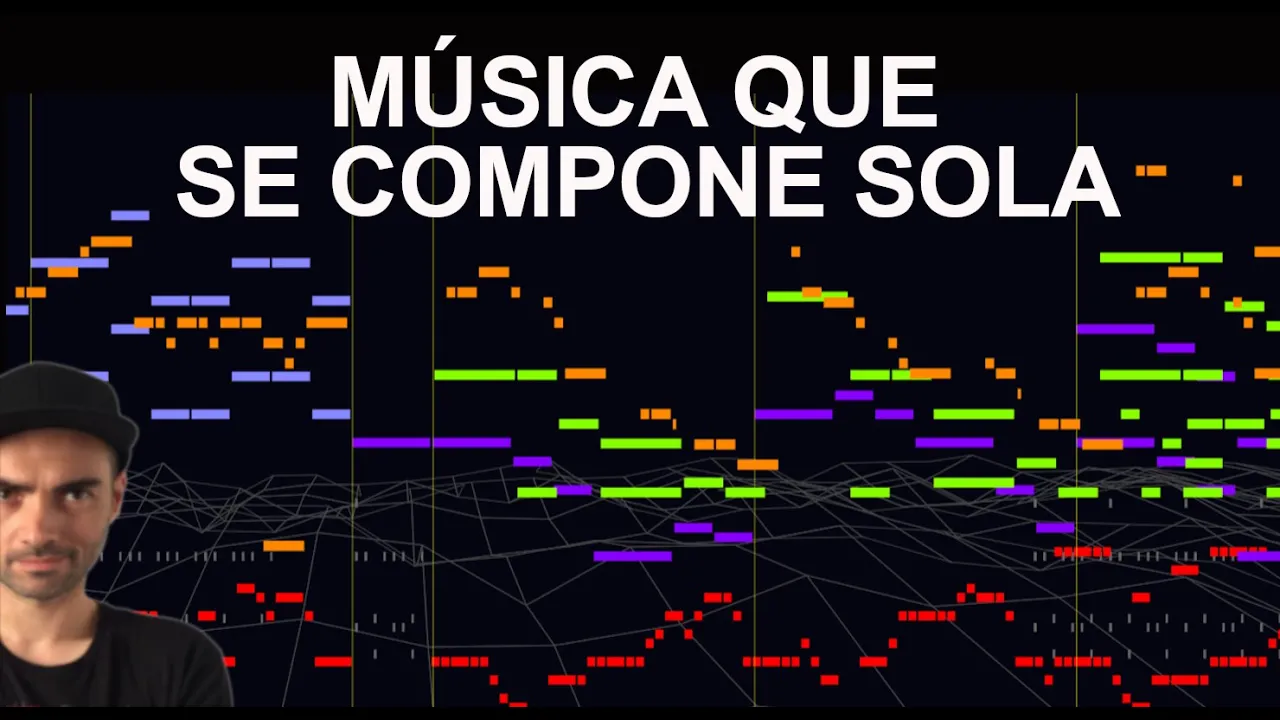
After all, it's probably the most troubled composition of all time at your Christmas classic. Just be careful there. You don't want to get sued for copyright infringement. In addition to indeterminacy dictating composition and performance, there is an additional possible dimension, notation. You may forget now about traditional notation systems. Embrace modernity. Rather than the familiar steps for writing music, indeterminacy in scores use symbols, illustrations, graphs, and lines to suggest how the music should be performed. The notation then is more of an abstract guide for performance to imagine what the music will be. The interpretation might be spontaneous, but musicians might also come up with their own rules and methods for performing the piece. Indeed, indeterminacy appear to have expanded musical concepts to its absolute limits. Could we go any further, or was this peak humanity? May we go extinct at this point, for there is nothing else to be done. Stocastic music directly inspired by the principles of indeterminacy. Stoastic music takes the concept even further by applying a variety of mathematical processes. These techniques were almost entirely developed by Yani Sinakis who described stoastic music in his 1963 book formalized music. Basically, Sinakis was discontent with the approach of serialism. He found the composition process to be very restrictive. At the same time, pure indeterminac used by John Cage often resulted in quite illogical outcomes. The music crushed under its own complexity. Stocastic music then used probability theory in natural phenomena as a model for the compositions. This was apparently more accessible to the average listener since it's underlying logic would be noticeable even at surface level. Here then listen to this most pleasing tune by Sinakis Popra composed in [Music] 1955. Such a lullabi. Now let me be honest with you for a second. I didn't Rick Sanakis's whole book and I don't think I fully understand the actual process for creating these pieces.
Before you judge, please take a look at some sections of formalized [Music] music. See, I wasn't kidding. Something remains clear, though. The main difference between indeterminacy and stoastic music is that the former is based on pure chance or arbitrary decisions while the latter is ruled by mathematical processes and probability.
Stoastic music had a huge influence in modern composers such as James Tenny, Francisco Guerrero and that's quite it actually. The truth is that Sakis pretty much had the monopoly of stoastic music. No more than a handful of followers kept this approach alive. I wonder why that is. If this is such a friendly, easily accessible approach to any [Music] composer. Anyways, to better understand how stoastic music is composed, here are some examples of pieces and the mathematical processes that inspire them. The use of statistical mechanics of gases in pithopra, the statistical distribution of points on a plane in diiamorphosis, mark of chains in analogic. And now look at this chart.
This is some matrix that Sakis designed for his piece acipsis. The entirety of musical dimensions including but not limited to speeds, densities, pitch and intervals of duration was determined by the loss of probability to calculate the probability of these occurrences in the piece. Sakis used Pon's distribution. We serve music here sir. As abstract and dense stoastic music might seem in theory, it's actually pretty fun to listen to, especially if you follow the graphic score.
[Music] Sonarism. Sonarism is a style associated with several Polish composers in the 1960s who were particularly concerned with the exploration of pure sound. In other words, composers would mostly ignore the musical aspects you probably enjoy, such as melody, rhythm, or harmony, and instead would focus on those you don't even pay attention to, such as tambber, texture, articulation, and dynamics. You probably heard the question, how many uses can you think of for a paperclipip? This is usually asked by companies as a means to encourage divergent thinking and find innovative solutions. Obviously though, you may simply look up a list on the internet, memorize it, and impress your future job employers. Please stop asking for this.
Anyhow, in contrast, now think about this question. How many different ways can you think of for producing sound of a violin? These are called extended techniques. You can play with a bow, but also with your fingers. You may use a guitar pick. You may drill more holes in it. Maybe blow air into them. You may slide sandpaper of the strings. You may bite and chew on the strings. You may tap your fingers on the wood. You may stuff the violin with several objects such as cloth, pebbles, or paper clips.
You may use a paper clip to play the violin. Now two worlds collide. Bet you didn't see that one coming, Susan from HR. But now you understand. This is what sonarism was all about. Finding all the many different ways to produce sound, either by means of traditional instruments or non-m musical sources.
[Music] However, it was also possible to use the more musical aspects of composition to experiment with sonorities. For instance, composers would often utilize sound masses which are based on several techniques to create a sort of heavy dense block of sound noise. The tone cluster that is using superimposed adjacent notes was a common element for producing sound masses. Some other approaches include using synchronized gissandos, extreme ranges, non-functional chords, or unusual instrument combinations. All of this could result in very spicy flavors in terms of texture and tambber. Some composers regarded as sonorists include Kristoff Pandereki Grain Chevaka in all of those people whose names I won't pretend to be able to pronounce. Perhaps the Polish language itself is a demonstration of [Music] sonarism.
Minimalism. Minimalism is an approach to a variety of arts that seeks to emphasize the essence of the work by removing any forms, concepts, or details that might distract from the actual identity of the piece. Less is more as an approach to composition. Minimalist music usually focuses on repetitive melodies, steady rhythms, static or very slowly moving chord progressions, mostly consonant harmony, and long continuous forms. Stop using anti-minimalist language. It's not boring. It's slowburn. Occasionally, there is also a superposition of distinct musical layers which create rich thick textures.
Minimalism became popular in the early 60s due to musicians such as Philip Glass, Steve Reich, and Lamont Young.
Although the actual beginning of minimalism is credited to Terry Riley and his 1964 piece inc. This work consists of 53 short melodic phrases all in the key of make your guess which may be repeated at the discretion of performers. The instruments and number of performers is also unspecified. If you've been paying attention, you may realize this idea shares principles within the terminacy. It's all part of the modern verse. This piece was also inspired by Riley's early incursions into electronic delay and looping. Now, here comes the dummy thick part I mentioned before. Since all musicians will be playing their chosen parts for as long as they please. A huge fabric of sound is created in which all melodic patterns overlap. Oh, and what's more, given that the phrases are different lengths, this also creates a very dense polytric texture that is more than one time signature played [Music] simultaneously, hypnotic, and by that I mean that it will put you to sleep.
Everybody love minimalism, of course.
Fewer notes, more audience. Except some critics compared minimalism to fascism.
Renowned American composer Elliot Carter described minimalism as being similar to how the angry mustache man used to repeat his speeches at nauseium and claimed that minimalism was just as dangerous. Pul thought it was a sign of how the American public was primitive and uneducated. Even so, the truth is that minimalism as an approach had a huge influence in a variety of popular music genres such as pop, electronic music, and even metal. Listen to any drone metal album and you'll see what I mean. About a decade later during the 70s some composers began to think you know what this whole minimalism thing it's really cool only too secular just listen to that repeated three note pattern so empty and devoid of faith yes need Jesus thus holy minimalism was born in reality holy minimalism was initially used as a bjorative term to describe some music which used a minimalist approach to composition but had an overtly religious aesthetic I've seen the face of god and it was minimal most composers cripped under this term in fact reject the concept. Nonetheless, it is true that this style earns its own distinct category in the first place.
Rather than being inspired by contemporary music, holy minimalism took direct influence from Christian liturggical music, for example, in its use of monophonic textures and very slow tempo. Other reference came from non-western traditions such as gamlan and thupat as well as renaissance or medieval music. In terms of emotional mood, holy minimalism is more meditative, more referential, and overall less abstract than other forms of minimalism. Like I've mentioned, there isn't any unified group of composers that identify with the term.
However, artists such as Henrik Mikolai Goriki and Arvopart are usually mentioned as part of this movement.
During the '90s, Holy Minimalism rose in popularity. So much that one of Gordi's pieces sold over a million city copies.
All glory to God.
In parallel also during the 70s minimalist music was beginning to evolve beyond its boundaries. Did I just say evolve checkmate holy minimalist? This more adventurous approach to minimalism was coined postminimalism and it deferred from early minimalism in a couple of ways. To begin with, postminimalism takes influences from modern genres which are unnecessarily part of the classical tradition such as jazz and folk music. Secondly, the progression in postminimalist pieces is not as linear as early minimalism. And finally, postminimalism tries to conceal, at least partly, its minimalist underlying structure, but it's not kidding anybody. In short, postminimalism is simply a term used to describe later compositions that were partly influenced by minimalism while also expanding its limitations and exploring other musical dimensions. A composer often associated to this style is Kan, who spent much of his time theorizing about this approach. You can read plenty of his writings, including several reflections on his own music on his official website.
[Music] As a matter of fact, Cal Gan has written so much that he's responsible for the invention of yet another term. This is the last one, I swear, to describe a particularly intricate form of minimalism, which he coined totalism.
The style is defined by great rhythmic complexity, including the use of polar rhythms. This is evenly spaced notes played at different duration values.
Another way to see this is two or more different empire played simultaneously.
Sometimes you could hear temper ratios such as 98. This would mean, for instance, having one voice play at 90 BPM and another one at 80 BPM. The pulses would eventually interlock after eight and nine repetitions, respectively. These guys can definitely rub their tummies and pat their heads at the same time. Totalism isn't widely recognized by modern musical studies.
This is basically all KL Gan's brainchild. All in all, in his article, A forest from the seeds of minimalism.
can describe the aim of totalism as appealing to lay audiences yet also providing enough underlying complexity to intrig sophisticated musicians meaning it can appeal to both plebs and patricians. He also states that totalism has the right to be ugly. Totalism is also more rhythmically consistent than serialism as well as more eclectic. Some compositions that use totalist vocabulary are dreaming white on white by John Luther Adams, Lonesome Road by Larry Pollinsky and of course Long Night by the Man of the Hour Kyle Gan.
[Music] Interestingly, Totalism seemed to appeal more to rock and metal musicians than to classically trained composers. One milestone of totalism is the album The Ascension by Glenn Brana, an exercise in noisy, dense, and experimental rock. And black metal band Liturgy also uses elements of totalism in some of their compositions. Other than that, totalism didn't really have much of a legacy and is often grouped with other post-minimalist approaches. Sorry, Kyle.
Stop trying to make totalism happen.
It's not going to happen. Spectralism.
Spectralism, also called spectral music, is a style that uses sound spectra as its basis for composition. Thanks for that. Sound spectrum is a visual representation of sound, and it displays the various frequencies present in what we hear. Get ready to have your mind blown. When we hear a musical note, there are actually a series of harmonics that we perceive with more or less intensity. This is called the overtone series. Let's say we play a note on the piano, for instance, an A note. We'll call this the fundamental. When we do this, we're also hearing another series of sound waves which are in order half the length or double the frequency. We perceive this as the same note on the next octave. The next frequency we hear is triple the frequency or a perfect fifth on the next register. Then we hear a fourth harmonic, four times the frequency, or two octaves from the fundamental. The fifth harmonic is five times the frequency. And we hear this as the major third on the next register.
Now you know where this is going. The overtone series is basically nature's way of creating harmony. Every sound we hear is its very own chord. So how is this connected to spectralism? Remember we talked about tambber which is the property that gives every instrument its unique sound. For example, an obo and a trumpet have a different tambber even when they play the same note. The thing is tambber is created due to different volumes of the overtone series.
Interestingly the dominant note that is the one we hear with most intensity isn't always the fundamental. Look at this graph. You can observe that the obo has a dominant fourth harmonic followed by the third and the trumpet favors the second harmonic. In general, all different instruments have a unique combination of overtone intensities.
Spectralism analyzes spectral properties of sound with an emphasis on the overtone series. A way to do this is to process a complex sound through a spectrogram. Then use this as a model to compose a unique blend of frequencies that often results in emitative tambers.
For example, the piece by Jaci was inspired by the spectrum of the E2 note of a trombone. The orchestration imitates the overtone series of these sound to achieve a similar tone color to that of a trombone with different instruments playing different partials, hence the name. Remember, harmonics are positive integrals of the fundamental.
Meaning the fundamental times 2 3 4.
Well, a partial is any overtone that can be heard along the fundamental, whether it's a harmonic or not. I really do hope you got that aderal.
[Music] Even though spectralism as a movement began in France during the 1970s, the truth is that earlier composers have been identified as protospectralists.
Harry Parch, for instance, designed instruments that could play up to 43 notes in an octave, all of which were derived from the overtone series.
Likewise, Henry Cowell devised a complex rhythmic system inspired by the proportions of the harmonic spectrum.
Spectral explorations, though, may be traced as early as ancient Greece, the time where the natural laws of acoustics were studied and became a cornerstone of music theory. Now you can blame this guy for all of your headaches. In summary, spectralism is concerned with the relation between harmony and tambber, especially through the analysis of the overtone series, the synthesis of complex sound through orchestration and attention to subtle sound phenomena, heady stuff, and honestly quite difficult to perceive musically. As a matter of fact, and for this reason, many composers associated with spectralism rejected the term as a style. Rather, it's more of an attitude.
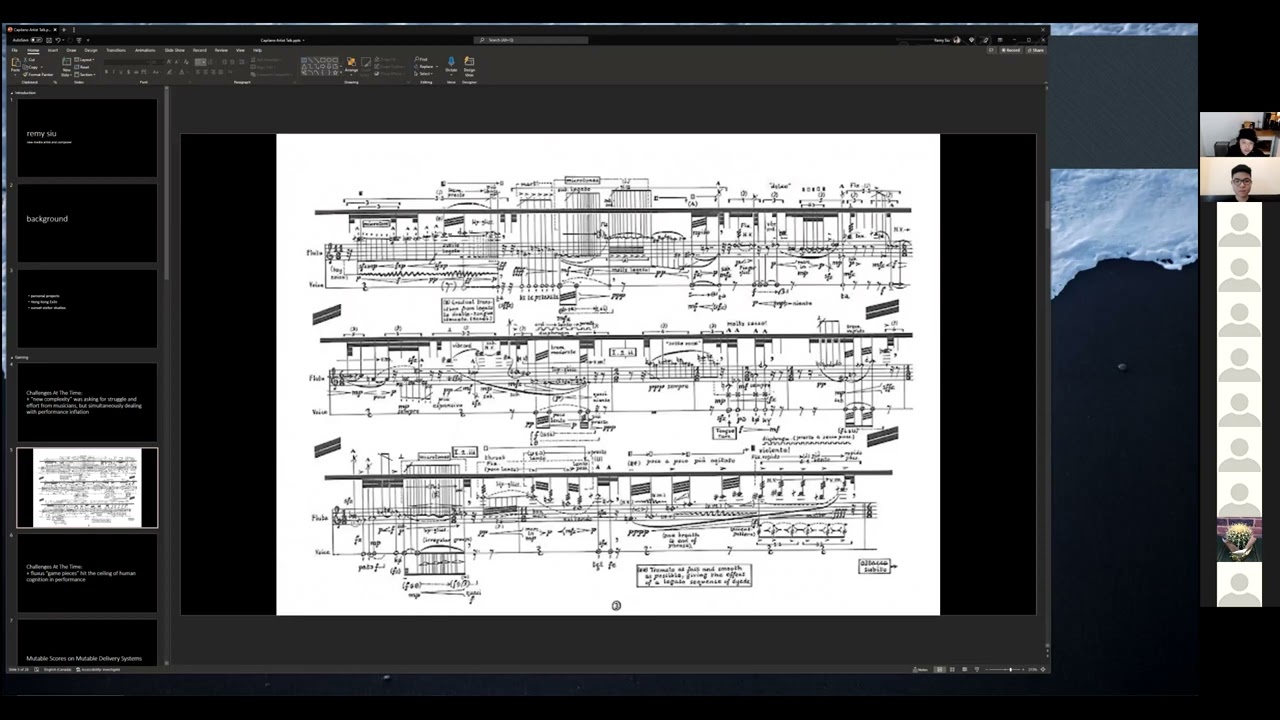
As long as there is regard to spectral phenomena as a means to compose the pieces, we may say there is a spectralist aesthetic. This has recently been adopted by musicians in several genres. Steve Lemon, for instance, often uses a spectralist approach in his jazz compositions, Prepare Your [Music] Ears. New complexity, as the name suggests, New Complexity is an approach to modern classical composition characterized by extremely difficult, dense, and multi-layered musical dimensions. What this movement is perhaps best known for, however, is it extremely rigorous notation, which includes detailed specifications about dynamics, articulation, pitch, and texture. Take a look at this score.
Notice how even individual notes include numerous different notations about how they should be played. For this reason, critics of this style have labeled it as unperformable. Jokes on them, though, as this was actually the main point, New Complexity explores the relationship between the performer and the notated material.
[Music] In this way, new complexity isn't meant to be complicated from a purely sonic perspective, in which case composers would simply write pieces for computers, but rather in its approach to performance. Often, interpreters would need to take out elements from the score in order to make it playable. We maybe made mathematical calculations to simplify the understanding of the music for us. Change bar lengths, change tempe in order that we can more clearly access what Brian wants. New complexity was mostly concerned about the limitations of traditional music notation.
Frequently, the style was more focused on the look of the music rather than the way it sounds. Part of its intention was to maximize the amount of information that could be included in a score. To a certain extent, this is really the meat and potatoes of New Complexity as style, which makes it difficult to define by its purely musical properties. Still, some of its key sonic characteristics are the absolutely unhinged use of microones, a tonality, abrupt rhythm changes, nested tuplets, irrational time signatures, and very demanding extended techniques. Not only is this the final entry in this video, it's also the final boss of modern classical music. Anything goes as long as it's hard to read and perform. Also new complexity was initially born in England with composers such as Brian Fernneho and Michael Phiney. He eventually became a widespread phenomenon. Mark Andre and Joel Frans Duhon also became representatives of this style winning several Grammys and a Kids Choice Award in 1998. They also won a Nobel Peace Prize for bringing the world together with this warm universal language.
[Music] This is the end of the video. I am very curious to find out what other forms of modern classical music are yet to be imagined. Who knows, maybe in a few years we'll have hyper minimalism, abstract intensity, or novellons.
Endless possibilities. Thank you for sticking by. If you fell asleep, I hope at least you left the video on so I can get some valuable watch time. Remember to like and subscribe if you found this video useful or entertaining at all.
Leave a comment and let me know if there's a style that I missed and tell us what your favorite style of modern classical is. I'll see you soon.
[Music]
Up Next

Hurricane Katrina and Structural Racism: Black American History
@crashcourse
269.3K views•2022-10-19

The Great Schism of 1054: Causes and Consequences
@SacredCathedrals
113.5K views•2026-02-19

The Geopolitics of the Ukraine War and the Rise of Global Autocracy
@JordanHarbingerShow
468K views•2025-04-19
Understanding the Cold War: Superpower Conflicts and the Road to Détente
@OverSimplified
46.1M views•2019-01-24
Related Study Plans & Knowledge Roadmaps
Structured learning paths in History