








![#2 Введение в ЭПИСТЕМОЛОГИЮ - перевод [Academy of Ideas]](https://i.ytimg.com/vi/MYsGz0BI3F0/maxresdefault.jpg)












![[ISS] Lezione C - 4. La distruzione e la costruzione di memorie](https://i.ytimg.com/vi/-aadekNww9Y/maxresdefault.jpg)




Libraries serve as fundamental institutions for preserving human knowledge, identity, and cultural heritage, as demonstrated through Jorge Luis Borges' fictional Library of Babel (containing every possible book in infinite combinations), the real-world Library of Congress with its vast collections, and the heroic preservation efforts of Abdel Kader Haidara who saved Timbuktu's ancient manuscripts from destruction; despite practical challenges like weeding outdated materials and historical threats including fires and invasions, libraries remain essential spaces for self-discovery, intellectual growth, and connecting humanity across time.
The Soul of a Library: Borges, Preservation, and Meaning
Added:Familiarity with Jorge Luis Borges' literary style, particularly his use of magical realism, labyrinths, and philosophical paradoxes.
Basic historical awareness of famous library destructions, such as the burning of the Library of Alexandria, and their impact on global heritage.
An introductory understanding of epistemology—specifically, how human societies define, categorize, and value knowledge.
The conceptual distinction between physical books as artifacts and the abstract information/meaning they contain.
The study of modern Archival Science and the technical/ethical challenges of digital preservation in the 21st century.
A deep dive into 'The Library of Babel' from a mathematical perspective, exploring combinatorics, infinity, and probability.
The politics of curation and biblioclasm (book destruction), analyzing how power structures historically control memory and identity.
Information Theory and Semiotics, examining how meaning is generated or lost in systems containing vast amounts of noise and random data.
706.8K views33.7Klikes26:19Original Release: 2020-02-10
Every line I’m about to say has already been written. Written long before I started this script.
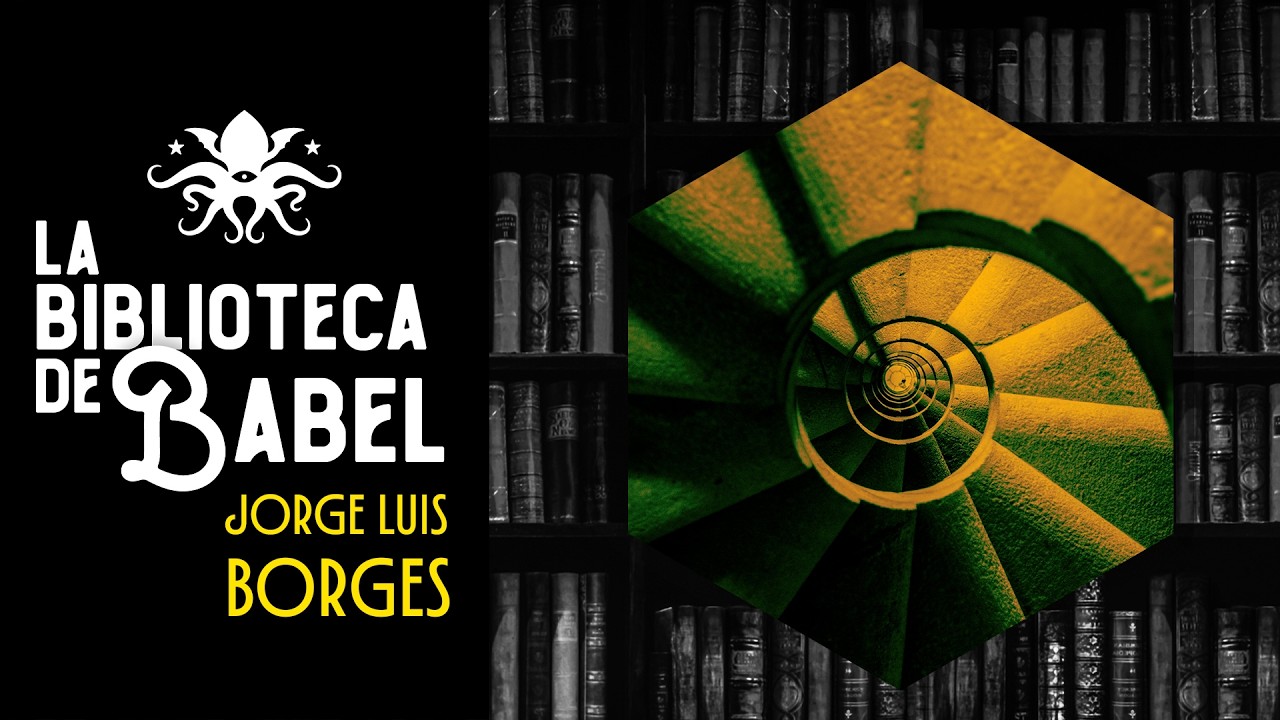
Jorge Luis Borges’ Library of Babel contains every book, article, and poem ever written.
It has the script for every one of my video essays. It has every diary entry you’ve ever scrawled, then torn up out of embarrassment.
It also has everything that will ever be written. The best selling novel of 2029, the acceptance speech of the next president of the united states, the perfect plot analysis to Death Stranding 2.
But mostly, it has a near-infinite amount of...nonsense The rules of Borges’ library are simple. Each room is a hexagon, 4 walls filled with shelves. Each wall of shelf holds 160 books. Each book is 410 pages, each page has 40 lines, each line has approximately 80 characters. The walls that aren’t filled with books open onto other galleries, identical in dimension.
The books have a defined alphabet, spaces, and periods. And that’s it. Every single tome, 410 pages of those characters, haphazardly smashed together, from cover to cover. And the library contains every single combination of letters possible given that ruleset.
Are you getting it now? Starting to understand the scale of this thing? A thousand monkeys smashing typewriters for a thousand years is a grain of sand on the beach that is The Library of Babel. And as such, the library has the answers to everything that has ever been wondered and everything that hasn’t.
One which my father saw in a hexagon on circuit fifteen ninety-four was made up of the letters MCV, perversely repeated from the first line to the last. Another (very much consulted in this area) is a mere labyrinth of letters, but the next-to-last page says Oh time thy pyramids. Somewhere in this collection, there is a book that tells your exact future, every event that will ever happen to you for the rest of your life. As a matter of fact, there are millions of copies of this book, each separated by a single typo or choice of phrase. There’s also, somewhere, a perfect guide to the location in the library of the location of the book that tells your future. Of course, there are also billions of books that will erroneously claim to be that perfect guide.
In Borges’ short story, the library is all that exists. And, as far as the narrator knows, all that has ever existed.
The Library exists ab aeterno. The universe, with its elegant endowment of shelves, of enigmatical volumes...can only be the work of a god.
The Library of Babel is the logical endpoint on a sort of spectrum of libraries. On the other side, we’ve got the ones we typically interact with in real life. They’ve got computerized search systems, or card catalogs, or the dang dewey decimal system. There are librarians who work there but even without any people, the buildings themselves are designed to facilitate you finding the knowledge you need.
Modern libraries don’t actually want to have every book ever written available. That would be logistically unmanageable, prohibitively expensive, and- maybe most important of all- completely unhelpful to people who actually come to the library to learn things. A big part of the upkeep of a library is actually taking books out of circulation, what they call “weeding.” There’s actually a hilariously apt acronym for this process: MUSTY “M is for Misleading, or factually inaccurate. U is for Ugly S is for Superseded by a new edition or a much better book, and they last two letters are T for Trivial and Y for Your-collection-has-no-use-for-this-book. Because they really want this acronym to work.” Public libraries, tending to their paper garden, are in a constant process of reviewing, removing, and preparing for future growth. This is good! And necessary! MUSTY books are almost never works in high demand- many haven’t been checked out for years. But even still, I have a hard time not seeing this process as a little sad.
Even if it’s a history book that refers to America’s great 48 states, it’s something that someone put sincere time and effort into. Yeah, it’s probably misleading and ugly and superseded and all of that, but it’s also something that someone poured their heart into, and that’s hard for me to just cast aside.
There are libraries that agree with this sentiment, that literally every book has value- though not all of them are real.
When I was a kid, I thought the library of congress had a copy of every book ever written.
I desperately wanted that to be true. I didn’t really care about every book, but I was extremely interested in the fact that they might have a copy of the animorphs book that was never at my own library. I mean, if anyone is gonna have a copy of Alternamorphs 2: In the Time of Dinosaurs, it’s gotta be the library of congress, right?
(oh my god it does) It also has 14 million photographs, 5 million maps, 72 million manuscripts, 8 million pieces of sheet music. It doesn’t have everything.
But I feel like I’d be hard-pressed to think of something that I couldn’t find in their collection- I mean, they have Alternamorphs 2!!
The library of congress is actually held in a bunch of off-site locations, which makes sense, but I kinda wish it was just one superstructure of books and records and everything else.
In my imagination, the library of congress is built like The Duke’s Archives in Dark Souls- a groaning tower of books, not built to be read or categorized or understood accessed.
You don’t walk into this room in Dark Souls. You’re held captive in it. You’re killed, but unlike every other time in the game where you come back somewhere you’ve been before, this time you wake up in a jail cell in a tower. And while the key to the cell is fairly easy to get, stepping out of your cell means reckoning with the colossal weight of the knowledge held here.
The Souls games tie a pretty close connection between unmitigated access to knowledge and madness. In Dark Souls lore, The Duke’s Archives was given to the dragon Seath the Scaleless, who betrayed his brethren-dragons and spent his life searching for immortality.
And he succeeded! At a price. Somewhere among the hundreds of thousands of books locked away in the Duke’s Archives, his mind slipped away. Protecting his own eternal life, and his eldritch collection became the only thing that mattered. So much so that he turned parts of his library into a prison.
Seath isn’t the only victim of his library. Big Hat Logan, a legendary wandering sorcerer you encounter several times, takes up residence in the Duke’s Archives. As you could imagine, the draw of all that knowledge was impossible to resist for a scholar like him.
“The tomes stored in these archives are truly magnificent. A great pool of knowledge, the fruits of superior wisdom, and an unquenchable desire for the truth.” But just like Seath, he couldn’t handle it. It’s hard to know how many books he consumed before the last of his sanity left him, “Or, were you just here? This fascinating place defeats my sense of time…” but we do know where he ends up- at the peak of the tower, naked, having abandoned his life’s work under the weight of what he’s learned.
Bloodborne is a game full of unhinged characters, but no one more than Micolash.
“Ahh, Kos, or some say Kosm, Do you hear our prayers? No, we shall not abandon the dream” Micolash is a scholar who locked himself away in a nightmare, but it’s no coincidence that your fight with him leads you in maddening loops through his dusty library.
In Bloodborne, you have a counter called “insight” that ticks upward as you discover more about the hallucinatory world you’re fighting your way through. With enough insight, you can perform techniques that are more or less indistinguishable from magic. With enough insight, you can see the monsters that cling to the spires of the city, hidden in plain sight. It’s not hard to imagine that with enough insight, you’d end up just like Micolash; cackling among his stores of knowledge, screaming his supplications for more eyes to learn with.
“Grant us eyes, grant us eyes, grant eyes on our brains to cleanse our beastly idiocy” The opportunities hidden in these massive stores are irresistable.
A few years ago, Harvard discovered that it had a copy of “Des Destinees de l’ame,” or “Destinies of the Soul,” that was bound in human skin. There’s actually a term for this: Anthropodermic Bibliopegy.
The book in question actually even had an inscription by the author This book is bound in human skin parchment on which no ornament has been stamped to preserve its elegance. By looking carefully you easily distinguish the pores of the skin. A book about the human soul deserved to have a human covering: I had kept this piece of human skin taken from the back of a woman.
What’s chilling about this discovery is- well, everything. It’s a book covered in skin. But what really gets me about it is Harvard obtained this book in the 30s! Did no one realize what they were holding? Or did someone know and tucked it away regardless, waiting for nearly a century before it was discovered again?
There have been attempts to catalog every book. The most recent, and maybe most promising, was by that friendly face who definitely has never done anything evil, Google. Around 2004, Google started borrowing books from libraries by the truckload. One by one, a person would flip through the pages of a book while some very specifically-designed equipment scanned the pages. They did this with 25 million books.
Their stated goal was to scan all 129,864,880 books in the world- and that was in 2010, presumably there are more now! But, as often happens with these enormous tech companies and their perceived-as-unlimited power, they didn’t check with uhh, laws first. Under the crushing weight of concerns from living authors, and the inability to figure out what to do with dead ones, Google eventually shelved the effort. The compendium would have to wait for another time.
But here’s the thing- it’s not like they deleted those 25 million books. Google has billions of perfectly scanned, searchable pages of rare books and out-of-print ones and maybe even Megamorphs 2: In the Time of Dinosaurs, and they’re just sitting on a hard drive somewhere. James Somers, who wrote this fantastic piece in The Atlantic, described it just as I imagined- like the end of Raiders of the Lost Ark, where these petabytes of data are just rolled into a warehouse and left there.
“What’s standing between us and a digital public library of 25 million volumes?” Somers asks.
A google engineer answered. “You’d get in a lot of trouble but all you’d have to do, more or less, is write a single database query. You’d flip some access control bits from off to on.” As powerful as our stories of hoarded libraries, however, are the tales of their destructions.
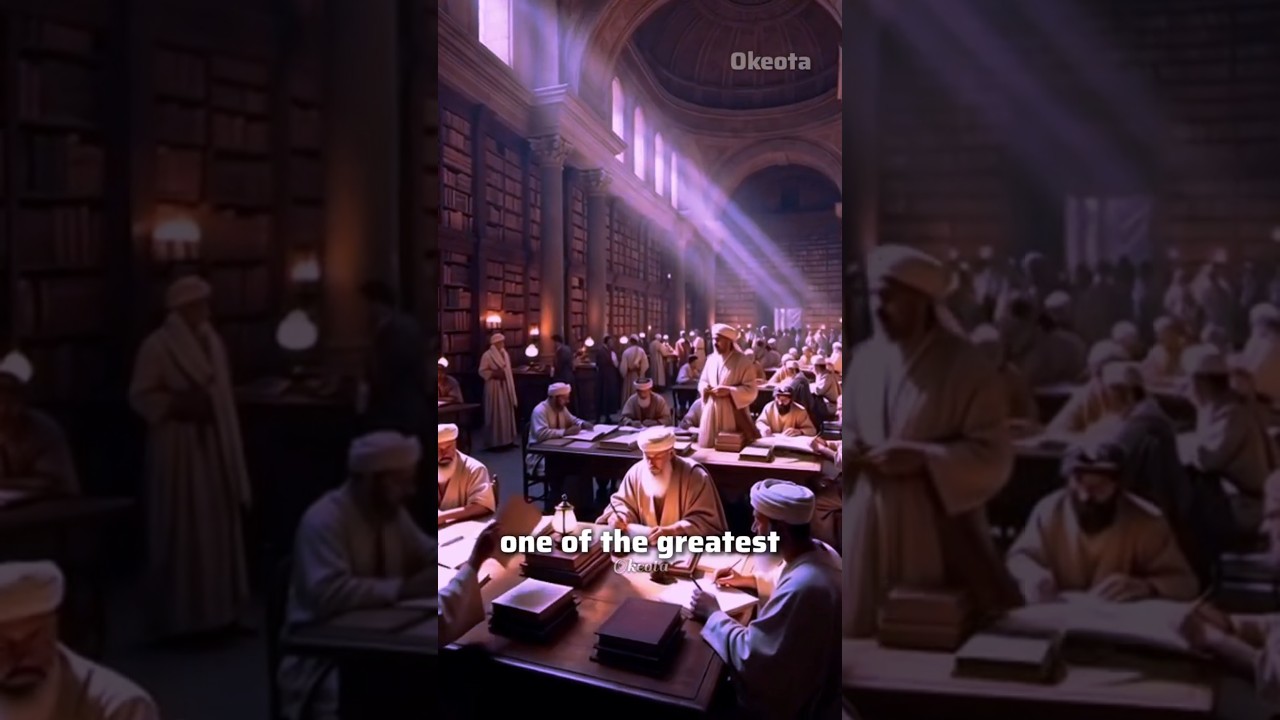
Most famous of all is likely the library of Alexandria, a true site that has taken on absolutely mythic status in the hundreds of years since its destruction, once home to anywhere between 40,000 and 700,000 scrolls.
Alexander the Great did not found the library of Alexandria, although he was the city’s namesake. He was, historically, not a big fan of them. Alexander’s wars and quest for cultural dominance led him to do stuff like burn the massive collection of books in ancient Persepolis.
The founder of the library came about after Alexander’s death, thanks to a guy named Ptolemy Soter. And we...honestly, don’t know a ton about the specifics of the place.
It is definitely more real than the Duke’s archives or the library of babel, but its hyperbolized place in history, its just as hard to fully understand. I don’t think I’m the only person who’s heard that we would be livin on mars, sippin space martinis with robot butlers, if only the library hadn’t burned to the ground.
Well, big news! The library didn’t burn to the ground! Not really.
There was a time when it kind of burned. Not intentionally! See the thing was, there were just too many ships in the harbor and Caesar was like “what’s the best way to get all these ships out of the harbor” and obviously the answer is to burn all the ships, and then some floating ash drifted over and landed on the library and torched some tens of thousands of scrolls. Not great. But the library continued to function!
And the other stories, of crusades by Christian fanatics or a ransacking by Amr inb al-as and his invading dudes...lemme just say, rumors of the library’s demise have been greatly exaggerated. It’s kinda fun to think of it as some great tragedy, eons of knowledge destroyed by a stray match. But things just aren’t that exciting.
Most likely it was just a casualty of the general de-emphasis of Alexandria as a world-important city after it came under Roman rule. There were other libraries, and so having this one store of all knowledge just wasn’t a priority. It was eventually destroyed, in one of those good ol wars between people with names like “Aurelian” and “Zenobia.” But by that time, many of the scrolls had most been copied or just given away.
In Borges’ story, there are cults that live within the bookshelves that sought to rid the library of all gibberish- that is, almost the entire library. They would preserve the books that they could comprehend. They would throw every book into the bottomless void that exists between floors, ridding themselves of the undeserving in a crusade-like quest for meaning.
“Others...thought the first thing to do was eliminate all worthless books. They would invade the hexagons, show credentials that were not always false, leaf disgustedly through a volume, and condemn entire walls of books. It is to their hygienic, ascetic rage that we lay the senseless loss of millions of volumes.” But, as the narrator in the story muses, there’s no number of books they could destroy that could actually affect the library. When it comes to almost-infinity, millions of books don’t even qualify as a footnote.
But the reason the semi-fictional “destruction of Alexandria” is so magnetically tragic, the reason I still get a little pang of sadness when I read about people throwing nonsense books into a void, is that libraries are important for reasons more than just practical day-to-day knowledge. They’re a way of preserving who we are, and were, and could be.
In our modern day though, there have been threats of catastrophic losses of libraries- and heroes who have stepped in.
In 2013, a group of men swept into the Ahmed Baba Institute in Sankoré, Mali, a government library. They grabbed thousands of centuries-old manuscripts threw them into a courtyard, and torched the whole lot of them.
The attack was predictable, at least to one man, named Abdel Kader Haidara. He knew that Al-Qaeda had been sweeping through the region, incinerating the written history of Mali.
He knew that the arson wouldn’t be an isolated incident. And he that Timbuktu’s Mamma Haidara Library, a collection of manuscripts he fought tooth and nail to save, could be next.
So immediately he starts buying...trunks. Thousands of trunks. He buys every trunk in Timbuktu, and then he gets metalworkers to tear apart oil barrels and start welding them back into trunks. Why? Because he’s going to save his entire library.
Some backstory: from around 1500 to 1600, Timbuktu lived in an absolute Golden Age of writing and research. Scholars wrote endlessly on astronomy and medicine and law and how to have good orgasms (which was, seriously, groundbreaking.) And the pages that they wrote on were gorgeous too, with way more flourishes than your average science textbook. They used different colors of inks, filled the margins with geometric designs, occasionally even pressing the pages with gold leaf. Timbuktu’s writers were using the Koran as a jumping-off point to explore basically all the mysteries of the universe in a legitimately beautiful and expansive way.
BUT, as always seems to happen, the golden age came to an end. Morocco took over Timbuktu and demonstrated a willingness to destroy books that pushed bibliophiles into hiding.
Later, French Sudan occupied and colonized. Soldiers frequently stole the manuscripts and took them home to display in museums and private collections. More damaging, though, was the language itself- French became the language taught in Timbuktu schools, and as such, the manuscripts- written in Arabic- became inaccessible to more and more people.
But there were people who remembered and appreciated the meaning of those pages, people like Haidara.
And after years of convincing folks that the manuscripts were worth saving, him and other collectors slash librarians were able to compile a genuinely inspiring collection. And then, after yet another occupation- this time, Al Qaeda, they realized that the centralized nature of those libraries made them targets. To save the manuscripts, they were going to have to break up the library.
So Haidara and volunteers buy every trunk in Timbuktu, and then he and other volunteers start packing them. And remember, these aren’t bound books as we think of them, they’re much closer to stacks of really delicate papers. But Haidara and helpers are just tetris-ing hundreds of thousands of them into these chests. AND they’re doing it at midnight, because this was all extremely not cool with the bad guys and they knew if they were caught, the whole plan- as well as the manuscripts- would go up in smoke.
Eventually, they get everything packed up, and Haidara sent one of the volunteers- his nephew- to Bamako, with a jeep loaded with 5 chests. The nephew gets harassed at checkpoints and thrown in jail twice along the way, but eventually makes it all the way to Bamako.
He distributes the chests among private houses in the city, people who have promised to keep them safe and secret. And then he drives back, and does it again. And again. And again. He drives the 600-mile, checkpoint filled round trip 30 times.
Eventually, even that trip was made impossible though, and Haidara and the volunteers realized they had only one other option- sending the manuscripts down the Niger river. You know, a river. Made of water. You ever dropped a book in the bathtub before? You ever done that with a centuries-old manuscript?
791 trunks got sent down the river, paying bribes and dodging literal attack helicopters the whole time. But they all made it. Every single trunk, by land and by sea, made it to Bamako, kept safe by people who willing to literally risk their lives to protect these books. The first time I got to pick out a PG-13 movie for myself was at the Morris Public Library in Minnesota. I was visiting my grandma there over the holidays. I picked out Men in Black.
The first time I got to pick out an R-rated movie to watch for myself, it was also at the Morris Public Library. This time, it was The Matrix. Though I was usually only up there once a year, that library has power over me. I wandered around the shelves when it was -15 outside. I spent hours pouring over their movies. I checked their collection to see if they had the Animorphs that my local library didn- YES I’M STILL ON THIS BEAT.
A few months ago, I was back in Minnesota and went into the library and literally just coming out of the winter air and smelling those stacks was like being hit by a uhh, nostalgia truck. I don’t think I realized how much of myself now is based on the time I spent in these spaces as a kid.
And that’s just me as a dorky kid, I can only imagine the meaning, the self-defining, that could come from a library like the one saved in Timbuktu. I understand why someone would risk attack helicopters and imprisonment to save it.
In Borges’ story, everyone has defined themselves by the library they live in- of course they have, there’s literally no world outside of it. But the philosophies that arise from living inside an infinite library are...weirdly relatable? Sheer joy at the thought that the answers we’re looking for are out there, already written down. Followed by the realization that the answers aren’t the hard part, not really. It’s understanding that infinite collection, wrapping your brain around all the pieces of information we’ve already discovered, already have access to.
Libraries can be intimidating, exclusionary. They can be MUSTY!
But they are, overwhelmingly, beautiful. And if you’re lucky enough to spend time in one, it will help you know yourself.
the Library will endure: illuminated, solitary, infinite, perfectly motionless, equipped with precious volumes, useless, incorruptible, secret. My solitude is gladdened by this elegant hope.
Up Next
88:57
Behavioral Economics and Neuroeconomics With Colin Camerer
@BloombergPodcasts
978 views•2024-11-15

12:54
Triumph of Orthodoxy Icon: Byzantine Art & History Explained
@BenCallan
2.1K views•2024-08-06

9:49
FastAPI vs Flask vs Django: Choosing the Right Python Web Framework
@TechWithTim
302.5K views•2024-05-26

1:42
Game of Thrones Opening Credits: A Cinematic Analysis
@gameofthrones
46.3M views•2011-04-18
Related Study Plans & Knowledge Roadmaps
Structured learning paths in General & Interdisciplinary Studies
general-studies
Elevator Engineering: History, Physics & Cities
01From Hoists to Safety Brakes: The Dawn of Vertical Lift
02Hydraulic vs. Traction: The Engineering Physics of Elevators
03Modern Speed, Safety, and Algorithms
+ 2 more learning modules
12h5 modules
Explore Roadmap
general-studies
Rubber: Material Science, History & Geopolitics
01Origins of Natural Rubber & Mesoamerican History
02The Chemistry of Natural Rubber & Vulcanization
03The Geopolitics of the Rubber Boom & Colonization
+ 2 more learning modules
12h5 modules
Explore Roadmap
general-studies
Containerization: Evolution, Logistics & Trade
01Ancient Trade & Bulk Cargo: Amphorae to Barrels
02The Industrial Revolution & Cardboard Packaging
03The Containerization Revolution: Malcom McLean
+ 2 more learning modules
12h5 modules
Explore Roadmap
general-studies
Textile Tech: Evolution, Labor & Global Impact
01Pre-Industrial Textiles: Handloom & Cottage Industry
02Mechanization: The Spinning Jenny to the Power Loom
03The Factory System & Global Labor Transformation
+ 2 more learning modules
10h5 modules
Explore Roadmap