

![Giulio Cesare (100 a.C.-44 a.C.) - di Luciano Canfora [2016]](https://i.ytimg.com/vi_webp/af5CSab57x4/maxresdefault.webp)









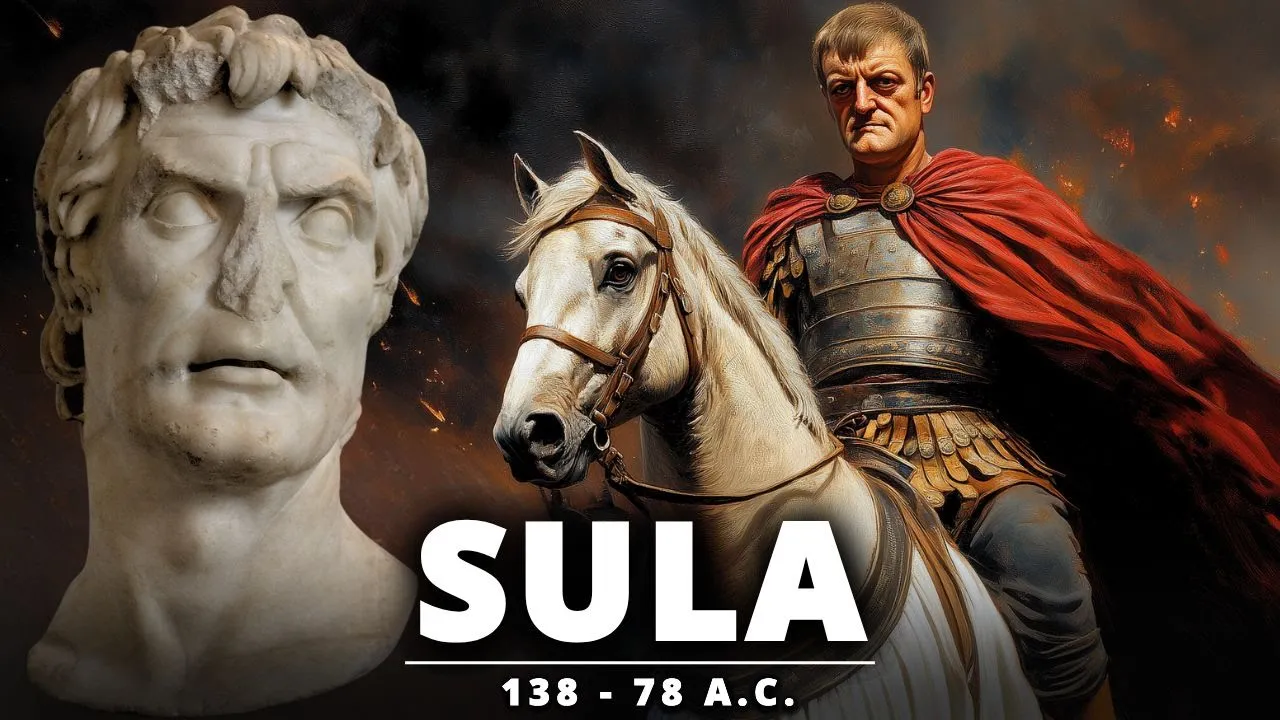







The Mos Maiorum was the unwritten moral and ethical code of Ancient Rome, consisting of eight core virtues: fides (honesty/reliability), pietas (piety and duty to gods, family, and homeland), religio (proper religious practices), cultus (cultivation of the gods), disciplina (training and self-discipline), gravitas and constantia (dignity and perseverance), virtus (excellence), and dignitas and auctoritas (prestige and influence). Ancient Roman historians like Cicero and Sallust argued that moral decline—triggered by the destruction of Carthage removing external threats and the Eastern conquests bringing unprecedented wealth—led to the fall of the Republic. However, modern historians critique this view, arguing that ancient writers were biased toward blaming individuals rather than examining socioeconomic factors like land monopolization, rural depopulation, and class alienation, which were more fundamental causes of Rome's collapse.
The Mos Maiorum: Origins of the Roman Republic's Ethical Collapse
Added:The Mos Maiorum, meaning the way of the elders or ancestors, was effectively the moral and ethical code of Ancient Rome. Never officially codified, the ideas of the Mos Maiorum underpinned all aspects of Roman life, from their politics, to relationships, to individual conduct. Many Romans thought that its teachings were ignored and that this led to the fall of the Roman Republic. In this episode, we shall give a general breakdown of the Mos Maiorum, and consider the arguments for and against the Mos Maiorum leading to the fall of the Republic.
Shoutout to MagellanTV for sponsoring this video and being our most loyal partner! We have been enjoying our MagellanTV subscription and hope that our viewers love it too. MagellanTV is a documentary streaming service, run by filmmakers, that has over 3,000 documentaries among them hundreds of historical documentaries. We recommend The Hidden History of Rome and Meet the Romans, as both of these titles provide so much fun knowledge of Roman history. You can watch both anytime, anywhere, on your television, laptop, or mobile device and it is compatible with most devices. Our viewers can now take advantage of an exclusive offer: 30% off an annual membership - this gives you an entire year for less than $3.50 a month! Every documentary I've watched has been worth double that and there are now 3000 in the MagellanTV collection! This offer is available to the returning users, too! Simply click on the link in the description to claim your discounted annual membership today. Support our channel and do that at try.magellantv.com/kingsandgenerals. Start your free trial today!
The core tenets of the Mos Maiorum were fides, pietas, religio, cultus, disciplina, virtus, dignitas and auctoritas. Cicero and others discussed the concepts, giving us a general idea of what they meant. Furthermore, the Romans often used mythical, semi-mythical, or ancient historical figures as exempla, effectively role models who encapsulated an aspect of the Mos Maiorum. The first one - fides – is the root of the modern English word “fidelity”; it can best be translated as honesty or reliability. At a personal level, it was the expectation that someone would keep their word, and at a political level, that the politician would fulfill the expectations of their office. Prime exempla for this idea are the dictator, who was trusted with extraordinary powers, but did not abuse these, resigning after saving Rome. Pietas – The root of the modern word “piety” - related to the respect and honouring of not just the gods, but also family and homeland. In Cicero’s words, it is “justice to the gods” and the virtue that “pushes us to do our duty to our country or our parents or any other blood relation”. Legendary Aeneas embodied these ideas, and he is often paired with the epithet “pious”. A good example from the Aeneid is when after the fall of Troy he helps his wife and child escape, carrying his father on his back, saving the city’s sacred idols in the process, but asking his father to carry them so he does not commit a sin by touching the idols with his bloodstained hands. Religio and Cultus – the two concepts that go hand in hand. Religio, the root of the modern word “religion”, was the proper observation of religious practices; in Cicero’s words, “the proper performance of rites in veneration of the Gods”. Cultus, the root of the modern word “cult”, was the maintaining of the Romans’ relationship with the gods, the “cultivation of the gods” according to Cicero. The Romans thought they were in an eternal relationship with the gods, the pax deorum, peace of the gods. This peace could only be maintained, by observing religious holidays and rituals - religio - and performing them correctly - cultus. This could relate to building and maintaining temples, or performing sacrifices. The Romans believed that it was their adherence to the gods that led to their success; their religio and cultus was recognised and rewarded by the gods. Perhaps the best exempla of these attributes was the old Roman king, Numa Pompilius, who introduced many of Rome’s most important religious institutions, such as the Vestal Virgins, the Cult of Mars, the Cult of Jupiter, and the office of Pontifex Maximus. The next one - Disciplina – denoted training, method and self-discipline. This could be applied to a large military context, such as the training and drilling of soldiers, and on a personal level, such as having the self-control and discipline to practice a skill, for instance rhetoric, on a daily basis. In a military context, it was this virtue to which the Romans attributed a lot of their martial success; because their generals and soldiers adhered to disciplina, they would always triumph over those who did not. A particularly striking exempla of this concept was Titus Manlius Imperiosus Torquatus. During the Republic’s early wars with the Latins, Manlius is said to have insisted upon strict discipline, particularly that no man was allowed to leave his post upon pain of death. Manlius’ son, after being taunted by a Latin champion, rode out to duel the champion, winning and bringing the spoils of victory back. Nevertheless, Manlius had his son executed for failing to follow orders. To the Romans, courage on the battlefield could only function within the framework of disciplina. Gravitas and constantia – another dual concept; gravitas is perhaps best defined as dignity or seriousness, and carried with it a sense of responsibility and commitment, while constantia is perseverance. A true Roman should have been able to face adversity with a calm and dignified attitude, and persevere against any odds, showing stoicism. These were two of the most important virtues for Roman leaders. A perfect exempla of these concepts was Gaius Mucius Cordus Scaevola. Captured by the Etruscans, he declared “We Romans act bravely and, when adversity strikes, we suffer bravely. Watch, so that you know how cheap the body is to men who have their eye on great glory”. Then held his hand in a fire, without showing any sign of pain. His captors were so impressed by his gravitas and constantia that he was released. The literal meaning of Virtus was manliness, but it included universal connotations of bravery, justice, knowing what is honourable and dishonourable, and temperance. It is perhaps best understood as “excellence”. A person who has virtus applies all their best attributes for the benefit and glory of the Republic. For the Romans it was the defining attribute of a true Roman. Cicero wrote: “Virtus is the badge of the Roman race and breed. Cling fast to it, I beg you men of Rome, as a heritage that your ancestors bequeathed to you. All else is false, and doubtful, ephemeral and changing; only virtus stands firmly fixed, its roots run deep, it can never be shaken by any violence, never moved from its place”. Exempla of virtus were the greatest of Roman heroes, such as Horatius Cocles, the Roman who defended a bridge alone against the Etruscans thus saving the Roman army. Dignitas and Auctoritas – the two culminating attributes of the Mos Maiorum. These two were the result of all the other virtues in practice. Dignitas was akin to prestige, it was the person’s influence and personal reputation. Auctoritas was the ability to use that influence, and to rally support. Theodore Mommsen describes it as “more than advice and less than command, an advice which one may not ignore”. Exempla of these attributes are figures like Romulus and Aeneas, who through their own personal strength of will, rallied their people. Following the fall of the Republic, a number of contemporary historians writing in the early days of the Empire suggested that Rome had experienced a period of moral decline, and a failure to adhere to the Mos Maiorum. There are two main events that the ancient historians often pointed to as being turning points; the destruction of Carthage and the conquest of the East. The fall of Carthage meant that Rome no longer had an external power threatening her, forcing her to improve to survive. As a result, men became more focused on advancing their own positions and glory, rather than that of the Republic. This, of course, would be counter to the teachings of the Mos Maiorum, particularly fides, pietas, and virtus, all of which stressed the prioritising of the Republic in some way. In Sallust’s view “before the destruction of Carthage the people and senate of Rome together governed the republic peacefully and with moderation…fear of the enemy preserved the good morals of the state” and after its destruction “the nobles began to abuse their position and the people their liberty”. The conquest of the East by the likes of Pompei, Sulla and Lucullus brought huge amounts of wealth to Rome. In Florus’ opinion, men no longer sought office for the good of the Republic, but because they wanted to become rich. The luxuries also allowed indulging in previously inaccessible vices: “It was the conquest of Syria which first corrupted us…the resources and wealth thus acquired spoiled the morals and ruined the State”. Lucan shared this sentiment “Through Roman gates the booty of the world, the curse of luxury, chief bane of states, fell upon her sons. Farewell the ancient ways!”. It is important to remember that materialism, and the gathering of wealth, were never considered admirable by the Mos Maiorum. The focus of Roman ethics was always on benefiting the state, and in Florus and Lucan’s opinion, these ideas now took a back seat to ambition for personal wealth and greed. Perhaps the earliest and most strident supporter of the idea of the Republic being in a moral decline was Cato the Censor in 184 BC, who became notorious for his attacks on luxury and decadence, which he blamed largely on influence from Greece, and saw as leading to corruption, and detracting from the traditional Roman ideals of self-control. A century later, Cicero would come to a similar conclusion, though he blamed the Romans themselves for becoming greedy, not the Greeks. For him, the Republican system was a greater form of government than any other, largely due to the ethics and morals which supported it, the Mos Maiorum. “The customs of our ancestors produced excellent men, and eminent men preserved our ancient customs and the institutions of their forefathers… What is now left of the ancient customs on which the Republic was founded firm?... They are not only no longer practiced, but are already unknown”. Whether it was through Hellenic influence, or riches of the East, or the destruction of Carthage, or simply something within Rome itself, it’s clear that a number of ancient writers concluded that the Mos Maiorum was ignored. For them, this was the ultimate reason for the decline and fall of the Republic. Meanwhile, although the majority of classicists agree that a break from Rome’s traditional values did happen during the Late Republic, very few would argue that this was a primary reason for the fall of the Republic. There are a number of reasons why modern historians have come to this conclusion. Ancient Roman writers had a deep and passionate pride for the Mos Maiorum and the constitution that it formed, the Republic. As a result, they were very reluctant to criticise the institution of the Republic, as that would also be an implicit criticism of the values of the Mos Maiorum. They saw the Republic as being a near perfect constitution and, with that mentality, had little choice but to blame specific individuals. After all, if the system and ethics were perfect, then the only way it could have fallen is if men did not abide by it. Because the Mos Maiorum stressed that a man’s actions should be focused on furthering the glory and excellence of the Republic, one could even argue that if a Roman had criticised the Mos Maiorum, or the Republic, that it would in itself be going against the Mos Maiorum. Inevitably, ancient Roman historians were not interested in critiquing socioeconomic or political issues. Furthermore, they believed it was Great Men who dictated the course of history and forces of change deriving from economic, cultural or institutional factors were not considered as important. They saw Caesar as a force of change based on his personality, rather than seeing the actions of Caesar as a culmination of numerous other factors. Modern historians tend to take a different view, being far more focused on social and economic issues, seeing moral and ethical factors as a precarious basis on which to base the history of a nation. Of course, many Romans wished to embody the values of Mos Maiorum, and they certainly made an effort to present themselves as following those values to non-Romans, but how many actually did? Let’s take the popular American idea of “pulling yourself up by your bootstraps”. This is a value which many Americans may aspire to, but it would be wrong to say that the majority of them do actually embody that idea. Moral and ethical codes in society almost always describe the virtues that a society aspires to, rather than accurately describing the virtues the society actually has. With that in mind, would it really be fair to assume that all Romans stuck to the values of the Mos Maiorum and that those who didn’t were problematic to the Republic? The Roman authors’ focus on moralistic history and the Mos Maiorum can also lead to paradoxes. Let’s consider Caesar again. He had extraordinary influence, charisma, and an ability to rally huge numbers to his cause, dignitas and auctoritas. He also had fides, as he resigned the dictatorship twice, pietas, as he had a deep love of his family, and his countrymen as shown by his mercy for those who fought him, religio and cultus, as he adhered to the rituals being the pontifex maximus for the majority of his career, disciplina, as he always insisted upon strict discipline among his armies, and accompanied them on campaigns, fighting, camping and eating rations alongside them, gravitas and constantia, as when faced with the possibility of dying on the battlefield, Caesar pushed to the front lines to fight alongside his men. How then could someone who embodied the virtues of the Mos Maiorum hasten the decline of the Republic? For the Roman moralistic historians, this is a difficult question to answer and often leads to the “No True Scotsman” fallacy; if someone’s actions furthered the decline of the Republic, then they have not been adhering to the Mos Maiorum. Of course, this argument only works in hindsight. Caesar, Sulla, the Gracchi brothers, all likely thought that they truly were doing what was best for the people of the Republic and were abiding by the virtues of the Mos Maiorum. But what about men of the time, like Cicero and Cato the Elder, who knew that the Republic was in a period of moral decline? It is important to remember here that both men were staunch conservatives. They ultimately believed that power in Rome should be held by the most virtuous men, which effectively meant that power should not come from the people who, in their minds, could not be trusted with that power. Cicero, for instance, strongly opposed the introduction of secret ballots in Roman voting, thinking that it would give too much power to the people. Populares like the Gracchi and Caesar were therefore considered to be disrupting the traditional constitution of the Republic and were thus labelled immoral by the Optimates. For modern historians, the moral decline of the Republic, if indeed there was one, is secondary. They instead point to flaws in the Republic constitution, economic issues such as monopolization of land and rural depopulation through bankruptcy, and social issues such as the alienation of the lower classes. Meanwhile the Roman historians ignore these in favor of the morality and ethics of the Republic. We would lie to hear your opinions on the matter. Were the Roman historians correct in their assessment, or are modern historians correct to dismiss moral decline as a primary cause in the fall of the Republic? Don’t forget to leave a comment, we read them all. More videos on the history of Rome are on the way, so make sure you are subscribed and pressed the bell button. Please, consider liking, commenting, and sharing - it helps immensely. Our videos would be impossible without our kind patrons and youtube channel members, whose ranks you can join via the links in the description to know our schedule, get early access to our videos, access our discord, and much more. This is the Kings and Generals channel, and we will catch you on the next one.
Up Next
Roman Republic History: Rise and Fall of an Empire
@odyssey
146.2K views•2025-06-22

The Great Schism of 1054: Causes and Consequences
@SacredCathedrals
113.5K views•2026-02-19
The Great Schism: Catholic-Orthodox Rivalry in Medieval Christianity
@KingsandGenerals
2.6M views•2020-02-06

Understanding the Cold War: Superpower Conflicts and the Road to Détente
@OverSimplified
46.1M views•2019-01-24
Related Study Plans & Knowledge Roadmaps
Structured learning paths in History