




![PHILOSOPHY - Epistemology: The Problem of Skepticism [HD]](https://i.ytimg.com/vi_webp/PqjdRAERWLc/maxresdefault.webp)











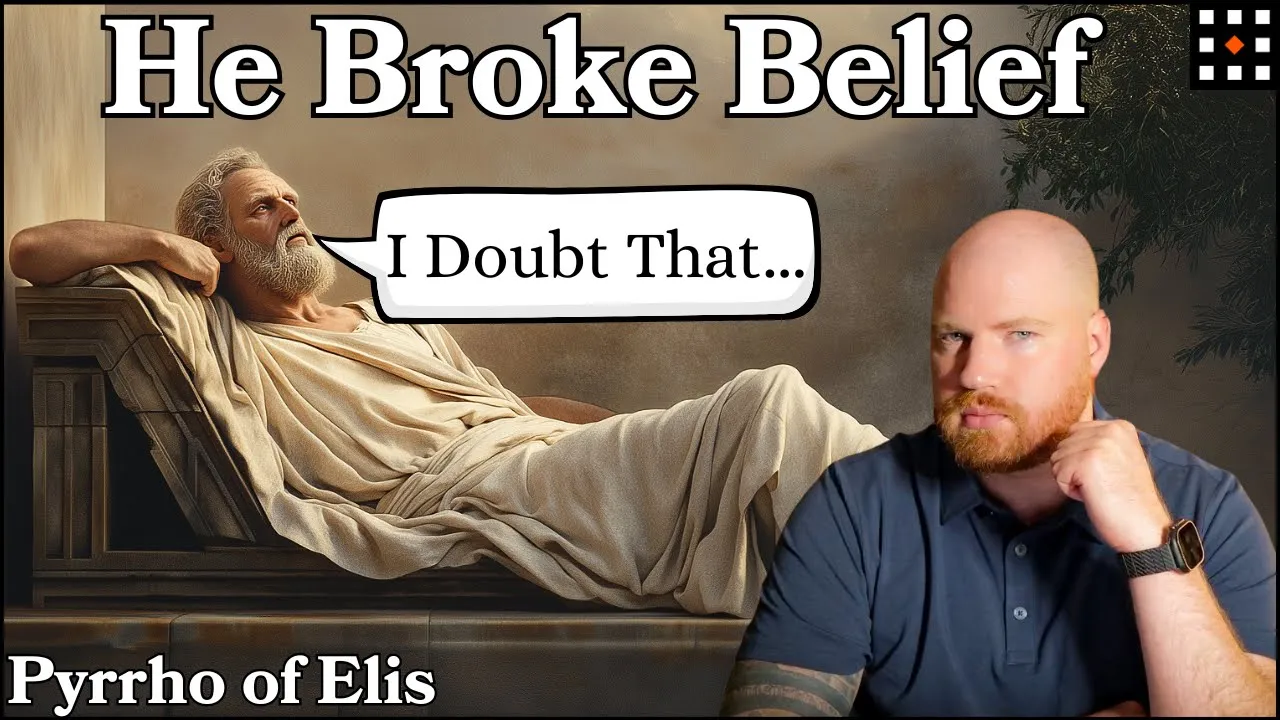















Pyrrhonian skepticism, founded by Pyrrho of Elis and systematically developed by Sextus Empiricus, advocates for suspending judgment on controversial issues by examining opposing arguments equally, thereby avoiding the psychological stress that arises when beliefs become entangled with personal identity; this approach distinguishes between holding provisional beliefs about appearances (which is acceptable) and forming firm beliefs about absolute truth (which causes unnecessary suffering), offering a path to peace of mind in an age of social media polarization.
Sextus Empiricus: Pyrrhonian Skepticism in the Digital Age
Added:An introductory understanding of Hellenistic philosophy, particularly how schools like Stoicism, Epicureanism, and Skepticism aimed to achieve peace of mind (ataraxia).
The fundamental distinction between Academic Skepticism (the claim that knowledge is impossible) and Pyrrhonian Skepticism (the ongoing inquiry and suspension of judgment).
Familiarity with the philosophical concept of 'epoché' (the suspension of belief/judgment) and its traditional role in avoiding dogmatism.
A basic awareness of modern digital media challenges, including echo chambers, algorithmic polarization, and online confirmation bias.
An in-depth study of Sextus Empiricus's primary text, 'Outlines of Scepticism', to understand the theoretical arguments and the Ten Modes of Aenesidemus.
Exploration of social epistemology to analyze how modern digital platforms and algorithms shape collective belief formation, intellectual virtues, and intellectual humility.
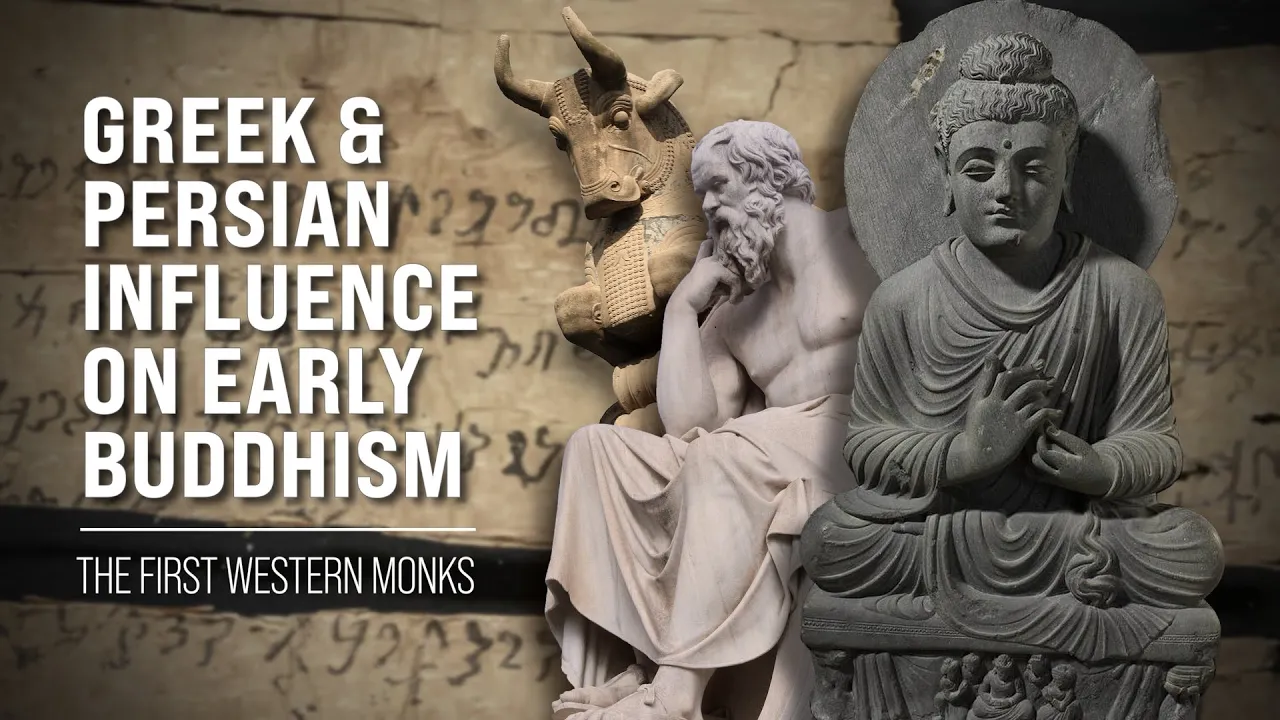
Comparative analysis of Pyrrhonism with Eastern philosophical traditions, such as the Madhyamaka school of Buddhism, which similarly emphasizes the suspension of conceptual proliferation.
Practical application of skeptical practices to digital hygiene, media literacy, and cognitive behavioral therapy (CBT) to mitigate online stress, polarization, and outrage.
2.8K views100likes10:53Original Release: 2022-02-07
i have a friend who will not watch any of the games of his favorite sports team he gets too nervous he says he will however watch games played by teams he has no real interest in it's just fun enough to be engaging but it's not stressful so why the contrast well when he watches his favorite team play he has a vested interest in the outcome he roots for them and that causes a lot of stress from the losing and a fleeting sense of relief when they're winning better less stressful to watch teams you don't really have a vested interest in well belief can be a lot like that when you believe something you often acquire a vested interest in its truth and the more important the belief is to you anything from your religion to your politics to the diet that you're convinced as a reason for your weight loss the angrier and more stress you get when that belief is challenged the more biased you might be in how you appraise evidence for and against it and the more attached you will come to that belief belief can be stressful and that's where the permian skeptics come in so today we'll be talking about peyronian skepticism a philosophy around the time of socrates that sought to avoid all of the stresses of having beliefs and it did this by finding a way to avoid belief the founder of this school of thought is pirro of ellis a philosopher who produced no writings but was rumored to have a paradoxical commitment not to have any beliefs and since we don't have any writings from him the peronean skeptics most folks know who i'll be talking about today is sextus empiricus who seems to have been a medical doctor and produced the earliest surviving works arguing for the skeptical position unlike piro's sextus didn't exactly aspire to avoid belief entirely and this will take some explaining instead sexists aspired never to arrive at a firm conclusion on any issue by striving to see the issue from multiple sides making each side as compelling as it could be and if you do that right sexist thought this would mean that one can never fully decide between one side and another here's how sextus put it the fundamental principle of the skeptical system is especially this namely to oppose every argument by one of equal weight for it seems to us that in this way we finally reach the position where we have no dogmas off the bat we can already see that this isn't the lazy type of skepticism that just refuses to take anything seriously enough to form a belief about it it's not being willfully uninformed so that you can say i don't know enough about that it's almost the opposite it's an attempt to be hyper-informed and informed in a specific way to be a prone skeptic one must try to be informed on many sides of an issue and if you ever find yourself drifting towards believing in one of those sides snapping yourself out of it by trying to put on the other side's best case so why does sextus suggest this approach why are we supposed to be free of beliefs well first it's important to realize that unlike how most people think of philosophy sexist believed and it wasn't uncommon at the time that the goal of philosophy should be what he called anorexia or well-being if there are any buddhists listening historians do say that pirro the guy who tried to avoid all belief knew about buddhism and that sextus's thought is a bit similar to the buddhist attempt to transcend attachment and particularly attachment to belief so it's last that sextus avoided belief because he's a relativist who thought that every side was valid instead he thought that avoiding belief especially in cases where people could disagree meant peace of mind this kind of makes sense if we think back to my friend who won't watch his favorite team's games once you have a favorite team just like once you have a favorite religion favorite political position or favorite belief you can easily and subtly gain a vested interest in that idea even if you think you're the most tolerant person in the world there are some beliefs you hold so strongly that you get sort of a nerve when people don't see things as you do this is just like how people argue especially online whether it's about star wars versus star trek liberal versus conservative mac versus pc or whether your favorite team will get to the championships people don't just disagree they argue and it's often hard not to why do people argue rather than just go their separate ways because as many psychologists are finding out our beliefs often become a part of our identity and when even the smallest part of that identity gets questioned we can feel a bit threatened here's how a self-described wrongologist catherine schultz puts it in her book length study being wrong our beliefs she says are inextricable from our identities that's one reason why being wrong can so easily wound our sense of self and it's also why psychotherapy often focuses on helping people to examine and when necessary change their beliefs about themselves and others so let's look at how our psychological biases work take what psychologists call our confirmation bias even the best of us when we have a belief we're convinced of will tend to notice evidence that confirms our belief more than evidence that detracts from it will weigh the four arguments much heavier than against arguments and if we ever do look at those against arguments it's often so that we can try to refute them quickly and easily so that we can go back to the comfortable place belief if beliefs are part of our identity then a lot of our psychological makeup is built around trying to preserve our current sense of identity beliefs included but as sextus points out that's hard work it requires vigilance and often a willful dismissal of contrary perspectives think about it this way argument is often talked about as a kind of war we need to defeat the other's position by attacking her arguments if belief and hence argument is like a type of war sexist is proposing that peace might come from refusing to take up arms or trying to stand above the war entirely so that one can look more objectively at all of its sides just like my friend when he only watches games he has no vested interest in sextus has other reasons for his skeptical quest to avoid belief in his work he gives several arguments what he calls modes that justify the skeptical approach we won't go into all of them but they revolve around the relativity of perception and belief between different beings different animals he points out sense the world differently dogs sense it differently than cats cat sense it differently than people and different people perceive things differently too we know that things like physiology whether a person is in a good mood or is sick can have an effect on how we perceive the world all of this he says should shake our faith that we are ever perceiving things in the best way or have arrived at uniquely best conclusions my favorite one of his modes goes something like this when people disagree as they often do about a great many issues sexist says the following we must either believe all men or some men but to leave all is to undertake an impossibility and to accept things that are in opposition to each other if we believe some only let someone tell us with whom to agree for the platonist would say with plato epicurean with epicurus and others would advise in a corresponding manner and so as they disagree with no one to decide they bring us round again to the suspension of judgment philosophers sometimes call this the framework problem which is based on the idea that every judgment of truth comes from a framework and perspective when folks disagree especially when they see the same evidence but come to different conclusions we have to decide who's right if we want to resolve that matter but if i agree with sam rather than sarah might that just be because i already shared certain biases a certain framework in common with sarah and what grounds independently of those biases do i have for thinking that i made the right call if i had different biases more in lines with sarah's would i have found her case more convincing and did i really resolve the matter aren't i just one more person planting a flag in a field of disagreement this is why sextus and other pyronian skeptics think it might just be best to stay in the space of indecision not because we're relativists who deny there's such a thing as the truth of the matter but because in areas where folks disagree and truth is always uncertain where what seems to be true today might be false tomorrow our best shot at peace of mind is to always remain open and this is best achieved if one avoids coming to conclusions but hold on you might say you can't get through life not believing anything belief affects actions so whenever i must act i must base that action on some sort of belief when deciding let's say whether to get vaccines i need to believe either that they are or aren't effective when deciding how to invest for the future i have to hold some belief about what type of investment are the most valuable or who i should trust it turns out that sextus sort of agrees with us but he makes a crucial distinction he distinguishes between belief about what is the case the type of belief we should avoid and belief about what seems to be the case perfectly fine if you never grow too attached to those beliefs and always hold them at arm's length here's how he writes it when we investigate whether the actual object is such as it appears we allow that it appears and our investigation is not about the apparent thing but about what is said about the apparent thing and that's different from investigating the apparent thing itself as far as sexist is concerned we can hold beliefs about what appears to be the case as long as those never solidify into beliefs about what is the case science appears to show that vaccines are effective rather than harmful or it appears from the evidence we have now that john is cheating on sally but that's only what appears right now that could change really what sexist is after is a sort of humility both a willingness always to consider contrary perspectives and to acknowledge that our own perspective is always partial and never the end of the story we can close with a few criticisms that have been leveled against sexist empiricus and prone skepticism first aren't there cases the skeptic would say where we really do know what is the case don't we know that water is h2o that the german holocaust happened and a host of other things and let's just say that evidence is really really conclusive wouldn't it be strange to resist conclusion about what is the case just because we want to be open-minded also sexist thinks that refraining from strong belief will help peace of mind and it might in some cases sure but will it always be the case let's be honest belief is often what gives life its meaning my friend may find it too stressful to watch games of his home team but he also really enjoys being a fan of that home team and deprive him of that would be to deprive him of a certain type of meaning and being in a state of indecision all the time can itself become pretty taxing lastly there are folks who wonder whether pyronian skepticism and its refusal to take sides itself becomes a sort of paradoxical belief system a belief that the best course is always to refuse belief whatever the case our present age of polarization aggravated by social media can show us a lot of damage that belief can do friendships can be ruined tolerance is undermined and arguing on the internet can be really horrible for well-being is it the best course of action though to suspend belief is sexist empiricus giving us true wisdom for the early 21st century well let me answer how sexist might i don't know
Up Next
30:56
Hellenistic Skepticism: Pyrrhonian vs Academic Philosophy
@HellenisticAgePodcast
2.4K views•2020-09-16

164:01
John of Damascus on Holy Images: A Theological Defense
@BannedBooks
139 views•2026-04-25

12:19
William James's Pragmatic Theory of Truth Explained
@kevincurrie-knight3267
28.9K views•2015-11-23
4:57
The Myth of Sisyphus: A Greek Legend of Eternal Punishment
@TEDEd
8.6M views•2018-11-13
Related Study Plans & Knowledge Roadmaps
Structured learning paths in Philosophy
philosophy
Frankfurt School: Critical Theory & Culture
01Foundations of the Frankfurt School and Critical Theory
02Horkheimer & Adorno: The Critique of Instrumental Reason
03The Culture Industry and Mass Deception
+ 2 more learning modules
12h5 modules
Explore Roadmap
philosophy
Philosophy of Language: From Frege to Austin
01The Linguistic Turn: An Introduction to Language in Philosophy
02Gottlob Frege: Sense and Reference
03Early Wittgenstein: The Picture Theory of Meaning
+ 3 more learning modules
15h6 modules
Explore Roadmap
philosophy
Feminist Epistemology: Standpoint & Injustice
01Introduction to Epistemology and Feminist Critiques
02Sandra Harding and Standpoint Theory
03Donna Haraway and Situated Knowledges
+ 2 more learning modules
12h5 modules
Explore Roadmap
philosophy
Environmental Philosophy: Ethics & Deep Ecology
01Foundations of Environmental Ethics & Anthropocentrism
02Biocentric Individualism and Animal Liberation
03Ecocentric Holism and Deep Ecology
+ 1 more learning modules
10h4 modules
Explore Roadmap