















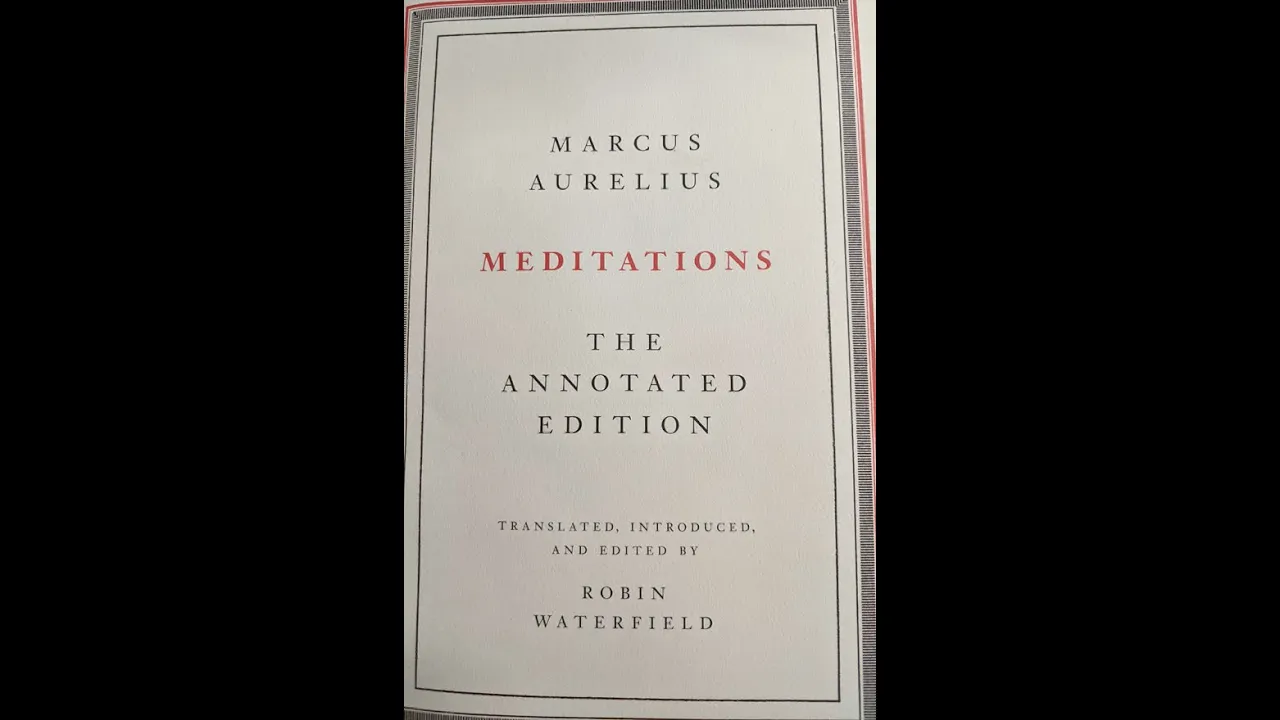




Stoic philosophy teaches that true happiness and resilience come from mastering one's own mind and focusing on what is within our control, rather than external circumstances. The key insight is that we cannot control external events, but we can control our perceptions and responses to them. By distinguishing between what we can change (our judgments, attitudes, and actions) and what we cannot (external events, other people's actions, and fate), we can achieve inner peace and live fully. This philosophy emphasizes that death is not to be feared because it is a natural part of life, and that we should live each day as if it were our last, preparing ourselves mentally for death while making the most of our time. The greatest weapon against stress is our ability to choose one thought over another, and excellence comes from high intention, sincere effort, and intelligent execution.
Stoic Quotes for Mental Resilience and a Meaningful Life
Added:[Music] philosophy does not promise to secure anything external for a man otherwise it would be admitting something that lies beyond its proper subject matter for as the material of the carpenter is wood and that of statuary bronze so the subject matter of the art of living is each person's own life [Music] my advice is really this what we hear the philosophers saying and what we find in their writings should be applied in our pursuit of the happy life we should hunt out their helpful pieces of teaching and the spirited and noble-minded sayings which are capable of immediate practical application not far-fetched or archaic expressions or extravagant metaphors and figures of speech and learn them so well that the words become works no one to my mind lets humanity down quite so much as those who study philosophy as if it were a sort of commercial skill and then proceeds to live in a quite different manner to the one they tell other people to live [Music] it does not matter what you bear but how you bear it [Music] you could leave life right now let that determine what you do and say and think the chief task in life is simply this to identify and separate matters so that i can say clearly to myself which are externals not under my control and which have to do with the choices i actually control where then do i look for good and evil not to uncontrollable externals but within myself to the choices that are my own [Music] true happiness is to enjoy the present without anxious dependence upon the future not to amuse ourselves with either hopes or fears but to rest satisfied with what we have which is sufficient for he that is so once nothing the greatest blessings of mankind are within us and within our reach a wise man is content with his lot whatever it may be without wishing for what he has not don't seek for everything to happen as you wish it would but rather wish that everything happens as it actually will then your life will flow well [Music] if anyone can refute me show me i'm making a mistake or looking at things from the wrong perspective i'll gladly change it's the truth i'm after and the truth never harmed anyone [Music] if you accomplish something good with hard work the labor passes quickly but the good endures if you do something shameful in pursuit of pleasure the pleasure passes quickly but the shame endures a gem cannot be polished without friction nor a man perfected without trials be tolerant with others and strict with yourself no person has the power to have everything they want but it is in their power not to want what they don't have and to cheerfully put to good use what they do have [Music] you will earn the respect of all if you begin by earning the respect of yourself don't expect to encourage good deeds in people conscious of your own misdeeds the greatest discovery of any generation is that a human can alter his life by altering his attitude excellence is never an accident it is always the result of high intention sincere effort and intelligent execution it represents the wise choice of many alternatives choice not chance determines your destiny we are more often frightened than heard and we suffer more in imagination than in reality man conquers the world by conquering himself how does it help to make troubles heavier by bemoaning them you have power over your mind not outside events realize this and you will find strength if it is not right do not do it if it is not true do not say it you should live in such a way that there is nothing which you could not as easily tell your enemy as keep to yourself waking up to who you are requires letting go of who you imagine yourself to be the high-minded man must care more for the truth than for what people think [Music] we have two ears and one mouth so we should listen more than we say the impediment to action advances action what stands in the way becomes the way don't promise twice what you can do once a man who has committed a mistake and doesn't correct it is committing another mistake he who has a why to live for can bear almost any how remember two things one that everything has always been the same and keeps recurring and it makes no difference whether you see the same things recur in a hundred years or two hundred or in an infinite period two that the longest lived and those who will die soonest lose the same thing the present is all they can give up since that is all you have and what you do not have you cannot lose for i am not everlasting but a human being a part of the whole as an hour is part of the day like an hour i must come and like an hour pass away i cannot escape death but at least i can escape the fear of it death therefore the most awful of evils is nothing to us seeing that when we are death is not come and when death is come we are not this is what it means to have rehearsed the lessons one ought to rehearse to have set desire and aversion free from every hindrance and made them proof against chance i must die if forthwith i die and if a little later i will take lunch now since the hour for lunch has come and afterwards i will die at the appointed time we fear death we shudder at life's instability we grieve to see the flowers wilt again and again and the leaves fall in our hearts we know that we too are transitory and will soon disappear when artists create pictures and thinkers search for laws and formulate thoughts it is in order to salvage something from the great dance of death to make something last longer than we do death is a sure for that which is born as birth is for that which is dead therefore grieve not for what is inevitable you live as if you were destined to live forever no thought of your frailty ever enters your head of how much time has already gone by you take no heed you squander time as if you drew from a full and abundant supply though all the while that day which you bestow on some person or thing is perhaps your last death smiles at us all all we can do is smile back [Music] it is not death a man should fear but rather he should fear never beginning to live choose to die well while you can wait too long and it might become impossible to do so the hour of departure has arrived and we go our separate ways i to die and you to live which of these two is better only god knows do not act as if you had ten thousand years to throw away death stands at your elbow be good for something while you live and it is in your power since every man dies it is better to die with distinction than to live long no one knows whether death is really the greatest blessing a man can have but they fear it is the greatest curse as if they knew well stop whatever you're doing for a moment and ask yourself am i afraid of death because i won't be able to do this anymore no evil is honorable but death is honorable therefore death is not evil but death and life honor and dishonor pain and pleasure all these things equally happen to good men and bad being things which make us neither better nor worse therefore they are neither good nor evil let us prepare our minds as if we had come to the very end of life let us postpone nothing let us balance life's books each day the one who puts the finishing touches on their life each day is never short of time life is pleasant death is peaceful it's the transition that's troublesome [Music] you could leave life right now let that determine what you do and say and think the fear of death follows from the fear of life a man who lives fully is prepared to die at any time [Music] perfection of character is this to live each day as if it were your last without frenzy without apathy without pretense to study philosophy is nothing but to prepare oneself to die your time is limited so don't waste it living someone else's life don't be trapped by dogma which is living with the results of other people's thinking don't let the noise of others opinions drown out your own inner voice and most important have the courage to follow your heart and intuition they somehow already know what you truly want to become everything else is secondary it is a curious thing the death of a loved one we all know that our time in this world is limited and that eventually all of us will end up underneath some sheet never to wake up and yet it is always a surprise when it happens to someone we know it is like walking up the stairs to your bedroom in the dark and thinking there is one more stare than there is your foot falls down through the air and there is a sickly moment of dark surprise as you try to readjust the way you thought of things i must die must i then die lamenting i must be put in chains must i then also lament i must go into exile does any man then hinder me from going with smiles and cheerfulness and contentment [Music] we cannot after all judge a biography by its length by the number of pages in it we must judge the richness of its contents sometimes the unfinished are among the most beautiful symphonies death is a stripping away of all that is not you the secret of life is to die before you die and find that there is no death bushido is realized in the presence of death this means choosing death whenever there is a choice between life and death there is no other reasoning it is nothing to die it is frightful not to live each night when i go to sleep i die and the next morning when i wake i am reborn every man's life ends the same way it is only the details of how he lived and how he died that distinguish one man from another do not use life to give life to death do not use death to bring death to life [Music] ultimately man should not ask what the meaning of his life is but rather he must recognize that it is he who is asked in a word each man is questioned by life and he can only answer to life by answering for his own life to life he can only respond by being responsible no amount of anxiety makes any difference to anything that is going to happen the happiness of your life depends upon the quality of your thoughts nothing to my way of thinking is a better proof of a well-ordered mind than a man's ability to stop just where he is and pass some time in his own company [Music] the greatest weapon against stress is our ability to choose one thought over another [Music] i begin to speak only when i'm certain what i'll say isn't better left unsaid all hellenistic schools seem to define wisdom in approximately the same terms first and foremost as a state of perfect peace of mind from this viewpoint philosophy appears as a remedy for human worries anguish and misery brought about for the cynics by social constraints and conventions for the epicureans by the quest for false pleasures for the stoics by the pursuit of pleasure and egotistic self-interest and for the skeptics by false opinions whether or not they lay claim to the socratic heritage all hellenistic philosophers agreed with socrates that human beings are plunged into misery anguish and evil because they exist in ignorance evil is to be found not within things but in the value judgments which people bring to bear upon things people can therefore be cured of their ills only if they are persuaded to change their value judgments and in this sense all these philosophies wanted to be therapeutic [Music] i am not soothing you or making light of your misfortune if fate can be overcome by tears let us bring tears to bear upon it let every day be passed in morning every night be spent in sorrow instead of sleep let your breast be torn by your own hands your very face attacked by them and every kind of cruelty be practiced by your grief if it will profit you but if the dead cannot be brought back to life however much we may beat our breasts if destiny remains fixed and immovable forever not to be changed by any sorrow however great and death does not loose his hold on anything that he has once taken away then let our futile grief be brought to an end let us then steer our own course and no longer allow ourselves to be driven to leeward by the force of our misfortune he is a sorry pilot who lets the waves ring his rudder from his grasp who leaves the sails to fly loose and abandons the ship to the storm but he who boldly grasps the helm and clings to it until the sea closes over him deserves praise even though he be shipwrecked never let the future disturb you you will meet it if you have to with the same weapons of reason which today arm you against the present there are misfortunes which strike the sage without incapacitating him of course such as physical pain infirmity the loss of friends or children or the catastrophes of his country when it is devastated by war i grant that he is sensitive to these things for we do not impute to him the hardness of rock or of iron there is no virtue in putting up with that which one does not feel and they say that there is this difference between the mind of a foolish man and that of a wise man that the foolish man thinks that such visions are in fact as dreadful and terrifying as they appear at the original impact of them on his mind and by his ascent he approves of such ideas as if they were rightly to be feared and confirms them but the wise man after being affected for a short time and slightly in his color and expression does not ascend but retains the steadfastness and strength of the opinion which he has always had about visions of this kind namely that they are in no wise to be feared but excite terror by a false appearance and vain alarms don't you know life is like a military campaign one must serve on watch another in reconnaissance another on the front line so it is for us each person's life is a kind of battle and a long and varied one too you must keep watch like a soldier and do everything commanded you have been stationed in a key post not some lowly place and not for a short time but for life seek not for events to happen as you wish but wish events to happen as they do and your life will go smoothly [Music] the chief task in life is simply this to identify and separate matters so that i can say clearly to myself which are externals not under my control and which have to do with the choices i actually control where then do i look for good and evil not to uncontrollable externals but within myself to the choices that are my own one ought to seek out virtue for its own sake without being influenced by fear or hope or by any external influence moreover that in that does happiness consist what is your art to be good and how is this accomplished well except by general principles some about the nature of the universe and others about the proper constitution of man in our control is the most beautiful and important thing the thing because of which even the god himself is happy namely the proper use of our impressions we must concern ourselves absolutely with the things that are under our control and entrust the things not in our control to the universe men are disturbed not by things but by the principles and notions which they form concerning things it is the act of an ill-instructed man to blame others for his own bad condition it is the act of one who has begun to be instructed to lay the blame on himself and of one whose instruction is completed neither to blame another nor himself one who knows not who he is and to what end he was born what kind of world is this and with whom he is associated therein one who cannot distinguish good and evil beauty and foulness truth and falsehood will never follow reason in shaping his desires and impulses and repulsions nor yet in ascent denial or suspension of judgment but will in one word go about deaf and blind thinking himself to be somewhat when he is in truth of no account is there anything new in all this is not this ignorance the cause of all the mistakes and mischances of men since the human race began we are all chained to fortune the chain of one is made of gold and wide while that's of another is short and rusty but what difference does it make the same prison surrounds all of us and even those who have bound others are bound themselves unless per chance you think that a chain on the left side is lighter honours bind one man wealth another nobility oppresses some humility others some are held in subjection by an external power while others obey the tyrant within banishments keep some in place the priesthood others all life is slavery therefore each one must accustom himself to his own condition and complain about it as little as possible and lay hold to whatever good is to be found near him nothing is so bitter that a calm mind cannot find comfort in it small tablets because of the writer's skill have often served for many purposes and a clever arrangement has often made a very narrow piece of land habitable reason to difficulties harsh circumstances can be softened narrow limits can be widened and burdensome things can be made to press less severely on those who bear them cleverly [Music] if you were distressed by anything external the pain is not due to the thing itself but to your estimate of it and this you have the power to revoke at any moment these reasonings are unconnected i am richer than you therefore i am better i am more eloquent than you therefore i am better the connection is rather this i am richer than you therefore my property is greater than yours i am more eloquent than you therefore my style is better than yours but you after all are neither property nor style if you have given way to anger be sure that over and above the evil involved therein you have strengthened the habit and added fuel to the fire if overcome by a temptation of the flesh do not reckon it a single defeat but that you have also strengthened your dissolute habits habits and faculties are necessarily affected by the corresponding acts one who has had fever even when it has left him is not in the same condition of health as before unless indeed his cure is complete something of the same sort is true also of diseases of the mind behind there remains a legacy of traces and of blisters and unless these are effectually erased subsequent blows on the same spot will produce no longer mere blisters but sores if you do not wish to be prone to anger do not feed the habit give it nothing which may tend to its increase at first keep quiet and count the days when you were not angry i used to be angry every day then every other day next every two next every three days and if you succeed in passing 30 days sacrifice to the gods in thanksgiving a dawn when you have trouble getting out of bed tell yourself i have to go to work as a human being what do i have to complain of if i'm going to do what i was born for the things i was brought into the world to do or is this what i was created for to huddle under the blankets and stay warm until we have begun to go without them we fail to realize how unnecessary many things are we've been using them not because we needed them but because we had them if you seek tranquility do less or more accurately do what's essential what the logos of a social being requires and in the requisite way which brings a double satisfaction to do less better because most of what we say and do is not essential if you can eliminate it you'll have more time and more tranquility ask yourself at every moment is this necessary riches are a cause of evil not because of themselves they do any evil but because they goad men on so that they are ready to do evil [Music] in general any method of discipline applied to the body which tends to modify its desires or reportions are good for acetic ends but if done for display they betray at once a man who keeps an eye on outward show who has an ulterior purpose and is looking for spectators to shout oh what a great man this is why apollonia's so well said if you are bent upon a little private discipline wait till you are choking with heat one day then take a mouthful of cold water and spit it out again and tell no man what is not good for the beehive cannot be good for the bees a commitment to justice in your own acts which means thought in action resulting in the common good what you were born to do [Music] men do not care how nobly they live but only how long although it is within the reach of every man to live nobly but within no man's power to live long he who is running a race ought to endeavour and strive to the utmost of his ability to come off victor but it is utterly wrong for him to trip up his competitor or to push him aside so in life it is not unfair for one to seek for himself what may accrue to his benefit but it is not right to take it from another for mankind evil is injustice and cruelty and indifference to a neighbor's trouble while virtue is brotherly love and goodness and justice and beneficence and concern for the welfare of your neighbor the courageous in exile or at home is fearless in the face of all such threats for that reason they've the courage to say what they think equally at home or in exile [Music] spartax what is your profession philip ii of macedon was conquering greek city-states left and right sparta was left alone philip had achieved a crushing victory and sparta was relatively weak and without wars philip sent a message to the spartans saying if i invade laconia you will be destroyed never to rise again the spartans replied with one word if when someone asked why they visited disgrace upon those among them who lost their shields but did not do the same thing to those who lost their helmets or their breastplates the spartan king demaritus is said to have replied because the latter they put on for their own protection but the shield for the common good of the whole line fill no fear before the multitude of men do not run in panic but let each man bear his shield straight towards the four fighters regarding his own life as hateful and holding the dark spirits of death as dear as the radiance of the sun [Music] xerxes wrote to him it is possible for you not by fighting against god but by ranging yourself to my side to be the sole ruler of greece but he wrote in reply if you had any knowledge of the noble things in life you would refrain from coveting others possessions but for me to die for greece is better than to be the sole ruler over the people of my race when xerxes wrote again hand over your arms he wrote in reply come and take them herodotus reports that just before the battle of thermopylae a spartan warrior named dienekies was told that the persian archers could blank out the sun with their arrows he replied good then we shall have our battle in the shade [Music] it was natural for spartan women to think and speak as gorgo the wife of leonidas is said to have done when some foreign lady as it would seem told her that the woman of lacademon were the only women of the world who could rule men with good reason she said for we are the only women who bring forth men [Music] an old man wandering around the olympic games looking for a seat was jeered at by the crowd until he reached the seat of the spartans whereupon every spartan younger than him and some that were older stood up and offered him their seat the crowd applauded and the old man turned to them with a sigh saying all greeks know what is right but only the spartans do it let a man learn how to fight by first daring to perform mighty deeds not where the missiles won't reach if he is armed with a shield but getting in close where the fighting is hand to hand inflicting a wound with his long spear or sword taking the enemy's life with his foot planted alongside a foot and his shield pressed against shield and his crest up against crest in his helm against helm and his breast against breast embroiled in the action let him fight man to man holding secure in his grasp half of his sword or spear rise up warriors take your stand at one another's sides our feet set wide and rooted like oaks in the ground learn to love death sinky black shadow as much as you love the light of dawn here is courage mankind's finest possession here is the noblest prize that a young man can endeavor to win [Music] the spartans are the equal of any men when they fight as individuals fighting together as a collective they surpass all other men [Music] bias caught in an ambush by afiquities the athenian general and asked by his soldiers what was to be done said what else except for you to save your lives and for me to die fighting the walls of sparta were its young men and its borders the points of their spears [Music] answer to the man who sought to know why the spartans used short daggers in war antarctis said because we fight close to the enemy [Music] for the spartans it wasn't wolves or magnificent public buildings that made a city it was their own ideas in essence sparta was a city of the head and the heart and it existed in its purest form in the disciplined march of the hoplite phalanx on their way to war [Music] in sparta mothers were said to say to their sons as a warrior of sparta come back with your shield or on it [Music] asked what was the greatest benefit lycargis conferred on his countrymen king agarcillus replied contempt of pleasure [Music] in answer to some of the citizens who desired to know how can we keep off invasion by armies he said if you remain poor and no one of you desires to be more important than the other [Music] alexander the son of ubiquities when someone inquired why the spartans did not amass money in the public treasury so that those made guardians of it may not become corrupt [Music] as he permitted citizens to only engage in that kind of athletic contest in which the arm is not held up someone inquired what was the reason he replied so that no one of the citizens shall get the habit of crying quits in the midst of hard struggle in answer to a man who raised the question how anyone could possibly rule in safety without the protection of a bodyguard agassicles said if one rules his subjects as fathers rule their sons [Music] when his brother said to teleklas that the citizens did not comport themselves towards himself as they did towards the king although they were of the same family but with much less consideration he said the reason is you do not know how to submit to injustice and i do [Music] when one of the elderly men said to alias in his old age in as much as he saw the good old customs falling into the sewer tube and other mischievous practices creeping in that for this reason everything was getting to be topsy-turvy and sparta aegis said humorously things are then but following a logical course if that is what is happening for when i was a boy i used to hear from my father that everything was topsy-turvy among them and my father said that when he was a boy his father had said this to him so nobody ought to be surprised if conditions later are worse than those earlier but rather wonder if they grow better or remain approximately the same [Music] uh [Music] you
Up Next
Top 10 Iconic Movie Props: Cinematic Objects Analysis
@CineFix
1.2M views•2017-09-13

Triumph of Orthodoxy Icon: Byzantine Art & History Explained
@BenCallan
2.1K views•2024-08-06

FastAPI vs Flask vs Django: Choosing the Right Python Web Framework
@TechWithTim
302.5K views•2024-05-26

Game of Thrones Opening Credits: A Cinematic Analysis
@gameofthrones
46.3M views•2011-04-18
Related Study Plans & Knowledge Roadmaps
Structured learning paths in General & Interdisciplinary Studies