Writing Surfaces: Papyrus, Parchment & Paper
Learning Goal: Analyze the historical development of writing surfaces—from papyrus and parchment to Chinese rag paper and industrial wood-pulp—and how the accessibility of physical media accelerated literacy rates, administrative control, and the spread of ideas.
- Prerequisites: None. A basic understanding of world history timeline (Ancient, Medieval, and Modern eras) is helpful.
- Estimated Total Study Time: 9 Hours
Module 1: Ancient Foundations: Clay, Stone, and Egyptian Papyrus
This module explores the dawn of human record-keeping. You will study the transition from heavy, highly localized, and durable recording media (clay tablets and stone) to the world's first light, flexible, and portable writing surface: Egyptian papyrus. This technological shift represents the birth of administrative logistics, allowing early empires to project power over massive distances by detaching information from static geographic locations.
Recommended Videos

Why this video: This deep-dive conversation featuring legendary British Museum curator Dr. Irving Finkel provides the ideal archaeological context for early writing. It explores how clay functioned as the primary material substrate for humanity’s earliest script, cuneiform. Dr. Finkel explains that writing originally emerged as a highly localized utility for temple bookkeeping and bureaucratic transactions. Understanding clay’s physical constraints (weight, high local availability, and low mobility) is crucial to understanding why the invention of papyrus was such a profound administrative breakthrough.
- Knowledge Checkpoint:
- Describe the physical process of inscribing cuneiform into wet clay and why its structural durability preserved records for thousands of years.
- Explain why early clay tablet writing was initially restricted to administrative, localized bookkeeping (such as tracking agricultural yields and livestock distributions) rather than rapid, far-reaching communication.

Why this video: This video functions as a historical bridge, tracing the developmental path of human writing surfaces starting with Fertile Crescent stone/clay, and moving to the 4th millennium BC Egyptian invention of papyrus. It highlights how the cyperus papyrus plant was processed into a pliable, rollable sheet. This overview establishes how early writing surfaces directly dictated the structure of information storage (e.g., the transition from localized tablets to imperial scrolls).
- Knowledge Checkpoint:
- Identify the natural plant species used to make papyrus and locate its primary geographical habitat.
- Explain the structural advantages that papyrus scrolls possessed over clay tablets in terms of weight, portability, and text capacity.
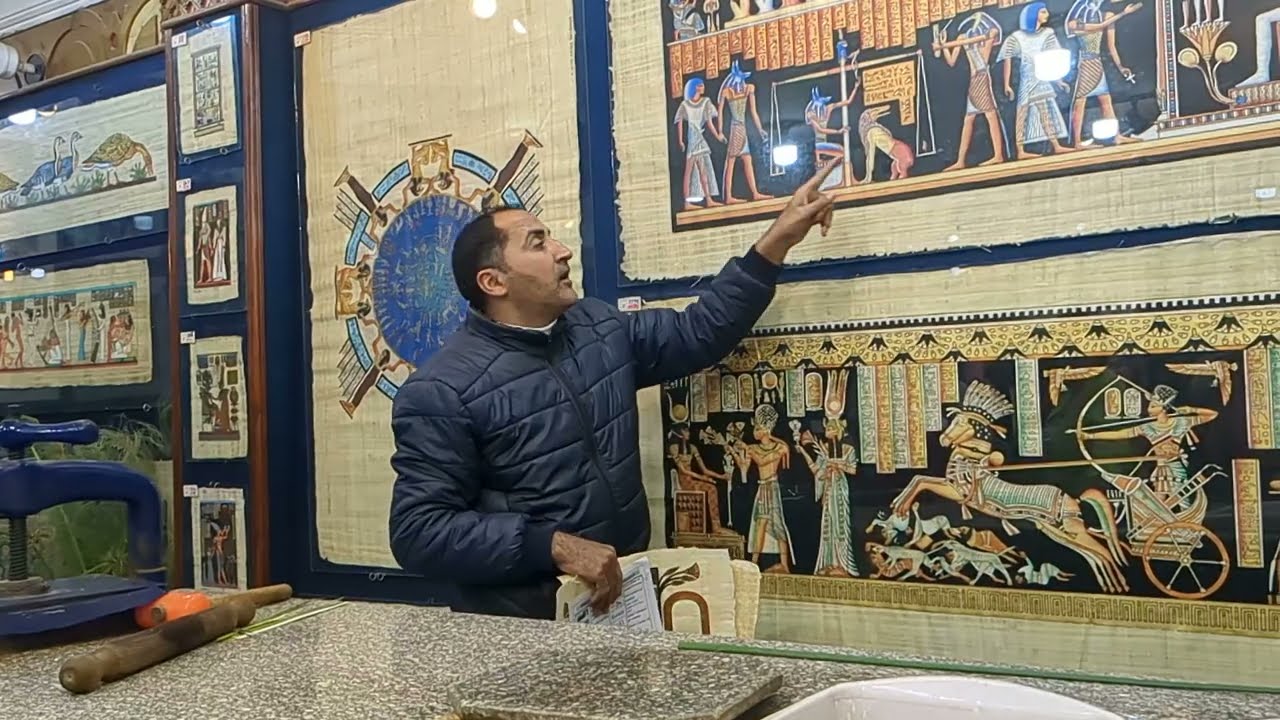
Why this video: To truly understand a historical writing surface, you must understand its physical construction. Filmed directly at the Papyrus Institute in Cairo, this footage demonstrates the manual processing of the papyrus plant stem. You will observe the peeling of the green bark, the slicing of the inner pith, the soaking to alter sugars, and the perpendicular weaving and mechanical pressing that fuses the organic fibers into a unified sheet.
- Knowledge Checkpoint:
- Detail the physical steps required to transform raw papyrus stems into a finished, writable sheet.
- Analyze how the natural properties of the plant's sugars and fibers allow it to fuse without the addition of external adhesives.
Module 2: The Chinese Rag Paper Revolution and the Silk Road
This module transitions to East Asia during the Han Dynasty to investigate the invention of true plant-and-rag-based paper by Cai Lun in 105 CE. By utilizing discarded materials (hemp, rags, old fishing nets, and mulberry bark), China developed a material far cheaper and more resource-efficient than either silk or papyrus. We will track how this technology remained a closely guarded state secret until the Battle of Talas in 751 CE, which catalyzed the westward migration of paper technology through the Islamic Golden Age and eventually into Europe.
Recommended Videos

Why this video: Though styled as a short, accessible animation, this video provides a concise historical visualization of Cai Lun's breakthrough in 105 CE. It highlights the raw materials used (bamboo fibers, bark, and rags) and shows how Cai Lun was inspired by observing wasps construct nests from macerated wood fibers. This demonstrates the chemical leap from woven sheets to suspended-fiber pulping.
- Knowledge Checkpoint:
- Explain who Cai Lun was, his historical placement (Han Dynasty, 105 CE), and the specific organic materials he combined to create paper pulp.
- Contrast the raw material sourcing of Chinese paper with Egyptian papyrus, noting why recycled rags and local bark made paper far less geographically restricted.
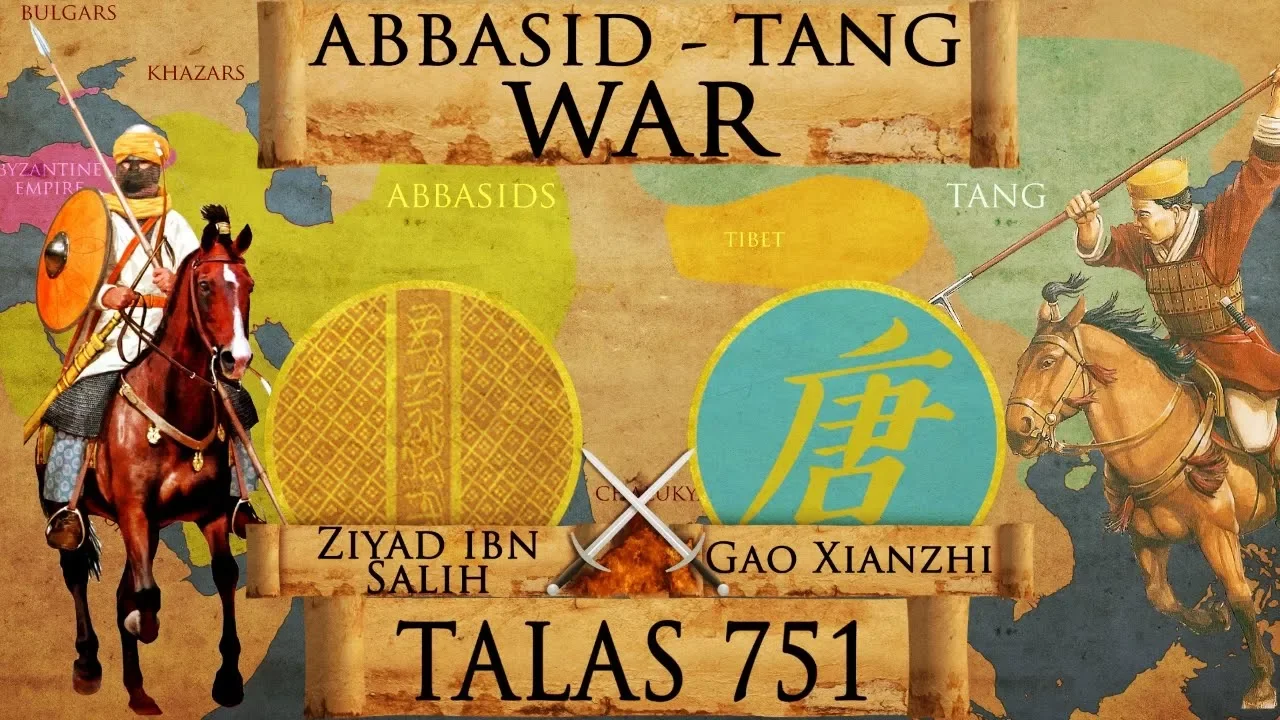
Why this video: This detailed military documentary focuses on the pivotal 751 CE Battle of Talas fought between the Abbasid Caliphate and the Chinese Tang Empire. This clash of empires is historically recognized as the crucial transmission point of papermaking technology. Captured Chinese artisans and papermakers were taken to Samarkand, where they were forced to reveal their paper production techniques, breaking the Chinese monopoly and initiating the westward journey of paper.
- Knowledge Checkpoint:
- Explain the historical significance of the Battle of Talas (751 CE) in the transmission of papermaking technology.
- Describe how the movement of prisoners of war from Central Asia to Islamic administrative centers altered the global distribution of information technology.
Why this video: This clip explains the massive intellectual and administrative consequences of paper technology arriving in the Islamic world. It charts the rapid construction of paper mills across major urban hubs, including Samarkand, Baghdad, Cairo, and Morocco, before arriving in Moorish Spain by 1150 CE. This video highlights how the abundance of cheap, flexible paper fueled the scientific, literary, and administrative triumphs of the Islamic Golden Age.
- Knowledge Checkpoint:
- Trace the geographical route of papermaking factories from Samarkand and Baghdad into Europe.
- Explain how the introduction of paper factories in the Islamic world influenced literacy, science, and the preservation of classical texts.
Module 3: Parchment, Vellum, and the Rise of the Codex
While China was refining paper, Europe relied on animal skins to preserve its written records. This module explores the technological shift from plant-based papyrus (which decayed in northern Europe’s cold, damp climate) to parchment and vellum (treated animal skins). We will examine the labor-intensive production of parchment and analyze how the physical transition from the scroll format to the codex (modern book format) revolutionized information retrieval and reading habits.
Recommended Videos

Why this video: This highly detailed mini-documentary takes you inside the last active commercial parchment-making workshop in the United States. It showcases the chemical and physical steps of parchment production: soaking animal hides in lime (calcium hydroxide) to strip the hair, stretching the wet skins on wooden frames under tension, and scraping them with a curved, crescent-shaped knife called a lunellum. This video reveals the extreme physical labor, immense time, and high resource costs that made parchment an elite, expensive commodity.
- Knowledge Checkpoint:
- Define the terms "parchment" and "vellum" and identify the primary animal skins used in their production.
- Detail the physical and chemical processes (liming, tension-stretching, lunellum-scraping) required to turn an animal hide into a smooth, white writing surface.
- Contrast the ecological footprint and cost of producing 100 pages of parchment versus 100 pages of plant-based paper.

Why this video: Produced by the Getty Museum, this beautifully animated video guides you through the entire lifecycle of a medieval manuscript. It demonstrates how parchment sheets were folded, cut, stitched, and bound into a "codex." By watching this video, you will gain an appreciation for the labor of monastic scribes and the material limitations of medieval book production, which relied entirely on manual labor and scarce animal skins.
- Knowledge Checkpoint:
- Explain how a codex is structurally assembled from individual sheets of parchment.
- Describe the sequence of steps a medieval scribe took to prepare, rule, and write on a parchment leaf.

Why this video: In this segment of a Yale University history lecture, you will explore the cognitive and administrative transition from scrolls to codices that took place between 400 CE and 1000 CE. The lecturer analyzes why the codex format triumphed: it allowed readers to write on both sides of a page, rapidly flip to specific passages (random access), and store vast amounts of administrative or religious law in a single, durable volume.
- Knowledge Checkpoint:
- Contrast the reading mechanics of a scroll with those of a codex, explaining how the codex enabled "random access" of information.
- Analyze how the rise of the codex format assisted administrative state control, church organization, and legal codification in early medieval Europe.
Module 4: The Printing Press and the Great Rag Paper Boom
This module marks the convergence of the Eastern paper revolution and Western printing technologies. We will examine how Johannes Gutenberg's mid-15th century development of movable metal type was completely dependent on the pre-existence of a thriving, mechanized European rag paper industry. Merging the study of technology and media ecology, this module highlights how the sudden availability of cheap physical media drove up literacy rates, changed human cognition through silent reading, and challenged central state and religious authorities.
Recommended Videos
Why this video: This video provides a rare look at the physical mechanics of a medieval European paper mill. It shows how European papermakers mechanized the Chinese process using waterwheels to drive heavy wooden stamping hammers. These hammers pounded linen and cotton rags into a fine, suspended pulp. This video illustrates the industrial scale of rag-paper production in Europe on the eve of the printing press revolution.
- Knowledge Checkpoint:
- Explain how early European papermakers utilized waterpower to mechanize the pulping of linen and cotton rags.
- Describe the chemical and physical differences between European medieval rag paper and modern wood-pulp paper.

Why this video: This comprehensive documentary explores the massive cultural and cognitive shifts triggered by Gutenberg's printing press. By lowering the cost of book production, the printing press democratized literacy, moving reading out of elite monasteries and into the public sphere. This video discusses how cheap printed paper became the engine of scientific discovery, political pamphlet campaigns, and religious reform.
- Knowledge Checkpoint:
- Analyze why Gutenberg’s movable metal type press would have been economically unviable without the concurrent availability of cheap rag paper.
- Detail how the mass production of cheap books shifted literacy rates and changed the relationship between citizens and state/religious authorities.

Why this video: This recording of an academic conference at the Huntington Library examines early modern paper through the lens of "media ecology." Scholars discuss how the availability of cheap paper acted as a material substrate that shaped early modern political authority, social activism, tax collection, and archival preservation. This video directly addresses how the rise of cheap, physical paper allowed states to build large administrative bureaucracies and exercise control over distant regions.
- Knowledge Checkpoint:
- Explain the concept of "media ecology" as it applies to writing surfaces.
- Discuss how cheap rag paper became an instrument of state surveillance, bureaucratic record-keeping, and early modern administrative control.
Module 5: Industrial Wood-Pulp and the Mass Media Age
The final module covers the 19th-century transition from scarce cotton and linen rags to abundant, chemically treated wood pulp. This chemical revolution lowered the cost of paper, enabling the rise of cheap newsprint, mass-market paperbacks, and global literacy. We will study the industrial manufacturing of wood pulp, explore how this abundance created the modern "information state," and trace the rise of the expansive 20th-century administrative bureaucracies that run our modern world.
Recommended Videos
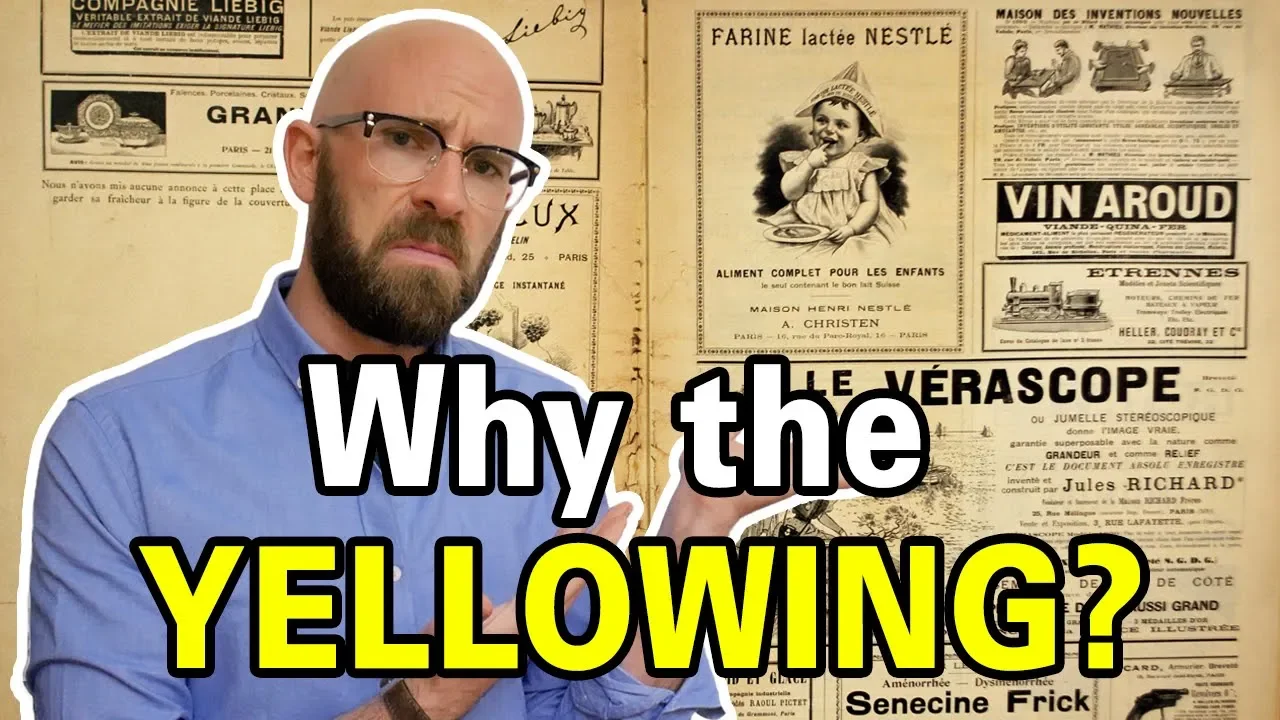
Why this video: This short video explains the mid-19th century transition (around 1844) from rag-based paper to wood-pulp paper. It addresses a major chemistry gap: why modern paper turns yellow over time. The video explains that wood pulp contains lignin (the organic polymer that binds wood fibers together). When exposed to oxygen and light, lignin breaks down into acidic compounds, causing the paper to yellow and degrade. This chemical vulnerability reveals why industrial cheapness came at the cost of archival longevity.
- Knowledge Checkpoint:
- Explain why the 19th-century paper industry was forced to pivot from cotton and linen rags to wood pulp.
- Identify the chemical compound lignin, explain its role in wood structure, and describe why its presence causes industrial paper to turn yellow and decay.

Why this video: This lecture highlights how the mass literary revolution of the 19th century was driven by industrial technology rather than creative movements. The speaker walks through the rise of high-speed steam-powered printing presses (such as the 1844 steam press at The Times of London) and links them to the mass production of cheap newsprint. It demonstrates how industrial chemistry and steam power worked together to build modern mass media.
- Knowledge Checkpoint:
- Describe the impact of steam-powered printing presses on the speed and volume of daily news production.
- Analyze how cheap paper and high-speed presses turned news from an elite subscription service into a daily mass medium.
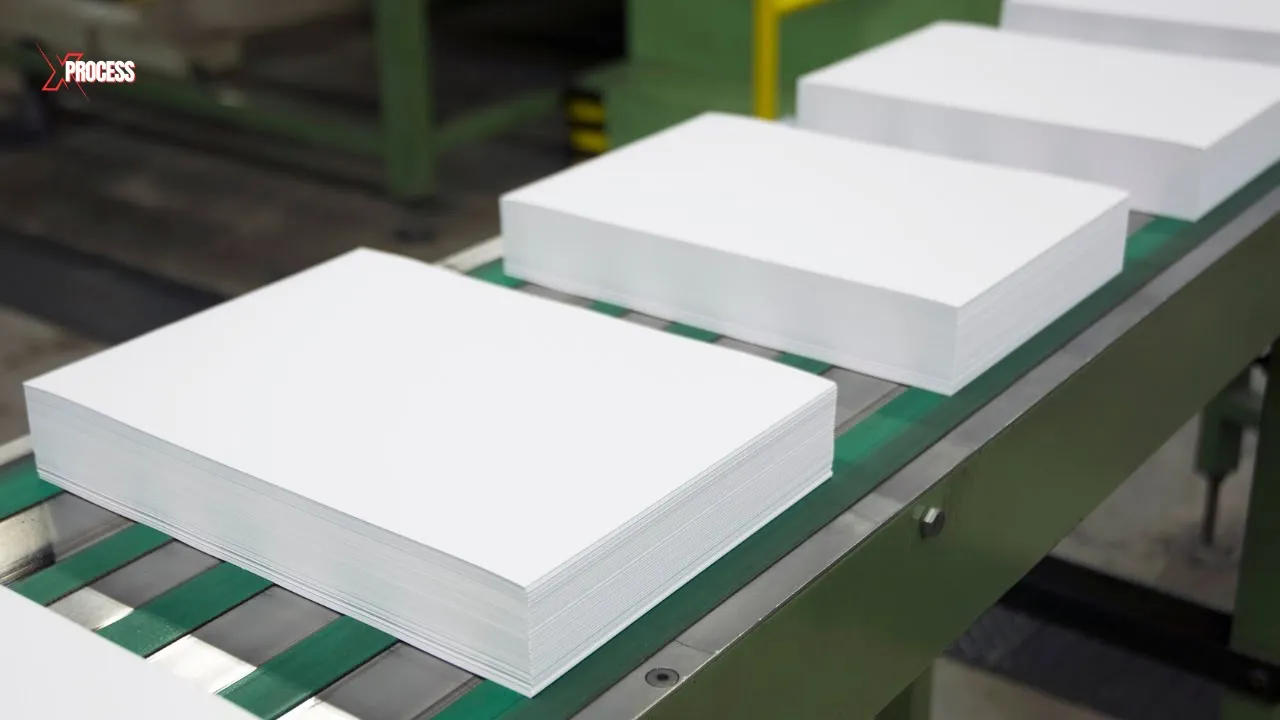
Why this video: This modern industrial process video shows you inside a paper mill, demonstrating the chemical pulping process. It displays the giant pressurized digestors that cook wood chips at high temperatures with acidic solutions. This process dissolves the lignin, isolating the cellulose fibers to create a brown pulp that is subsequently bleached and pressed into paper.
- Knowledge Checkpoint:
- Describe the modern chemical digestion process (the acid sulfite or sulfate kraft process) used to separate cellulose fibers from lignin.
- Explain why separating cellulose from lignin is essential for producing stable, white paper.

Why this video: In this final video, political analyst Brandon Turner explains how the 20th century witnessed the rise of a massive bureaucratic administrative state. This discussion connects directly back to our media ecology theme: cheap, abundant, wood-pulp paper made it possible for governments to generate thousands of pages of laws, process tax forms, and keep records on every citizen. This segment reveals how industrial paper served as the foundation for modern state administration and governance.
- Knowledge Checkpoint:
- Connect the industrial abundance of paper to the expansion of 20th-century government bureaucracy and the administrative state.
- Analyze how the ease of generating paper records changed the relationship between the citizen and the modern state.
Course Map
Key People Index
- Irving Finkel: A world-renowned Assyriologist and curator at the British Museum, whose work on cuneiform clay tablets shows how writing first served as a tool for local temple accounting.
- Cai Lun: A Han Dynasty court official who, in 105 CE, revolutionized communication by inventing true paper from suspended wood bark, hemp rags, and old fishing nets.
- Charlemagne: King of the Franks and Holy Roman Emperor, who standardized handwriting (Carolingian minuscule) on durable parchment, laying the administrative foundation for medieval Europe.
- Johannes Gutenberg: The German goldsmith whose 1440 invention of movable metal type transformed Europe's intellectual life, a technology that succeeded because of Europe's mechanized rag-paper mills.
Final Self-Assessment
Complete this comprehensive self-assessment to verify your mastery of the historical development of writing surfaces and media ecology.
- Explain how the physical weight and local availability of clay tablets limited early cuneiform writing to local administration.
- Detail the physical steps involved in harvesting, slicing, weaving, and pressing Nile river papyrus into sheets.
- List the primary raw materials Cai Lun used in 105 CE, and explain why recycling rags made paper cheaper than papyrus or silk.
- Identify the military conflict in 751 CE that broke China's monopoly on papermaking, and trace paper's journey through the Islamic world.
- Describe how parchment and vellum are made, and calculate the approximate resource cost of producing a single medieval manuscript.
- Compare the reading mechanics of a scroll with a codex, noting how the codex enabled "random access" of information.
- Detail how European papermakers used waterpower to mechanize the pulping of linen and cotton rags.
- Explain why Johannes Gutenberg's printing press was economically dependent on the pre-existence of a mechanized rag paper industry.
- Define "media ecology" and give an example of how cheap paper changed human reading habits and individual cognition.
- Identify the organic polymer lignin, explain why its presence causes industrial wood-pulp paper to turn yellow, and describe how chemical pulping removes it.
- Explain how high-speed steam printing presses and cheap wood-pulp newsprint catalyzed the 19th-century rise of mass media.
- Describe the relationship between cheap physical paper and the growth of 20th-century government bureaucracies and administrative states.