










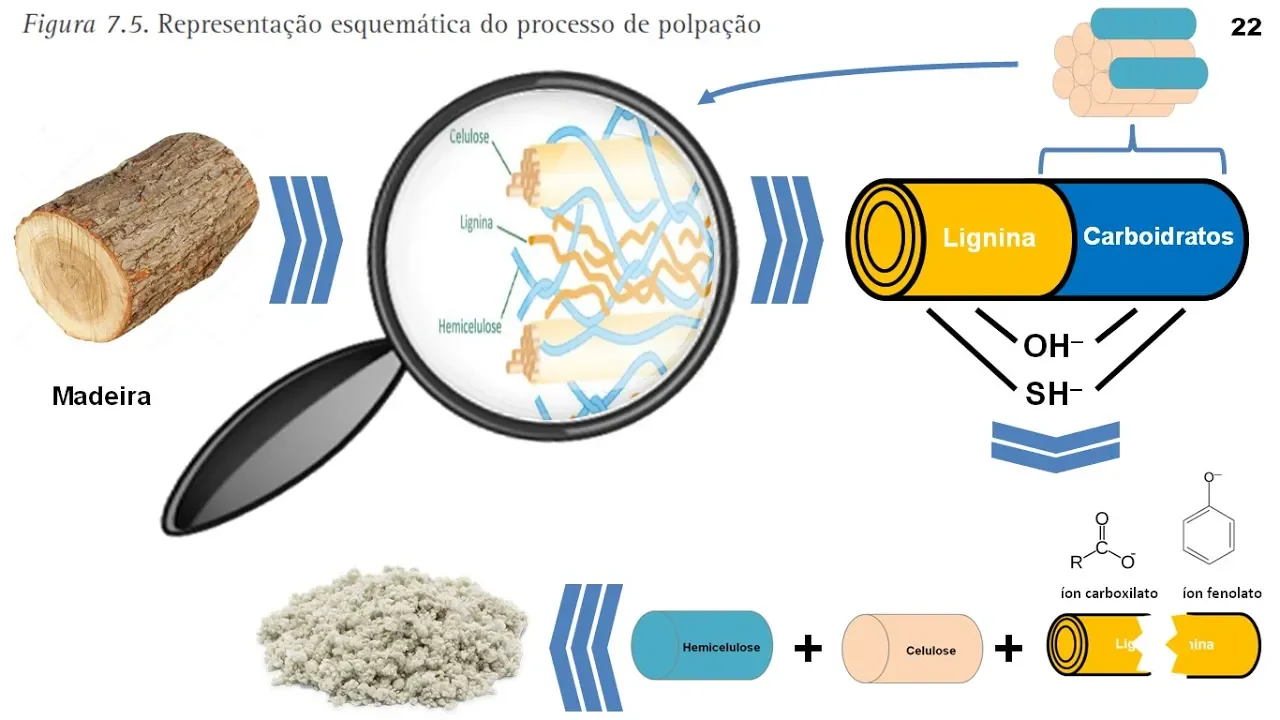


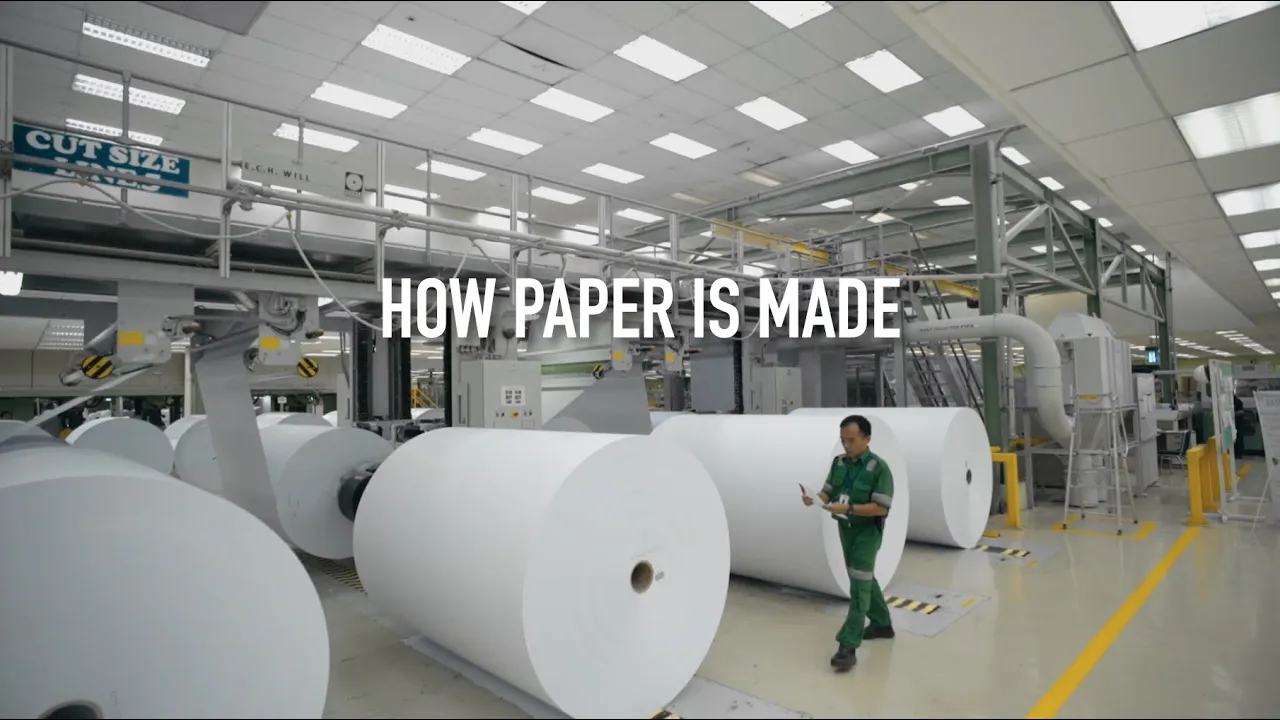






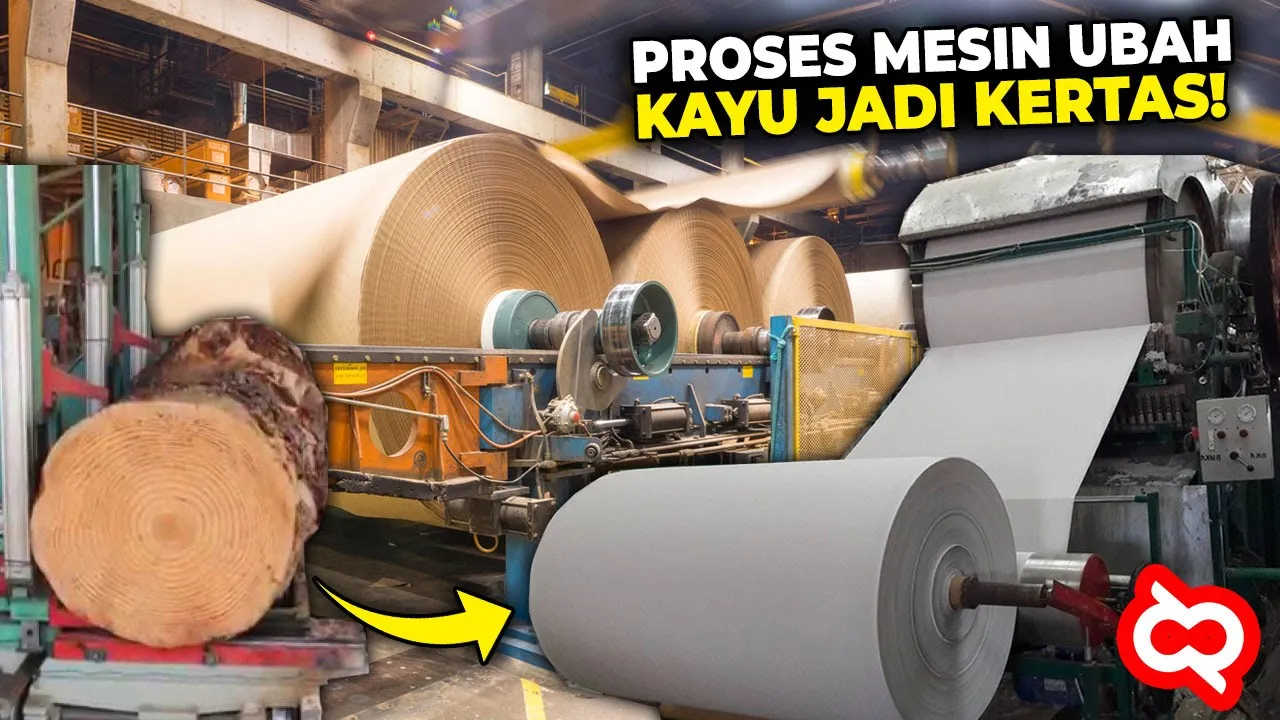


Paper is manufactured through a multi-stage industrial process where wood is transformed into pulp and then into sheets; the process begins with harvesting mature trees (typically eucalyptus, birch, or poplar), which are debarked, chipped, and cooked in a digestor at 158°C to separate cellulose fibers from lignin, followed by bleaching to remove impurities, and finally forming the pulp into paper sheets on a paper machine that dries and finishes the product at speeds reaching 55,000 sheets per minute.
Paper Manufacturing Process: From Wood to Pulp and Sheets
Added:Basic plant anatomy and biochemistry, specifically the structure of wood and the distinct properties of cellulose and lignin.
Fundamental chemistry principles, including pH, oxidation-reduction reactions, and the behavior of chemical solvents.
Basic industrial engineering concepts, such as continuous flow processing and mass-balance principles.
The physical concepts of filtration, evaporation, and mechanical pressing used in dewatering mixtures.
Environmental impact and sustainability in pulp and paper manufacturing, including waste management, effluent treatment, and sustainable forestry practices.
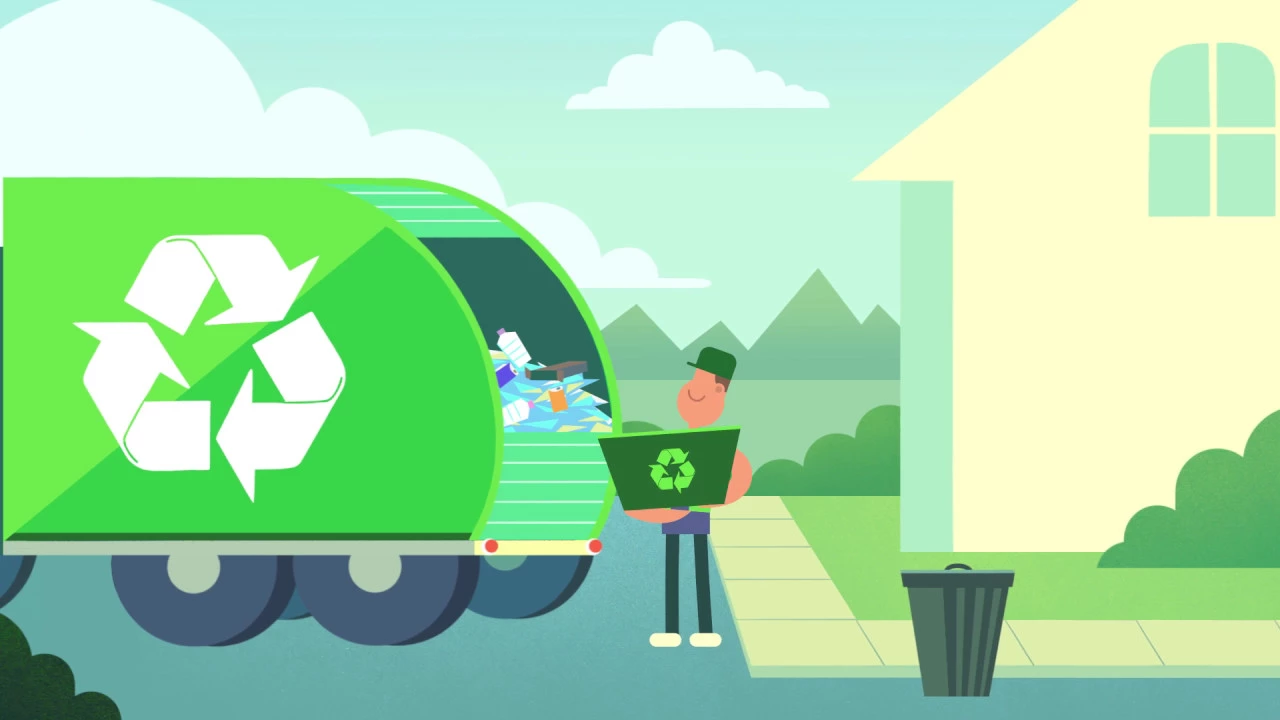
The chemistry of recycling paper, focusing on the de-inking process and the physical limits of fiber degradation over multiple lifecycles.
Advanced paper coatings and additives, such as sizing agents, fillers like calcium carbonate, and polymers used to create specialized paper types.
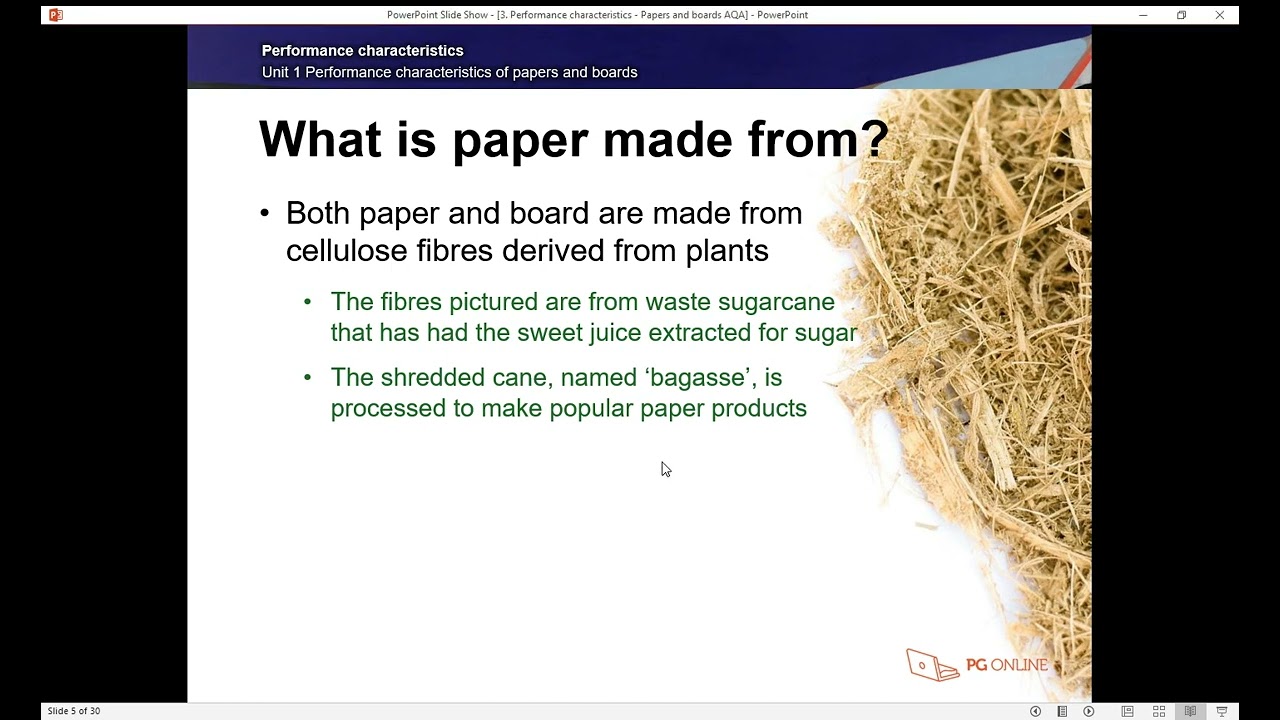
Alternative raw materials for papermaking, such as non-wood fibers including bamboo, agricultural waste, and hemp, and their corresponding processing adjustments.
108K views1.4Klikes8:00Original Release: 2024-08-03
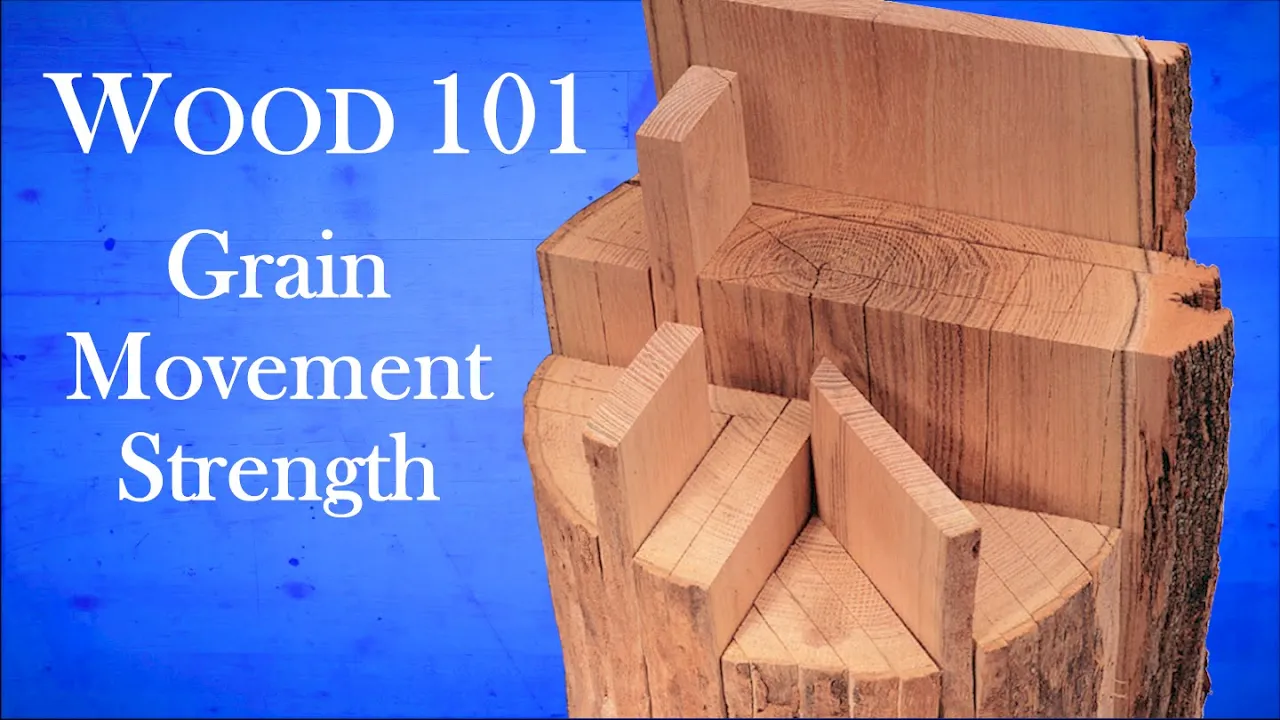
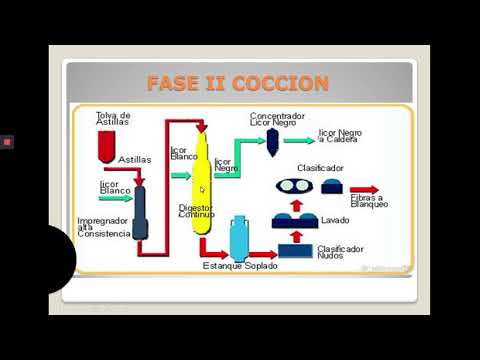
each year more than 400 million tons of paper are consumed worldwide around 15 trees are needed to produce one ton of paper production reaches 55,000 sheets per minute to meet this great demand enormous Harvesters gather tons of wood but how does wood become paper we visited a paper mill to discover how paper is made from trees It is believed that paper was invented in China during the Han Dynasty around the 2 Century BC the invention of the paper machine allowed mass production in the mid 19th century chemical methods for bleaching pulp were introduced which improved paper quality the paper industry is one of the largest in the world millions of tons of paper are produced each year to meet Global demand mainly wood pulp extracted from cellulose found in trees is used to make paper the wood used in cellulose production comes from forest plantations of fast growing species cellulose is a natural fiber found in the cell wall of plants and is particularly abundant in Wood eucalyptus trees are widely used especially in tropical and subtropical regions they have a high cellulose content in their wood and grow quickly making them an efficient option a tree like this provides oxygen for three people to breathe each day some varieties of eucalyptus can be harvested in 10 to 15 years the paper making process begins with tree felling in the forests trees selected for Harvest are ch chosen carefully considering their age size and health selection may be based on a selective logging approach where only mature and ready to harvest trees are cut selected trees are felled in a controlled manner this process is carried out using a 25 ton Forest Harvester The Cutting head grips a tree with a lathlike device and a saw just under 1 m in size cuts the trunk the FED tree passes through the head where four blades cut off its branches and the saw cuts it into more manageable pieces it takes just 40 seconds to turn a Tall Tree into a pile of wood chunks the wood is loaded onto trucks and transported to the Pulp and Paper Mill after harvesting reforestation is carried out to ensure the renewal of forest resources this involves planting new trees to replace those harvested contributing to the sustainability of the wood supply for paper production the paper making process begins with the arrival of the wood each day more than 200 trucks loaded with hundreds of logs arrive at the paper mill the wood logs are unloaded in the designated area The Machine's clamp can lift 25 tons of logs at once with a single log at least 15 packs of copier paper are made paper is made from a pulp that contains 65% eucalyptus 25% Birch and 10% popler to produce one ton of paper pulp 2 tons of wood are needed first the cellulose must be extracted but bark is rich in tannin and other unwanted chemicals so the logs must be debarked this process takes place in a debarker that removes the bark from the logs the logs are placed in this enormous debarking drum inside they collide with each other and against the walls and the contact removes the bark it is a process that lasts 20 minutes the bark will be burned to produce the steam needed to make the paper the peeled logs exit from the other end onto a conveyor belt that carries them to a cutter that first Cuts them and then reduces them to chips the largest source of wood chips for paper making comes from recycled Sawmill scraps the chips are stored temporarily before entering the cooking process this storage allows a continuous flow of raw material throughout the manufacturing process these five piles contain a total of 30,000 tons of wood the next step is to turn those wood chunks into pulp the wood chips are transported to the pulp mill on a conveyor belt upon entering the pulp Mill the wood chips are introduced into a digestor where they are cooked in an acidic solution to dissolve the linen and separate the plant fibers the necessary chemicals for the wood cooking process are prepared and will be used in the digestion stage to separate the linen from the cellulose fibers during this step the linen dissolves releasing the cellulose fibers and creating a mixture called pulp this enormous cylinder is the digestor where the wood is cooked for several hours at a temperature of 158° C pulp is the key raw material for paper making and will undergo additional processes to turn it into paper sheets once cooked the brown pulp exits the digestor and is sent to the thickener with this spatula the quality of the brown pulp is modified the obtained pulp may contain impurities and remnants of linin at this stage an additional cleaning and defibration are performed to separate the cellulose fibers and remove any unwanted material the fibers are washed to remove the acidic solution I and the pulp is now soft and fibrous next it needs to be bleached before it can be used to make white paper the pulp is bleached and filtered to remove any remaining lining that would cause the paper to Yellow over time to protect the environment this bleaching is chlorine free using oxygen and peroxide the wood chips that entered the pulp Mill have now been turned into a soft white pulp the main raw ingredient for making paper the prepared pulp is taken to the paper machine where the paper sheet formation process begins the paper machine consists of a series of sections and screens and the pulp is poured onto a continuous mesh allowing the water to drain and the fibers to interlock to form the sheet the water is extracted with this equipment which operates at a speed of 1,60 m per minute after the initial formation the paper sheet passes through pressing sections where some of the water is removed next the sheet passes through heated cylinders that apply pressure and heat to complete the drying process this process reduces the water content and provides strength to the sheet between the input and output the water concentration in the pulp drops from 95% to 5% subsequently it passes through a calendaring stage where the paper sheet passes between hot rollers that smooth and improve the uniformity of the paper's surface next technicians check the paper's quality parameters and note any anomaly throughout the process quality controls are performed to ensure the paper meets the desired standards the weight strength and smoothness are inspected then the paper is rolled the now dry and formed paper sheet is rewound into large rolls these rolls can be cut into smaller sheets according to customer requirements with this transfer crane a full roll is changed for an empty one a roll weighs more than 35 tons and contains 60 km of P paper some will be delivered as is While others will go through the paper Cutters the rolls are sent to the automated Warehouse the rolls that will be cut later are stored in the warehouse robots Guided by rails in the floor feed the paper cutter this one produces copier paper the robots are controlled from a central computer operated by technicians then the paper is cut into standard siiz sheets or smaller rolls ready for distribution production reaches 55,000 sheets per minute four automatic receivers and operators check the paper quality before packaging the finished paper is packaged according to customer specifications and stored for shipment in just 1 hour 6,600 packs of printing paper are produced if you want to know how Doritos are made watch the video on your screen and please like the video If you enjoyed it and share it with someone who might be interested also subscribe to this channel by activating the notifications to continue learning thanks for watching watching
Up Next

9:04
History of Mass Pornography in 19th Century America | Gerard Jones
@QuietLightning
149 views•2010-03-12

12:54
Triumph of Orthodoxy Icon: Byzantine Art & History Explained
@BenCallan
2.1K views•2024-08-06

9:49
FastAPI vs Flask vs Django: Choosing the Right Python Web Framework
@TechWithTim
302.5K views•2024-05-26

1:42
Game of Thrones Opening Credits: A Cinematic Analysis
@gameofthrones
46.3M views•2011-04-18
Related Study Plans & Knowledge Roadmaps
Structured learning paths in General & Interdisciplinary Studies
general-studies
Elevator Engineering: History, Physics & Cities
01From Hoists to Safety Brakes: The Dawn of Vertical Lift
02Hydraulic vs. Traction: The Engineering Physics of Elevators
03Modern Speed, Safety, and Algorithms
+ 2 more learning modules
12h5 modules
Explore Roadmap
general-studies
Rubber: Material Science, History & Geopolitics
01Origins of Natural Rubber & Mesoamerican History
02The Chemistry of Natural Rubber & Vulcanization
03The Geopolitics of the Rubber Boom & Colonization
+ 2 more learning modules
12h5 modules
Explore Roadmap
general-studies
Containerization: Evolution, Logistics & Trade
01Ancient Trade & Bulk Cargo: Amphorae to Barrels
02The Industrial Revolution & Cardboard Packaging
03The Containerization Revolution: Malcom McLean
+ 2 more learning modules
12h5 modules
Explore Roadmap
general-studies
Textile Tech: Evolution, Labor & Global Impact
01Pre-Industrial Textiles: Handloom & Cottage Industry
02Mechanization: The Spinning Jenny to the Power Loom
03The Factory System & Global Labor Transformation
+ 2 more learning modules
10h5 modules
Explore Roadmap