































The invention of steam-powered printing presses in the 19th century transformed publishing from an elite activity into a mass medium, democratizing information access while simultaneously creating new cultural challenges as cheap print enabled the spread of explicit content and challenged traditional moral authorities, sparking America's first major culture war between reformers and publishers.
History of Mass Pornography in 19th Century America | Gerard Jones
Added:Understanding of the technological advancements of the Industrial Revolution, specifically the transition to steam-powered printing and the emergence of the 'penny press'.
Awareness of 19th-century demographic shifts, particularly rapid urbanization in New York City and the rise of a distinct, working-class bachelor subculture.
Familiarity with Victorian-era social norms, moral reform movements, and the prevailing attitudes toward sexuality and public decency in 1800s America.
Basic concepts of market capitalism, specifically how high-volume, low-margin business models drive the creation and dissemination of taboo or populist media.
Investigation of the Comstock Act of 1873 and the subsequent legal and social history of federal anti-obscenity legislation in the United States.
Analysis of how subsequent communication technologies (such as photography, early cinema, home video, and the internet) were historically adopted and shaped by the adult entertainment industry.
Study of landmark U.S. Supreme Court cases defining obscenity and First Amendment protections, specifically focusing on the evolution from the Hicklin test to Miller v. California.
Exploration of the late 20th-century feminist debates (the 'sex wars') and modern sociological theories regarding the impact of mass pornography on gender roles and society.
149 views0likes9:04Original Release: 2010-03-12
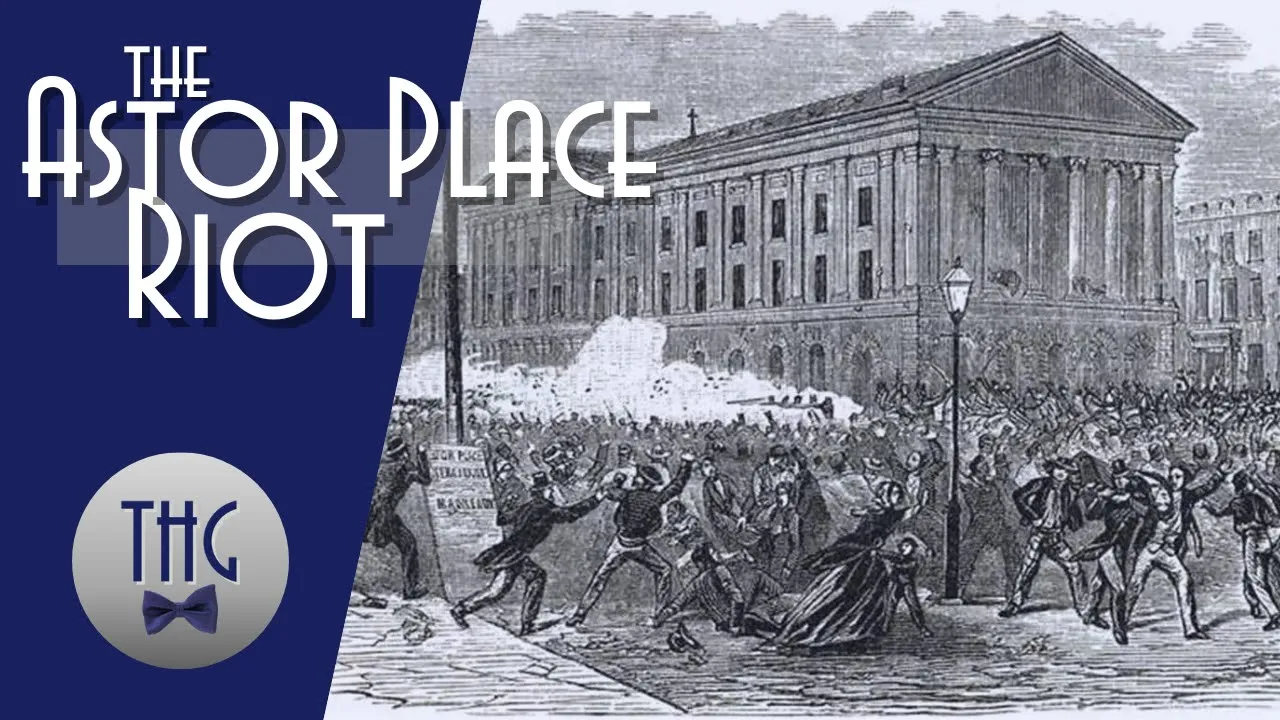
was wondering why I was invited here um just that I I my my last book was like 3 years ago this book is at least a year away so I'm totally off the the reading circuit right now but I found out that NATO green is going to be doing comedy after me right up next uh kind of grew up on my comic books when he was a little squirt he found my work of 20 years ago was shaping his sensibilities so um I'm flattered but also now begin to understand why people used to burn comics in the ' 50s because you know we laugh we say oh they can't possibly really affect someone's worldview and upbringing but we do have our spawn and this is sort of about that what I'm writing is a book it's called the undressing of America it's coming from FSG sometime next year if I finish it kind of soon possibly the year after it's been a sluggish project and it's uh it's about that struggle between indecency and decency and freedom and control in the Press but it's especially about the power that the that the world of mass publishing used to have and as we kind of are standing here at the end of the era of mass publishing we a point where ink and paper are going off into some other role that I think is no longer the central role in disseminating information and World Views and values it's I'm liking looking back at the beginning and this is kind of a boil down piece of it of this big messy book in progress we're starting around 1800 for 200 years publishing had doled through a post Gutenberg and pastoral paper was pressed from linen by hand Craftsman then printed by independent Journeymen with hand presses at best putting out 100 Pages an hour Publications were for ladies and gentlemen professor and Jesuits burgers with heirs not the Rabel newspapers reached more people posted on walls than held in hand one reason the clumsy floppy broad sheet became its standard form novels were often pre-sold by by subscription a sort of a Regency version of print on demand and sales of 3 or 4,000 was considered a great success then came the revolution a literary Revolution brought not by The Souls of poets but by Steam and steel oil and acid in 184 14 the times of London unveiled a steam powered press that turned out not 100 Pages an hour but 1100 2 years later that number was doubled meanwhile P pulping machines and acid baths were slashing the price of paper and soon a wave of cheap newspapers and magazines and my machine stitched books began pouring over Europe and across the Atlantic to America Penny papers and Shilling novels filled with crime news and gossip and rambunctious fiction that appealed to shopkeepers Office Clerks mechanics and seamstresses this was was something new it was a mass medium a generation grew up on it shaped by it making from it a new kind of culture a mass culture it worked the way mass culture still works New Media Arenas aren't driven by artistic Visions needing the venue machines make the Arenas just as big as technology in the market will allow and the writers and artists fight to fill them shape them and as with every new medium since the audience was in love with the medium itself so Charles Dickens became first hero in part because he was the cheap press in his rivine productivity his Relentless surge toward undetermined endings his cast of characters as modly and restive as his still evolving readership and the readership was happy to slug through his swamps of page filling dribble to reach those peaks of his from which they could scan the sprawling new world that paper and ink were making them part of America wasn't the first into the new Mass medium but we were quick and successful we were a pirate Nation we flaunted International copyright laws so the best and worst of Europe got here fast and cheap then the machines and the chemicals pushed us forward again in 1843 a German engineer found a way to make paper out of wood it was crap paper brittle and dingy and so full of acid that it ate itself away but it turned the trackless forest of North America into a cornicopia of cheap newsprint and in the very same year a young New York printer named Richard hoe reinvented the wheel a rotary press a colossal spinning drum that could shoot out not 2,000 Pages an hour but 200,000 from the moment ho drums began to roll New York became the publishing center of the Western Hemisphere Boston Philadelphia and Montreal became instant backwaters now the Broad River of Printed Matter became a flood its waves began to beat at the high Windows of the Rich and influential there were few controls on publishing in America the Press was free under law and had been constrained by tradition decorum and the expectations of its J teal consumers but those constraints didn't hold when the half-letter poor could buy Penny newspapers when even the growing masses of Slum Irish were learning to read when Country Boys newly away from their families went looking for excitement in the ramshackle news stands that popped up like mushrooms on the city street corners when Hustlers and fly by Knights saw a free press not as a sacred right but as a loophole and realized there was gold in the mountains of Pulp the new medium was a wide open field immigrants in Outsiders could Plunge in and with enough daring and luck create fortunes an Irish surgeon named William Haynes unable to make a living at home immigrated to New York but found it hard to practice there too so he thought he'd tried to make some extra cash pursuing his hobby pornography just as Richard Ho's new presses began to were Haynes hired a printer to bring out a $2 copy of Fanny Hill a runchy novel that had been passed among affluent hobbyists for a century to see if there was a market for cheap Mass pornography what do you suppose he learned his first edition sold out in his second he reprinted more old dirty books and popular editions then he found manuscripts arriving from readers wanting their own efforts to see print pretty soon Haynes had a mail order catalog and dozens of competitors there at the corner of Anne and Nassau streets in lower Manhattan a block from PT Barnum's Museum of Wonders the modern porn industry was born although no one's put a plaque on the spot yet in the wake of the smut came Frank sexual information books like secrets of the wedding night and guide books to local brothel in one visit to a news stand a young man whose entire sexual education had been provided by The Animals on his parents' Farm could learn of the easies of oral and group and anal sex and the addresses where they might be bought major newspapers ran ads for rubber Novelties and medicines that claim to cure social diseases and failures of male Vic sometimes too the smut turned confrontational a novel called The Secret history of a voy of pleasure spent its first 30 pages excoriating the congregationalist church the mother Church of American morality declaring that religious prohibition was the greatest possible go to puant thinking before it finally got down to the hundred pages of non-stop frating for which its buyers had been looking when the custodians of American culture the ministers teachers reform-minded politicians looked looked out in this Rising tide of cheap print they saw it as part of a greater flood a flood that threatened to sweep away an entire social and moral order in the publishing Capital itself in New York these were times of great scores epidemics of malaria and chera fed by undrained swamps and open sewers vast Lawless Shanty towns the rioting poor a monumentally corrupt city government installed by tamon Hall and its Army of immigrant voters saloons casinos and whouses buying the police force and swalling ing whole neighborhoods a new Urban mythology woven of tales of young men and women fall falling into dissipation drunkenness and crime for years the great Crusade of the nation's moral leaders and reformers had been the abolition of slavery with the end of the Civil War those leaders brought their energies back home reform movements swept New York one organization that particularly concerned itself with the spiritual and physical health of the generation of boys and men who be building the post-war Nation turned its eyes on the lurid press the debasing influences of these Publications on young men cannot be overestimated they said they saw the future of a generation and so a civilization seeming threatened and so the first great culture war in American history was launched between a ragtag militia of smug mongers smut mongers and yellow journalists and the muscular troops of the YMCA [Music] [Applause]
Up Next
13:59
Cinematic Techniques for Conveying Emotion in Film
@BradyBessette
23K views•2021-12-20

12:54
Triumph of Orthodoxy Icon: Byzantine Art & History Explained
@BenCallan
2.1K views•2024-08-06

9:49
FastAPI vs Flask vs Django: Choosing the Right Python Web Framework
@TechWithTim
302.5K views•2024-05-26

1:42
Game of Thrones Opening Credits: A Cinematic Analysis
@gameofthrones
46.3M views•2011-04-18
Related Study Plans & Knowledge Roadmaps
Structured learning paths in General & Interdisciplinary Studies
general-studies
Elevator Engineering: History, Physics & Cities
01From Hoists to Safety Brakes: The Dawn of Vertical Lift
02Hydraulic vs. Traction: The Engineering Physics of Elevators
03Modern Speed, Safety, and Algorithms
+ 2 more learning modules
12h5 modules
Explore Roadmap
general-studies
Rubber: Material Science, History & Geopolitics
01Origins of Natural Rubber & Mesoamerican History
02The Chemistry of Natural Rubber & Vulcanization
03The Geopolitics of the Rubber Boom & Colonization
+ 2 more learning modules
12h5 modules
Explore Roadmap
general-studies
Containerization: Evolution, Logistics & Trade
01Ancient Trade & Bulk Cargo: Amphorae to Barrels
02The Industrial Revolution & Cardboard Packaging
03The Containerization Revolution: Malcom McLean
+ 2 more learning modules
12h5 modules
Explore Roadmap
general-studies
Textile Tech: Evolution, Labor & Global Impact
01Pre-Industrial Textiles: Handloom & Cottage Industry
02Mechanization: The Spinning Jenny to the Power Loom
03The Factory System & Global Labor Transformation
+ 2 more learning modules
10h5 modules
Explore Roadmap